
Introduction
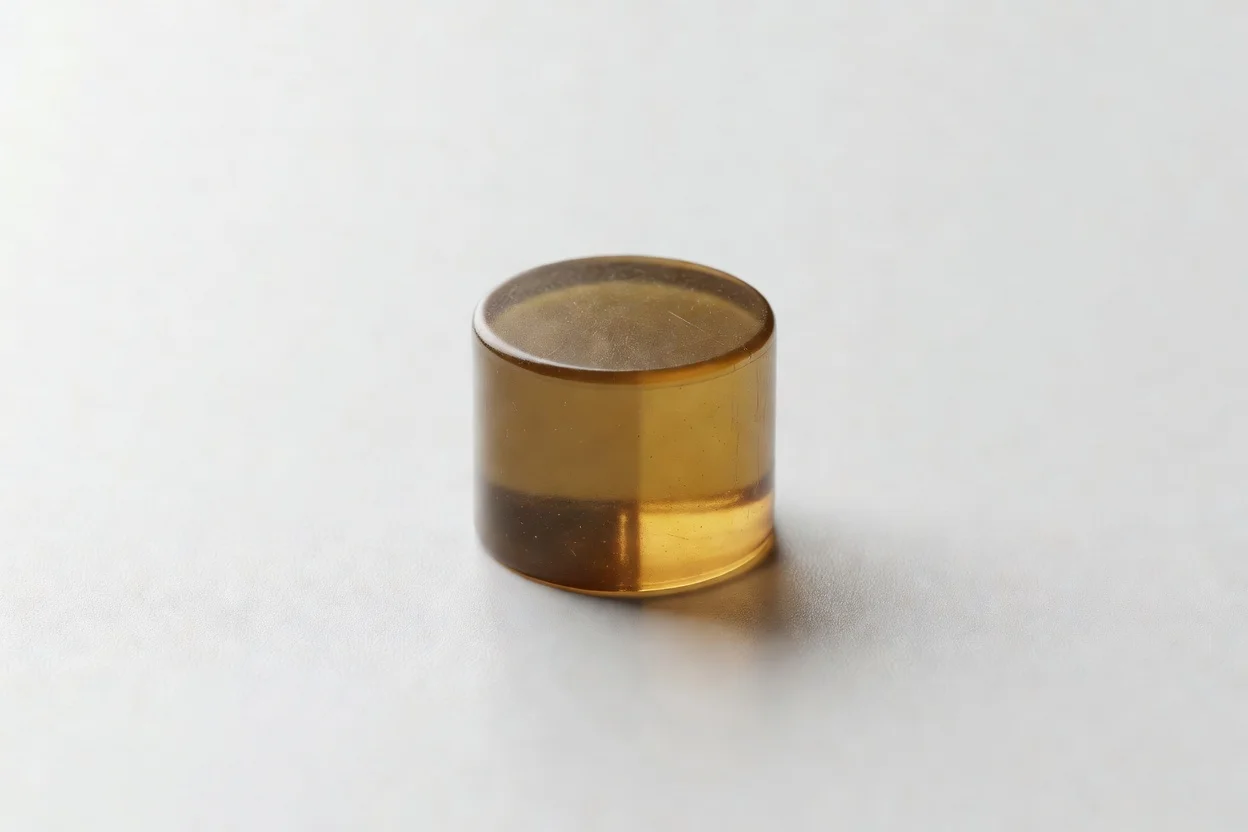
Polyketone is a family of high-performance engineering thermoplastics defined by alternating carbonyl and olefin-derived units in the polymer backbone, with commercial grades most commonly based on carbon monoxide, ethylene, and sometimes propylene. Its combination of chemical resistance, low moisture uptake, excellent wear behavior, and stable mechanical performance has positioned it as a practical alternative to polyamide and acetal in demanding industrial parts, especially where dimensional stability and resistance to fuels, solvents, and aqueous media are important.
Commercial interest in polyketone expanded after the first large-scale industrialization by Hyosung, which markets its material family as POKETONE and describes it as the world’s first commercialized polyketone. Since then, the material has moved beyond niche technical uses into automotive, fluid handling, electrical components, pipes and tubes, films, water-related applications, and selected medical and food-contact products, while ongoing development has focused on blends, composites, barrier structures, and processing optimization.
From a sustainability perspective, polyketone is notable for its use of carbon monoxide as a feedstock, which is an unusual route among engineering plastics and is often presented as a way to create value from a reactive, otherwise problematic gas stream. At the same time, the polymer remains a fossil-based engineered material in most commercial supply chains, so its environmental profile depends heavily on monomer sourcing, conversion efficiency, service life extension, and end-of-life recovery.
History and Development
Polyketone chemistry has been studied for decades, but commercialization lagged behind the academic understanding because of catalyst complexity, process control requirements, and the challenge of producing materials with consistent molecular architecture at scale. The breakthrough for industrial viability came with controlled alternating copolymerization of carbon monoxide and olefin monomers using metal-complex catalysts, enabling reproducible thermoplastic grades suitable for molding and extrusion.
The material’s industrial identity was shaped by Hyosung’s POKETONE, which established the first major commercial platform and demonstrated that polyketone could serve not only as a laboratory curiosity but as a broadly processable engineering resin. Subsequent technical literature and supplier guides emphasized the material’s combination of toughness, low friction, barrier performance, and hydrolysis resistance, which differentiated it from more familiar polyamides, polyacetals, and some polyester grades.
As market awareness expanded, compounders and resin distributors began positioning polyketone for applications where low moisture sensitivity and fuel resistance are critical, especially in automotive under-the-hood systems, fluid-contact parts, and wear components. More recent work has focused on reinforcing polyketone with fibers or functional fillers, as well as adapting it for films, membranes, and advanced manufacturing methods.
Chemical Structure and Key Properties
Polyketone is typically an aliphatic alternating copolymer whose repeating structure contains regularly spaced carbonyl groups, producing a semi-crystalline morphology and a relatively polar backbone. This molecular architecture is central to its property balance: the ordered chain arrangement supports strength and wear resistance, while the polar carbonyl functionality contributes to chemical resistance and barrier behavior.
Key property profile
| Property | Typical significance |
|---|---|
| Toughness and impact resistance | Maintains ductility and impact performance across a broad temperature range. |
| Low moisture absorption | Supports dimensional stability without the conditioning often needed for nylons. |
| Chemical resistance | Resists fuels, oils, solvents, salts, acids, and bases better than many common engineering plastics. |
| Wear and friction behavior | Offers low friction and strong abrasion resistance for gears, bearings, and moving parts. |
| Barrier performance | Provides strong resistance to gas and hydrocarbon permeation, useful in fuel and film applications. |
| Thermal capability | Commercial guidance commonly places long-term service around -40 °C to +120 °C, with short-term exposure up to about +140 °C, while processing is often reported around 180 °C to 240 °C. |
Practical limits and workarounds
- Oxygen and hydrocarbon barrier needs in thin-wall packaging or fuel-contact parts can exceed standard grades → cause: barrier performance is strong but still application-specific and thickness-dependent → workaround: use multilayer structures, barrier coatings, or reinforced/blended formulations.
- Surface adhesion can be limited in untreated parts → cause: like many engineering thermoplastics, polyketone may present low surface energy for printing, painting, or bonding → workaround: corona treatment, plasma treatment, primers, or adhesive-compatible compounding.
- Heat resistance is high for an engineering plastic but below high-temperature aromatic polymers → cause: its aliphatic backbone is less thermally robust than PEEK-class materials → workaround: select it for fuel, wear, and chemical service rather than extreme continuous-heat environments.
A notable feature of polyketone is its rapid crystallization, which supports short molding cycles, low warpage, and efficient productivity in injection molding. Its low creep tendency and stable dimensions are valuable where gears, clips, seals, or housings must preserve fit under load and humidity.
Production Processes and Raw Feedstocks
Commercial polyketone is produced by copolymerizing carbon monoxide with ethylene or other olefins in a liquid medium or related catalytic process, using transition-metal catalyst systems developed to control alternating sequence and molecular weight. Patent literature and industrial descriptions indicate that the process can also involve ternary copolymerization with propylene to tune flexibility, toughness, and processing behavior.
The industrial feedstock slate is distinctive:
- Carbon monoxide provides the ketone functionality and is a defining element of the polymer backbone.
- Ethylene is the most common olefin comonomer in commercial products.
- Propylene may be incorporated in certain grades to adjust properties such as flexibility and crystallinity.
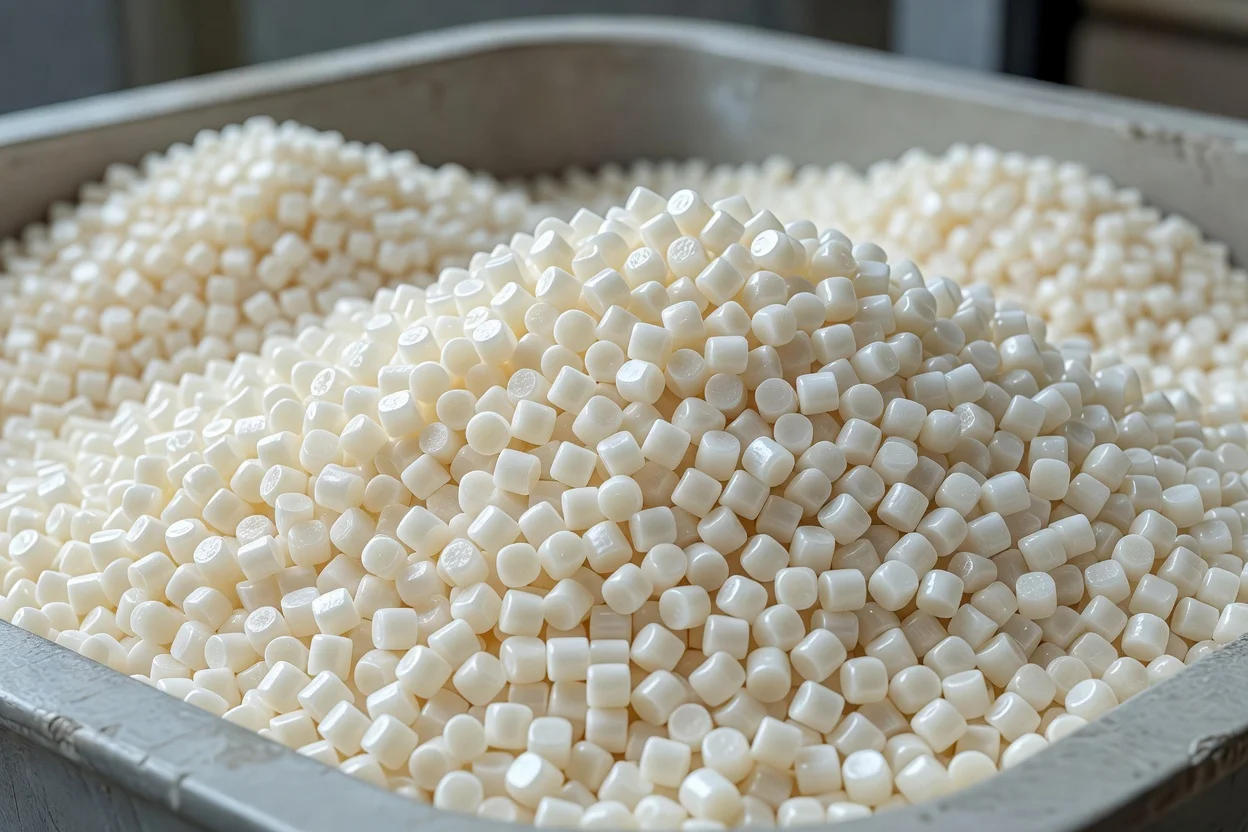
A typical production chain includes purification of feed gases, catalytic polymerization, recovery and drying of polymer, pelletization, and quality control before downstream compounding or conversion. Some literature notes that reactor flake or powder is often washed, dried, and extruded into pellets for commercial handling.
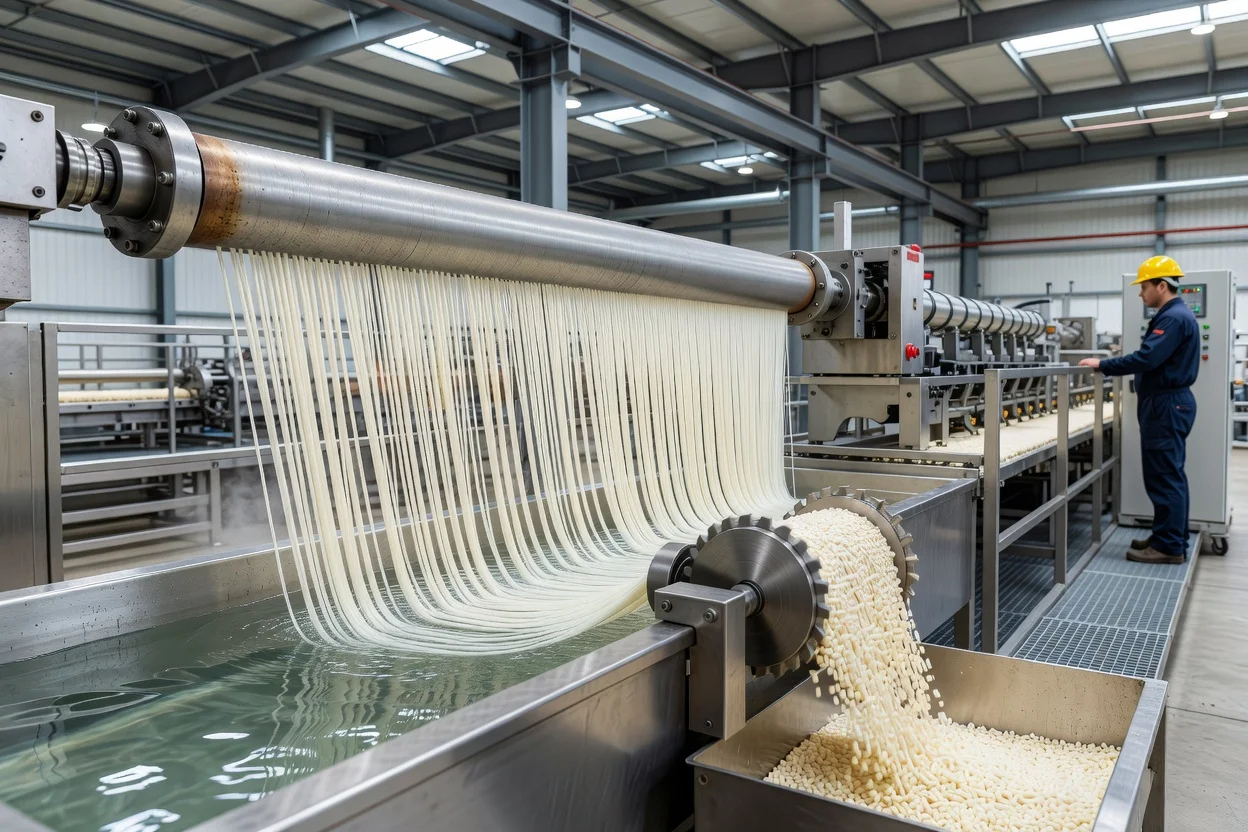
Because process conditions must preserve the alternating structure and control residual catalyst, polyketone production is technically more demanding than commodity polyolefin manufacture. The reward for that complexity is a resin that can compete with higher-priced engineering plastics in selected performance niches.
Applications and End-Use Markets
Polyketone is used where a combination of chemical resistance, wear performance, barrier behavior, and dimensional stability matters more than ultra-high-temperature capability.
Major application sectors
| Sector | Typical uses | Usual grade/process fit |
|---|---|---|
| Automotive | Fuel system parts, connectors, clips, radiator end tanks, fluid-handling components, gears, and housings. | Injection-molded general-purpose or reinforced grades with low warpage and fuel resistance. |
| Oil and gas | Pipe liners, seals, corrosion-resistant components, drilling-related parts. | Chemical-resistant grades and extrusion or molding compounds. |
| Water management | Water meters, filtration parts, valves, pump housings, pipe and tube applications. | Injection molding and extrusion grades with hydrolysis resistance. |
| Electrical and electronics | Switches, connectors, housings, gears, cable-related parts. | Dimensional-stable molding grades with flame-retardant formulations where required. |
| Industrial machinery | Bearings, bushings, gears, wear strips, conveyor components, rail fasteners, seals. | Low-friction, wear-resistant grades; sometimes filled or lubricated compounds. |
| Films and packaging | Barrier films, food-related films, protective layers, coatings, membranes. | Extrusion grades; often multilayer designs for optimized barrier. |
| Medical and food-contact | Housings, device components, fluid-contact parts, selected approved applications. | Biocompatibility-aware grades and process validation. |
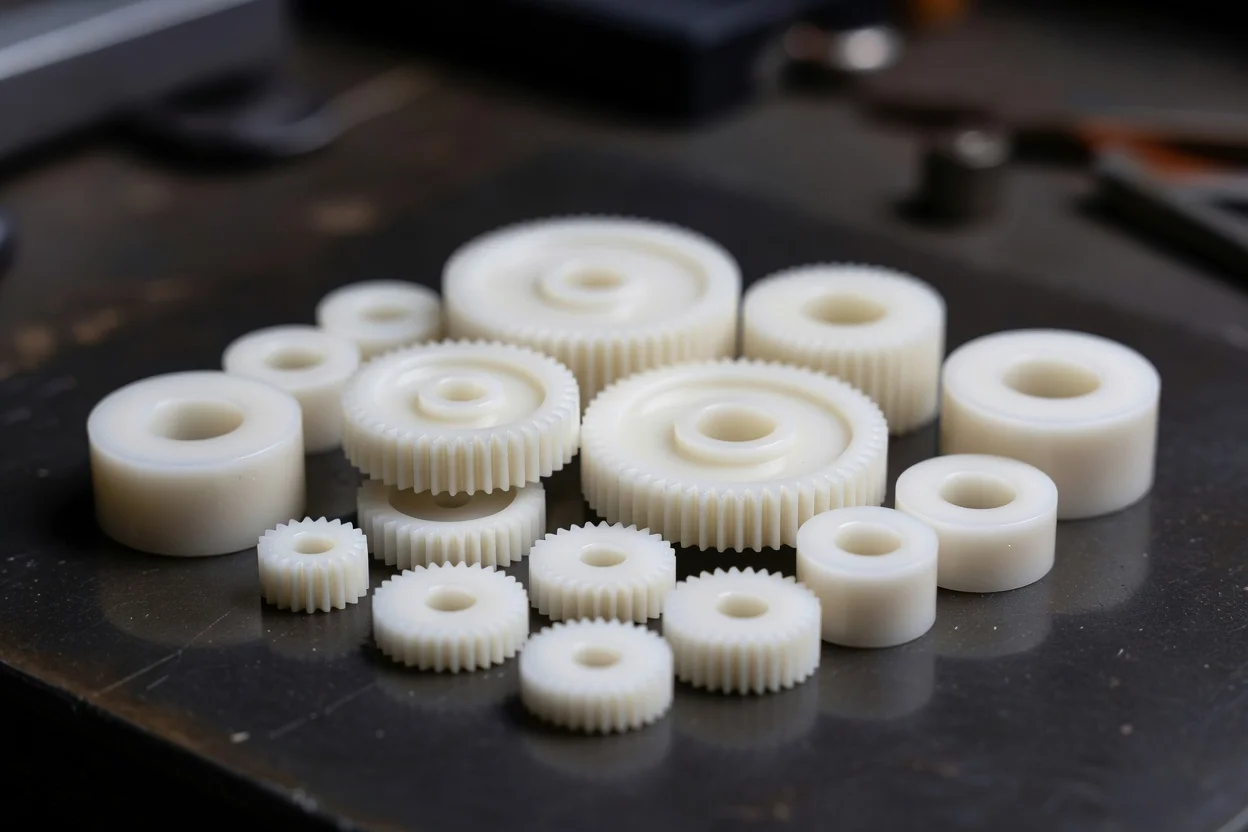
A useful rule of thumb is that polyketone often replaces PA, POM, or some PBT grades where moisture sensitivity, solvent attack, or wear noise create problems. In tribological applications, its low friction and abrasion resistance support long service life in gears and sliding parts.
One relatively poor-fit use is extreme long-term high-temperature service, where aromatic high-performance polymers such as PEEK-class materials retain more capability. Polyketone can still serve in moderately elevated temperatures, but it is not a substitute for top-tier heat-resistant engineering plastics in aerospace- or engine-adjacent continuous-use environments.
Environmental and Sustainability Aspects
Polyketone is often discussed as a lower-toxicity and potentially lower-impact engineering resin because it incorporates carbon monoxide into a useful product stream and can deliver long service life through wear and chemical resistance. Its low moisture uptake can also reduce the need for overdesign or replacement in humid service, which is a practical sustainability advantage through durability.
At the same time, environmental assessment should remain balanced:
- It is not inherently bio-based in mainstream commercial production.
- Its climate footprint depends on the origin of ethylene and carbon monoxide, catalyst efficiency, processing energy, and the durability of the finished part.
- Like many engineering thermoplastics, it can be mechanically recycled where collection streams, part cleanliness, and formulation control make this practical, but mixed-material assemblies remain a challenge.
Research cited in recent literature has explored recyclable polyketone composites, indicating continuing interest in circular design and reprocessable reinforced systems. This is strategically important because reinforced engineering plastics often face higher end-of-life barriers than unfilled resins.
A concrete formulation example illustrates how additives affect performance: glass fiber reinforcement can raise stiffness and heat deflection temperature, but it may reduce impact toughness and increase tool wear; the mechanism is straightforward load transfer from matrix to fiber, which improves modulus but can embrittle the part if overfilled. Another common approach is lubricant or PTFE-type wear modification at low dosage to reduce friction in gears and bushings, where the mechanism is formation of a low-shear transfer film at the contact interface.
Economic and Global Market Impact
The polyketone market remains smaller than commodity plastics and established engineering resins, but it has carved out a valuable position in specialty technical applications where total lifecycle performance matters more than resin price alone. Its business case is strongest where one resin can solve multiple problems simultaneously: moisture sensitivity, chemical attack, wear, fuel permeability, and molding stability.
Hyosung is the most visible global producer and brand owner in this segment, with POKETONE serving as the commercial benchmark and the main reference point for market education. Distributor and compounder networks, including major engineering plastics suppliers, have helped widen access to polyketone through standard conversion channels and application support.
Market demand is closely linked to:
- Automotive lightweighting and fluid management
- Industrial wear-part replacement
- Water infrastructure and metering
- Fuel and chemical resistance requirements
- Barrier film and tubing niches
Because the material occupies a niche between commodity plastics and ultra-high-performance polymers, pricing, availability, and qualification cycles strongly influence adoption. Where design teams can justify material substitution based on extended life or reduced failure risk, polyketone can be cost-competitive on a system basis even if the resin itself is premium-priced.
Current Challenges and Innovations
Several technical and commercial challenges continue to shape polyketone development:
- Limited brand diversity and supply concentration compared with polyamide or polypropylene markets.
- Need for broader processing data across extrusion, blow molding, additive manufacturing, and fiber applications.
- Adhesion and surface treatment requirements in coatings, printing, and bonding applications.
- Property trade-offs in filled grades, especially impact retention versus stiffness.
Innovation is occurring in several directions:
- Blends and composites to tailor stiffness, flame behavior, and wear.
- Membranes and micro/nanofibers for filtration and functional separation uses.
- Fiber-reinforced recyclable systems that seek to preserve performance while improving circularity.
- Additive manufacturing formulations that adapt the material to newer production routes.
Processing improvements remain important because polyketone’s value depends not only on intrinsic resin properties but also on how reliably it crystallizes, flows, welds, and shrinks in production.
Future Outlook
Polyketone is likely to remain a specialty engineering resin rather than a mass commodity plastic, but that position may prove durable if the material continues to demonstrate clear advantages in fuel resistance, wear, moisture stability, and barrier performance. Its strongest future prospects lie in applications where material failure is expensive, service environments are aggressive, and dimensional stability is critical.
Future growth is most plausible in:
- Automotive fluid systems, including electric and hybrid vehicle components
- Water-contact and filtration equipment
- Industrial wear parts
- Barrier films and multilayer packaging
- Sustainable composites and recyclable high-performance parts
Longer term, commercial success will depend on whether producers can expand grade portfolios, diversify supply, and strengthen circular-economy narratives without overstating environmental claims. If that balance is achieved, polyketone can continue to serve as a technically differentiated bridge between conventional engineering plastics and the more expensive high-performance polymer segment.
Summary
Polyketone is a semi-crystalline engineering thermoplastic valued for its unusual combination of toughness, chemical resistance, low moisture absorption, wear performance, and barrier properties. Its commercial identity was established by POKETONE, and its main markets today include automotive, oil and gas, water management, electrical components, industrial wear parts, and selected film and packaging uses.
Its most important limitations are moderate heat resistance relative to top-tier high-temperature polymers, surface-treatment needs in bonding or printing, and dependence on specialized catalytic production and concentrated supply chains. Even so, polyketone remains a strategically important material wherever engineering plastics must resist fuels, solvents, humidity, and wear while still processing efficiently in standard industrial equipment.
References
- •
Polyketones (PK): Properties, areas of application and processing. (2022, August 18). K.D. Feddersen.Link
- •
Polyketones: Synthesis and applications. (2017, November 15). Wiley Online Library.Link
- •
POKETONE (Polyketone) What is it? (n.d.). Polysource.Link
- •
POKETONE (Polyketone) What is it? (n.d.). Polysource.Link
- •
Polyketone industrial applications: Comprehensive analysis of.... (n.d.). Eureka PatSnap.Link
- •
Polyketone: Properties & applications guide. (2026, March 23). Scribd.Link
- •
Progresses of Polyketone materials: Blends and composites. (n.d.). Sci-Hub.Link
- •
Polyketones. (n.d.). Machine Design.Link
- •
POKETONE. (n.d.). Poketone.Link
- •
Polyketone (POK): Next-Gen engineering polymer for.... (2025, November 20). Salesplastics.Link
- •
POKETONE. (2011, October 1). Hyosung Chemical.Link
- •
PK plastic. (n.d.). Ensinger.Link
- •
HYOSUNG POLYKETONE: POKETONE. (2023, October 5). Poketone.Link
- •
POKETONE™ Polyketone (PK) properties and applications. (2024, November 1). Manuals Plus.Link
- •
Polyketon solves problems where others fail. (2023, February 16). AKRO-PLASTIC.Link
- •
Polyketone solvent resistant properties: Advanced analysis and.... (2026, April 24). Eureka PatSnap.Link
- •
Polyketone: Comprehensive analysis of structure, properties, and.... (n.d.). Eureka PatSnap.Link
- •
Polyketone industrial material: Comprehensive analysis of.... (n.d.). Eureka PatSnap.Link
- •
POK. (n.d.). Hyosung USA.Link
- •
Polyketone: Properties and limitations. (2018, September 2). LinkedIn.Link
- •
Synthesis, characterization and application of high adsorption.... (2022, September 29). Nature.Link
- •
Polyketone engineering plastic: Comprehensive analysis of.... (n.d.). Eureka PatSnap.Link
- •
How Polyketone resin works — In one simple flow (2025). (2025, December 16). LinkedIn.Link
- •
[PDF] Hyosung Polyketone. (n.d.).Link
- •
Polyketone (PK) resin products. (n.d.). Nexeo Plastics.Link
- •
Polyketone vs PEEK. (2022, January 8). CNC Plastics.Link
- •
BuzzingBiz - Polyketone market by application. (2025, January 28).Link
- •
Polyketone sheet: Comprehensive analysis of properties.... (n.d.). Eureka PatSnap.Link
- •
KR100668572B1 - Polyketone and its manufacturing method. (2002, December 24). Google Patents.Link
- •
Facile fabrication and characterization of aliphatic polyketone.... (2020, December 24). RSC Publishing.Link
- •
KR100652073B1 - Method of manufacturing polyketone. (2005, December 29). Google Patents.Link
- •
Polyketone powder: Advanced material properties.... (n.d.). Eureka PatSnap.Link
- •
Manganese-catalysed synthesis of polyketones using hydrogen-borrowing approach. (n.d.). ChemRxiv.Link
- •
Method of manufacturing polyketone. (2005, December 30). Google Patents.Link
- •
폴리케톤의 제조방법. (2006, December 28). Google Patents.Link
- •
폴리케톤 제조방법. (2015, October 16). Google Patents.Link
- •
Development history and modification methods of polyketone resin.... (2024, May 8). Gudmould.Link
- •
How Polyketone polymers improve gear performance. (2018, December 15). Gear Solutions.Link
- •
Thermally stable and highly recyclable carbon fiber-reinforced.... (n.d.). ScienceDirect.Link
- •
Polyketone injection moulding. (2025, June 7). Stephens Plastic Mouldings.Link
- •
New Polyketone-based material for additive manufacturing. (2023, October 17). PlasticsToday.Link
- •
Polyketones market size 2026 | Automotive, electrical & industrial.... (2025, April 19). Prismane Consulting.Link