
Introduction
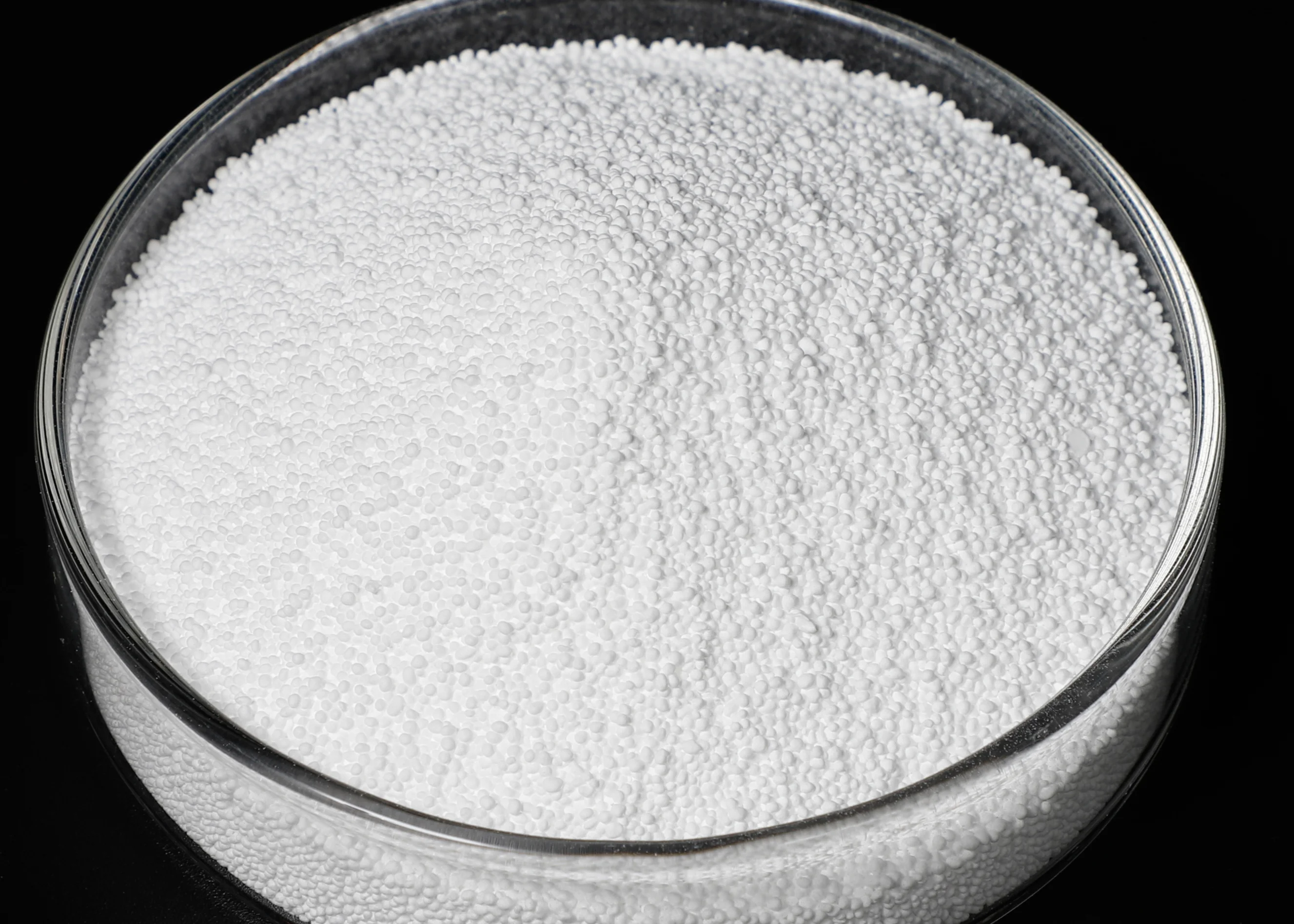
Polytetrafluoroethylene (PTFE) is a high-performance fluoropolymer best known for its extraordinary chemical inertness, very low friction, high thermal stability, and non-stick surface. It is the polymer most closely associated with the trade name Teflon, and it occupies a distinct position in the plastics industry because its combination of properties is difficult to replicate with standard engineering thermoplastics.
PTFE was discovered in 1938 by Roy J. Plunkett during fluorocarbon research, and its commercial importance grew rapidly once its unique resistance to heat and aggressive chemicals became recognized. Today, PTFE serves in corrosion-resistant linings, seals, gaskets, bearings, cable insulation, laboratory and semiconductor components, medical devices, and non-stick release surfaces.
From a materials-science perspective, PTFE is a fully fluorinated polymer built from tetrafluoroethylene units, with carbon atoms shielded by fluorine atoms along the backbone. That structure underpins its low surface energy, very low coefficient of friction, and exceptional resistance to chemical attack, while also creating processing constraints and some mechanical trade-offs that limit its use in load-bearing or high-precision molded parts without modification.
In the wider plastics ecosystem, PTFE is significant not only as a premium raw material but also as a benchmark material for fluoropolymers, with relevance to chemical processing, electronics, aerospace, medical technology, and high-specification industrial equipment. Sustainability debates around PTFE center on fluoropolymer persistence, emissions control in manufacture, and end-of-life handling, while current innovation is focused on cleaner production, safer processing, filled grades, and more efficient recycling routes where technically feasible.
History and Development
PTFE was first identified in 1938, and its early development was closely tied to fluorocarbon chemistry and wartime industrial applications. Its unusual slipperiness, resistance to corrosion, and ability to function at high temperatures made it valuable first in military and industrial systems, then in consumer cookware and a broad range of technical applications.
Commercial PTFE expanded as manufacturers learned to exploit its powder-processing behavior, dispersion-coating capability, and compatibility with fillers such as glass, carbon, graphite, and bronze to improve wear resistance and dimensional stability. Over time, PTFE became the reference material for chemically demanding service conditions and a foundational material for expanded PTFE membranes, filled compounds, and machined components.
Chemical Structure and Key Properties
PTFE is a linear, semi-crystalline, fully fluorinated homopolymer of tetrafluoroethylene. Its repeat unit is often written as plain-text (CF2-CF2)n, reflecting the complete replacement of hydrogen by fluorine.
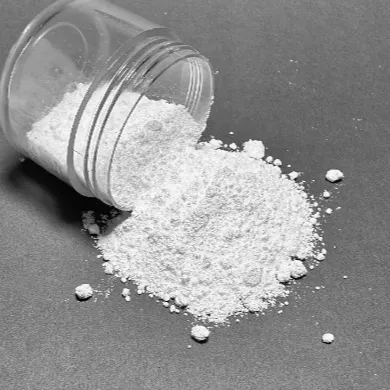
The carbon-fluorine bond strength and the shielding effect of fluorine atoms produce a polymer surface with unusually low chemical reactivity and very low surface energy. This is the basis for PTFE’s non-stick behavior, low wetting, and resistance to attack by most acids, bases, oxidants, and solvents.
Key properties
| Property | Typical characteristic | Practical implication |
|---|---|---|
| Thermal stability | Service up to about 260 C; melting point around 327 C | Suitable for hot, aggressive environments |
| Chemical resistance | Resistant to most chemicals and solvents | Used in linings, seals, and fluid handling |
| Friction | Extremely low coefficient of friction | Useful in bearings, slide surfaces, and wear parts |
| Electrical behavior | Excellent dielectric strength and insulation | Used in wire, cable, and electronics |
| Surface energy | Very low | Produces non-stick and release performance |
Important limitations
- Poor creep resistance → PTFE can deform slowly under sustained load because its chains slide easily and the material is relatively soft → filled grades, backing structures, and design changes are used to improve dimensional stability.
- Low wear resistance in unfilled form → the same low-friction surface that is advantageous in sliding contact can wear under abrasive or high-load conditions → fillers such as glass fiber, carbon fiber, graphite, or bronze are added to increase wear performance.
- Difficult melt processing → PTFE has extremely high melt viscosity and cannot be processed like ordinary melt-extruded thermoplastics → powder sintering, paste extrusion, dispersion coating, and machining are commonly used instead.
- Poor adhesion to other materials → very low surface energy makes bonding difficult → surface etching, mechanical anchoring, or designed mechanical retention is used before coating or lamination.
Production Processes and Raw Feedstocks
PTFE is produced by free-radical polymerization of tetrafluoroethylene, typically using specialized fluorochemical feedstocks and controlled emulsion or suspension processes. The manufacturing route is technically demanding because tetrafluoroethylene is a hazardous monomer and because the resulting polymer is not readily melt-processable.
The typical industrial sequence is:
- Production of tetrafluoroethylene from fluorochemical precursor streams.
- Polymerization into PTFE resin.
- Conversion into powder, dispersion, fine powder, or modified grades.
- Shaping by compression molding, sintering, paste extrusion, skiving, machining, or coating.
PTFE dispersions are important for coatings, while fine powder grades are used in paste extrusion for tape, tubing, and thin-wall products. Expanded PTFE, often abbreviated ePTFE, is produced by stretching PTFE under controlled conditions to create a microporous structure used in membranes, filtration media, and medical products.
Applications and End-Use Markets
PTFE is used where multiple severe service demands coincide, especially heat, corrosion, low friction, and electrical insulation. The material is often selected not because it is the strongest polymer, but because it performs reliably in environments where alternatives fail.
Major end-use sectors
| Sector | Typical PTFE form or grade | Common uses |
|---|---|---|
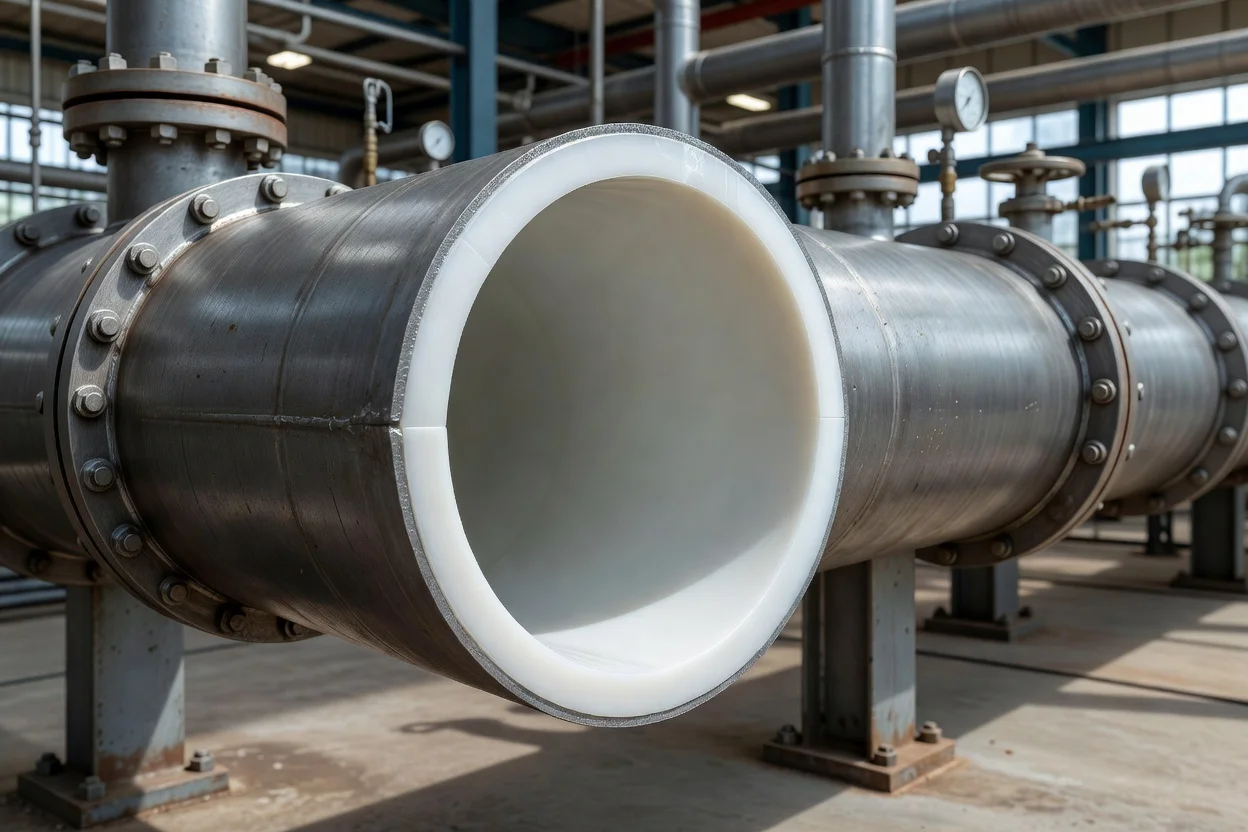
| Chemical processing | Virgin or filled PTFE; lined components | Pipe linings, vessel linings, valves, pumps, gaskets |
| Electrical and electronics | High-purity PTFE, wire-grade PTFE | Cable insulation, high-frequency components, connectors |
| Industrial machinery | Filled PTFE, machined parts | Bearings, bushings, slide plates, wear rings |
| Food processing | Virgin, compliant PTFE coatings | Release surfaces, scrapers, conveyor parts, seals |
| Medical and pharmaceutical | High-purity PTFE and ePTFE | Catheters, implants, grafts, lab and cleanroom components |
| Aerospace and transport | Reinforced PTFE, cable and seal grades | Hydraulic seals, insulation, bearing parts, fluid systems |
| Filtration and textiles | ePTFE membranes | Breather membranes, filtration media, waterproof breathable textiles |
Typical application-fit logic
- Pipe and vessel linings are a strong fit because PTFE resists corrosive media and reduces fouling.
- Bearings and bushings are a strong fit because PTFE provides dry lubrication and low friction, especially at low to moderate load and speed.
- Wire and cable insulation is a strong fit because of PTFE’s dielectric strength and heat resistance.
- Non-stick cookware coatings are a strong fit because PTFE’s low surface energy prevents adhesion and eases cleaning.
- Load-bearing structural parts are a relatively poor fit in unfilled form because PTFE creeps and wears more readily than many engineering plastics → filled compounds or alternative polymers are often preferred.
Environmental and Sustainability Aspects
PTFE is chemically durable, which is a performance advantage but also a sustainability concern because durable fluoropolymers can persist in the environment if not properly managed. The main environmental questions concern manufacturing emissions, fluorochemical handling, and end-of-life collection rather than rapid service degradation in use.
Recyclability and end of life
- Mechanical recycling is possible in some clean, segregated industrial streams, but it is limited by contamination, product complexity, and the high-value niche in which PTFE is used.
- Regrind and scrap recovery are more practical in machining and component fabrication than in mixed consumer products.
- Thermal treatment and incineration require stringent controls because fluorinated materials can generate hazardous byproducts if not properly managed.
Bio-based alternatives and substitution
There are no true bio-based drop-in replacements that match PTFE’s full combination of chemical inertness, thermal resistance, and frictional performance. In many uses, however, engineers can substitute with lower-impact materials when the service environment is less severe, such as PE, PP, PVDF, PEEK, silicone, or coated metals, depending on the application.
Carbon footprint and process impact
PTFE is an energy- and chemistry-intensive material relative to commodity plastics, and its sustainability profile is shaped by the upstream fluorochemical chain. As a result, industry efforts increasingly focus on energy efficiency, improved emissions capture, process optimization, and longer service life through better compound design, since durability can offset replacement frequency in demanding applications.
Economic and Global Market Impact
PTFE is a specialty polymer with a much smaller volume market than polyethylene or polypropylene, but it has high strategic value because of its critical role in corrosive, high-temperature, and high-purity systems. Its economics are shaped by fluorochemical feedstock costs, regulatory pressure, capacity concentration, and demand from high-specification sectors such as chemical processing, semiconductors, electronics, and medical devices.
Leading global suppliers and technology holders have historically included Chemours, Daikin, 3M in fluoropolymer-related businesses, AGC, Solvay, Arkema, and several regional fluorochemical producers, with market position often tied to purification capability, application engineering, and the ability to supply consistent grades for regulated industries. In PTFE markets, customer qualification and long-term supply reliability can matter as much as price because replacement parts and lining systems are often mission-critical.
Current Challenges and Innovations
The principal technical challenge for PTFE is the combination of excellent surface performance with mediocre structural performance in unfilled form. That balance has driven sustained development in filled compounds, expanded PTFE structures, and composite solutions.
Current innovation themes
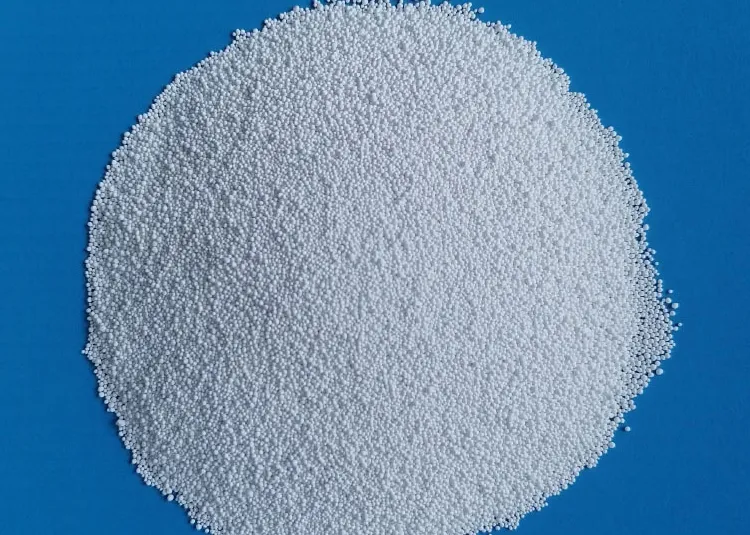
- Filled PTFE compounds use glass fiber, carbon fiber, graphite, bronze, or molybdenum disulfide to improve wear resistance, creep resistance, or thermal conductivity.
- ePTFE membranes are being refined for filtration, medical devices, and breathable barriers where microporosity is the functional asset.
- High-purity grades continue to improve for semiconductor and pharmaceutical environments, where extractables and contamination control are critical.
- Safer and cleaner fluorochemical production is a major industry priority, driven by regulatory scrutiny and corporate sustainability goals.
A practical formulation example is PTFE filled with about 25 percent glass fiber, which is often used to reduce creep and improve dimensional stability in seals, seats, and structural wear parts. Another example is carbon- or graphite-filled PTFE, which improves wear performance and, in some formulations, helps dissipate heat in sliding contact.
Future Outlook
PTFE is likely to remain indispensable in demanding industrial niches where few materials can combine corrosion resistance, thermal stability, and low friction at the same time. Demand is expected to remain strongest in chemical processing, electronics, medical technology, precision machinery, and high-reliability sealing applications.
Future development is likely to emphasize:
- lower-emission fluoropolymer manufacturing,
- more efficient filled and reinforced compounds,
- longer-life components that reduce replacement frequency,
- improved recoverability of clean scrap,
- and tighter compliance in food, medical, and semiconductor applications.
At the same time, PTFE will continue to face substitution pressure in applications where its extreme properties are not essential, especially as manufacturers seek lower-cost or lower-complexity alternatives. Its long-term role in plastics is therefore likely to be concentrated but durable: a premium raw material reserved for service conditions where performance margin matters more than commodity economics.
Summary
PTFE is a fully fluorinated, high-performance fluoropolymer whose defining features are chemical inertness, very low friction, high thermal stability, and excellent electrical insulation. Its structure gives it exceptional utility in harsh industrial environments, but also creates limitations in creep, wear, adhesion, and melt processing that shape how it is compounded and fabricated.
As a result, PTFE remains a cornerstone material for seals, linings, bearings, cable insulation, medical devices, and non-stick surfaces, while ongoing innovation focuses on filled compounds, ePTFE membranes, cleaner production, and more responsible end-of-life management.
References
- •
Polytetrafluoroethylene. (2001, September 28). Wikipedia.Link
- •
Teflon (PTFE) explained: Properties, applications, and best practices. (2025, November 5). Fictiv.Link
- •
Poly(tetrafluoroethylene): Properties and applications. (2026, August 27). ChemicalBook.Link
- •
Polytetrafluoroethylene (PTFE): Properties, processing, and applications. (n.d.). Matmatch.Link
- •
PTFE: Properties, benefits & uses. (2021, December 15). Adtech.Link
- •
Polytetrafluoroethylene (PTFE): How to select the right grade? (2025, July 8). SpecialChem.Link
- •
General. (2026, May 8). PTFE Industries.Link
- •
Polytetrafluoroethylene (PTFE). (2025, September 23). Britannica.Link
- •
Polytetrafluoroethylene. (2014, June 29). PubChem. National Institutes of Health.Link
- •
Poly(tetrafluoroethene) (polytetrafluoroethylene) and other fluoropolymers. (2018, November 28). Essential Chemical Industry.Link
- •
PTFE / Teflon applications: Seals, liners and more. (2026, May 8). Ready Plastics.Link
- •
Pexco's PTFE applications across industries. (2026, April 17). Pexco.Link
- •
Top 5 applications of PTFE. (2022, June 21). PTFE Machinery.Link
- •
What is PTFE material? Properties, advantages.... (2026, January 5). LangHe Industry.Link
- •
PTFE uses: Applications, industries & why it’s the best choice. (2026, April 23). Tianyouseals.Link
- •
PTFE or Teflon uses, properties & limitations. (2023, May 23). Fluorocarbon.Link
- •
Poly(tetrafluoroethylene). (n.d.). ScienceDirect.Link
- •
PTFE applications across industries: From aerospace to.... (2026, April 2). Liantuo PTFE.Link
- •
PTFE overview introduction – Uses, features & benefits. (n.d.). National PTFE.Link
- •
The properties and advantages of PTFE. (2016, July 19). Fluorotec.Link
- •
Polytetrafluoroethylene - PTFE. (2024, May 16). AZoM.Link
- •
All about PTFE (polytetrafluoroethylene) Teflon explained. (2023, April 6). Xometry.Link
- •
An introduction to PTFE and thin-walled catheter liners. (2017, September 14). AZoM.Link
- •
PTFE (Teflon) sheet material overview. (n.d.).Link
- •
What is PTFE? (2026, May 7). Fluorotec.Link
- •
Top 7 industries that use PTFE. (2022, July 22). Smartech Online.Link
- •
Teflon: Properties and uses of PTFE. (2026, January 27). Scribd.Link
- •
What is polytetrafluoroethylene? (PTFE). (2016, February 3). Fluorocarbon Group.Link
- •
Polytetrafluoroethylene (PTFE). (2013, May 6). EBSCO.Link
- •
Polytetrafluoroethylene. (2025, January 11). ScienceDirect.Link
- •
PTFE applications. (n.d.). Polyfluor.Link
- •
Learning about the PTFE applications. (2023, October 19). Cannon Gasket.Link
- •
Polytetrafluoroethylene. (2015, October 29). ScienceDirect.Link
- •
Applications of polytetrafluoroethylene (PTFE) in medical treatments. (2025, July 24). Stanford Advanced Materials.Link