
Introduction
Measuring & Testing Equipment refers to the instruments, systems, and procedures used to quantify physical, electrical, mechanical, thermal, and chemical properties so that parts, machines, and processes can be verified against defined specifications. In the plastics processing industry, this equipment is essential for quality control, process validation, calibration, materials characterization, and regulatory compliance across injection molding, extrusion, blow molding, thermoforming, compounding, and recycling operations.
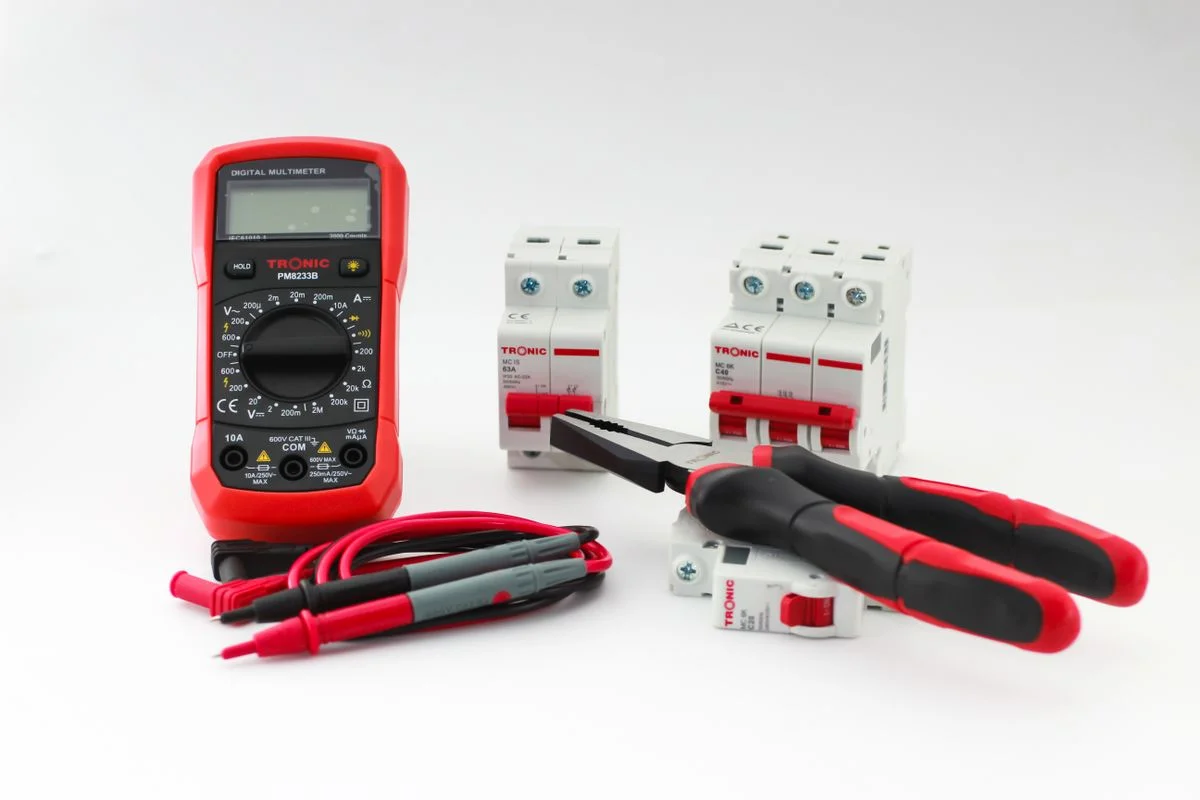
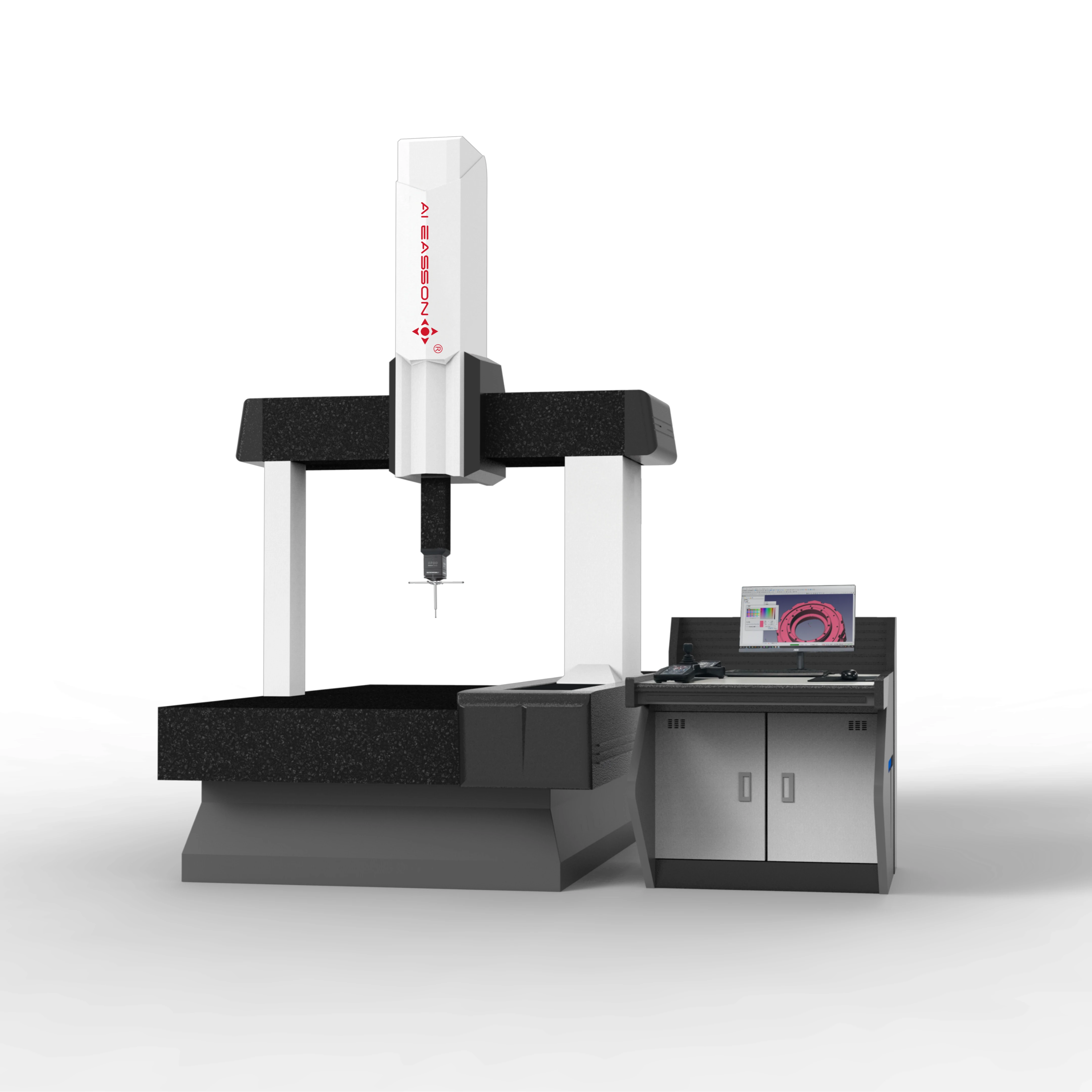
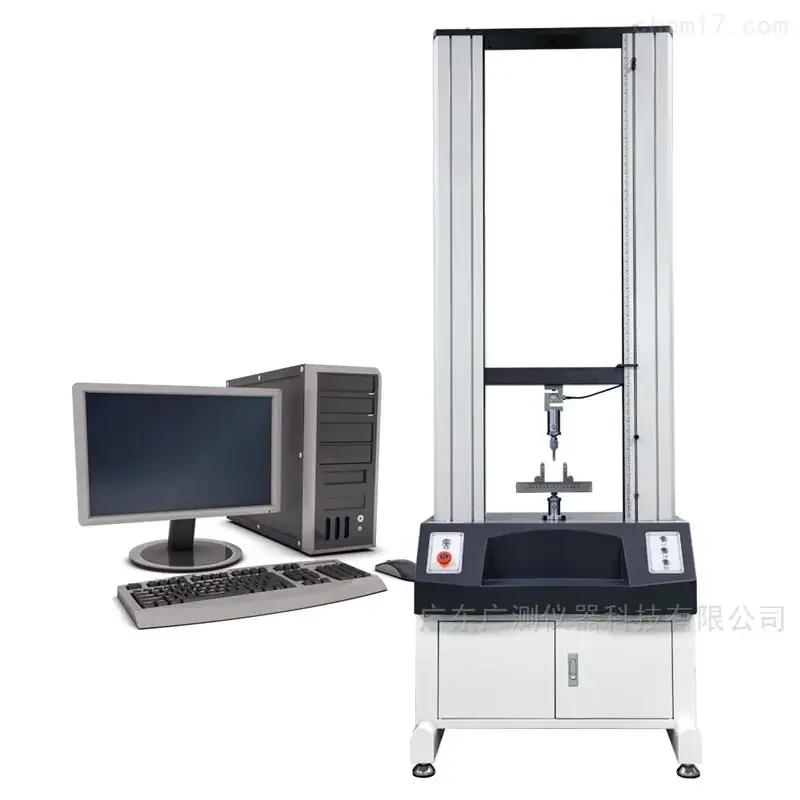
In plastics manufacturing, the term covers a wide range of tools, from dimensional metrology devices such as calipers, micrometers, coordinate measuring machines, and optical systems to mechanical test systems such as tensile testers, impact testers, hardness testers, and fatigue machines. It also includes process measurement devices used on production lines, such as pressure gauges, temperature sensors, flow meters, moisture analyzers, vibration meters, and electrical test instruments for control systems and drives.
The sector has evolved from simple analog gauges and manual laboratory testing into highly automated, software-driven systems that support statistical process control, digital traceability, and inline inspection. Current development is shaped by higher demand for tighter tolerances, greater material complexity, recycled-content verification, energy efficiency, and Industry 4.0 integration.
History and Development
Early industrial measurement relied on manual gauges, balances, thermometers, and basic mechanical testers to standardize production and verify conformity. As plastics became a major engineering material in the twentieth century, laboratories and factories increasingly adopted universal testing machines, melt-flow testers, viscometers, and precision dimensional tools to characterize resin behavior and finished parts.
A major milestone was the spread of automated electrical test equipment, which improved repeatability in electronics and later influenced machine control and sensor validation in plastics processing. Another important development was the rise of coordinate measuring machines and optical metrology, which enabled faster and more repeatable verification of molds, tooling, and molded parts with complex geometry.
A third milestone has been the integration of digital data acquisition, networked sensors, and software analytics into both laboratory and shop-floor testing. This has made it possible to connect measurement results directly to process control, predictive maintenance, and digital quality records.
Key Characteristics and Technical Overview
Measuring & testing equipment in plastics processing is defined by four engineering requirements: accuracy, repeatability, traceability, and environmental robustness. The most useful systems are not only precise but also suitable for the production environment, where vibration, temperature variation, dust, and operator variation can affect measurement quality.
Core measurement domains
- Dimensional measurement: length, thickness, diameter, flatness, concentricity, surface roughness, and warpage.
- Mechanical testing: tensile strength, elongation, flexural modulus, impact resistance, creep, fatigue, and hardness.
- Thermal testing: heat deflection, thermal stability, temperature profiling, and thermal cycling.
- Process monitoring: pressure, melt temperature, screw speed, torque, flow rate, humidity, and vibration.
- Electrical and control validation: voltage, current, resistance, signal integrity, frequency response, and insulation performance.
Typical performance ranges and practical benchmarks
- Granulator or regrind flake size: commonly around 6–12 mm for many pelletizing and recycling workflows, though size depends on rotor design, screen aperture, and material brittleness; finer control is used when downstream feeding or wash performance is critical.
- Residual moisture after centrifugal dewatering: often reduced to roughly 1–5% before thermal drying in PET and polyolefin recycling lines, depending on washer design and polymer type; lower moisture is especially important for hydrolysis-sensitive materials.
- Throughput: laboratory testers operate at specimen scale, while industrial inline systems range from tens of kg/h in small inspection or recycling subsystems to several t/h in large process and sorting lines.
- Rotor speed in size-reduction and sample-preparation systems: commonly in the hundreds to several hundred RPM, with higher-speed designs used for brittle materials and finer output control.
- Specific energy consumption: depends strongly on machine class; modern testing and measurement systems are generally low-energy consumers, while associated sample-preparation and inspection workflows can range from modest electrical loads in laboratories to substantially higher loads in continuous industrial lines.
Engineering features
- Sensors and transducers convert physical phenomena into electrical signals for recording and control.
- Data acquisition systems capture measurements at defined sampling rates, allowing trend analysis and defect detection.
- Calibration traceability ensures that results can be linked to recognized standards and certification frameworks.
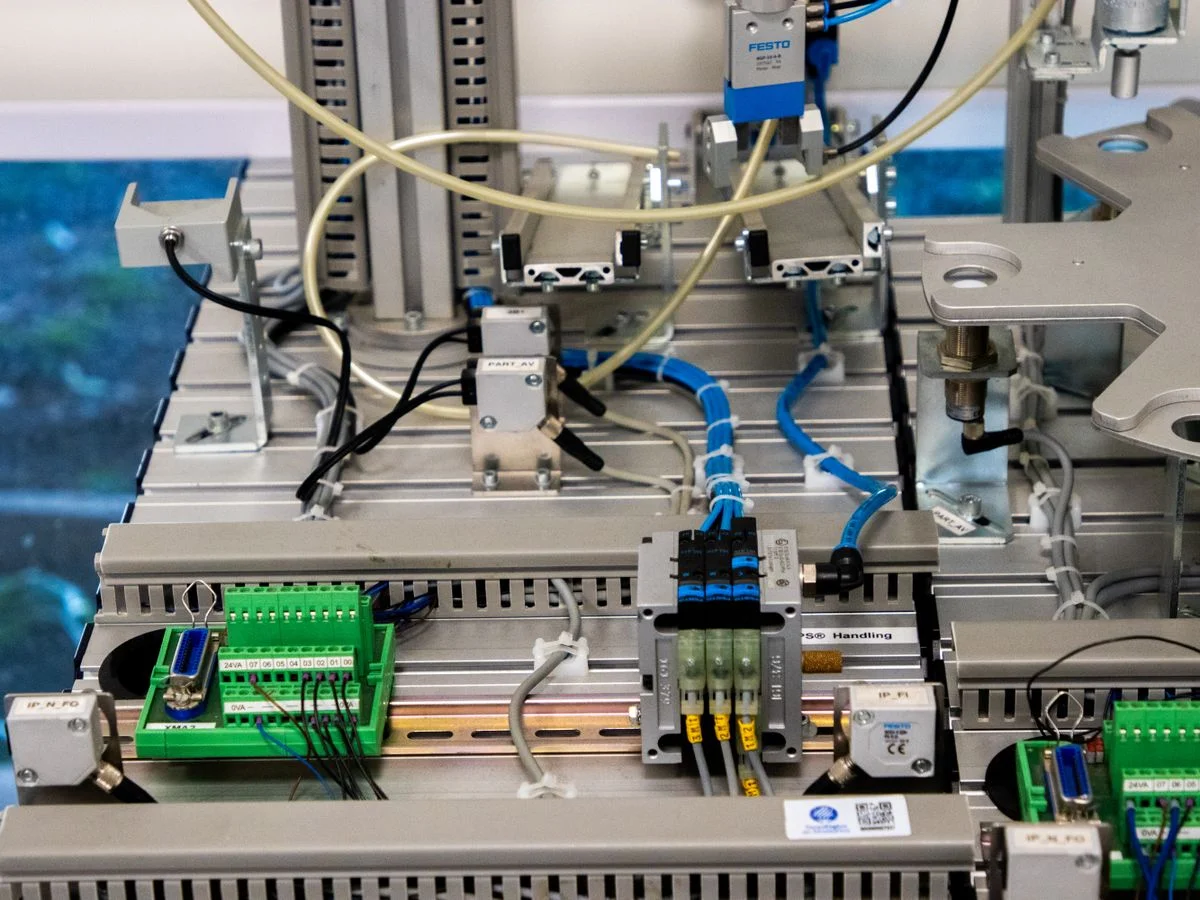
- Automation interfaces connect instruments to PLCs, MES platforms, and quality databases for closed-loop control.
Major Types and Variations
| Category | Common instruments | Main role in plastics processing |
|---|---|---|
| Dimensional metrology | Calipers, micrometers, height gauges, CMMs, optical comparators | Verifying part dimensions, mold accuracy, warpage, and tooling alignment |
| Mechanical testing | Tensile testers, impact testers, hardness testers, compression testers | Characterizing resin and finished-part performance |
| Thermal analysis | DSC, TGA, heat deflection equipment, thermal chambers | Assessing thermal stability, crystallinity, and service behavior |
| Process measurement | Pressure gauges, thermocouples, flow meters, moisture analyzers | Monitoring machine and line conditions in real time |
| Electrical test equipment | Multimeters, oscilloscopes, insulation testers, power analyzers | Validating drives, controls, heaters, sensors, and electronics |
| Inspection systems | Vision systems, laser scanners, X-ray, ultrasound, thickness gauges | Detecting defects, voids, contamination, and internal inconsistencies |
By deployment mode
- Laboratory equipment for standardized material and product testing.
- Inline equipment for continuous measurement during production.
- Offline inspection systems for sampling, certification, and forensic failure analysis.
- Portable instruments for maintenance, troubleshooting, and field calibration.
Applications and Uses in Plastics Processing
Injection molding
Injection molders use measuring and testing equipment to verify part dimensions, shrinkage, gate performance, warpage, and mechanical properties of molded components. Process sensors monitor melt temperature, cavity pressure, clamping force, and cycle consistency, which are decisive for repeatable quality.
Extrusion
Extrusion lines rely on thickness gauges, diameter measurement, melt pressure transducers, and temperature profiling to control pipes, profiles, films, and sheet. Mechanical and thermal testing of extrudates helps confirm long-term performance, especially for pressure pipe, cable insulation, and outdoor products.
Blow molding and thermoforming
These processes require inspection of wall thickness distribution, neck geometry, pinch-off quality, and package integrity. Leak testers, vision systems, and dimensional gauges are especially important for containers and thin-wall parts where defects can be subtle but functionally serious.
Compounding and recycling
Recycling lines depend heavily on moisture analyzers, contamination inspection, density and melt-flow testing, and particle-size monitoring to verify feedstock quality. In recycled polymer production, measuring equipment supports blending control, wash-line optimization, and consistency of regranulate properties.
Poor-fit use case
Measuring & testing equipment is a poor fit when a process needs only rough presence/absence checks and does not justify the cost or complexity of precision instrumentation; in such cases, a simple go/no-go fixture may be more economical than a CMM or full analytical setup.
Technological Innovations and Automation
Modern systems increasingly combine machine vision, laser metrology, robotic handling, and statistical process control to reduce operator dependence and improve repeatability. Automated test equipment is especially valuable where large sample volumes, short cycle times, or traceable documentation are required.
Notable trends include:
- Inline defect detection for scratches, contamination, voids, and dimensional drift.
- Closed-loop control linking measurement to machine settings such as temperature, pressure, and speed.
- Digital calibration records for audit readiness and lifecycle management.
- Remote diagnostics and predictive maintenance for test benches and production equipment.
Environmental and Sustainability Aspects
Measuring & testing equipment supports sustainability by reducing scrap, improving first-pass yield, and enabling more reliable use of recycled polymers. Better measurement of moisture, contamination, and melt behavior helps processors avoid energy-intensive rework and reject rates.
The main sustainability trade-offs are:
- Higher instrumentation energy use versus lower process waste.
- More extensive inspection versus greater throughput delay.
- Advanced sensors and software versus higher capital cost and electronic complexity.
In practice, the environmental value is strongest when measurement is integrated into process optimization rather than used only for end-of-line rejection.
Economic and Global Market Impact
The global test and measurement equipment market is large and continues to grow, reflecting demand from manufacturing, telecom, automotive, semiconductors, and healthcare. Recent market analyses place the market in the range of tens of billions of US dollars, with continued expansion expected through the 2030s.
For plastics processors, the economic significance is less about the standalone equipment market and more about what the equipment enables: lower scrap, faster qualification, fewer warranty claims, better process capability, and more reliable certification. Plants that serve automotive, medical, electrical, or packaging markets often treat measurement systems as strategic assets rather than optional accessories.
Current Challenges and Innovations
Key challenges include:
- Calibration drift and measurement uncertainty in harsh factory environments.
- Integration complexity between legacy machines and modern digital quality platforms.
- Testing recycled and bio-based polymers, whose variability can make standard material data less predictive.
- Balancing speed and accuracy in high-throughput production.
- Operator skill gaps, especially where advanced metrology and data interpretation are required.
Innovations are addressing these issues through self-checking sensors, smarter software, non-contact measurement, and better interoperability between instruments and plant systems.
Future Outlook
The future of measuring & testing equipment in plastics processing is likely to be defined by in-line intelligence, AI-assisted defect recognition, and tighter connection between metrology and process control. As processors move toward higher levels of automation, measurement systems will increasingly function as real-time decision tools rather than only as verification devices.
Demand is also expected to grow for systems that can validate recycled content, material consistency, and product safety under more complex regulatory and customer requirements. In this context, the most competitive measuring and testing platforms will combine precision, speed, traceability, and software integration in one workflow.
References
- •
Test & measurement: Complete guide to electronic test equipment. (2026, July 23). https://ydtparts.com/test-measurement/Link
- •
Understanding test and measuring instruments. (2025, March 9). https://nagman.com/blog/10-measuring-instruments-and-their-uses/Link
- •
Must know uses of test & measurement equipment. (2019, April 23). https://www.industryarc.com/industryarcblogs/posts/must-know-uses-of-test-measurement-equipmentLink
- •
Basic types of test and measurement equipment. (2025, January 21). https://www.projects.raahgroup.com/basic-types-of-test-and-measurement-equipment/Link
- •
Test and measurement equipment in the real world. (2025, October 1). https://www.linkedin.com/pulse/test-measurement-equipment-real-world-5-uses-youll-actually-wo1tfLink
- •
Test/measurement industry. (2023, May 12). https://oilgasindustryparts.com/industries/test-measurement-industry/Link
- •
List of electrical and electronic measuring equipment. (2011, January 14). Wikipedia. https://en.wikipedia.org/wiki/List_of_electrical_and_electronic_measuring_equipmentLink
- •
Jenis-jenis alat ukur. (2025, September 17). https://id.scribd.com/presentation/617524947/JENIS-JENIS-ALAT-UKURLink
- •
Electronic test equipment. (2003, July 20). Wikipedia. https://en.wikipedia.org/wiki/Electronic_test_equipmentLink
- •
Understanding test and measurement: Essential equipment for quality assurance. (2026, March 11). https://sarkinencalibrating.com/feeds/blog/test-measurementLink
- •
Electrical test instruments: Overview and uses. (2026, April 16). https://www.linkedin.com/posts/omar-bouameur-9059751b3_instrument-meters-electric-activity-7450461397685182464-UZcCLink
- •
Test & measurement equipment market. (2025, November 1). https://www.factmr.com/report/test-and-measurement-equipment-marketLink
- •
75 test equipment categories. (n.d.). https://us.metoree.com/lists/1203/Link
- •
10 types of measuring equipment. (2023, September 20). https://www.slideshare.net/slideshow/10-types-of-measuring-equipmentpptx/261197040Link
- •
What are measurement and test instruments? (2024, January 6). https://petaelektronik.com/en/uncategorized/what-are-measurement-and-test-instruments/Link
- •
141 measuring equipment categories. (n.d.). https://us.metoree.com/lists/1210/Link
- •
Why test and measurement equipment is more important than ever. (2020, August 27). https://www.supplychainconnect.com/supply-chain-technology/article/21140259/why-test-and-measurement-equipment-is-more-important-than-everLink
- •
Measuring instruments facts, list & uses - lesson. (n.d.). https://study.com/academy/lesson/scientific-measurement-instruments-types-uses.htmlLink
- •
Understanding test measurement world: Standards, properties, and applications. (2026, February 28). https://www.alibaba.com/product-insights/test-measurement-world.htmlLink
- •
Test equipment. (2012, September 9). Wikipedia. https://en.wikipedia.org/wiki/Test_equipmentLink
- •
The importance of test & measurement equipment. (2024, July 2). https://www.emcorenclosures.com/blog/the-importance-of-test-and-measurement-equipment/Link
- •
List of measuring devices. (2025, September 28). https://www.scribd.com/document/259032944/List-of-Measuring-DevicesLink
- •
Top 10 electronic test equipment every engineer should know. (2025, November 10). https://www.keysight.com/used/us/en/knowledge/guides/top-10-electronic-test-equipment-for-engineersLink
- •
Why is test and measurement equipment essential? (n.d.). https://tt-ms.com/why-is-test-and-measurement-equipment-essential/Link
- •
List of measuring instruments. (2001, October 23). Wikipedia. https://en.wikipedia.org/wiki/List_of_measuring_instrumentsLink
- •
The role of top precision measuring tools and their applications. (2025, July 15). https://fametrology.com/florida-metrology/blog/the-role-of-top-precision-measuring-tools-and-their-applications/Link
- •
Test & measurement design resources. (2026, January 8). https://www.ti.com/applications/industrial/test-measurement/overview.htmlLink
- •
30+ measuring instruments for mechanical engineers. (2025, December 11). https://gaugehow.com/blog/30-measuring-instruments-for-mechanical-engineersLink
- •
Category: Measuring instruments. (2023, December 2). Wikipedia. https://en.wikipedia.org/wiki/Category:Measuring_instrumentsLink
- •
Test and measurement equipment. (n.d.). https://www.labcompare.com/Test-and-Measurement-Equipment/Link
- •
Measuring instruments. (2026, August 17). https://www.pce-instruments.com/english/measuring-instruments-kat_40035.htmLink
- •
Test and measurement equipment market report 2026. (n.d.). https://www.marketsandmarkets.com/Market-Reports/test-measurement-equipment-market-116452716.htmlLink
- •
Regional insights. (2026, June 9). https://www.grandviewresearch.com/industry-analysis/test-measurement-equipment-market-reportLink
- •
Top 10 electronic test equipment every engineer should know. (2025, November 10). https://www.keysight.com/used/rs/en/knowledge/guides/top-10-electronic-test-equipment-for-engineersLink
- •
Measuring instruments - an overview. (n.d.). https://www.sciencedirect.com/topics/social-sciences/measuring-instrumentsLink
- •
Explore the global test and measurement equipment market. (2026, April 13). https://www.futuremarketinsights.com/reports/test-and-measurement-equipment-marketLink
- •
Measurement tools & equipment. (n.d.). https://us.misumi-ec.com/vona2/fs_processing/T0300000000/Link
- •
Measuring instruments. (2018, June 1). https://www.industrial-needs.com/measuring-instruments.htmLink