
Introduction
Measuring and testing equipment for electrical properties comprises the instruments used to quantify voltage, current, resistance, capacitance, frequency, power, insulation quality, waveform behavior, and related parameters in electrical and electronic systems. In plastics processing machinery, this equipment is essential for validating control cabinets, heaters, drives, sensors, motors, cable assemblies, grounding systems, and safety circuits, where electrical integrity directly affects uptime, product quality, and operator safety.
The category spans general-purpose instruments such as digital multimeters and clamp meters, and special-purpose instruments such as insulation testers, hipot testers, LCR meters, oscilloscopes, spectrum analyzers, and power analyzers. Its development has followed the increasing complexity of industrial electrification, from simple analog meters to automated, connected, and compliance-oriented test systems used in production, maintenance, and certification workflows.
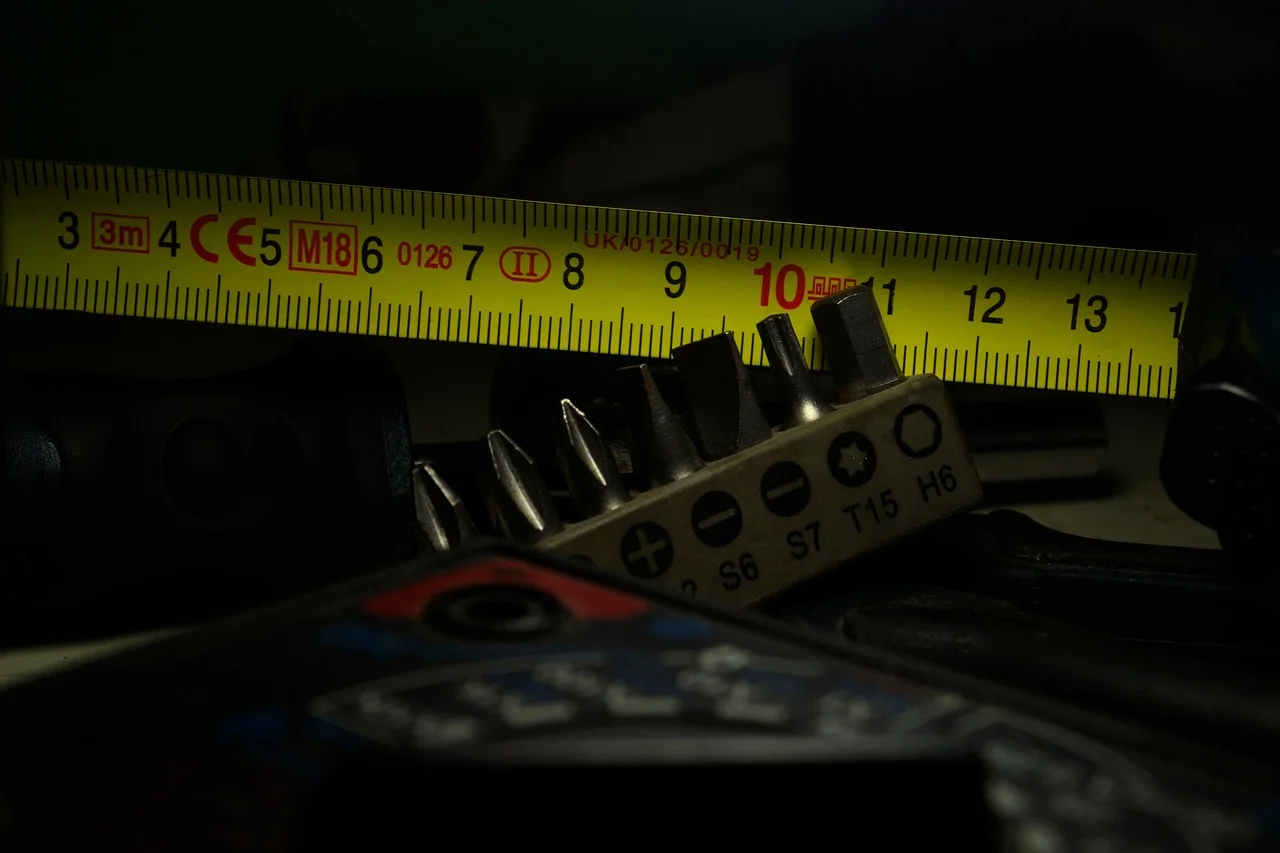
In plastics machinery, the practical significance of electrical testing has grown with servo drives, frequency inverters, modular heating zones, machine vision, embedded sensors, and Industry 4.0 integration, all of which demand stable power quality and precise signal measurement. Sustainability considerations also matter: accurate electrical diagnostics reduce scrap, prevent energy losses, extend component life, and support safer refurbishment and remanufacturing of machine assets.
History and Development
Early electrical testing relied on analog pointers, bridge circuits, and basic resistance and voltage measurements, reflecting the needs of telegraphy, power distribution, and early factory electrification. As industrial systems became more complex, instruments such as the oscilloscope, frequency counter, and LCR meter enabled deeper analysis of dynamic signals and component behavior.
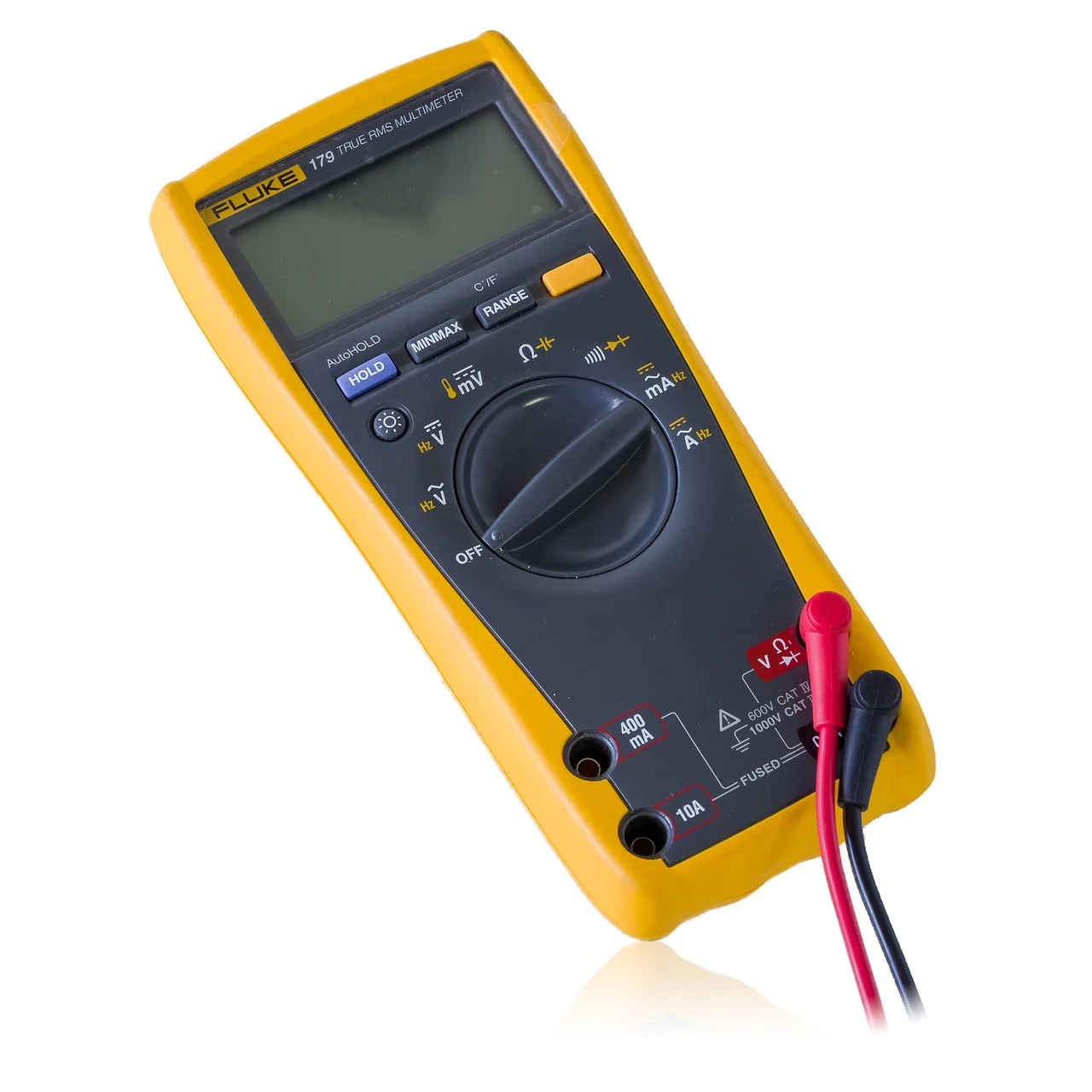
A major milestone was the widespread adoption of the digital multimeter (DMM), which became the standard handheld instrument for voltage, current, and resistance measurements and later added capacitance, frequency, temperature, and continuity functions. Another milestone was the growth of portable safety and installation testers, including insulation testers and multifunction testers, which combine continuity, insulation resistance, loop impedance, and residual-current-device testing in one device.
A further development has been the integration of automated test systems and software-driven measurement platforms, particularly in electronics manufacturing and industrial diagnostics. These systems improve repeatability, enable data logging, and support compliance with quality and safety standards while reducing human error in repetitive testing tasks.
Key Characteristics and Technical Overview
Electrical test equipment is typically defined by measurement range, accuracy, bandwidth, input impedance, safety category, sampling rate, and automation capability. In industrial environments, selection also depends on withstand voltage, environmental robustness, calibration traceability, and compatibility with the voltage class and fault-energy level of the application.
Common instrument classes include:
| Instrument | Primary function | Typical industrial use |
|---|---|---|
| Digital multimeter | Measures voltage, current, resistance, and often capacitance, frequency, and continuity | Troubleshooting control panels, heaters, sensors, and drives |
| Clamp meter | Measures current non-invasively around a conductor | Load checks on motors, heaters, and feeders |
| Oscilloscope | Displays voltage versus time | Signal integrity, inverter outputs, sensor diagnostics |
| LCR meter | Measures inductance, capacitance, and resistance | Component and filter verification |
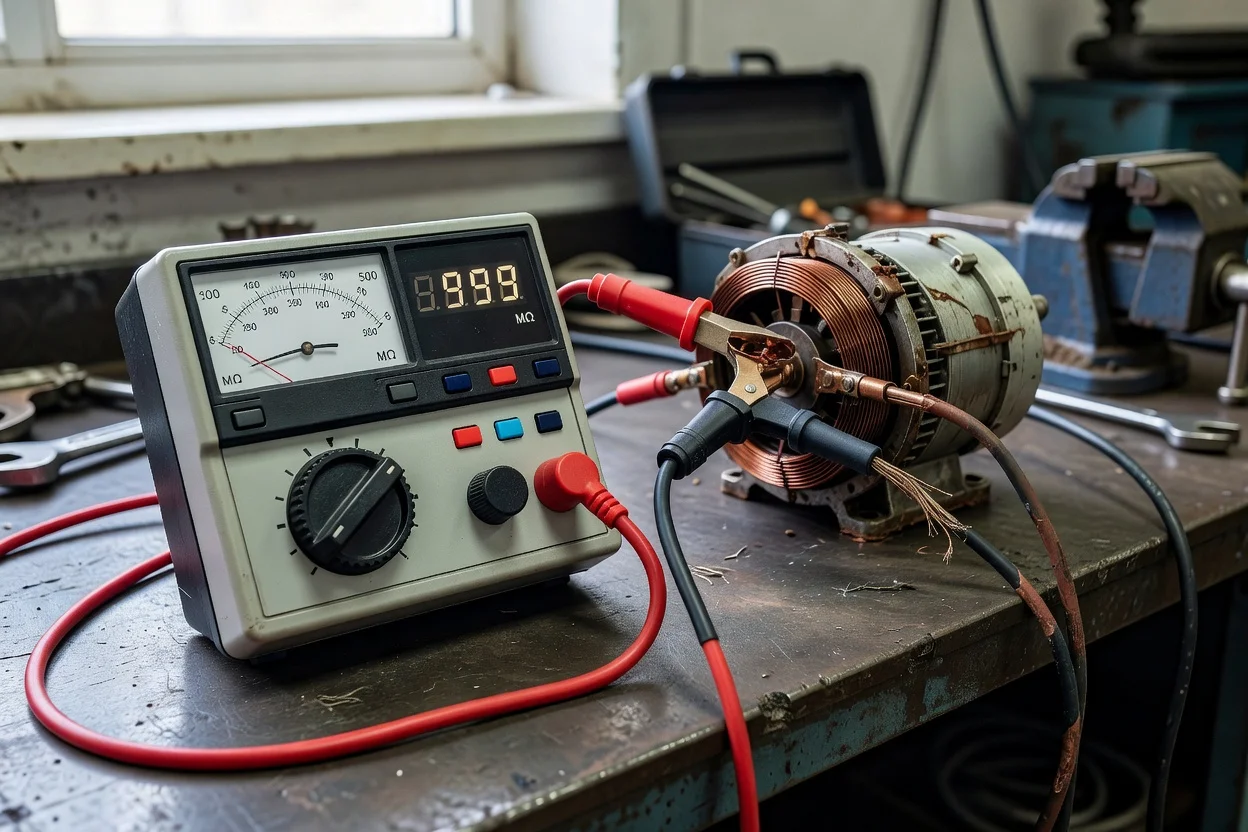
| Insulation tester / megohmmeter | Measures high resistance of insulation systems | Motor windings, heaters, cables, and cabinets |
| Hipot tester | Applies high voltage to verify dielectric withstand | Safety qualification of assemblies and harnesses |
| Power analyzer | Measures power, harmonics, and efficiency-related parameters | Drive systems, motors, and plant energy audits |
| Spectrum analyzer | Measures signal amplitude across frequency | EMI/EMC diagnosis, RF and control electronics |
For industrial plastics machinery, several quantitative benchmarks are especially relevant. Insulation resistance tests commonly use 250 V, 500 V, or 1000 V DC on low-voltage machinery and can reveal moisture ingress, contamination, or aging in cables and windings. Clamp meters are widely used for current measurements without opening the circuit, which is valuable on live motor feeders and heater banks. Oscilloscopes and power analyzers are used to examine inverter-fed motors, where switching transients and harmonics may affect motor heating and electromagnetic compatibility.
Types and Variations
The field is usually grouped into three functional categories:
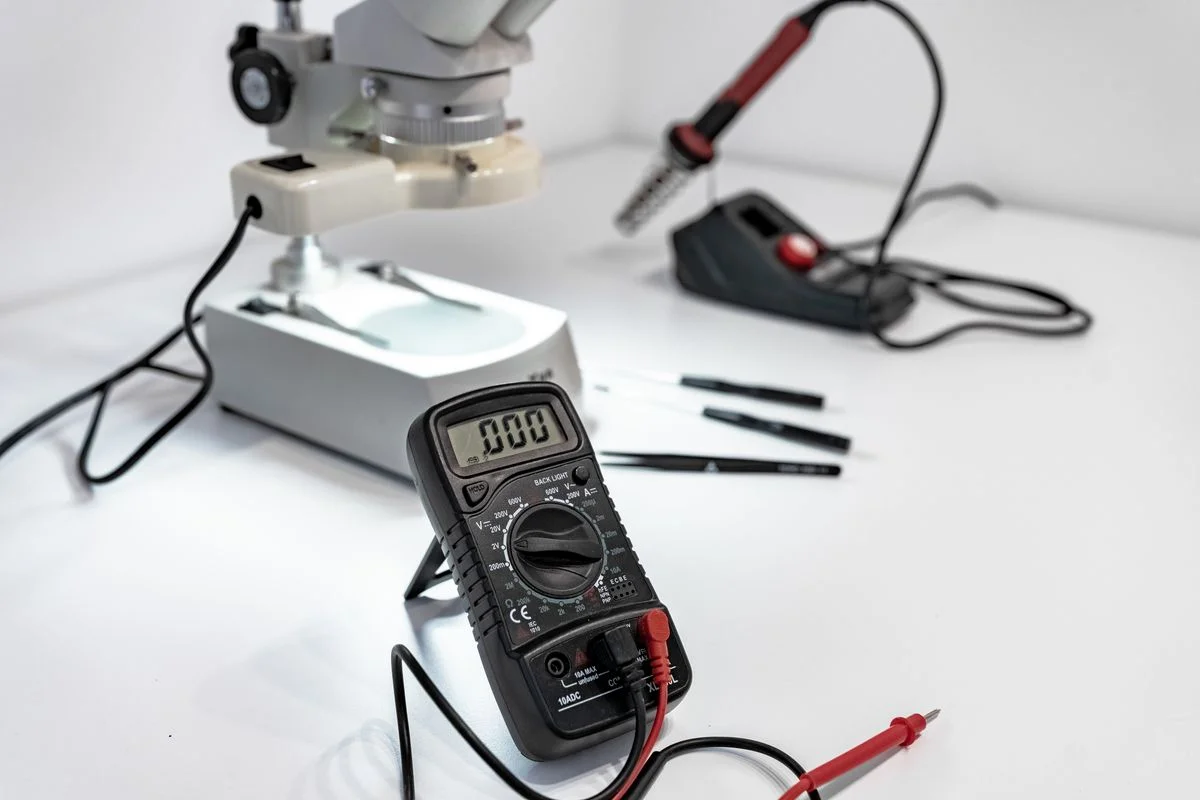
- Basic measurement instruments for voltage, current, and resistance, such as voltmeters, ammeters, ohmmeters, and multimeters.
- Stimulus instruments that generate known signals for testing, such as signal generators, pulse generators, and function generators.
- Response and analysis instruments that observe how a device behaves under test, such as oscilloscopes, spectrum analyzers, logic analyzers, and network analyzers.
Within these categories, there are also specialized variants:
- Handheld portable meters, optimized for field maintenance and fast troubleshooting.
- Benchtop precision instruments, optimized for laboratory calibration and R&D.
- Rack-mounted and automated test systems, optimized for production-line throughput and traceability.
- Safety compliance testers, optimized for insulation, grounding, dielectric strength, and leakage verification.
Applications and Uses
In plastics processing machinery, electrical test equipment supports nearly every stage of the machine lifecycle.
- Injection molding machines: verification of heater zones, thermocouples, servo drives, safety interlocks, and mold temperature control circuits.
- Extrusion lines: testing of drive motors, screw heater circuits, melt-pressure sensors, and control panels.
- Blow molding and thermoforming machines: inspection of heaters, timing circuits, motion control, and guarding systems.
- Auxiliary equipment: diagnostics for chillers, dryers, conveyors, feeders, granulators, and vacuum loaders, where electrical faults often present as intermittent downtime.
- Automation and robotics: analysis of I/O modules, industrial networks, encoders, encoders’ supply quality, and servo feedback loops.
- Maintenance and certification: insulation testing, earth continuity testing, and verification of protective devices before return to service.
A poor-fit use case is direct mechanical diagnosis of wear in screws, barrels, or cutting blades; electrical test equipment may indicate motor loading or drive anomalies, but it cannot by itself assess mechanical geometry or tribological degradation.
Technical Performance Notes
Electrical measurements in industrial machinery are only as reliable as the test method and instrument class. For example, a true RMS multimeter is preferred for non-sinusoidal waveforms produced by variable-frequency drives, because simple average-responding meters can misread distorted signals. Likewise, power analyzers are more informative than basic meters when evaluating energy consumption, harmonics, and phase imbalance in electrically heated or servo-driven systems.
In maintenance practice, insulation testers and meggers are especially valuable for detecting aging cables, contaminated heater bands, and moisture-related faults before they escalate into shutdowns. Multifunction testers are widely used where one instrument must perform continuity, insulation resistance, loop impedance, and RCD checks efficiently.
Technological Innovations and Automation
Modern electrical test systems increasingly incorporate data acquisition (DAQ), software control, automated pass/fail limits, and cloud or plant-network connectivity. This enables repeatable production testing, trend analysis, and statistical process control, especially in high-volume manufacturing of electrical panels, motors, and electronically controlled auxiliaries.
Other notable innovations include:
- Mixed-signal oscilloscopes for simultaneous analog and digital fault analysis.
- Automated test systems that reduce operator variation and accelerate end-of-line validation.
- Thermal imaging cameras used as complementary diagnostic tools to locate overheating conductors, terminals, and drive components.
- Portable energy loggers for monitoring consumption patterns in molding and extrusion plants.
Environmental and Sustainability Aspects
Electrical testing contributes to sustainability primarily by reducing energy waste, premature component replacement, and production scrap. Accurate power measurements can identify inefficient motors, poor power factor, harmonic distortion, and unnecessary standby loads, all of which are relevant in energy-intensive plastics plants.
Preventive electrical diagnostics also support circular-economy practices by extending the service life of drives, heaters, cables, and control cabinets through repair rather than replacement. At the same time, sustainability depends on calibration discipline, because drifting instruments can lead to false failures, unnecessary part disposal, or unsafe return-to-service decisions.
Economic and Global Market Impact
Demand for electrical measuring and testing equipment is closely tied to industrial electrification, automation density, and compliance requirements across manufacturing sectors. In plastics machinery, rising use of servo drives, sensor-rich controls, and connected maintenance systems has expanded the need for test equipment in both OEM production and aftermarket service.
The market is shaped by the balance between low-cost portable tools for field technicians and high-end automated platforms for factories and laboratories. Suppliers compete on accuracy, durability, software integration, calibration support, and adherence to regional safety standards.
Current Challenges and Innovations
Key challenges include:
- Non-sinusoidal waveforms, which complicate measurement on inverter-driven equipment and demand true RMS and wide-bandwidth instruments.
- Calibration and traceability, which are essential for valid certification and quality records.
- Safety, especially when testing energized machinery and high-voltage assemblies.
- Data management, because modern test programs generate large volumes of measurement records that must be stored, analyzed, and audited.
Innovation is focused on improving automation, connectivity, diagnostic depth, and operator safety, while reducing the time required to isolate faults in complex machine systems.
Future Outlook
Future electrical test equipment for plastics machinery is likely to become more integrated with condition monitoring, predictive maintenance, and digital twins. This will favor instruments that can stream measurements directly into maintenance software, correlate electrical signatures with mechanical behavior, and support remote diagnostics.
Demand is also likely to grow for tools that can handle higher switching frequencies, lower standby losses, and more stringent EMC requirements as machine builders continue to refine servo systems and energy-efficient electrification. In this context, the most valuable instruments will be those that combine precision measurement, industrial robustness, and software interoperability.
Summary
Measuring and testing equipment for electrical properties is a foundational part of modern plastics machinery engineering, maintenance, and compliance. Its core instruments range from simple meters to sophisticated analyzers and automated systems, all of which help ensure safe operation, energy efficiency, and reliable production performance.
References
- •
List of electrical and electronic measuring equipment. (2011, January 14). Wikipedia. https://en.wikipedia.org/wiki/List_of_electrical_and_electronic_measuring_equipmentLink
- •
Test & measurement. (n.d.). Farnell. https://uk.farnell.com/c/test-measurementLink
- •
Electronic testers, electrical properties testing, oscilloscope. (n.d.). AgsTech. https://www.agstech.net/ml/electronic-testers-multimetersLink
- •
Fluke electrical test meters. (n.d.). Fluke. https://www.fluke.com/en-us/products/electrical-testingLink
- •
Top 10 electronic test equipment every engineer should know. (2025, November 10). Keysight. https://www.keysight.com/used/us/en/knowledge/guides/top-10-electronic-test-equipment-for-engineersLink
- •
Electric power testing. (n.d.). Global Industrial. https://www.globalindustrial.com/c/tools/testing_inspection_instruments/electrical_power_testingLink
- •
Electrical test equipment. (2022, May 1). EBSCO. https://www.ebsco.com/research-starters/science/electrical-test-equipment/Link
- •
Electrical test instruments. (2024, May 13). Measure-Mart. https://www.measure-mart.com/collections/electrical-test-instrumentsLink
- •
Top 10 electronic test equipment every engineer should know. (2025, November 10). Keysight. https://www.keysight.com/used/rs/en/knowledge/guides/top-10-electronic-test-equipment-for-engineersLink
- •
Electrical test & measurement equipment. (n.d.). Triplett Tools. https://www.triplett.com/pages/electrical-test-measurementLink
- •
Electrical testers & meters. (n.d.). Tester. https://www.tester.co.uk/electrical-electronicLink
- •
Electrical test & measurement equipment. (2025, November 5). RS Components. https://uk.rs-online.com/web/c/test-measurement/electrical-test-measurement/Link
- •
Electrical test & measurement equipment. (2025, January 22). RS Components. https://uk.rs-online.com/web/content/m/machine-building/electrical-test-measurementLink
- •
Top 10 electronic test equipment every engineer should know. (2025, November 10). Keysight. https://www.keysight.com/used/tw/en/knowledge/guides/top-10-electronic-test-equipment-for-engineersLink
- •
Electronic test equipment. (2003, July 20). Wikipedia. https://en.wikipedia.org/wiki/Electronic_test_equipmentLink
- •
Electrical test instruments guide. (2025, May 15). Elec-Mate. https://www.elec-mate.com/guides/test-instruments-guideLink
- •
Test equipment 101: The basics of electrical testing. (2019, June 10). TestGuy. https://wiki.testguy.net/t/test-equipment-101-the-basics-of-electrical-testing/57Link
- •
Basic types of test and measurement equipment. (2025, January 21). Raah Group. https://www.projects.raahgroup.com/basic-types-of-test-and-measurement-equipment/Link
- •
Electrical testing equipment. (2024, October 1). JM Test Systems. https://jmtest.com/c/electrical-test-equipment/Link
- •
Measurement of electrical properties. (2026, June 3). ATS Industrial Automation. https://atsindustrialautomation.com/testing/measurement-of-electrical-properties/Link