
Introduction
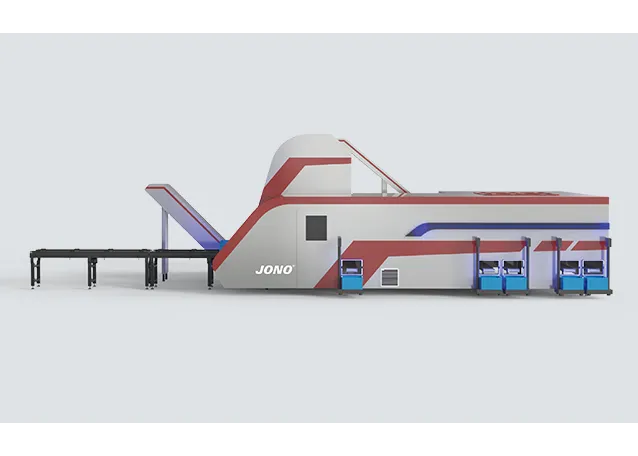
Separating and sorting systems for waste are the mechanical, sensor-based, and automated technologies used to divide mixed waste streams into recoverable fractions such as paper, plastics, metals, organics, glass, and residuals. In modern recycling and material recovery facilities, these systems are the core interface between collection and downstream reprocessing, determining both the purity of recovered materials and the economics of the plant.
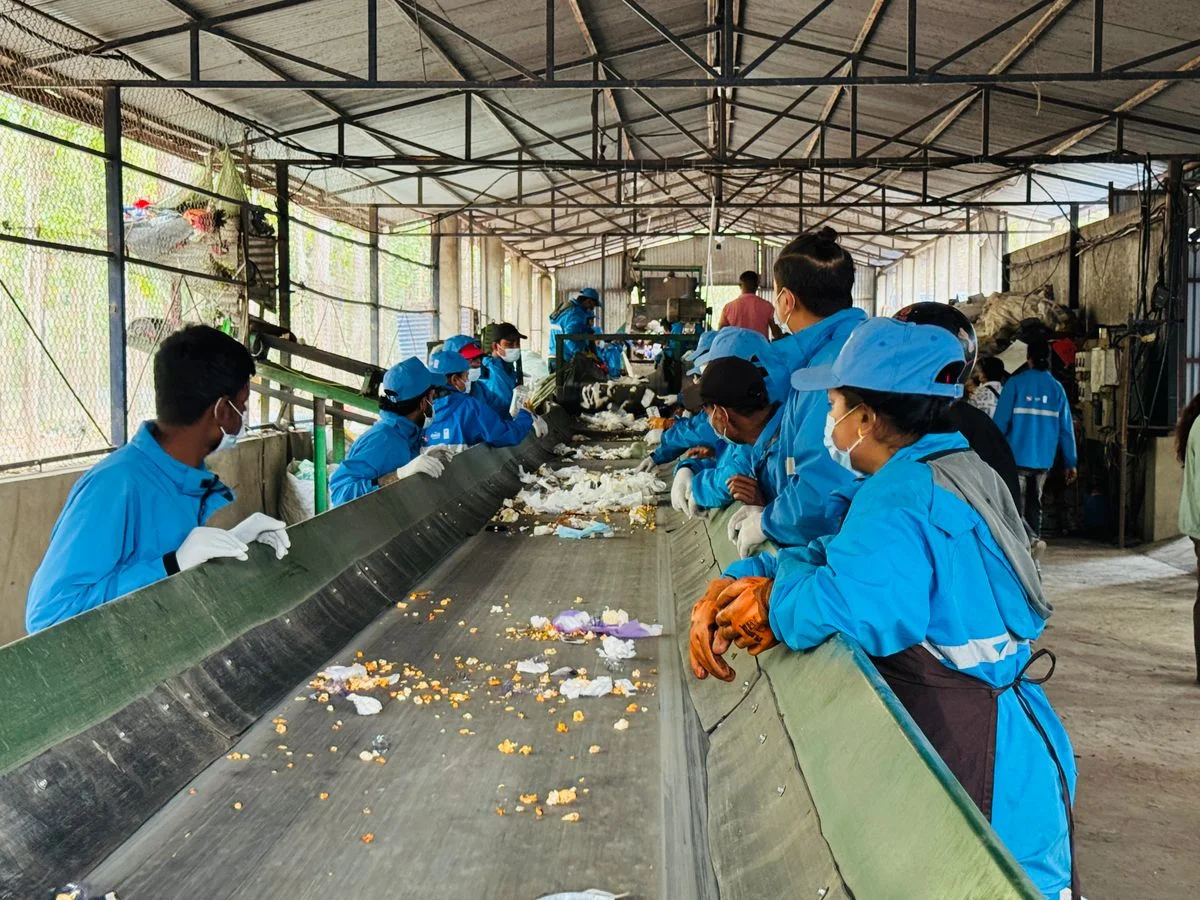
In industrial practice, the term covers a broad family of equipment: screening devices, air classifiers, magnetic and eddy current separators, ballistic separators, optical sorters, and robot-assisted picking stations, often arranged in a multi-stage line rather than as a single machine. Their development has been driven by rising municipal solid waste volumes, stricter landfill diversion targets, and the need to recover higher-value secondary raw materials with lower contamination.
The technology has evolved from manual picking and simple size separation toward highly instrumented systems that combine cameras, near-infrared sensors, X-ray methods, and AI-based recognition with high-speed conveyors and pneumatic ejection. At the same time, sustainability considerations remain central: these systems can improve recycling yields and reduce virgin-material demand, but they also require careful energy management, maintenance, and contamination control to remain economically and environmentally effective.
History and development
Early waste sorting relied on manual segregation, basic screens, and gravity-based separation. As industrial recycling expanded, plants began adopting mechanized screening, magnetic extraction of ferrous metals, and air classification to separate light and heavy fractions more consistently.
A major milestone was the introduction of automated sensor-based sorting, especially optical sorting using visible, near-infrared, and related spectral technologies. These systems made it possible to identify materials by their spectral signature and eject selected items with compressed air, enabling far higher throughput than hand sorting and improving purity in plastics and paper recovery.
More recently, AI-assisted vision systems and robotic picking have extended automation into tasks that once depended on human judgment, particularly for complex municipal or e-waste streams. Recent reviews and industry reports note continued progress in sensor fusion, machine learning, and integration of robotic end-effectors, though many plants still retain manual quality-control stations because mixed waste streams remain highly variable.
Technical overview
Separating and sorting systems work by exploiting differences in size, density, shape, magnetism, conductivity, optical properties, and surface chemistry. A typical materials recovery facility uses several stages in sequence:
- Pre-treatment: bag opening, shredding, or debagging to expose hidden materials.
- Screening: trommel, disc, star, or vibrating screens split the stream by particle size.
- Density and shape separation: ballistic separators and air classifiers divide 2D light fractions such as films and paper from 3D containers and heavier items.
- Metal recovery: magnets remove ferrous metals, while eddy current separators eject non-ferrous metals such as aluminum.
- Fine purification: optical sorters, X-ray systems, and AI-based robotic systems isolate target polymers, colors, or contaminants.
Typical performance characteristics vary widely by feedstock, but the following ranges are commonly reported in industry practice and technical reviews:
- Trommel and coarse screen cut sizes: often in the approximate range of 20–150 mm, depending on whether the objective is organic separation, RDF preparation, or coarse pre-sorting.
- Optical sorting throughput: commonly several tonnes per hour per machine, with higher-throughput systems used on mixed packaging and plastics lines.
- Rotor or drum screening speeds: selected to balance throughput, opening efficiency, and abrasion resistance rather than maximized alone; operating settings are feed-specific.
- Residual moisture after centrifugal dewatering: in wet-plastics or wash-line contexts, centrifugal dewatering commonly reduces moisture to roughly 1–3% on cleaned rigid plastics, though actual values depend strongly on polymer type, particle geometry, and upstream washing conditions.
- Specific energy consumption: highly dependent on the line architecture; mechanical pre-sorting is usually lower energy than thermal processing, while sensor-based sorting adds electricity demand for sensors, compressed air, and control systems.
For plastics, separating systems are especially important because waste plastic sorting often must distinguish both plastic from non-plastic and one polymer from another. Reviews describe manual sorting, flotation, electrostatics, spectroscopy, and X-ray-based methods as key routes, with optical/NIR systems and triboelectrostatic technologies frequently used when high polymer purity is required.
Main types and variations
| System type | Separation principle | Typical use |
|---|---|---|
| Manual picking line | Human inspection | Removing bulky contaminants and final quality control |
| Trommel screen | Particle size | Opening mixed waste and separating fines, organics, and coarse items |
| Disc or star screen | Size and shape | Separating films, 2D fractions, and flat materials from 3D items |
| Ballistic separator | Shape, elasticity, and trajectory | Splitting light flat fractions from rolling/heavy fractions |
| Air classifier / wind sifter | Density and aerodynamic behavior | Removing light paper and film from heavier fractions |
| Magnetic separator | Ferromagnetism | Recovering iron and steel |
| Eddy current separator | Electrical conductivity | Recovering aluminum and other non-ferrous metals |
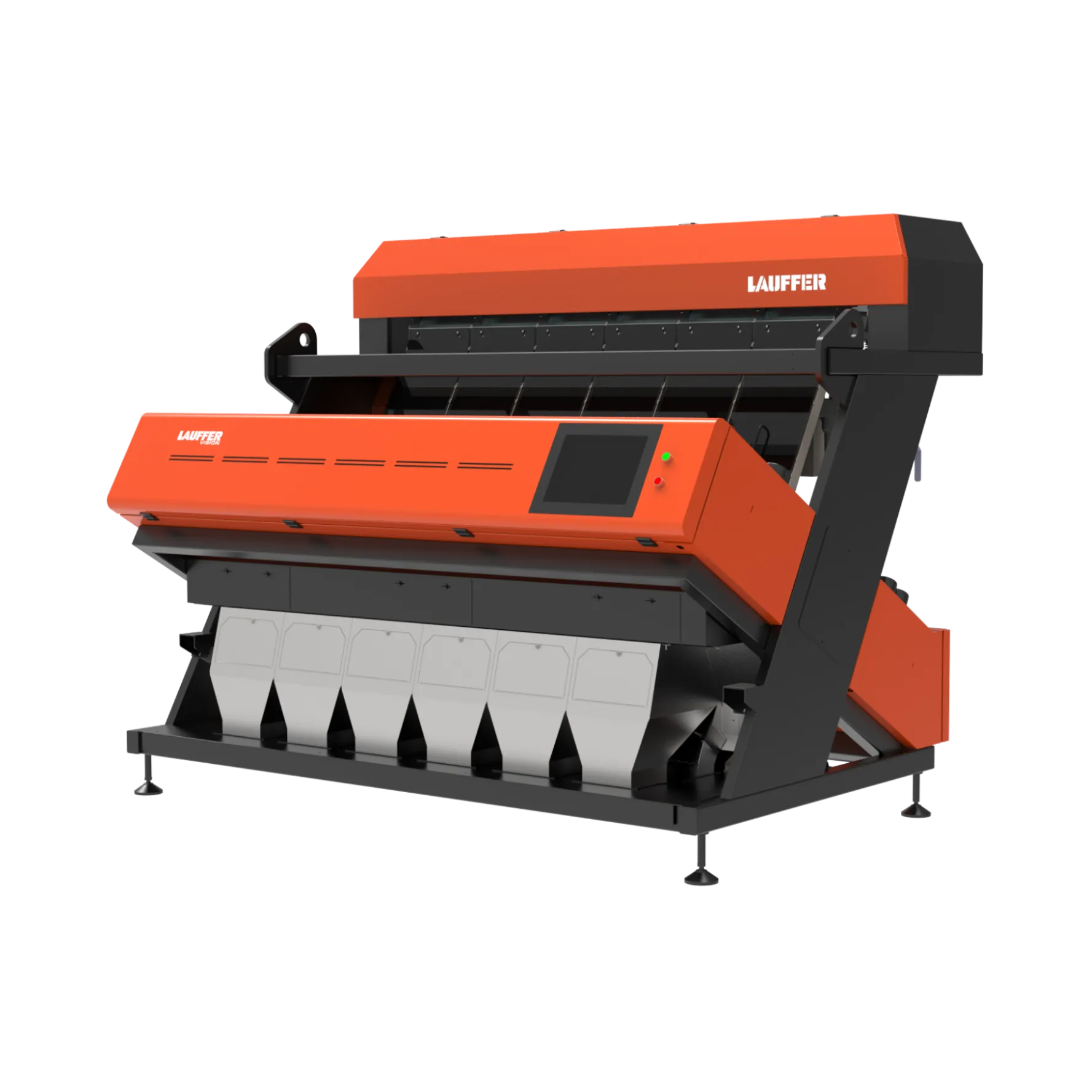
| Optical sorter | Spectral reflectance and color | Sorting plastics, paper, and glass by material or color |
| X-ray sorter | Density/atomic response | Separating contaminants or density-different materials |
| Robotic sorter | Machine vision and end-effector control | Flexible picking of specific items or contaminants |
Mechanical sorting lines often combine several of these units because no single separation method performs well across all waste fractions. For example, a municipal solid waste line may begin with a trommel, continue through a ballistic separator and air classifier, and then use magnets, eddy current units, and optical sorters for final recovery.
Applications and uses
Separating and sorting systems are used wherever waste is mixed, variable, and potentially recyclable.
- Municipal solid waste (MSW): material recovery facilities use integrated sorting lines to recover paper, plastics, metals, glass, and organics from household and commercial refuse.
- Packaging recycling: optical sorters and ballistic separators are widely used to separate PET, HDPE, film, cardboard, and aluminum containers from commingled collections.
- Construction and demolition waste: screens, magnets, and air separation help recover metals, wood, inert fines, and aggregates.
- E-waste: sensor-based systems, AI vision, and robotic sorting help separate circuit boards, metals, housings, and components, often with higher precision than conventional MSW lines.
- Plastics recycling: NIR, color sorting, flotation, and electrostatic separation are used to distinguish polymer families and improve bale or flake purity.
- Organic waste preprocessing: screens and air separation remove contaminants before composting, anaerobic digestion, or RDF production.
A poor-fit application is highly homogeneous single-material production scrap, where a simple shredder, grinder, or melt filtration system may be more appropriate than a full separation line because the feed does not justify multi-stage sorting complexity.
Technological innovations and automation
Recent innovation has focused on sensor fusion, where visible-light cameras, NIR spectroscopy, X-ray techniques, and inductive or capacitive sensing are combined to improve recognition under variable lighting, dirt, and overlapping items. This is particularly important in mixed municipal and post-consumer streams, where contamination and soiling can defeat simpler classifiers.
AI and machine learning are increasingly used to improve object recognition, pick selection, and adaptive control of air jets or robot arms. In practice, these systems are strongest when they supplement rather than replace robust mechanical pre-sorting, because stable feed presentation is still essential for accurate identification and actuation.
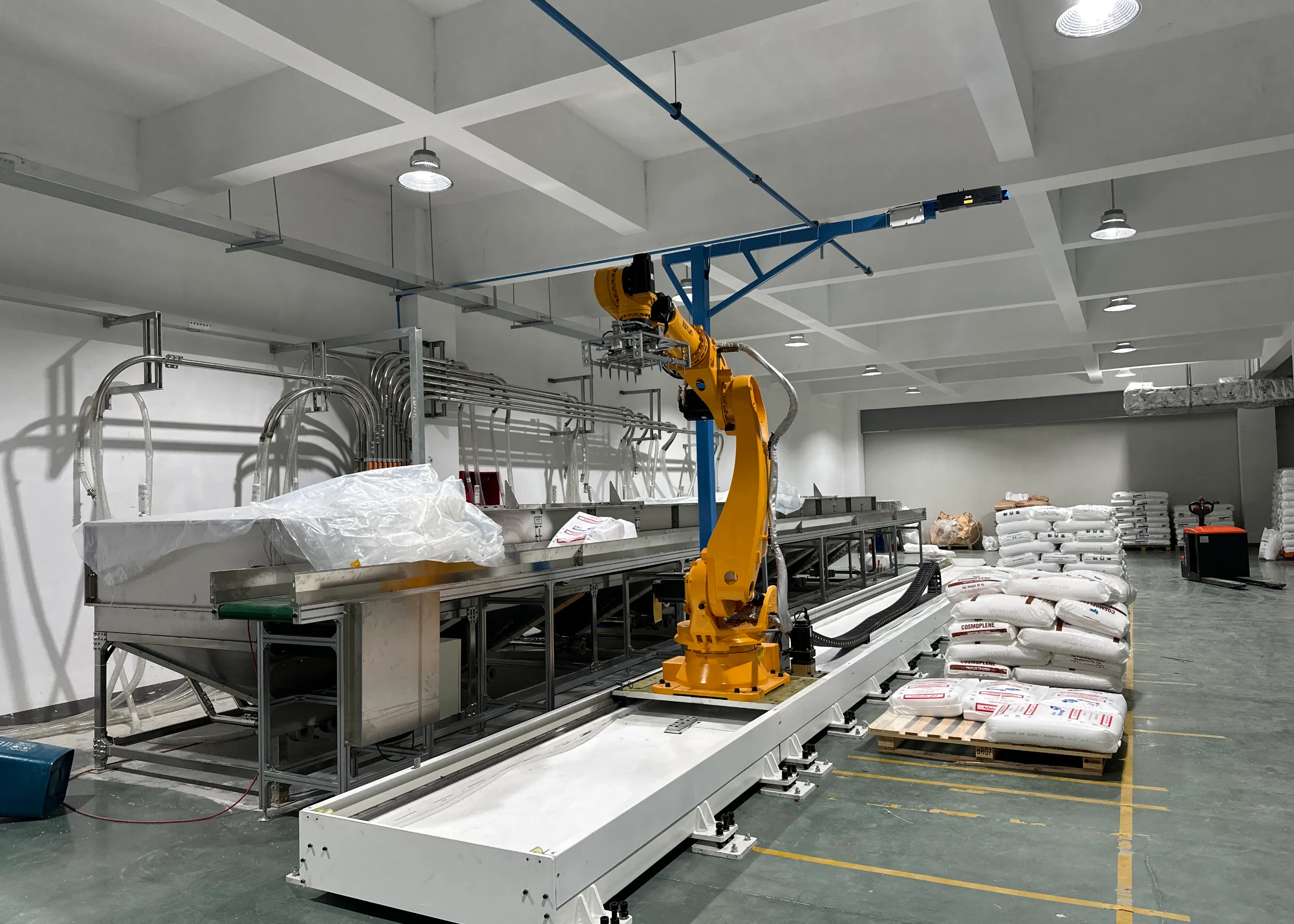
Robotic sorting is also expanding, especially for quality control and selective recovery of high-value items. Its advantages are consistency and the ability to work continuously in harsh environments, while its limitations include capital cost, sensitivity to feed presentation, and the need for ongoing software tuning.
Environmental and sustainability aspects
These systems are foundational to the circular economy because they increase the recovery of secondary raw materials and reduce the amount of recyclable material sent to landfill or incineration. By improving purity, they help recyclers produce outputs that are more acceptable to end markets and more suitable for closed-loop applications.
Their environmental benefits are strongest when sorting lines are designed to maximize recovery with minimal rehandling, reject contamination early, and keep energy use proportional to output value. However, the systems themselves consume electricity, compressed air, and maintenance resources, so their net sustainability impact depends on throughput, uptime, and the downstream market for sorted fractions.
For plastics, better sorting can substantially improve the quality of recycled polymer streams by removing labels, mixed resins, fines, and non-plastic contaminants, which is critical for mechanical recycling and for meeting specifications in packaging and molded products.
Economic and global market impact
Separating and sorting systems are a major capital category in recycling infrastructure because they directly influence yield, purity, labor cost, and saleability of recovered materials. Facilities with stronger separation performance generally obtain more consistent bale or flake quality and can access higher-value markets for secondary materials.
Global investment has been supported by rising urban waste generation, regulatory pressure on landfill diversion, and the growth of extended producer responsibility schemes in many regions. At the same time, volatile commodity prices can quickly affect the economics of a sorting plant, making operational flexibility and low contamination especially important.
Vendors active in the sector include machinery builders and system integrators that specialize in sensor-based separation, optical sorting, and complete MRF design; their competitive position often depends on application depth, service capability, and regional installation base rather than a single technology advantage.
Current challenges and innovations
The central technical challenge is feed variability. Waste streams differ by geography, season, collection method, and contamination level, which makes one-size-fits-all separation difficult. Mixed flexible films, multilayer packaging, black plastics, and heavily soiled materials remain especially hard to sort reliably.
Another challenge is the trade-off between automation and manual quality control. Even advanced plants often retain hand-picking stations because visual inspection remains effective for odd-shaped contaminants, oversized items, and special wastes that sensors may misclassify. This hybrid approach is currently the most common industrial solution.
Innovation is therefore moving toward:
- better pre-conditioning of incoming waste,
- multi-sensor classification,
- AI-based calibration,
- adaptive process control,
- and robotic finishing of complex picking tasks.
Future outlook
Future separating and sorting systems are likely to be more digital, adaptive, and integrated with plant-wide data systems. Trends include sensor fusion, remote monitoring, predictive maintenance, and digital watermarking or item-level identification for packaging streams.
For plastics processing specifically, future progress will be shaped by how well sorting systems can deliver consistent feedstock quality for mechanical and chemical recycling routes. The most important engineering direction is not simply higher automation, but better purity at lower life-cycle cost, especially for mixed and contaminated post-consumer waste.
The long-term trajectory points toward sorting lines that combine efficient mechanical separation, high-speed sensing, and selective robotics, with manual labor increasingly reserved for exception handling and final verification.
References
- •
Source separation, transportation, pretreatment, and valorization of municipal solid waste. (2021, November 10). https://pmc.ncbi.nlm.nih.gov/articles/PMC8579419/Link
- •
Separation and sorting technology in waste management. (2025, January 16). https://www.recyclingtoday.org/blogs/news/separation-and-sorting-technology-in-waste-managementLink
- •
A review on automated sorting of source-separated municipal solid waste for recycling. (n.d.). https://www.iitp.ac.in/~athakur/pubs/wm2016.pdfLink
- •
MSWsorting: Waste sorting machine. (n.d.). https://www.mswsorting.com/Link
- •
Waste sorting. (2006, August 18). https://en.wikipedia.org/wiki/Waste_sortingLink
- •
Choosing the right sorting and separating equipment. (2018, September 13). https://wastemanagementreview.com.au/choosing-right-equipment/Link
- •
List of separation methods used to divert waste from landfill. (2025, August 27). https://wastersblog.com/604/waste-separation-methods/Link
- •
Separation and sorting technology. (2023, September 14). https://recyclinginside.com/recycling-technology/separation-and-sorting-technology/Link
- •
Advanced sorting technologies in the waste sector. (n.d.). https://www.ieabioenergy.com/wp-content/uploads/2024/07/IEA-Bioenergy_-Advanced-sorting-technologies-in-the-waste-sector.pdfLink
- •
6 types of sorting systems for waste management. (2022, February 17). https://www.anis-trend.com/6-types-of-sorting-systems/Link
- •
Sorting and material recovery. (n.d.). https://mohua.gov.in/upload/uploadfiles/files/chap8.pdfLink
- •
Equipment for waste & metal treatment separation systems. (2024, July 4). https://hardrecycle.com/recycling-equipment-systems/separation-systems/Link
- •
5 top household municipal solid waste sorting technologies. (n.d.). https://waste-technology.co.uk/5-top-household-municipal-solid-waste-sorting-equipment-technologies.htmlLink
- •
Lappeenranta University of Technology. (n.d.). https://lutpub.lut.fi/bitstream/handle/10024/143915/SHEHU%20(2017)_THESIS_FINAL%20VERSION.pdf?sequence=2&isAllowed=yLink
- •
5 sorting technologies for e-waste recycling. (2026, April 1). https://www.ricarecycling.com/blog/5-sorting-technologies-for-e-waste-recyclingLink
- •
Waste sorting solutions. (2026, January 27). https://www.stavn.cn/articles.aspx?category_id=187Link
- •
Optical-based sorting systems: The intelligent backbone of modern waste management. (2026, January 18). https://www.linkedin.com/pulse/optical-based-sorting-systems-intelligent-backbone-modern-prabhath-mseicLink
- •
Sorting. (n.d.). https://www.eggersmann-recyclingtechnology.com/en/recycling-machines/sorting/Link
- •
Waste sorting plants. (n.d.). https://caninternational.no/onewebmedia/Waste_sorting_plants_Final-ISWA.pdfLink
- •
Collection & sorting. (2022, January 13). https://plasticseurope.org/sustainability/circularity/waste-management-prevention/collection-sorting/Link
- •
Sorting technology - sensor-based sorting - optical sorting. (n.d.). https://www.tomra.com/waste-metal-recycling/products/machinesLink
- •
Municipal solid waste segregation equipment. (2026, June 2). https://mechwaste.com/msw-equipments-2/Link
- •
A review on automated sorting of source-separated municipal solid waste for recycling. (n.d.). https://www.sciencedirect.com/science/article/abs/pii/S0956053X16305189Link
- •
Waste sorting machines. (2026, July 22). https://wasteinitiatives.com.au/products/sorting-equipment/Link
- •
Sorting systems: Picking the right one for your facility. (2001, January 1). https://www.wastetodaymagazine.com/article/sorting-systems-picking-the-right-one-for-your-facility/Link
- •
Way of working and advantages of sorting systems with manual separation. (2022, January 1). https://www.camec.net/en/blog/way-of-working-and-advantages-of-sorting-systems-with-manual-separationLink
- •
Smart general waste x-ray sorting solution. (2023, June 1). https://wastesortx.com/Link
- •
A comprehensive review of separation technologies for plastic waste. (2023, October 15). https://www.sciencedirect.com/science/article/abs/pii/S0921344923002239Link
- •
Waste sorting machines & automated systems. (n.d.). https://www.tomra.com/waste-metal-recycling/applications/waste-recyclingLink
- •
Sensor-based technologies in effective solid waste sorting: Successful applications, sensor combination, and future directions. (2022, November 16). https://pubs.acs.org/doi/abs/10.1021/acs.est.2c05874Link
- •
MSW sorting machine | municipal waste equipment. (n.d.). https://www.energycle.com/msw-sorting-machines/Link
- •
Waste sorting plant. (n.d.). https://www.mswsorting.com/waste-sorting-plant/Link
- •
E-ISSN: 2582-5208. (n.d.). https://www.irjmets.com/uploadedfiles/paper/issue_4_april_2023/36471/final/fin_irjmets1682143674.pdfLink
- •
Design and implementation of an automatic waste sorting machine. (2025, April 1). https://zenodo.org/records/15118542Link
- •
Technical solutions for waste classification and management. (2022, November 15). https://pmc.ncbi.nlm.nih.gov/articles/PMC10108328/Link
- •
Design and simulation of small-scale waste separation and sorting equipment. (n.d.). https://psecommunity.org/wp-content/plugins/wpor/includes/file/2302/LAPSE-2023.2485-1v1.pdfLink
- •
Automated waste systems: Key technologies. (2026, September 3). https://www.councilfire.org/guides/automated-waste-systems-key-technologies/Link
- •
Sorting systems: Efficient solutions for quality and yield. (n.d.). https://www.sesotec.com/en/blog/blog-detail/sorting-systems-efficient-solutions-for-quality-and-yieldLink
- •
CPG sorting technologies. (2026, January 13). https://cpgrp.com/Link
- •
Design and simulation of small-scale waste separation and sorting equipment. (n.d.). https://www.mdpi.com/2227-9717/10/5/1020Link
- •
AI-powered waste sorting solutions. (2023, October 25). https://ampsortation.com/Link
- •
A review of smart solutions for waste collection, sorting, and recycling. (n.d.). https://www.sciencedirect.com/science/article/pii/S2590123025001069Link
- •
Smart and efficient waste management through wireless IoT-enabled deep learning. (2026, April 1). https://www.nature.com/articles/s41598-026-43827-8Link
- •
Design and fabrication of a low-cost automated waste sorting system. (n.d.). https://dergipark.org.tr/tr/download/article-file/4748117Link
- •
4 smart waste management solutions that are changing the game. (2023, April 6). https://earth.org/smart-waste-management/Link
- •
Modern technologies for waste management: A review. (n.d.). https://www.mdpi.com/2076-3417/13/15/8847Link
- •
Smart waste management and classification system using deep learning. (2025, April 1). https://pmc.ncbi.nlm.nih.gov/articles/PMC12190594/Link
- •
6 smart waste management technologies emerging in 2026. (2023, May 15). https://www.rts.com/blog/smart-waste-management-technologies/Link
- •
A guide to modern waste management systems. (2025, October 3). https://www.recyclingbristol.com/a-guide-to-modern-waste-management-systems/Link
- •
Multi-class waste segregation using computer vision and robotic arm. (2024, May 10). https://pmc.ncbi.nlm.nih.gov/articles/PMC11157593/Link
- •
Modern waste systems: Effective solutions for sustainable management. (2026, July 22). https://www.mark-costello.com/modern-waste-systems/Link
- •
Types of waste management. (2025, February 16). https://frontierwaste.com/resources/types-of-waste-management/Link