
Introduction
In-mold decoration (IMD) equipment refers to the machines, film-handling systems, mold features, robots, and control technologies used to decorate plastic parts during the injection molding cycle rather than afterward. In its most common form, a printed film is fed into the mold, positioned with registration sensors, formed or conformed to the cavity, and then bonded to the molded part by the heat and pressure of the melt, producing a durable decorative or functional surface in a single integrated process.
IMD is best understood as a family of closely related process routes rather than a single machine type. Industry sources commonly distinguish IMR (in-mold roller/transfer), IML (in-mold labeling), and IMF (in-mold forming), each differing in film geometry, stretch capability, and the way the decorative layer is transferred or retained in the finished part. The equipment segment has evolved from manual and semi-automatic film placement toward highly synchronized automation using film feeders, vacuum systems, precision trimming, and industrial robots.
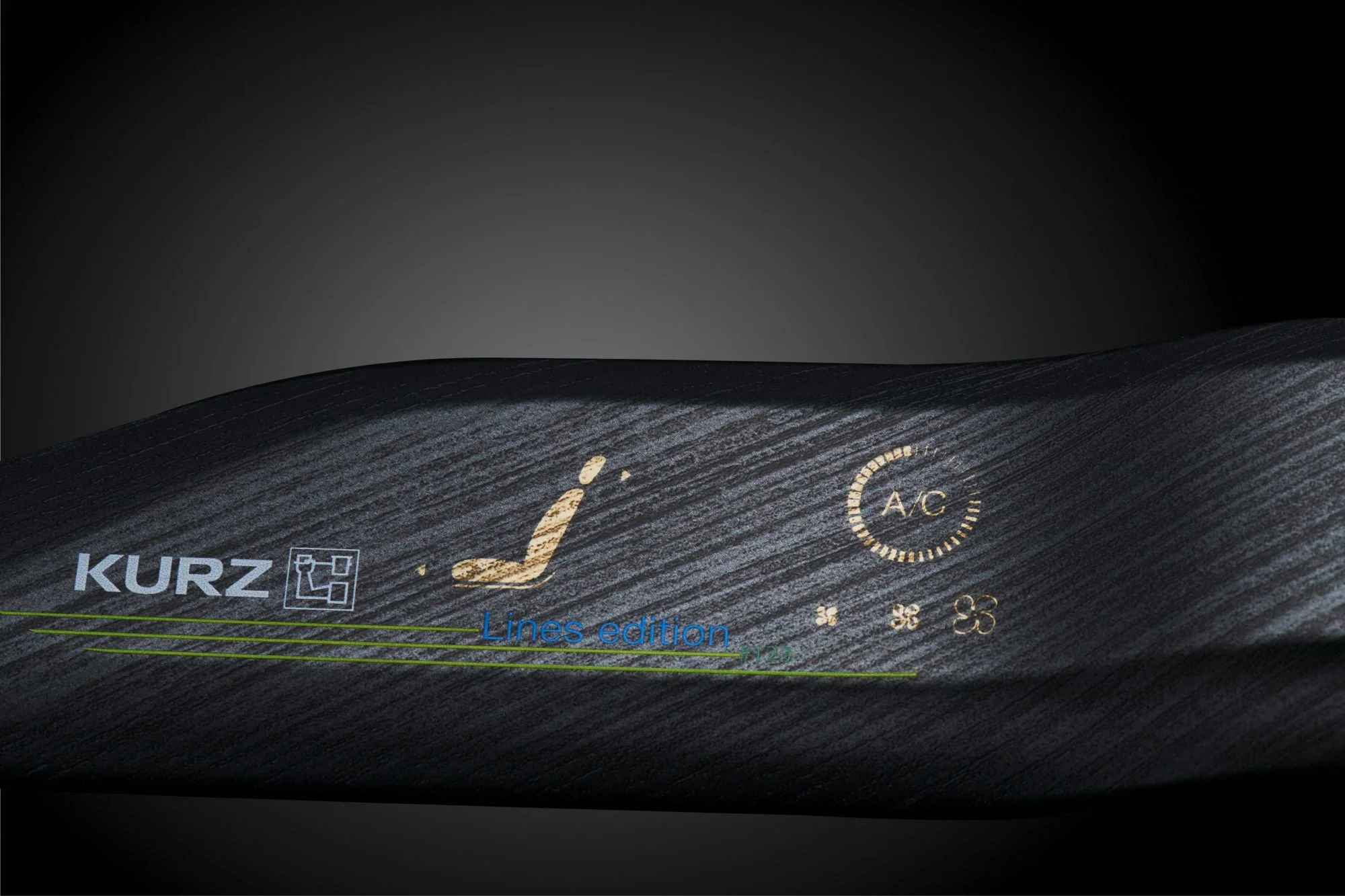
The technology is widely used where appearance, scratch resistance, chemical resistance, and brand differentiation matter, including automotive interior trims, appliance panels, consumer electronics housings, and medical and industrial interfaces. Its future is being shaped by tighter quality control, more complex 3D geometries, and greater emphasis on material efficiency, recyclability, and digital process integration.
History and Development
IMD developed as manufacturers sought alternatives to secondary painting, pad printing, hot stamping, and adhesive labels, which can add labor, cure time, and durability limitations.
- Early IMD systems established the basic workflow of printed film insertion, injection molding, and carrier-film separation, enabling decorative graphics to be embedded into molded parts instead of applied later.
- As demand increased for higher-value surfaces, the process diversified into IMR, IML, and IMF, reflecting different combinations of roll-fed transfer, cut-sheet labeling, and preformed 3D film forming.
- More recent development has centered on automation and registration precision, including feeder units mounted to molding machines, sensors for mark detection, vacuum-assisted cavity pull-in, and robotic handling for loading and unloading.
Technical Overview
At the equipment level, an IMD cell usually combines several subsystems:
- Injection molding machine
- Film feeder or transfer unit
- Alignment and registration sensors
- Vacuum or clamping system
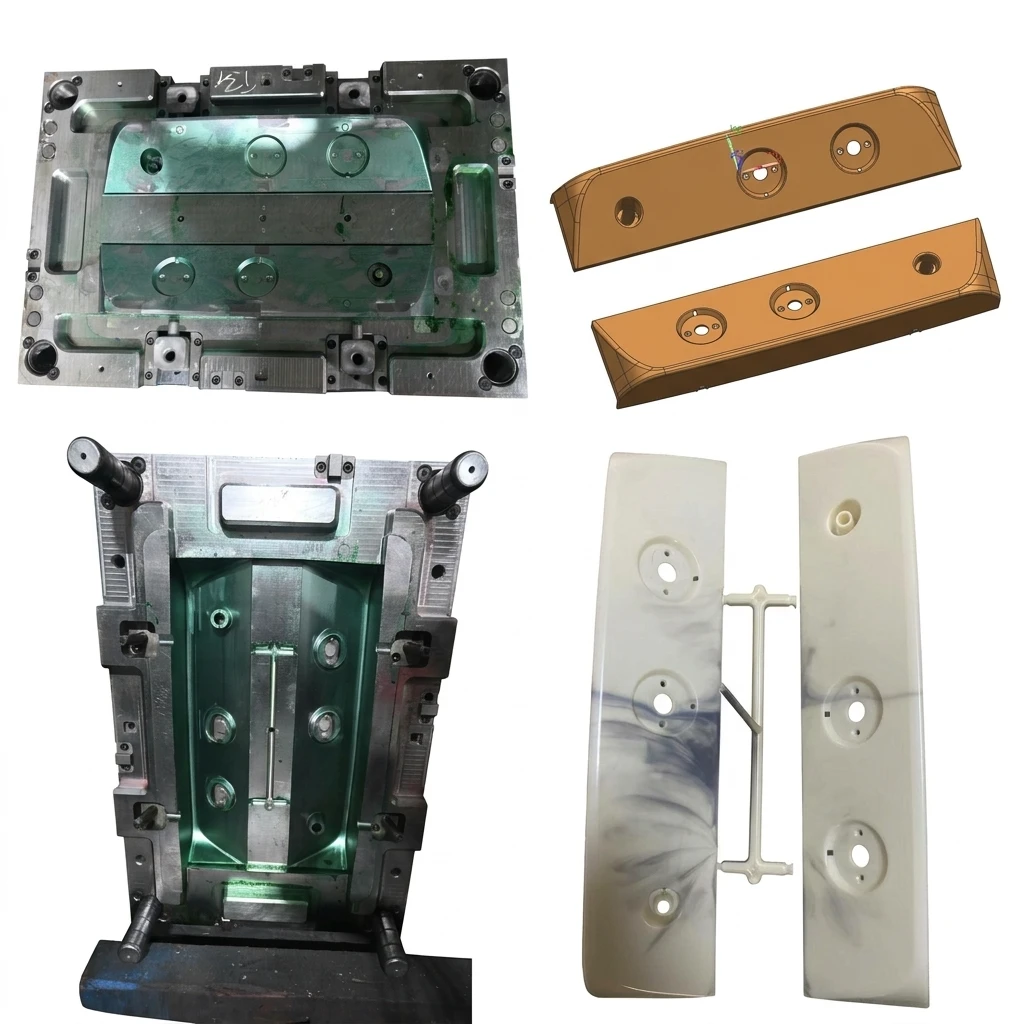
- Mold with parting-line guidance and film retention features
- Robotic handling or pick-and-place automation
- Trimming or preforming equipment, depending on the IMD variant
The core mechanism is straightforward: a printed decorative layer on a carrier film is positioned in the mold, then the polymer melt presses the film against the cavity surface. Heat causes the decorative layer to release from the carrier in many systems, leaving the design bonded to the plastic surface. In other implementations, a preformed appliqué or formed film becomes part of the molded laminate structure.
Typical process sequence
- Print graphics or functional layers on film.
- Form, cut, or roll-feed the film into a precise position.
- Clamp, vacuum, or mechanically hold the film in the mold.
- Inject resin behind or over the film.
- Allow bond formation during cooling.
- Open the mold and remove the finished part, often with carrier separation or residual trimming.
Quantitative engineering notes
Public industry descriptions rarely publish a single universal spec because parameters vary by part size and variant, but several practical benchmarks are common in IMD production:
- Film thickness is often in the PET carrier range of roughly 0.05 to 0.125 mm for roll-fed decorative constructions, with thicker or preformed laminates used in 3D routes.
- Residual moisture after centrifugal dewatering is generally relevant to recycled or washed film handling rather than the molding step itself; in adjacent plastics recovery systems, centrifugal dewatering commonly leaves materials at a low but nonzero moisture level before thermal drying, and IMD film-preparation lines aim for surfaces that will not trap moisture or dust before molding. This is an operational inference rather than a universally specified IMD standard.
- Throughput depends strongly on tooling and automation; compact systems may run at modest part-cycle rates, while high-volume automotive or appliance lines can be integrated for continuous production with automated film feed and robotic part handling.
- Rotor speeds are not a defining IMD parameter for the decoration process itself, but auxiliary film-preparation, trimming, or material-recovery machinery in the same production ecosystem may use high-speed rotating equipment; the IMD line is instead characterized more by indexing accuracy and cycle synchronization than by any single rotational benchmark.
- Specific energy consumption is generally lower than multi-step decoration routes that require separate printing, curing, handling, and assembly, because decoration is combined with molding. However, actual energy use varies with mold temperature control, vacuum generation, robotics, and whether preforming or thermal conditioning is required.
Types and Variations
| Variant | Main principle | Typical strengths | Typical limitations |
|---|---|---|---|
| IMR | Continuous or indexed film transfer inside the mold | High-volume surface transfer, good for decorative panels | Best suited to relatively limited curvature and geometry complexity |
| IML | Preprinted label is inserted and fused during molding | Flexible graphics changes, widely used on rigid containers and panels | Requires accurate placement and careful label design |
| IMF | Film is preformed to 3D shape before molding | Better for deep draw and more complex surfaces | Adds forming equipment and process steps |
| Insert-style IMD / appliqué molding | Precut or preformed decorative appliqué is placed in mold | Strong visual quality and durable surface integration | Higher tooling complexity and tighter handling tolerances |
In practice, many suppliers use IMD as an umbrella term that covers these variants, while others reserve it for transfer-foil or appliqué-based processes and treat IML as a neighboring but distinct method.
Key Equipment and Machine Components
IMD equipment is usually purchased as an integrated system rather than as a single standalone machine.
Film handling and feeding
- Foil or film feeder mounted on the injection molding machine or mold base
- Servo-driven indexing for repeatable positioning
- Register-mark sensors for image alignment
- Anti-static equipment where needed for dust control and film handling
Mold-side hardware
- Clamping frames or segments to hold the film at the parting line
- Vacuum channels to pull film into the cavity
- Guide features and locating pins for precise placement
- Special tool surfaces designed for transfer, release, and bonding
Automation systems
- 3-axis, side-entry, or 6-axis robots for loading, unloading, and staging
- End-of-arm tooling customized for appliqués, labels, or formed films
- Machine vision or sensor feedback for inspection and alignment
- Integrated safety controls to synchronize feeder, mold, and robot timing
Applications and Uses
IMD equipment is used wherever a molded plastic part must combine structural function with a premium surface.
- Automotive interiors: instrument panels, control bezels, switch surrounds, and center-stack trims, where gloss level, texture, and scratch resistance are important.
- Consumer electronics: housings, keypads, touch interfaces, and decorative covers that benefit from integrated graphics and wear resistance.
- Appliances and home goods: panels, control faces, handles, and decorative covers where long-term appearance matters.
- Medical and industrial devices: control surfaces, nameplates, and durable interface parts, especially where cleanability and chemical resistance are valuable.
- A poor-fit use case: very low-cost, single-color commodity parts often do not justify the tooling and film-handling complexity of IMD, especially when post-mold printing or simple texturing is sufficient.
Performance and Quality Advantages
IMD is valued because it integrates decoration, surface protection, and sometimes functional layers into one molding step.
- Scratch resistance is often superior to surface printing because the ink layer can be protected within the film structure or bonded beneath a functional layer.
- Chemical resistance can be improved when the decorative layer is engineered for the target environment.
- Design freedom is high, including metallic effects, textures, gradients, transparent windows, and multi-image graphics.
- Part consistency can be strong when registration, vacuum, and trimming are well controlled.
Technological Innovations and Automation
Current IMD development is closely tied to automation and process monitoring.
- Servo-controlled feeders improve repeatability and reduce scrap from misregistration.
- Robotic loading systems reduce labor dependence and support high-cavity or high-mix production.
- Sensor-based mark detection is used to align motifs precisely within the tool.
- Vacuum-assisted film draw-in helps manage complex cavity surfaces and edge definition.
- Clean-room or controlled-environment installations are used when surface contamination would compromise the final appearance or function.
The trade-off is that higher automation increases capital cost and engineering complexity, and it can make changeovers more demanding than in conventional molding.
Environmental and Sustainability Aspects
IMD can support sustainability objectives when it replaces multiple downstream steps such as painting, adhesive labeling, and separate assembly.
- Reduced secondary operations can lower labor, transport, and curing requirements.
- Lower scrap from finishing may be possible when decoration is embedded during molding instead of applied afterward.
- Material efficiency depends on film construction, carrier recovery, and the ability to minimize trim waste.
- Recycling compatibility is mixed: multi-layer films, inks, and adhesives can complicate polymer recovery, so design for disassembly and material compatibility remain important challenges.
A balanced assessment is therefore necessary: IMD can reduce process steps and surface-finish waste, but its film stack-up may make end-of-life recycling more complex if materials are not selected carefully.
Economic and Global Market Impact
IMD equipment sits in the premium segment of plastics processing machinery because it couples injection molding with purpose-built decoration automation. Its economic appeal is strongest where brand differentiation, durable graphics, and high volumes justify the tooling investment.
The global supplier landscape includes mold makers, film converters, machine builders, automation suppliers, and decoration specialists. Companies such as KURZ, Nissha, Wittmann, and specialized mold and automation firms are associated with film systems, process know-how, and integration support in this segment.
Current Challenges and Innovations
- Tooling complexity remains high because the mold, feeder, trimming, and registration system must work as one process chain.
- Tight tolerances are needed for exact image placement and repeatable surface quality.
- Material selection must balance print adhesion, formability, heat resistance, and final recyclability.
- Process scrap from misfeed, wrinkling, contamination, or poor release can be expensive, especially with high-value films.
- 3D geometry limits continue to push development toward better preforming, stretch control, and cavity adaptation.
Innovation is concentrated in better film engineering, smarter sensors, more flexible robots, and integrated quality inspection.
Future Outlook
IMD equipment is likely to move further toward fully integrated cells with closed-loop control, vision-guided alignment, and more adaptable film handling for mixed-product manufacturing. Growth opportunities are strongest in automotive interiors, consumer electronics, and premium appliance panels, where durable surfaces and branded aesthetics remain commercially important.
The most significant technical direction is not simply more decoration capability, but better process efficiency, recyclability, and compatibility with complex 3D parts. As OEMs seek fewer secondary operations and greater visual differentiation, IMD will remain relevant wherever surface performance and production efficiency must be engineered together.
References
- •
Instrumental Machine & Development. (n.d.). Instrumental Machine & Development. https://www.imdortho.com/Link
- •
WITTMANN Group. (n.d.). IMD – Back molding. https://www.wittmann-group.com/en/imd-back-moldingLink
- •
IMD. (2024, August 29). Partners. https://imd.ro/en/suppliers/Link
- •
Summerer. (2023, March 29). IMD Inmold Decoration. https://www.summerer.de/en_us/imd-inmold-decoration/Link
- •
Nissha USA. (2022, November 28). IMD (In-Mold Decoration). https://nisshausa.com/products/in-mold-decoration/Link
- •
Industrial Machinery Digest. (2026, March 20). Vivax | IMD Supplier Directory. https://industrialmachinerydigest.com/directory/company/vxmt-comLink
- •
Plastic Decoration. (n.d.). In-Mold Decoration IMD. https://www.plastic-decoration.com/en/processes/in-mold-decoration-imdLink
- •
DuraTech. (2026, April 30). In-mold decorating (IMD). https://www.duratech.com/capabilities/in-mold-decorating/Link
- •
IMD Ortho. (n.d.). Equipment & Services. https://www.imdortho.com/equipment-services.htmlLink
- •
FGTech. (n.d.). IMD Insulation Monitoring devices. https://fgtech.no/produkt/isolasjonsovervaking/Link
- •
IMD Srl. (2023, April 6). Home | IMD - Italian Medical Devices. https://imdsrl.com/Link
- •
TASUS. (n.d.). IMD | TASUS - Tsuchiya Group North America. https://www.tasus.com/imdLink
- •
Compo-Sil. (2024, June 25). How In-Mold Decoration Works: Process, Benefits, and .... https://www.compo-sil.com/in-mold-decoration/Link
- •
PRM Taiwan. (n.d.). In Mold Labeling Injection Molding Machines. https://www.prm-taiwan.com/category/In-Mold-Labeling-Injection-Molding-Machines.phpLink
- •
In-Mold Decorating Association. (2021, July 12). Getting Started Guide. https://imdassociation.com/in-mold-101/in-mold-basics/Link
- •
In-Mold Decorating Association. (n.d.). Mold Manufacturers. https://imdassociation.com/Services/mold-manufacturers/Link
- •
Flexographic Technical Association. (2018, November 27). Meech International's Static Generation Equipment Provides Solutions for IML IMD. https://www.flexography.org/industry-news/meech-internationals-static-generation-equipment-provides-solutions-iml-imd/Link
- •
IMD LLC of America. (2022, November 23). Products. https://www.imd-us.com/products/Link
- •
Hytech. (n.d.). In Mold Decorating (IMD). https://www.hytechusa.com/in-mold-decoratingLink
- •
Made-in-China. (2022, July 1). Suzhou Gongyuan Automatic Control Technology Co., Ltd. https://www.made-in-china.com/showroom/24a735064d2c88af/Link
- •
Petrolia Plastics. (n.d.). Injection Molding and Decoration. http://www.petrolia.com/inmold-plastic-decorating.htmlLink
- •
KURZ Automotive. (n.d.). In-Mold Decoration. https://www.kurz-automotive.com/en/decoration-processes/imdLink
- •
Plastics Decorating. (2023, April 4). Design Concerns for Durable Products: IML/IMD/IME. https://plasticsdecorating.com/articles/2022/design-concerns-for-durable-products-iml-imd-ime/Link
- •
IMR Technology. (2020, October 15). In mold technology-In Mold Decoration Solutions. https://www.imr.net/Technicalsolutions/Link
- •
加點製造誌. (2021, June 2). 射出成型薄膜表面製程小夥伴:模內裝飾 IMD 與模外裝飾 OMD. https://mag.addmaker.tw/2021/06/02/imd-omd-process/Link
- •
IMD Generators. (2023, November 7). IMD Generators. https://imdxray.com/en/Link
- •
IMD Group. (n.d.). IMD Spa. https://www.imdgroup.it/en/Link
- •
Robotic Automation Systems. (n.d.). In-Mold Decorating (IMD) & In-Mold Labeling Automation. https://www.roboticautomationsystems.com/automation-expertise/in-mold-decorating-automation/Link
- •
LinkedIn. (2025, October 4). What is In-Mold Decorating Automation Equipment? Uses, How It .... https://www.linkedin.com/pulse/what-in-mold-decorating-automation-equipment-bsu0cLink
- •
KingStar Mold. (2026, January 9). Comprehensive Analysis of IMD Process. https://kingstarmold.com/analysis-of-imd-process/Link
- •
Iffains. (n.d.). In-Mold Decoration. https://www.iffains.com/en/product-insLink
- •
Blue Jay. (2026, August 26). Top 10 DC Insulation Monitoring Device Manufacturer. https://cqbluejay.com/top-10-dc-insulation-monitoring-device-manufacturer/Link
- •
Lee Sun. (2025, August 26). In Mold Decoration & Labeling for Plastic Nameplates. https://en.lee-sun.com.tw/imd-iml-imfLink
- •
智能汽車俱樂部. (2025, September 4). 2019年IMD/IML/IMT/INS/IME產業資源彙總. https://www.smartautoclub.com/p/2362/Link
- •
WalterPack. (2025, October 1). Technology. https://www.walterpack.com/en/technology/Link
- •
DuraTech. (n.d.). HOW TO SUCCESSFULLY LAUNCH IN-MOLD. https://www.duratech.com/wp-content/uploads/eBook-IMD.pdfLink
- •
IMD Ortho. (n.d.). IMD Services. https://www.imdortho.com/equipment-services/7-imd-services.htmlLink
- •
HGGAOLI. (2024, December 28). In-Mold Decoration. https://en.hgxingaoli.com/product/in-mold-decorationLink
- •
弘力工業. (2021, April 22). In Mold Decoration - IMD. https://www.honlex.com.tw/en/%E7%94%A2%E5%93%81%E9%A0%85%E7%9B%AE/%E6%A8%A1%E5%85%A7%E5%B0%84%E5%87%BA/Link
- •
CMPE360. (n.d.). 一文读懂模内注塑装饰(IMR)工艺. https://www.cmpe360.com/p/16803Link
- •
Mold World. (n.d.). IMD and IML Molds. https://www.moldworld.com/cases/imd-and-iml-moldsLink
- •
威亮科技. (2021, December 31). 各类IMD模内装饰工艺简介. http://www.winlight.tech/news/180.htmlLink
- •
Made-in-China. (2024, July 8). Imd Forming Machine Manufacturers & Suppliers. https://www.made-in-china.com/manufacturers/imd-forming-machine.htmlLink
- •
Rosti. (n.d.). In-Mold Decoration (IMD) Services. https://www.rosti.com/en-us/in-mold-decoration-imd/Link
- •
IMD Technologies. (n.d.). IMD Technologies. https://www.imd-tec.com/Link
- •
Accio. (2025, December 21). imd insulation monitoring device: Real-time Fault Detection. https://www.accio.com/plp/imd-insulation-monitoring-deviceLink
- •
Michel ITC. (n.d.). IMD (In-Mold-Decoration). https://michelitc.com/en/inputsystems-hmi/imd-mold-decorationLink
- •
Plastics Decorating. (2000, July 1). In-Mold Decorating - What are the Options? https://plasticsdecorating.com/articles/2000/in-mold-decorating-what-are-the-options/Link
- •
Innovative Material and Devices, Inc. (2025, June 2). Innovative Material and Devices, Inc. https://imdmedical21.goldsupplier.com/Link
- •
Edge Impulse. (n.d.). IMD Technologies. https://www.edgeimpulse.com/ecosystem-partners/imd-tecLink
- •
JBR Plas. (2026, July 7). IML and IMD — In-Mold Decoration for Graphics-Intensive .... https://jbrplas.com/posts/iml-imd-in-mold-decoration/Link
- •
Wikipedia. (2006, March 16). In-mould decoration. https://en.wikipedia.org/wiki/In-mould_decorationLink
- •
Robotic Automation Systems. (2023, February 27). In-Mold Labeling vs. In-Mold Decorating. https://www.roboticautomationsystems.com/blog/in-mold-labeling-vs-in-mold-decorating/Link
- •
ScienceDirect. (2012, October 27). In-Mold Labelling. https://www.sciencedirect.com/topics/engineering/in-mold-labellingLink
- •
IMD Med. (2026, March 13). Laboratory Equipment & Diagnostics Saudi Arabia: Innovative .... https://www.imd-med.com/Link
- •
Plastics Decorating. (2020, May 28). When to Consider In-Mold Decorating – and When to Avoid It. https://plasticsdecorating.com/articles/2018/when-to-consider-in-mold-decorating-and-when-to-avoid-it/Link
- •
Tapecon. (2024, October 1). Getting the Most Out of In-Mold Decorating. https://www.tapecon.com/blog/getting-the-most-out-of-in-mold-decoratingLink
- •
LinkedIn. (2025, September 11). Advancements in In-Mold Decoration (IMD) Technologies. https://www.linkedin.com/pulse/advancements-in-mold-decoration-imd-technologies-nina-jiang-b36bcLink
- •
YHT. (2023, January 11). In Mold Decoration - IMD FILM. https://www.yht.com.tw/en/article/IN-MOLD-DECORATION-FILM.htmlLink