

Introduction
Control equipment in plastics processing refers to the hardware and control assemblies that sense, regulate, and actuate machine functions so that a process follows the desired setpoints for temperature, pressure, speed, position, and sequence. In the plastics industry, this equipment forms the operational bridge between sensors and final control elements in machinery such as injection molding machines, extruders, blow molding systems, thermoformers, and auxiliary equipment, enabling stable output quality, repeatability, and safe operation.
In practical terms, control equipment ranges from relays, contactors, and motor starters to programmable logic controllers (PLCs), human-machine interfaces (HMIs), drives, servo systems, sensors, and actuators. Its importance has increased as plastics plants have moved from electromechanical sequencing toward digital, networked, and data-driven automation, with tighter process windows, higher energy efficiency expectations, and stronger requirements for traceability and predictive maintenance.
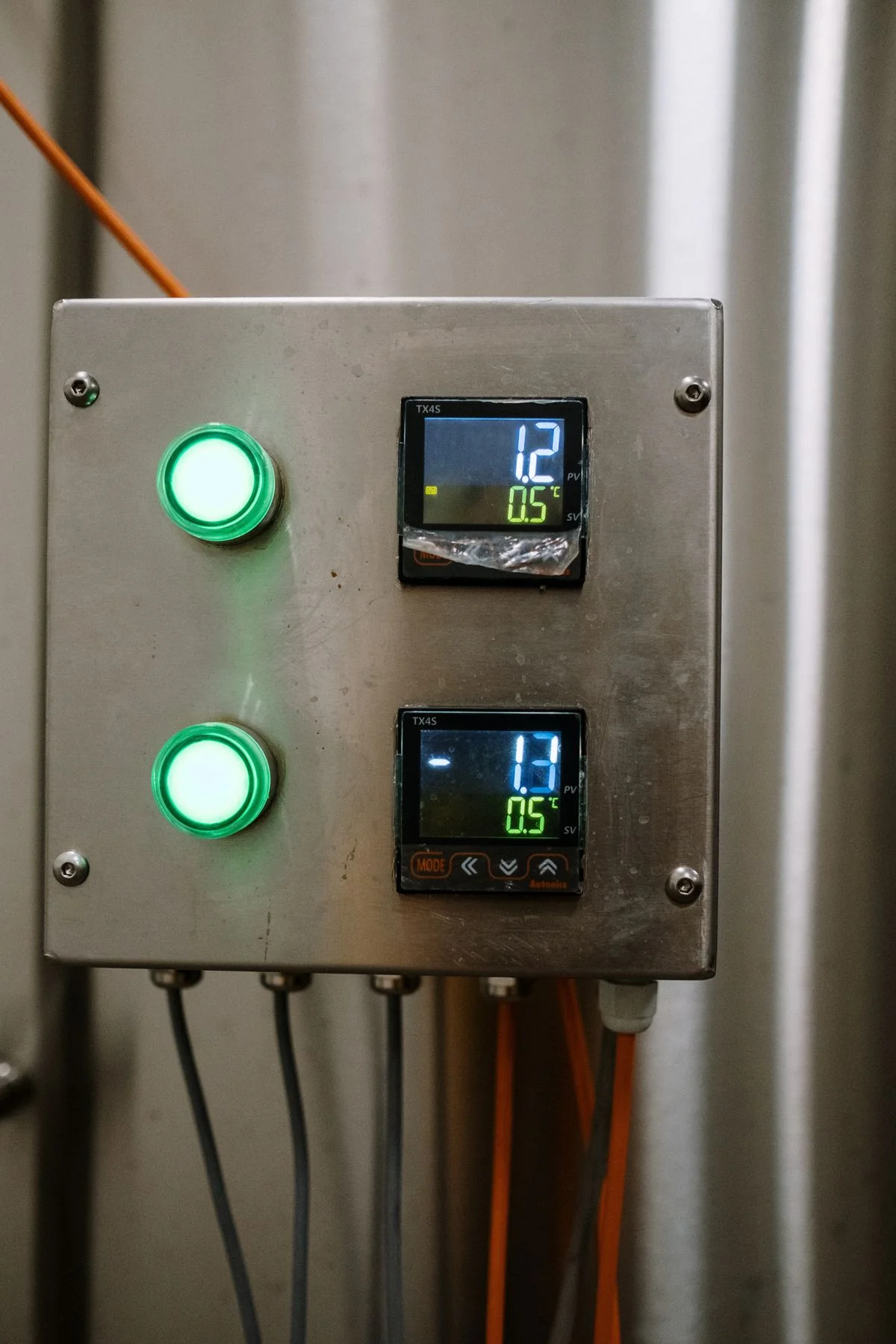
The evolution of control equipment in plastics machinery has followed three broad stages: early hardwired relay logic, the adoption of PLC-based sequential control, and the present shift toward connected automation architectures that integrate HMIs, SCADA, industrial Ethernet, and analytics. These developments have improved precision and uptime, but they have also increased system complexity, cybersecurity exposure, and the need for skilled commissioning and maintenance.
Sustainability is now a central design criterion. Modern control equipment is used to reduce scrap, optimize energy use, stabilize heating and cooling cycles, and support recycling-oriented operations such as washing, sorting, dewatering, and regranulation. Looking ahead, the sector is moving toward more adaptive control, condition monitoring, and software-defined integration across the full plastics processing line.
History and Development
Early industrial plastics machinery relied on hardwired electromechanical control, typically built from switches, relays, timers, and motor starters. This approach was robust and easy to troubleshoot, but it was limited in flexibility and required substantial panel wiring when machine logic changed.
A major milestone was the spread of PLC-based control, which made sequential logic programmable rather than fixed in wiring. PLCs became especially important for repetitive machine cycles in plastics production, including clamping, injection, screw rotation, heater zoning, conveying, and safety interlocks.
A further milestone was the adoption of distributed automation, in which PLCs, PACs, drives, HMIs, SCADA, and networked I/O were integrated into larger machine and plant architectures. This made it possible to coordinate complete lines, collect process data, and apply supervisory control across complex manufacturing cells.
Key Characteristics and Technical Overview
Control equipment in plastics machinery is designed around a closed loop: a sensor measures a process variable, the controller compares that value with a setpoint, and an actuator changes the process to reduce error. Typical measured variables include melt temperature, barrel zone temperature, mold temperature, hydraulic pressure, screw speed, motor current, air pressure, vacuum level, and conveyor position.
Core hardware functions
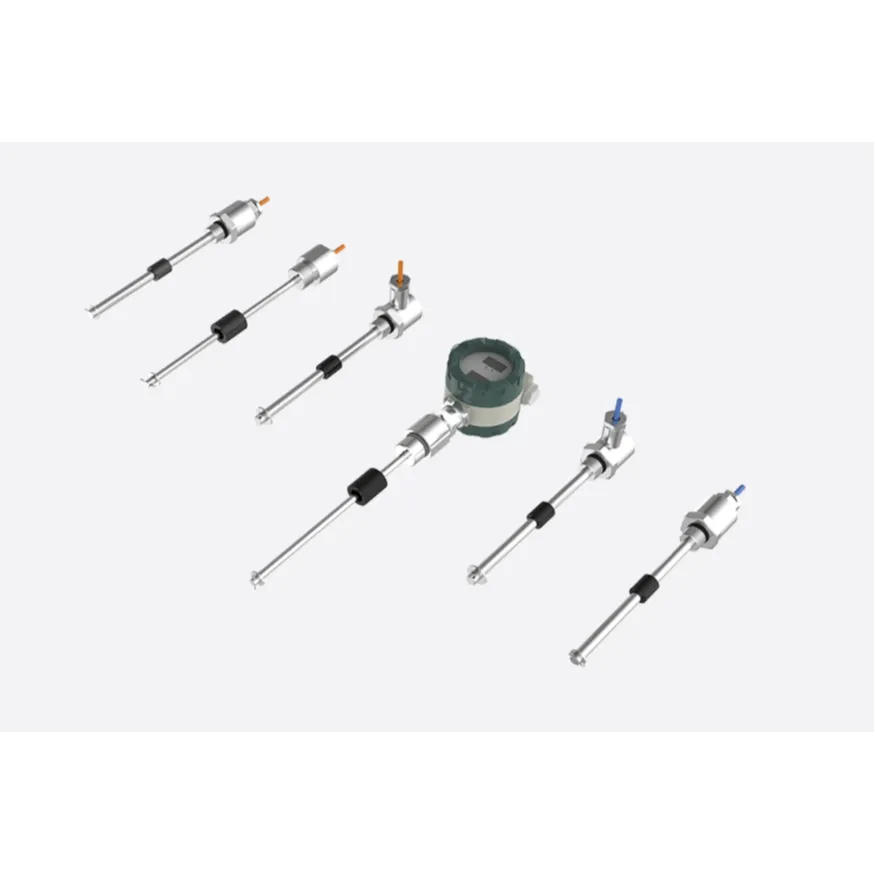
- Sensors detect temperature, pressure, level, flow, position, vibration, and current.
- Controllers such as PLCs, PACs, and dedicated process controllers execute logic, sequencing, and feedback control.
- Final control elements include valves, contactors, servo drives, motor drives, heaters, relays, and solenoids.
- HMIs present recipes, alarms, trends, and manual controls to operators.
- Safety devices and interlocks prevent unsafe motion or overheating and can shut down equipment when limits are exceeded.
Typical performance and operating benchmarks
- In plastics recycling and size-reduction lines, granulator flake size is commonly controlled to about 6–12 mm, depending on screen size and rotor configuration; control equipment regulates feed, rotor load, and discharge consistency to stabilize output quality.
- After centrifugal dewatering, residual moisture is often reduced to roughly 1–5%, depending on polymer type, part geometry, and downstream drying requirements; control systems manage rotation speed, residence time, and discharge.
- Industrial granulators and shredders commonly operate from hundreds of kilograms per hour in compact systems to multiple tons per hour in larger lines, with control equipment balancing throughput against torque and overload protection.
- Rotor speeds in size-reduction machinery can range from several hundred to several thousand rpm, depending on cutter design and material brittleness; control electronics are used to keep speed stable under changing feed loads.
- Specific energy consumption varies widely by process, but control optimization in extrusion, granulation, and auxiliary systems is commonly used to reduce unnecessary energy draw through load matching, idle reduction, and precise thermal management.
Engineering priorities
- Repeatability: maintaining cycle-to-cycle consistency in part weight, dimensions, and appearance.
- Responsiveness: correcting deviations quickly in fast thermal and mechanical processes.
- Reliability: surviving heat, vibration, dust, moisture, and electrical noise common in plastics plants.
- Scalability: supporting single machines, cells, or full plants.
- Maintainability: simplifying diagnostics, replacement, and calibration.
Types and Variations
| Type of control equipment | Main role in plastics machinery | Typical examples |
|---|---|---|
| Electromechanical control | Basic sequencing and power switching | Relays, contactors, timers, overloads |
| PLC-based control | Programmable machine logic and interlocks | Injection molding sequencers, extruder line control |
| Drive-based control | Speed, torque, and position regulation | Servo drives, variable-frequency drives |
| Process control systems | Continuous regulation of thermal and flow variables | Barrel heating, chillers, pumps, dryers |
| Supervisory systems | Plant-wide monitoring and data collection | SCADA, dashboards, alarm systems |
| Human-machine interfaces | Operator interaction and recipe management | Touch panels, industrial PCs |
Applications and Uses
Control equipment is used across the plastics sector wherever temperature, motion, and timing must remain tightly coordinated.
- Injection molding: controls clamping force, injection speed, screw recovery, hold pressure, mold temperature, and ejection timing.
- Extrusion: regulates screw speed, melt temperature, vacuum venting, haul-off speed, die pressure, and downstream cooling.
- Blow molding: coordinates parison extrusion, mold closing, inflation pressure, and trimming sequences.
- Thermoforming: controls heater zoning, sheet transport, vacuum timing, and forming pressure.
- Recycling and reprocessing: manages shredders, granulators, wash lines, centrifuges, dryers, and pelletizers; this is a strong fit because recycling lines depend on stable feed and moisture control.
- Auxiliary equipment: used in chillers, dryers, loaders, blenders, conveyors, and material handling systems.
- Poor-fit use: very simple manual-only workshop tools rarely justify advanced PLC or SCADA architectures because the control complexity and cost would exceed the value of automation.
Technological Innovations and Automation
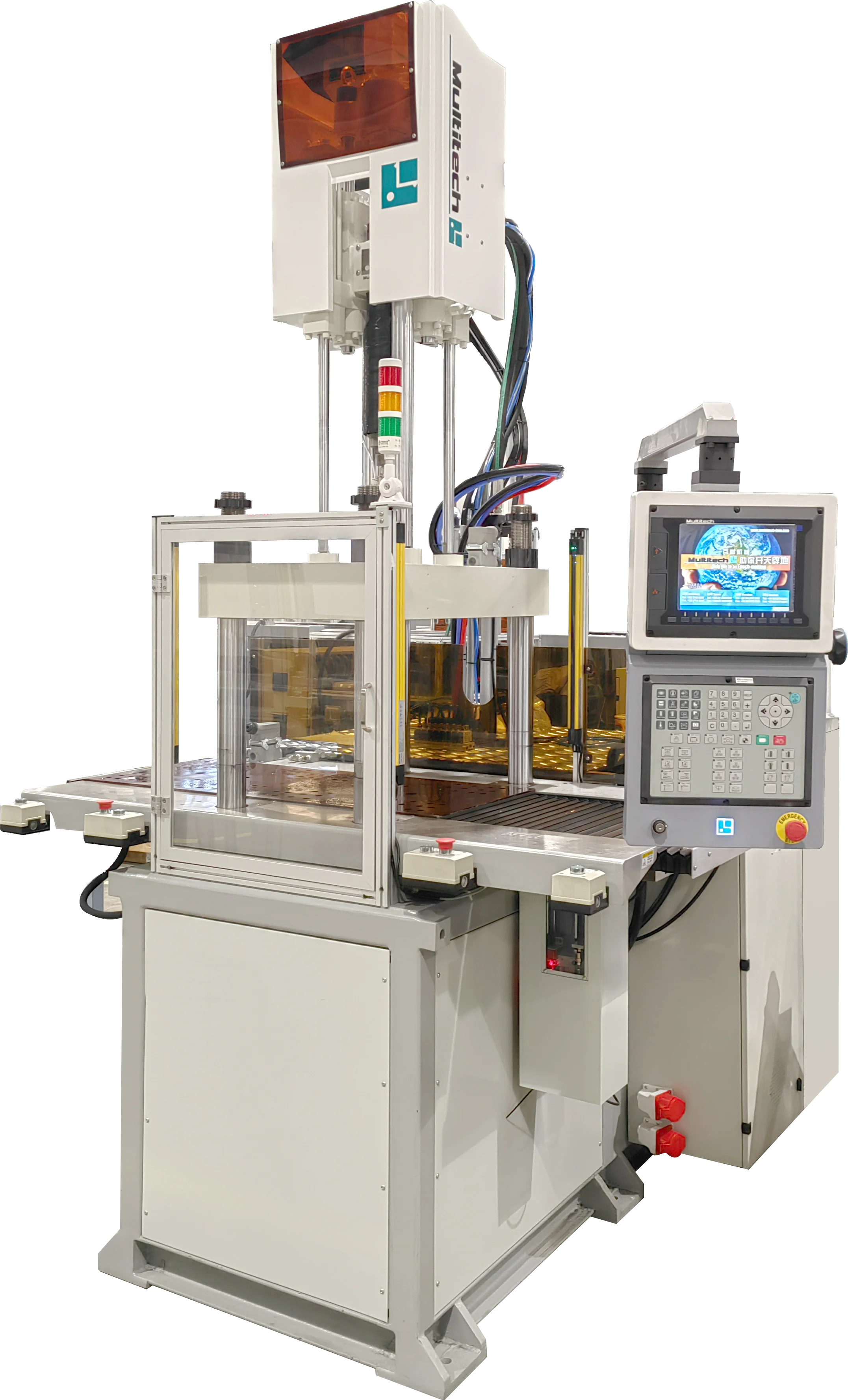
Modern control equipment increasingly combines industrial networking, remote diagnostics, motion control, and data analytics. In plastics plants, this enables recipe management, digital alarms, energy dashboards, and predictive maintenance based on trends in temperature, current, vibration, and cycle time.
Current innovations include:
- Servo-centric motion control for more precise positioning and lower mechanical wear.
- Adaptive process control that compensates for material variation, ambient temperature changes, and throughput fluctuations.
- Condition monitoring for motors, bearings, heaters, and pumps.
- Remote service and parameter backup for faster commissioning and reduced downtime.
- Integrated safety control that combines motion logic and protective functions.
Environmental and Sustainability Aspects
Control equipment contributes directly to sustainability by reducing scrap, improving thermal efficiency, and enabling tighter resource management. In plastics processing, this matters because unstable temperature or speed control can produce reject parts, off-spec melt, excess purge, and wasted energy.
Key sustainability contributions include:
- Energy efficiency through load-matched drives, optimized heater control, and reduced idle consumption.
- Material waste reduction through more stable dosing, conveying, and process sequencing.
- Water and cooling optimization in chillers, mold temperature control, and closed-loop auxiliary systems.
- Circular-economy support in washing, sorting, shredding, dewatering, and pelletizing lines for recycled polymers.
At the same time, advanced control systems can raise embodied electronics content and maintenance complexity, so lifecycle design, repairability, and software support are increasingly relevant.
Economic and Global Market Impact
Control equipment is a strategic cost and productivity factor because it affects machine uptime, scrap rate, labor intensity, and energy intensity. In capital-intensive plastics operations, even modest gains in control precision can produce significant gains in output consistency and operating margin.
Globally, demand is shaped by:
- Expansion of automation in emerging manufacturing regions.
- Replacement of legacy relay panels with PLC and drive-based systems.
- Growth in smart factory investments.
- Stronger demand for traceability, especially in packaging, medical, and automotive plastics.
- Rising interest in retrofits that modernize existing machinery rather than replace it entirely.
Current Challenges and Innovations
Several challenges define the present state of the field:
- System integration: legacy machines often combine old and new control architectures.
- Cybersecurity: connected HMIs, SCADA, and remote access increase exposure.
- Skills gaps: troubleshooting modern control systems requires electrical, software, and process knowledge.
- Environmental robustness: dust, heat, vibration, and electromagnetic interference remain persistent hazards in plastics plants.
- Compatibility: control systems must accommodate diverse polymers, regrind ratios, and changing process windows.
Innovation is responding through modular platforms, better diagnostics, safer network design, and more standardized machine data models.
Future Outlook
The future of control equipment in plastics machinery is likely to be defined by greater autonomy, higher data integration, and more energy-aware control logic. Control hardware will continue to converge with software, making process optimization more predictive and less reactive.
Likely developments include:
- Wider adoption of edge computing for fast local decisions.
- More extensive use of digital twins for commissioning and optimization.
- Machine-learning-assisted control for process drift detection and parameter tuning.
- Improved closed-loop recycling-line control for contaminated and variable feedstocks.
- More compact, modular control cabinets with simpler retrofit pathways.
Summary
Control equipment is the functional core of plastics processing automation, linking measurement, logic, and actuation to deliver stable product quality, safe operation, and efficient use of energy and material. Its evolution from relay logic to PLC- and network-based architectures has transformed both machine capability and plant productivity, and its future will be shaped by smarter control, stronger connectivity, and tighter sustainability requirements.
References
- •
Careers. (n.d.).Link
- •
What is control equipment? - Sumble. (2026, May 26).Link
- •
Equipment Systems Application Engineer. (n.d.).Link
- •
Control Equipment | IEEE Technology Navigator. (n.d.).Link
- •
Control equipment Definition: 252 Samples. (2025, July 15).Link
- •
Types of Control Devices and Sensors in Electrical Systems. (2024, April 1).Link
- •
Industrial Control Equipment: An Overview of the Types, .... (2023, June 2).Link
- •
Control Devices: Types, Functions, and How to Select Them. (2025, September 11).Link
- •
Uses of Control System - GeeksforGeeks. (2024, January 29).Link
- •
Circuit Control Devices - CEDengineering.com. (n.d.).Link
- •
Types of Controls and Controllers - Thomasnet. (2021, December 6).Link
- •
Examples of Electrical Control Equipment for Modern Automation. (2025, April 20).Link
- •
APPLICATION OF CONTROL SYSTEMS. (2023, December 9).Link
- •
Control equipment. (n.d.).Link
- •
5.5: Circuit Control Devices. (2019, August 14).Link
- •
Control devices - Electronic systems - Edexcel - GCSE Design and Technology Revision - Edexcel - BBC Bitesize. (2024, May 14).Link
- •
Environmental control equipment Definition. (2025, July 6).Link
- •
What Is a Control System and Why It Matters | WGPT. (n.d.).Link
- •
Equipment Control | IEEE Technology Navigator. (n.d.).Link
- •
Control System: Types, Uses, and Components. (2025, August 7).Link
- •
5 Types of Control Systems for Industrial Applications. (2025, May 9).Link
- •
The 8 Types of Industrial Control Systems. (2021, September 29).Link
- •
Applications. (2016, January 1).Link
- •
All Types of Electrical Control Devices - OOHMAGE. (2024, October 23).Link
- •
Control Systems & Control Components. (2025, March 28).Link
- •
Category:Control devices - Wikipedia. (2020, August 1).Link
- •
[PDF] 17.8.101 DEFINITIONS As used in this chapter, unless ... - EPA. (n.d.).Link
- •
Industrial control system - Wikipedia. (2006, October 7).Link
- •
Control equipment - Tipteh. (n.d.).Link
- •
Introduction to Industrial Control Systems - Swanson Flo. (n.d.).Link
- •
Control Systems: Basics and Applications. (2025, March 11).Link
- •
Different Types of Electrical Control Systems. (2023, June 12).Link
- •
Exploring the Diverse Types of Control Panel Instruments. (2023, June 13).Link
- •
Essential Components of Electrical Control Systems Explained. (2025, December 29).Link
- •
Details for IEV number 351-56-24: "control equipment". (2013, November 1).Link
- •
Instrumentation & Controls - Benefits & Applications. (2025, October 7).Link
- •
What is control system? | Definition from TechTarget. (2023, March 31).Link
- •
40 CFR § 64.1 - Definitions. (2016, July 25).Link
- •
Control Device definition and meaning | GenieAI. (n.d.).Link
- •
Industrial Controls And Electronics. (2023, June 23).Link
- •
Rotary Handles | Isolator Handles | Disconnector Switch Turn Handles. (2025, November 5).Link
- •
Manufacturing Instrumentation And Control Systems | ITI College. (2024, November 6).Link
- •
CONTROL | English meaning - Cambridge Dictionary. (2026, January 1).Link
- •
Process Control Applications for beginners. (2018, January 9).Link
- •
A Comprehensive Guide to Machine Control Systems. (2025, April 2).Link
- •
Industrial Automation Control Products Allen‑Bradley. (2026, August 13).Link