
Introduction
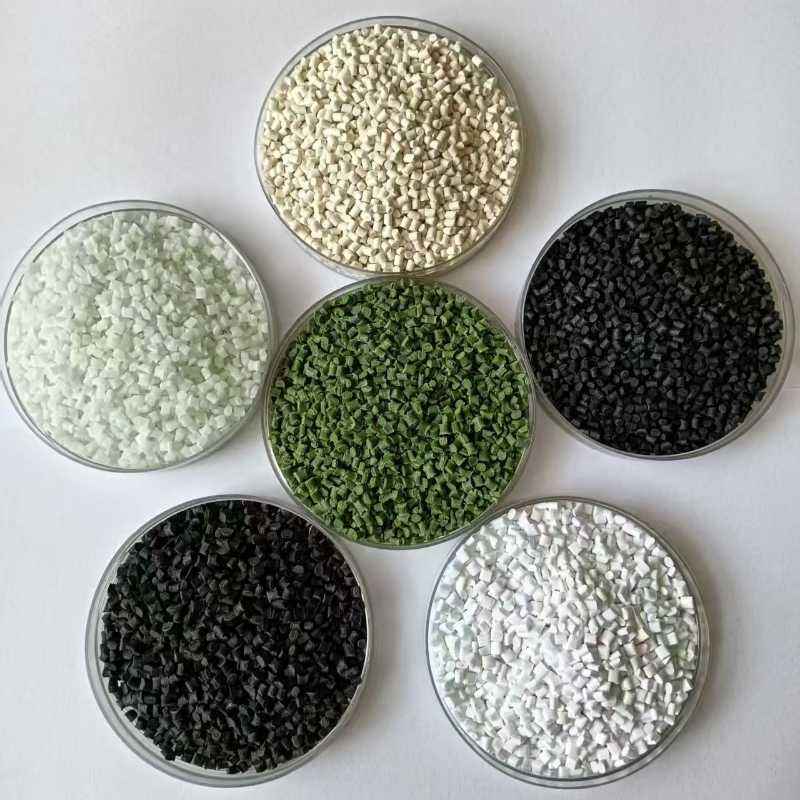
Pelletizers are machines that convert polymer melt, plastic scrap, or other particulate feedstocks into small, uniform pellets for downstream processing, handling, storage, and transport. In plastics processing, pelletizing is a critical finishing step because it transforms irregular material into a standardized feedstock for injection molding, blow molding, film extrusion, and compounding lines.
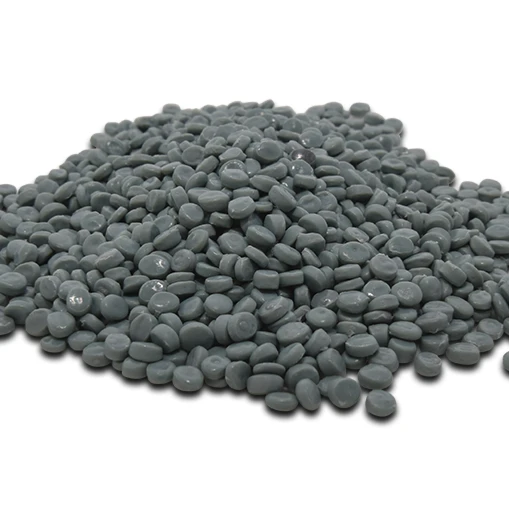
In the plastics industry, the term usually refers to the cutting or forming stage at the end of an extrusion or recycling line, rather than the entire extrusion system itself. The main machine families are strand pelletizers, water-ring or die-face pelletizers, and underwater pelletizers, each selected according to polymer type, throughput, pellet geometry, and contamination sensitivity. Beyond virgin resin finishing, pelletizers are central to plastic recycling, masterbatch production*, **thermoplastic elastomers, **hot-melt* adhesives, and specialized compounds, where they improve metering accuracy and downstream consistency.
Historically, pelletizing developed from broader agglomeration and compaction machinery used in minerals, feed, and chemicals, then evolved in plastics into high-speed cutting systems integrated with extrusion and automated cooling, dewatering, and screening. Modern systems emphasize throughput stability, energy efficiency, closed-loop water handling, and compatibility with digital process control, while sustainability pressures increasingly favor designs that reduce scrap, moisture, and off-spec pellets.
History and Development
Early pelletizing technologies arose from industrial agglomeration practices in minerals and feed, where powders were compacted or rolled into transportable granules. Plastics adoption accelerated when extrusion made it practical to standardize molten polymer into repeatable pellets suitable for reprocessing and resale.
Several milestones shaped the modern plastics pelletizer:
- Strand pelletizing became a widely used early industrial method because it was mechanically straightforward: molten strands were cooled, then cut into pellets after solidification.
- Die-face pelletizing, including water-ring and later underwater systems, enabled more compact layouts and better control for high-output compounding and polymer production.
- Underwater pelletizing advanced as a premium solution for high-throughput lines, especially where uniform spherical pellets, rapid heat removal, and automation were important.
As extrusion and recycling lines became more sophisticated, pelletizers were increasingly integrated with vacuum venting, melt filtration, automatic screen changers, centrifugal dewatering, and process monitoring to stabilize pellet quality and reduce downtime.
Key Characteristics and Technical Overview
A pelletizer’s core function is to create uniform pellet size and shape from a controlled melt or agglomerated feed. In plastics, the machine is usually downstream of an extruder, where it receives filtered polymer melt and cuts it into discrete granules.
Working principle
- Feeding and melt preparation: Polymer melt, compounded resin, or recycled plastic enters the pelletizing section after plasticization and filtration.
- Formation of strands or die-face flow: In strand systems, melt exits as continuous filaments; in die-face systems, melt is cut immediately at or near the die surface.
- Cutting and shaping: Rotating knives, water-assisted cutters, or underwater rotor knives separate the melt into pellets of controlled length or geometry.
- Cooling and solidification: Cooling may occur in water baths, water rings, or submerged chambers, depending on machine type.
- Dewatering and finishing: Pellets are dried or centrifugally dewatered before screening and storage.
Typical technical ranges in plastics pelletizing
| Parameter | Typical industrial range |
|---|---|
| Pellet size | About 2–5 mm for many plastics applications, with some systems producing larger or smaller formats depending on end use. |
| Pellet shape | Cylindrical, rounded, or spherical, depending on process and die design. |
| Strand pelletizer throughput | Commonly suitable for medium to high output lines; practical capacity varies widely by polymer and strand count. |
| Water-ring pelletizer throughput | Often used in compact continuous production; cited industrial capacities can reach around 2,000 kg/h in suitable resin systems. |
| Underwater pelletizer throughput | Often selected for high-output systems; cited industrial capacities can reach around 3,000 kg/h in suitable applications. |
| Rotor or cutter speeds | High-speed cutting heads are typical; exact rotor speed depends on die size, melt viscosity, and pellet diameter. |
| Residual moisture after dewatering | Centrifugal dewatering and drying are typically intended to leave pellets at low residual moisture; industrial systems often target very low surface moisture before siloing, with exact values depending on resin and dryer design. |
| Specific energy consumption | Highly process-dependent; energy use is influenced by extrusion load, cooling demand, cutting system, and dewatering efficiency. |
Because pelletizers sit at the intersection of mechanics, heat transfer, and polymer rheology, their performance depends strongly on melt viscosity, contamination load, die pressure stability, and cooling behavior.
Types and Variations
Strand pelletizers
Strand pelletizers extrude polymer through a die into continuous strands, cool them in a water bath or controlled cooling section, and cut them into pellets after solidification. They are valued for visible strand quality, straightforward operation, and flexibility across many compounds.
Water-ring pelletizers
Water-ring systems cut melt at the die face while a circulating water ring cools the pellets immediately. They are compact and widely used for continuous production where a relatively simple layout and good pellet appearance are desired.
Underwater pelletizers
Underwater systems cut molten polymer directly inside a water chamber, allowing immediate quenching and highly uniform pellet formation. They are favored for high-throughput lines, especially in compounding and polymer production where spherical pellet quality and automation are important.
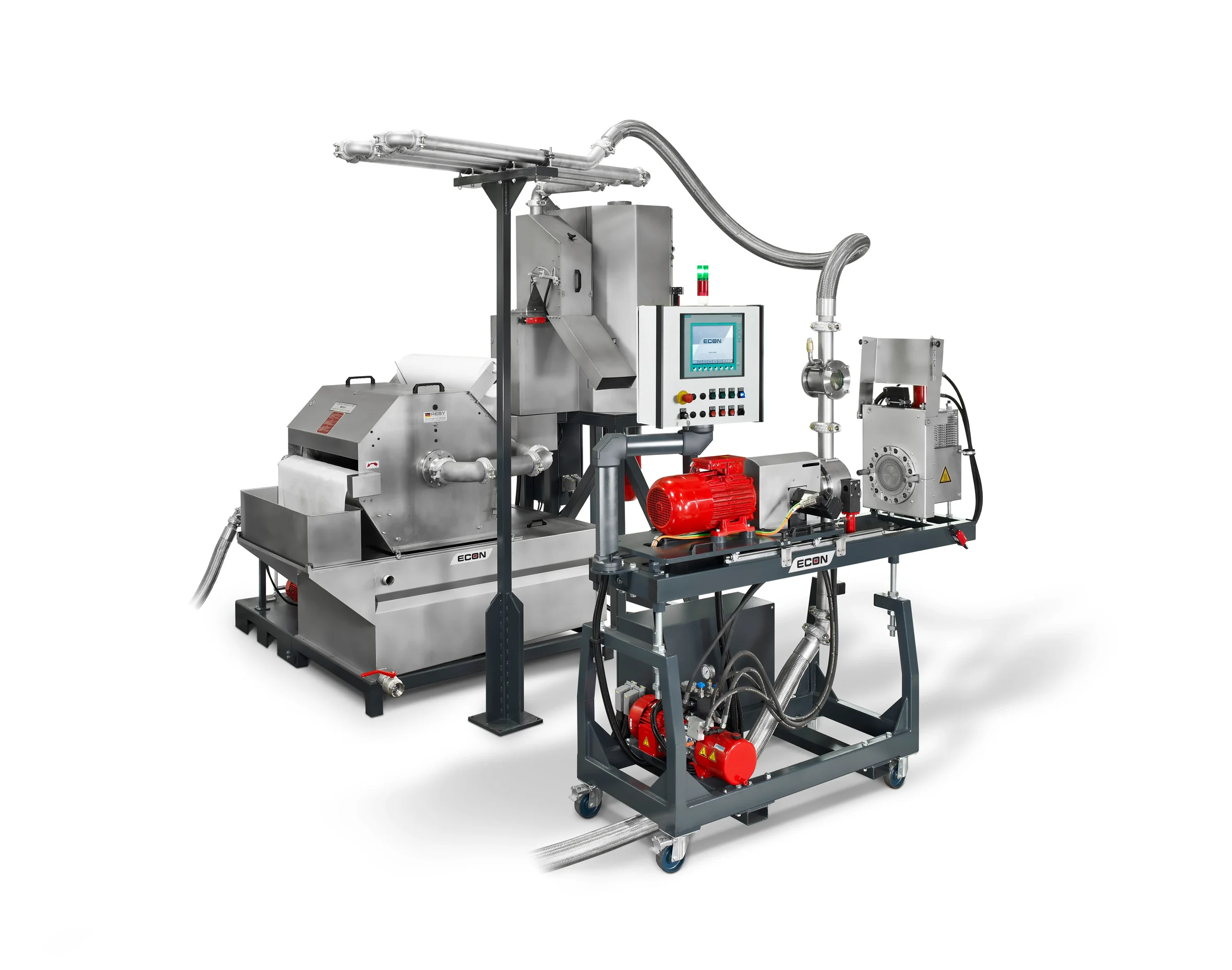
Air-cooled hot-cut systems
Air-cooled hot-cut pelletizers cut the melt near the die without water as the primary cooling medium. They are used where water contact is undesirable or where material behavior suits air cooling better.
Compaction and recycling pelletizers
In recycling, some pelletizing lines include pre-compaction, shredding, densification, vacuum degassing, extrusion, and cutting as one integrated system. These systems are particularly relevant for film scrap, woven sacks, post-industrial waste, and contaminated regrind when stable melt conveyance is required.
Applications and Uses
Pelletizers are used wherever polymers must be converted into a standardized feedstock with controlled size and handling properties.
- Virgin resin production: Pelletizers finish polymerization output into marketable resin pellets suitable for shipping and converting.
- Compounding and masterbatch: They convert filled or reinforced formulations into pellets with consistent additive distribution.
- Plastic recycling: They turn washed, filtered, and re-melted plastic waste into reusable pellets for reprocessing.
- Hot-melt adhesives and thermoplastic elastomers: They produce manageable pellets from sticky or temperature-sensitive formulations.
- Medical and food-related polymers: Modular systems are used where cleanliness, consistency, and traceability matter.

A poor-fit application is highly moisture-sensitive or heavily contaminated feed without adequate pre-drying and filtration; in such cases, pelletizing alone cannot compensate for poor upstream preparation and may produce voids, degradation, or unstable cut quality.
Technological Innovations and Automation
Modern pelletizing systems increasingly use automated process control to stabilize melt flow, knife load, water temperature, pellet length, and throughput. In practice, this can improve pellet uniformity and reduce operator dependence.
Key innovations include:
- Automatic screen changers that maintain filtration without prolonged shutdowns.
- Vacuum venting for moisture and volatile removal in recycling and compounding lines.
- Closed-loop water systems to reduce water use and temperature fluctuation.
- Condition monitoring for cutter wear, bearing health, and die pressure stability.
- Integrated line control connecting extruder speed, melt pressure, cutter rpm, and cooling flow.
Industry suppliers increasingly market modular pelletizing systems for compounding, recycling, micropellets, WPCs, and specialty formulations, reflecting the trend toward process-specific configuration rather than one universal design.
Environmental and Sustainability Aspects
Pelletizers contribute to sustainability primarily by enabling recycling, reclaim, and material reuse. By turning scrap into pellets, they support circular-economy feedstocks that can re-enter molding and extrusion chains.
Sustainability performance depends on several factors:
- Energy efficiency: Systems with stable extrusion, efficient cutting, and low rework reduce energy per kilogram of usable pellet.
- Waste reduction: Better melt filtration and process control lower off-spec output and scrap rates.
- Water management: Water-ring and underwater systems can require substantial cooling and dewatering infrastructure, making closed-loop water handling important.
- Pellet quality: Consistent pellet geometry improves downstream feeding, reducing processing losses in molding and compounding.
The sustainability trade-off is that higher automation and more intensive cooling can raise capital cost and system complexity, even while improving material efficiency and product consistency.
Economic and Global Market Impact
Pelletizers are strategically important because they define the form in which many polymers are sold, transported, and processed. In resin production, they are part of the final value-adding stage; in recycling, they often determine whether scrap can be upgraded into a marketable secondary raw material.
Economic relevance is strongest in:
- High-volume polymer plants
- Compounding and masterbatch facilities
- Mechanical recycling operations
- Specialty polymer and additive manufacturing supply chains
Pelletizing technology also has a significant equipment market because buyers often choose systems based on throughput, resin family, pellet appearance, automation level, and maintenance profile rather than price alone.
Current Challenges and Innovations
Several engineering challenges remain central:
- Melt sensitivity: Heat-sensitive polymers can degrade if residence time or cutting temperature is excessive.
- Contamination control: Recycling feeds may contain moisture, labels, paper, or mixed polymers that complicate extrusion and pellet quality.
- Knife wear and maintenance: Cutting performance depends on blade sharpness, die-face cleanliness, and alignment.
- Moisture removal: Residual water after pelletizing must be managed to avoid storage and feeding problems.
- Process stability: Fluctuating viscosity or pressure can produce fines, stringing, or irregular pellet geometry.
Current innovation is focused on more robust filtration, improved die materials, advanced cooling design, and easier changeover between resin grades.
Future Outlook
Pelletizers are likely to remain essential as the plastics industry pursues higher recycled content, tighter quality control, and more automated production. Future systems will probably emphasize:
- Greater compatibility with recycled and mixed feedstocks
- Lower energy and water intensity
- Higher levels of digital monitoring and predictive maintenance
- More compact, modular line architectures
- Improved pellet consistency for sensitive downstream applications
As circular plastics markets mature, pelletizing will become even more important as the interface between waste recovery, compounding, and high-value manufacturing.
References
- •
Merriam-Webster. (2024, August 5). PELLETIZER definition & meaning. https://www.merriam-webster.com/dictionary/pelletizerLink
- •
Merriam-Webster. (2024, August 5). Definition of PELLETIZERS. https://www.merriam-webster.com/dictionary/pelletizersLink
- •
GlobalSpec. (n.d.). Customize your GlobalSpec experience. https://www.globalspec.com/learnmore/manufacturing_process_equipment/materials_processing_equipment/pelletizersLink
- •
Recycling Today. (2025, February 9). Choose the right pelletizer for different materials. https://www.recyclingtoday.org/blogs/news/choose-the-right-pelletizer-for-different-materialsLink
- •
GSmach. (2025, December 23). What is a pelletizer and how does a pelletizer work? https://www.gsextruder.com/what-is-a-pelletizer-and-how-does-a-pelletizer-work/Link
- •
Chuangbo. (2020, September 16). How to divide different pelletizing system. https://www.chuangboextrusion.com/how-to-divide-different-pelletizing-system.htmlLink
- •
Suhui Machine. (2026, August 19). What is a pelletizer and the four ways it cuts. https://suhuimachine.com/blog/technology/what-is-a-pelletizer/Link
- •
Technomaszbud. (2025, April 9). All about pelletizers - operation and use. https://technomaszbud.pl/en/wszystko-co-musisz-wiedziec-o-peleciarkachLink
- •
Open Source Ecology. (2014, February 26). Pelletizer. https://www.opensourceecology.org/portfolio/pelletizer/Link
- •
Fisheries Journal. (n.d.). On studying different types of pelletizing system for fish feed. https://www.fisheriesjournal.com/archives/2019/vol7issue2/PartC/7-2-4-857.pdfLink
- •
TP Machinery. (2026, June 12). How does disc pelletizer operation work? A complete technical guide. https://www.tp-machinery.com/news/industry-news/how-does-disc-pelletizer-operation-work-a-complete-technical-guide.htmlLink
- •
Mars Mineral. (n.d.). Why pelletize. https://www.marsmineral.com/why-pelletize.phpLink
- •
Neuralword. (2023, October 30). How does a pelletizer work: A comprehensive guide. https://www.neuralword.com/en/innovation-technology/innovations-future-products/how-does-a-pelletizer-work-a-comprehensive-guideLink
- •
Industrial Blades and Knives. (2023, August 28). What is pelletizing? https://www.industrialbladesandknives.com/articles/what-is-pelletizingLink
- •
TP Machinery. (2026, August 15). What is a disc pelletizer? How it works, types & applications. https://www.tp-machinery.com/news/industry-news/what-is-a-disc-pelletizer-how-it-works-types-applications.htmlLink
- •
Fangtai Plastic Machine. (2024, June 24). How does a plastic pelletizer work? https://www.fangtaiplasticmachine.com/resources/how-does-a-plastic-pelletizer-work.htmlLink
- •
Alibaba. (2026, March 10). Exploring particles pelletizer: Composition, grades, and applications. https://www.alibaba.com/product-insights/particles-pelletizer.htmlLink
- •
Recycling Today. (2025, January 1). Pelletizers for plastic recycling & material processing. https://www.recyclingtoday.org/pages/pelletizersLink
- •
HONGQI. (2026, August 15). What are the different types of pelletizers? https://www.gdhongqijixie.com/news/179/Link
- •
Plastics Technology. (2019, February 1). Follow these guidelines to select the right pelletizing system. https://www.ptonline.com/articles/follow-these-guidelines-to-select-the-right-pelletizing-systemLink
- •
Kitech Recycling. (2026, June 4). Compacting pelletizer working principle: How KCP-style lines work. https://kitech-recycling.com/blog/compacting-pelletizer-working-principle/Link
- •
Energycle. (2025, May 22). 2. Die-face pelletizers. https://www.energycle.com/plastic-pelletizer-types-guide-to-choosing-your-recycling-solution/Link
- •
Recycling Today. (2024, October 30). Plastic pelletizer: Everything you need to know. https://www.recyclingtoday.org/blogs/news/plastic-pelletizer-everything-you-need-to-knowLink
- •
Kitech Recycling. (2026, April 12). Plastic pelletizer: Types, working principle & selection guide. https://kitech-recycling.com/blog/plastic-pelletizer/Link
- •
TP Machinery. (2026, June 5). How does a fertilizer disc pelletizer work and how to choose one. https://www.tp-machinery.com/news/industry-news/how-does-a-fertilizer-disc-pelletizer-work-and-how-to.htmlLink
- •
Compas Analytics Hub. (2025, October 15). How pelletizer works — In one simple flow (2025). https://www.linkedin.com/pulse/how-pelletizer-works-one-simple-flow-2025-compas-analytics-hub-o6sufLink
- •
Vocabulary.com. (2025, February 18). Pelletizer - Definition, meaning & synonyms. https://www.vocabulary.com/dictionary/pelletizerLink
- •
Retech Machinery. (n.d.). How to choose the right plastic pelletizer system. https://www.retechmachine.com/news/how-to-choose-the-right-plastic-pelletizer-system.htmlLink
- •
TCPEL. (2026, June 23). How an animal feed pelletizer works: 2026 process guide. https://tcpel.net/blog/animal-feed-pelletizer-guide/Link
- •
FEECO International. (2023, October 26). What is pelletizing? https://feeco.com/what-is-pelletizing/Link
- •
Hmicronpowder. (n.d.). Pelletizing technology extrusion and. https://www.hmicronpowder.com/wp-content/uploads/2015/02/Pelletizing-Technology.pdfLink
- •
Aceretech. (2022, August 10). How does a plastic pelletizer work? https://www.aceretech.com/blog/marketing-event-3/how-does-a-plastic-pelletizer-work-160Link
- •
Rayli Machinery. (2026, August 12). How does a plastic pelletizer work: Complete working principle for plastic recycling. https://raylimachinery.com/ru/how-does-a-plastic-pelletizer-work/Link
- •
ScienceDirect. (2015, October 30). Pelletizer - An overview. https://www.sciencedirect.com/topics/engineering/pelletizerLink
- •
Nordson. (2025, March 19). BKG® underwater pelletizers & systems. https://www.nordson.com/en/divisions/polymer-processing-systems/pelletizers---product-category-pageLink
- •
Alibaba. (2026, August 12). Catalyst pelletizer machine overview: Performance, composition. https://www.alibaba.com/product-insights/catalyst-pelletizer-machine.htmlLink
- •
Educalingo. (2024, January 1). PELLETIZER - 영어사전에서 pelletizer 의 정의 및 동의어. https://educalingo.com/ko/dic-en/pelletizerLink
- •
Genius Plas. (2020, March 28). 5 minutes to understand plastic pelletizing machine. https://www.geniusplas.com/en/article/plastic-pelletizing-machine-guide.htmlLink
- •
Making.com. (n.d.). Pelleting equipment. https://making.com/technologies/pelletingLink
- •
ScienceDirect. (2012, January 1). Pelletizing - An overview. https://www.sciencedirect.com/topics/chemical-engineering/pelletizingLink
- •
Energycle. (2026, July 28). Pelletizing plastic: Methods, machines & cost guide (2026). https://www.energycle.com/pelletizing-plastic/Link
- •
Pureloop. (n.d.). Plastic pelletizing | Blog. https://www.pureloop.com/en/blog/plastic-pelletizing--99/Link
- •
Maag. (2026, March 24). Pelletizing systems for polymer production. https://maag.com/maag-products/pelletizing-systems/Link