
Introduction
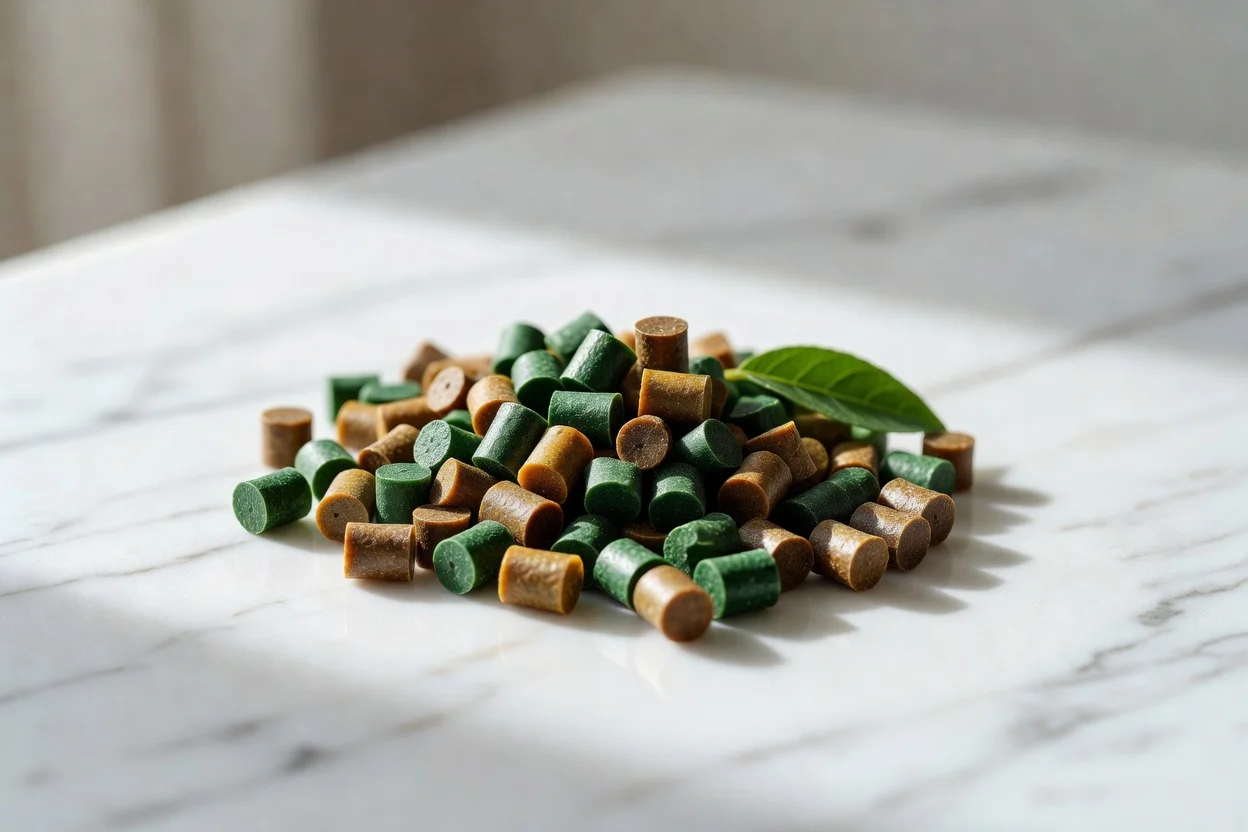
Biodegradable colour masterbatches are concentrated colour concentrates formulated for use in compostable or otherwise biodegradable plastic systems, where the carrier resin, pigments, and auxiliaries are selected to be compatible with end-of-life biodegradation or composting requirements. They are used to deliver uniform coloration, controlled dispersion, and processing stability in materials such as PLA, PBAT, PBS, and PHA-based compounds, while avoiding the incompatibility that can arise when conventional polyolefin masterbatches are added to compostable formulations.
Their development reflects a broader shift in the plastics industry: from colouring conventional polymers with durable, fossil-based concentrates toward designing colour systems that preserve compostability, meet certification regimes, and fit lower-carbon packaging and short-life applications. Recent technical work has also explored natural-pigment masterbatches based on biodegradable carriers, showing that colour can be added at relatively low loadings while maintaining functional performance in injection-moulded biodegradable parts.
History and development
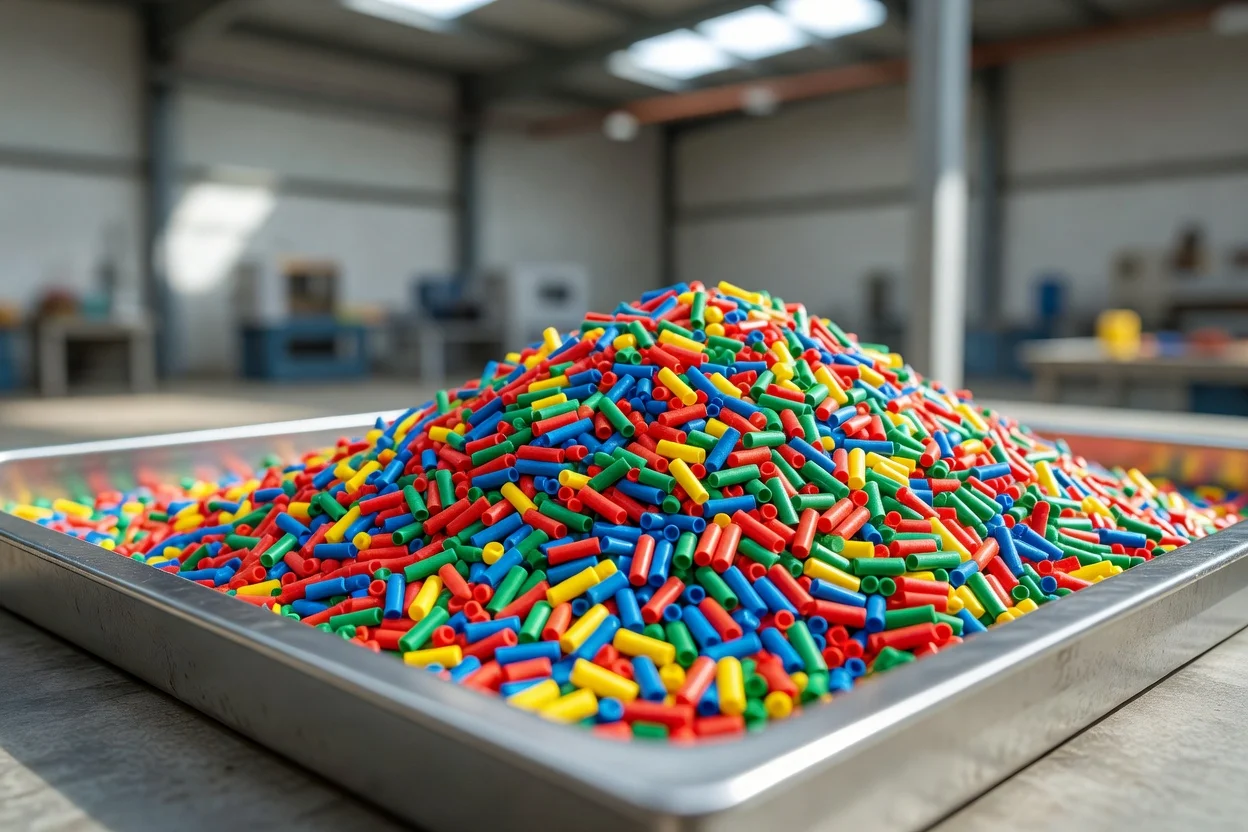
Masterbatch technology predates the biodegradable plastics movement and was originally developed as an efficient way to disperse pigments or additives in a carrier resin before dilution into a final polymer melt. As compostable polymers such as PLA, PBAT, PBS, and PHA entered packaging and consumer-goods markets, colour suppliers began adapting masterbatch systems so that the carrier resin, pigments, dispersants, and processing aids would not undermine the biodegradation profile of the finished article.
Patent literature shows that biodegradable colour masterbatches have been engineered with biodegradable carrier resins, fillers, pigments, and auxiliaries, typically processed by premixing followed by twin-screw extrusion and granulation. More recent commercial portfolios and academic studies indicate a transition from purely synthetic pigment systems toward certified compostable colour solutions and, in some cases, natural pigments for improved environmental alignment.
Chemical structure and key properties
A biodegradable colour masterbatch is not a single chemical substance but a formulated system containing:
- a biodegradable carrier resin such as PLA, PBAT, PBS, or PHA/PHB-compatible matrices
- one or more pigments or colourants, which may be inorganic, organic, or natural-pigment based
- auxiliaries such as dispersants, plasticizers, coupling agents, and lubricants to improve wetting, dispersion, flow, and compatibility
- optional fillers or extenders, used carefully so they do not compromise mechanical performance or compostability targets
Typical commercial dosing is often in the low single-digit range, commonly around 1% to 5% of the finished polymer, although some development studies have evaluated 2%, 4%, and 6% addition levels for biodegradable injection-moulded parts.
Functional properties
The most important performance requirements are:
- Colour uniformity: pigments must disperse finely to avoid specks, streaks, or shade variation.
- Compatibility: the masterbatch carrier should blend readily with the target biodegradable resin to avoid phase separation.
- Thermal stability: the colour system must survive the processing window of the base polymer without excessive degradation or discoloration.
- Compostability alignment: the full formulation must support the intended biodegradation or compostability certification pathway.
Real limits and workarounds
- Colour inconsistency or specking → caused by poor pigment wetting or insufficient dispersion in the carrier → workaround: use twin-screw compounding, appropriate dispersants, and a carrier resin closely matched to the base polymer.
- Loss of compostability certification → caused by non-compatible additives, pigments, or carriers → workaround: use certified biodegradable carriers and certification-aligned pigment/additive packages.
- Thermal sensitivity → caused by degradation of some biopolymers and natural pigments during prolonged residence at processing temperatures → workaround: shorten residence time, optimize temperature profiles, and use pigments stable in the intended processing window.
- Reduced mechanical properties at high loading → caused by excessive pigment or filler content disrupting polymer continuity → workaround: keep colourant loadings low and use only the minimum filler necessary for processing or cost control.
Production processes and raw feedstocks
Biodegradable colour masterbatches are typically produced by:
- weighing and premixing the carrier resin, pigments, and auxiliaries
- melt compounding in a twin-screw extruder
- cooling and pelletizing or granulating the concentrate
- blending the pellets into the final biodegradable product during film extrusion, injection moulding, thermoforming, or related processing steps
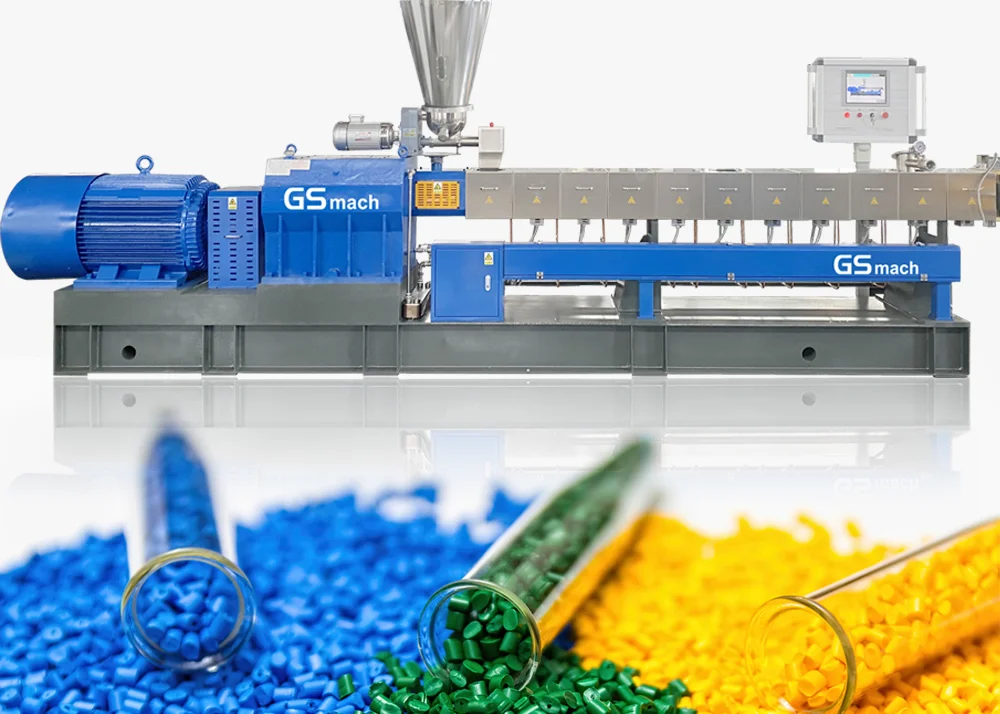
The raw feedstocks depend on the formulation strategy:
- Carrier resins: PLA, PBAT, PBS, and PHA-family polymers are commonly referenced in commercial and patent sources.
- Pigments: conventional organic or inorganic pigments remain common, but natural pigments such as spirulina, curcumin, beetroot, and chlorophyllin have been studied for biodegradable systems.
- Additives: coupling agents, lubricants, plasticizers, and dispersants improve processing and colour development.
In one patent example, the biodegradable masterbatch is composed of 60% to 85% biodegradable carrier, 0% to 15% filler, 5% to 25% pigment, and 2% to 9% auxiliaries, reflecting a design that prioritizes carrier compatibility and pigment loading control. Academic work has likewise confirmed that twin-screw extrusion is well suited to dispersing natural pigments into PLA and PBS masterbatches for injection-moulded parts.
Applications and end-use markets
Biodegradable colour masterbatches are used wherever colour must be added without compromising the compostability or biodegradability goals of the article.
| End-use sector | Typical biodegradable base resin | Usual process | Role of the masterbatch |
|---|---|---|---|
| Flexible packaging | PLA, PBAT, PLA/PBAT blends | Blown film, cast film | Uniform colour, brand differentiation, opacity or tint control |
| Compostable bags and liners | PBAT, starch blends, PLA blends | Film extrusion | Colouring without impairing compostable certification targets |
| Food-service items | PLA, PBS, PHA blends | Injection moulding, thermoforming | Aesthetic colour plus process consistency |
| Agricultural films | PBAT, PBS, PLA blends | Film extrusion | Colour coding, light management, product identification |
| Mulch film and plant pots | PBAT, PLA, starch blends | Film extrusion, injection moulding | Functional colouring for agriculture and horticulture |
| Consumer goods | PLA, PBS, PHA | Injection moulding | Durable appearance in short-life products |
| Medical and hygiene disposables | Biodegradable blends with strict regulatory control | Injection moulding, extrusion | Controlled aesthetics for single-use items |
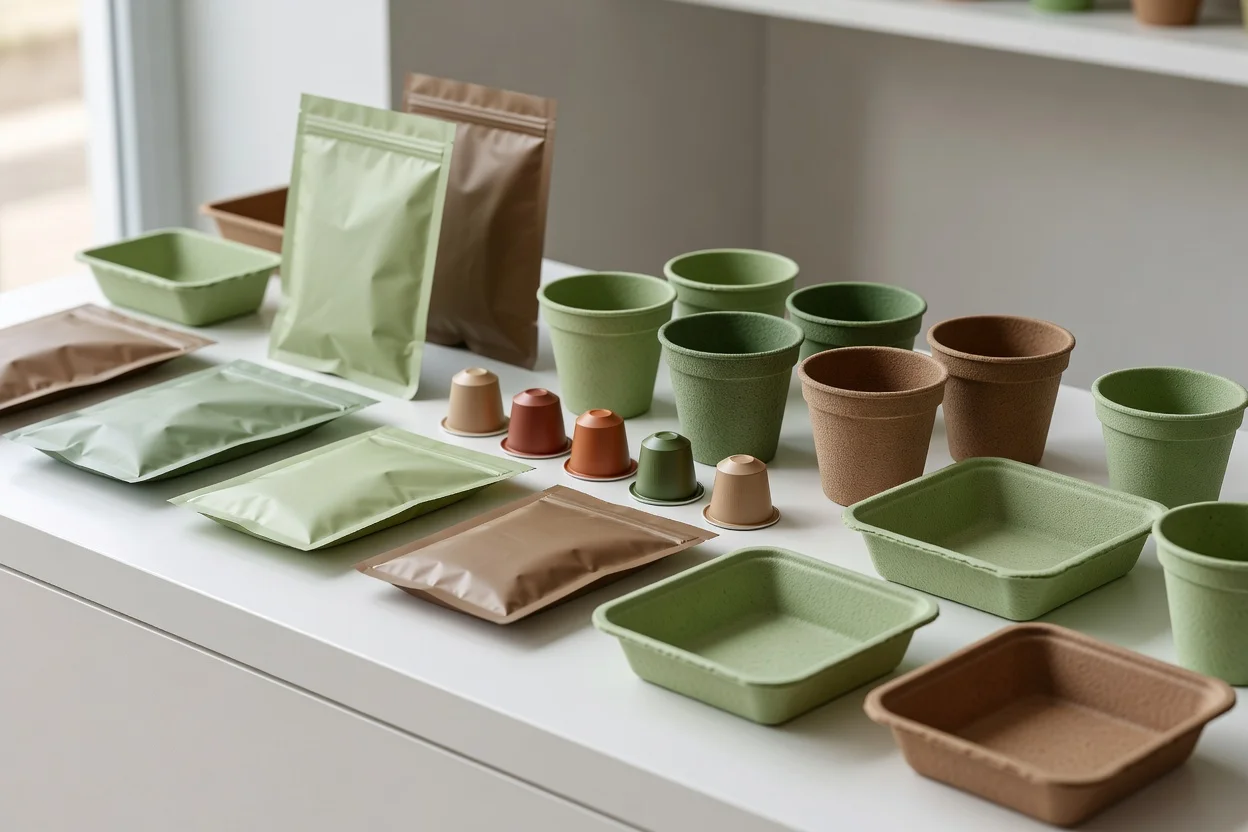
Commercial sources specifically mention applications such as carrier bags, trash bags, coffee capsules, plant pots, mulch film, food packaging, and moulded consumer items. Academic research has also shown that natural-pigment masterbatches can be used in injection-moulded PLA and PBS parts at low loadings while preserving practical performance.
A poor-fit use
Biodegradable colour masterbatches are generally a poor fit for long-life engineering products that require decades of durability, heat resistance, and outdoor weathering, because the biodegradable carrier system is designed for controlled end-of-life breakdown rather than permanent service. In such applications, conventional masterbatches in durable polymers remain the technically appropriate choice.
Environmental and sustainability aspects
The principal environmental value of biodegradable colour masterbatches is that they enable colouration in materials intended for composting or biodegradation without introducing non-compatible carrier resins that could disrupt the end-of-life pathway. This is especially relevant for packaging and other short-life products where recovery and sorting are difficult.
Recyclability and end-of-life
- In compostable systems, the objective is not mechanical recycling but certified biodegradation or composting under defined conditions.
- If a colour masterbatch contains incompatible pigments, fillers, or carriers, it can weaken the intended compostability performance and complicate certification.
- Certification frameworks cited by suppliers include EN 13432, ASTM D6400, TÜV OK compost INDUSTRIAL, and TÜV OK compost HOME.
Bio-based alternatives
There is a clear trend toward natural pigments and biodegradable carriers derived from PLA, PBS, PBAT, or PHA systems. Natural-pigment studies are particularly important because they suggest a route to reduce fossil-derived inputs while maintaining colour functionality.
Carbon footprint considerations
The carbon footprint benefit is primarily indirect: colour masterbatches themselves do not eliminate plastic use, but they allow compostable or bio-based products to be manufactured consistently at scale. The net climate benefit depends on feedstock origin, manufacturing energy, end-of-life conditions, and whether the product truly displaces a more durable or recyclable alternative.
Economic and global market impact
The market for biodegradable colour masterbatches is expanding alongside compostable packaging, agriculture films, and short-life consumer goods. Demand is driven by brand sustainability targets, packaging regulations, and the need for certified colouring solutions that can be integrated into established converting lines.
Commercial suppliers active in this area include specialist masterbatch producers offering certified colour systems for PLA, PBAT, PBS, PHA, and related blends. Patent activity and product launches suggest that competition is focused on colour precision, certification breadth, processing stability, and compatibility with multiple biodegradable carriers.
Current challenges and innovations
Current challenges
- Certification complexity: every component of the formulation must align with compostability requirements.
- Processing sensitivity: biodegradable polymers often require tighter thermal control and shorter residence times than conventional polyolefins.
- Colour gamut limitations: some pigments are less suitable because of heat sensitivity, migration risk, or certification constraints.
- Cost pressure: biodegradable carriers and certified additives generally cost more than conventional masterbatch systems.
Innovations
- Natural-pigment masterbatches using spirulina, curcumin, beetroot, and chlorophyllin in PLA and PBS matrices.
- Compostable certified colour platforms tailored for home and industrial composting routes.
- Compatibility engineering to match masterbatch rheology with thin-film blown extrusion and injection moulding.
- Black and dark-tone solutions, historically more difficult in compostable systems because carbon-black and high-load formulations can be harder to balance with certification and processing targets.
Future outlook
Biodegradable colour masterbatches are likely to become more specialized rather than universally applied. Growth will be strongest where the end-product is already intended to be biodegradable or compostable, especially in flexible packaging, agricultural films, disposable serviceware, and selected consumer items.
The most important future directions are likely to be:
- wider use of certified home-compostable and industrial-compostable colour systems
- greater adoption of bio-based pigments and lower-impact auxiliaries
- improved dispersion technology for thinner films and more demanding colours
- tighter integration with circular-economy design rules, so colour masterbatches support rather than obstruct end-of-life performance
Summary
Biodegradable colour masterbatches are engineered colour concentrates for compostable and biodegradable plastics, built around compatible carrier resins, pigments, and auxiliaries. Their value lies in enabling stable, uniform colouration in PLA, PBAT, PBS, PHA, and related systems while preserving processing performance and end-of-life compliance, especially in packaging, agriculture, and short-life consumer products.
References
- •
Biodegradable plastic color masterbatch and preparation method thereof. (2015, December 4). https://patents.google.com/patent/CN105400154A/enLink
- •
What are the applications of biodegradable plastic masterbatch. (2024, August 29). https://www.fspgfilm.com/What-Are-The-Applications-of-Biodegradable-Plastic-Masterbatch-id42413366.htmlLink
- •
Masterbatch. (2011, July 25). Wikipedia. https://en.wikipedia.org/wiki/MasterbatchLink
- •
Biodegradable masterbatches for plastics. (2024, September 19). https://bio-fed.com/en/masterbatches/biodegradable-masterbatchesLink
- •
Biodegradable masterbatches. (2023, August 22). https://www.univcol.com/products/biodegradable-masterbatches/Link
- •
New ChromaBioColor masterbatch from Chroma Color. (2024, May 7). https://chromacolors.com/chroma-color-announces-new-bio-compostable-color-masterbatch-for-difficult-to-recycle-parts/Link
- •
Ibáñez-García, A. (2024). Sustainability in the development of natural pigment-based biodegradable colour masterbatches. PMC. https://pmc.ncbi.nlm.nih.gov/articles/PMC11314074/Link
- •
What is masterbatch? Definition, types & uses (2026). (2024, July 25). https://biopakwell.com/what-is-masterbatch/Link
- •
Chen, C. (2018). Optimization of the preparation process of biodegradable masterbatches and characterization of their properties. Polymer Testing. https://www.sciencedirect.com/science/article/abs/pii/S0142941818307451Link
- •
Sustainable bio-degradable and compostable masterbatch. (2020, March 10). Tosaf. https://www.tosaf.com/bio-degradable-and-compostable-masterbatch/Link
- •
Biodegradable masterbatch manufacturer, supplier & exporter. (2024, April 9). https://perfectcolourants.com/products/biodegradable-masterbatches/Link
- •
Sustainable masterbatches. (2022, October 29). Sun Chemical. https://www.sunchemical.com/sustainable-masterbatches/Link
- •
Biodegradable black masterbatch: MD Plast's green innovation. (2026, April 2). https://www.mdplast.it/en/biodegradable-black-masterbatch-md-plast/Link
- •
BioRange+. (2019, October 18). Ampacet. https://www.ampacet.com/masterbatch-products/core-product/biorange/Link
- •
Color masterbatches for biodegradable films. (2026, July 7). https://www.globalcolors.com/blog/news/color-masterbatches-for-biodegradable-films/Link