
Introduction
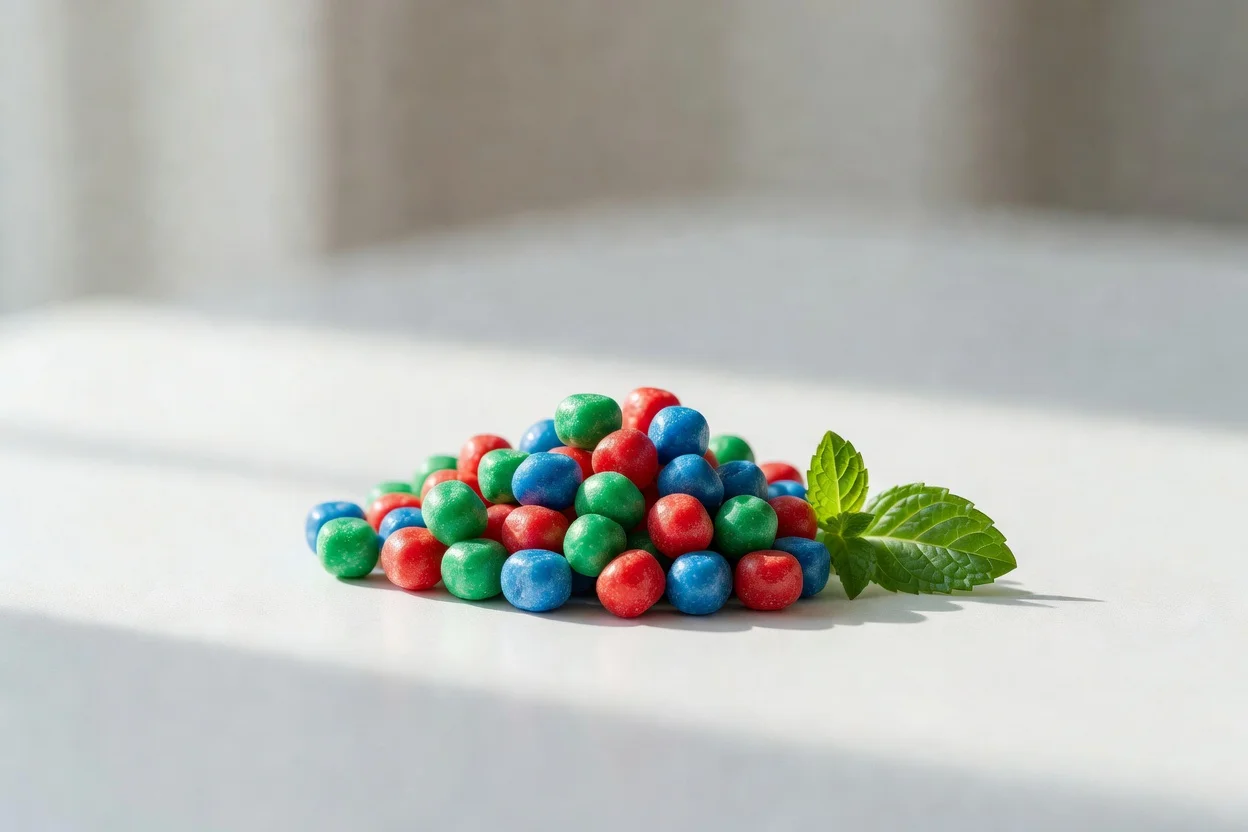
Degradable colour masterbatch is a concentrated colouring concentrate formulated for plastics that are designed to break down under defined end-of-life conditions, most commonly composting or other controlled biodegradation pathways. In practice, the term usually refers to a colour masterbatch made with a biodegradable or compostable carrier resin and pigments or additives selected so that the masterbatch does not undermine the degradability of the final article.
These masterbatches sit at the intersection of polymer compounding, coloration technology, and sustainable materials design. They are used to impart stable, uniform colour to biodegradable plastics such as PLA, PBS, PBAT, and PHA-based systems, while remaining compatible with compostability standards and processing temperatures. Recent technical work has focused on natural pigments, biodegradable carrier resins, and formulations that preserve mechanical performance and colour consistency without leaving persistent residues.
History and Development
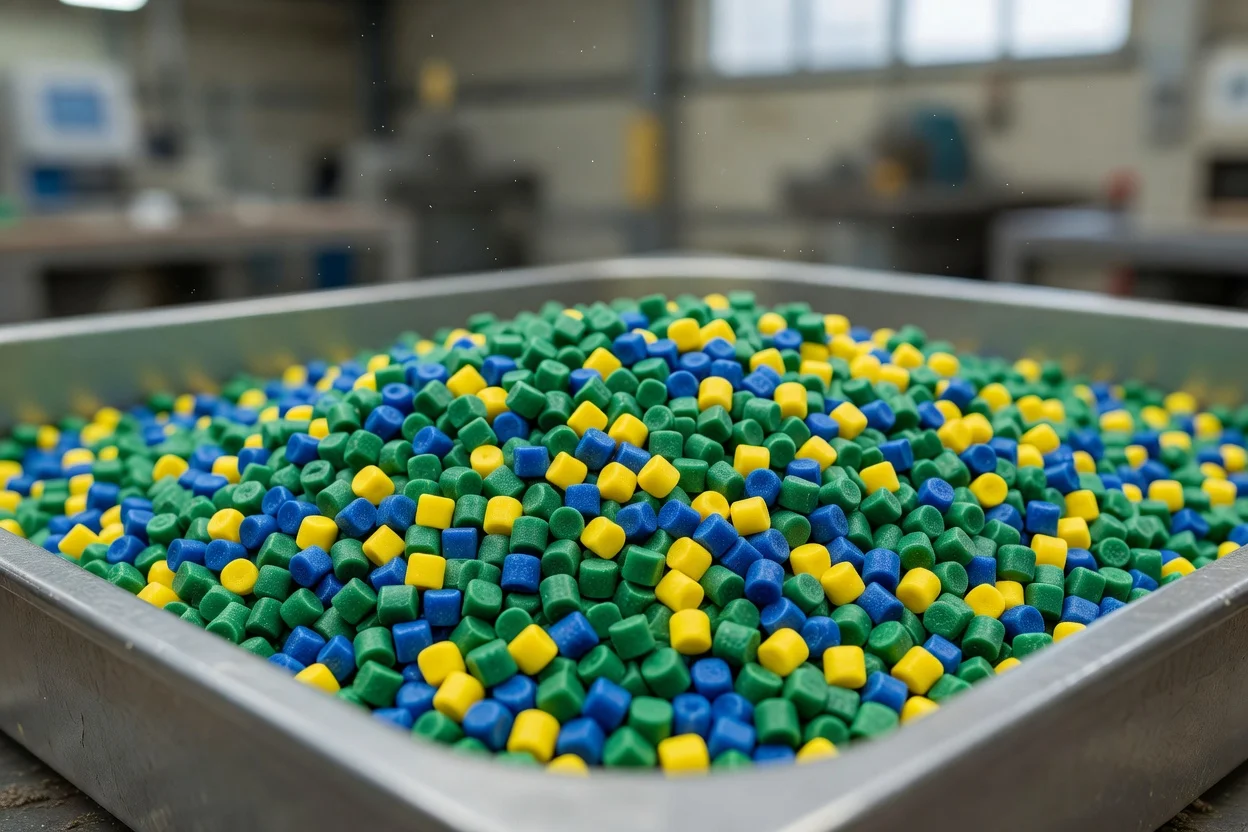
Colour masterbatch technology developed as a practical alternative to direct pigment dosing, because pre-dispersed concentrates improve dosing accuracy, colour consistency, handling safety, and dispersion quality in downstream processing. As interest in compostable plastics increased, conventional masterbatches based on polyolefin carriers became less suitable for applications where the finished product had to remain compostable.
The next stage of development was the creation of biodegradable masterbatches using biodegradable carriers such as PLA, PBS, PBAT, and related polyesters. Patent literature and commercial product lines show that these formulations often combine pigments with auxiliaries such as coupling agents, plasticizers, and lubricants to maintain processability while preserving biodegradability. More recently, research has demonstrated the feasibility of natural pigment-based masterbatches using spirulina, curcumin, beetroot, and chlorophyllin dispersed in PLA and PBS carriers.
Chemical Structure and Key Properties
A degradable colour masterbatch is not a single chemical substance but a formulated concentrate. It typically consists of:
- A biodegradable carrier resin that is compatible with the target compostable polymer.
- One or more pigments or colourants, which may be organic, inorganic, or natural.
- Processing auxiliaries such as dispersants, plasticizers, lubricants, and coupling agents.
- In some products, functional additives that help with antistatic behavior, release, opacity, or UV protection, provided these do not compromise end-of-life criteria.
Key technical attributes include:
- Dispersion quality, which controls colour uniformity and surface finish.
- Thermal stability, which must match extrusion or molding conditions for biodegradable polymers.
- Compatibility with compostability, meaning the formulation should not introduce persistent non-degradable components that would fail standards such as EN 13432 or ASTM D6400.
- Low-dose effectiveness, since masterbatches are generally used at small addition levels rather than as bulk polymers.
Real limits and practical workarounds
- Limit: colour can reduce transparency or brightness in thin films → cause: pigment loading and particle scattering → workaround: use finer-particle pigments, better dispersion, or lower loading with higher tint strength.
- Limit: some colourants can interfere with compostability certification → cause: non-compostable carrier resins or persistent additives → workaround: use certified biodegradable carriers and compliance-tested pigment/additive packages.
- Limit: thermal degradation during processing → cause: biodegradable resins often have narrower processing windows than commodity polyolefins → workaround: use stabilised carriers, lower residence time, and matched extruder or molding settings.
A useful formulation example from patent literature is a biodegradable colour masterbatch containing roughly 60% to 85% biodegradable carrier, 5% to 25% pigment, and 2% to 9% auxiliaries, with fillers optionally included. Another research example used about 1 wt% masterbatch in PLA to produce a molded article with smooth surface and biodegradable behavior, illustrating how small additions can provide visible colour without dominating the polymer matrix.
Production Processes and Raw Feedstocks
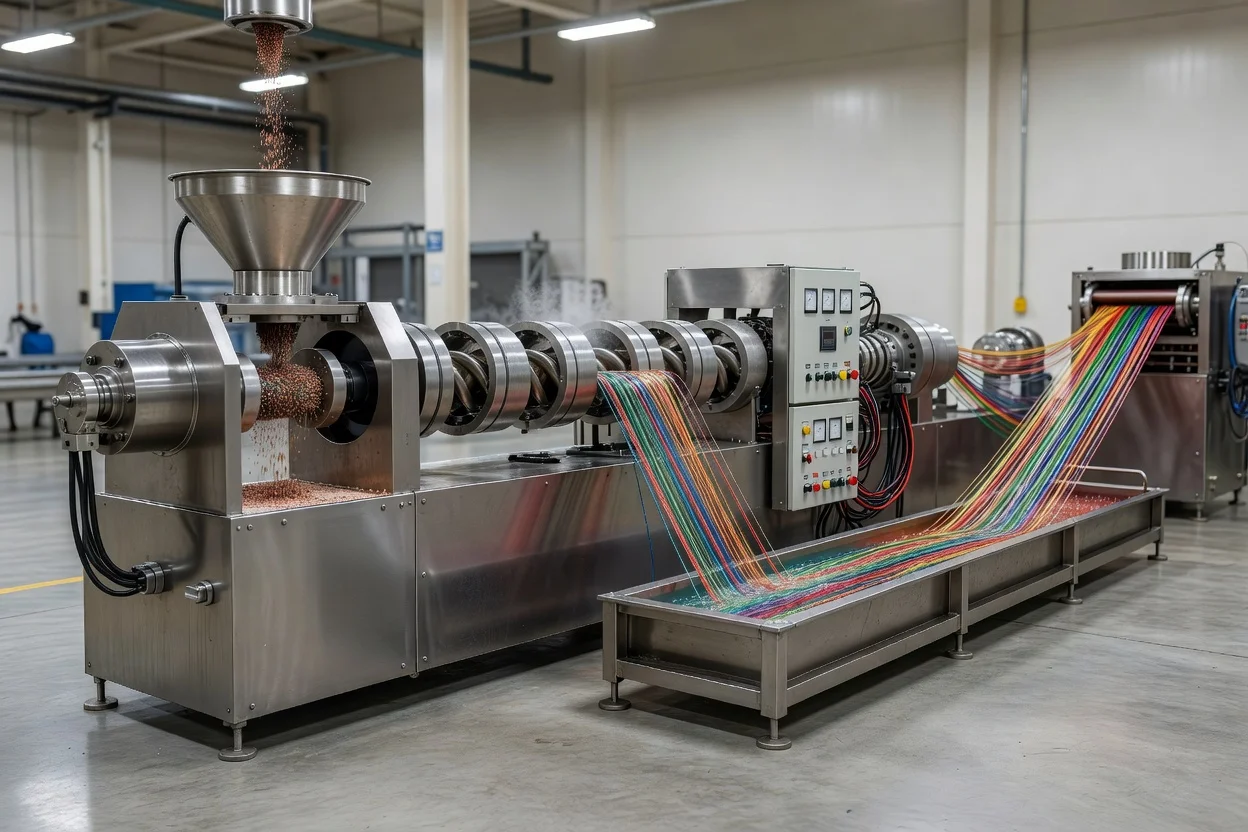
Production typically follows standard masterbatch compounding routes:
- Pre-mixing of carrier resin, pigment, and auxiliaries.
- Melt compounding in a twin-screw or similar extruder.
- Cooling, strand or pellet granulation, and drying.
- Subsequent dilution in the final processing step, such as film extrusion or injection molding.
Raw feedstocks depend on the target product:
- PLA carriers derived from renewable feedstocks such as sugar or starch-based intermediates.
- PBS and PBAT-type carriers used for flexible, compostable applications.
- PHA-based carriers used in higher-value compostable applications.
- Natural pigments such as spirulina, curcumin, beetroot, and chlorophyllin, which support an eco-oriented product profile.
- Conventional pigments may still be used if they satisfy regulatory and compostability requirements.
Commercial suppliers emphasize that the final performance depends on correct pigment dispersion, carrier compatibility, and certification of all ingredients, not merely on the “biodegradable” label.
Applications and End-Use Markets
Degradable colour masterbatch is used wherever a compostable or biodegradable plastic article needs colour identification, branding, opacity, or appearance control.
| End-use sector | Typical substrate | Usual processing route | Role of the masterbatch |
|---|---|---|---|
| Flexible packaging | PLA, PBAT blends, PBS | Film extrusion, bag making | Colour, opacity, brand differentiation |
| Food-service items | PLA, PHA, PBS | Injection molding, thermoforming | Uniform appearance and batch consistency |
| Agricultural films | Biodegradable film grades | Blown film | Colour coding and light management |
| Waste bags and carry bags | Compostable blends | Film extrusion | Standardised coloration with compostability |
| Pharma and consumer packaging | Compostable polyesters | Injection molding, extrusion | Visual identity and regulatory alignment |
| Medical or hygiene disposables | Biopolymer grades | Injection molding, extrusion | Colour coding, product differentiation |
Research and commercial listings indicate use in food packaging, pharmaceutical packaging, medical devices, agricultural products, bags, films, and disposable consumer goods.
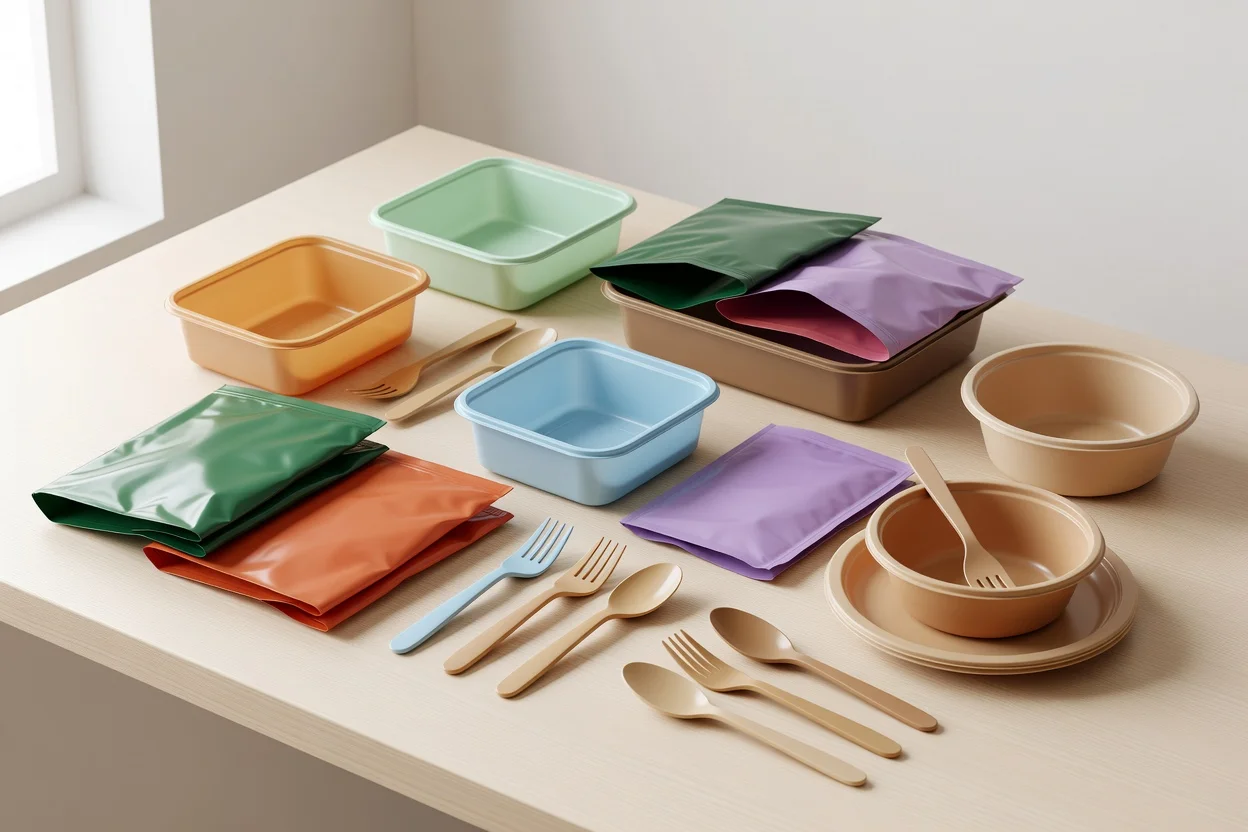
The best-fit applications are those with short service life and controlled disposal routes, such as compostable bags, films, and single-use packaging. A poorer-fit use is long-life outdoor goods, because many degradable systems are not designed for prolonged weathering, UV exposure, or multi-year durability without compromising end-of-life behavior.
Environmental and Sustainability Aspects
The environmental case for degradable colour masterbatch depends on the entire formulation and waste-management context.
Potential benefits
- It enables colouration of compostable plastics without relying on conventional carrier resins that could hinder biodegradation.
- Natural-pigment systems may reduce dependence on some petroleum-derived colourant inputs.
- Certified formulations can support packaging designed for industrial composting or, in some cases, home composting.
Important limitations
- Biodegradable does not mean harmless in any environment. Compostability is typically demonstrated under specified conditions, such as industrial composting temperatures and residence times.
- If waste is landfilled, littered, or improperly sorted, the expected degradation pathway may not occur.
- Persistent pigments, heavy-metal contamination, or non-compostable additives can compromise the environmental profile and certification status.
Recyclability and circularity
Colour masterbatches for degradable polymers generally support material integrity within a composting chain, not conventional mechanical recycling in mixed plastic streams. In that sense, they are part of a separate circular pathway based on biodegradation rather than repeated remelting. Some suppliers also explore carriers made from recycled PLA waste, indicating a possible link between recycled feedstocks and degradable colour concentrates.
Economic and Global Market Impact
Degradable colour masterbatch remains a niche but growing segment within the broader masterbatch market, driven by compostable packaging, regulatory pressure on single-use plastics, and brand demand for sustainable-looking products.
Commercial activity is concentrated among specialty masterbatch producers with bioplastics expertise, including companies offering certified compostable colour and additive systems for PLA, PBS, PBAT, and PHA-type carriers. Patent filings and product launches suggest active competition in formulations that combine colour stability, compliance, and cost control.
The main economic constraint is cost: biodegradable carriers and certification-grade formulations generally cost more than conventional masterbatches, and processors must balance appearance, performance, and compliance against margin pressure.
Current Challenges and Innovations
Key challenges
- Maintaining strong colour performance while preserving compostability.
- Achieving thermal stability during extrusion and molding of heat-sensitive biopolymers.
- Ensuring certified inputs across carrier resin, pigment, and auxiliaries.
- Controlling cost relative to conventional masterbatches.
Notable innovations
- Natural pigment masterbatches based on spirulina, curcumin, beetroot, and chlorophyllin.
- Certification-led product families for industrial or home composting.
- Fully biodegradable carrier matrices tailored to PLA, PBS, PBAT, and PHA systems.
- Formulation engineering that uses lubricants, plasticizers, and coupling agents to preserve processability while limiting environmental trade-offs.
Future Outlook
The future of degradable colour masterbatch is likely to be shaped by three converging trends: stricter packaging regulation, wider adoption of compostable polymers, and more rigorous certification of additive systems. Growth is most plausible in short-life packaging, food service, hygiene, and agricultural films, where colour serves both branding and sorting functions.
Research is likely to focus on:
- Higher-tint-strength natural pigments.
- Better heat stability for processing at industrial line speeds.
- Lower-cost biodegradable carrier systems.
- Improved compatibility with composting standards and traceability frameworks.
Summary
Degradable colour masterbatch is a specialised colouring concentrate for biodegradable and compostable plastics, designed to deliver consistent colour while preserving end-of-life degradability. Its value lies in combining aesthetics, processability, and sustainability, but its performance depends heavily on carrier choice, pigment selection, and certification compliance.
References
- •
Ibáñez-García, A. (2024, July 25). Sustainability in the development of natural pigment-based colour masterbatches. https://pmc.ncbi.nlm.nih.gov/articles/PMC11314074/Link
- •
Types of masterbatch and their individual uses. (n.d.). https://www.abbeymb.com/types-of-masterbatch-and-their-individual-uses/Link
- •
Masterbatch - Master batch manufacturer - Plastic additive. (2026, January 8). https://www.color-master.com/products/masterbatch/Link
- •
Biodegradable plastic color masterbatch and preparation method thereof. (2015, December 4). https://patents.google.com/patent/CN105400154A/enLink
- •
Biodegradable masterbatches. (2023, August 22). https://www.univcol.com/products/biodegradable-masterbatches/Link
- •
What is masterbatch? Guide to black masterbatch & plastic compounds. (2026, January 22). https://hubron.com/insights/guide-to-masterbatch-plastic-compounds/Link
- •
Biodegradable masterbatch manufacturer, supplier. (2024, April 9). https://perfectcolourants.com/products/biodegradable-masterbatches/Link
- •
Biodegradable colour masterbatches. (n.d.). https://www.chinaplasonline.com/eMarketplace/AllExhibitors/?SearchType=all&SearchBy=Prod&page=1&SProds=487&Keyword=%E7%BC%A9%E7%9F%AD%E7%94%9F%E4%BA%A7%E5%91%A8%E6%9C%9FLink
- •
Masterbatch - An overview. (2010, October 19). ScienceDirect. https://www.sciencedirect.com/topics/engineering/masterbatchLink
- •
Biodegradable masterbatches for plastics. (2024, September 19). https://bio-fed.com/en/masterbatches/biodegradable-masterbatchesLink
- •
How color masterbatch ensures quality & efficiency. (2025, June 11). https://deltatecnic.com/color-consistency-in-plastics/Link
- •
Sustainable bio-degradable and compostable masterbatch. (2020, March 10). https://www.tosaf.com/bio-degradable-and-compostable-masterbatch/Link
- •
Ecopond biodegradable masterbatch. (n.d.). https://www.bagrechamasterbatch.com/biodegradable-masterbatch.htmlLink
- •
Biodegradable black masterbatch: MD Plast's green innovation. (2026, April 1). https://www.mdplast.it/en/biodegradable-black-masterbatch-md-plast/Link
- •
New ChromaBioColor masterbatch from Chroma Color. (2024, May 7). https://chromacolors.com/chroma-color-announces-new-bio-compostable-color-masterbatch-for-difficult-to-recycle-parts/Link
- •
Color masterbatches for biodegradable films. (2026, July 7). https://www.globalcolors.com/blog/news/color-masterbatches-for-biodegradable-films/Link