
Introduction
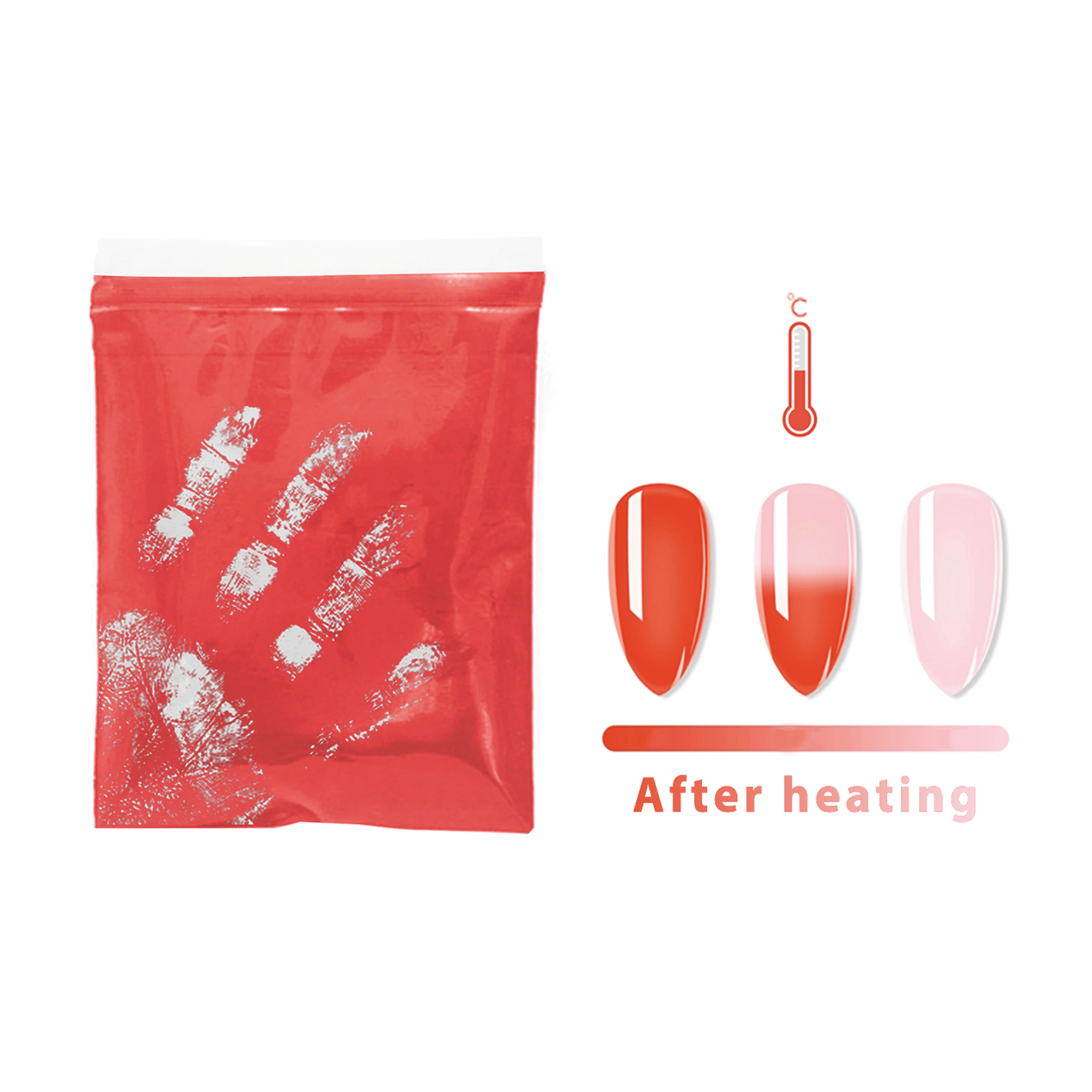
Thermosensitive pigment is a functional colorant that changes appearance in response to temperature, and in industrial practice it is usually described as a thermochromic pigment. These materials are widely used in plastics, inks, coatings, textiles, packaging, security printing, and temperature indicators because they provide direct visual feedback when a defined thermal threshold is reached or crossed.
Thermosensitive pigments are generally divided into reversible systems, which return to their original color when cooled, and irreversible systems, which undergo a permanent color change after a set temperature exposure. In commercial products, the most common reversible systems are based on microencapsulated leuco-dye chemistry, while other families include liquid-crystal thermochromics and inorganic or transition-metal-based thermochromic materials.
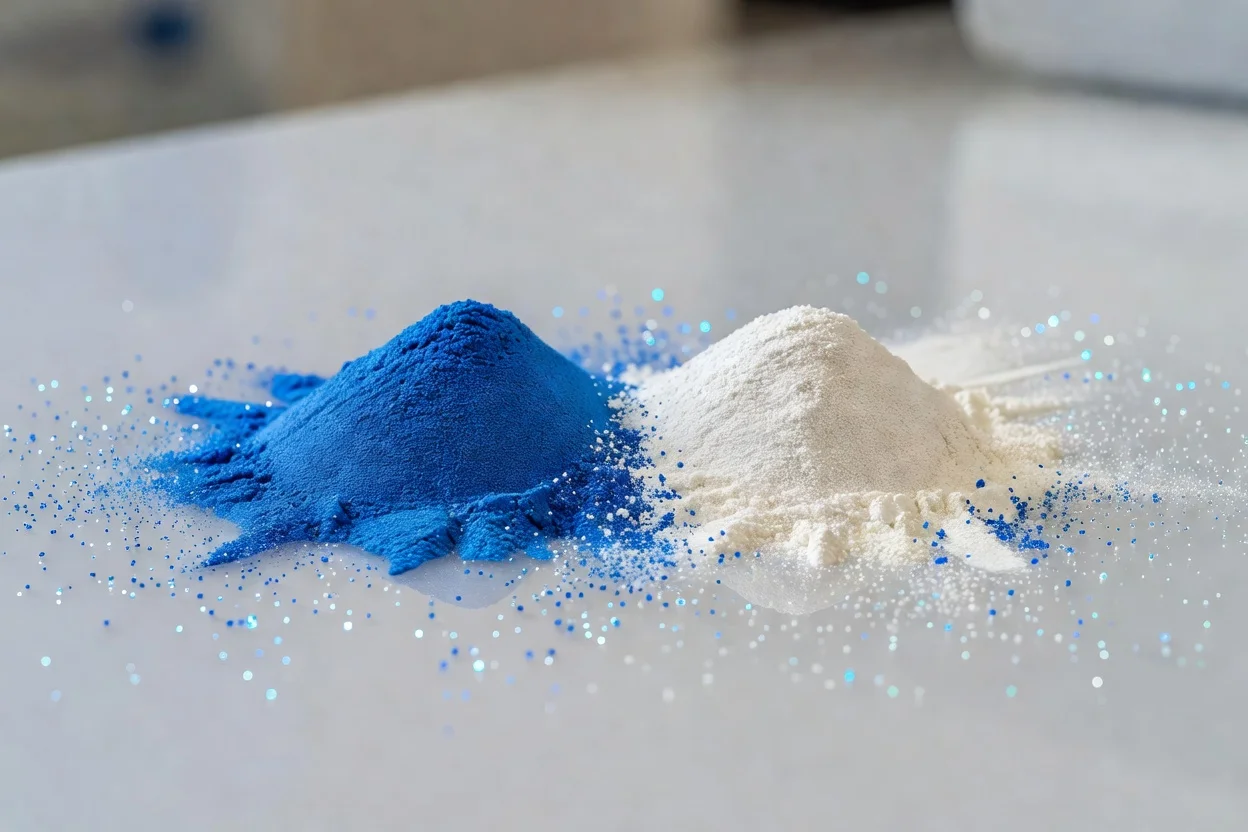
In the plastics sector, thermosensitive pigments are especially important because they can be compounded into transparent or translucent polymers and processed by injection molding, blow molding, extrusion, coating, and printing, enabling “smart” consumer goods, safety indicators, and interactive packaging. Their main value is not structural reinforcement but functional signaling: they convert an invisible temperature event into a visible one.
Their development sits at the intersection of color chemistry, microencapsulation, polymer processing, and product design. At the same time, the technology faces real limitations, including finite thermal durability, sensitivity to UV and solvents, and generally modest long-term stability in harsh outdoor or high-temperature environments. Sustainability discussions are also becoming more important, because thermochromic systems may complicate recycling when used in multilayer packaging or when encapsulation chemistry is not compatible with closed-loop reprocessing.
History and Development
Thermochromism has been recognized scientifically for decades, but commercial thermosensitive pigments became much more visible with the development of stable microencapsulation methods and leuco-dye systems for printed goods and plastics. Earlier work also explored liquid-crystal and inorganic thermochromic mechanisms, which remain important in certain niche applications where spectral precision or high-temperature operation is required.
Industrial adoption accelerated as manufacturers refined the activation temperature, color transition sharpness, and reversibility of pigment systems. This made it possible to tune products for specific use cases such as cold-chain labels, body-temperature indicators, hot-liquid warning graphics, and novelty consumer goods. More recent research has expanded the field into rhodamine-based systems, transition-metal compounds, and sensor coatings for medical, electronic, and energy applications.
Chemical Structure and Key Properties
Thermosensitive pigments are not a single chemical substance but a family of thermochromic systems built on different optical mechanisms. The dominant commercial type in plastics and printing is usually a microencapsulated reversible system containing a color former, a developer, and a temperature-responsive solvent or medium. Below the activation temperature, the internal chemistry favors the colored state; above it, the solvent phase change or molecular rearrangement reduces color intensity or makes the system effectively colorless.
Key properties
- Activation temperature
- The transition can be engineered over a broad range, commonly from low single digits up to around body-temperature and beyond in commercial products.
- Reversibility
- Reversible pigments repeatedly switch color with temperature cycling, while irreversible grades retain a permanent thermal record once triggered.
- Opacity and color depth
- Many systems are strongest in opaque or semi-opaque formulations and may require a white or light background for best contrast.
- Processing compatibility
- Real limit: thermal instability
- Limit: prolonged exposure to excessive heat can destroy the color-change function.
- Cause: the microcapsule shell, dye system, or solvent phase can degrade.
- Workaround: use lower-melt compounding conditions, add the pigment late in processing, and choose a grade matched to the resin’s processing window.
- Real limit: UV and weathering sensitivity
- Limit: outdoor exposure can fade performance over time.
- Cause: photo-oxidation and capsule breakdown.
- Workaround: use UV stabilizers, protective coatings, or applications with controlled exposure rather than permanent outdoor use.
- Real limit: limited barrier performance
- Limit: the pigment does not improve polymer barrier properties.
- Cause: it is an optical functional additive, not a barrier enhancer.
- Workaround: combine it with barrier layers, metallized films, or separate indicator labels when oxygen or moisture protection is required.
Mechanisms
| Family | Principle | Typical strengths | Typical limits |
|---|---|---|---|
| Microencapsulated leuco dyes | Temperature changes the equilibrium between colored and colorless states | Low cost, strong color contrast, good for plastics and printing | Heat and solvent sensitivity, moderate durability |
| Liquid crystal thermochromics | Temperature changes molecular order and reflected wavelength | Precise hue shifts, good visual sensing | Narrower application window, higher formulation sensitivity |
| Inorganic or transition-metal systems | Structural or electronic changes alter absorption | Better high-temperature robustness in some cases | Often less vivid or less flexible in polymer processing |
| Rhodamine-based systems | Temperature affects molecular state and optical response | Strong sensing performance in selected research systems | Less established in mass plastics production |
Production Processes and Raw Feedstocks
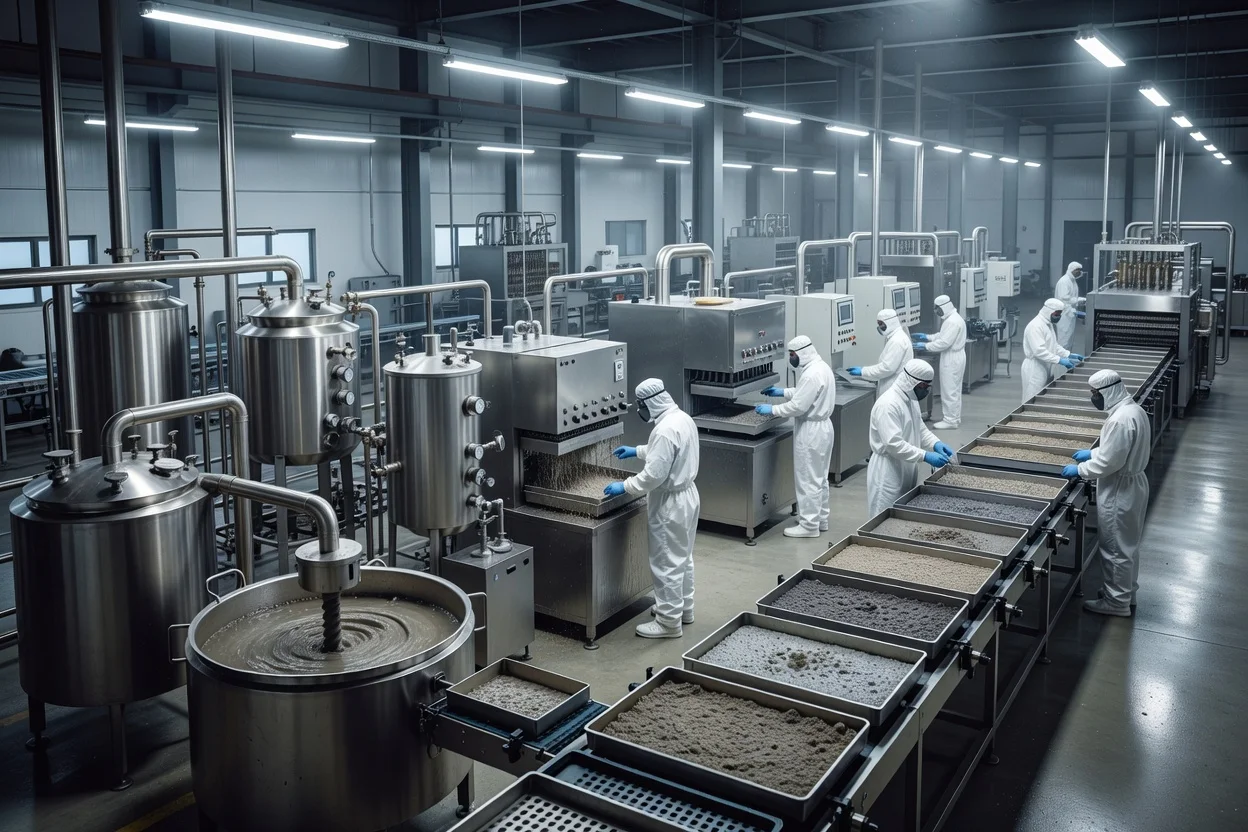
Commercial thermosensitive pigments are typically produced through a combination of chemical synthesis, microencapsulation, washing, drying, classification, and formulation into masterbatches, inks, or coatings. The microcapsule step is critical because it isolates the active chemistry from the surrounding polymer and improves handling, although it also introduces complexity and cost.
Typical raw feedstocks
- Color former
- Often a leuco dye that becomes visible only under the right internal chemical environment.
- Developer
- An acidic or electron-accepting component that stabilizes the colored form.
- Temperature-responsive medium
- A solvent or phase-change component that shifts state at the designed activation temperature.
- Capsule wall material
- A protective shell that controls mechanical resistance, migration, and process compatibility.
- Polymer carrier or binder
- Used in masterbatches, inks, and coatings to disperse the pigment evenly in the final product.
A practical formulation example is a 3–5 wt% pigment masterbatch in a compatible polyolefin carrier for plastics coloration, though the exact loading depends on the required contrast, part thickness, and background color. In printing inks, lower loadings are often used to preserve flow and film integrity, while the visual effect is built through substrate contrast and print thickness.
Processing strategy matters. For injection molding or extrusion, the pigment is usually introduced late in compounding or via a masterbatch to reduce thermal stress. For screen printing or coating, the formulation is tuned to preserve capsule integrity while maintaining viscosity and coverage.
Applications and End-Use Markets
Thermosensitive pigment is used wherever visual temperature feedback is more useful than continuous electronic sensing. In plastics, the main attraction is the ability to turn everyday articles into interactive or safety-relevant products without electronics.
Major application sectors
- Packaging
- Common in beverage, food, and smart-label systems that indicate serving temperature or thermal exposure.
- Usual process: printed labels, coatings, or thin-film graphics.
- Consumer plastics and toys
- Used in cups, spoons, containers, novelty items, and color-changing toys.
- Usual grade: reversible, low- to moderate-temperature activation.
- Industrial safety
- Applied to cable jackets, equipment labels, and hot-surface indicators for overheating warnings.
- Usual grade: reversible or irreversible, depending on whether a resettable or permanent warning is needed.
- Textiles and wearables
- Used in fashion, sportswear, and smart textiles for body-heat-responsive effects.
- Usual process: textile inks or coatings rather than bulk polymer compounding.
- Security and anti-counterfeiting
- Used in labels, documents, and authentication features because thermal response can be hard to imitate casually.
- Usual process: security inks and layered graphics.
- Medical and cold-chain indicators
- Used in vaccine logistics, sterilization indicators, and temperature-exposure labels.
- Usual grade: narrow-range reversible or irreversible indicator systems.
- Industrial sensing and electronics
- Used for thermal-cycle validation, maintenance marking, and heat-warning surfaces.
- Usual process: coatings or printed indicators on components.

Fit by product form
| End-use | Common pigment type | Typical polymer/process fit | Notes |
|---|---|---|---|
| Flexible packaging | Reversible microcapsule system | Printing inks, coatings, thin films | Needs good contrast and abrasion resistance |
| Rigid consumer goods | Reversible microcapsule system | Injection molding, masterbatch | Best for opaque or light-colored parts |
| Safety labels | Reversible or irreversible system | Coatings, screen printing | Often optimized for a specific trip point |
| Textiles | Reversible system | Textile printing | Wash and light fastness are key constraints |
| Medical indicators | Narrow-range reversible or irreversible system | Printed labels, films | Calibration and consistency are critical |
One poor-fit use is long-life outdoor architectural coating in harsh sunlight. The technology can work visually, but the pigment’s sensitivity to UV, heat, and weathering makes it less durable than inorganic colorants in that setting.
Environmental and Sustainability Aspects
Thermosensitive pigments can support sustainability in a limited but meaningful way by enabling passive sensing without batteries or electronics. This can reduce device complexity and in some cases avoid powered sensors for simple threshold monitoring.
However, the sustainability picture is mixed.
- Recyclability
- In bulk plastic articles, thermochromic pigments can complicate sorting and reprocessing because they introduce a specialty additive that may affect color consistency and melt history.
- In labels and multilayer packaging, the main issue is not the pigment alone but the entire laminate structure.
- Bio-based alternatives
- Some research and product development has explored less persistent or more bio-derived components, but commercial thermochromic systems are still dominated by petrochemical and specialty chemical inputs.
- Carbon footprint
- The pigment itself adds manufacturing complexity because of microencapsulation and purification, but the bigger environmental question is application-level: whether the pigment prevents waste, improves cold-chain compliance, or simply adds novelty.
- Regulatory and safety considerations
- For food-contact, medical, and consumer products, the encapsulated chemistry, potential migration, and stability under use conditions are central concerns.
- Formulators often prefer print-on-label approaches when regulatory control is easier than in-bulk compounding.
A 1–2 wt% additive level can be enough to create a useful visual effect in coatings or inks, which is environmentally relevant because low loading reduces material intensity; nonetheless, the capsule chemistry and end-of-life compatibility remain more important than dosage alone.
Economic and Global Market Impact
Thermosensitive pigment is a niche but commercially important specialty colorant. Its economic value comes from the premium paid for functionality rather than volume, especially in packaging, consumer products, safety labels, and promotional goods.
Recent industry and supplier materials indicate broad demand across plastics, printing, and textiles, with especially strong use in interactive packaging, cold-chain indicators, and novelty consumer products. Market participation is fragmented, with a mixture of specialty pigment manufacturers, ink formulators, and private-label suppliers. Publicly visible suppliers include firms such as Nichwell, Olikrom, iS Pigment, and other specialty colorant companies cited in the available material.
The strongest commercial advantage is that thermosensitive pigment can add perceived product value at low inclusion levels, making it attractive for consumer differentiation and safety signaling. The main economic constraint is durability: if the effect fades too quickly, the product loses value and brand trust.
Current Challenges and Innovations
Main challenges
- Durability
- Repeated heating, UV exposure, and mechanical abrasion can reduce performance.
- Processing window
- Many pigments cannot survive high-temperature polymer processing unless carefully engineered or introduced via low-temperature masterbatch routes.
- Color contrast
- Some systems need light backgrounds or specific film thicknesses to appear clearly, which limits design flexibility.
- Recycling compatibility
- Specialty capsule systems are not yet fully optimized for circular polymer streams.
Innovation directions
- Broader temperature tuning
- Commercial systems already span a wide range of activation points, and suppliers continue to refine narrow-band indicators for medical and cold-chain use.
- Improved capsule chemistry
- Better shells and more stable internal phases are being developed to improve heat resistance and lifetime.
- Hybrid sensing
- Thermochromic pigments are increasingly paired with barcodes, RFID, or digital traceability tools in packaging and logistics.
- Higher-performance inorganic and molecular systems
- Research into transition-metal and rhodamine-based thermochromics aims to improve robustness and expand applications beyond novelty goods.
Future Outlook
Thermosensitive pigment is likely to remain a specialized but durable part of the plastics auxiliaries market because it offers a simple, low-power way to communicate temperature states. Near-term growth is most plausible in smart packaging, cold-chain monitoring, safety labeling, and consumer products, where the functional value is easy to understand and the required service life is moderate.
Longer term, the most important developments will probably be:
- more stable pigments for higher-temperature polymers,
- better UV and solvent resistance,
- formulations designed for easier recycling,
- and tighter integration with digital sensing and traceability systems.
Summary
Thermosensitive pigment is a thermochromic functional colorant used to convert temperature into a visible signal. Its commercial importance lies in reversible and irreversible systems that can be processed into plastics, inks, coatings, and labels for packaging, safety, medical, textile, and security applications.
Its strengths are simplicity, low energy demand, and strong visual communication. Its weaknesses are thermal fragility, UV sensitivity, and limited circularity when used in complex plastic structures.
References
- •
How does temperature-sensitive pigment work. (2026, July 22). https://nichwellchem.com/how-does-temperature-sensitive-pigment-work/Link
- •
When temperature talks: How thermochromic pigments transform materials. (2025, April 16). https://www.l-i.co.uk/knowledge-centre/when-temperature-talks-how-thermochromic-pigments-transform-materials/Link
- •
Термочувствительные пигменты. (2023, July 27). https://vk.com/@chemistryeasyru-termo-pigmentLink
- •
Temperature sensitive color changing thermochromic pigment. (2014, February 11). https://www.ispigment.com/temperature-sensitive-color-changing-thermochromic-pigment_p108.htmlLink
- •
Understanding thermochromic pigments: Technology, applications. (2025, January 5). https://www.aolongchemical.com/en/news/thermochromic-pigmentsLink
- •
Термочувствительные краски. (2007, October 8). https://ru.wikipedia.org/wiki/%D0%A2%D0%B5%D1%80%D0%BC%D0%BE%D1%87%D1%83%D0%B2%D1%81%D1%82%D0%B2%D0%B8%D1%82%D0%B5%D0%BB%D1%8C%D0%BD%D1%8B%D0%B5_%D0%BA%D1%80%D0%B0%D1%81%D0%BA%D0%B8Link
- •
Thermochromic pigment & powder. (2025, October 21). https://nichwellchem.com/thermochromic-pigment/Link
- •
Custom pigments, inks and thermochromic paints. (2023, April 5). https://www.olikrom.com/en/thermochromic-materials/Link
- •
Thermochromic pigment uses. (2024, June 18). https://www.kingchroma.com/example-of-pigments-uses/thermochromic-pigment-uses/Link
- •
Science of magic mugs: How does heat-sensitive paint work? (2023, October 19). https://www.scienceabc.com/pure-sciences/science-of-magic-mugs-how-does-heat-sensitive-paint-work-thermochromism.htmlLink
- •
Thermochromic pigment buyer's guide: 7 series, 5 applications. (n.d.). https://www.origochem.com/blog/thermochromic-pigment-guide/Link
- •
Thermochromic color change. (2026, July 10). https://solarcolordust.com/ThermalLink
- •
Thermochromic performance of a new temperature sensitive pigment based on rhodamine derivative in both liquid and solid systems. (n.d.). https://www.sciencedirect.com/science/article/abs/pii/S0300944019308811Link
- •
What is thermochromic pigment? How it works & uses. (2026, February 5). https://nichwellchem.com/what-is-thermochromic-pigment/Link
- •
Thermochromic pigment - High-precision temperature-sensitive. (2024, March 29). https://www.everyglow.com/product/thermochromic-pigment/Link
- •
The gecko visual pigments—I. The thermosensitive property. (n.d.). https://www.sciencedirect.com/science/article/abs/pii/0042698974900868Link
- •
10 hot questions about thermochromic pigments. (2024, August 28). https://www.ispigment.com/blog/10-hot-questions-about-thermochromic-pigments_b140Link
- •
Applications of thermochromic pigment. (n.d.). http://colorchangepigment.com/mobile/index/show/catid/1/id/70.htmlLink
- •
热敏颜料. (2024, August 7). https://baike.baidu.com/item/%E7%83%AD%E6%95%8F%E9%A2%9C%E6%96%99/7889784Link
- •
Novel thermosensitive pigment compositions comprising a compound of formula (I) as a reaction medium. (2018, February 16). https://patents.google.com/patent/KR20190113782A/enLink
- •
Thermochromic pigment | Color changing powder for paint. (2026, March 20). https://www.technoglowproducts.com/thermochromic-pigment/Link
- •
Professional thermochromic paint, temperature. (n.d.). https://www.cromas.it/thermochromic-paint.htmlLink
- •
Thermochromic pigment powder heat activated color changing. (2020, December 7). https://glomania.com/products/thermochromic-pigment-powder-heat-activated-color-changingLink
- •
Thermochromism. (2005, March 9). https://en.wikipedia.org/wiki/ThermochromismLink
- •
All about thermochromic pigment: Specifications, performance, and. (2025, December 19). https://www.alibaba.com/product-insights/thermochromic-pigment.htmlLink
- •
Thermochromic screen printing ink: Industrial applications. (2026, February 6). https://www.olikrom.com/en/blog/oeil-de-lexpert/encre-thermochromique-pour-la-serigraphie/Link
- •
Transition metal compounds as thermochromic materials. (2026, June 16). https://onlinelibrary.wiley.com/doi/full/10.1002/ece2.70079Link
- •
Analysis of the degradation of thermochromic sensors in electrical. (n.d.). https://onlinelibrary.wiley.com/doi/full/10.1002/app.70136Link
- •
The color changing principle and structure of thermochromic pigments. (2022, December 31). https://www.ispigment.com/blog/the-color-changing-principle-and-structure-of-thermochromic-pigments_b75Link
- •
Thermochromic pigments and their uses. (2025, June 18). https://www.scribd.com/document/865972147/ThermochromicLink
- •
Thermosensitive coatings: A review. (n.d.). https://alfabuild.spbstu.ru/userfiles/files/AlfaBuild/AlfaBuild_2025_35/3502.pdfLink
- •
Application of rhodamine B as thermochromic sensor. (2024, December 28). https://pmc.ncbi.nlm.nih.gov/articles/PMC11682077/Link
- •
How do thermochromic materials work? (2023, July 30). https://www.explainthatstuff.com/thermochromic-materials.htmlLink
- •
Thermochromic ink. (2005, June 30). https://en.wikipedia.org/wiki/Thermochromic_inkLink
- •
Thermochromic pigment. (n.d.). https://www.amazon.com/thermochromic-pigment/s?k=thermochromic+pigmentLink
- •
Understanding the thermochromic pigment mechanism. (2026, March 10). https://insilico-materials.com/thermochromic-pigment-mechanism/Link
- •
Discover the main families of thermochromic materials. (2024, January 10). https://www.olikrom.com/en/blog-olikrom/the-expert-eye/all-about-thermochromic-materials/Link
- •
Thermochromic pigment. (2014, February 11). https://www.ispigment.com/blog/Thermochromic-Pigment_bc6Link