
Introduction
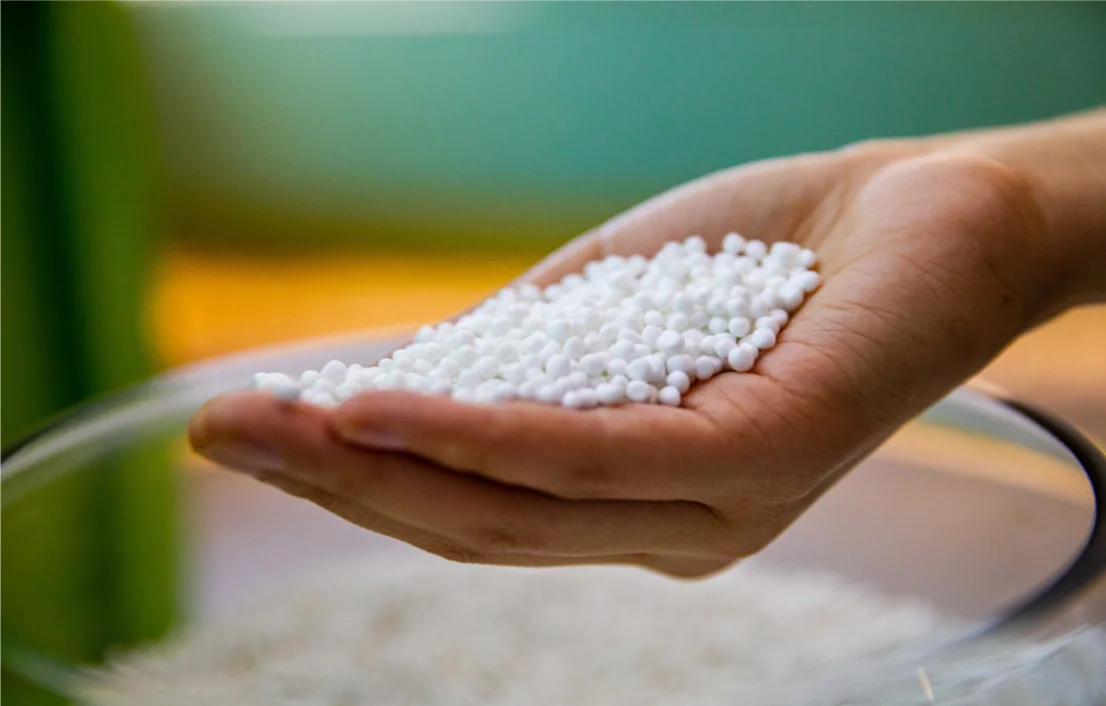
Polybutylene succinate (PBS) is a biodegradable aliphatic polyester used as a thermoplastic raw material in packaging, agriculture, textiles, consumer goods, and selected biomedical applications. It occupies a distinctive position among compostable plastics because it combines conventional melt-processability with a property balance often compared to polypropylene, while also offering biodegradation under suitable microbial and environmental conditions.
PBS is typically produced from succinic acid and 1,4-butanediol, which can be derived from petrochemical routes or increasingly from renewable biomass-based routes. In industry, PBS is often discussed alongside bio-based and compostable polyesters such as PLA and PBAT, but it is especially valued for its flexibility, toughness, thermal resistance, and compatibility in blends.
The material has moved from a niche specialty polyester to a commercially relevant biopolymer, supported by brands such as BioPBS and other trade names used by major suppliers. At the same time, PBS remains constrained by cost, feedstock economics, moisture and heat limitations in some end uses, and the reality that “biodegradable” does not mean universally degradable in every environment.
History and Development
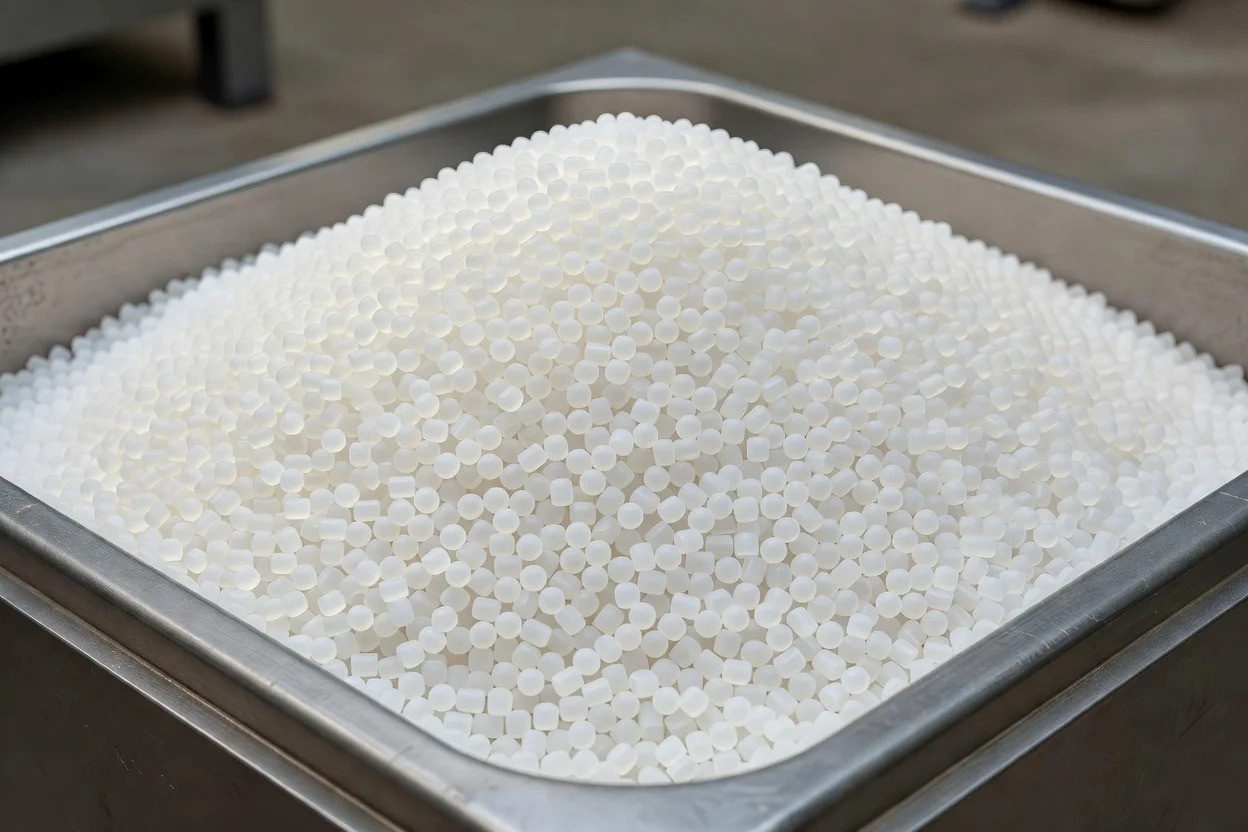
PBS emerged from broader research on aliphatic polyesters as industry sought materials that could retain thermoplastic processing behavior while enabling biodegradation. Its development accelerated as interest grew in compostable packaging and agricultural films, especially for short-life products where conventional polyethylene and polypropylene generated persistent waste streams.
Commercialization was strengthened by improvements in catalyst systems, polyester polycondensation technology, and the scaling of bio-based succinic acid and bio-based 1,4-butanediol. More recent work has focused on copolymers, blends, and filler-reinforced grades to widen the material’s process window and extend performance into flexible packaging, nonwovens, and durable compostable articles.
Chemical Structure and Key Properties
PBS is a linear polyester formed by repeating butylene succinate units; its ester backbone is what enables hydrolytic and enzymatic degradation. It is a semi-crystalline polymer, and its crystallinity strongly influences stiffness, transparency, heat resistance, and biodegradation rate.
Key property profile
| Property | Typical characteristic | Industrial significance |
|---|---|---|
| Melting point | About 90–120 C | Compatible with conventional extrusion, injection molding, film, and fiber processing. |
| Glass transition temperature | Low, often below 0 C | Supports flexibility and low-temperature toughness. |
| Mechanical behavior | Ductile, tough, moderate strength | Makes PBS suitable for films, bags, sheets, and molded goods. |
| Heat resistance | Higher than many other biodegradable polyesters | Supports hot-fill-adjacent and selected packaging uses. |
| Chemical resistance | Good resistance to many common chemicals | Useful for consumer and agricultural products. |
| Biodegradability | Compostable under suitable conditions | Enables certified compostable applications when formulation and thickness are controlled. |
Real limits and workarounds
- Limited oxygen barrier → caused by its polyester structure and moderate barrier performance relative to specialized barrier polymers → workaround: use multilayer structures, coatings, or blending with barrier-enhancing polymers and additives.
- Low surface wettability / low surface energy in some applications → caused by the hydrophobic polyester surface and limited polar functionality at the interface → workaround: corona or plasma treatment, primers, or surface-functional blends before printing, coating, or lamination.
- Heat distortion constraints in demanding uses → caused by PBS softening before engineering plastics do → workaround: copolymerization, reinforcement, nucleating agents, or blending with PLA and other compostable polymers.
- Biodegradation depends on conditions → caused by temperature, humidity, oxygen, microbial activity, thickness, and crystallinity → workaround: design for industrial composting or controlled end-of-life routes rather than assuming rapid degradation everywhere.
A useful mechanism example is the use of nucleating agents at low loadings to accelerate crystallization and improve dimensional stability; by promoting more ordered crystal formation, they can raise heat resistance without fundamentally changing PBS’s compostability profile. Another common approach is blending PBS with PLA or PBAT to combine flexibility, sealability, and processability for films and sheets.
Production Processes and Raw Feedstocks
PBS is produced primarily by polycondensation of succinic acid or dimethyl succinate with 1,4-butanediol, followed by vacuum finishing to raise molecular weight. Industrial routes may use titanium-based or tin-based catalysts, and process control is important because residual catalysts, water removal, and chain growth all affect molecular weight and final performance.
Main feedstocks
- Succinic acid or dimethyl succinate
- 1,4-butanediol
- Catalysts, stabilizers, and sometimes chain extenders for property tuning
Feedstock pathways
- Petrochemical PBS: conventional succinic acid and butanediol supply chains.
- Bio-based PBS: bio-succinic acid and bio-butanediol from fermentation or biomass-derived intermediates.
- Recycled-carbon or hybrid routes: emerging systems that seek to reduce life-cycle emissions while preserving material performance.
Leading commercial and technology contributors include Mitsubishi Chemical through BioPBS, along with other specialty resin suppliers and resin formulators active in compostable polyester systems. Research and pilot-scale progress has also emphasized plant-based residue feedstocks and process routes compatible with common thermoplastic converting equipment.
Applications and End-Use Markets
PBS is used where conventional plastics are needed but a compostable or bio-based end-of-life pathway is desirable. Its strongest position is in flexible, short-life, and contamination-prone applications where collection and recycling are difficult.
Major application sectors
| Sector | Typical PBS grade or format | Usual process |
|---|---|---|
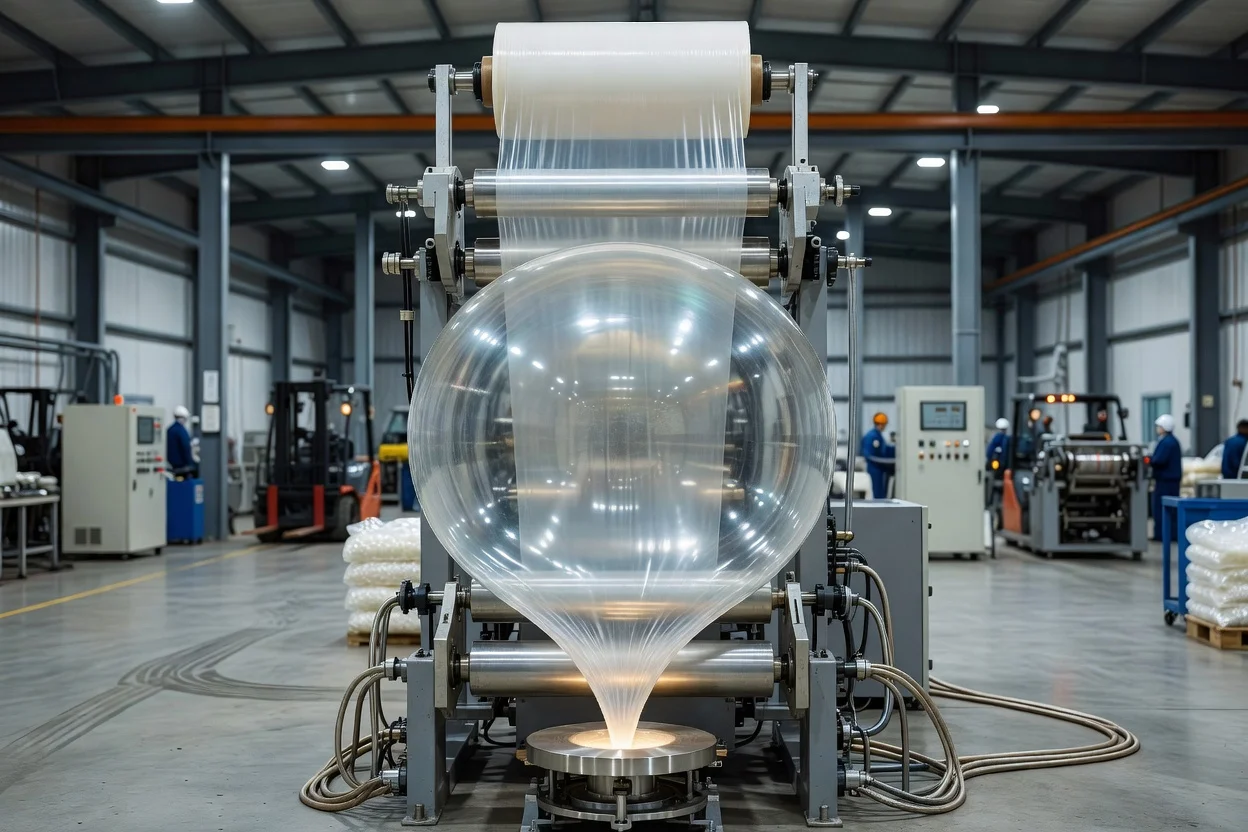
| Flexible packaging | Film grades, blends with PLA or PBAT | Blown film, cast film, lamination, heat sealing |
| Food-contact packaging | Heat-sealable and compostable sheet or film grades | Thermoforming, extrusion coating, sealing |
| Agriculture | Mulch film, seedling trays, compost bags | Film extrusion, sheet forming |
| Consumer goods | Injection-molded disposable items | Injection molding, extrusion |
| Textiles and nonwovens | Fiber and filament grades | Spinning, nonwoven production |
| Coatings and paper conversion | Coating-grade PBS | Extrusion coating, paper coating |
| Biomedical and research uses | Specialized high-purity grades | Electrospinning, scaffold fabrication, prototype devices |
Representative end uses
- Packaging films and bags, where PBS provides flexibility and compostability.
- Compostable tableware and cutlery, especially in food-service and event applications.
- Agricultural mulch films, one of the most visible use cases because field recovery of conventional film is costly and incomplete.
- Fiber and nonwoven products, including wipes, hygiene materials, and technical textiles.
- Paper coatings and cup linings, where PBS can replace conventional fossil-based coatings in selected formats.
- Biomedical prototypes, including scaffolds and drug-delivery research materials, although these remain more specialized than packaging uses.
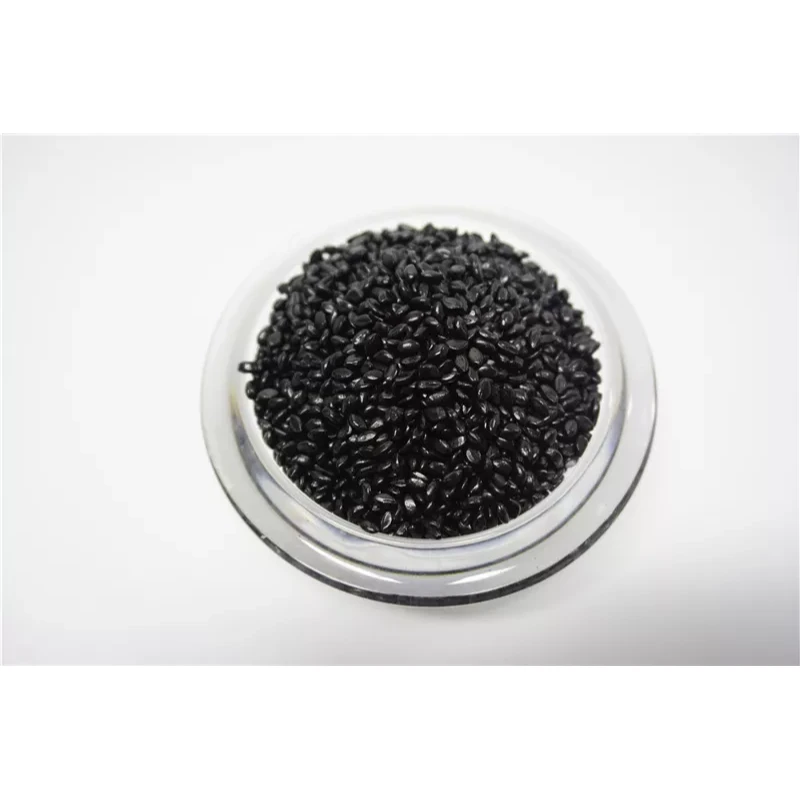
One poor-fit use is long-term high-temperature structural parts, because PBS lacks the thermal and mechanical stability required for engineering components that must carry load under sustained heat.
Environmental and Sustainability Aspects
PBS is widely described as biodegradable, but its environmental profile depends heavily on feedstock origin, formulation, use phase, and disposal route. In industrial composting conditions, PBS can biodegrade substantially faster than in ambient soil or marine settings, where temperature and microbial activity are often too low for rapid decomposition.
Sustainability strengths
- Potential bio-based sourcing from renewable feedstocks such as biomass-derived succinic acid and 1,4-butanediol.
- Compostability in certified systems, making it attractive for food-contaminated packaging and agricultural films.
- Melt-processability on conventional equipment, reducing the need for entirely new converting infrastructure.
- Compatibility with blends, enabling lower-impact formulations with targeted performance.
Key sustainability caveats
- Biodegradability is environment-specific; PBS is not a universal solution for littering or uncontrolled marine disposal.
- Bio-based is not automatically low-carbon if feedstock cultivation, energy use, and transport are intensive.
- Compostable labeling can complicate sorting if infrastructure and consumer education are weak.
- Mechanical recycling is possible in principle, but contamination, grade separation, and economics often limit closed-loop recycling for compostable PBS products.
In practice, PBS is most credible as part of a targeted circularity strategy for short-life products, not as a replacement for durable recyclables in applications that already have efficient collection systems.
Economic and Global Market Impact
PBS occupies a smaller market than commodity polyolefins, but its importance is rising in regions and sectors where compostability and bio-based content create regulatory or brand value. Market momentum is driven by food-service packaging, agricultural films, and demand for alternatives to petroleum-based single-use plastics.
Economic adoption depends on three variables:
- Feedstock price parity versus fossil-based resins
- Access to composting or organics collection infrastructure
- Performance cost relative to PLA, PBAT, and conventional films
Major industry contributors include resin producers, compounders, and film converters that support compostable packaging systems, with Mitsubishi Chemical’s BioPBS frequently cited as a prominent commercial brand. Recent industry and academic reviews also point to expanding processing flexibility, which lowers adoption barriers across extrusion, injection molding, spinning, and deep drawing.
Current Challenges and Innovations
PBS faces several technical and commercial challenges:
- Cost remains higher than conventional polyolefins in many markets.
- Barrier performance is moderate, limiting standalone use in demanding food packaging.
- Heat and dimensional stability must often be improved for higher-value applications.
- End-of-life clarity remains difficult because composting claims depend on certification, thickness, and local infrastructure.
Current innovation themes include:
- Copolymerization with adipate or other comonomers to improve flexibility and processing window.
- Blending with PLA, PBAT, and starch-based systems to tune seal strength, toughness, and compostability.
- Chain extenders and nucleating agents to increase molecular weight, crystallization rate, and heat resistance.
- Bio-based residue feedstocks to reduce dependence on food-crop inputs.
- Functional fillers and coatings to improve barrier, stiffness, and printability while keeping compostability targets in view.
A practical formulation example is a PBS/PLA blend for packaging film: PBS contributes flexibility and heat-seal behavior, while PLA improves stiffness and clarity; the blend is then tuned further with compatibilizers or nucleating agents to balance tear resistance and process stability.
Future Outlook
PBS is likely to expand where regulations, brand requirements, and waste-management realities favor compostable or bio-based materials for short-life products. Its most plausible growth path is not universal substitution, but application-specific replacement in packaging, agriculture, and certain fiber-based or coated-paper formats.
Future progress will depend on:
- Lower-cost renewable feedstocks
- Better barrier and heat-resistant grades
- More robust composting and organics infrastructure
- Clearer standards for certification and labeling
- Improved integration with paper, fiber, and multilayer compostable structures
If these conditions mature, PBS could become one of the more important bridge materials in the transition from fossil-based disposables to lower-impact, circular, or organics-compatible plastics systems.
Summary
PBS is a biodegradable aliphatic polyester that combines conventional thermoplastic processing with compostable-end-of-life potential. Its strongest advantages are flexibility, toughness, and broad processability; its main limitations are cost, moderate barrier performance, and dependence on suitable disposal conditions. As a result, PBS is best understood not as a universal plastic replacement, but as a high-value material for specific short-life applications where performance and sustainability goals align.
References
- •
Polybutylene succinate. (2013, December 23). Wikipedia. https://en.wikipedia.org/wiki/Polybutylene_succinateLink
- •
A brief review of poly(butylene succinate) (PBS) and its.... (2022, February 21). https://pmc.ncbi.nlm.nih.gov/articles/PMC8963078/Link
- •
A review on properties and application of bio-based poly(butylene.... (2021, April 29). https://pmc.ncbi.nlm.nih.gov/articles/PMC8125033/Link
- •
Polybutylene succinate (PBS): Properties, applications, and.... (2025, February 10). https://www.plas.com/news/details/1246Link
- •
Polybutylene succinate properties | PBS polymer datasheet & specs. (2025, June 7). https://waycoochem.com/polybutylene-succinate-properties-pbs-datasheet/Link
- •
PBS biodegradable plastic in the real world: 5 uses you'll.... (2025, October 8). https://www.linkedin.com/pulse/pbs-biodegradable-plastic-real-world-5-uses-youll-actually-0pwcfLink
- •
Synthesis, properties and applications of poly(butylene succinate). (n.d.). https://www.matec-conferences.org/articles/matecconf/pdf/2023/13/matecconf_menec2023_01005.pdfLink
- •
BioPBS™ (polybutylene succinate). (n.d.). Springer Nature Link. https://link.springer.com/chapter/10.1007/12_2023_159Link
- •
Polybutylene succinate, a potential bio-degradable polymer. (2022, June 21). https://pubs.rsc.org/en/content/articlelanding/2022/py/d2py00204cLink
- •
Polybutylene succinate (PBS). (2025, June 4). https://corvay-specialty.com/en/products/polybutylene-succinate-pbs/Link
- •
Polybutylene succinate (PBS) - Biobased products / Alfa Chemistry. (2025, April 15). https://bioeco.alfa-chemistry.com/polybutylene-succinate-pbs.htmlLink
- •
Synthesis, properties and applications of poly(butylene succinate). (2023, November 1). https://www.matec-conferences.org/articles/matecconf/abs/2023/13/matecconf_menec2023_01005/matecconf_menec2023_01005.htmlLink
- •
Poly(butylene succinate) (PBS): Materials, processing, and.... (2022, September 28). https://research.utwente.nl/en/publications/polybutylene-succinate-pbs-materials-processing-and-industrial-ap/Link
- •
Poly(butylene succinate) (PBS): Materials, processing, and.... (n.d.). https://www.sciencedirect.com/science/article/abs/pii/S0079670022000776Link
- •
Poly butylene succinate sustainable material. (n.d.). https://eureka.patsnap.com/materials/pbs-biodegradable-polyesterLink
- •
Bio-based poly(butylene succinate): Recent progress, challenges and future opportunities. (2021, December 5). https://www.sciencedirect.com/science/article/abs/pii/S0014305721005899Link
- •
Poly(butylene succinate) (PBS): Materials, processing, and industrial applications. (n.d.). https://ris.utwente.nl/ws/portalfiles/portal/329049739/1-s2.0-S0079670022000776-main.pdfLink
- •
Biobased biodegradable polybutylene succinate polymers.... (2025, March 20). https://www.techscience.com/jrm/v13n3/60045/htmlLink
- •
Poly(butylene succinate) average Mw 40000. (n.d.). Sigma-Aldrich. https://www.sigmaaldrich.com/US/en/product/aldrich/936340Link
- •
Studies on poly(butylene succinate) and poly(butylene succinate-co-adipate)-based biodegradable plastics for sustainable flexible packaging and agricultural applications: A comprehensive review. (n.d.). https://pubs.rsc.org/en/content/articlepdf/2025/su/d4su00193aLink
- •
Biodegradable polyester-polybutylene succinate (PBS): A review. (n.d.). https://link.springer.com/article/10.1007/s00289-023-04998-wLink
- •
Poly butylene succinate environmentally friendly plastic. (n.d.). https://eureka.patsnap.com/materials/pbs-biodegradable-polymerLink
- •
Poly butylene succinate bio based polymer. (n.d.). https://eureka.patsnap.com/materials/pbs-bio-based-polymerLink
- •
Poly butylene succinate chemical resistant. (n.d.). https://eureka.patsnap.com/materials/pbs-chemical-resistantLink
- •
Polybutylene succinate (PBS) in our products - Fillplas resin. (2019, November 20). https://fillplas.com/polybutylene-succinate-pbs-fillplas-resin/Link
- •
Poly butylene succinate biodegradable film. (n.d.). https://eureka.patsnap.com/materials/pbs-biodegradable-filmLink
- •
A general review on poly butylene succinate fiber in the.... (2025, March 6). https://article.innovationforever.com/JMPCM/20240411.htmlLink
- •
What is PBS bioplastic? Properties and industrial uses. (n.d.). https://halebioplastics.com/en/pbs-bioplasticsLink
- •
Preparation and characterization of new bioplastics.... (2023, February 28). https://pmc.ncbi.nlm.nih.gov/articles/PMC10007215/Link
- •
Polybutylene succinate processing and evaluation as a micro.... (2022, October 23). https://pmc.ncbi.nlm.nih.gov/articles/PMC9655432/Link
- •
Based biodegradable plastics for sustainable flexible packaging and.... (2025, March 5). https://pubs.rsc.org/en/content/articlehtml/2025/su/d4su00193aLink
- •
Recent insight into the biomedical applications of.... (n.d.). https://real.mtak.hu/198922/1/EPL-0012111_article.pdfLink
- •
A review on current strategies for the modulation.... (2022, March 3). https://pmc.ncbi.nlm.nih.gov/articles/PMC8914744/Link
- •
Synthesis of poly(butylene succinate) catalyzed by tetrabutyl.... (2025, March 17). https://pmc.ncbi.nlm.nih.gov/articles/PMC11944070/Link
- •
PHA, PHB, PBAT, PLA, PBS, PCL, and TPS explained. (2025, May 17). https://specialty-polymer.com/biodegradable-compared-pha-phb-pbat-pla-pbs-pcl-and-tps/Link
- •
Compostable biopolymer PBS replacing fossil plastics. (2026, May 7). https://www.interpack.com/en/Media_News/interpack_Magazin/BEVERAGES_PACKAGING/Beverages_Industry_News/Compostable_biopolymer_PBS_replacing_fossil_plasticsLink
- •
New types of the bioplastic PBS for industrial applications. (2025, September 4). https://www.iap.fraunhofer.de/en/press_releases/2025/k-2025-new-types-bioplastic-pbs-for-industrial-applications.htmlLink