
Introduction
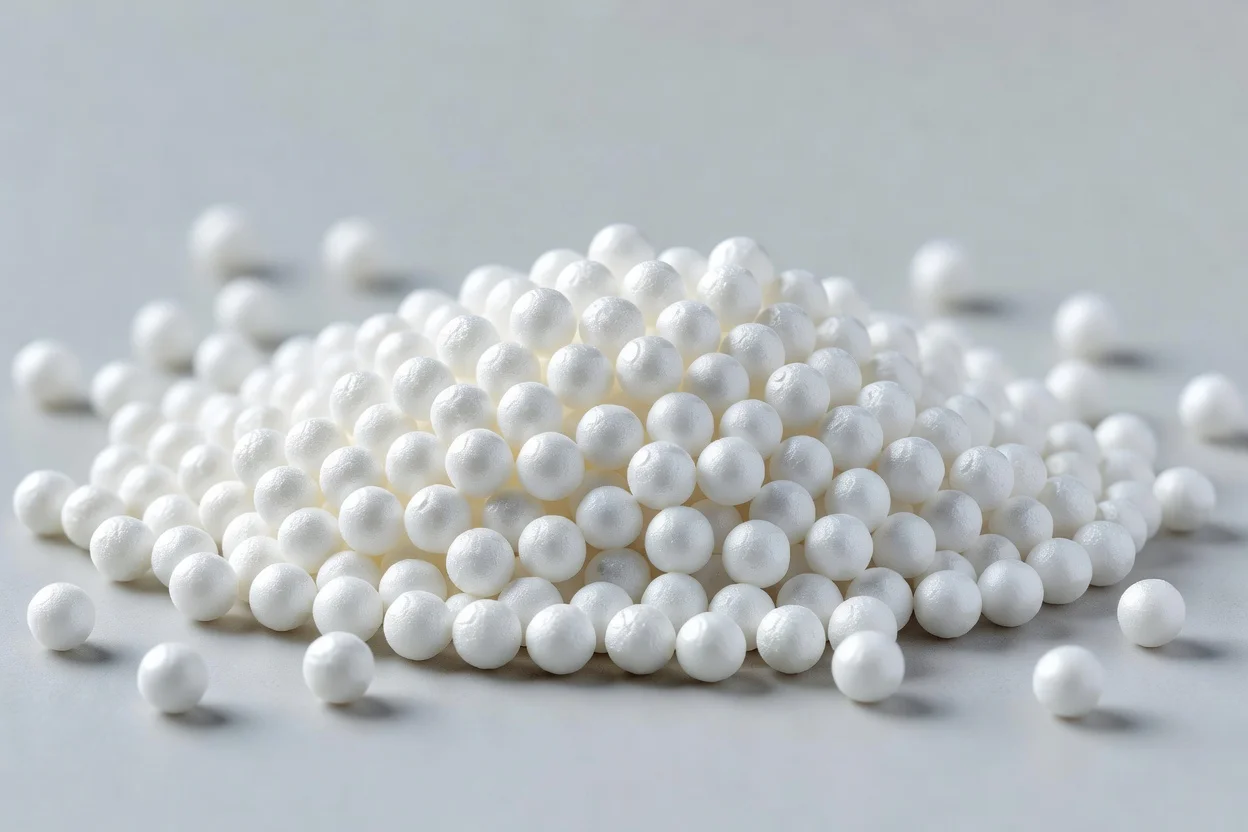
Expandable polystyrene (EPS) is a polystyrene resin formulated with a volatile blowing agent, most commonly pentane, that expands when heated and is then fused into a rigid, closed-cell foam article. In industry usage, EPS is the feedstock form; after pre-expansion and molding, it becomes the familiar lightweight foam used in construction insulation, protective packaging, cold-chain containers, and a wide range of molded technical parts.
EPS occupies a distinctive position in the plastics value chain because it combines very low density, good thermal insulation, and strong cushioning performance with relatively simple processing and broad compatibility with standard molding equipment. Its commercial success has been shaped by the growth of building energy-efficiency standards, expansion of packaged-goods logistics, and the need for low-cost, high-volume protective materials.
Historically, EPS was developed commercially in the 1950s and became a major commodity foam through branded products such as BASF’s Styropor, which helped establish the modern market for expandable foam beads. Since then, formulation improvements have focused on bead-size control, flame-retardant systems, faster molding cycles, and modified grades such as graphite-enhanced EPS for improved insulation performance.
From a materials perspective, EPS is best understood as a cellular architecture rather than a conventional dense plastic: finished articles are typically around 98% air by volume, with a small polystyrene matrix forming the load-bearing skeleton. That structure explains both its key advantages and its limits, including relatively modest resistance to some solvents and a surface that is poorly suited to bonding or printing without treatment.
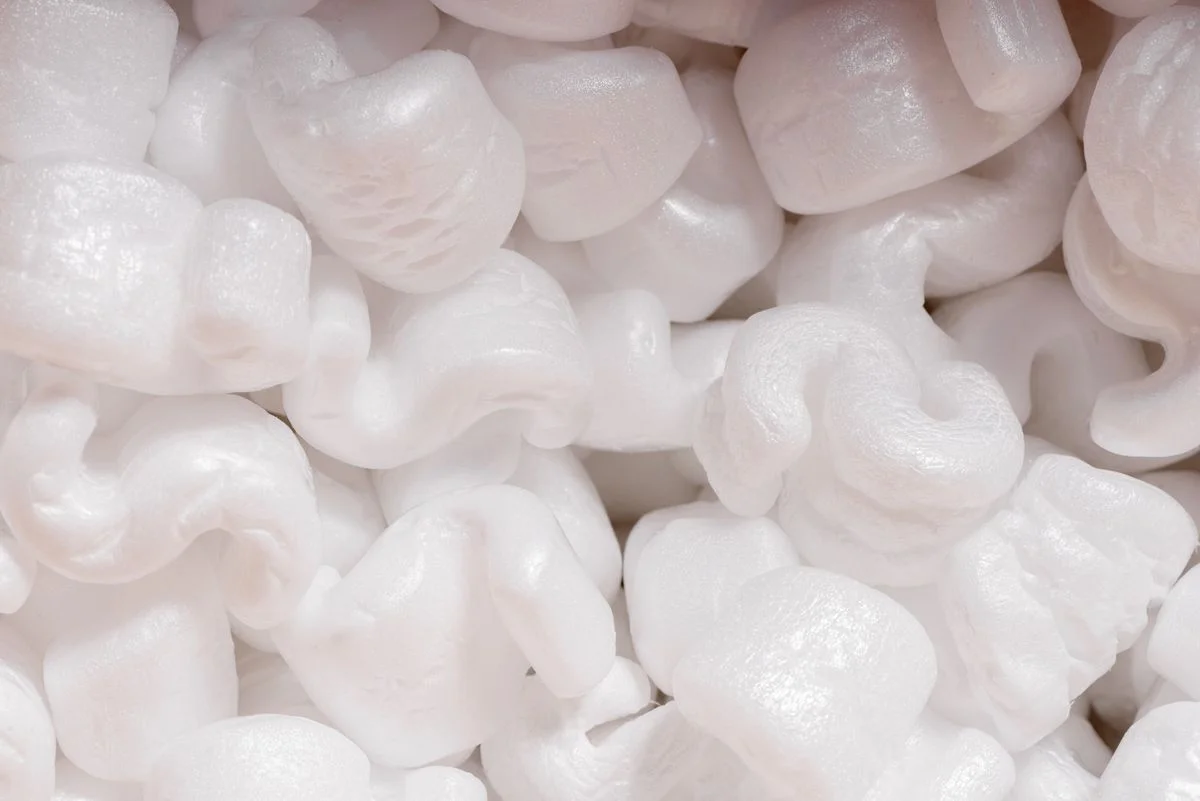
Sustainability is a central part of the EPS discussion. EPS is technically recyclable, and mechanically recycled EPS can be reprocessed into new foam or other plastic products, but collection, contamination, and low bulk density remain major practical barriers. At the same time, the material’s low mass can reduce transport emissions and its thermal performance can lower building energy use over decades, which is why EPS remains widely used despite continuing pressure from regulators, brand owners, and circular-economy initiatives.
History and Development
EPS emerged from mid-20th-century advances in styrene polymerization and foam processing, when manufacturers learned to incorporate a blowing agent into polystyrene beads and expand them with steam in a mold. This process produced a rigid foam with a much lower density than solid polystyrene, opening applications in insulation and packaging.
Commercial adoption accelerated because EPS offered several practical advantages at scale: low raw-material cost, short molding cycles, and the ability to make custom shapes with modest tooling complexity. Over time, the market moved from simple protective packaging toward high-value building products, including insulation boards, structural insulated panels, and geofoam used in civil engineering.
More recent development has centered on performance upgrades rather than a replacement of the basic chemistry. Graphite-filled EPS, for example, uses infrared-absorbing particles to reduce thermal conductivity, while flame-retardant packages and tighter bead-sizing control have improved compliance and consistency for construction-grade materials.
Chemical Structure and Key Properties
EPS begins as polystyrene beads containing dissolved blowing agent, typically pentane, which expands under heat to create a closed-cell foam structure. The final product is not chemically “expanded” by reaction; rather, it is physically foamed and fused, which is why EPS remains a thermoplastic material and can be remelted or recycled under suitable conditions.
Core property profile
| Property | Practical effect | Typical significance |
|---|---|---|
| Very low density | Large volume from little polymer | Low transport weight, easy handling |
| Closed-cell structure | Trapped gas limits heat flow | High insulation and buoyancy |
| Energy absorption | Cells deform under impact | Protective packaging and cushioning |
| Thermoplastic nature | Can be reheated and reprocessed | Mechanical recycling potential |
| Chemical resistance | Tolerates many aqueous and mild environments | Useful in construction and packaging |
EPS’s main performance advantage is the combination of low thermal conductivity and low weight. In construction applications, this makes it effective for walls, roofs, floors, and below-grade insulation where cost-to-performance matters.
Important limits and workarounds
- Poor oxygen and grease barrier → the foam is highly porous at the macroscopic level and therefore does not block gases or oils well → workaround: use it as a structural or insulating component inside a multilayer package or combine it with liners, films, or coatings for barrier duty.
- Low surface energy before treatment → untreated EPS bonds and prints poorly because the polystyrene surface is chemically nonpolar → workaround: use corona, flame, plasma, primers, or mechanically interlocked design features when adhesive bonding or decoration is required.
- Limited resistance to some organic solvents → aromatic and chlorinated solvents can attack polystyrene-based foams → workaround: specify compatible chemicals, barriers, or alternative foams in solvent-exposed environments.
- Bulkiness in post-consumer waste streams → low density makes collection and transport uneconomic without densification → workaround: compact, melt-densify, or use local take-back systems before recycling.
Production Processes and Raw Feedstocks
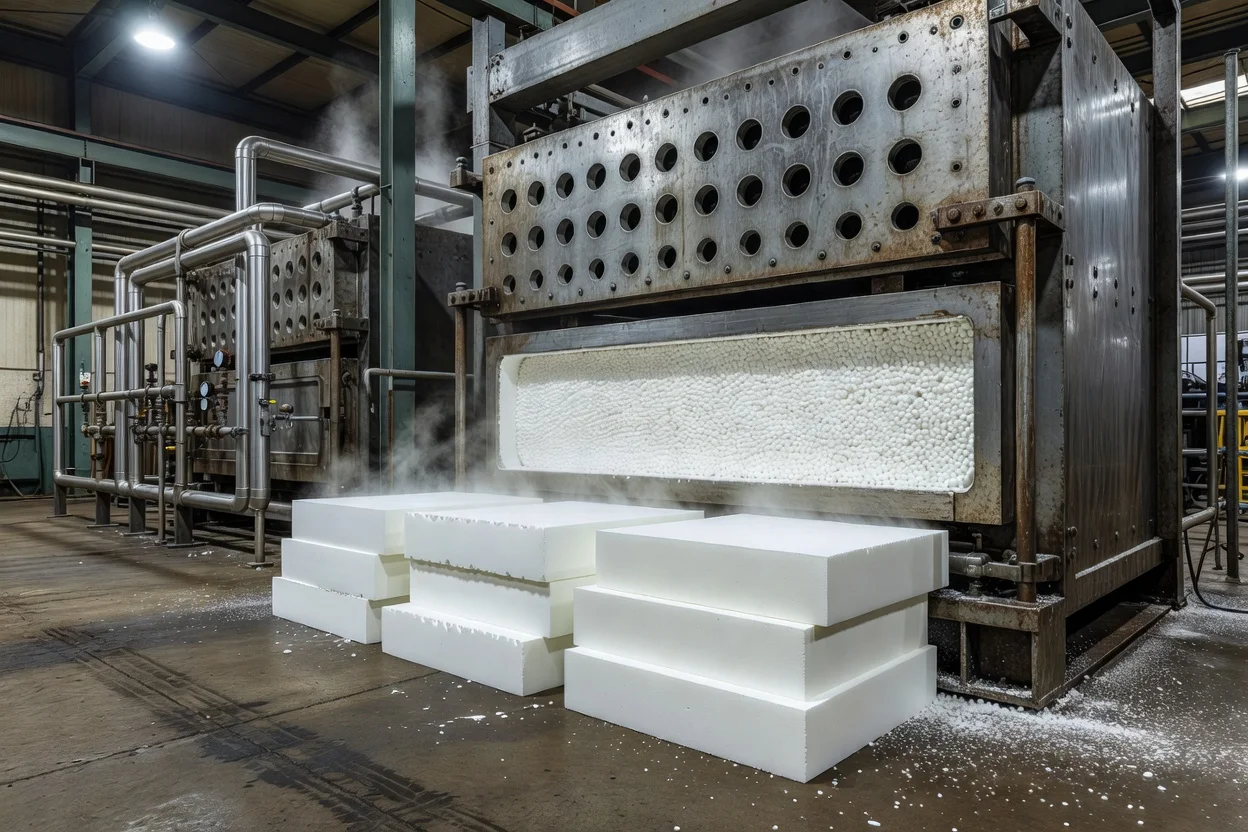
EPS production begins with styrene-derived polystyrene beads containing a physical blowing agent, typically pentane. The manufacture generally follows three steps:
- Pre-expansion The beads are heated with steam so the blowing agent vaporizes and expands the particles.
- Aging or stabilization The expanded beads are allowed to equilibrate so internal pressure normalizes and molding performance improves.
- Steam chest molding or block molding The beads are fused in a mold, producing shaped articles, blocks, or boards.
The key raw feedstocks are:
- Styrene monomer as the polymer precursor
- Pentane as the expansion agent
- Additives such as flame retardants, nucleating agents, pigments, and processing aids, depending on the grade and application
In practice, EPS production is highly sensitive to bead size distribution, residual blowing-agent content, and molding conditions, because these variables determine cell uniformity, density, and final mechanical performance. Industrial producers therefore compete not only on chemistry but on particle engineering and process control.
Leading producers and market position
The EPS market is served by large global petrochemical and specialty-foam producers, with major capacity historically associated with BASF, Synthos, INEOS Styrolution, Alpek, and regional specialists in Europe and Asia. BASF is especially significant historically because Styropor established EPS as a mass-market foam category, while other large producers have expanded capacity for construction and packaging grades in major consuming regions.
Applications and End-Use Markets
EPS is most strongly associated with building insulation and protective packaging, but its application base is broader than many users realize.
| End-use sector | Typical EPS form or grade | Why EPS fits | One notable limitation |
|---|---|---|---|
| Construction insulation | Boards, blocks, shaped insulation | Low thermal conductivity, light weight, low cost | Needs protection from UV and some solvents |
| Cold-chain packaging | Molded boxes, inserts, shipping containers | Thermal stability, cushioning, hygiene | Bulkiness in reverse logistics |
| Protective packaging | Custom molded cushions, corner protectors | Shock absorption and shape retention | Poor barrier to moisture and gases |
| Civil engineering | Geofoam, void formers, lightweight fill | Low load on subgrades, easy installation | Requires proper design against fire and solvents |
| Industrial components | Molded technical parts, housings, dunnage | Fast cycle molding, low weight | Limited heat resistance versus engineering plastics |
| Horticulture and specialty uses | Seed trays, floatation, props, displays | Easy shaping, low mass | Environmental scrutiny and disposal issues |
Construction
Construction is the dominant EPS market, especially for thermal insulation in walls, roofs, floors, and facade systems. The material is also used in structural insulated panels, insulated concrete forms, void formers, embankment fill, and geofoam in civil works. In these uses, the usual grade is a block or board product designed for dimensional stability, compressive strength, and consistent thermal conductivity.

Packaging
EPS packaging exploits its ability to absorb impact energy while remaining extremely light. It is commonly used for electronics, appliances, fragile goods, pharmaceuticals, and temperature-sensitive foods, where molded inserts or boxes reduce breakage and protect temperature-sensitive contents.
Cold chain and food logistics
EPS remains important in insulated transport containers for fish, meat, dairy, vaccines, and other cold-chain goods because it combines thermal resistance with low cost and hygiene properties. The usual product is a molded insulated box or liner, often designed for single-use or limited reuse in high-throughput logistics.
Civil engineering and geofoam
EPS geofoam is used as lightweight fill where reducing dead load matters, such as road embankments, bridge approaches, retaining structures, and slope stabilization. Its usual form is a large block cut into site-specific shapes, chosen for load reduction and constructability rather than long-term thermal performance.
One poor-fit use
EPS is a poor fit for demanding high-temperature, solvent-rich, or long-life barrier applications because its thermal resistance, surface chemistry, and solvent sensitivity are inferior to those of many engineering plastics or laminated composites. For that reason, it is rarely appropriate as a standalone material for aggressive chemical-service housings or primary gas-barrier packaging.
Environmental and Sustainability Aspects
EPS is one of the most debated plastics because it is simultaneously useful, lightweight, and visible in litter and waste discussions. The sustainability assessment depends strongly on application, transport distance, use life, and end-of-life management.
Recyclability and circularity
EPS is technically recyclable, and some streams are mechanically recycled through densification, regrinding, or remelting. However, real-world recycling rates are constrained by:
- low bulk density, which makes collection expensive
- contamination from food or mixed waste
- fragmented end markets for recovered material
- the cost of densification infrastructure
Bio-based and lower-carbon alternatives
There is no direct “bio-EPS” equivalent at meaningful scale in mainstream commodity markets, although bio-attributed styrene and recycled feedstock routes have been explored within the broader styrenics value chain. In parallel, building users may substitute mineral wool, wood fiber, polyurethane, or other foams depending on fire, moisture, and design constraints. These alternatives do not uniformly outperform EPS; the comparison depends on thermal performance, embodied carbon, moisture behavior, cost, and installation complexity.
Carbon footprint perspective
EPS has a relatively low mass per functional unit, which can lower transport emissions and reduce material input per square meter of insulation or packaging. In buildings, its operational energy savings over time can be substantial, particularly where insulation thickness is optimized and the system is designed to last for decades. Against that benefit, the industry must address pentane emissions during production, fossil feedstock dependence, and end-of-life leakage into the environment.
Economic and Global Market Impact
EPS is a global commodity foam with demand closely tied to construction activity, consumer packaging, cold-chain logistics, and industrial production. Because the material is relatively inexpensive and easy to mold, it is especially attractive in price-sensitive markets where performance must be achieved at scale.
The largest demand centers are typically regions with strong building sectors and expanding logistics networks, including Asia-Pacific, Europe, and North America. Construction-grade EPS tends to dominate volume demand, while packaging grades are more cyclical and linked to consumer goods, e-commerce, and appliance shipments.
Economically, EPS benefits from:
- established manufacturing infrastructure
- low processing temperatures and short cycles
- low scrap generation in molding
- extensive standardization in boards, blocks, and molded shapes
At the same time, it faces increasing policy pressure from waste regulation, design-for-recycling requirements, and customer substitution in food service and single-use packaging. This has pushed producers toward higher-performance construction grades, recycled-content initiatives, and cleaner collection models.
Current Challenges and Innovations
Current challenges
- Waste management: low density and contamination make recycling difficult.
- Public perception: EPS is often associated with visible litter, especially in food-service and shipping contexts.
- Fire and smoke performance: construction uses require carefully formulated grades and compliance systems.
- Solvent sensitivity: limits its use in chemically harsh environments.
- Competition from substitutes: mineral wool, polyurethane foams, molded pulp, and paper-based packaging continue to pressure market share.
Innovation directions
- Graphite-enhanced insulation grades for lower thermal conductivity and thinner assemblies.
- Improved flame-retardant formulations for building compliance and safer detailing.
- Densification and advanced recycling systems to improve collection economics.
- Design-for-disassembly in construction, enabling cleaner recovery of insulation boards and blocks.
- Recycled styrenic feedstocks to reduce fossil dependence across the styrenics chain.
- Hybrid packaging designs that reduce EPS mass while preserving shock absorption through ribs, corrugations, or composite structures.
A useful chemical example is the use of pentane at low levels as a physical blowing agent in the bead; its volatilization during steam exposure creates the cell structure that gives EPS its low density and insulation performance. A second practical example is graphite-filled EPS, where infrared-absorbing particles lower heat transfer without changing the basic polymer platform, improving insulation efficiency in building boards.
Future Outlook
EPS is likely to remain a major commodity foam because its functional combination of insulation, light weight, and low cost is difficult to match across all applications at once. The most durable demand base is expected to remain construction, where energy-code compliance and whole-life economics still favor EPS in many designs.
Future growth will depend on how successfully the industry addresses three pressures:
- Circularity: better collection, densification, and recycled content
- Regulatory change: tighter restrictions on problematic packaging uses
- Performance upgrading: thinner, more fire-safe, and lower-carbon grades
The most plausible long-term scenario is not the disappearance of EPS, but a narrower, more specialized role: stronger in building insulation, geofoam, and engineered cold-chain logistics, and weaker in discretionary disposable packaging where substitution pressure is highest.
Summary
EPS is a closed-cell, rigid foam made from expandable polystyrene beads, typically expanded with pentane, and valued for low density, insulation, and cushioning. Its principal markets are construction insulation and protective packaging, with important additional roles in cold chain logistics and civil engineering.
Its strengths are clear: low thermal conductivity, easy molding, and low cost. Its weaknesses are equally clear: poor gas barrier performance, limited solvent resistance, low surface energy, and difficult post-consumer collection at low density. As a result, the future of EPS will depend less on replacing the material outright and more on improving its formulation, circularity, and fit-for-purpose use across the plastics ecosystem.
References
- •
Expanded Polystyrene (EPS): How to select the right grade? (2025, July 8). SpecialChem. https://www.specialchem.com/plastics/guide/expanded-polystyrene-eps-foam-insulationLink
- •
Expanded polystyrene or EPS. (2008, July 10). Techniques de l'Ingénieur. https://www.techniques-ingenieur.fr/en/resources/article/ti100/expanded-polystyrene-or-eps-am3341/v1Link
- •
EPS applications. (2026, July 27). EPack Petrochem. https://www.epackpetrochem.com/expandable-polystyrene-applications/Link
- •
Expanded Polystyrene (EPS). (n.d.). British Plastics Federation. https://www.bpf.co.uk/plastipedia/polymers/expanded-and-extruded-polystyrene-eps-xps.aspxLink
- •
Application of expanded polystyrene (EPS) in buildings and constructions: A review. (2019, May 20). Wiley. https://onlinelibrary.wiley.com/doi/10.1002/app.47529Link
- •
What is EPS (expanded polystyrene)? Properties, uses & benefits. (2026, June 25). EPRO Technologies. https://www.eprotechnologies.com/blog/what-is-eps/Link
- •
A basic guide to expanded polystyrene: Definition, structure, properties and applications. (2026, February 10). R-EPS. https://www.r-eps.com/a-basic-guide-to-expanded-polystyrene-definition-structure-properties-and-applications/Link
- •
Expanded polystyrene (EPS). (2024, April 29). Plastics Europe. https://plasticseurope.org/plastics-explained/a-large-family/expanded-polystyrene/Link
- •
What is expanded polystyrene (EPS)? (2026, July 2). Sales Plastics. https://salesplastics.com/expanded-polystyrene-eps/Link
- •
Polystyrene. (2003, January 12). Wikipedia. https://en.wikipedia.org/wiki/Expanded_polystyreneLink
- •
What is EPS? (2023, May 23). Expanded Polystyrene Australia. https://epsa.org.au/what-is-eps/Link
- •
EPS (expandable polystyrene). (2022, September 12). Polimaxx. https://polimaxx.irpc.co.th/en/troubleshooting-type/eps-expandable-polystyrene/Link
- •
7 properties of expanded polystyrene (EPS). (n.d.). Isowall. https://isowall.co.za/7-properties-of-expanded-polystyrene-eps/Link
- •
Application and uses of expandable polystyrene (EPS). (n.d.). EPack Petrochem. https://www.epackpetrochem.com/blogs/application-and-uses-of-expandable-polystyrene-eps/Link
- •
The problems with expanded polystyrene (a.k.a. EPS or plastic foam). (2024, February 12). Beyond Plastics. https://www.beyondplastics.org/fact-sheets/polystyreneLink
- •
Expandable polystyrene in the real world: 5 uses you'll... (2025, October 23). LinkedIn. https://www.linkedin.com/pulse/expandable-polystyrene-real-world-5-hwwdfLink
- •
可发性聚苯乙烯. (n.d.). Baidu. https://baike.baidu.com/item/%E5%8F%AF%E5%8F%91%E6%80%A7%E8%81%9A%E8%8B%AF%E4%B9%99%E7%83%AF/4751722Link
- •
What is expanded polystyrene - EPS - definition. (2019, June 4). Thermal Engineering. https://www.thermal-engineering.org/what-is-expanded-polystyrene-eps-definition/Link
- •
What is expanded polystyrene used for? (2024, May 14). Epsole. https://epsole.com/what-is-expanded-polystyrene-used-for/Link
- •
Properties of expanded polystyrene (EPS) and its... (n.d.). MiliLink. https://www.mililink.com/upload/article/1897080164aams_vol_2010_august_2021_a10_p2151-2162_ankesh_and_sanjeev_goyal.pdfLink
- •
Expanded polystyrene (EPS) and the environment. (n.d.). EPS. https://www.eps.co.uk/pdfs/eps_and_the_environment.pdfLink
- •
Properties, performance and design fundamentals of expanded... (n.d.). Expanded Polystyrene Australia. https://epsa.org.au/wp-content/uploads/2023/08/PropertiesPerformanceDesign8-2019-compressed.pdfLink
- •
Expanded polystyrene (EPS): A comprehensive overview. (2025, October 16). Energycle. https://www.energycle.com/expanded-polystyrene-eps-a-comprehensive-overview/Link
- •
Everything you need to know about expanded polystyrene... (2023, October 31). Green Theory. https://www.greentheory.me/post/everything-you-need-to-know-about-expanded-polystyrene-epsLink
- •
A complete guide to expanded polystyrene (EPS) foam. (2026, February 26). R-EPS. https://www.r-eps.com/a-complete-guide-to-expanded-polystyrene-eps-foam/Link
- •
101 applications for expanded polystyrene & polypropylene. (2022, November 4). Engineered Foam Products. https://www.engineeredfoamproducts.com/news/101-applications-for-expanded-polystyrene-polypropylene/Link
- •
Guide to expanded polystyrene (EPS) applications in construction. (2026, March 7). LinkedIn. https://www.linkedin.com/pulse/guide-expanded-polystyrene-eps-applications-yadkfLink
- •
Why specify EPS? (2002, January 1). EPS. https://www.eps.co.uk/abouteps/attributes.htmlLink
- •
Extruded polystyrene vs. expanded polystyrene (XPS vs. EPS): What's the difference? (2020, April 8). Ultraboard. https://ultraboard.com/extruded-polystyrene-vs-expanded-polystyrene-xps-vs-eps-whats-the-difference/Link