
Introduction
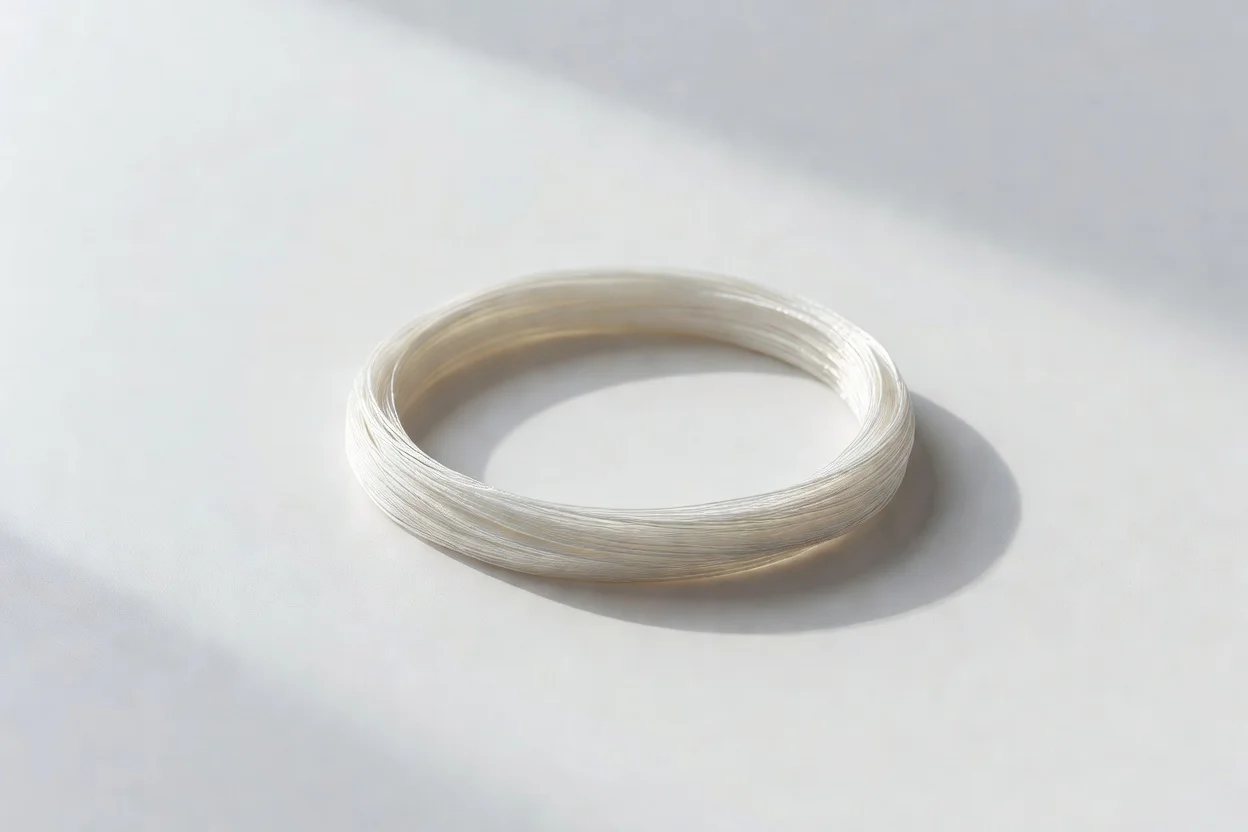
Polyamides (PA) are a major family of engineering thermoplastics defined by repeating amide linkages along the polymer backbone. In the plastics industry, the term usually refers to nylons such as PA 6, PA 66, PA 11, and PA 12, but the broader family also includes semi-aromatic grades such as polyphthalamides and high-performance aromatic polyamides, or aramids, such as Kevlar. Polyamides are valued for their combination of strength, toughness, wear resistance, thermal stability, and processability, which has made them essential in textiles, automotive parts, electrical components, films, cable protection, and precision engineering applications.
The material class has a long industrial history, beginning with early nylon development in the 1930s and expanding into a large global engineering plastics platform with many tailored variants. Today, polyamides span commodity-volume grades and high-performance specialty resins, and their position in the market is shaped by lightweighting trends, electrification, higher thermal demands, and the push toward circularity, recycled content, and bio-based feedstocks.
History and Development
Polyamides were among the first widely commercialized synthetic engineering polymers. Their industrial rise is closely associated with nylon, originally developed through early polymer research at DuPont and commercialized in the late 1930s. The early success of nylon transformed both the textile market and the emerging engineering plastics sector by demonstrating that synthetic polymers could outperform natural materials in strength, abrasion resistance, and consistent processing behavior.
Over time, the family expanded well beyond textile fibers. PA 6 and PA 66 became core general-purpose engineering grades, while PA 11 and PA 12 gained importance where lower moisture uptake and better dimensional stability were needed. Later, semi-aromatic polyamides such as polyphthalamides extended service temperature and chemical resistance, and aromatic polyamides established a separate high-performance niche in ballistic protection, flame resistance, and advanced composites.
Chemical Structure and Key Properties
Polyamides are polymers whose repeating units are connected by amide bonds. This polar linkage creates strong intermolecular interactions, including hydrogen bonding, which is a major reason for their mechanical strength, toughness, and relatively high melting points compared with many other thermoplastics.
Main structural families
| Family | Typical examples | Main characteristics |
|---|---|---|
| Aliphatic polyamides | PA 6, PA 66, PA 11, PA 12 | Balanced strength, toughness, and processability |
| Semi-aromatic polyamides | Polyphthalamides | Higher heat resistance, better chemical stability |
| Aromatic polyamides | Aramids | Very high strength, thermal stability, and flame resistance |
Polyamides are often semi-crystalline, meaning they combine ordered crystalline regions with amorphous regions. That structure helps explain their balance of stiffness and toughness, but it also makes their properties sensitive to moisture and thermal history.
Key performance features
- High tensile strength and good impact resistance.
- Excellent wear and abrasion resistance, making polyamides suitable for moving parts and sliding contact.
- Low coefficient of friction relative to many structural polymers.
- Good thermal performance, especially in reinforced or high-temperature grades.
- Good resistance to oils, greases, fuels, and many solvents.
- Electrical insulation, particularly important in connectors and housings.
Important limits and workarounds
- Moisture absorption → hydrogen-bonding sites in the amide groups attract water → use PA 12 or PA 11, apply reinforcement, or condition parts for dimensional stability.
- Dimensional change in humid environments → absorbed water plasticizes the polymer and reduces stiffness → use filled grades, lower-absorption polyamides, or design with moisture-conditioning allowances.
- Poor oxygen and grease barrier in many packaging uses → polyamide alone is not a sufficient barrier layer → use multilayer structures with barrier polymers or coatings.
- Low surface energy before treatment in films and molded parts → printing, painting, and adhesive bonding can be difficult → use corona, plasma, flame, or primer treatment.
Practical processing examples
- Glass-fiber reinforcement at around 30% loading is widely used in structural PA compounds to raise stiffness and heat deflection temperature; the fibers carry load while the matrix transfers stress.
- Heat and light stabilizer packages at low dosages, often well below 2% combined, are used to slow chain scission and embrittlement during service; the mechanism is radical scavenging and protection against oxidation.
Production Processes and Raw Feedstocks
Industrial polyamides are produced mainly by two routes: polycondensation and ring-opening polymerization.
Common synthesis pathways
- PA 66 and related grades are typically made by polycondensation of a diamine and a dicarboxylic acid.
- PA 6 is commonly produced by ring-opening polymerization of caprolactam.
- PA 11 is derived from bio-based or petrochemical monomers depending on route.
- PA 12 is generally produced from laurolactam-based chemistry.
- Aromatic and semi-aromatic polyamides require more specialized monomers and process conditions.
Raw feedstocks
The upstream value chain depends on petrochemical intermediates such as:
- caprolactam
- adipic acid
- hexamethylenediamine
- laurolactam
- terephthalic acid derivatives
- specialty aromatic diamines and diacids
For bio-based polyamides, renewable routes may use castor-oil-derived intermediates or other biomass-based building blocks.
Manufacturing and compounding
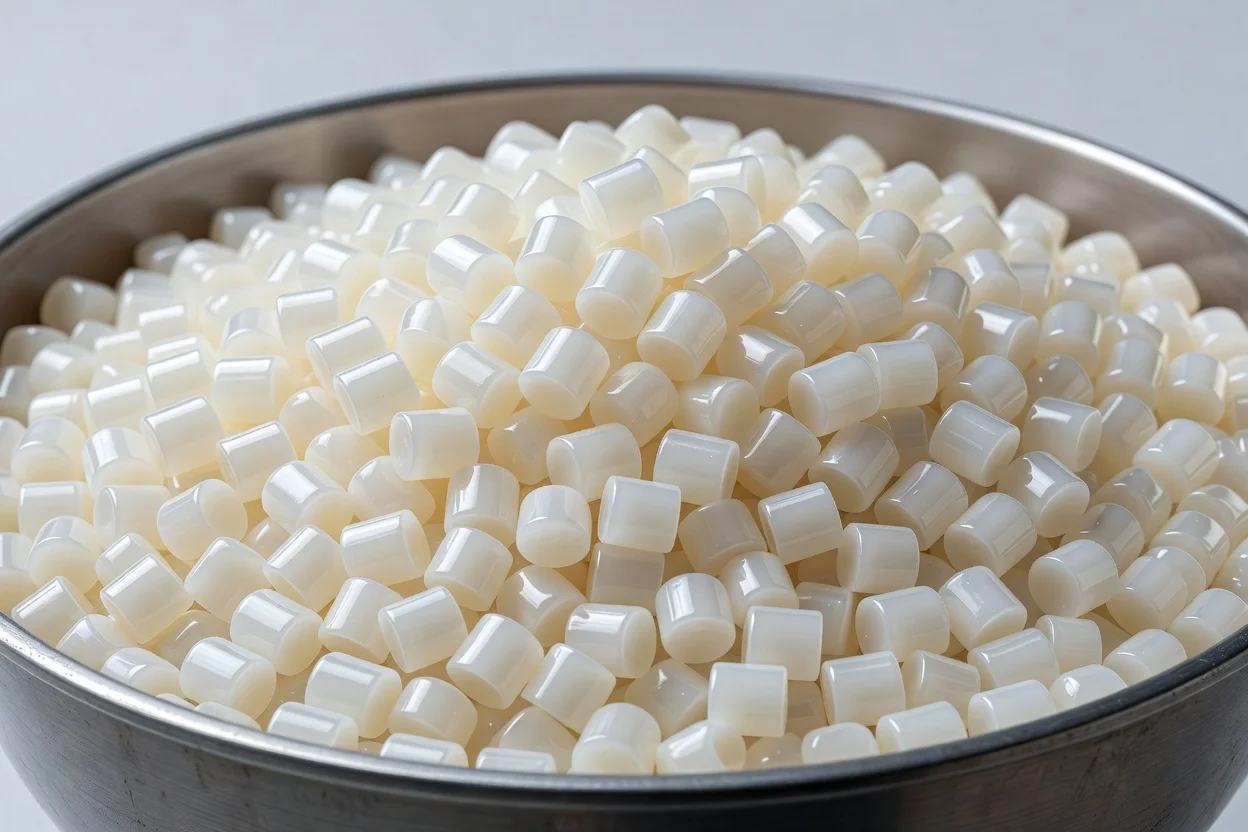
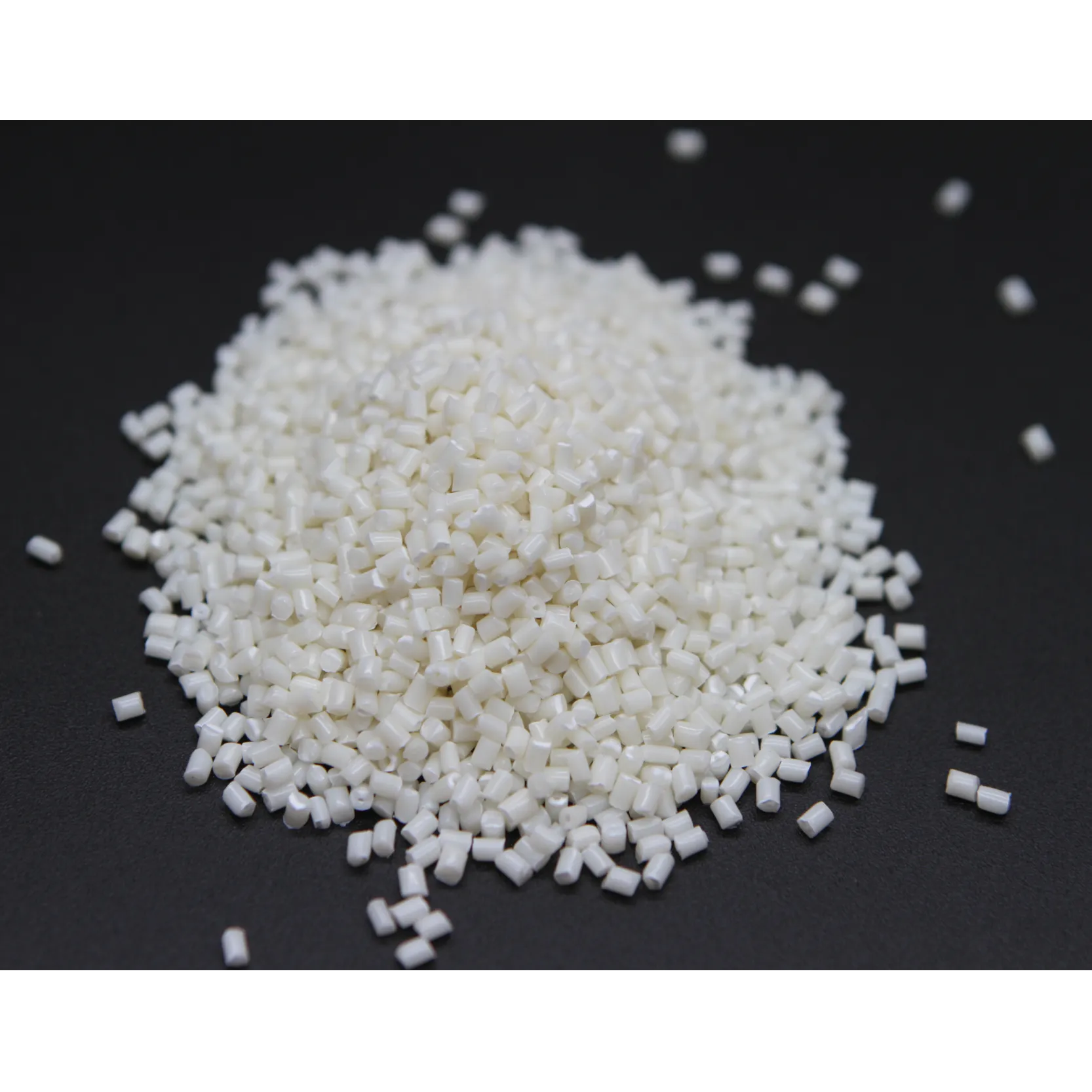
Polyamide resins are commonly converted into pellets and then compounded with:
- glass fiber or mineral fillers
- impact modifiers
- heat stabilizers
- lubricants and mold-release aids
- pigments and color concentrates
- flame retardants for electrical and transportation uses
This compounding step is central to the polyamide business because many end uses require not the base resin, but a tuned formulation with specific stiffness, flow, shrinkage, electrical, or flame performance.
Applications and End-Use Markets
Polyamides are used across a wide range of markets because the chemistry can be tuned from flexible, moisture-sensitive general-purpose grades to highly rigid, heat-resistant specialty compounds.
| End-use sector | Typical PA grades | Usual process | Why PA is used |
|---|---|---|---|
| Automotive | PA 6, PA 66, reinforced PA, polyphthalamides | Injection molding, extrusion | Lightweight replacement for metal, heat and chemical resistance |
| Electrical and electronics | PA 6, PA 66, flame-retardant grades | Injection molding | Insulation, dimensional precision, heat resistance |
| Textiles and fibers | Fiber-grade PA 6, PA 66, PA 11 | Spinning, drawing | Strength, elasticity, abrasion resistance |
| Film and packaging | PA 6, PA 66, multilayer blends | Film extrusion, coextrusion | Mechanical toughness and moderate barrier performance |
| Cable protection | PA 12, PA 6, specialty flexible grades | Extrusion | Flexibility, abrasion resistance, routing durability |
| Pipes, tubing, and fuel lines | PA 11, PA 12, reinforced PA | Extrusion, blow molding, injection molding | Chemical resistance and low moisture uptake |
| Industrial gears and wear parts | PA 6, PA 66, lubricated grades, filled grades | Injection molding, machining | Low friction and good fatigue resistance |
| Medical and consumer goods | PA 11, PA 12, selected specialty grades | Injection molding, extrusion | Biocompatibility in selected grades, toughness |
| High-performance protection | Aramids | Fiber spinning, composite processing | Exceptional strength and thermal stability |
Major application sectors
- Automotive: Polyamides are used in intake manifolds, engine covers, connectors, clips, air ducts, fuel system parts, and structural under-the-hood components, where metal replacement can reduce mass and improve part integration.
- Electrical and electronics: PA 6 and PA 66 are widely used for housings, connectors, switches, and insulating components because they combine heat resistance with electrical performance.
- Textiles: Nylon fibers remain important in apparel, carpets, industrial fabrics, hosiery, ropes, and cords.
- Films and packaging: Polyamide is used in multilayer packaging, especially where toughness and puncture resistance are required; however, it is generally not a standalone high-barrier solution.
- Cable protection and conduits: PA, especially flexible grades, is used for tubing, corrugated conduits, and connector systems because of abrasion resistance and durability in moving installations.
- Wear parts and machinery: Gears, bushings, rollers, and sliding elements benefit from the low friction and fatigue resistance of PA.
- One poor-fit use: Standalone oxygen-barrier packaging is a weak fit for standard PA grades because the barrier is not sufficient by itself; multilayer design is usually required.
Environmental and Sustainability Aspects
Polyamides are durable materials, but that durability is also a sustainability challenge because it can contribute to persistence in the environment if products are not collected and recycled properly.
Recyclability
- Mechanical recycling is established for many PA streams, especially production scrap and relatively clean post-industrial material.
- Chemical recycling and depolymerization routes are being developed to recover monomers or oligomers from end-of-life material, with particular interest in circular feedstock for high-value grades.
- Recycling is technically more complex than for some polyolefins because polyamides are often compounded, reinforced, or blended and may have absorbed moisture or degraded during use.
Bio-based alternatives
Bio-based polyamides are an active development area. Castor-oil-based PA 11 is one of the best-known examples, and broader research continues into renewable monomer supply, lower-carbon synthesis, and hybrid circular feedstocks.
Carbon footprint considerations
The footprint of a polyamide product depends heavily on:
- feedstock origin
- process energy
- reinforcing content
- part lifetime
- end-of-life recovery
In some applications, polyamides can reduce life-cycle impacts indirectly by enabling lightweighting, fuel savings, and longer service life, but their fossil-based production and recycling complexity remain important concerns.
Economic and Global Market Impact
Polyamides occupy a major position in engineering plastics because they bridge the gap between commodity thermoplastics and higher-cost specialty polymers. Recent industry analyses have described the global polyamide market as a multibillion-dollar sector with annual volumes measured in millions of metric tons, led by PA 6 and PA 66.
The largest demand centers are typically:
- automotive and transportation
- electrical and electronics
- industrial machinery
- fibers and textiles
- packaging and films
Leading producers and market structure
The market is served by a mix of large integrated chemical companies and specialized polymer producers. Globally significant participants include:
- BASF, a major supplier of PA 6 and PA 66-based engineering plastics.
- DSM/Firmenich legacy polyamide businesses and other regional players, important in specialty engineering compounds.
- DuPont, historically central to nylon and still relevant in high-performance polyamide materials.
- Toray, Asahi Kasei, Evonik, Solvay, LANXESS, and Arkema, each with strong positions in selected PA families, compounds, or specialty grades.
Market competitiveness is shaped by:
- feedstock integration
- energy costs
- regional automotive demand
- compounding know-how
- circular-material credentials
- qualification cycles in regulated sectors
Current Challenges and Innovations
Current challenges
- Moisture sensitivity remains a major design constraint in precision parts and electrical components.
- Feedstock volatility affects costs because many polyamide routes depend on petrochemical intermediates.
- Recycling complexity is increased by fillers, blends, and contamination.
- Sustainability pressure is forcing producers to justify fossil-derived materials through performance, durability, and circularity benefits.
Innovation directions
- Low-moisture polyamides for tighter dimensional stability in electrical and mobility systems.
- High-heat semi-aromatic grades for e-mobility, connectors, and under-hood use.
- Reinforced and long-fiber compounds that replace metal in structural parts.
- Chemical recycling and monomer recovery to support circular supply chains.
- Bio-based polyamides with lower fossil carbon intensity.
- Additive and surface-engineering improvements for better barrier, UV, flame, and tribological performance.
Future Outlook
Polyamides are likely to remain strategically important because they solve a narrow but valuable engineering problem: how to combine strength, temperature resistance, wear performance, and processability in lightweight parts. Their future growth is expected to come from electrified vehicles, compact electronics, industrial automation, high-performance fibers, and more circular material systems.
The most important development trend is not a replacement of polyamides as a class, but a differentiation among them. Commodity PA 6 and PA 66 will continue to dominate volume, while PA 11, PA 12, polyphthalamides, and other specialty grades are expected to gain share where moisture resistance, thermal stability, and precision are critical. At the same time, recycled content, renewable monomers, and design-for-recycling strategies will increasingly determine which polyamide platforms remain preferred in premium applications.
Summary
Polyamides are a foundational family of plastics built around amide-linked polymer chains, with a property set that includes strength, toughness, wear resistance, and useful thermal performance. Their industrial importance spans fibers, engineering parts, films, cables, and specialty high-performance applications, while their main technical limitations are moisture sensitivity and incomplete barrier performance in some uses. The next phase of polyamide development is being shaped by lightweight design, electrification, bio-based feedstocks, and circular recycling technologies.
References
- •
Basic introduction of polyamide. (2022, May 31). Tuntun Plastic. https://www.tuntunplastic.com/news/basic-introduction-of-polyamide.htmlLink
- •
Polyamide - an overview. (2012, October 29). ScienceDirect Topics. https://www.sciencedirect.com/topics/chemical-engineering/polyamideLink
- •
Polyamide: Definition, composition, types, properties, and applications. (2023, August 8). Xometry. https://www.xometry.com/resources/materials/polyamide/Link
- •
Polyamides. (2018, November 8). Essential Chemical Industry. https://www.essentialchemicalindustry.org/polymers/polyamides.htmlLink
- •
Polyamide: A guide to an essential technical material. (2025, October 3). Holimaker. https://holimaker.fr/en/polyamide/Link
- •
What is polyamide: Properties, pros, cons and applications. (2025, December 3). Olaben. https://olaben.com/blogs/olaben-blog/what-is-polyamideLink
- •
Polyamide. (2003, December 23). Wikipedia. https://en.wikipedia.org/wiki/PolyamideLink
- •
Polyamides. (2024, July 17). Linseis. https://www.linseis.com/en/wiki/polyamides-an-overview/Link
- •
Polyamide: Properties, types, advantages, applications. (2024, April 4). Science Info. https://scienceinfo.com/polyamidepolyamide-properties-types-advantage/Link
- •
What is polyamide: Types, applications, properties. (2020, May 2). BTDS. https://btdsco.com/en/blog/article/show/15Link
- •
Polyamide: What is it, advantages and disadvantages, scope. (2023, September 21). Inegva. https://inegva.eu/news/poliamidLink
- •
Polyamide vs. nylon: What are the differences and uses? (2023, March 30). Xometry. https://www.xometry.com/resources/materials/polyamide-vs-nylon/Link
- •
Polyamide: Types, properties and industrial applications. (2026, July 8). Weerg. https://www.weerg.com/guides/polyamideLink
- •
Advantages and disadvantages. (2025, May 13). Enneatech. https://enneatech.com/en/polyamide-properties-technical-diversity-and-recycling/Link
- •
Polyamide - an overview. (n.d.). ScienceDirect Topics. https://www.sciencedirect.com/topics/agricultural-and-biological-sciences/polyamideLink
- •
Polyamides. (2013, October 3). Chemistry LibreTexts. https://chem.libretexts.org/Bookshelves/Organic_Chemistry/Supplemental_Modules_(Organic_Chemistry)/Amides/Reactivity_of_Amides/PolyamidesLink
- •
Polyamide. (2009, July 22). Britannica. https://www.britannica.com/science/polyamideLink
- •
Polyamide: Synthesis, properties, and applications. (2024, May 9). LinkedIn. https://www.linkedin.com/pulse/polyamide-synthesis-properties-applications-danny-sharma-p3pjcLink
- •
Polyamide properties & uses in cable protection. (2020, October 9). AerosUSA. https://aerosusa.com/applications-properties-and-uses-of-polyamide/Link
- •
Polyamides – Still strong after seventy years. (n.d.). Wiley Online Library. https://onlinelibrary.wiley.com/doi/abs/10.1002/mren.201000017Link
- •
Polyamide (PA): Properties, applications and processing. (2022, August 18). K.D. Feddersen. https://kdfeddersen.com/en/products/polymers/polyamideLink
- •
Polyamide: Durable, flexible, and found everywhere. (2024, October 22). Eureka. https://eureka.patsnap.com/blog/what-is-polyamide/Link
- •
Polyamides. (n.d.). ScienceDirect. https://www.sciencedirect.com/science/article/abs/pii/B9780815515814500275Link
- •
Understanding polyamide: A versatile engineering polymer. (2024, December 20). Polyfluoro. https://polyfluoroltd.com/blog/understanding-polyamide-a-versatile-engineering-polymer/Link
- •
Comprehensive guide to polyamides in engineering: History, chemistry, properties, and applications. (2024, December 17). SlideServe. https://www.slideserve.com/tonyyates/alok-kumar-powerpoint-ppt-presentationLink
- •
3 Polyamides. (n.d.). SlideShare. https://www.slideshare.net/slideshow/3-polyamidespptpptx/257523416Link
- •
Recycling and degradation of polyamides. (2024, April 11). PMC. https://pmc.ncbi.nlm.nih.gov/articles/PMC11052090/Link
- •
Polyamides: Diverse materials for demanding applications. (2025, August 12). Ocean Chemie. https://oceanchemie.com/polyamides-diverse-materials-for-demanding-applications/Link
- •
Polyamide (nylon): How to select the right grade? (2025, July 7). SpecialChem. https://www.specialchem.com/plastics/guide/polyamide-pa-nylonLink
- •
Biobased polyamides: Recent advances in basic and applied research. (n.d.). Wiley Online Library. https://onlinelibrary.wiley.com/doi/full/10.1002/marc.201600181Link
- •
Recent advances and future challenges of polyamide. (n.d.). ScienceDirect. https://www.sciencedirect.com/science/article/pii/S2772823423000167Link
- •
Polyamides. (n.d.). Wiley Online Library. https://onlinelibrary.wiley.com/doi/10.1002/14356007.a21_179.pub4Link
- •
Polyamide. (n.d.). Taylor & Francis. https://taylorandfrancis.com/knowledge/Engineering_and_technology/Chemical_engineering/Polyamide/Link
- •
Polyphthalamide polymers: A review on synthesis, properties, and advance manufacturing and emerging applications. (n.d.). Wiley Online Library. https://onlinelibrary.wiley.com/doi/full/10.1002/app.52965Link
- •
Polyamide/poly(amino acid) polymers for drug delivery. (2021, October 8). PMC. https://pmc.ncbi.nlm.nih.gov/articles/PMC8544418/Link
- •
Pure hydrolysis of polyamides: A comparative study. (2023, December 20). MDPI. https://www.mdpi.com/2624-8549/6/1/2Link
- •
Polyamide - an overview. (n.d.). ScienceDirect Topics. https://www.sciencedirect.com/topics/engineering/polyamideLink
- •
Polyamide. (2003, July 15). Wikipedia. https://de.wikipedia.org/wiki/PolyamideLink
- •
Polyamides. (2018, July 1). Science.gov. https://www.science.gov/topicpages/p/polyamides.htmlLink