
Introduction
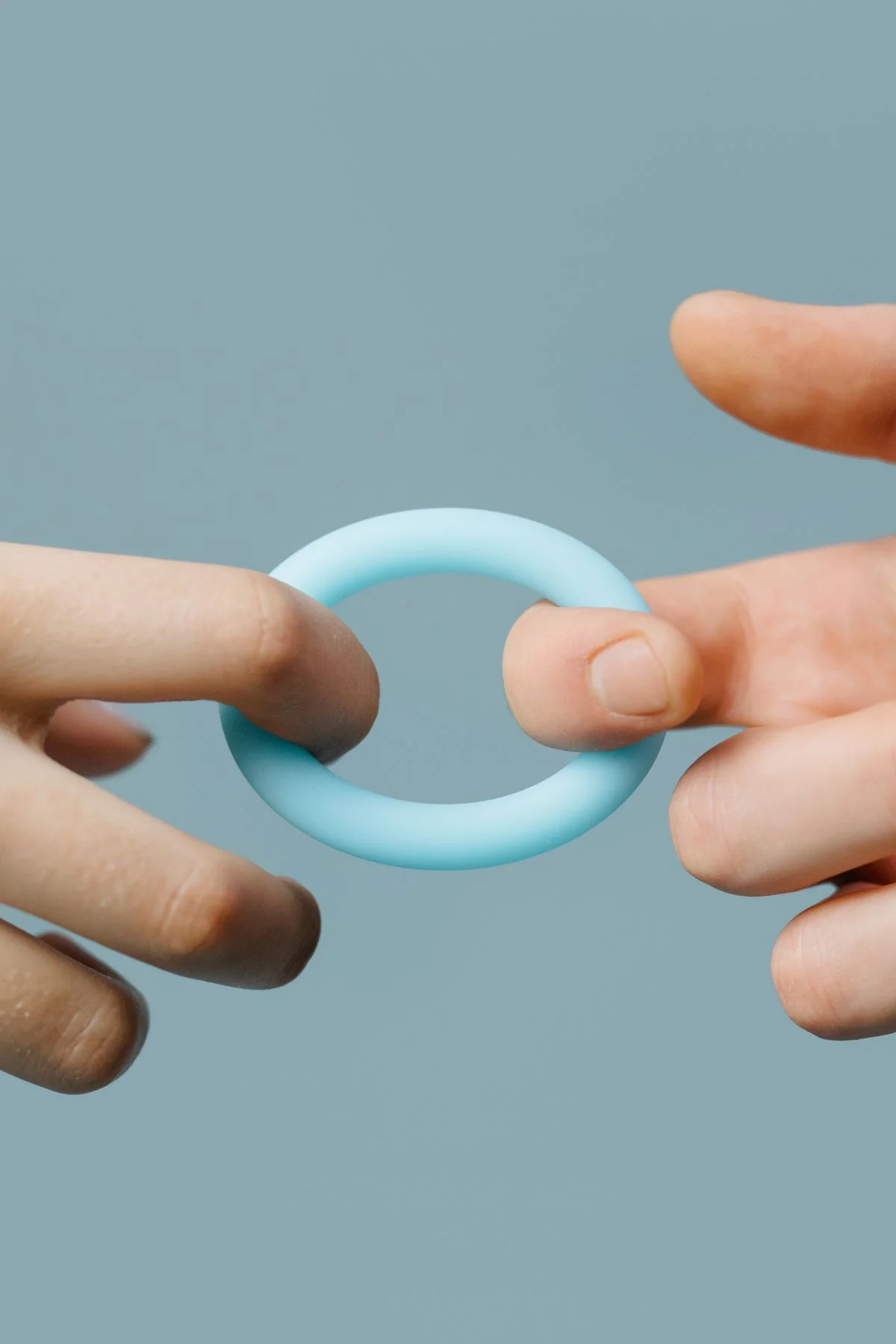
Silicone rubber is a family of high-performance elastomers built on a siloxane backbone, valued for its unusually wide service-temperature range, weatherability, electrical insulation, low toxicity, and long-term flexibility. It occupies a distinct position in the plastics and elastomers value chain because it combines inorganic backbone chemistry with organic-like processing versatility, enabling use in seals, medical devices, electronics, construction, transportation, and consumer products.
Unlike hydrocarbon rubbers, silicone rubber is typically based on silicon-oxygen chains rather than carbon-carbon chains, which helps explain its resistance to heat, ultraviolet light, ozone, and oxidation. The material is not a single product but a platform technology that includes HCR (heat-cured rubber), LSR (liquid silicone rubber), and RTV (room-temperature vulcanizing) systems, each suited to different processing routes and performance targets.
Its history is closely tied to the industrial chemistry of silicon metal, chlorosilanes, and siloxane polymerization, with the modern commercial ecosystem built around controlled hydrolysis-condensation chemistry and subsequent compounding with fillers, curing agents, and specialty additives. At the same time, silicone rubber presents persistent sustainability questions: feedstock production is energy-intensive, the material is difficult to recycle in conventional mechanical loops once crosslinked, and end-of-life management remains more limited than for thermoplastics.
History and Development
Silicone chemistry emerged from the broader development of organosilicon compounds in the twentieth century, when industrial producers learned to convert silica-derived silicon into reactive chlorosilanes and then into siloxane polymers. Commercial silicone rubber expanded as manufacturers refined the balance between molecular weight, crosslink density, filler reinforcement, and curing systems, allowing the material to move from specialty seals and electrical parts into medical, consumer, and high-reliability industrial applications.
A major step in its development was the separation of silicone into different formulation families. HCR grades became important for molded technical parts, LSR enabled high-volume automated injection molding, and RTV systems supported on-site sealing, potting, and encapsulation. This diversification turned silicone rubber from a niche heat-resistant elastomer into a broad materials platform.
Chemical Structure and Key Properties
Silicone rubber is an inorganic-organic hybrid elastomer whose backbone is dominated by siloxane bonds, which are more thermally robust than the carbon-carbon bonds in many conventional rubbers. The chain architecture is highly flexible, and the molecular coils are relatively open, which contributes to low glass transition temperature, high elasticity, and excellent performance in cold conditions.
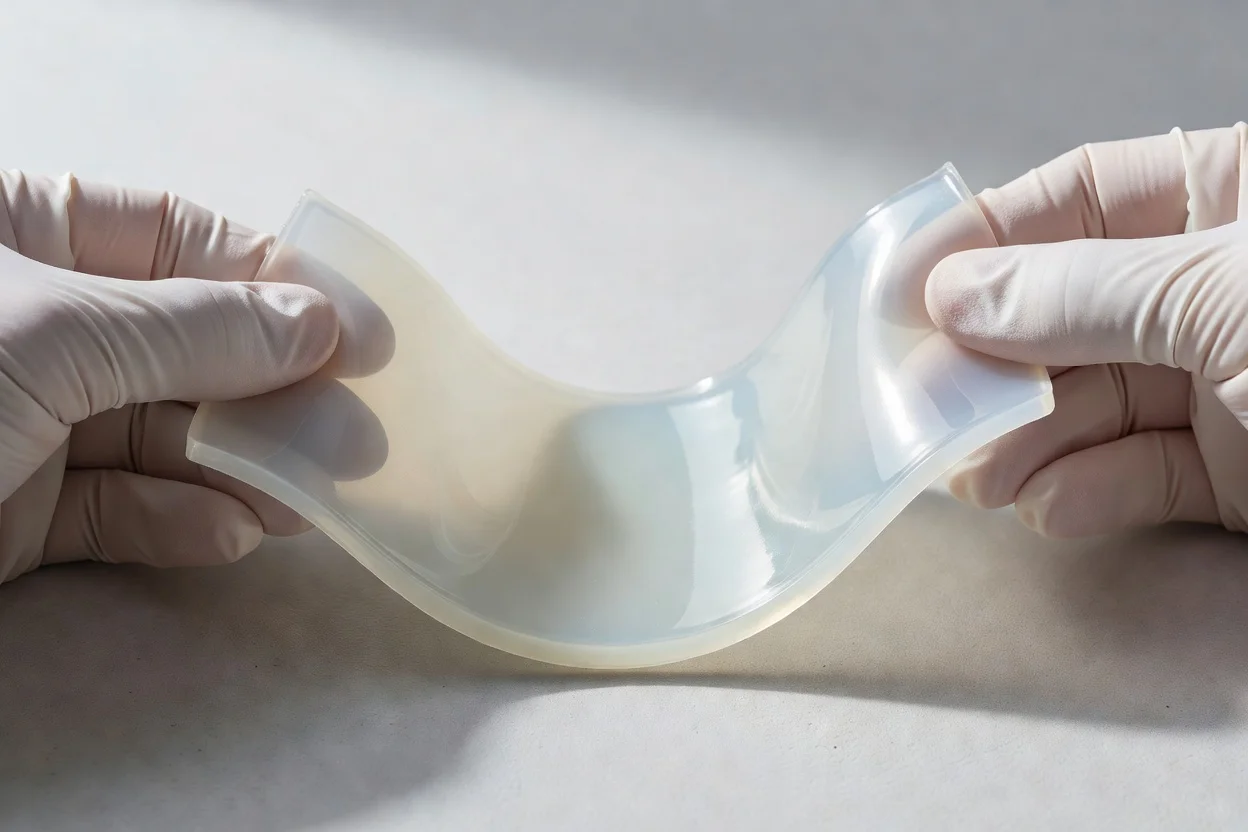
Key properties commonly associated with silicone rubber include the following:
| Property | Typical behavior |
|---|---|
| Service temperature | Broad operating range, often around -60 to 230 C for standard grades, with some formulations extending further |
| Flexibility | Retains elasticity at low temperatures |
| Electrical insulation | Strong dielectric behavior across a wide temperature range |
| Weather resistance | Excellent resistance to ozone, UV, and outdoor exposure |
| Compression set resistance | Good recovery after prolonged compression, especially in well-formulated grades |
| Transparency | Can be made optically clear in selected formulations |
| Thermal conductivity | Naturally low in unfilled grades, though it can be increased with fillers |
Important limitations are part of the material profile:
- Low tensile strength → caused by the flexible siloxane backbone and relatively low intermolecular attraction → commonly addressed by reinforcing fillers such as precipitated silica and by formulation optimization.
- Poor wear and tear resistance → caused by low intrinsic abrasion resistance compared with many engineering elastomers → often mitigated through compounding, surface design, or selection of a more suitable elastomer for sliding-duty service.
- High gas permeability → caused by the open polymer network and chain mobility → workable where gas transfer is acceptable or desired, but a poor fit for gas-tight sealing applications.
- Low surface energy and non-stick behavior → caused by the siloxane surface chemistry → advantageous for release and fouling resistance, but it can complicate bonding and adhesion without primers or surface treatment.
These trade-offs are central to silicone selection: the material excels where reliability under heat, cold, and outdoor exposure matters more than high abrasion strength or structural stiffness.
Production Processes and Raw Feedstocks
Commercial silicone rubber production begins with silicon metal, which is obtained by reducing quartz or silica-derived feedstock in an electric arc furnace. Silicon metal is then reacted with methyl chloride in the Rochow process to form methylchlorosilanes, the key intermediates for silicone chemistry.
The main process sequence is:
- Silicon metal production from silica-rich raw material.
- Reaction with methyl chloride to produce chlorosilane intermediates.
- Separation and purification by distillation.
- Hydrolysis and condensation to form siloxane chains.
- Polymer modification, compounding, and curing into elastomer grades.
Typical formulation routes include:
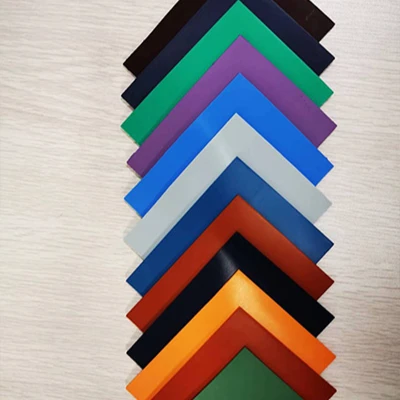
- HCR: high-consistency material compounded with reinforcing silica, pigments, and curing system, then shaped by compression, transfer, or extrusion.
- LSR: low-viscosity two-component systems designed for automated liquid injection molding and fast cycle times.
- RTV-1 and RTV-2: room-temperature curing systems used for sealants, potting, molds, and field-applied gasketing.
Common compounding ingredients include silica reinforcing fillers, heat stabilizers, pigments, processing aids, adhesion promoters, and special fillers for thermal conductivity or electrical properties. In one representative functional example, silica filler** is used at substantial loading to raise tensile strength and tear resistance by forming a reinforcing network within the silicone matrix, while **aluminum oxide or similar conductive fillers may be added to increase thermal conductivity for heat-management parts.
Applications and End-Use Markets
Silicone rubber serves markets that require durability across severe thermal, electrical, and environmental conditions. The usual grade and process vary by end use:
| End use | Typical silicone grade | Usual process | Why silicone is chosen |
|---|---|---|---|
| Medical tubing, catheters, implants, seals | LSR, selected HCR | Injection molding, extrusion, extrusion plus post-cure | Biocompatibility, sterilization resistance, flexibility |
| Automotive gaskets, O-rings, hoses, seals | HCR, LSR | Compression molding, extrusion, injection molding | Heat and oil-adjacent thermal stability, compression set resistance |
| Electrical insulation, cable jackets, potting | HCR, RTV | Extrusion, potting, encapsulation | Dielectric stability, flame and heat resistance |
| Construction sealants and glazing | RTV | Field application, sealing, adhesion systems | Weatherability, UV and ozone resistance |
| Consumer bakeware and kitchenware | HCR, LSR | Compression molding, injection molding | Non-stick behavior, thermal stability, flexibility |
| Aerospace and industrial seals | HCR, specialty formulations | Compression molding, extrusion | Reliability under temperature cycling and weather exposure |
| Protective and damping parts | HCR, foam or sponge variants | Molding, foaming, extrusion | Cushioning, vibration damping, resilience |
Silicone rubber is especially strong in:
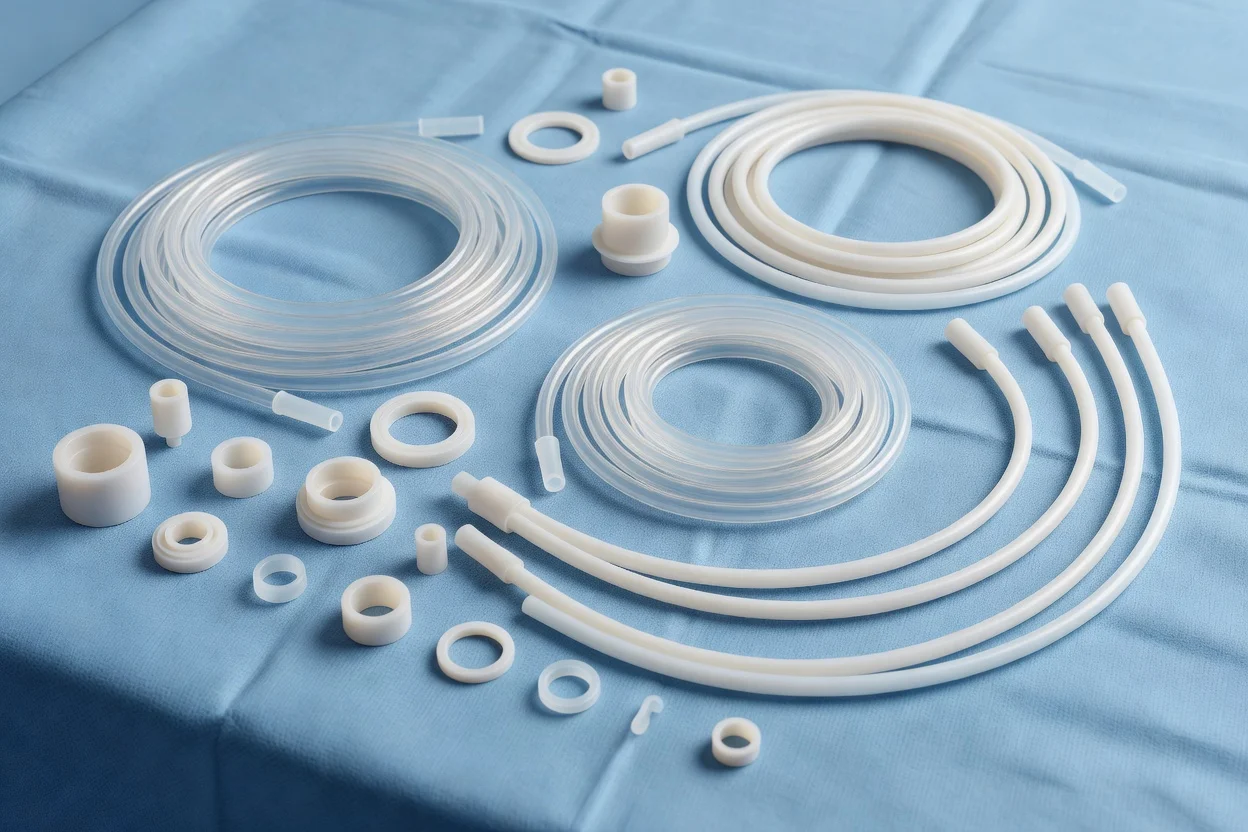
- Medical and healthcare: tubing, catheters, surgical accessories, seals, and wearable components because it is flexible, sterilizable, and often well tolerated in contact with biological tissues.
- Electrical and electronics: gaskets, connectors, potting compounds, cable insulation, and EMI-related sealing because the material maintains insulating performance over a broad thermal range.
- Automotive and transportation: engine-room seals, hoses, connectors, and high-temperature gasketing where conventional elastomers may degrade faster.
- Construction and glazing: sealants, weatherproof joints, and façade applications where UV and moisture resistance are important.
- Consumer and food-contact products: bakeware, molds, seals, and utensils that benefit from heat stability and release properties.
A poor-fit use is high-pressure gas sealing or high-vacuum sealing, because silicone’s gas permeability is relatively high compared with materials such as butyl rubber or fluorinated elastomers.
Environmental and Sustainability Aspects
Silicone rubber occupies an ambiguous position in sustainability discussions. On one hand, its durability can extend product life, reduce replacement frequency, and improve reliability in demanding applications such as medical devices, renewable-energy hardware, and weather-exposed building seals. On the other hand, upstream production depends on energy-intensive silicon metal manufacture, and the crosslinked nature of cured silicone makes conventional mechanical recycling difficult.
Key sustainability issues include:
- Feedstock intensity: the route from quartz to silicon metal and then to chlorosilanes requires substantial energy input.
- Recycling limits: once vulcanized, silicone rubber cannot be remelted like a thermoplastic, so material circularity is more constrained.
- End-of-life pathways: reuse, grinding into fillers, chemical recycling research, and energy recovery are all being explored, but none yet matches the maturity of closed-loop recycling in some thermoplastics.
- Bio-based alternatives: research and commercialization efforts continue, but most silicone chemistry still depends on mineral silicon and methanol-derived or petrochemical-linked reagents rather than fully bio-based feedstocks.
At the application level, the sustainability case can still be favorable when silicone rubber replaces less durable materials in long-life, high-failure-cost environments. In such cases, material longevity, reduced maintenance, and lower leakage risk can partly offset the higher manufacturing footprint.
Economic and Global Market Impact
Silicone rubber is a globally traded specialty elastomer with demand linked to electronics, construction, transportation, healthcare, and industrial equipment. Market value is shaped less by commodity volume than by formulation complexity, qualification costs, and performance-critical end uses.
The leading industrial ecosystem is concentrated among multinational silicone and specialty-material producers, including established groups such as Dow, Wacker, Shin-Etsu, Elkem, Momentive, and KCC. Competitive advantage typically depends on:
- access to silicon metal and chlorosilane integration,
- formulation know-how,
- reliable curing and molding technology,
- regulatory and application approvals for medical or food-contact uses,
- and the ability to tailor grades for thermal, electrical, or optical performance.
Current Challenges and Innovations
Current development work is focused on solving the classic trade-offs of silicone rubber while improving manufacturability and circularity.
Main challenges:
- Mechanical reinforcement without sacrificing elasticity or processability.
- Adhesion control, because the low-surface-energy surface resists bonding unless treated or primed.
- Thermal management, especially in electronics where the base material is naturally insulating but some applications need controlled heat dissipation.
- Recycling and end-of-life recovery, particularly for cured parts.
Innovation directions include:
- High-conductivity silicones for battery packs, LEDs, power electronics, and thermal interface parts, using conductive fillers to tune heat flow.
- LSR automation for high-throughput medical and precision parts manufacturing.
- Self-adhesive and selectively adhesive grades for multi-material assemblies.
- Specialty flame-retardant and low-outgassing grades for aerospace and electronics.
- Functional foam and sponge silicones for sealing, insulation, and lightweight cushioning.
Future Outlook
Silicone rubber is likely to remain a premium elastomer platform where performance under heat, weather, and electrical stress justifies higher cost and more complex chemistry. Growth is expected to be strongest in electric mobility, medical technology, electronics encapsulation, energy systems, and building envelopes, all of which require durable sealing and thermal stability.
The most important long-term shifts will probably involve:
- lower-carbon silicon and intermediate production,
- more efficient curing and molding routes,
- expanded use of recycled or recovered silicone content where technically feasible,
- and formulation advances that improve adhesion, conductivity, and toughness without eroding the core advantages of the siloxane backbone.
Summary
Silicone rubber is a versatile high-performance elastomer whose siloxane chemistry delivers exceptional thermal stability, weatherability, electrical insulation, and flexibility across a broad temperature range. Its principal limitations are lower strength, limited abrasion resistance, high gas permeability, and challenging recyclability, but formulation and processing advances continue to broaden its role in demanding industrial, medical, and consumer applications.
References
- •
Silicone rubber. (2005, December 6). Wikipedia. https://en.wikipedia.org/wiki/Silicone_rubberLink
- •
Characteristic properties of Silicone Rubber Compounds. (n.d.). Shin-Etsu Silicone. https://www.shinetsusilicone-global.com/catalog/pdf/rubber_e.pdfLink
- •
All About Silicone Rubber – Properties, Applications and ... (2023, September 18). Thomasnet. https://www.thomasnet.com/articles/plastics-rubber/about-silicone-rubber/Link
- •
General Properties & Applications of Silicone Rubber. (2020, June 11). ETI Roltec. https://www.etiroltec.com/blog/general-properties-applications-of-silicone-rubber/Link
- •
Silicone rubber: How to select the right grade? (2025, July 8). SpecialChem. https://www.specialchem.com/plastics/guide/silicone-rubber-elastomerLink
- •
Understanding Silicone Rubber: Basics, Uses, and Innovations. (2024, August 30). Eureka by PatSnap. https://eureka.patsnap.com/blog/material-tech-resources/what-is-silicone-rubber/Link
- •
Properties: Silicone Rubber. (2026, August 26). AZoM. https://www.azom.com/properties.aspx?ArticleID=920Link
- •
Silicone Rubber: Complete Guide to Properties, Applications & Selection. (n.d.). Harkesh Rubber. https://harkesh.com/glossary/silicone-rubberLink
- •
What is silicone rubber made of? (2024, February 15). Elkem. https://magazine.elkem.com/material-science-insights/what-is-silicone-rubber-made-of/Link
- •
What is silicone rubber? (2023, May 17). Essentra Components. https://www.essentracomponents.com/en-gb/news/solutions/general-protection/what-is-silicone-rubberLink
- •
How Do You Make Silicone Rubber. (2025, October 25). INNOSILICONE. https://www.innosiltech.com/company-news/36/Link
- •
Characteristics of silicone rubber (elongation, strength, shock ...). (n.d.). Nagase ChemteX. https://group.nagase.com/nagasechemtex/e1/en/advanced-concept-materials/rubber-like-resin/silicone-rubber-properties-comparison/Link
- •
The Complete Guide to Silicone Rubber. (2026, April 1). JLCPCB. https://jlcpcb.com/blog/complete-introduction-to-silicone-rubbersLink
- •
Silicone Rubber Properties & Applications | Ultimate Guide. (2025, March 9). Rubber & Seal. https://www.rubberandseal.com/properties-and-applications-of-silicone-rubber/Link
- •
How Silicone Products Are Made Step by Step. (2026, March 31). HB Silicone. https://www.hbsilicone.com/silicone-manufacturing-process/Link
- •
Silicone Rubber Molding: Types, Materials and Uses. (2026, May 14). IQS Directory. https://www.iqsdirectory.com/articles/rubber-molding/silicone-molding.htmlLink
- •
Application of silicone rubber. (2022, November 28). LinkedIn. https://www.linkedin.com/pulse/application-silicone-rubber-ingrit-liuLink
- •
Silicone Rubber: Types, Uses, Properties & Applications. (2024, September 30). Manuf-Rubber. https://www.manuf-rubber.com/news/quick-guide-to-silicone-rubber/Link
- •
Silicone Rubber in the Real World: 5 Uses You'll Actually ... (2025, October 1). LinkedIn. https://www.linkedin.com/pulse/silicone-rubber-real-world-5-uses-youll-actually-see-2025-yymseLink
- •
Application Of Silicone Rubber, Silicone Rubber Uses, Silicone Rubber Industry. (2023, June 29). GENVAN. https://www.genvan.com/silicone-rubber-applications/Link
- •
How Do You Manufacture Silicone? (2021, September 10). Silicone.co.uk. https://silicone.co.uk/news/how-do-you-manufacture-silicone/Link
- •
How is silicone rubber made? (2021, May 3). Elkem. https://magazine.elkem.com/faq/how-is-silicone-rubber-made/Link
- •
Galīgais silikona gumijas ceļvedis: pielietojumi, īpašības ... (2024, December 16). UDTECH. https://ud-machine.com/blog/silicon-rubber/Link
- •
Healthcare Industry. (2025, November 18). Uniflex Inc. https://www.uniflexinc.com/blog/top-5-uses-for-silicone-rubber/Link
- •
What are the silicone rubber molding processing? (2024, January 18). Elkem. https://magazine.elkem.com/material-science-insights/what-are-the-different-rubber-molding-processes/Link
- •
Silicone Rubber: A Versatile Elastomer in Industry. (2023, November 27). J-Flex. https://www.j-flex.com/silicone-rubber-a-versatile-elastomer-in-industry/Link
- •
Silicone Rubber Manufacturing Applications: Defense, Automotive ... (2025, August 7). Moldtech Rubber. https://moldtechrubber.com/silicone-rubber-manufacturing-applications-defense-automotive-medical-and-more/Link
- •
What is Silicone? The applications and uses of Silicone. (2017, February 9). Silicone.co.uk. https://silicone.co.uk/news/an-introduction-to-silicone/Link
- •
Top 5 Commercial Applications of Silicone Rubber Products. (2024, July 18). Elastostar. https://elastostar.com/top-5-commercial-applications-of-silicone-rubber-products/Link
- •
Silicone. (2002, July 29). Wikipedia. https://en.wikipedia.org/wiki/SiliconeLink
- •
What are the different processing methods for silicone ... (2022, July 5). Elkem. https://magazine.elkem.com/material-science-insights/different-processing-methods/Link
- •
What Is Silicone Rubber? A Guide to Types, Common ... (2026, May 25). Glorysun Group. https://www.glorysungroup.com/blog/common_silicone_rubberLink
- •
Manufacturing Process Of Silicone Products: A Guide. (2025, April 28). Elastostar. https://elastostar.com/manufacturing-process-of-silicone-products/Link
- •
Where does Silicone Rubber come from? Learn with us today. (2017, July 31). Silicone.co.uk. https://silicone.co.uk/news/where-does-silicone-rubber-come-from/Link
- •
Silicone: A Guide to Production, Uses and Benefits. (2022, December 11). SIMTEC Silicone Parts. https://www.simtec-silicone.com/blogs/how-is-silicone-produced/Link
- •
The Making Of Silicone- The 5 Step Process. (2024, November 28). United Silicones. https://united-silicones.com/blogs/news/the-making-of-silicone-the-5-step-processLink