
Introduction
Core materials are the central, load-bearing or functional materials used to give a product its primary structural, thermal, magnetic, or dimensional performance, depending on the industry context. In plastics and polymer engineering, the term most often refers to lightweight core media used in sandwich composites and insulation structures, such as foam, honeycomb, balsa, or fiber-based cores, which improve stiffness, insulation, and energy absorption while minimizing mass.
Because the phrase “core materials” is used across several technical fields, it is important to distinguish the plastics and composites meaning from other uses in magnetic devices, casting, construction, or microencapsulation. In the composites sector, the core is the “middle layer” between two stronger skins and is selected to optimize bending stiffness, compressive strength, thermal insulation, acoustic damping, and cost-to-weight ratio.
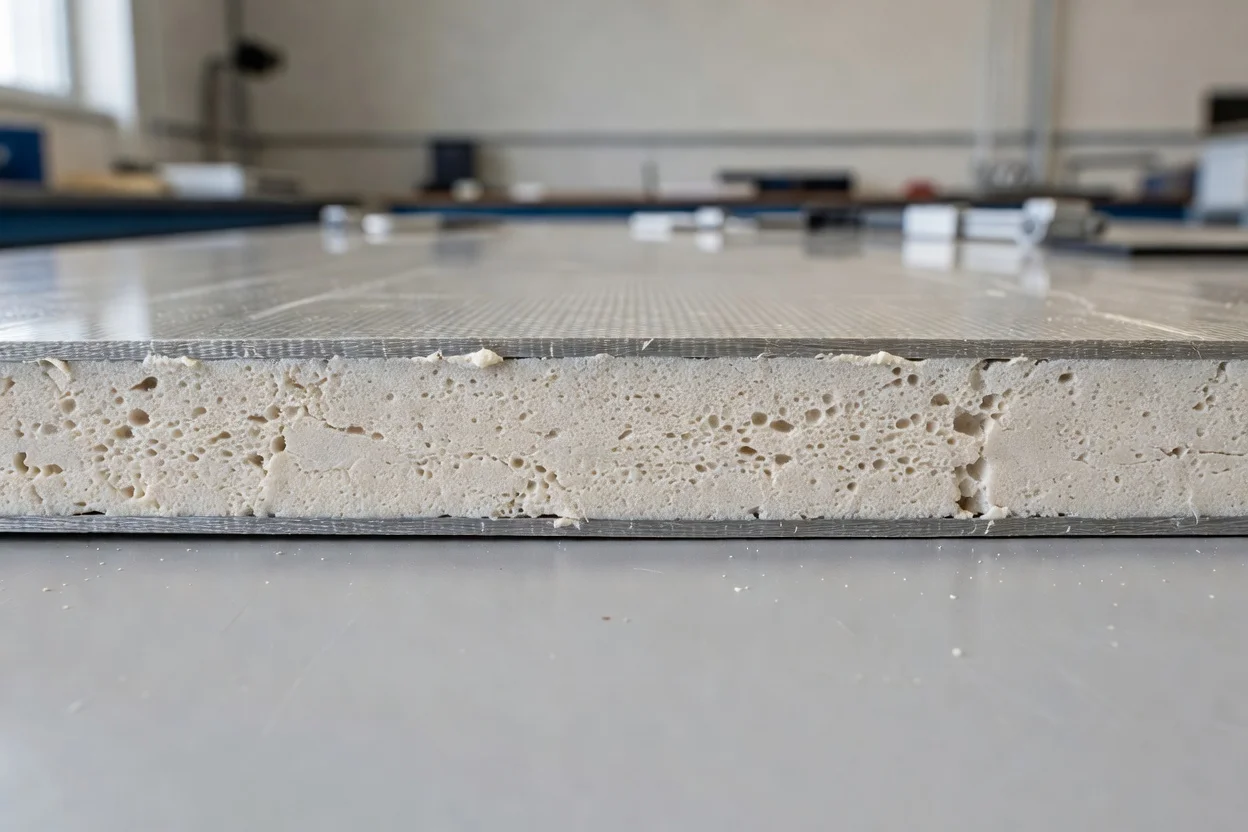
Core materials have evolved from traditional natural cores such as balsa to engineered polymer foams, structural honeycombs, syntactic foams, and hybrid constructions tailored for aerospace, marine, wind energy, transport, refrigeration, and building envelopes. Current development is increasingly shaped by recyclability, lower-carbon feedstocks, fire performance, and circular design, especially as composite structures expand into wind blades, mass transit, and energy-efficient construction.
History and Development
The earliest core concepts in structural engineering relied on natural, low-density materials such as wood or cellular constructions, which offered good stiffness at low mass. As composite manufacturing advanced, especially after the growth of polymer laminates in the 20th century, core materials became more specialized and were engineered to match resin systems, cure cycles, and performance targets.
A major milestone was the broad industrial adoption of sandwich structures, in which thin, strong skins are separated by a lightweight core to greatly increase bending stiffness without a proportional rise in weight. This design principle enabled lighter aircraft panels, boat hulls, turbine blades, refrigerated truck bodies, and architectural panels.
Later development focused on closed-cell polymer foams, structural PVC, PET, SAN, PMI, and PU foams, as well as paper and aramid honeycombs, because these materials could be produced with controlled density, cell size, and mechanical anisotropy. The market has since diversified into high-performance and more sustainable core families, including recycled PET foam and bio-based or lower-impact formulations.
Chemical Structure and Key Properties
In the plastics and composites sense, core materials are not usually a single chemistry but a family of engineered cellular or porous structures. Their performance depends less on absolute chemical composition than on density, cell geometry, resin compatibility, shear strength, compressive modulus, and thermal stability.
Common core types include:
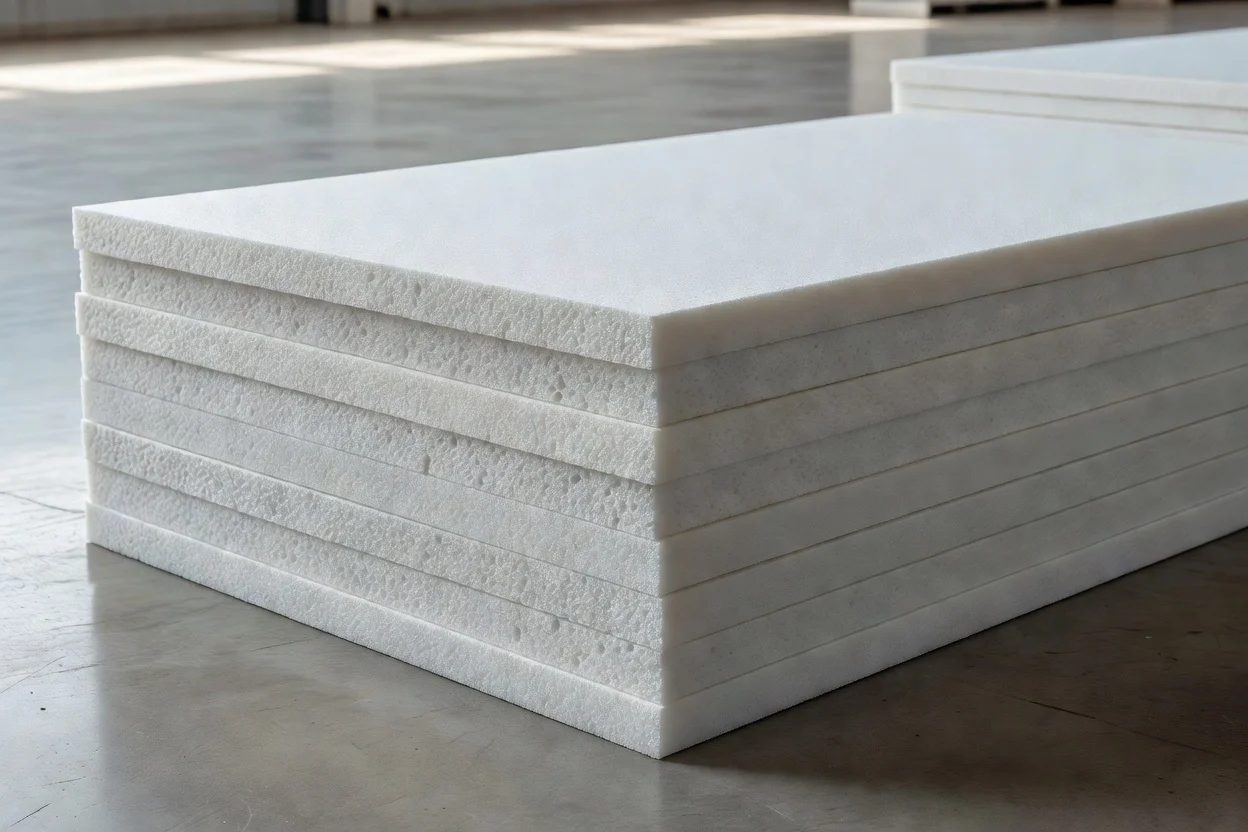
- Foam cores: rigid or semi-rigid polymer foams such as PVC, PET, PMI, SAN, PU, and specialty thermoplastics.
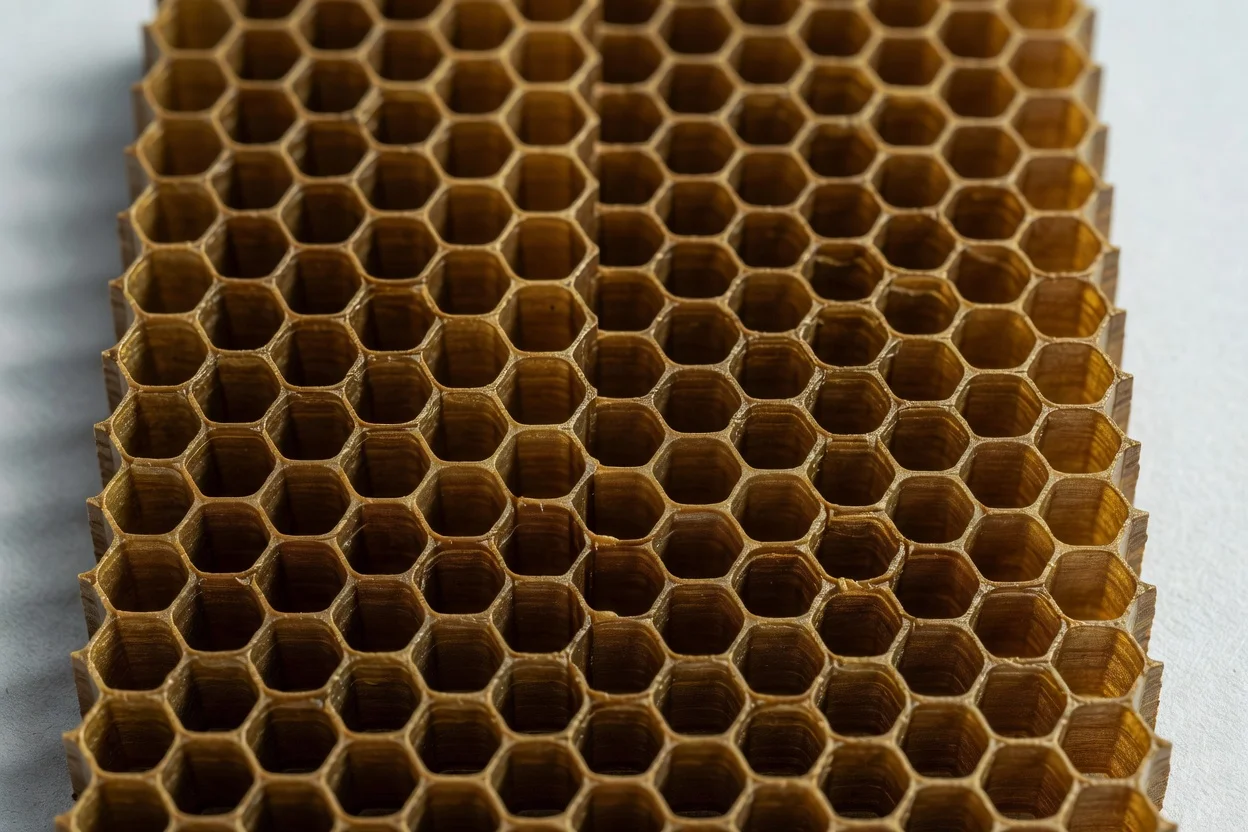
- Honeycomb cores: usually paper, aramid, aluminum, or thermoplastic honeycomb with very high stiffness-to-weight efficiency.
- Natural cores: balsa wood and other lignocellulosic structures used where compressive strength and low density are attractive.
- Hybrid or composite cores: combinations of foam, fibers, fillers, or facings tuned for fire performance, impact resistance, or thermal insulation.
Core properties that matter most
| Property | Why it matters | Typical implication |
|---|---|---|
| Low density | Reduces mass | Improves specific stiffness and transport efficiency |
| Shear strength | Transfers load between skins | Prevents panel buckling and core shear failure |
| Compressive strength | Supports facing layers | Important in flooring, decks, and structural panels |
| Thermal insulation | Reduces heat flow | Important in building, cold chain, and refrigeration |
| Dimensional stability | Preserves geometry during service | Critical under heat, moisture, or cyclic loading |
| Processing compatibility | Survives lamination and curing | Must resist resin attack, pressure, and temperature |
A major functional limit is that low-density cores can fail in shear or compression under concentrated loads, caused by their cellular architecture and thin load-bearing ligaments; the usual workaround is to increase core density locally, use inserts or potting, or select a higher-modulus core such as honeycomb or reinforced foam. Another common limit is that some polymer foams have restricted fire or heat resistance, caused by softening, combustion, or smoke generation at elevated temperature; the workaround is flame-retardant formulation, mineral-filled systems, protective skins, or alternative core chemistries such as PMI or aramid honeycomb.
Production Processes and Raw Feedstocks
Core materials are produced through several manufacturing routes, depending on whether the target is foam, honeycomb, fiber-based, or natural core construction.
Foam cores
Polymer foam cores are typically made by extrusion, batch foaming, bead expansion, or chemical blowing processes. The resin feedstock may be virgin polymer, recycled polymer, or blends modified with nucleating agents, stabilizers, and flame retardants.
Typical feedstocks include:
- PET or recycled PET for structural and more circular foam grades.
- PVC for widely used, cost-effective structural foam cores.
- PMI for high-temperature, high-performance aerospace and wind applications.
- SAN and PU for selected structural and insulation uses.
A representative additive example is a flame-retardant package at low single-digit percentages, used to reduce ignitability and smoke evolution by promoting char formation or radical quenching in the polymer matrix.
Honeycomb cores
Honeycomb cores are made by paper impregnation, thermoplastic sheet expansion, aluminum foil forming, or aramid-paper conversion into a hexagonal cellular network. The geometry provides very high bending efficiency because the cell walls are arranged to resist shear with minimal mass.
Natural and hybrid cores
Balsa core is produced from end-grain wood sections selected for low density and favorable compressive properties. Hybrid cores may combine foam with fibers, facings, or functional fillers to improve impact resistance, acoustics, or fire behavior.
Applications and End-Use Markets
Core materials are used wherever a structure must be light, stiff, insulating, or impact-tolerant. The usual grade and process depend strongly on the end-use sector.
| End use | Typical core type | Usual process |
|---|---|---|
| Aerospace panels | PMI foam, aramid honeycomb, high-spec PVC/PET foam | Vacuum bagging, autoclave, infusion |
| Marine and boat building | PVC foam, PET foam, balsa, honeycomb | Hand lay-up, infusion, sandwich paneling |
| Wind energy | PET foam, PVC foam, balsa, PMI in selected parts | Infusion, prepreg, blade molding |
| Construction panels | PU, PIR, PVC, PET, honeycomb | Lamination, continuous panel production |
| Rail and road transport | PVC/PET foam, honeycomb | Compression molding, bonding |
| Cold chain and refrigeration | PU/PIR foams | Rigid foam panel manufacture |
| Industrial flooring and decks | Higher-density structural foams, balsa, honeycomb | Lamination, panel assembly |
| Acoustic and vibration control | Foam and fiber hybrid cores | Laminated composites, multilayers |
A strong fit is sandwich panel construction, where the core separates two skins to deliver high bending stiffness with low weight. Another strong fit is thermal insulation, especially in building envelopes and refrigerated transport, because low-density cellular structures reduce heat transfer and can also improve acoustic damping.
A poor-fit use is highly abrasion-prone unprotected surfaces, because many core materials are structurally efficient but not intended to be exposed directly to wear, impact, or UV without skins or coatings.
Environmental and Sustainability Aspects
Sustainability performance varies widely across core material families. Lightweight sandwich structures can reduce energy use during operation by lowering vehicle mass or improving building insulation, but the environmental benefit depends on durability, resin choice, and end-of-life handling.
Key sustainability issues include:
- Recyclability: Thermoplastic foams and some honeycombs are more compatible with mechanical recycling than thermoset-heavy constructions, but bonded multi-material panels remain difficult to separate.
- Recycled content: Recycled PET foam is one of the most important circularity pathways because it can valorize post-consumer plastic streams into structural applications.
- Bio-based alternatives: Natural cores such as balsa and engineered wood can lower fossil input, but they are constrained by land use, moisture sensitivity, and variability.
- Carbon footprint: The footprint is influenced both by raw material production and by in-use savings from reduced weight or improved insulation; in many applications, operational savings can outweigh material impacts over the service life.
A practical chemistry example is the use of recycled PET with stabilizers and foaming aids to produce a structural foam core; the mechanism is that recycled polymer is reprocessed into a cellular morphology that lowers density while maintaining enough shear and compressive strength for panel service.
Economic and Global Market Impact
The core materials market is a specialized but fast-growing segment within advanced composites and insulation materials, supported by demand from aerospace, marine, wind energy, transportation, and construction. Recent industry analyses project market growth at a high single-digit CAGR through the early 2030s, reflecting the continued shift toward lightweight and energy-efficient structures.
Market demand is influenced by:
- Lightweighting targets in transport and wind energy.
- Building energy efficiency requirements.
- The need for fire-safe and durable panel systems.
- Supply availability of foam precursors, honeycomb intermediates, and recycled feedstocks.
Prominent producers and suppliers commonly active in this segment include specialists in composite cores, foam technology, honeycomb structures, and sandwich-panel systems, with regional leadership varying by application and material family.
Current Challenges and Innovations
Several technical challenges continue to shape product development:
- Fire performance versus low smoke and low toxicity requirements in transport and buildings.
- Delamination and bonding reliability in multi-material sandwich constructions.
- Moisture uptake in some natural or paper-based cores, which can degrade properties unless sealed.
- End-of-life separation of skins, adhesives, and core layers.
- Cost volatility in specialty polymer foams and high-performance honeycombs.
Innovation is focusing on:
- Recycled and mass-balance feedstocks for foam cores.
- Lower-VOC and lower-smoke formulations.
- Hybrid cores that combine foam with fibrous reinforcement.
- More repairable, reusable, and demountable sandwich systems.
- Digital design tools that optimize cellular architecture for specific load cases.
Future Outlook
Core materials are likely to expand in value where lightweighting, thermal efficiency, and structural integration intersect. Growth prospects appear strongest in wind energy, electric and mass transit vehicles, modular construction, and high-performance insulation panels.
The next stage of development will probably emphasize three directions:
- Higher circularity, including recycled thermoplastic cores and designs that support disassembly.
- Greater fire and thermal robustness, especially for transport and building codes.
- Functionally graded structures, where density and stiffness vary within the same core to place material only where it is needed.
Summary
Core materials are engineered internal layers that provide stiffness, insulation, and load transfer in sandwich structures and related systems. Their value lies in combining low weight with high functional efficiency, but that advantage must be balanced against fire performance, moisture sensitivity, recyclability, and multi-material end-of-life complexity.
References
- •
Core Material - an overview. (n.d.). ScienceDirect. https://www.sciencedirect.com/topics/engineering/core-materialLink
- •
Core material - Principles of Physics II. (n.d.). Fiveable. https://fiveable.me/principles-physics-ii/key-terms/core-materialLink
- •
Significance of Core material. (2024, December 11). Wisdom Library. https://www.wisdomlib.org/concept/core-materialLink
- •
Structural Core Materials: Types, Properties & Selection. (2026, February 24). Sky Composites. https://sky-composites.com/news/structural-core-materials-types-properties-selection/Link
- •
Core and Covering Material in Engineering Definition. (2021, March 22). 3DS Blog. https://blog.3ds.com/brands/enovia/core-and-covering-material-in-engineering-definition/Link
- •
Core Material - (Electrical Circuits and Systems II). (n.d.). Fiveable. https://fiveable.me/key-terms/electrical-circuits-systems-ii/core-materialLink
- •
Factors When Picking Core Material for Your Application. (2020, January 28). General Plastics. https://www.generalplastics.com/technical-papers/composite-core-factors-to-consider-when-choosing-core-material-for-your-applicationLink
- •
Complete List of Building Materials: Names, Uses, and .... (2026, March 11). Architecture Courses. https://www.architecturecourses.org/build/list-building-materialsLink
- •
Important Construction Materials List & Their Uses. (2026, April 18). MBC Cont LLC. https://mbccontllc.com/construction-materials-list/Link
- •
Core (manufacturing). (2009, July 30). Wikipedia. https://en.wikipedia.org/wiki/Core_(manufacturing)Link
- •
CORE MATERIALS. (n.d.). Gurit. https://www.gurit.com/wp-content/uploads/2025/11/Core-brochure_v21_web.pdfLink
- •
Core Materials. (2025, September 17). Scribd. https://www.scribd.com/document/926050795/Core-MaterialsLink
- •
Types of core materials. (2000, January 1). Fibermax. https://www.fibermax.eu/types-of-core-materials.htmlLink
- •
Materials For Civil And Construction Engineers. (2021, May 13). https://www2.internationalinsurance.org/GR-8-14/Book?docid=phd54-0545&title=materials-for-civil-and-construction-engineers.pdfLink
- •
Core Material Reference. (2021, April 1). Explore Composites. https://explorecomposites.com/materials-library/core-ref/Link
- •
More Sticks and Bricks. (n.d.). American Bar Association. https://www.americanbar.org/content/dam/aba-cms-dotorg/products/inv/book/301109091/5570239_sample.pdfLink
- •
Core Material For Composites in the Real World: 5 Uses .... (2025, October 2). LinkedIn. https://www.linkedin.com/pulse/core-material-composites-real-world-5-uses-youll-actually-h1dqeLink
- •
Core Building Materials in the Real World: 5 Uses You'll .... (2025, October 23). LinkedIn. https://www.linkedin.com/pulse/core-building-materials-real-world-5-uses-2s0ceLink
- •
Construction Raw Materials: Complete List of Building Materials Explained. (2025, October 22). TLR Web. https://tlrweb.co.uk/construction-raw-materials-complete-list-of-building-materials-explainedLink
- •
20 Types of Construction Materials | What Is Building Materials List | Construction Materials List | Different Materials Used in Building Construction. (2024, September 16). Civil Jungle. https://civiljungles.com/building-materials-list/Link
- •
21 Building Materials And Their Uses. (2023, July 9). Material Network. https://materialnetwork.com/building-materials-and-their-uses/Link
- •
What is Wood (Core Materials)? Uses, How It Works & Top .... (2025, October 5). LinkedIn. https://www.linkedin.com/pulse/what-wood-core-materials-uses-how-works-top-companies-2025-xpmnfLink
- •
Core Types and Applications in Manufacturing. (2024, August 1). Newji. https://newji.ai/japan-industry/core-types-and-applications-in-manufacturing/Link
- •
Types of Building Materials used in construction. (2021, September 23). Ferrovial. https://www.ferrovial.com/en/resources/building-materials/Link
- •
10 Types of Building Materials Used in Construction. (2023, December 11). UltraTech Cement. https://www.ultratechcement.com/for-homebuilders/home-building-explained-single/descriptive-articles/building-materials-used-in-constructionLink
- •
Meaning of Core- materials in Hindi - Translation. (2014, January 1). Hinkhoj. https://dict.hinkhoj.com/core-%20materials-meaning-in-hindi.wordsLink
- •
List of building materials. (2006, February 4). Wikipedia. https://en.wikipedia.org/wiki/List_of_building_materialsLink
- •
The 5 Most Common Construction Materials. (2025, May 19). Autodesk. https://www.autodesk.com/blogs/construction/common-construction-materials/Link
- •
Sandwich Structures in Polymer Physics. (2025, June 18). Number Analytics. https://www.numberanalytics.com/blog/ultimate-guide-sandwich-structures-polymer-physicsLink
- •
Korpusy i rdzenie typu RM. (n.d.). Telzam. https://telzam.pl/wp-content/uploads/2020/02/E20_10_6en.pdfLink
- •
List of construction materials. (2025, November 24). Uniccm. https://www.uniccm.com/construction-project-management/construction-materialsLink
- •
Core material Definition. (2025, July 6). Law Insider. https://www.lawinsider.com/dictionary/core-materialLink
- •
fundamentals of magnetics design: inductors and .... (n.d.). IEEE. https://www.ieee.li/pdf/viewgraphs/fundamentals_magnetics_design.pdfLink
- •
Core Materials Explanation for "noobs" ?. (2012, August 30). Talk Composites. http://www.talkcomposites.com/2141/Core-Materials-Explanation-for-noobsLink
- •
Building material. (2004, February 11). Wikipedia. https://en.wikipedia.org/wiki/Building_materialLink
- •
Historical Context of Materials.... (2026, July 28). Dhinwa Construction. https://dhinwaconstruction.com/blog/materials-used-in-construction/Link
- •
An introduction to core materials. (n.d.). ScienceDirect. https://www.sciencedirect.com/science/article/pii/S0034361714701079Link
- •
Structural Core Materials for Sandwich Panels. (n.d.). ACP Composites. https://acpcomposites.com/category/core-materialsLink
- •
Metal Materials for Series Additive Manufacturing. (2020, June 29). EOS. https://www.eos.info/press-media/press-center/press-releases/2020/eos-expands-range-of-premium-and-core-metal-materialsLink
- •
Core Manufacturing Process Overview. (2025, November 28). Scribd. https://www.scribd.com/presentation/130188219/Core-MakingLink
- •
Top 10 Companies in Core Materials Market in 2023. (2023, April 20). Emergen Research. https://www.emergenresearch.com/blog/top-10-companies-offering-high-performance-core-materials-for-industrial-applicationsLink
- •
Types of Building Materials Used in Construction. (2019, May 28). Structural Engineering Basics. https://structuralengineeringbasics.com/what-types-of-construction-building-materials/Link
- •
Types of Manufacturing Materials: Engineer's 2026 Guide. (2026, July 2). WJ Prototypes. https://www.wjprototypes.com/blog/types-of-manufacturing-materials-engineers-2026-guideLink
- •
Coremaking: Life of a Casting. (2018, April 9). Reliance Foundry. https://www.reliance-foundry.com/blog/coremaking-sand-castingLink
- •
Structural Core Materials for Sandwich Panels. (2025, September 17). RaxPanel. https://www.raxpanel.com/core-material/Link
- •
CORE Definition & Meaning. (n.d.). Dictionary.com. https://www.dictionary.com/browse/coreLink
- •
복합재 핵심 재료. (2024, November 8). Market Research Intellect. https://www.marketresearchintellect.com/ko/blog/building-the-future-the-rising-demand-for-composites-core-materials-in-advanced-manufacturing/Link
- •
Foldcore. (2019, January 4). MaterialDistrict. https://materialdistrict.com/material/foldcore/Link
- •
Raw Materials Essential for Metal Fabrication: Modern Industry. (2023, October 27). SciTechnol. https://www.scitechnol.com/peer-review/raw-materials-essential-for-metal-fabrication-modern-industry-Ggv5.php?article_id=24191Link
- •
コア材料市場 | 市場規模 分析 予測 2026-2032年 【市場調査レポート】. (2026, April 8). Global Information. https://www.gii.co.jp/report/ires2011237-core-materials-market-by-material-product-form.htmlLink
- •
Global Transformer Supply Chain 2026: Powering Grids .... (2026, June 9). Intel Market Research. https://www.intelmarketresearch.com/blog/935/global-transformer-supply-chain-powering-grids-amid-surging-demandLink
- •
core and core making for foundry tech .pptx. (2024, July 8). SlideShare. https://www.slideshare.net/slideshow/core-and-core-making-for-foundry-tech-pptx/270127064Link
- •
Core Materials Market Report 2026-2031 [300 Pages & .... (n.d.). MarketsandMarkets. https://www.marketsandmarkets.com/Market-Reports/core-material-market-146879627.htmlLink
- •
Comparative Study of Transformer Core Material. (n.d.). IJISRT. https://ijisrt.com/wp-content/uploads/2018/12/IJISRT18DC46.pdfLink
- •
Core Materials Market Size, Share, Growth, Trends Report, 2034. (n.d.). Fortune Business Insights. https://www.fortunebusinessinsights.com/core-materials-market-107400Link
- •
コア材料市場 | 市場規模 分析 予測 2025-2032年 【市場調査 ... . (2025, October 10). Global Information. https://www.gii.co.jp/report/ires1827930-core-materials-market-by-material-product-form.htmlLink
- •
Magnetic core. (2005, February 17). Wikipedia. https://en.wikipedia.org/wiki/Magnetic_coreLink
- •
Core Materials for Composite Manufacturing. (2025, May 20). Tricel Composites. https://www.tricelcomposites.co.uk/composites-and-materials/core-materials-for-composite-manufacturing/Link
- •
Core Materials Market Trends and Forecast Analysis. (2011, June 5). Introspective Market Research. https://introspectivemarketresearch.com/reports/core-materials-market/Link
- •
Introduction to Shell and Core Construction. (2019, June 7). NY Engineers. https://www.ny-engineers.com/blog/shell-and-core-constructionLink