
Introduction
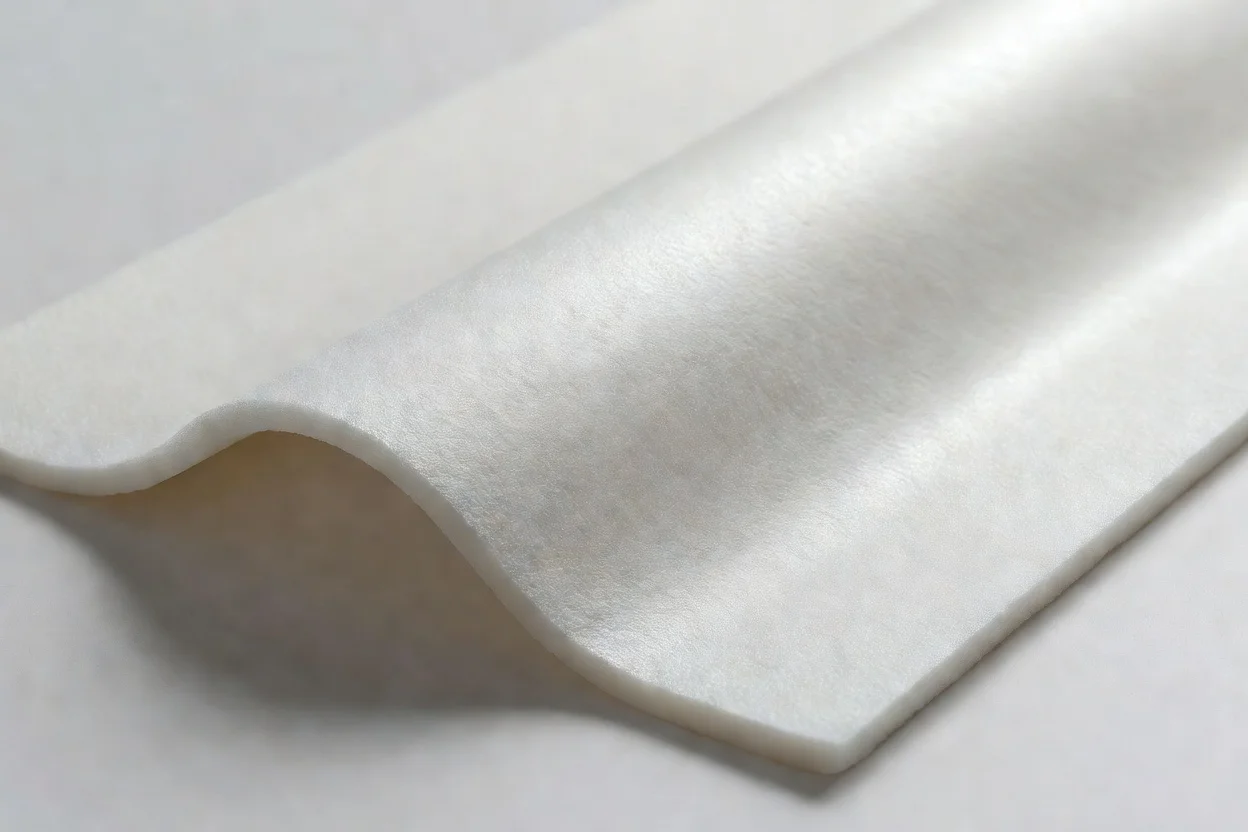
Expanded polypropylene (EPP) is a thermoplastic, closed-cell bead foam made from polypropylene that combines very low weight with high energy absorption, good thermal insulation, chemical resistance, buoyancy, and strong resistance to repeated impacts. It is widely used in automotive safety parts, protective and reusable packaging, consumer goods, sports equipment, HVAC components, and buoyancy or insulation applications, and it is commonly described as a highly recyclable foam material suited to circular-economy design.
EPP occupies a distinct position among plastic foams because its properties derive from both the semi-crystalline nature of polypropylene and the cellular bead-foam structure, which gives it a strong balance of resilience, compressive recovery, and dimensional stability. Commercial grades are available across a broad density range, with reported material densities roughly from 15 to 200 g/L before moulding and about 18 to 260 g/L after moulding, allowing producers to tune stiffness, cushioning performance, and mass for specific end uses.
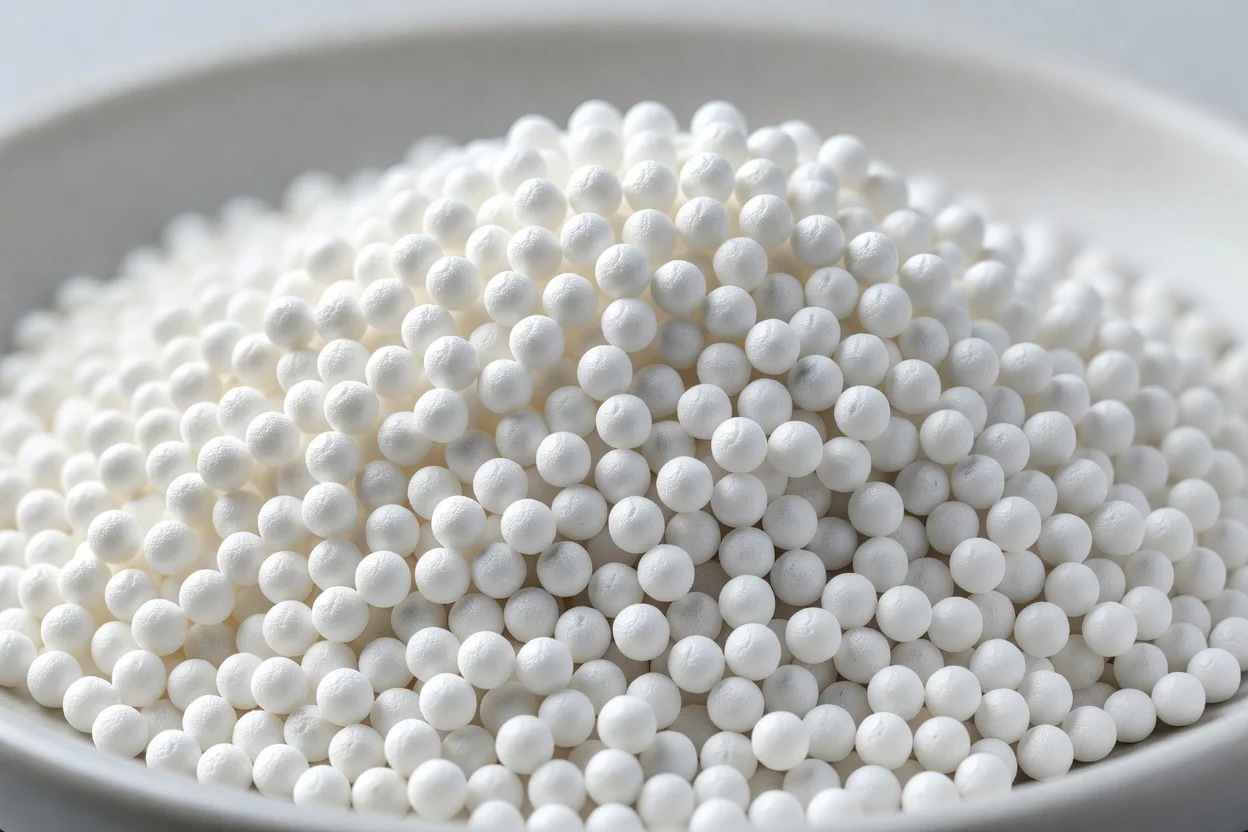
From a materials perspective, EPP is often positioned between lower-cost cushioning foams and more engineering-focused lightweight structures: it is used where repeated impact protection, low mass, and recoverability matter more than precise structural strength or surface aesthetics. Its rise has been closely tied to vehicle lightweighting, reusable logistics systems, packaging durability, and the search for alternatives to less recyclable or more chemically intensive foam solutions.
Sustainability is central to the EPP value proposition, but the picture is nuanced. EPP is repeatedly described by industry sources as mechanically recyclable and free from blowing agents such as CFCs in production, yet its overall environmental profile still depends on feedstock origin, energy used in production, product lifetime, and the effectiveness of collection and reprocessing systems. Current innovation efforts focus on improved recyclate integration, lower-carbon polypropylene supply chains, and design-for-reuse packaging systems that extend service life and reduce material throughput.
History and Development
Expanded polypropylene emerged as part of the broader development of particle foams based on thermoplastic polymers, building on the industrial success of expanded polystyrene and other lightweight bead-foam technologies. Its commercial adoption accelerated when processors recognized that polypropylene’s inherent toughness and fatigue resistance could be combined with a foam structure to create parts capable of repeated deformation and recovery, especially in transport safety and reusable packaging.
Over time, EPP gained traction in automotive applications such as bumper cores, seat components, headrests, and side-impact elements because it could absorb energy efficiently while remaining light enough to support mass-reduction targets. Parallel growth occurred in returnable logistics, where the foam’s impact resistance and low density helped reduce damage rates and transport costs in high-value supply chains.
Chemical Structure and Key Properties
EPP is based on polypropylene, a semi-crystalline polyolefin; the foam consists of fused expanded beads that are moulded under heat and pressure into shaped articles. The resulting structure is predominantly air by volume, with one source describing EPP as about 95–96% air, which explains its low density and high cushioning efficiency.
Key performance characteristics
- Low density: typically about 20 to 200 g/L, depending on grade and moulded part geometry.
- High energy absorption: especially useful for impact mitigation and repeated loading.
- Closed-cell structure: supports buoyancy, low water uptake, and good thermal insulation.
- Chemical resistance: broadly resistant to water, many aqueous chemicals, oils, and fuels in many practical uses.
- Good resilience: compressed parts recover well, which is essential in reusable packaging and crash-management components.
- Recyclability: often presented as mechanically recyclable with minimal performance loss across several cycles, though real-world recycling quality depends on contamination and processing history.
Practical limits and workarounds
| Limit | Cause | Workaround |
|---|---|---|
| Poor oxygen and grease barrier | Polypropylene foam is not an effective high-barrier material because its cell walls and polymer chemistry do not strongly block small molecules | Use barrier laminates, coatings, multi-layer packaging, or pair EPP with a separate barrier layer |
| Low surface energy before treatment | Polypropylene surfaces are nonpolar, which reduces ink, adhesive, and paint wetting | Apply corona, flame, plasma, primers, or mechanical design features for joining |
| Limited load-bearing precision compared with rigid engineering plastics | Foam architecture prioritizes cushioning over stiffness and tight dimensional tolerance | Use inserts, ribs, hybrid assemblies, or higher-density grades where needed |
| Reduced suitability for hot-fill or very high-temperature structural duty | Polypropylene softens and creeps under heat and sustained stress | Choose heat-stabilized grades, redesign for lower stress, or select alternative materials for continuous high-heat service |
Typical mechanisms and additives
EPP production often relies on controlled expansion and bead fusion rather than heavy additive loading, but certain formulations may include nucleating agents or antistatic additives at low levels to influence cell structure or handling behavior. For example, a nucleating package in the low-percentage range can promote more uniform cell formation during foaming, improving density consistency and mechanical repeatability; antistatic additions can reduce dust attraction in packaging environments.
Production Processes and Raw Feedstocks
EPP begins with polypropylene resin derived from petrochemical or increasingly recycled polymer streams. The process typically involves impregnating polypropylene beads with a blowing agent, pre-expanding them, aging them to stabilize internal pressure, and then moulding them under steam heat and pressure so the beads fuse into a shaped article.
General production sequence
- Polypropylene resin is compounded or prepared for foaming.
- A blowing agent is introduced, often under pressure.
- The material is expanded into beads.
- Beads are conditioned or aged.
- Beads are placed in a mould.
- Steam and pressure fuse the beads into a finished part.
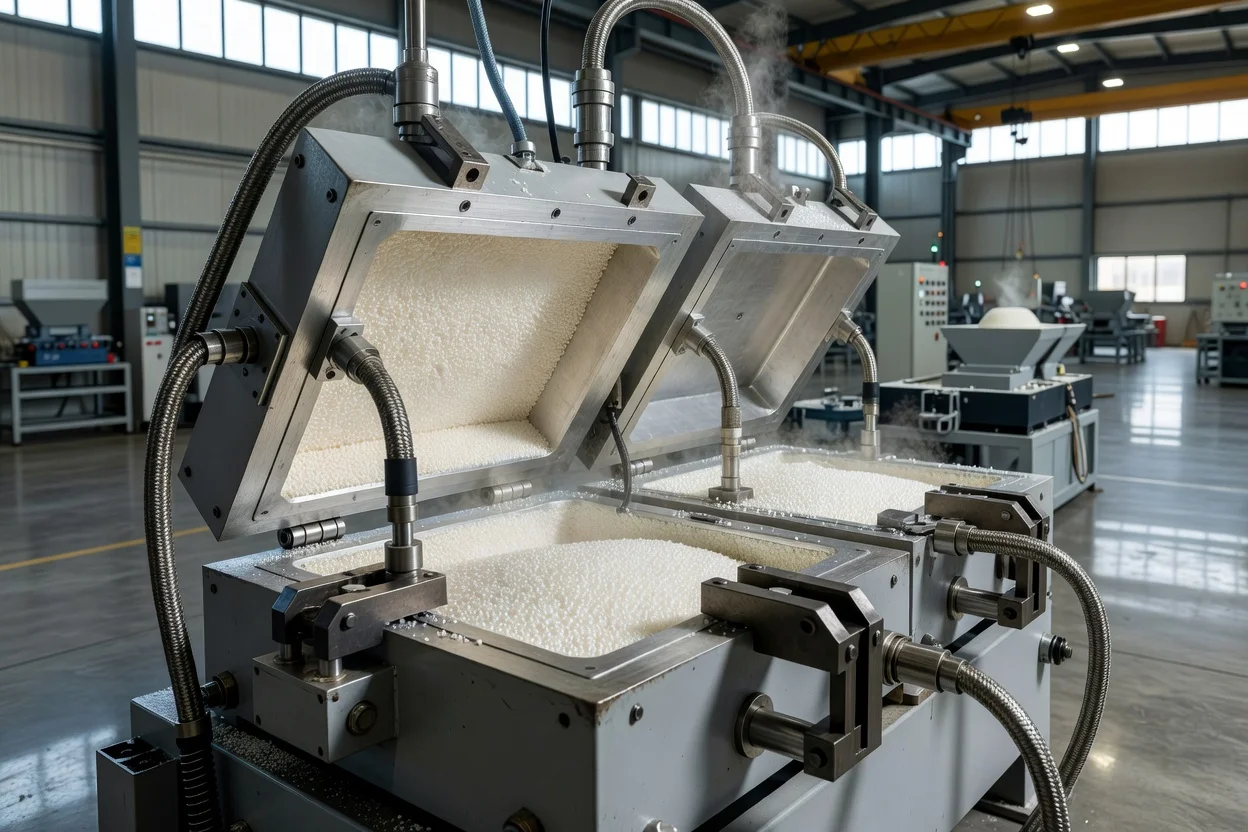
This bead-foam route differs from extruded foams because the final product is assembled from expanded particles rather than formed as a continuous sheet. That architecture gives EPP excellent mouldability into complex 3D parts and is one reason it is favored for protective shapes, inserts, and returnable containers.
Applications and End-Use Markets
EPP’s main end-use logic is the combination of light weight, impact protection, recoverability, and thermal insulation. Different grades and part densities are selected to match function rather than appearance.
| End-use sector | Typical EPP role | Usual grade/process fit |
|---|---|---|
| Automotive | Bumper cores, seat parts, headrests, side-impact absorbers, load floors, battery packaging | Moulded medium- to high-density parts for energy absorption and repeated impacts |
| Protective packaging | Returnable dunnage, void fill, cushioning for electronics, medical devices, and industrial goods | Low- to medium-density moulded inserts and reusable trays |
| Logistics and industrial handling | Reusable containers, tool trays, transport supports, load stabilizers | Durable moulded shapes with high recovery and low mass |
| HVAC and building services | Thermal covers, duct components, insulation parts | Grades selected for insulation and dimensional stability |
| Marine and buoyancy | Floats, buoyancy aids, marine cushioning | Low-density grades optimized for water resistance |
| Sports and leisure | Helmets, pads, child seats, flotation and protective gear | Energy-absorbing grades with repeated-impact performance |
| Consumer and food-related applications | Cool boxes, catering boxes, insulated delivery containers | Hygienic, insulating, reusable mouldings |
| Medical and technical packaging | Protective shipping inserts, transport supports | Clean, low-contamination packaging systems |
| Poor-fit use: high-barrier food packaging | Requires strong gas/moisture barrier, which EPP does not provide well | Use with separate barrier films or another packaging platform |
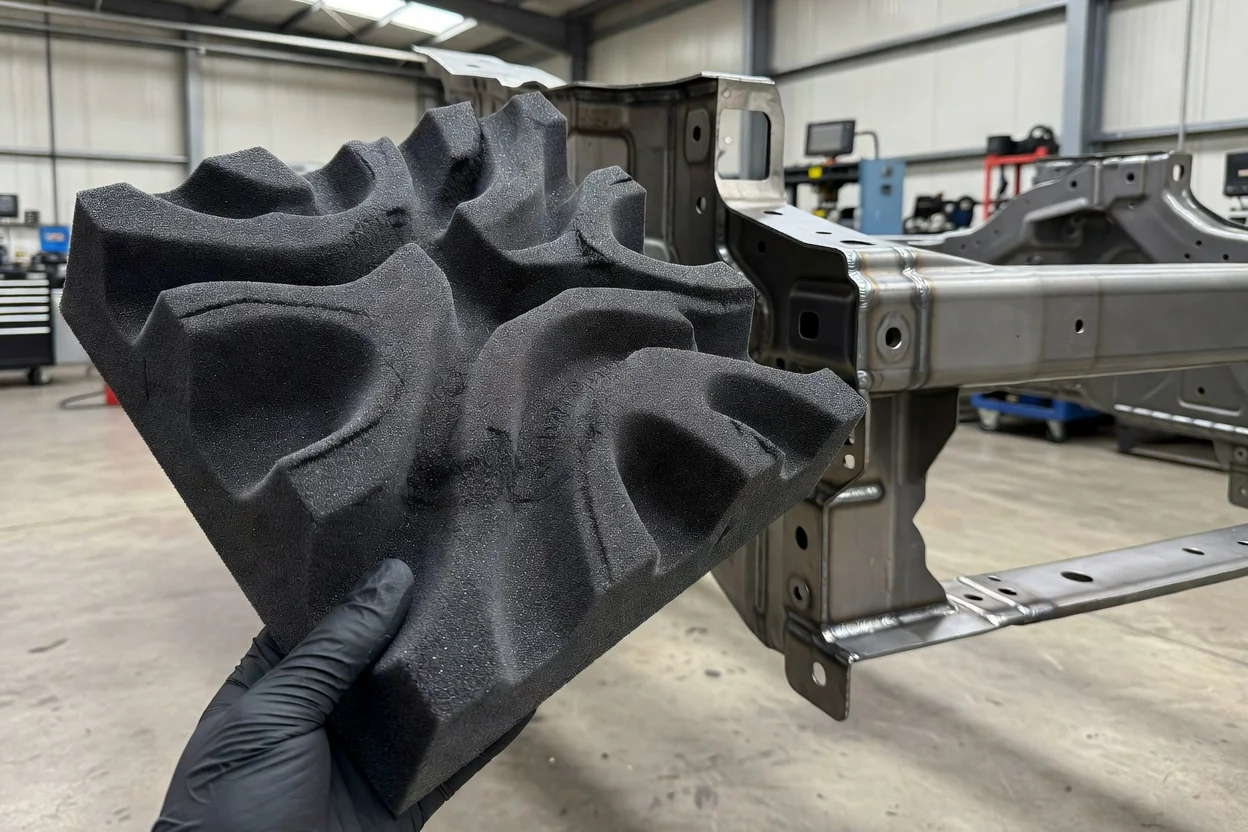
Automotive remains one of the most important markets because crash management, pedestrian protection, interior comfort, and lightweighting all align with EPP’s mechanical profile. Protective packaging is another major market because the material can absorb shocks repeatedly, making it suitable for returnable logistics and high-value shipments.
Environmental and Sustainability Aspects
EPP is frequently promoted as a more circular foam option because it is thermoplastic and can be mechanically recycled, with several industry sources describing it as 100% recyclable in principle. Its durability also enables reuse, which can lower material intensity in packaging and logistics systems by extending service life over many trips.
At the same time, sustainability claims require careful interpretation. The climate impact of EPP depends on the upstream polypropylene feedstock, the energy mix used for foaming and moulding, transport efficiency, and whether collected products are actually recycled into useful secondary material. In many use cases, the strongest environmental benefit comes not from single-use recycling alone but from reuse, repairable packaging systems, and lightweighting that reduces product damage and transport losses.
Biobased and recycled-polypropylene feedstocks are important areas of development, although supply, cost, and property consistency remain limiting factors in many markets. For high-performance applications, the main challenge is preserving cell structure and crash performance while increasing recycled content.
Economic and Global Market Impact
Recent market analyses place the EPP foam market in the low-billions of U.S. dollars, with one forecast valuing it at USD 1.28 billion in 2025 and projecting growth to USD 2.83 billion by 2034, while another estimates market volume at about 260 thousand tons in 2023 rising to around 370 thousand tons by 2034. These forecasts reflect strong demand from automotive lightweighting, reusable packaging, and protective logistics.
Market growth is also shaped by manufacturing localization, because EPP parts are often produced close to automotive assembly plants, distribution hubs, or end-use packaging operations to reduce transport cost and damage risk. Producers with integrated bead-foam expertise, automotive supply relationships, and tooling capabilities tend to have a stronger position in this segment.
Current Challenges and Innovations
Key challenges include:
- Barrier limitations: EPP is not a substitute for high-barrier packaging films or multilayer containers where oxygen or aroma retention is critical.
- Joining and finishing: bonding, painting, and printing can require surface treatment because of polypropylene’s low surface energy.
- Recycling quality: contamination, mixed polymers, and additives can reduce the value of post-consumer streams.
- Cost pressure: competition from cheaper foams or molded fiber solutions in packaging applications.
- Design complexity: the material performs best when parts are engineered around foam behavior rather than copied from rigid plastics.
Innovation is concentrated in:
- Higher recycled-content EPP compounds and better sorting systems.
- Hybrid parts combining EPP with rigid inserts, textiles, or barrier layers.
- Lightweight automotive modules that integrate crash, insulation, and acoustic functions.
- Reusable logistics systems with standardized return cycles.
- Improved moulding control for tighter tolerances and more consistent density profiles.
Future Outlook
EPP is likely to remain a strategic foam material where repeated impact absorption, low weight, and recyclability are jointly required. Its strongest future growth areas are expected to be electric-vehicle battery logistics, reusable transport packaging, thermal protection of sensitive goods, and lightweight safety components in transport and consumer products.
The most important long-term determinant will be whether the industry can pair technical performance with credible circularity: higher recycled feedstock use, longer part lifetimes, and collection systems that preserve material quality. If these conditions improve, EPP is well positioned to expand as a premium engineering foam rather than remaining a niche packaging material.
Summary
EPP is a closed-cell polypropylene foam valued for energy absorption, resilience, insulation, and recyclability. Its core strengths make it especially useful in automotive safety parts, reusable packaging, and protective cushioning, while its main limitations are barrier performance, surface treatment requirements, and dependence on effective recycling systems.
References
- •
Expanded Polypropylene (EPP). (n.d.). British Plastics Federation. https://www.bpf.co.uk/plastipedia/polymers/Expanded_Polypropylene_EPP.aspxLink
- •
EPP Foam: Versatility & Applications. (2026, February 17). Schlaadt. https://www.schlaadt.com/our-materials/epp-epp-re/Link
- •
Expanded Polypropylene Datasheet. (2021, December 12). The Foam Factory. https://www.thefoamfactory.com/tech/ExpandedPolypropyleneTech.htmlLink
- •
Expanded polypropylene, EPP. (n.d.). Flatz. https://www.flatz.com/en/technical-components-made-from-particle-foams/material-properties/epp/Link
- •
Expanded Polypropylene Foam (EPP) Physical Data Sheet. (2021, November 22). Foam by Mail. https://www.foambymail.com/polypropylene-foam-sheet.htmlLink
- •
Particle Foams | Materials, Properties & Applications. (2026, April 16). Particle Foam Association. https://particle-foam-association.com/en/particle-foams/Link
- •
Expanded Polypropylene - Del-Tec Packaging. (2025, May 8). Del-Tec Packaging. https://del-tec.com/resources/technical-datasheets/expanded-polypropylene/Link
- •
Polypropylene Foam produced by physical expansion (EPP). (n.d.). Extrusion Consulting Inc. https://www.extrusionconsultinginc.com/polypropylene-foam-produced-by-physical-expansion-epp.htmlLink
- •
EPP/EPE Foam Technical Data. (2017, May 19). Foamsearch. https://www.foamsearch.com/products/epp-epe-foam/Link
- •
Application of EPP foam sheets. (2024, May 7). LinkedIn. https://www.linkedin.com/pulse/application-epp-foam-sheets-pmpfepp-0llhcLink
- •
What are the applications of Expanded Polypropylene in the promising market #PP#EPP#foam#Environmentally friendly materials. (2023, November 2). JWELL. https://www.jwell-group.com/blog/What-are-the-applications-of-Expanded-Polypropylene-in-the-promising-market-PPEPPfoamEnvironmentally/Link
- •
Porous Expanded Polypropylene | Foam Material. (2021, June 23). Engineered Foam Products. https://www.engineeredfoamproducts.com/materials/porous-expanded-polypropylene/Link
- •
EPP - HSV. (2021, August 30). HSV. https://www.hsv-pi.nl/en/epp/Link
- •
Expanded Polypropylene | EPP Foam. (2021, May 27). Engineered Foam Products. https://www.engineeredfoamproducts.com/materials/expanded-polypropylene/Link
- •
Static Mechanical Properties of Expanded Polypropylene ... (2021, January 6). PMC. https://pmc.ncbi.nlm.nih.gov/articles/PMC7825443/Link
- •
EPP - Expanded polypropylene. (2023, November 2). Novapor. https://www.novapor.com/en/materials/epp-expanded-polypropylene/Link
- •
ARPRO® Expanded Polypropylene (EPP). (n.d.). ARPLANK Direct. https://arplankdirect.com/wp-content/uploads/2021/03/Techdoc-ARPLANK-ARPRO-EPP-2.8to3.7pcf-vs-ExtrudedPE-4.0to9.0pcf-GenPropInfo.pdfLink
- •
Polypropylene Foam - FoamInsider. (2019, May 31). FoamInsider. https://www.foaminsider.com/materials/epp-polypropylene-foam/Link
- •
Polypropylene Foam for Packaging. (n.d.). Foam by Mail. https://www.foambymail.com/polypropylene-foam.htmlLink
- •
101 Applications for Expanded Polystyrene & Polypropylene. (2022, November 4). Engineered Foam Products. https://www.engineeredfoamproducts.com/news/101-applications-for-expanded-polystyrene-polypropylene/Link
- •
EPP (Expanded Polypropylene). (n.d.). Xometry. https://xometry.pro/wp-content/uploads/2025/07/EPP-Expanded-Polypropylene-1.pdfLink
- •
EPP Foam Properties: A Comprehensive Guide to Its Insulation and Shock Absorption. (n.d.). Epsole. https://epsole.com/epp-foam-properties/Link
- •
EPP (Expanded Polypropylene). (2025, July 15). Xometry. https://xometry.pro/en-eu/materials/epp/Link
- •
Crushing Responses of Expanded Polypropylene Foam - PMC. (2023, April 26). PMC. https://pmc.ncbi.nlm.nih.gov/articles/PMC10181497/Link
- •
EPP technical data | EPP Forum Bayreuth. (n.d.). EPP Forum Bayreuth. https://epp-forum.com/en/about-epp/technical-data/Link
- •
Expanded Polypropylene for Packaging, Storage. (2026, January 1). The Foam Factory. https://www.thefoamfactory.com/closedcellfoam/polypropylene.htmlLink
- •
Expanded Polypropylene (EPP) Foam Market Size, Share, ... (2026, August 10). Fortune Business Insights. https://www.fortunebusinessinsights.com/expanded-polypropylene-epp-foam-market-102897Link
- •
Mechanical response of low density expanded ... (n.d.). ScienceDirect. https://www.sciencedirect.com/science/article/pii/S2352492819313911Link
- •
EPP Foam Market Analysis By Demand, By Region, ... (2025, October 28). Prismane Consulting. https://prismaneconsulting.com/report-details/expanded-polypropylene-epp-foam-marketLink