
Introduction
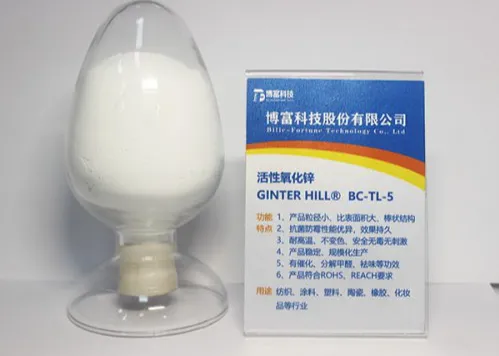
Zinc oxide is a versatile inorganic material used across plastics, rubber, coatings, cosmetics, and specialty chemicals as a pigment, reinforcing aid, UV absorber, antimicrobial additive, and processing auxiliary. In the plastics value chain, it is especially important in rubber compounding, PVC heat stabilization systems**, **polymer additives, and functional masterbatches, where its high thermal stability, white opacity, and surface activity are exploited for performance rather than as a structural polymer ingredient.
From a materials-science perspective, zinc oxide is a white, nearly insoluble oxide with a high melting point and a wide band gap, which underpins its usefulness as an optical, electrical, and protective additive. Industrial grades are used in conventional micron-size form, while nano-ZnO is used where UV shielding, transparency, or antimicrobial performance must be balanced against formulation and regulatory constraints. Its long commercial history in dermatology and pigments has broadened into modern applications in plastics, where it supports product durability, appearance, and processing stability.
At the same time, zinc oxide sits within broader sustainability debates. It is not a polymer and is not “recyclable” in the usual sense, but it can affect the recyclability, emissions profile, and end-of-life behavior of the plastics into which it is compounded. Recent innovation has therefore focused on lower-dust grades, better dispersion, surface-treated nanoparticles, and formulations that preserve performance while reducing additive loading and lifecycle impacts.
History and Development
Zinc oxide has been used for centuries in pigments, ceramics, and medicinal preparations, long before its semiconductor and nanomaterial properties were recognized. In industrial manufacturing, its role expanded in the twentieth century as rubber vulcanization chemistry matured and as plastics processing required increasingly sophisticated stabilizers, fillers, and opacifiers.
The modern materials phase of zinc oxide development began with recognition of its semiconductor behavior, optical transparency, and UV absorption, which opened pathways into electronics, coatings, and advanced composites. In plastics and polymers, this shift translated into more controlled particle engineering, tighter impurity specifications, and the emergence of nano-ZnO for transparent UV-protective formulations.
Chemical Structure and Key Properties
Zinc oxide is an inorganic compound with formula ZnO and is commonly found as a white to pale yellow powder. It is nearly insoluble in water, soluble in dilute acids and bases, and has an extremely high melting point of about 1975 °C, which makes it suitable for high-temperature processing environments.
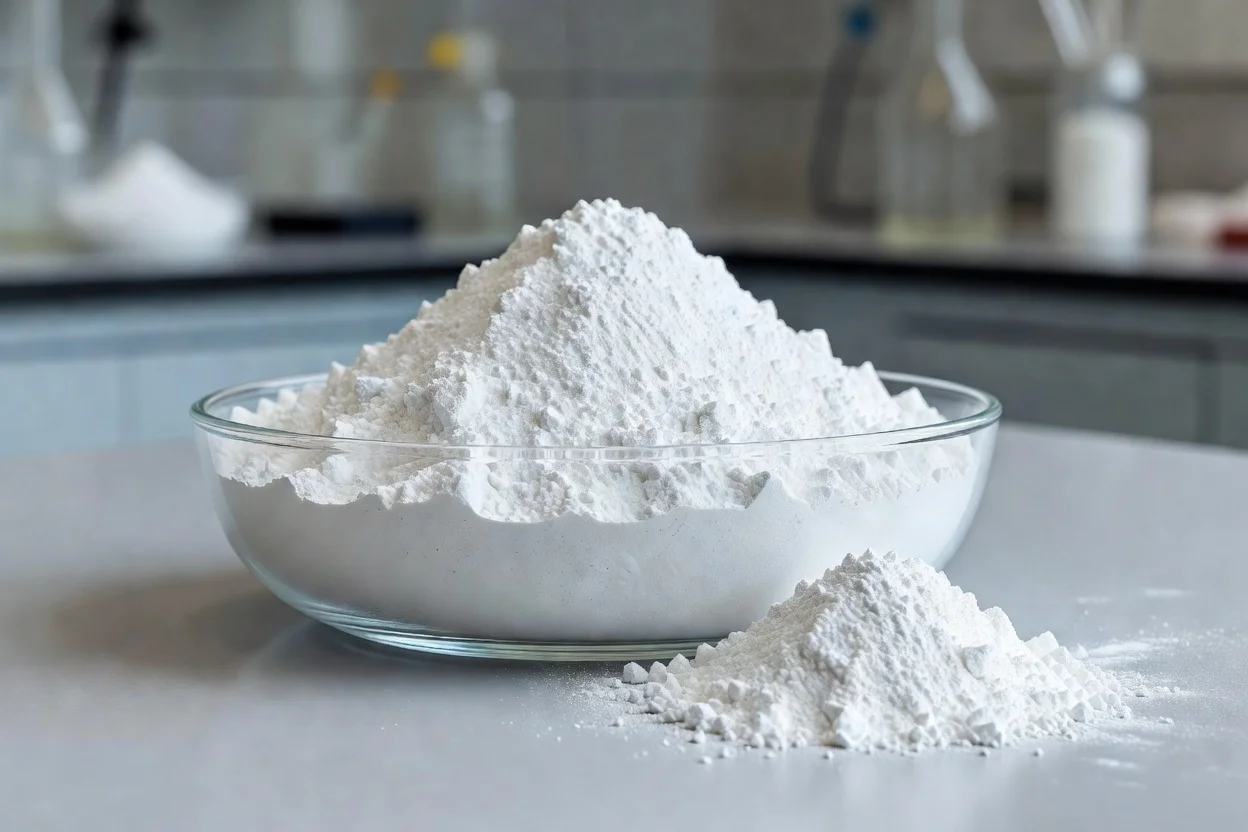
Key technical attributes
| Property | Typical significance in plastics and auxiliaries |
|---|---|
| White, opaque powder | Pigmenting and whitening capability |
| High thermal stability | Survives compounding and processing temperatures |
| Insolubility in water | Durable in humid and outdoor service |
| High refractive index | Strong light scattering and opacity |
| UV absorption | Protects polymers from photo-degradation |
| Surface activity | Useful in fillers, activators, and specialty formulations |
Its most relevant limitation in plastics is that poor dispersion → particle agglomeration → loss of opacity, weaker reinforcement, and defects, so formulators often use surface treatment, high-shear mixing, or masterbatching as the workaround. A second practical limit is that high loading in clear or semi-clear systems → haze and whiteness → use of nano-ZnO or alternative UV stabilizers, especially when transparency must be retained.
Production Processes and Raw Feedstocks
Commercial zinc oxide is produced primarily from zinc-bearing raw materials through thermal or chemical routes. The main industrial pathways are based on zinc metal, zinc ores, or zinc-containing secondary materials, with process choice influenced by purity, particle size, and intended use.
Main manufacturing routes
- Indirect or French process: zinc metal is vaporized and oxidized to ZnO, yielding a relatively high-purity product suited to specialty applications.
- Direct or American process: zinc-containing ores or secondary materials are calcined, often producing more variable impurity levels.
- Wet chemical routes: precipitation and calcination are used to make controlled particle-size and nano grades for high-performance applications.
Feedstock considerations
- Primary zinc metal and zinc concentrates remain important upstream inputs.
- Secondary zinc streams and recycled residues are increasingly important in circular supply systems.
- Particle morphology, surface area, and impurity profile are often more important than simple bulk composition in advanced additive uses.
In plastics, the relevant supply chain issue is not only cost but also consistency: compounding performance depends heavily on particle size distribution, moisture, and trace contaminants.
Applications and End-Use Markets
In plastics and related materials, zinc oxide is used less as a “base resin” ingredient and more as a functional auxiliary that modifies appearance, durability, cure behavior, and weathering resistance.
| End use | Typical grade or form | Usual function |
|---|---|---|
| Rubber and elastomers | Fine micron ZnO | Vulcanization activator, curing aid |
| PVC compounds | Micron or specialty ZnO | Heat stabilizing synergy, acid scavenging |
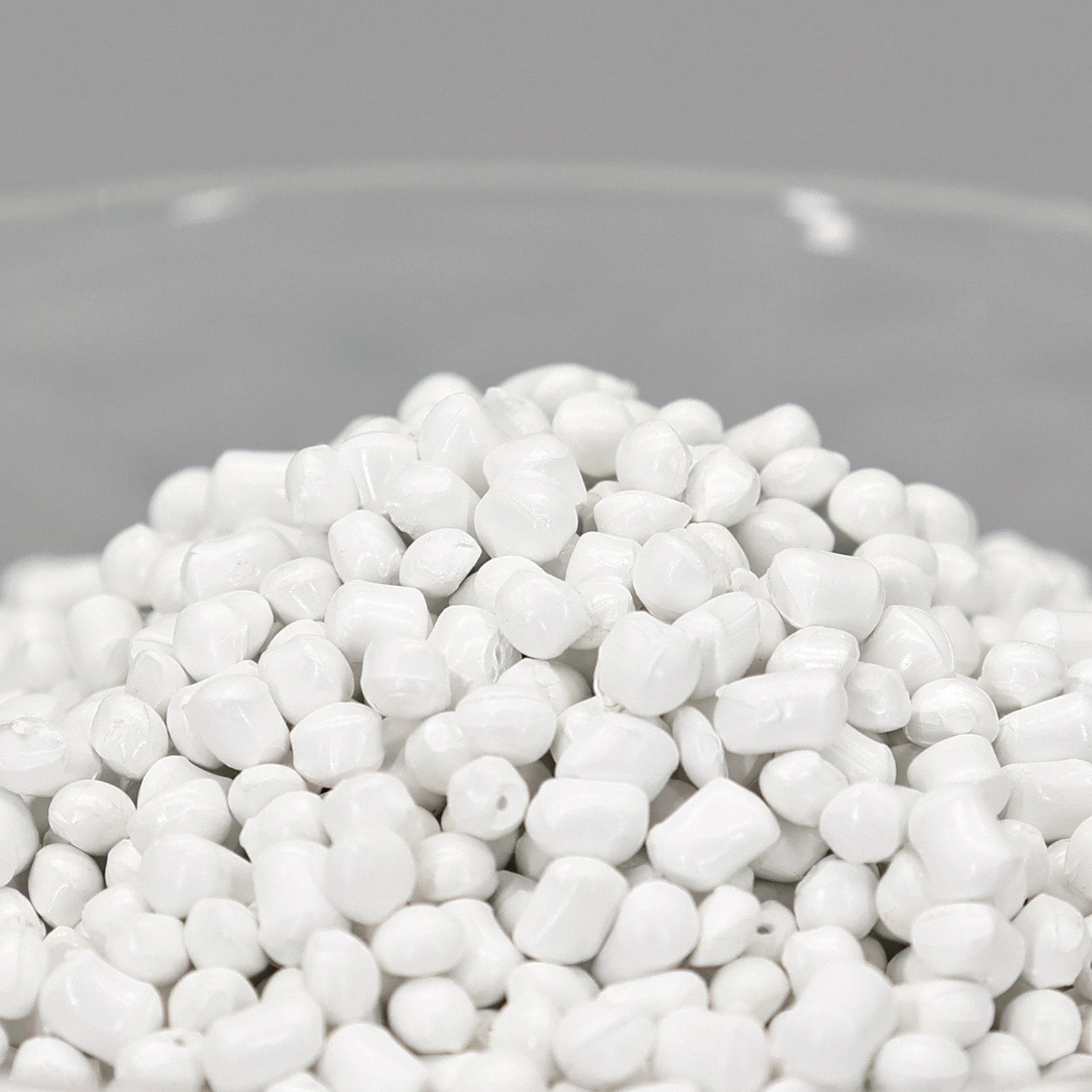
| Polyolefin masterbatches | Treated micron or nano ZnO | UV protection, whitening, antimicrobial effect |
| Cable compounds | Fine ZnO | Thermal and electrical performance support |
| Coatings and inks | High-opacity ZnO | Pigment, mildew/corrosion-related functionality |
| Cosmetics and personal care | Nano or non-nano ZnO | Physical UV filter, opacity |
| Ceramics and glass | High-purity ZnO | Fluxing and optical properties |
| Adhesives and sealants | Specialty ZnO | Rheology and antimicrobial support |
Plastics and polymers
- In PVC, zinc oxide is used in certain formulations to improve heat-aging behavior and support stabilization systems, often alongside other metal soaps or organotin alternatives depending on regulatory and performance needs.
- In polyolefin films and masterbatches, it may be used for whiteness, UV screening, and antimicrobial effects, although opacity and haze can limit use in clear packaging.
- In cable compounds, ZnO can contribute to thermal stability and processing robustness, especially in filled systems.
- In engineering plastics, it is sometimes used in specialty blends where UV screening, antistatic, or antibacterial functionality is needed.
Rubber and elastomers
Zinc oxide is a classic vulcanization activator in rubber, especially in sulfur-cured systems, where it helps form zinc complexes that accelerate crosslinking and improve cured properties. This remains one of its most economically important industrial uses.

One poor-fit use
A poor-fit application is high-clarity packaging film, because conventional ZnO tends to increase haze and whiteness. In such systems, formulators usually prefer alternative UV stabilizers or very carefully engineered nano-ZnO dispersions.
Concrete formulation examples
- A rubber compound may use roughly 3–5 phr zinc oxide as an activator, where it promotes more efficient sulfur vulcanization through zinc-sulfur complex formation.
- A UV-protective polymer coating may use low-percentage nano-ZnO, where the high surface area improves UV attenuation while limiting visible-light scattering when particle dispersion is well controlled.
Environmental and Sustainability Aspects
Zinc oxide is not a polymer and is not typically recycled as a standalone commodity within plastics recovery streams, but it strongly influences the sustainability profile of the products it is added to.
Recyclability and circularity
- In mechanically recycled plastics, ZnO can remain in the material stream and alter color, odor, or stabilization behavior.
- In mixed waste, additive carryover can complicate reprocessing, especially when loadings are high or when nano-scale grades are used.
- In controlled compounding systems, ZnO can be compatible with circularity if formulations are designed for stable reprocessing.
Bio-based and lower-impact alternatives
- In some applications, zinc oxide may be replaced partly by organic UV stabilizers, non-zinc mineral fillers, or alternative antimicrobial systems.
- For coatings and packaging, designers increasingly evaluate whether ZnO is necessary or whether lower-loading systems can deliver equivalent performance.
Carbon footprint and sourcing
Its carbon footprint depends strongly on zinc source, energy intensity of calcination, and purification route. Secondary zinc feedstocks can reduce upstream impacts, but only if product purity remains suitable for the application.
Regulatory and safety context
Zinc oxide is widely regarded as an established industrial material, but nano-sized forms draw greater regulatory scrutiny because of inhalation, dispersion, and environmental behavior concerns. In plastics compounding, occupational exposure control is therefore a practical sustainability and safety requirement.
Economic and Global Market Impact
Zinc oxide is a globally traded industrial chemical with demand shaped by rubber, ceramics, coatings, cosmetics, and increasingly specialty polymer applications. The largest volume consumption historically comes from rubber compounding, while higher-value demand is concentrated in nano-ZnO, high-purity grades, and surface-treated dispersions for advanced products.
Leading production is spread across major zinc-processing regions, with significant capacity in Asia, Europe, and North America, often integrated with broader zinc smelting and refining systems. Market competitiveness depends on feedstock access, energy costs, particle-engineering capability, and compliance with health and environmental requirements.
Current Challenges and Innovations
The main technical challenge for plastics formulators is achieving a balance between performance, dispersion, transparency, and processing stability.
Current challenges
- Agglomeration can reduce optical and mechanical benefits.
- White tint and haze limit use in transparent plastics.
- Nanoform regulation increases compliance complexity.
- Dust handling matters for worker safety and process cleanliness.
- Compatibility with specific resins, plasticizers, and stabilizer packages is formulation-dependent.
Innovation directions
- Surface-treated ZnO to improve dispersion and interfacial compatibility.
- Nano-engineered particles for better UV shielding at lower loadings.
- Masterbatch delivery systems that simplify dosing and reduce dust.
- Hybrid additive packages combining ZnO with HALS, UV absorbers, or antimicrobial agents.
- Use of secondary zinc streams to improve circular material sourcing.
Future Outlook
Zinc oxide is likely to remain a relevant auxiliary in plastics wherever UV protection, whiteness, cure activation, or antimicrobial function is needed. Its future growth in plastics will probably come less from bulk commodity use and more from specialty formulations that demand precise control over particle size, surface chemistry, and regulatory compliance.
The most promising opportunities are in:
- durable outdoor polymers,
- functional masterbatches,
- antimicrobial surfaces,
- high-performance elastomers,
- and coatings for packaging, cables, and consumer goods.
At the same time, sustainability pressures will continue to favor lower-loading systems, recycled zinc feedstocks, and additive designs that preserve recyclability while reducing environmental trade-offs.
Summary
Zinc oxide is a high-value inorganic auxiliary whose importance in plastics comes from its ability to modify curing, opacity, UV durability, and surface functionality. Its core strengths are thermal stability, insolubility, and optical performance, while its main constraints are dispersion, haze, and nanoform governance. Within the broader plastics ecosystem, it remains an established but increasingly engineered ingredient, with future relevance tied to specialty performance and circular-material design.
References
- •
Zinc oxide. (2004, March 9). Wikipedia. https://en.wikipedia.org/wiki/Zinc_oxideLink
- •
Zinc oxide. (2012, September 19). PubChem. https://pubchem.ncbi.nlm.nih.gov/compound/Zinc-OxideLink
- •
Zinc oxide. (2023, May 19). American Chemical Society. https://www.acs.org/molecule-of-the-week/archive/z/zinc-oxide.htmlLink
- •
Zinc oxide. (2026, June 24). ChemicalBook. https://www.chemicalbook.com/ChemicalProductProperty_EN_CB3853034.htmLink
- •
Zinc oxide properties and applications. (2024, March 5). Goodfellow. https://www.goodfellow.com/global/resources/zinc-oxide-zno-material-informationLink
- •
Zinc oxide properties and applications. (2025, November 12). Goodfellow. https://www.goodfellow.com/uk/resources/zinc-oxide-zno-material-information/Link
- •
Chemical properties of zinc oxide. (2022, August 8). BYJU'S. https://byjus.com/chemistry/zinc-oxide/Link
- •
Zinc oxide – Properties, applications and the future for ZnO. (2011, October 6). AZoM. https://www.azom.com/article.aspx?ArticleID=5818Link
- •
Zinc oxide properties and applications. (2025, November 12). Goodfellow. https://www.goodfellow.com/usa/resources/zinc-oxide-zno-material-information/Link
- •
Zinc oxide in skincare: All you need to know. (2025, June 24). Clique Clinic. https://www.cliqueclinic.com/blog/zinc-oxide-in-skincareLink
- •
Zinc oxide properties and applications. (n.d.). https://img1.wsimg.com/blobby/go/d53883a8-bd67-40c7-9cc1-1a588ae4c05a/downloads/zinc_oxide_properties_and_applications.pdfLink
- •
Zinc in skincare: The anti-inflammatory mineral for acne, oil control, and more. (n.d.). MedSpot. https://medspot.ai/blog/zinc-skincare-guideLink
- •
Zinc therapy in dermatology: A review. (2014, July 10). PMC. https://pmc.ncbi.nlm.nih.gov/articles/PMC4120804/Link
- •
Zinc oxide (ZnO) semiconductors. (2013, April 5). AZoM. https://www.azom.com/article.aspx?ArticleID=8417Link
- •
Zinc oxide. (2017, October 18). ScienceDirect. https://www.sciencedirect.com/topics/pharmacology-toxicology-and-pharmaceutical-science/zinc-oxideLink
- •
Zinc oxide: Uses, side effects, dosage & interactions. (2025, July 1). Apollo Hospitals. https://www.apollohospitals.com/medicines/zinc-oxideLink
- •
Zinc oxide: Properties, application and safety. (2023, March 28). ChemicalBook. https://www.chemicalbook.com/article/zinc-oxide-properties-application-and-safety.htmLink
- •
Zinc oxide—From synthesis to application: A review. (2014, April 9). PMC. https://pmc.ncbi.nlm.nih.gov/articles/PMC5453364/Link
- •
What is zinc oxide mainly used for? Medical & cosmetic uses. (2025, December 1). RxWellness. https://rxwellz.com/what-is-zinc-oxide-mainly-used-for-a-comprehensive-guideLink
- •
Zinc oxide in skincare: Uses & benefits. (2026, July 22). The Beauty Briefing. https://thebeautybriefing.com/ingredients/zinc-oxide/Link
- •
Uses of zinc oxide in skincare & sunscreen: A guide for cosmetic manufacturers. (2025, May 2). Elchemy. https://elchemy.com/blogs/personal-care/uses-of-zinc-oxide-in-skincare-sunscreen-a-guide-for-cosmetic-manufacturersLink
- •
Properties of zinc oxide nanoparticles and their activity against microbes. (2018, May 8). PMC. https://pmc.ncbi.nlm.nih.gov/articles/PMC5940970/Link
- •
Zinc oxide for face: Benefits, safe use and side effects. (2026, February 5). Bolt Pharmacy. https://www.boltpharmacy.co.uk/guide/zinc-oxide-for-faceLink
- •
Zinc oxide (nano form). (n.d.). European Commission. https://ec.europa.eu/health/scientific_committees/opinions_layman/zinc-oxide/fr/l-2/1.htmLink
- •
Zinc oxide: Origin, properties, and uses. (2024, June 10). Typology. https://us.typology.com/library/fiche-didentite-oxyde-de-zincLink
- •
Zinc oxide is good for skin: Benefits and uses. (2026, February 5). Bolt Pharmacy. https://www.boltpharmacy.co.uk/guide/zinc-oxide-is-good-for-skinLink
- •
1. What is zinc oxide used for? (n.d.). European Commission. https://ec.europa.eu/health/scientific_committees/opinions_layman/zinc-oxide/de/l-2/1.htmLink
- •
Zinc oxide benefits, uses and side effects. (2022, June 13). Dr. Axe. https://draxe.com/health/zinc-oxide-benefits/Link
- •
The effect of zinc oxide in treatment and skin care. (n.d.). https://journals.ekb.eg/article_375761_903d1f5ea428cd43178e3401213905a5.pdfLink
- •
Zinc oxide nanoparticles in modern science and technology. (2025, May 17). PMC. https://pmc.ncbi.nlm.nih.gov/articles/PMC12113910/Link
- •
Zinc oxide: Uses, interactions, mechanism of action. (2022, October 18). DrugBank. https://go.drugbank.com/drugs/DB09321Link
- •
Zinc oxide, mineral sunscreen benefits, topical uses, and safety guide. (2026, January 7). Vitalibrary. https://vitalibrary.com/zinc-oxide-benefits-safety/Link
- •
Zinc oxide. (2022, October 14). Chemical Safety Facts. https://www.chemicalsafetyfacts.org/chemicals/zinc-oxide/Link
- •
Zinc oxide particles: Synthesis, properties and applications. (n.d.). ScienceDirect. https://www.sciencedirect.com/science/article/pii/S138589471200099XLink
- •
Zinc‐containing compounds for personal care applications. (n.d.). Wiley Online Library. https://onlinelibrary.wiley.com/doi/10.1111/ics.12463Link
- •
Zinc oxide for skin: Benefits, uses & side effects. (2022, January 3). SkinKraft. https://skinkraft.com/blogs/articles/zinc-oxide-for-skinLink
- •
What's the risk? – Zinc oxide. (2022, August 16). [email protected]. https://cris.msu.edu/news/whats-the-risk/whats-the-risk-zinc-oxide/Link
- •
Zinc oxide coating. (2024, February 23). Skin Type Solutions. https://skintypesolutions.com/blogs/skincare/zinc-oxide-in-skin-careLink
- •
The ultimate guide to zinc oxide: Benefits and uses for healthy skin with zinc oxide. (2025, August 7). ALYAKA USA. https://www.alyaka.com/en-us/blogs/alyaka-magazine/the-ultimate-guide-to-zinc-oxide-for-skinLink
- •
Introduction to zinc oxide. (n.d.). BHSkin Dermatology. https://ai.bhskin.com/glossary/zinc-oxide-dermatology-explainedLink
- •
Zinc oxide (skin protecting agent): Cosmetic ingredient INCI. (2023, September 20). SpecialChem. https://www.specialchem.com/cosmetics/inci-ingredients/zinc-oxideLink
- •
Is zinc oxide good for the skin? A dermatologist reveals all. (2025, August 11). Dermstore. https://www.dermstore.com/blog/ingredient-index/is-zinc-oxide-good-for-the-skin/Link
- •
What is zinc oxide? (n.d.). Paula's Choice. https://www.paulaschoice-eu.com/zinc-oxide/ingredient-zinc-oxide.htmlLink
- •
Zinc oxide cream, ointment, paste. (2023, September 20). Cleveland Clinic. https://my.clevelandclinic.org/health/drugs/18700-zinc-oxide-cream-ointment-pasteLink
- •
Benefits of zinc oxide in skincare & sunscreen. (2026, June 5). Aveeno. https://www.aveeno.com/our-ingredients/zinc-oxideLink
- •
Why is everyone sleeping with zinc oxide on their face? (2026, May 29). Vogue. https://www.vogue.com/article/sleeping-with-zinc-oxide-on-faceLink
- •
Zinc oxide (topical application route) - Side effects & dosage. (2026, March 31). Mayo Clinic. https://www.mayoclinic.org/drugs-supplements/zinc-oxide-topical-application-route/description/drg-20075525Link
- •
What is zinc oxide & how does it benefit the skin? (2025, June 23). ALASTIN Skincare. https://alastin.com/pages/zinc-oxideLink