
Introduction
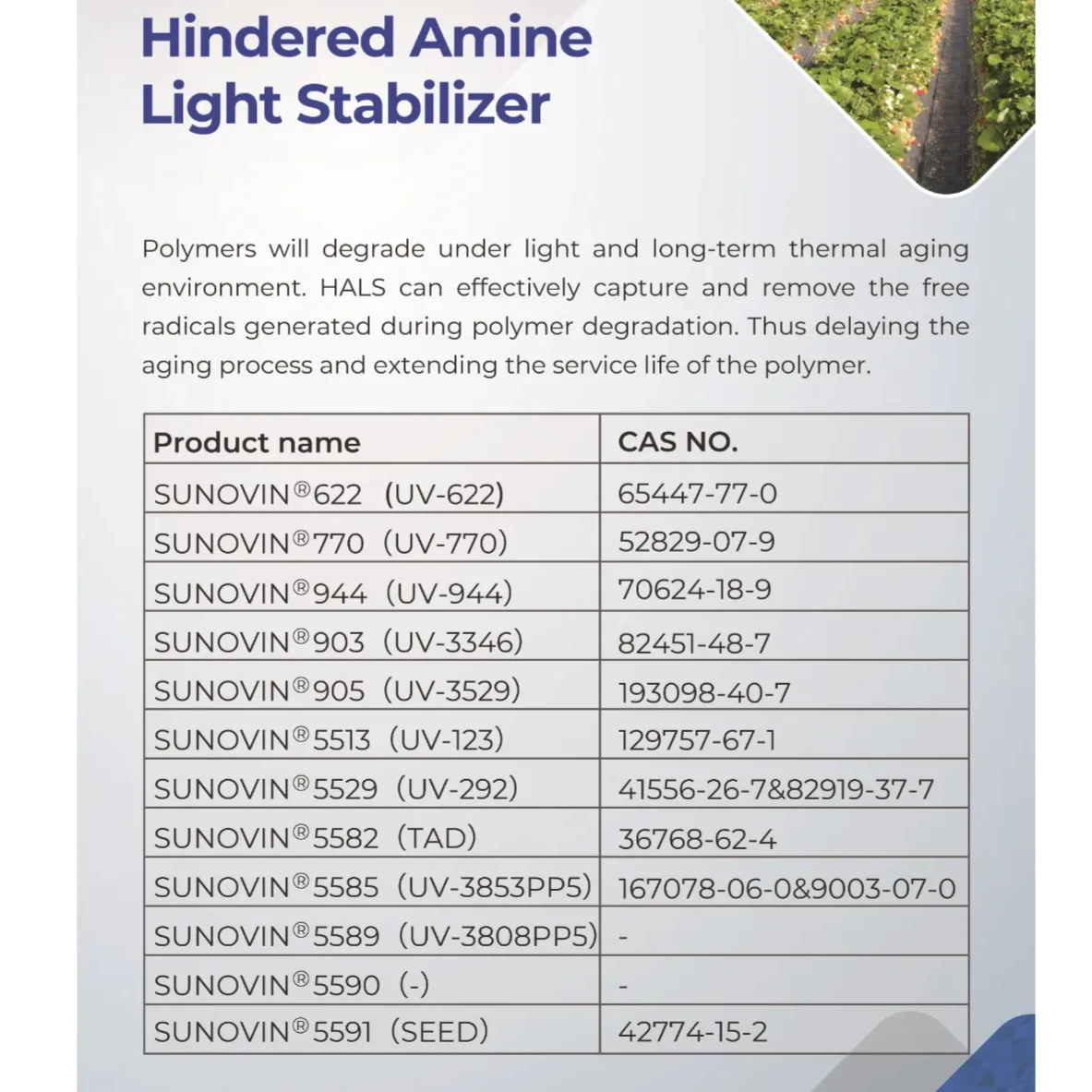
Hindered amine light stabilizers (HALS) are a major class of polymer additives used to protect plastics, coatings, rubber, and related materials from photo-oxidative degradation during outdoor or high-light exposure. Unlike UV absorbers, HALS do not primarily block ultraviolet radiation; instead, they act as radical scavengers that interrupt oxidation chains and are regenerated during use, which gives them unusually long-lasting stabilizing efficiency.
HALS are especially important in polyolefins such as polyethylene and polypropylene, but they are also widely used in engineering plastics, coatings, adhesives, sealants, and fiber materials. The class includes monomeric, polymeric, basic, and non-basic grades, as well as specialized low-volatility and low-interaction variants for sensitive formulations such as waterborne coatings. Their industrial significance has grown because durable polymers are increasingly required in agriculture, construction, automotive, cable, and outdoor consumer products, while recyclability, additive migration, and long service life have become central sustainability issues.
History and Development
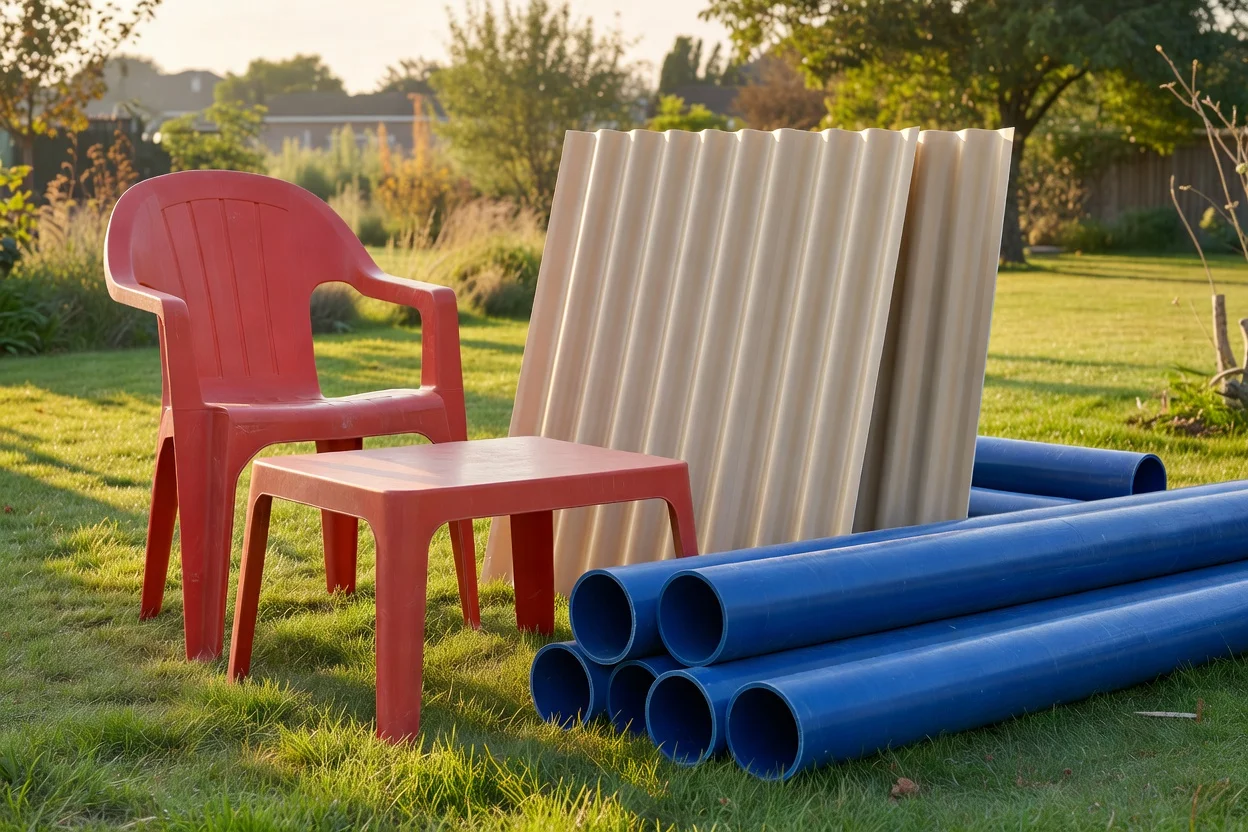
HALS became established as highly effective polymer stabilizers in the late twentieth century, following recognition that hindered piperidine derivatives could protect polymers from weathering far more efficiently than many conventional absorbers. Early development centered on derivatives of 2,2,6,6-tetramethylpiperidine, which remains the core structural motif for most HALS chemistries.
Over time, formulation work expanded from low-molecular-weight stabilizers to polymeric HALS, low-basicity types, and multifunctional structures designed to reduce volatility, extraction, blooming, and incompatibility in demanding systems. Patent and product literature also show a continuing shift toward specialized grades for coatings, waterborne systems, high-temperature processing, and long-life outdoor polymers.
Chemical Structure and Key Properties
HALS are organic compounds built around a sterically hindered amine, usually a piperidine ring substituted so that the nitrogen center is shielded from rapid irreversible side reactions. This structure enables the additive to participate in a cyclic stabilization mechanism in which a parent amine is converted to nitroxyl-type species and then regenerated, allowing repeated radical-quenching cycles.
Key properties
- High efficiency at low dosage: HALS can provide significant stabilization at relatively low concentrations compared with many older stabilizer systems.
- Regenerating mechanism: the additive is not simply consumed once; it is reactivated through a catalytic-like cycle.
- Strong weathering performance: HALS are highly effective against UV-induced photo-oxidation in outdoor service.
- Good synergy: HALS often perform best when combined with UV absorbers and antioxidants.
- Formulation sensitivity: basic HALS may interact with sensitive binders or require cosolvents in waterborne coatings; low-basic or non-basic grades are used to mitigate these issues.
Real technical limits and workarounds
- Limit: incompatibility or interaction in sensitive formulations → cause: basicity of some HALS grades → workaround: use non-basic or low-basic HALS, or select polymeric grades with better compatibility.
- Limit: volatility, extraction, or bloom in long-life outdoor products → cause: low molecular weight and insufficient anchoring in the matrix → workaround: use polymeric HALS or high-molecular-weight grades with lower migration.
- Limit: weaker performance in isolation in some systems → cause: HALS mainly interrupt radical chains rather than screen UV directly → workaround: combine HALS with UV absorbers and antioxidants for complementary protection.
Mechanism of action
HALS are not UV absorbers in the strict sense. Their principal role is to suppress photodegradation by scavenging alkyl and peroxy radicals and by participating in a regenerative nitroxyl cycle that interrupts autoxidation. This is why they are often described as highly durable stabilizers rather than sacrificial additives.
Production Processes and Raw Feedstocks
HALS are typically manufactured through organic synthesis routes centered on hindered piperidine intermediates derived from 2,2,6,6-tetramethylpiperidine chemistry or related hindered amine structures. Industrial variants may be further functionalized into monomeric, oligomeric, or polymeric forms to adjust volatility, compatibility, and extraction resistance.
Common feedstock and synthesis considerations
- Hindered amine intermediates provide the core reactive scaffold.
- Functional groups such as sebacate, triazine, or carboxyl-containing substituents are used to tune performance and compatibility.
- Polymeric HALS are designed to reduce physical loss from the final article, especially in outdoor applications.
- Low-basicity HALS are developed to improve formulation tolerance and reduce interaction with other components.
In practice, production is closely linked to downstream application requirements. A coating stabilizer needs different solubility and acid-base behavior than a masterbatch additive for polypropylene film or a polymer-bound stabilizer for long-life agricultural film.
Applications and End-Use Markets
HALS are widely used in outdoor plastics and other light-exposed materials where long-term color retention, mechanical integrity, and surface appearance matter.
| End-use sector | Typical polymer or system | Usual HALS type | Why it is used |
|---|---|---|---|
| Films | Polyethylene, polypropylene | Monomeric or polymeric HALS | Weathering resistance, reduced embrittlement, longer field life |
| Bottles and rigid packaging | Polyolefins, selected engineering plastics | Low-volatility HALS | Color retention and protection during storage/display |
| Pipe and profiles | PVC, polyolefins | HALS often with UV absorber | Outdoor durability and resistance to cracking |
| Cable and wire jacketing | Polyolefins, elastomers | Low-migration HALS | Long-term outdoor and thermal stability |
| Agriculture | Mulch film, greenhouse film, silage wrap | High-efficiency or polymeric HALS | Exposure to intense sunlight and service life extension |
| Geomembranes | Polyethylene | Polymeric HALS | Long service life in environmental containment |
| Rotomolding | Polyethylene | Heat-stable HALS | Thick-section durability and weather resistance |
| UHMWPE wear/medical | UHMWPE and specialty grades | Specialized stabilizer systems | Oxidation control in demanding applications |
| PEX | Crosslinked polyethylene | HALS packages in some formulations | Aging resistance in long-life installations |
| Coatings and sealants | Solventborne or waterborne coatings | Non-basic or low-basic HALS | Gloss retention, chalk resistance, durability |
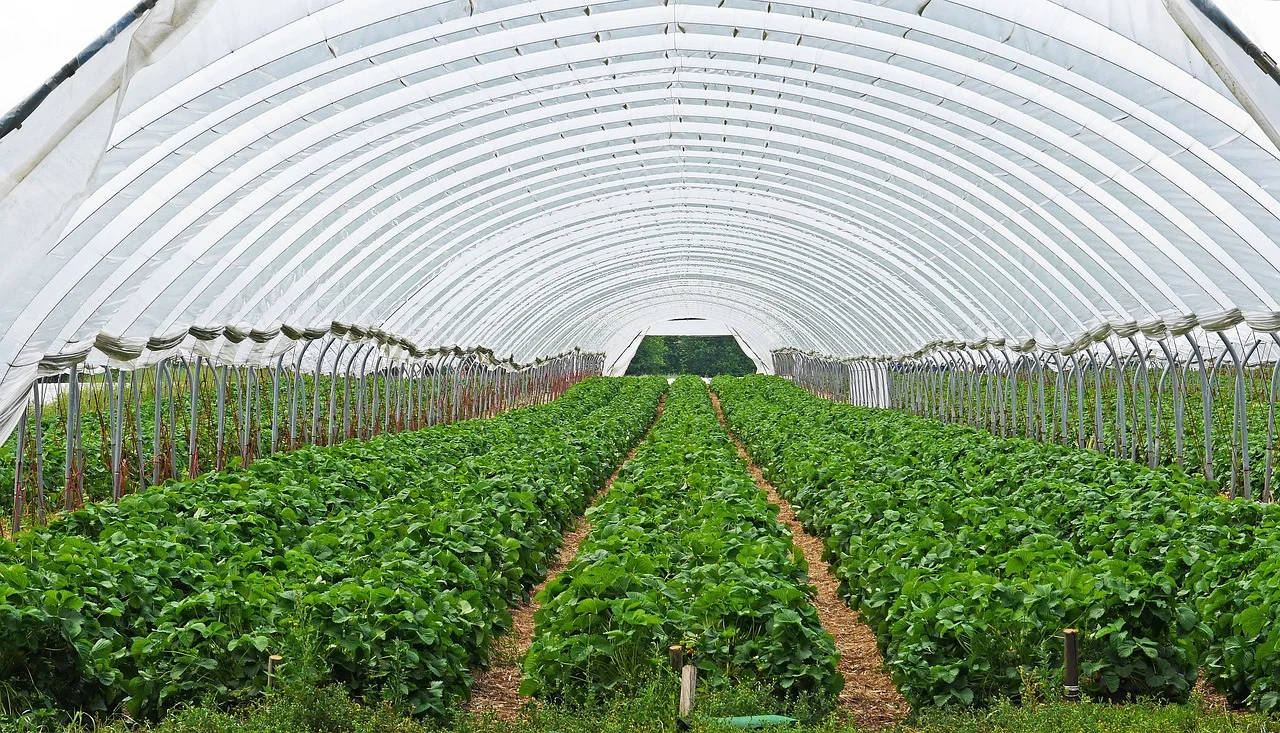
HALS are particularly important in polyolefin films, agricultural plastics, and outdoor construction products because these materials receive intense sunlight and often need a long service life at low cost. In coatings, product literature distinguishes between basic and non-basic HALS because waterborne and sensitive binder systems can react unfavorably with basic stabilizers.
A poor-fit use is any formulation in which strong acid-base interactions, high extraction risk, or severe volatilization dominate the design constraints; in such cases, a standard low-molecular-weight HALS can underperform unless replaced by a more compatible grade or paired with a different stabilizer system.
Environmental and Sustainability Aspects
HALS support sustainability primarily by extending product life. Longer-lasting plastics reduce replacement frequency and can lower material intensity over the product life cycle, which is especially valuable in agricultural films, construction products, and infrastructure materials.
Recyclability and circular economy
- HALS can help maintain mechanical properties and appearance in recycled-content plastics, but additive carryover and formulation balance must be managed carefully.
- In recycled streams, prior stabilizer depletion, thermal history, and contamination can reduce performance.
- Polymeric and low-migration HALS are often preferred where long-life durability or recycling compatibility is important.
Bio-based alternatives and carbon footprint
Bio-based polymers do not eliminate the need for stabilizers when they are used outdoors or exposed to heat and light. HALS can still be required to preserve performance in bio-attributed or recycled materials. Their carbon footprint is therefore indirect: the main sustainability benefit comes not from the additive being bio-based, but from the service-life extension it enables.
Trade-offs
- Positive: longer product life, reduced failure, better retention of function.
- Negative: additive migration, potential environmental release from wear or weathering, and formulation complexity in recycling streams.
- Balanced view: the most sustainable HALS package is usually the one that maximizes useful life with the lowest effective loading and the least migration risk.
Economic and Global Market Impact
HALS are among the most commercially important light stabilizers in the plastics industry, and industry sources consistently describe them as a dominant category for polymer weathering protection. Market demand is driven by outdoor plastics, automotive plastics, films, coatings, and construction materials, all of which require durability under UV exposure.
According to industry and patent-based discussions, HALS represent a very large share of light-stabilizer consumption, with especially strong use in polyolefins and weatherable polymer formulations. Leading global suppliers include major additive manufacturers such as BASF and ADEKA, alongside other multinational specialty chemical producers with broad stabilizer portfolios.
Current Challenges and Innovations
Main challenges
- Compatibility in complex formulations: especially in waterborne coatings and binder-sensitive systems.
- Volatility and extraction: especially for low-molecular-weight grades in harsh outdoor service.
- Long-term environmental monitoring: additive residues in dust and environmental compartments have increased attention to release pathways.
- Performance balance in recycling: stabilizers must protect the polymer without compromising reprocessing or downstream recyclability.
Important innovation directions
- Polymeric HALS for lower migration and better permanence.
- Non-basic HALS for improved compatibility in coatings and sealants.
- Multifunctional HALS combining light stabilization with antioxidant behavior or improved dispersion.
- Reactive or copolymerizable HALS that can be chemically incorporated into polymers for reduced loss.
- Tailored packages that combine HALS with UV absorbers and antioxidants for synergistic protection.
Future Outlook
HALS are likely to remain a core technology in durable plastics because weather resistance is becoming more important, not less. Growth opportunities are strongest in agricultural films, construction materials, automotive polymers, recycled-content plastics, and waterborne coatings, where long life and formulation flexibility are both essential.
Future development will probably emphasize lower migration, reduced environmental release, better compatibility with recycling, and multifunctional performance in one additive package. The most competitive HALS technologies will be those that deliver durability with minimal dosage, minimal formulation risk, and maximum retention of properties over the entire service life of the polymer article.
Summary
HALS are highly efficient, regenerative light stabilizers that protect polymers mainly by scavenging radicals rather than absorbing UV radiation. They are central to outdoor durability in polyolefins, coatings, and many other plastics, and their evolution has increasingly focused on polymeric, low-migration, and formulation-compatible grades for modern sustainability and performance demands.
References
- •
塑料抗氧剂/紫外线吸收剂/光屏蔽剂/光稳定剂 - Calaméo. (2018, April 20). https://www.calameo.com/books/002460180e82db377e61cLink
- •
受阻胺光稳定剂CAS#:. (2023, January 1). https://www.chemicalbook.com/ProductChemicalPropertiesCB31145204.htmLink
- •
Hindered amine light stabilizers containing aromatic carboxy groups and derivatives - European Patent Office - EP 0294818 A2. (n.d.). https://data.epo.org/publication-server/rest/v1.2/publication-dates/19881214/patents/EP0294818NWA2/document.pdfLink
- •
A review on the mechanism of action and applicability of Hindered Amine Stabilizers. (2017, November 2). https://www.sciencedirect.com/science/article/abs/pii/S0141391017301350Link
- •
光稳定剂UV-3346 CAS#: 82451-48-7. (n.d.). https://www.chemicalbook.com/ProductChemicalPropertiesCB1170320.htmLink
- •
一种含受阻酚的受阻胺光稳定剂及其制备方法和应用 - Google Patents. (2020, September 8). https://patents.google.com/patent/CN112010800A/zhLink
- •
Hindered amine light stabilizer for improved yellow dark stability. (2003, August 5). https://patents.google.com/patent/US6824936B1/enLink
- •
受阻胺光稳定剂 HS-508 (292)的抗老化机制与污染风险. (2025, December 20). https://www.chemicalbook.com/NewsInfo_74808.htmLink
- •
一种反应型受阻胺光稳定剂及其制备方法 - Google Patents. (2019, January 31). https://patents.google.com/patent/CN109678790A/zhLink
- •
[PDF] 国内受阻胺光稳剂龙头,两大基地拓展产业链布局. (n.d.). http://pdf.dfcfw.com/pdf/H3_AP202305311587369666_1.pdfLink
- •
CN113861168A - 一种聚合型受阻胺光稳定剂及其制备方法. (2021, September 16). https://patents.google.com/patent/CN113861168A/zhLink
- •
聚合型高相对分子质量低碱性受阻胺光稳定剂在耐候农膜中的应用. (n.d.). http://dianda.cqvip.com/Qikan/Article/Detail?id=7200471975&from=Qikan_Article_DetailLink
- •
一种具有热稳定性的受阻胺光稳定剂及其制备方法. (2015, May 15). https://patents.google.com/patent/CN104829650B/zhLink
- •
巴斯夫功能性助剂和配方助剂. (n.d.). https://www.basf.com/dam/jcr:415d4196-5f36-318e-ba11-a834ee949bf2/basf/www/global/segments/industrial-solution/downloads/Asia%20Pacific%20(Chinese%20version).pdfLink
- •
N-取代的三嗪受阻胺光稳定剂及其制备方法和应用. (2018, November 6). https://patents.google.com/patent/WO2020087551A1/zhLink
- •
Hindered amine light stabilizers (HALS). (2026, September 17). https://www.basf.com/us/en/products/dispersions-resins-additives/products/hindered-amine-light-stabilizersLink
- •
Hindered amine light stabilizers. (2007, April 13). https://en.wikipedia.org/wiki/Hindered_amine_light_stabilizersLink
- •
Hindered Amine Light Stabilizers (HALS) - ADEKA. (n.d.). https://www.adeka.co.jp/en/chemical/products/plastic/pro116c.htmlLink
- •
1. (n.d.). https://www.jstage.jst.go.jp/article/gomu/85/9/85_283/_pdf/-char/enLink
- •
Hindered Amine Light Stabilizers (HALS). (n.d.). https://www.adeka.co.jp/en/chemical/pickup/pickup17.htmlLink
- •
UV Stabilizers and Light Stabilizers: A Practical HALS Guide. (2026, July 16). https://www.safic-alcan.com/en-fr/industry-articles/uv-stabilizer-light-stabilizer/Link
- •
Hindered amine light stabilizers in indoor dust - Springer Nature. (n.d.). https://link.springer.com/article/10.1007/s00216-026-06541-y?error=cookies_not_supported&code=01ddd50a-7656-4f8c-922b-efb149fab181Link
- •
Synthesis and properties of multifunctional hindered amine light stabilizers. (2014, February 1). https://www.degruyter.com/document/doi/10.1515/hc-2013-0153/html?lang=deLink
- •
Synthesis of Novel Hindered Amine Light Stabilizers (HALS) and Their Copolymerization with Ethylene or Propylene over Both Soluble and Supported Metallocene Catalyst Systems. (2000, June 13). https://pubs.acs.org/doi/10.1021/ma0000780Link
- •
Hindered Amine Light Stabilizers (HALS). (n.d.). https://link.springer.com/chapter/10.1007/978-94-009-0747-8_6Link
- •
Model studies on the mechanism of hals stabilization. (n.d.). https://onlinelibrary.wiley.com/doi/abs/10.1002/apmc.1995.052320105Link
- •
HALS - Knowledge and References | Taylor & Francis. (2019, September 1). https://taylorandfrancis.com/knowledge/Engineering_and_technology/Chemical_engineering/HALS/Link
- •
Polymer Stabilization and Degradation. (2025, March 27). https://pubs.acs.org/doi/book/10.1021/bk-1985-0280Link
- •
http://dx.doi.org/10.1590/0104-1428.2057. (n.d.). https://www.scielo.br/j/po/a/rG4xpmpBZhdwmKS569RxC3g/?format=pdf&lang=enLink
- •
信息动态. (n.d.). https://www.tiangang.com/guangwendingji/331.htmlLink
- •
Low basicity hindered amine light stabilizers. (2005, October 18). https://patents.google.com/patent/US4778837A/enLink
- •
Light Stabilizers - Plastics & Rubber - BASF. (2025, July 7). https://plastics-rubber.basf.com/global/en/plastic_additives/products/light-stabilizersLink
- •
受阻胺在聚烯烃材料中的应用研究进展. (n.d.). http://ship-material.725.com.cn/cn/article/pdf/preview/10.19515/j.cnki.1003-1545.2011.03.025.pdfLink
- •
信息动态. (n.d.). https://www.tiangang.com/guangwendingji/288.htmlLink
- •
[PDF] 受阻胺光稳定剂 - 高分子通报. (n.d.). https://www.gfztb.com/rc-pub/front/front-article/download/29978883/lowqualitypdf/%E5%8F%97%E9%98%BB%E8%83%BA%E5%85%89%E7%A8%B3%E5%AE%9A%E5%89%82.pdfLink
- •
受阻胺光稳定剂定义,机理,选择指南,塑料典型应用 | 宝旭化工. (2017, December 18). https://www.additivesforpolymer.com/zh/overall-introduction-polymer-light-stabilizers-2/Link
- •
101357-36-2, ADK STAB LA-63P - 广州伟伯科技有限公司. (2026, March 17). https://adekacn.chinadbs.com/product_185063.htmlLink
- •
受阻胺光稳定剂在PVC中的作用与应用. (n.d.). https://www.sohu.com/a/201811620_684355Link