
Introduction
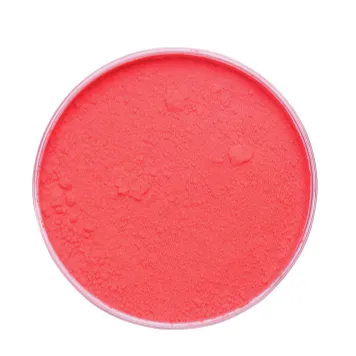
Daylight fluorescent pigments are high-visibility colorants designed to absorb ultraviolet and part of the visible spectrum and re-emit that energy as intense visible light, producing a brightness that exceeds conventional pigments under daylight. In plastics and allied industries, they are valued for their exceptional attention-getting effect in safety products, advertising, packaging, toys, and decorative molded articles, while their relatively limited lightfastness and heat sensitivity define important processing and durability constraints.
Technically, most daylight fluorescent pigments are not classic insoluble mineral pigments but solid solutions of fluorescent dyes dispersed in a polymeric resin matrix, often based on melamine-formaldehyde or related resin systems. This structure gives them their brilliant appearance but also explains why they are more vulnerable to photodegradation, heat, and solvent attack than many conventional colorants.
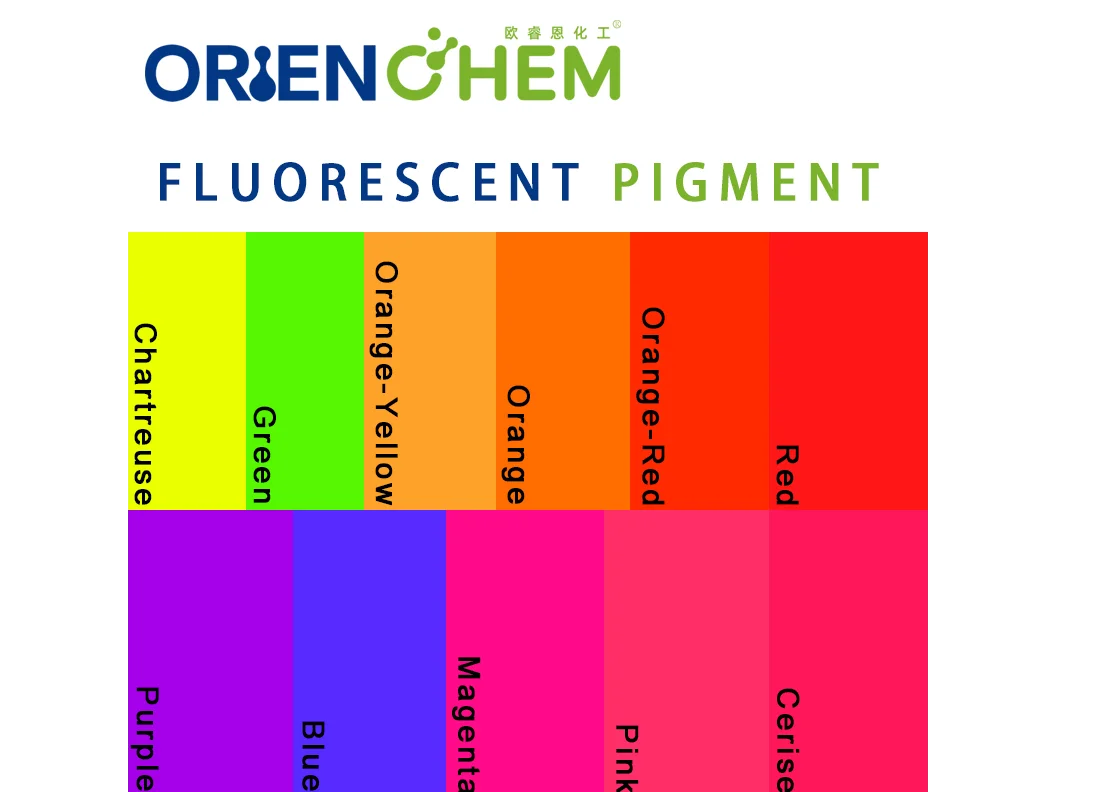
The history of the class is closely tied to the Switzer brothers and the development of Day-Glo pigments in the 1930s and 1940s, when fluorescent dyes were combined with polymeric materials to create a new family of “daylight fluorescents.” Since then, the technology has expanded into inks, coatings, plastics, textiles, and safety products, with ongoing work focused on thermal stability, reduced emissions, and improved compatibility with modern polymer processing.
From a sustainability perspective, daylight fluorescent pigments present a mixed profile: they can enable durable visual communication and safety with very low loading levels, but they are often based on complex resin-dye systems whose light aging, recyclability, and end-of-life separation remain challenging. Future development is likely to center on lower-emission resin chemistries, improved weatherability, and better integration with circular plastics systems.
History and Development
The earliest commercial daylight fluorescent pigments emerged from experiments by Bob and Joe Switzer in the 1930s and 1940s, leading to the Day-Glo family and a new category of bright visual materials. Their innovation was to embed fluorescent dyes in resinous matrices so that the final material remained a solid colorant while still fluorescing under ambient or UV-rich light.
By the mid-20th century, these pigments were adopted first in advertising and display applications, then in printing inks, molded plastics, and safety products. Patent literature from the period already describes their use in fluorescent plastics and printing inks, including vinyl polymers such as PVC and related thermoplastics.
Modern commercial systems have evolved toward more specialized grades for low-temperature plastics, solvent-resistant inks, and safer or lower-emission formulations. Scientific studies continue to document their aging behavior and spectral properties, reflecting ongoing interest in both artistic and industrial performance.
Chemical Structure and Key Properties
Daylight fluorescent pigments are typically transparent polymer particles containing dissolved fluorescent dyes, rather than opaque particulate pigments in the conventional sense. The dye molecules absorb shorter-wavelength light and rapidly emit longer-wavelength visible light, while the surrounding resin acts as a carrier that locks the dye in place and gives the material a powder-form or masterbatch-compatible handling profile.
Common dye families reported in the literature include xanthene, aminonaphthalimide, and benzazolylcoumarin types, with the resin matrix often based on toluenesulfonamide–melamine–formaldehyde or related thermoset systems. The exact composition varies by manufacturer and end use.
Key properties
- Very high visual brightness: the emitted fluorescence adds to reflected light, giving a “super-brilliant” appearance under daylight.
- Low loading effectiveness: small additions can create strong visual impact, which is useful in plastics and coatings.
- Limited lightfastness: the fluorescent dyes are sensitive to UV and visible radiation, so color and intensity can fade faster than conventional pigments.
- Thermal sensitivity: heat exposure during processing can reduce fluorescence, so polymer processing temperature is a major design constraint.
- Solvent and migration resistance depend on resin system: the carrier resin controls resistance to bleed, extraction, and compatibility with the formulation.
Important limits, causes, and workarounds
| Limit | Cause | Workaround |
|---|---|---|
| Low lightfastness | Fluorescent dyes are susceptible to visible and UV radiation, which degrades emission intensity over time. | Use protected indoor applications, UV absorbers, HALS packages, overcoats, or select more weatherable grades. |
| Heat sensitivity | The dye-resin system can lose fluorescence or discolor at elevated processing temperatures. | Use low-temperature processing, shorter residence times, and grades specifically formulated for plastics with improved heat stability. |
| Solvent sensitivity in some systems | The dye is dissolved in a resin matrix that may swell or dissolve in aggressive media. | Choose a more resistant resin matrix, use compatible binder systems, or limit exposure to harsh solvents. |
Real-world property implication
A daylight fluorescent pigment may look brighter than a conventional organic pigment, but that brightness is partly purchased at the expense of outdoor durability. In practice, formulators often trade maximum fluorescence for acceptable service life in the target environment.
Production Processes and Raw Feedstocks
Production generally involves three linked steps: synthesis or selection of fluorescent dye, dissolution or incorporation into a resin matrix, and formation of a solid pigment powder or dispersion. The product is then milled, classified, and packaged for plastics, coatings, or inks.
Typical feedstocks and process elements
- Fluorescent dyes: the chromophoric component responsible for absorption and emission.
- Resin matrix: often melamine-formaldehyde or related organic resin systems that immobilize the dye.
- Auxiliaries: stabilizers, dispersants, and sometimes optical brighteners for performance tuning.
- Processing aids: used to improve grinding, filtration, or incorporation into polymers and inks.
Manufacturing considerations for plastics
For plastics, pigments are often supplied as powders or concentrates so they can be let down into the final polymer system. Because the colorant is usually heat-sensitive, manufacturers often recommend lower-temperature polymers or low-residence-time processing routes such as injection molding or extrusion with tightly controlled thermal profiles.
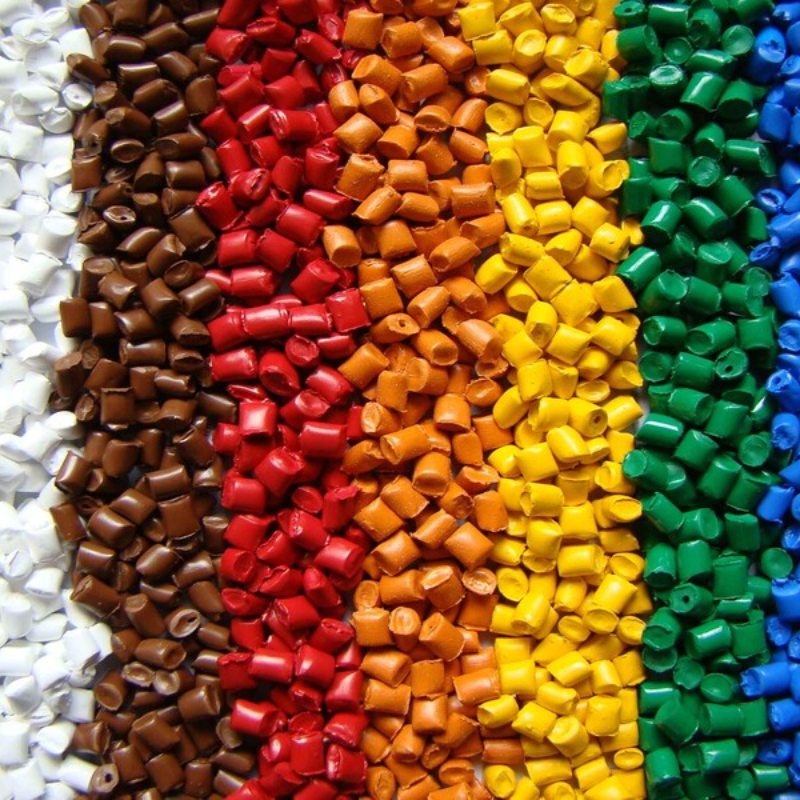
A practical formulation example is a fluorescent masterbatch used at low addition levels in polyolefin or PVC systems; the exact dosage depends on the target brightness and the base polymer opacity, but the general mechanism is the same: the dye-in-resin particles disperse through the matrix and convert part of the incident light into visible emission.
Applications and End-Use Markets
Daylight fluorescent pigments are used wherever visibility matters more than color realism. Their principal value is not subtlety but signal intensity.
Major application sectors
- Safety products: traffic cones, barriers, warning signs, helmets, high-visibility garments, and marine or construction markers.
- Printing and graphics: posters, labels, advertising displays, packaging, and promotional items.
- Plastics: molded consumer goods, toys, bottles, closures, film, and colored polymer articles.
- Textiles and apparel: sportswear, hi-vis garments, novelty fabrics, and printed textile effects.
- Specialty and technical uses: tracing, coding, anti-counterfeiting, and some biomedical or diagnostic applications in broader fluorescent colorant systems.

Usual grade and process by sector
| Sector | Typical grade | Usual process |
|---|---|---|
| Packaging and advertising | High-brightness fluorescent pigment or dispersion | Offset, screen, flexographic, or gravure printing |
| Safety goods | Weather-resistant fluorescent pigment | Coating, printing, film casting, or molding |
| Plastics | Heat-stabilized pigment or masterbatch | Injection molding, extrusion, blow molding |
| Textiles | Fluorescent dye or specialized print pigment | Printing or fiber-related coloration |
| Consumer novelties | Standard fluorescent pigment | Injection molding, extrusion, or paint-like coating |
One poor-fit use
A poor-fit application is long-term outdoor architectural plastics without protective measures, because the pigments can fade and lose brilliance under sustained UV exposure. In such cases, conventional weatherfast colorants are usually more appropriate.
Environmental and Sustainability Aspects
The sustainability profile of daylight fluorescent pigments is complex. On one hand, they can improve safety and communication efficiency at relatively low dosage, which may reduce the need for larger printed areas or additional signage layers. On the other hand, many systems rely on specialty resin-dye structures that are not designed for easy recycling or simple reprocessing.
Recyclability
- Mechanical recycling: fluorescent pigments can complicate color sorting and may suffer performance loss after reprocessing, especially if the polymer matrix or dye degrades.
- Compatibility: their resin carrier may not be fully compatible with all polymer recycling streams, particularly mixed or contaminated plastics.
- Design for circularity: lower-dose masterbatches, mono-material packaging, and removable labels can reduce recycling burden.
Bio-based alternatives
Bio-based or partially bio-based resin systems are conceptually attractive, but the main technical barrier is preserving fluorescence, thermal stability, and optical intensity while replacing petroleum-derived resin components. At present, the field is more mature in specialty coatings and inks than in high-volume commodity plastics.
Carbon footprint
The carbon footprint depends strongly on formulation complexity, synthesis route, and service life. A pigment that extends product visibility or reduces the amount of printed signage needed may offer functional efficiency, but specialty resin-dye systems can be more resource-intensive to produce than conventional inorganic colorants.
Economic and Global Market Impact
The market for daylight fluorescent pigments is niche compared with major commodity colorants, but it has outsized influence in branding, safety, and visual communication. Demand is concentrated in packaging, promotional graphics, safety products, and specialty plastics.
Market characteristics
- High value per kilogram: specialty performance and low usage rates support premium pricing.
- Fragmented supply base: the sector includes global specialty colorant producers and regional formulators.
- Application-driven demand: end-user requirements for visibility, novelty, and safety drive purchasing more than bulk polymer consumption.
Known leading brands and producers include Day-Glo Color Corp, which remains strongly associated with daylight fluorescent color technology. Other suppliers offer application-specific grades for inks, plastics, and coatings.
Current Challenges and Innovations
The main technical challenge is balancing optical brilliance with durability. Additional challenges include processing heat, solvent resistance, and regulatory pressure on certain resin chemistries.
Current innovation directions
- Improved thermal stability: grades formulated for plastics processing with better heat resistance.
- Enhanced lightfastness: pigment systems that retain emission longer under UV exposure.
- Cleaner resin chemistries: efforts to reduce formaldehyde-related concerns and improve handling properties.
- Better dispersion systems: masterbatches and concentrates that improve uniformity in polyolefins, PVC, and engineering polymers.
- Functional integration: combining fluorescent effects with anti-counterfeiting, traceability, or safety signaling.
A useful formulation example is a fluorescent plastic masterbatch designed for injection molding: the pigment is pre-dispersed in a carrier resin to improve distribution and reduce dusting, while the fluorescence mechanism remains unchanged at the particle level.
Future Outlook
Future development is likely to emphasize three priorities: longer service life, lower environmental burden, and better compatibility with polymer processing. Demand should remain steady in safety and branding applications, where visual impact has immediate commercial value.
In plastics, the most promising opportunities are likely to be:
- lower-temperature, more recyclable carrier systems,
- improved UV-stabilized grades for semi-outdoor use,
- and masterbatch technologies that simplify processing in films, molded parts, and coated articles.
The class is unlikely to replace conventional pigments in general-purpose coloration, but it will remain important wherever conspicuity is a functional requirement rather than an aesthetic preference.
Summary
Daylight fluorescent pigments are specialty colorants built from fluorescent dyes embedded in resin matrices, giving them exceptional brightness under daylight and UV-rich illumination. They are widely used in plastics, inks, coatings, signage, and safety products, but their lower lightfastness, heat sensitivity, and complex resin chemistry limit their use in demanding outdoor or high-temperature applications.
References
- •
荧光颜料. (n.d.). ChemicalBook. https://www.chemicalbook.com/ChemicalProductProperty_CN_CB01122998.htmLink
- •
DayGlo fluorescent pigments. (n.d.). American Chemical Society. https://www.acs.org/education/whatischemistry/landmarks/dayglo.htmlLink
- •
荧光颜料Fluorescent Pigments. (n.d.). Sanerchem. http://www.sanerchem.com/data/attachment/file/20211103/dd0cf8718631aa6a52dbd2289a65c64b.pdfLink
- •
Most fluorescent pigments are of the toluenesulfonamide–melamine–formaldehyde resin matrix. (n.d.). University of Turin. https://iris.unito.it/bitstream/2318/1763890/1/2020%20Microchem%20OpenAccess.pdfLink
- •
螢光顏料:分類,成分結構,套用領域,主要性能指標,遮蓋力,耐熱性,耐光性.... (n.d.). Newton. https://www.newton.com.tw/wiki/%E8%9E%A2%E5%85%89%E9%A1%8F%E6%96%99/1791784Link
- •
Daylight fluorescent pigments. (2023, October 9). PCI Magazine. https://www.pcimag.com/articles/111825-daylight-fluorescent-pigmentsLink
- •
Category: 顏料與色彩. (n.d.). Kaiyuh. https://kaiyuh.com.tw/category/%E9%A1%8F%E6%96%99%E8%88%87%E8%89%B2%E5%BD%A9/Link
- •
国际材料科学通报 2022 年第3 卷第1 期. (n.d.). Oajrc. https://www.oajrc.org/FileUpload/PdfFile/475a67ac1b6e4467931a41b1f842bad4.pdfLink
- •
荧光染料应用和特性概述| 学习与分享. (2023, October 9). Leica Microsystems. https://www.leica-microsystems.com.cn/cn/science-lab/fluorescent-dyes/Link
- •
Most fluorescent pigments are of the toluenesulfonamide–melamine–formaldehyde resin matrix. (n.d.). University of Turin. https://iris.unito.it/retrieve/handle/2318/1763890/684357/2020%20Microchem%20OpenAccess.pdfLink
- •
Fluorescent pigments (daylight). (n.d.). Wiley. https://onlinelibrary.wiley.com/doi/abs/10.1002/0471238961.0612211519201805.a01.pub2Link
- •
DayGlo color corp | Daylight fluorescent pigment leader. (n.d.). DayGlo. https://www.dayglo.com/Link
- •
Shedding light on daylight fluorescent artists’ pigments, Part 2: Spectral properties and light stability. (2023, July 3). Taylor & Francis. https://www.tandfonline.com/doi/full/10.1080/01971360.2022.2031460Link
- •
Fluo pigment explained: Key specifications, features, and common .... (n.d.). Alibaba. https://www.alibaba.com/product-insights/fluo-pigment.htmlLink
- •
荧光颜料_上海秀乐化工科技有限公司. (n.d.). Supercolor. https://www.supercolor.cn/index.php?m=home&c=Lists&a=index&tid=28Link
- •
Products - Swada. (2025, June 30). Knowde. https://www.knowde.com/stores/swada/productsLink
- •
蛍光染料・蛍光顔料とは?違いと選び方を専門メーカーが徹底解説. (2025, November 3). Nihon Lumicolor. https://nihon-lumicolor.jp/column/column-287Link
- •
荧光涂料色浆 - 爱采购寻源宝典. (2025, June 30). Baidu. https://b2bwiki.baidu.com/encyclopedic/fluorescent-paint-pigmentLink
- •
The light aging behavior of daylight fluorescent paints. (2022, October 27). PMC. https://pmc.ncbi.nlm.nih.gov/articles/PMC9610339/Link
- •
Most fluorescent pigments are of the toluenesulfonamide–melamine–formaldehyde resin matrix. (n.d.). University of Turin. https://iris.unito.it/retrieve/e27ce430-d5dd-2581-e053-d805fe0acbaa/2020%20Microchem%20OpenAccess.pdfLink
- •
蛍光技術: 蛍光顔料を使用してプロジェクトを改善する - KingChroma. (2025, January 24). KingChroma. https://www.kingchroma.com/ja/fluorescent-pigment-technologyLink
- •
What are fluorescent pigments and how do they work?. (2021, June 24). L-I. https://www.l-i.co.uk/knowledge-centre/what-are-fluorescent-pigments-and-how-do-they-work/Link
- •
Day-Glo color corp. (n.d.). Askjan. https://askjan.org/vendors/Day-Glo-Color-Corp.cfmLink
- •
蛍光染料・蛍光顔料とは? ※違いと選び方を専門メーカーが徹底解説. (2025, November 27). Ipros. https://mono.ipros.com/product/detail/2001558167/Link
- •
Daylight fluorescent pigments and process for their preparation. (1995, May 2). Google Patents. https://patents.google.com/patent/US3812051A/enLink
- •
Evaluation of appearance and fading of daylight fluorescent watercolors. (n.d.). JAIC. https://cool.culturalheritage.org/jaic/articles/jaic44-02-002.htmlLink
- •
Daylight fluorescent pigments and colours. (2004). Emerald. https://www.emerald.com/insight/content/doi/10.1108/eb040844/full/htmlLink
- •
Fluorescent colour. (2023, July 3). London Graphics. https://www.londongraphics.co.uk/blog/a-guide-to-fluorescent-colourLink
- •
Daylight fluorescent pigment compositions. (1995, November 28). Google Patents. https://patents.google.com/patent/US2498592A/enLink
- •
The light aging behavior of daylight fluorescent paints: A colorimetric, photographic, Raman spectroscopic and fluorescence spectroscopic study. (2022, October 27). Nature. https://www.nature.com/articles/s40494-022-00812-4Link
- •
The chemistry and physics of special-effect pigments .... (2003, June 15). PCI Magazine. https://www.pcimag.com/articles/85016-the-chemistry-and-physics-of-special-effect-pigments-and-colorants-for-inks-and-coatingsLink
- •
Fluorescent pigments. (2024, April 10). Chembk. https://www.chembk.com/en/chem/Fluorescent%20pigmentsLink
- •
The shining brightness of daylight fluorescent pigments: Raman and SERS study of a modern class of painting materials. (2020, January 10). ScienceDirect. https://www.sciencedirect.com/science/article/abs/pii/S0026265X19320508Link
- •
荧光色效应及应用. (n.d.). Qtccolor. https://m.qtccolor.com/Article/341.aspxLink
- •
Strange brew: Creating fluorescent pigments. (2020, August 19). Smithsonian. https://library.si.edu/finding-aid/strange-brew-creating-fluorescent-pigmentsLink
- •
Daylight fluorescent pigments. (n.d.). Collectionscanada. https://www.collectionscanada.gc.ca/obj/s4/f2/dsk1/tape4/PQDD_0017/MQ54043.pdfLink
- •
荧光激发和发射的基本原理 - Evident Scientific. (n.d.). Evident Scientific. https://evidentscientific.com/zh/microscope-resource/knowledge-hub/lightandcolor/fluoroexcitationLink