

Introduction
Nano-coatings are ultra-thin functional surface layers engineered at the nanometer scale to change how a substrate behaves rather than to add bulk thickness. They are used to improve protection, cleanliness, adhesion, optics, conductivity, corrosion resistance, and other surface functions across glass, metals, polymers, textiles, electronics, medical devices, and construction materials.
In plastics and allied materials engineering, nano-coatings are significant because they can upgrade the surface performance of otherwise ordinary substrates, including polymer films, molded parts, cables, and packaging components, without changing the base material. Their industrial relevance has expanded with demand for self-cleaning, antimicrobial, anti-fingerprint, anti-corrosion, and low-maintenance surfaces, while sustainability pressures are pushing formulators toward lower-VOC, longer-life, and more resource-efficient systems.
The term covers a broad family of technologies, from true nanoscale coating layers and nanocomposite films to coatings that incorporate nanoscale additives such as silica, titania, alumina, or other engineered particles. Recent market studies describe the segment as one of the faster-growing areas in advanced coatings, although estimates vary widely by methodology and scope.
Historical Development
The commercial rise of nano-coatings followed advances in colloid science, thin-film deposition, sol-gel chemistry, plasma processing, and surface functionalization. Early applications were concentrated in optics, electronics, and corrosion control, where very thin films could provide high performance with minimal material use.
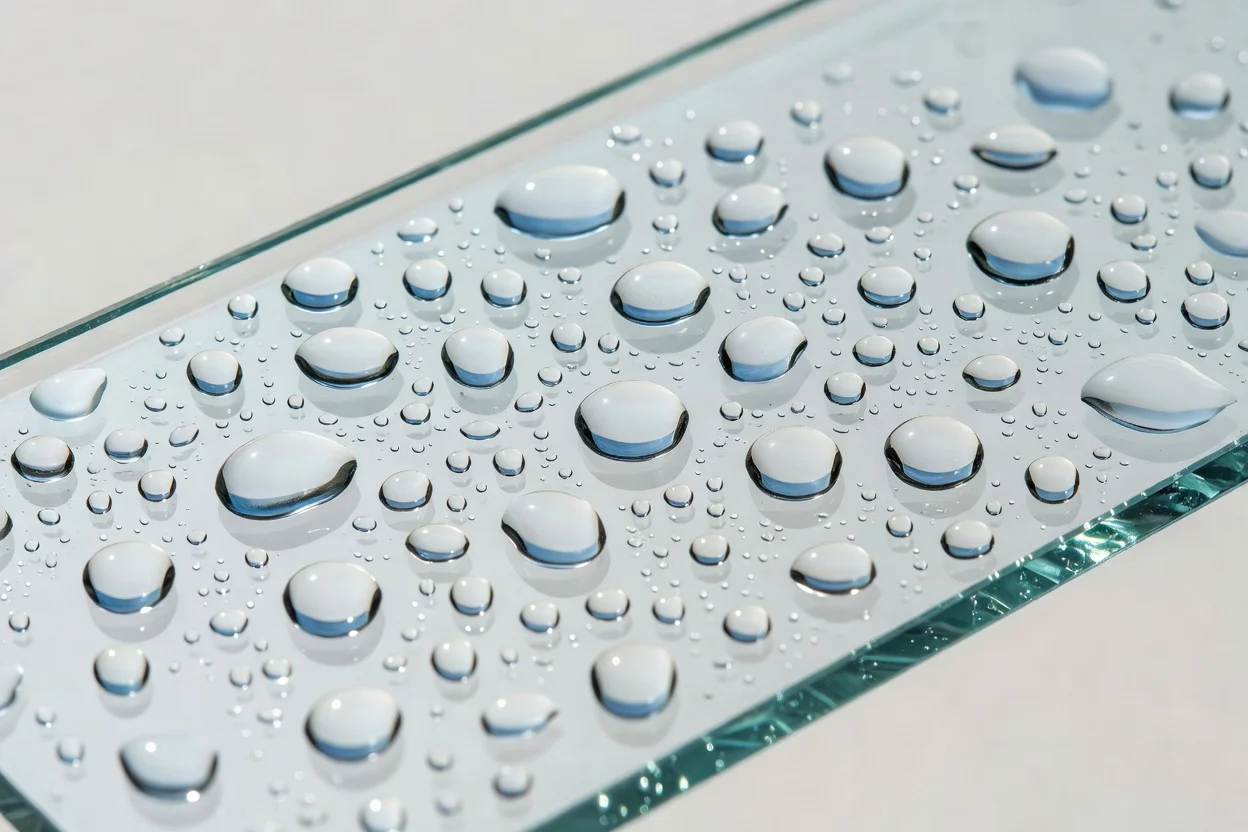
The technology broadened as manufacturers learned to tailor surface energy, roughness, and chemistry at very small scales. This enabled water repellency, oil repellency, anti-fogging, and easier cleaning on transparent and high-value surfaces such as windows, displays, medical instruments, and automotive trim.
More recent development has focused on multifunctional coatings and “smart” behavior, including surfaces that respond to light, heat, moisture, contamination, or electrical stimuli. Sustainability has become a central theme, with R&D aimed at reducing solvent content, extending service life, and improving functional durability so that recoating frequency can be lowered.
Chemical Structure and Key Properties
Nano-coatings are defined less by one chemical composition than by their scale, morphology, and function. They may be inorganic, organic, hybrid, or nanocomposite systems, and their performance often depends on particle size distribution, surface functional groups, bonding density, and film continuity.
Common design families include:
- Silica-based and titania-based coatings for hardness, UV interaction, self-cleaning, and transparency.
- Sol-gel hybrid coatings that combine organic flexibility with inorganic durability.
- Nanocomposite coatings that disperse nanoparticles throughout a binder matrix to enhance barrier, wear, or corrosion resistance.
- Plasma-deposited or vapor-phase thin films for electronics and precision surfaces.
Key properties include:
- Very high surface-area-to-volume effects, which allow small amounts of material to produce outsized changes in performance.
- Tunable wettability, including hydrophobic and oleophobic behavior.
- Improved scratch and abrasion resistance.
- Corrosion and chemical resistance on metals and metalized plastics.
- Optical clarity in transparent applications such as glass, lenses, and displays.
- Functional activity such as antimicrobial or anti-fog performance.

Real limits remain important:
- Poor coating durability on flexible or highly abraded substrates → very thin films can crack, delaminate, or wear away under bending or repeated contact → use elastic binders, primer layers, plasma pretreatment, or multilayer architectures.
- Weak adhesion to low-surface-energy plastics → substrates such as untreated polypropylene or polyethylene present poor wetting and bonding → use corona, flame, plasma, or chemical surface activation before coating.
- Barrier performance can be insufficient if the film is defect-rich → nanoscale films are sensitive to pinholes and process contamination → use multilayer deposition, crosslinking, or nanofiller reinforcement.
- Cost and process complexity → advanced deposition and nanoparticle synthesis can raise production cost → use roll-to-roll coating, spray systems, or lower-loading hybrid formulations where feasible.
Production Processes and Raw Feedstocks
Nano-coatings are manufactured through several process routes, chosen according to substrate, required thickness, and end-use performance.
- Spray coating is common for large-area and irregular parts; low-viscosity formulations are often atomized for even coverage.
- Dip coating is used for simple geometries and laboratory-to-industrial scale transition.
- Spin coating is common for precision electronics and optical samples.
- Sol-gel processing creates thin inorganic or hybrid films through hydrolysis and condensation chemistry.
- Chemical vapor deposition and physical vapor deposition are used for high-performance, highly controlled thin films.
- Plasma-assisted processes improve adhesion, crosslinking, and surface activation.
Typical raw feedstocks include:
- Silica, titania, alumina, zirconia, and other nanoceramic materials.
- Silane coupling agents and functional organosilanes for bonding and surface tailoring.
- Polymer binders such as acrylics, polyurethanes, epoxies, or fluorinated systems.
- Solvents or waterborne carriers, depending on regulatory and formulation constraints.
- Additives for leveling, dispersing, UV stability, and curing.
A practical formulation example is a silica- or titania-containing hybrid coating at low solids loading, where nanoparticles increase hardness and scratch resistance while the matrix provides film formation and adhesion. Another example is an antimicrobial coating that incorporates a low concentration of nanoscale silver or metal-oxide active phase, where the surface effect rather than bulk loading delivers the performance benefit. The exact dosage depends strongly on particle size, dispersion quality, and regulatory limits.
Applications and End-Use Markets
Nano-coatings are used wherever a surface needs a function that is difficult to obtain from the bulk material alone.
| End use | Typical substrate or product | Usual nano-coating function | Common process fit |
|---|---|---|---|
| Building glass and architectural surfaces | Glass, ceramics, stone | Self-cleaning, anti-fog, UV, water repellency | Spray, sol-gel, dip |
| Electronics and displays | Glass, metal, polymer housings | Anti-fingerprint, moisture protection, dielectric or conductive function | Spray, CVD, PVD |
| Automotive | Painted parts, trim, lenses, interiors | Scratch resistance, hydrophobicity, corrosion protection | Spray, plasma, thin film |
| Medical and healthcare | Instruments, device housings, textiles | Antimicrobial, anti-soiling, biocompatibility support | Spray, dip, plasma |
| Construction and infrastructure | Masonry, concrete, steel, façades | Water repellency, anti-corrosion, stain resistance | Spray, brush, sol-gel |
| Textiles and technical fabrics | Fibers and coated fabrics | Stain resistance, moisture management, antimicrobial behavior | Pad-dry-cure, spray |
| Industrial equipment | Machinery, molds, components | Wear reduction, release properties, corrosion control | Plasma, spray, PVD |
| Packaging and consumer goods | Plastic films, closures, rigid parts | Barrier enhancement, appearance, anti-fingerprint | Roll-to-roll, spray |
In plastics specifically, nano-coatings are valuable for polymer films and molded parts where a conventional bulk resin cannot easily provide surface hardness, barrier, or optical performance. They are increasingly relevant in packaging, medical disposables, consumer electronics housings, and transportation interiors.

A poor-fit use is deep-structure mechanical protection: nano-coatings are not a substitute for thick structural coatings or load-bearing layers when impact, gouging, or long-term abrasion is severe. In such cases, they may improve the top surface but cannot replace substrate design.
Environmental and Sustainability Aspects
Nano-coatings are often promoted as sustainability tools because very thin films can provide high performance with low material consumption and long service life. In building and consumer applications, this can reduce cleaning frequency, repainting, replacement, and associated energy and labor use.
Their sustainability profile, however, is not universally positive.
- Benefits
- Reduced coating mass per unit area compared with conventional coatings.
- Potentially longer service life and lower maintenance demand.
- Opportunities for waterborne, low-VOC, and solvent-free formulations.
- Energy-saving uses in buildings through reflective, insulating, or self-cleaning surfaces.
- Concerns
- Nanoparticle release during manufacturing, use, wear, or end-of-life can raise occupational and environmental questions.
- Some high-performance systems rely on fluorinated or otherwise persistent chemistries.
- End-of-life recycling can be complicated when coatings alter surface chemistry or contaminate plastic reprocessing streams.
Bio-based and lower-impact directions include waterborne binders, sol-gel hybrids with reduced solvent content, and formulations designed for easier reclamation or remanufacture. The most credible sustainability case is usually not that nano-coatings are inherently “green,” but that they can lower lifecycle impacts when they replace thicker, shorter-lived, or more toxic alternatives.
Economic and Global Market Impact
Recent industry reports consistently describe strong growth for the nanocoatings market, but the reported market sizes vary substantially by definition and coverage. Estimates in the provided results range from about USD 12.9 billion to more than USD 21.5 billion in the mid-2020s, with forecast CAGRs commonly between roughly 6% and 22% depending on the study.
The main demand centers are construction, automotive, electronics, healthcare, and industrial protection. North America is repeatedly identified as a leading market in the available reports, while Europe and Asia-Pacific are often highlighted as important growth regions.
Key economic drivers include:
- Demand for self-cleaning and anti-fingerprint finishes.
- Rising use in electronics and mobile devices.
- Corrosion protection in infrastructure, transportation, and industrial assets.
- Sustainability-driven replacement of heavier or higher-VOC coating systems.
Current Challenges and Innovations
Current technical challenges center on adhesion, long-term durability, scale-up cost, and regulatory scrutiny of nanoparticle safety. For plastics applications, additional challenges include compatibility with low-surface-energy polymers, maintaining transparency, and preserving flexibility after coating.
Active innovation areas include:
- Multifunctional coatings that combine hydrophobic, antimicrobial, and scratch-resistant performance in one system.
- Smart coatings that respond to environmental triggers rather than remaining permanently active.
- Low-temperature and rapid-curing systems for heat-sensitive plastics and electronics.
- Roll-to-roll processing for film and packaging applications.
- Hybrid nanocomposites that improve barrier and wear resistance without excessive coating thickness.
- Eco-friendlier chemistries with reduced solvent use and improved recyclability.
Future Outlook
The most probable development path for nano-coatings is continued migration from niche, high-value uses into larger-volume industrial and consumer applications. Growth is likely to be strongest where the coating delivers a clear lifecycle benefit, such as reduced maintenance, improved hygiene, or extended component life.
For plastics and auxiliaries markets, the main opportunity lies in functionalizing polymer surfaces without changing the polymer grade itself. That makes nano-coatings a strategic complement to base resins, additives, and compounding: they can extend the performance envelope of commodity plastics, specialty films, and molded parts while supporting lighter-weight design and more efficient use of materials.
Longer term, the field is likely to be shaped by four priorities:
- safer nanoparticle handling and release control,
- broader use of waterborne and low-solvent formulations,
- better adhesion on recycled and bio-based plastics,
- and coating architectures designed for circularity rather than single-use performance alone.
Summary
Nano-coatings are nanoscale surface layers that deliver high-value functionality with minimal thickness. Their main industrial role is to enhance durability, cleanliness, corrosion resistance, optics, and special surface effects across metals, glass, textiles, and plastics, while their main strategic challenge is balancing performance gains with cost, safety, and end-of-life sustainability.
References
- •
Nanotechnology coating. (2024, November 19). https://www.gruppogaser.com/en/news/nanotechnology-coating-34Link
- •
Nano-coating - An overview. (n.d.). https://www.sciencedirect.com/topics/materials-science/nano-coatingLink
- •
The Nano Coatings Market insights provide historical trends and future prospect, projecting a growth rate of 11.9% from 2026 to 2033. (2026, July 13). https://www.linkedin.com/pulse/nano-coatings-market-insights-provide-historical-trends-3cgueLink
- •
What are nanocoatings? (2018, May 7). https://nanoslic.com/about-nanocoatings/Link
- •
Nanotechnology in the world of paints and coatings. (2022, January 12). https://www.paint.org/coatingstech-magazine/articles/nanotechnology-in-the-world-of-paints-and-coatings/Link
- •
Nanocoatings market size to surge USD 106.64 billion by 2035. (2026, August 5). https://www.precedenceresearch.com/nanocoatings-marketLink
- •
Nano-coating - An emerging application for protecting circuitry. (2023, December 12). https://www.nordson.com/en/about-us/nordson-blog/electronics-solutions-blogs/nano-coating---an-emerging-application-for-protecting-circuitryLink
- •
Nanotechnology in coatings: Transforming surface protection. (2024, December 30). https://kovalentcoatings.com/how-nanotechnology-in-coatings-is-revolutionising-surface-protection/Link
- •
Nanocoatings market - A global and regional analysis. (2025, November 14). https://bisresearch.com/industry-report/nanocoatings-market.htmlLink
- •
The advancing role of nano-coatings in corrosion protection. (2024, August 29). https://www.icorr.org/the-advancing-role-of-nano-coatings-in-corrosion-protection/Link
- •
Science behind nanocoatings: Functions, benefits & uses. (2025, October 16). https://jesons.net/blogs/nanocoatings-functions-benefits/Link
- •
From nano to eco: The buzz in protective coatings. (2024, August 26). https://www.pcimag.com/blogs/14-pci-blog/post/112693-from-nano-to-eco-the-buzz-in-protective-coatingsLink
- •
Advantages of surface nano coatings & their ecological benefits. (2024, August 16). https://www.nasiol.com/nanoblog/advantages-of-surface-nano-coatings-and-how-they-reduce-the-ecological-footprint/Link
- •
Nanocoatings market size, share, growth, industry report. (n.d.). https://www.fortunebusinessinsights.com/nanocoatings-market-105023Link
- •
Nanocoatings - Innovative premium coatings. (2024, December 17). https://www.aalberts-st.com/processes/nanocoatings/Link
- •
Nanocoatings market size and share report, 2024-2030. (n.d.). https://www.grandviewresearch.com/industry-analysis/nanocoatings-marketLink
- •
Application of different types of nanocoatings in lithium-ion batteries. (2024, December 24). https://drpress.org/ojs/index.php/HSET/article/view/27790Link
- •
Nanocoatings market size, share & growth report 2035. (2026, May 15). https://www.marketresearchfuture.com/reports/nanocoatings-market-5992Link
- •
Applications of nanotechnology. (2026, April 20). https://www.nano.gov/about-nanotechnology/applications-nanotechnology/Link
- •
Nanomaterial advanced smart coatings: Emerging trends. (2025). https://www.sciencedirect.com/science/article/pii/S2352940724005195Link
- •
Nanocoating - An overview. (2021, October 14). https://www.sciencedirect.com/topics/chemistry/nanocoatingLink