
Introduction
Polyhydroxybutyrate (PHB) is a microbial polyester in the polyhydroxyalkanoate (PHA) family and one of the best-known bio-based, biodegradable thermoplastics. It is produced by many microorganisms as an intracellular carbon and energy reserve, and it has attracted sustained industrial interest because it combines renewability, thermoplastic processability, and broad biodegradability with properties that can resemble polypropylene in stiffness and heat resistance.
PHB is important in the plastics value chain because it sits at the intersection of fermentation technology, polymer chemistry, and circular-economy materials design. Its history stretches back to early 20th-century microbiological discovery, but its commercial relevance has expanded more recently as pressure has increased to reduce fossil feedstocks and improve end-of-life outcomes for selected plastic uses. The material is also central to a broader family of PHAs, including copolymers such as PHBV, which are often developed to address PHB’s processing and brittleness limitations.
From a sustainability perspective, PHB is significant because it is derived from renewable or waste carbon and can biodegrade in soil, compost, wastewater, and even marine environments under suitable conditions, although degradation rates depend strongly on geometry, crystallinity, temperature, and microbial activity. Its future is therefore closely tied to advances in low-cost feedstocks, high-yield fermentation, downstream recovery, blending, and property modification, all of which determine whether PHB can move beyond niche applications into larger-volume markets.
History and Development
PHB was first identified in the early development of microbiology and later recognized as a distinct natural polyester stored by bacteria under nutrient-limiting conditions. The polymer became a landmark material because it demonstrated that plastics-like macromolecules could be biosynthesized by living organisms rather than derived from petrochemicals.
Research interest accelerated when PHB was shown to be biodegradable, thermoplastic, and biocompatible, opening pathways into packaging and biomedical use. Over time, the field expanded from basic microbial characterization to industrial biotechnology, with emphasis on strain engineering, alternative substrates, and fermentation optimization to reduce cost and improve productivity.
Commercial development has also shifted from PHB as a standalone homopolymer toward PHB-containing copolymers and blends, because pure PHB is often too brittle and has a narrow processing window for many high-volume applications. This evolution reflects a broader materials strategy: use PHB’s strong sustainability and barrier profile while compensating for its mechanical and thermal processing constraints through formulation and copolymerization.
Chemical Structure and Key Properties
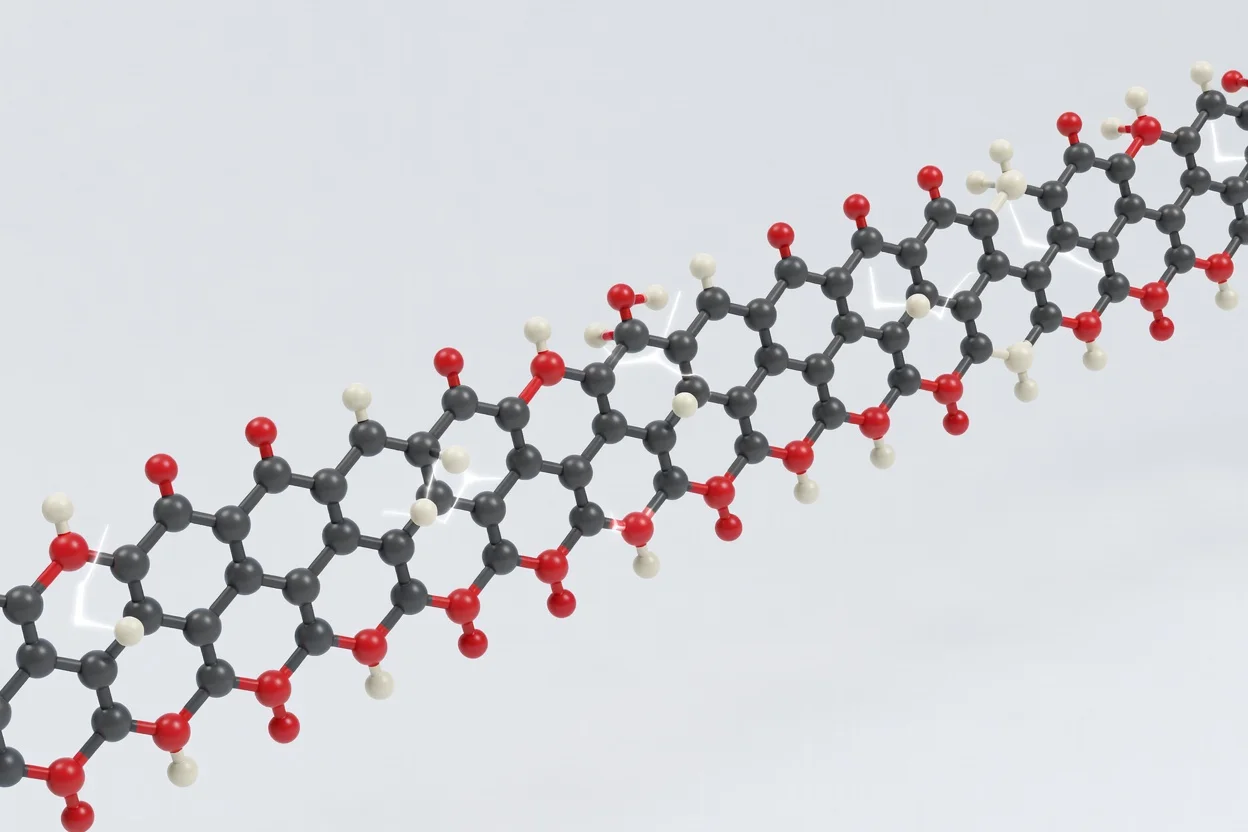
PHB is a linear aliphatic polyester composed of repeating 3-hydroxybutyrate units, commonly written in structural form as a repeating ester backbone with methyl side groups. It is isotactic and highly crystalline, which contributes to its relatively high stiffness and melting point but also to its brittleness.
| Property | Typical significance |
|---|---|
| High crystallinity | Drives stiffness and good barrier performance, but also brittleness. |
| Melting point around 175 to 180 C | Enables use in thermoplastic processing, but thermal degradation can begin close to the melt-processing window. |
| Low elongation at break | Limits use in tough, impact-loaded parts unless modified. |
| Good oxygen and moisture barrier | Useful in packaging where shelf-life extension matters. |
| Biodegradability | Supports soil, compost, wastewater, and marine end-of-life scenarios under suitable conditions. |
A useful way to understand PHB is through its structure-property tradeoff. The regular stereochemistry and high crystallinity produce a material that is strong and relatively rigid, but the same molecular order makes it more brittle than many commodity plastics.
PHB has several practical limitations:
- Brittleness → high crystallinity and limited chain mobility → workaround: copolymerization with hydroxyvalerate units, blending, plasticization, or fiber/nanofiller reinforcement.
- Narrow processing window → thermal degradation occurs near useful melt-processing temperatures → workaround: lower-residence-time processing, stabilizer packages, and careful temperature control.
- Low surface energy before treatment → limited ink, coating, and adhesive wetting → workaround: corona, plasma, or flame surface activation for printing and lamination; this is especially relevant for packaging films.
- Limited heat resistance in thin parts under prolonged high-temperature exposure → molecular relaxation and crystallization effects can distort parts → workaround: annealing, nucleating agents, and formulation adjustments.
In performance terms, PHB is often compared with polypropylene because of its stiffness and heat behavior, but it differs fundamentally in end-of-life profile and barrier performance. It is also hydrophobic and water-repellent, which is useful for packaging, yet it remains biodegradable in appropriate environments.
Production Processes and Raw Feedstocks
PHB is produced biosynthetically by microorganisms, typically when carbon is abundant but another nutrient such as nitrogen or phosphorus is limiting. Under these conditions, cells accumulate PHB granules as storage material, which are then harvested and purified.
The production chain generally includes:
- Feedstock preparation
- Microbial fermentation
- Intracellular accumulation
- Cell disruption and polymer recovery
- Purification and pelletization
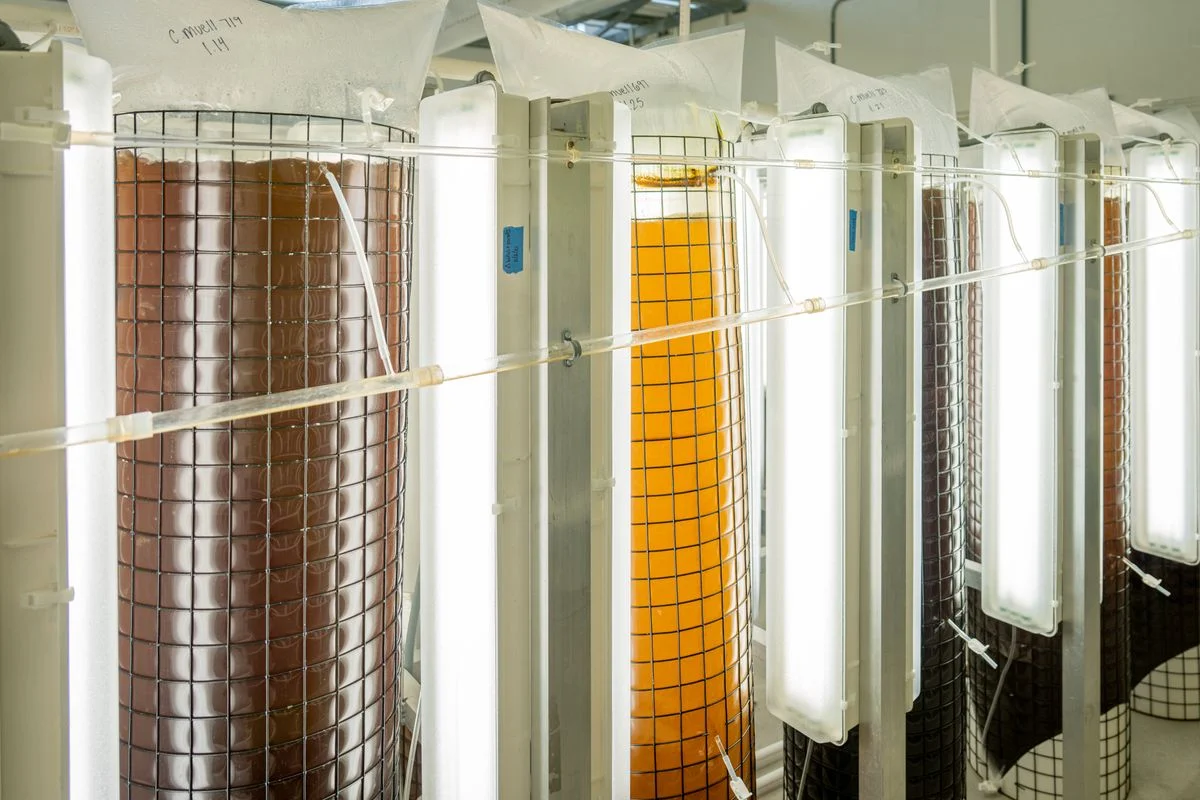
Common feedstocks include sugars, starch hydrolysates, glycerol, and increasingly waste-derived carbon streams such as agro-industrial by-products. The use of low-cost waste substrates is strategically important because feedstock cost is one of the main barriers to broad commercialization.
Microbial strains commonly discussed in PHB literature include Cupriavidus necator and other bacteria capable of high intracellular polymer accumulation. Industrial work focuses on improving yield, reducing oxygen and nutrient costs, and simplifying downstream extraction, which is often energy-intensive and economically burdensome.
A practical technical challenge is that PHB must be recovered from cells without excessive solvent use or polymer damage. This has led to interest in greener recovery approaches, including non-halogenated solvents, enzymatic lysis, and mechanical separation methods. In parallel, metabolic engineering aims to widen substrate tolerance and improve productivity on mixed or low-value feedstocks.
Applications and End-Use Markets
PHB is used where biodegradability, biocompatibility, and barrier performance matter more than ultra-high toughness or very low cost. The main application areas are:
- Food packaging
- Agricultural films
- Biomedical products
- Composites and specialty molded items
- Fibers and nonwovens in niche uses
| End use | Typical PHB fit | Usual processing route | Notes |
|---|---|---|---|
| Food packaging films | Strong fit | Cast film, blown film, coating | Good oxygen and moisture barrier supports shelf life. |
| Bottles and containers | Moderate fit | Injection molding, extrusion blow molding | Better for short-life or specialty packaging than mass beverage bottles. |
| Agricultural mulch films | Strong fit | Film extrusion | Biodegradation after use can reduce collection burdens. |
| Medical sutures, scaffolds, drug carriers | Strong fit | Fiber spinning, molding, porous scaffolds | Biocompatibility is a key advantage. |
| Compostable service ware | Moderate fit | Thermoforming, injection molding | Brittle unless modified. |
| Automative interior or composite parts | Moderate fit | Compounding, injection molding | Often needs blending and reinforcement. |
| Cable insulation | Limited fit | Extrusion | Niche use only; thermal and toughness requirements are challenging. |
| Rotomolding parts | Weak fit | Rotational molding | Poor match because of narrow thermal processing window and material cost. |
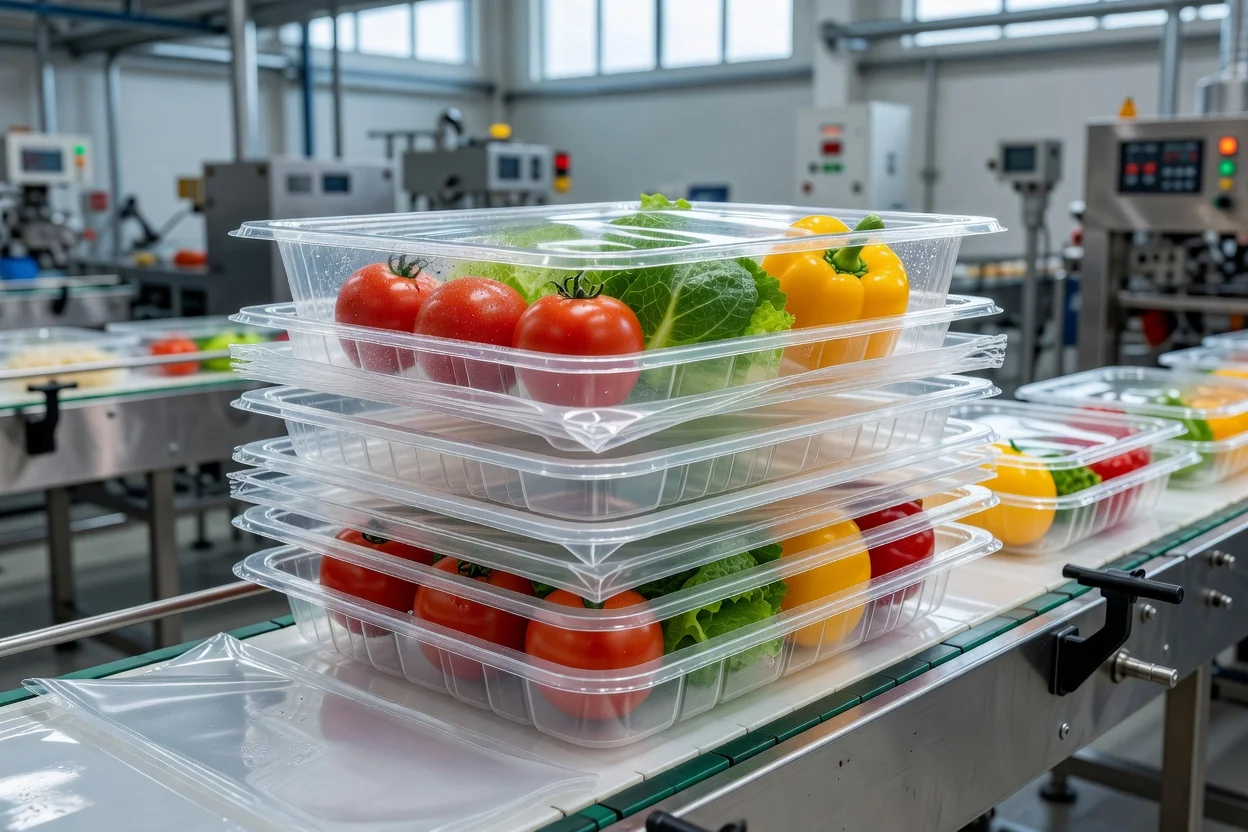
PHB is particularly attractive in food packaging because it combines decent moisture resistance with excellent gas barrier behavior, which can help extend shelf life. In agriculture, it is relevant for mulch films and seed coatings, where biodegradability can reduce retrieval and disposal costs.
In biomedical applications, PHB’s biocompatibility supports sutures, drug-delivery matrices, and tissue-engineering scaffolds. For these uses, its biodegradation can be an advantage if degradation timing matches healing or release requirements.
PHB is a weaker fit for applications requiring extreme toughness, high impact resistance, or long-term heat exposure, unless it is modified or blended. That is why many commercial developments focus on PHB blends, PHBV, or reinforced PHB composites rather than pure homopolymer.
Environmental and Sustainability Aspects
PHB is widely viewed as one of the most environmentally promising plastics because it is bio-based and biodegradable. It can be produced from renewable or waste-derived feedstocks, and under suitable conditions it can mineralize in natural and managed environments, including composting, soil, wastewater, and marine settings.
However, sustainability claims must be interpreted carefully:
- Biodegradable does not mean instant or universal degradation; rate depends on thickness, crystallinity, temperature, and microbial exposure.
- Bio-based does not automatically mean low-carbon; upstream fermentation energy, substrate sourcing, and recovery chemistry matter materially.
- Compostable performance depends on certification conditions and product design, especially for thick or highly crystalline parts.
PHB’s end-of-life advantage is strongest in applications that are hard to collect or contaminate with food and organic residues, such as certain agricultural films and selected food-contact items. In these cases, biodegradation can offer a functional disposal route that conventional plastics lack.
Recyclability remains more limited than for established commodity polyolefins, largely because PHB volumes are still small and separate collection streams are rare. Mechanical recycling is possible in principle, but repeated heat history and degradation can reduce performance, and contamination with other bioplastics complicates processing. As a result, PHB is usually discussed more as a designed-for-biodegradation material than a circular mechanical-recycling material, although industrial composting and organic-waste integration may be appropriate in some systems.
Economic and Global Market Impact
PHB’s market impact is shaped by the tension between performance and cost. Its functional benefits are well established, but production costs remain higher than those of large-scale fossil plastics because fermentation, recovery, and purification are more complex than petrochemical polymerization.
According to recent industry analyses, commercial progress is being driven by several converging factors:
- tighter restrictions on certain single-use plastics,
- growth in certified compostable packaging,
- rising demand for biobased materials in agriculture and healthcare,
- and increased interest in waste-to-material valorization.
The main economic bottlenecks are:
- feedstock price and variability,
- low volumetric productivity in fermentation,
- downstream extraction cost,
- and the need for property modification to match target applications.
Leading activity in PHB and broader PHA development is distributed across biotech firms, specialty polymer producers, and integrated fermentation developers rather than the traditional large petrochemical majors. Market leadership is often associated less with absolute scale than with strain technology, process integration, and access to low-cost renewable carbon streams. The sector remains fragmented, with capacity expansion depending heavily on policy support and offtake agreements.
Current Challenges and Innovations
The central technical challenges for PHB are well established:
- Brittleness
- Thermal processing sensitivity
- Cost
- Downstream recovery efficiency
- Scale-up consistency
Innovation is concentrated in several areas:
- Blend design with PLA, PBAT, starch, or other PHAs to improve toughness and processability.
- Copolymerization to produce PHBV or related structures with lower crystallinity and better ductility.
- Nanocomposites and fillers to tune barrier, stiffness, and thermal behavior.
- Strain engineering to increase intracellular accumulation and broaden substrate use.
- Waste-based feedstocks such as agro-residues and industrial by-products to lower carbon intensity and cost.
- Greener recovery systems to reduce solvent burden and improve life-cycle performance.
Two concrete formulation examples illustrate the engineering logic:
- Plasticizer addition at low single-digit percentages can increase chain mobility and reduce brittleness, but excessive loading may reduce barrier performance and heat resistance.
- Blending with a small fraction of more ductile polyester or elastomeric phase can improve impact strength, while PHB still provides stiffness and biodegradability.
The most active research direction is not merely making PHB cheaper, but making its property profile more application-specific. That is what could move it from a specialty biopolymer into a platform material for packaging, agriculture, and biomedical devices.
Future Outlook
PHB is likely to remain strategically important because it addresses a real materials gap: a thermoplastic that is bio-based, biodegradable, and capable of useful barrier and stiffness performance. Its commercial future will depend on whether the industry can resolve the cost-performance balance through fermentation efficiency, feedstock diversification, and formulation science.
The most plausible growth areas are:
- high-value packaging where barrier performance matters,
- agricultural films and controlled-release systems,
- medical and tissue-engineering materials,
- and specialty compostable products where disposal infrastructure supports biodegradation.
In the longer term, PHB will probably not replace commodity polyethylene or polypropylene across all uses. Instead, it is more likely to expand in segments where end-of-life value, contamination risk, or regulatory pressure justify a premium material. Its broader significance lies in demonstrating how microbial manufacturing can generate plastics that are compatible with both performance demands and circular-material design.
Summary
PHB is a biodegradable microbial polyester with a rare combination of renewability, thermoplastic behavior, and strong barrier properties. Its main advantages are biodegradability, biocompatibility, and useful stiffness, while its main limitations are brittleness, a narrow processing window, and relatively high cost.
Its strongest near-term roles are in packaging, agriculture, and biomedical products, especially where controlled biodegradation and barrier performance provide clear functional value. The future of PHB will depend on continued progress in low-cost fermentation, waste feedstocks, blends, and recovery technologies that can make it economically competitive without sacrificing its sustainability advantages.
References
- •
Polyhydroxybutyrate. (2004, November 5). Wikipedia. https://en.wikipedia.org/wiki/PolyhydroxybutyrateLink
- •
Polyhydroxybutyrate (PHB): Production, Properties ... - PMC. (2026, July 20). https://pmc.ncbi.nlm.nih.gov/articles/PMC13413960/Link
- •
Polyhydroxybutyrate (PHB): Critical Perspectives on Material Properties, Production Advances, and Challenges Toward Sustainable Commercialisation. (2026, July 13). https://www.mdpi.com/1996-1944/19/14/3013Link
- •
Review of Biopolymer Polyhydroxybutyrate (PHB) and Blends. (2025, November 20). https://pmc.ncbi.nlm.nih.gov/articles/PMC12655965/Link
- •
Polyhydroxybutyrate (PHB): microbial synthesis and waste ... (n.d.). https://link.springer.com/article/10.1007/s42452-026-08715-w?error=cookies_not_supported&code=39dfdd9f-2ddb-48f6-a1d2-d623b6fcdd28Link
- •
Polyhydroxybutyrate (PHB)-Based Biodegradable Polymer from ... - PMC. (2022, September 23). https://pmc.ncbi.nlm.nih.gov/articles/PMC9571180/Link
- •
Synthesis, Structure, and Properties of Polyhydroxybutyrate ... (2025, May 6). https://pmc.ncbi.nlm.nih.gov/articles/PMC12518049/Link
- •
Polyhydroxybutyrates: A Sustainable Alternative for ... (2024, September 30). https://www.biotech-asia.org/vol21no3/polyhydroxybutyrates-a-sustainable-alternative-for-synthetic-polymers/Link
- •
Polyhydroxybutyrate: Comprehensive Analysis Of Biosynthesis ... (n.d.). https://eureka.patsnap.com/materials/polyhydroxybutyrate-analysisLink
- •
Poly Beta Hydroxybutyric Acid (PHB) As A Sustainable Material (n.d.). https://eureka.patsnap.com/materials/phb-sustainable-materialLink
- •
PHB profile – material | technology | sustainability | design (n.d.). https://www.burg-halle.de/gast/process/phb-profile/Link
- •
Production of Polyhydroxybutyrate (PHB) and Factors Impacting Its ... - PMC. (2020, December 4). https://pmc.ncbi.nlm.nih.gov/articles/PMC7761907/Link
- •
Polyhydroxybutyrate. (2014, October 26). ScienceDirect. https://www.sciencedirect.com/topics/agricultural-and-biological-sciences/polyhydroxybutyrateLink
- •
[PDF] Industrial and Biomedical Applications Biobased Polymers of ... (n.d.). https://fjet.fudutsinma.edu.ng/index.php/fjet/article/download/74/65Link
- •
Polyhydroxybutyrate: plastic made and degraded by ... (n.d.). PubMed. https://pubmed.ncbi.nlm.nih.gov/9921137/Link
- •
Mechanical properties and biodegradation characteristics of PHB-based films (n.d.). ScienceDirect. https://www.sciencedirect.com/science/article/pii/S0032959299001077Link
- •
Biodegradable and active materials based on PHBV for sustainable ... (2026, May 28). https://pubs.rsc.org/en/content/articlehtml/2026/fb/d5fb00936gLink
- •
A review on Polyhydroxybutyrate (PHB): Production ... - IJNRD (n.d.). https://www.ijnrd.org/papers/IJNRD2404734.pdfLink
- •
PHB (2022, January 1). https://bioweb.supagro.inrae.fr/ESTHER/substrate/PHBLink
- •
[PDF] A comprehensive review on production of polyhydroxybutyrate (PHB) (n.d.). https://www.microbiojournal.com/article/142/5-1-22-572.pdfLink
- •
Polyhydroxybutyrate - an overview (n.d.). ScienceDirect. https://www.sciencedirect.com/topics/engineering/polyhydroxybutyrateLink
- •
Polyhydroxybuttersäure – Wikipedia. (2007, April 27). https://de.wikipedia.org/wiki/Polyhydroxybutters%C3%A4ureLink
- •
Biodegradable and active materials based on PHBV for sustainable food packaging (n.d.). https://pubs.rsc.org/en/content/articlepdf/2026/fb/d5fb00936gLink
- •
Polyhydroxybutyrate (PHB): microbial synthesis and waste ... (n.d.). https://link.springer.com/article/10.1007/s42452-026-08715-w?error=cookies_not_supported&code=15a5ea87-6025-4bca-9a50-b2bacac098fdLink
- •
Polyhydroxybutyrat – Wikipedia tiếng Việt. (2015, January 10). https://vi.wikipedia.org/wiki/PolyhydroxybutyratLink
- •
Complete Biodegradable Plastics Compared: PHA, PHB, PBAT, PLA ... (2025, July 2). https://specialty-polymer.com/biodegradable-compared-pha-phb-pbat-pla-pbs-pcl-and-tps/Link
- •
Review of recent advances in the biodegradability ... - RSC Publishing. (2020, August 31). https://pubs.rsc.org/en/content/articlehtml/2020/gc/d0gc01647kLink
- •
ポリヒドロキシ酪酸 - Wikipedia. (2009, November 18). https://ja.wikipedia.org/wiki/%E3%83%9D%E3%83%AA%E3%83%92%E3%83%89%E3%83%AD%E3%82%AD%E3%82%B7%E9%85%AA%E9%85%B8Link
- •
Poly-β-Hydroxybutyric Acid: Comprehensive Analysis Of ... (n.d.). https://eureka.patsnap.com/materials/phb-biosynthesis-propertiesLink
- •
Biosynthesis of bioplastic polyhydroxybutyrate (PHB) from ... (n.d.). ScienceDirect. https://www.sciencedirect.com/science/article/abs/pii/S0957582024005317Link
- •
PLA/PHB-Based Materials Fully Biodegradable under Both ... - PMC. (2022, September 30). https://pmc.ncbi.nlm.nih.gov/articles/PMC9572414/Link
- •
Polyhydroxybutyrate (PHB) in the Real World: 5 Uses You'll Actually ... (2025, October 23). https://www.linkedin.com/pulse/polyhydroxybutyrate-phb-real-world-5-uses-youll-actually-nkejfLink
- •
Biodegradable Plastic: Types, Properties & Material Table (2026, June 24). https://www.specialchem.com/plastics/guide/biodegradabilityLink
- •
Novel Production Methods of Polyhydroxyalkanoates and Their ... - PMC. (2022, November 30). https://pmc.ncbi.nlm.nih.gov/articles/PMC9740486/Link
- •
Production of biodegradable plastic by polyhydroxybutyrate (PHB) accumulating bacteria using low cost agricultural waste material - PMC. (2016, December 12). https://pmc.ncbi.nlm.nih.gov/articles/PMC5154074/Link
- •
Poly Beta-Hydroxybutyric Acid Food Packaging (n.d.). https://eureka.patsnap.com/materials/phb-food-packaging-solutionsLink
- •
In search of poly-3-hydroxybutyrate (PHB): A comprehensive review ... (n.d.). ScienceDirect. https://www.sciencedirect.com/science/article/abs/pii/S0960308524001603Link
- •
Recent Updates on the Economic Use of Poly Hydroxy ... (n.d.). https://bbrc.in/recent-updates-on-the-economic-use-of-poly-hydroxy-butyrate-phb-a-green-alternative-to-plastics/Link
- •
Development and Advantages of Biodegradable PHA ... - PMC. (2021, October 15). https://pmc.ncbi.nlm.nih.gov/articles/PMC8672356/Link
- •
Frontiers | In vivo and Post-synthesis Strategies to Enhance the Properties of PHB-Based Materials: A Review (2021, January 14). https://www.frontiersin.org/journals/bioengineering-and-biotechnology/articles/10.3389/fbioe.2020.619266/fullLink
- •
Review Polyhydroxybutyrate blends: A solution for biodegradable packaging? (2022, May 15). ScienceDirect. https://www.sciencedirect.com/science/article/abs/pii/S014181302200441XLink
- •
Polyhydroxybutyrate (PHB) Market Size, Trends & Growth (2025, March 27). https://marksparksolutions.com/reports/polyhydroxybutyrate-phb-marketLink
- •
What are PHB and PHA bioplastics? (2023, March 19). https://goecopure.com/faq-items/what-are-phb-and-pha-bioplastics/Link
- •
PHB production by bacteria and its applications | PPTX (2015, November 20). https://www.slideshare.net/slideshow/phb-production-by-bacteria-and-its-applications/55338260Link
- •
PHB-based biodegradable polymer composite films to replace ... (n.d.). https://acs.digitellinc.com/p/s/phb-based-biodegradable-polymer-composite-films-to-replace-conventional-packaging-materials-533852Link