
Introduction
Polycaprolactone (PCL) is a synthetic, semi-crystalline, biodegradable polyester valued for its low melting point, excellent flexibility, and unusually slow, controllable degradation. It occupies a distinctive niche in the plastics and biomaterials landscape: less common than mass-market polyolefins, but highly important in medical devices, tissue engineering, drug delivery, blends, coatings, and specialty thermoplastics.
PCL was first synthesized in the early 1930s, and its industrial and biomedical relevance expanded significantly from the 1970s onward as researchers recognized its processability, biocompatibility, and resorbable behavior in the body. Today, PCL is best known as a platform polymer for long-term biomedical constructs, yet it is also used in specialty polyurethanes, 3D printing, adhesives, packaging research, and biodegradable blends with other polymers.
Its appeal lies in a combination of properties that is unusual even among biodegradable polyesters: a melting point around 58–64 °C, a glass transition temperature near −60 °C, hydrophobic character, and long in vivo degradation times often measured in years rather than months. Those same features create trade-offs: PCL is easy to process and durable in service, but its slow degradation and relatively low heat resistance limit some applications, while its poor oxygen and grease barrier performance and low surface energy before treatment make it a weak fit for many standalone packaging and adhesion uses.
PCL is therefore best understood as a specialty enabling material rather than a commodity resin. Its future is being shaped by three converging themes: medical innovation, additive manufacturing, and polymer circularity, including blends, copolymers, bio-based routes to its monomer, and strategies to improve degradability and functional performance.
History and Development
PCL was among the early synthetic polyesters explored in polymer chemistry, with initial synthesis dating to the Carothers era in the early 1930s. For many decades it remained a niche material, overshadowed by lower-cost commodity plastics and by other biodegradable polyesters that offered faster hydrolysis or broader commercial positioning.
Its modern resurgence came from biomedical research, where the polymer’s low toxicity, easy melt processing, and slow, predictable resorption proved attractive for long-term scaffolds, sutures, implants, and drug-release systems. As bioprinting, electrospinning, and tissue engineering matured, PCL became one of the most widely used specialty biodegradable thermoplastics in laboratory-to-clinic development.
In parallel, PCL found a role in blend and copolymer systems, especially with polylactide, where its flexibility offsets the brittleness of more rigid biopolymers. This blending function has become one of the polymer’s most commercially relevant “hidden” strengths, because it allows formulators to tune stiffness, toughness, melt behavior, and degradation rates without redesigning the entire material platform.
Chemical Structure and Key Properties (Technical Overview)
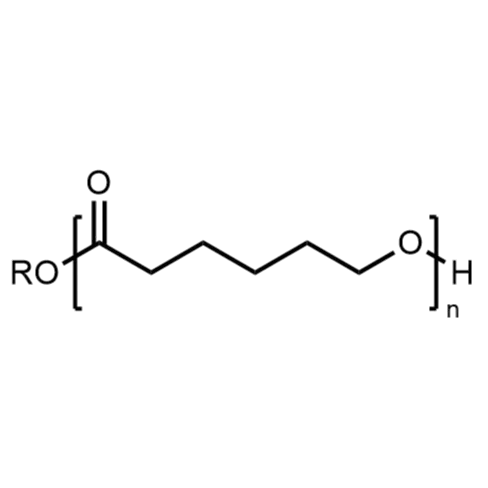
PCL is an aliphatic polyester built from repeating caprolactone-derived ester units. Its chain architecture contains a comparatively long methylene-rich segment between ester groups, which explains its flexibility, hydrophobicity, and slower hydrolytic degradation relative to shorter-chain aliphatic polyesters.
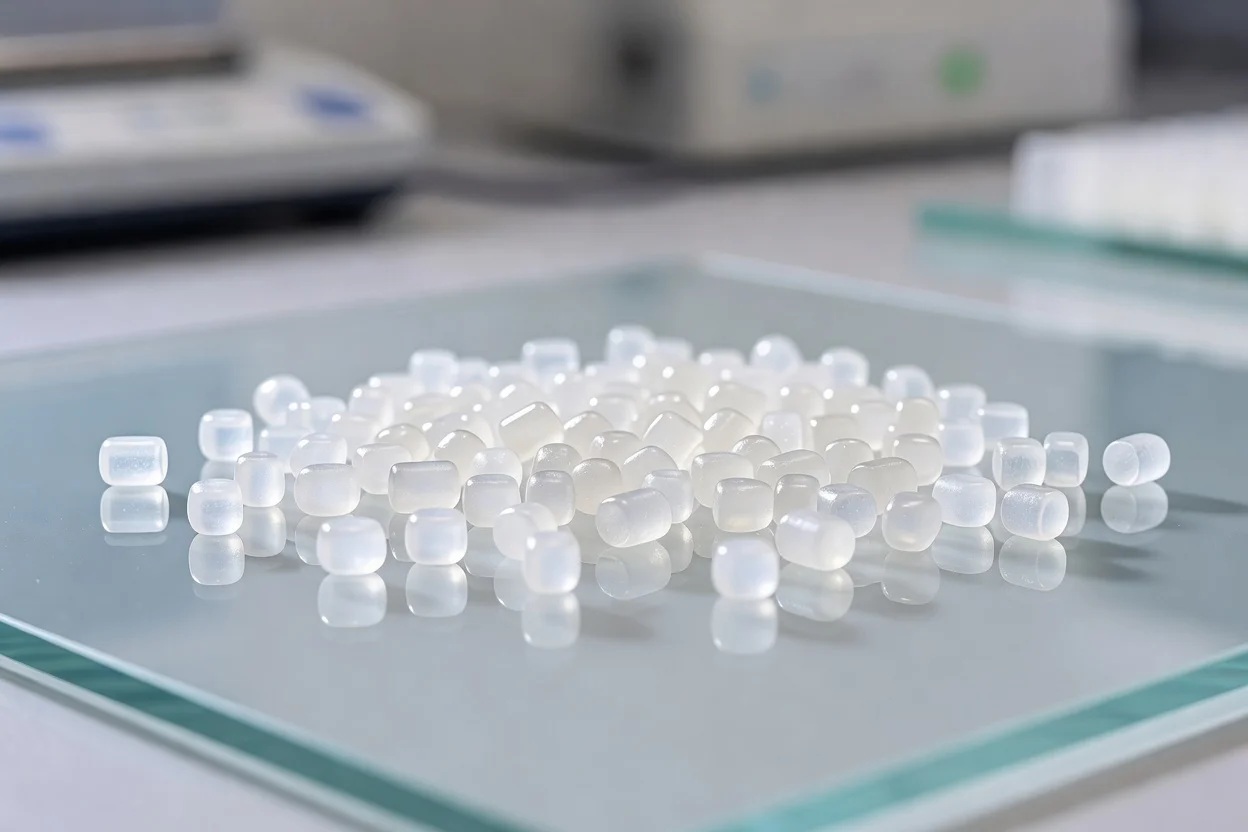
Key property profile
| Property | Typical behavior |
|---|---|
| Thermal behavior | Low melting point, around 58–64 °C |
| Glass transition temperature | About −60 °C, indicating high chain mobility at ambient conditions |
| Morphology | Semi-crystalline |
| Surface character | Hydrophobic, low surface energy |
| Degradation | Slow hydrolytic and enzymatic degradation, often over years in biomedical use |
| Processability | Easily extruded, molded, spun, cast, and printed |
Practical limits and workarounds
- Poor oxygen and grease barrier → caused by its hydrophobic, semi-crystalline structure and relatively open polymer morphology → workaround: use PCL as a blend component, multilayer layer, coating, or composite rather than a monolithic barrier film.
- Low surface energy before treatment → caused by the non-polar methylene-rich segments that reduce wetting and adhesion → workaround: apply corona, plasma, primer, or blending with more polar materials to improve printability and bonding.
- Low melting temperature → caused by flexible chains and low intermolecular restraint → workaround: use PCL where low-temperature melt processing is beneficial, or reinforce it with fillers, fibers, or copolymers when heat resistance must increase.
- Slow degradation → caused by its hydrophobicity and relatively crystalline structure → workaround: lower molecular weight, reduce crystallinity, or copolymerize with faster-degrading segments such as lactide.
Where PCL stands structurally
Compared with polylactide, PCL is softer, more flexible, and much slower to resorb. Compared with poly(glycolic acid), it is far less brittle and less water-sensitive. Compared with many commodity polyolefins, it offers greater functional versatility in biomedical and specialty applications, but it cannot match their cost advantage or general-purpose scale.
Production Processes and Raw Feedstocks
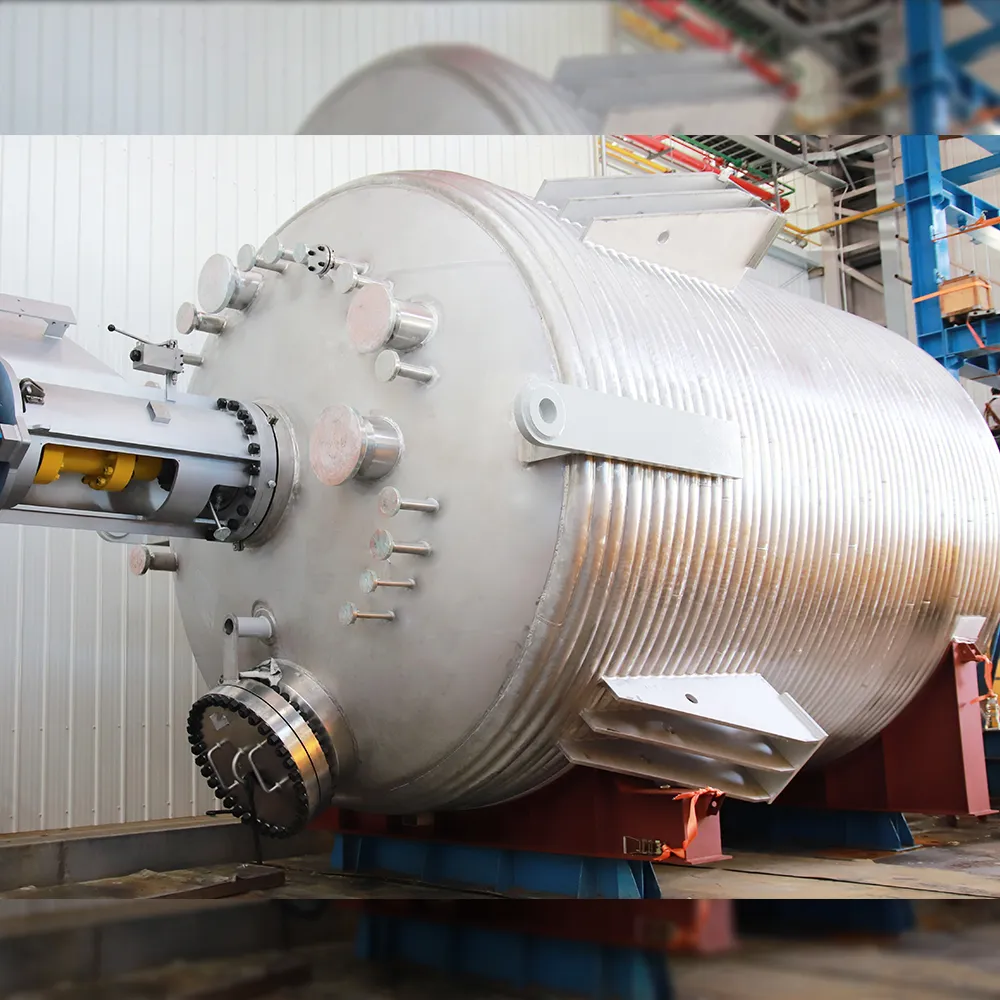
Commercial PCL is produced primarily by ring-opening polymerization of ε-caprolactone, using catalysts such as stannous octoate or other coordination, anionic, cationic, or enzymatic systems. The monomer itself is the key upstream feedstock, so the economics and sustainability profile of PCL are strongly influenced by how ε-caprolactone is made and purified.
Main production route
- ε-caprolactone feedstock preparation
- Purification to reduce water, residual monomer, and catalyst impurities
- Ring-opening polymerization to target molecular weight and crystallinity
- Compounding, pelletizing, or conversion into powder, fiber, film, or specialty grades
Process control and product tailoring
Manufacturers can tune PCL by adjusting molecular weight, catalyst system, and polymerization conditions. Higher molecular weight generally improves toughness and slows degradation, while lower molecular weight increases degradation rate and reduces mechanical persistence. Crystallinity can also be influenced by processing history, which matters for stiffness, thermal behavior, and scaffold performance.
Leading producers and market position
PCL is not dominated by a small number of commodity-scale suppliers in the same way as polyethylene or polypropylene; instead, the market is more fragmented and application-specific. Publicly visible suppliers include specialty chemical and life-science material companies that sell biomedical and research grades, such as Sigma-Aldrich, Polysciences, and other specialty biomaterials vendors, while broader industrial production is tied to specialized polyester and polyurethane value chains. This structure reflects PCL’s role as a high-value, lower-volume specialty polymer rather than a bulk packaging resin.
Applications and End-Use Markets
PCL is used where low-temperature processability, flexibility, controlled degradability, and compatibility with biofunctional design matter more than high heat resistance or barrier performance.
| End-use sector | Typical PCL role | Usual grade/process |
|---|---|---|
| Tissue engineering | Scaffolds, porous structures, electrospun fibers | Biomedical grade, electrospinning, 3D printing |
| Drug delivery | Microspheres, implants, long-release carriers | High-purity, low-residual catalyst grades |
| Wound care | Dressings, absorbable matrices, soft supports | Film, nonwoven, composite scaffolds |
| Bone and cartilage repair | Load-bearing or hybrid scaffolds | Reinforced PCL composites, bioprinting |
| Dentistry and fixation devices | Temporary implants, resorbable devices | Medical-grade molded parts |
| 3D printing | Filament, experimental bioinks, support structures | Low-melt thermoplastic grades |
| Specialty polyurethanes | Polyol-like soft segment precursor use | Chemical intermediate role |
| Packaging research | Active packaging, blends, coatings | Blend or multilayer systems |
A poor-fit use
PCL is a poor standalone choice for high-temperature structural parts because its melting point is only around 60 °C, which limits thermal service stability. It is also a weak standalone material for high-barrier packaging because of its poor oxygen and grease barrier performance.
Concrete formulation examples
- PCL plus hydroxyapatite in bone scaffolds: the filler increases bioactivity and stiffness while PCL contributes processability and gradual resorption; this is common in regenerative medicine composites.
- PCL blended with PLA in bioprinting or packaging prototypes: PLA contributes stiffness and faster degradation, while PCL improves flexibility and crack resistance.
Environmental and Sustainability Aspects
PCL is often described as biodegradable, but the meaning of that term depends on environment, thickness, crystallinity, and microbial or hydrolytic conditions. In biomedical contexts, its slow degradation is an advantage because it preserves mechanical support for months to years; in post-use waste management, the same slow degradation can be a disadvantage if disposal systems do not match the intended end-of-life pathway.
Recyclability and end-of-life
- Mechanical recycling is possible in principle for clean, single-polymer streams, but PCL’s niche use and contamination challenges limit practical recovery at scale.
- Chemical recycling or controlled depolymerization is conceptually relevant, but it is less developed commercially than for larger-volume polyester streams.
- Industrial composting or biodegradation may be feasible for certain PCL-containing products, but actual rates are highly conditional and are not interchangeable with open-environment degradation.
Bio-based alternatives and feedstock sustainability
PCL is typically made from petrochemical ε-caprolactone, so its sustainability profile depends heavily on upstream feedstock sourcing and process efficiency. Research and development are exploring bio-based routes to caprolactone, catalysis improvements, and more efficient ring-opening polymerization to reduce carbon intensity and residual catalyst burden.
Circularity considerations
PCL is increasingly used as a function polymer in circular-material design rather than as a conventional disposable plastic. It can improve circularity indirectly by enabling longer-life medical devices, repairable scaffolds, recyclable blends, or lower-temperature processing that reduces energy demand. However, its own biodegradability should not be treated as a universal waste solution, because inappropriate disposal can still lead to material loss rather than recovery.
Economic and Global Market Impact
PCL is a specialty market with demand concentrated in healthcare, life sciences, prototyping, and advanced materials rather than mass consumer goods. That gives it a smaller absolute market size than commodity polymers, but a higher value per kilogram and stronger dependence on regulatory qualification, purity, and application-specific performance.
Global economic activity around PCL is shaped by three factors:
- Medical demand, especially for resorbable and implantable materials.
- Additive manufacturing growth, where low-temperature thermoplastic behavior is useful for filaments and hybrid constructs.
- Composite and copolymer development, which extends PCL into higher-performance niches and improves its fit with biofabrication.
Because the market is specialty-driven, price sensitivity is less about raw resin commodity cycles and more about purity, consistency, regulatory compliance, and formulation know-how. This makes the value chain relatively innovation-intensive and less vulnerable to simple capacity competition than bulk plastics.
Current Challenges and Innovations
Main challenges
- Slow degradation outside biomedical timing windows, which limits use where rapid environmental breakdown is desired.
- Low thermal resistance, which restricts service temperatures and sterilization windows.
- Weak barrier and adhesion properties, which limit packaging and structural adhesive uses unless modified.
- Cost and scale constraints, since PCL remains a specialty material rather than a large-volume commodity.
Innovation directions
- Copolymerization and blending with PLA, PLGA, PEG, and other polymers to balance stiffness, toughness, and degradation rate.
- Functional composites using hydroxyapatite, bioactive glass, carbon nanomaterials, and other fillers to improve mechanical and biological performance.
- Electrospun nanofibers for wound dressings, nerve guides, and tissue scaffolds with high surface area and tunable porosity.
- 3D bioprinting and additive manufacturing, where PCL’s low melt temperature helps create controlled architectures without harsh processing conditions.
- Stimuli-responsive and drug-loaded systems for targeted release and regenerative medicine.
Future Outlook
PCL’s future is likely to be shaped less by broad substitution of commodity plastics and more by deeper integration into high-value engineering systems. In healthcare, it is expected to remain important in scaffolds, implants, wound care, and long-duration drug delivery because few polymers combine its processability with its slow, predictable resorption.
In materials science, the strongest growth opportunities are in blends, copolymers, and composites, where PCL acts as a flexible phase or biodegradable matrix that can be tuned to specific mechanical and biological targets. In sustainability terms, the most meaningful progress will come from lower-carbon monomer routes, better catalyst systems, and clearer end-of-life pathways rather than from biodegradability claims alone.
For the plastics industry, PCL illustrates a broader strategic shift: high-performance value increasingly comes from precision materials that are designed for function, regulated use, and tailored lifecycle behavior rather than from maximum tonnage.
Summary
Polycaprolactone is a specialty biodegradable polyester distinguished by its low melting point, flexibility, biocompatibility, and slow, controllable degradation. Its principal strengths lie in biomedical engineering, drug delivery, 3D printing, and composite design, while its main limitations are weak barrier performance, low heat resistance, and niche-scale economics.
References
- •
Polycaprolactone - Wikipedia. (2005, June 23).Link
- •
Biomedical applications of polycaprolactone (PCL).... (n.d.).Link
- •
Biomedical applications of polycaprolactone (PCL) composites.... (2025, September 24).Link
- •
Applications of poly(caprolactone)-based nanofibre electrospun scaffolds in tissue engineering and regenerative medicine. (2021, January 1).Link
- •
Polycaprolactone (PCL) - Medical biodegradable material. (2024, January 24).Link
- •
PCL and PCL-based materials in biomedical applications. (n.d.).Link
- •
A review on synthesis, characterization and applications.... (2023, December 31).Link
- •
Polycaprolactone: How a well-known and futuristic polymer has.... (2020, January 20).Link
- •
Polycaprolactone and its derivatives for drug delivery. (n.d.).Link
- •
PCL polymers: Properties, applications & mechanics. (2026, January 22).Link
- •
Electrospun polycaprolactone nanofibers: Current research.... (2021, October 3).Link
- •
Polycaprolactone: Synthesis, properties, and applications. (n.d.).Link
- •
Everything you need to know about polycaprolactone.... (2025, November 10).Link
- •
Polycaprolactone(PCL). (2018, November 20).Link
- •
Polycaprolactone in bone tissue engineering. (2024, August 24).Link
- •
Current applications of polycaprolactone as a scaffold material for heart regeneration. (2022, May 27).Link
- •
Understanding PCL polymer: Structure, biodegradability.... (2026, April 27).Link
- •
Polycaprolactone. (2021, October 23).Link
- •
A review on synthesis, characterization and applications of polycaprolactone as a novel drug delivery system and tissue engineering. (2023, December 31).Link
- •
Poly (∊-caprolactone) fiber: An overview. (n.d.).Link
- •
Modified poly(ε-caprolactone) with tunable degradability and improved biofunctionality for regenerative medicine. (2023, July 10).Link
- •
Polycaprolactone PCL. (2025, October 14).Link
- •
Polycaprolactone (PCL): The biodegradable polyester shaping the.... (2025, June 1).Link
- •
Application of PLCL as a biodegradable polymer in.... (2026, February 27).Link
- •
This is the author version published as:. (n.d.).Link
- •
Polycaprolactone (PCL): The biodegradable polyester shaping the.... (2025, June 23).Link
- •
Polycaprolactone - An overview. (2011, October 21).Link
- •
Biodegradable polycaprolactone (PCL) based polymer and.... (2023, November 1).Link
- •
Polycaprolactone (PCL) powder: A breakthrough in biodegradable.... (2025, January 24).Link
- •
Biological properties of polycaprolactone and barium titanate.... (2023, November 29).Link
- •
Polycaprolactone (PCL) biodegradable polymers. (2025, August 14).Link
- •
Polycaprolactone (PCL). (2023, June 15).Link
- •
Polycaprolactone composites/blends and their.... (n.d.).Link