
Introduction
Measuring equipment for moisture content refers to the instruments used to determine how much water is present in a material, either by direct sampling or by indirect sensing. In plastics processing, these instruments are critical because moisture can affect drying efficiency, melt stability, surface quality, hydrolytic degradation, dimensional accuracy, and downstream performance of polymers and compounds.
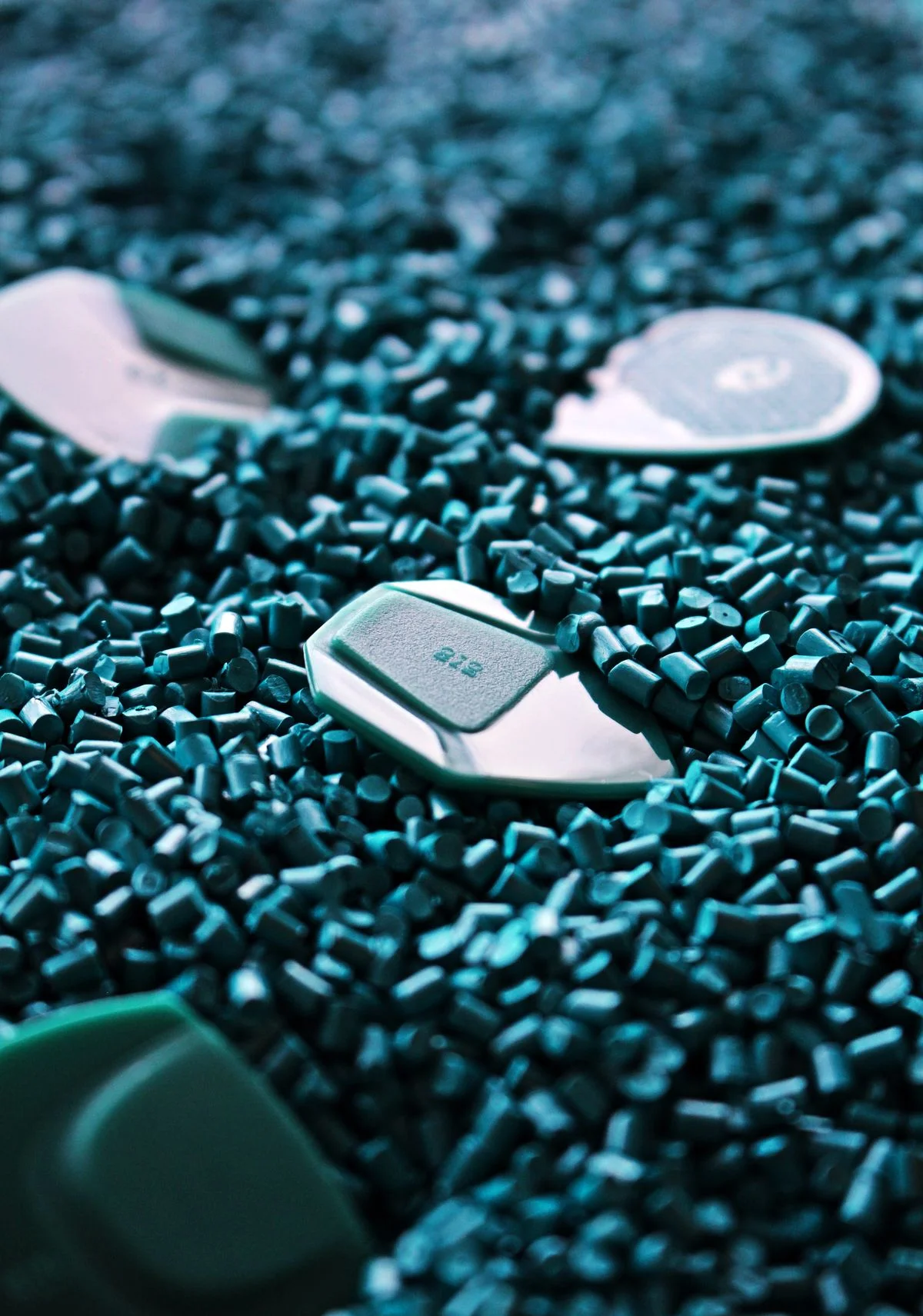
In industrial practice, the term covers a wide range of devices, from loss-on-drying moisture analyzers for laboratory and quality-control use to inline near-infrared, microwave, capacitance, resistance, and dew-point instruments for process monitoring. For plastics, the most relevant systems are those used to verify residual moisture in resin pellets, powders, recycled flakes, and masterbatch before and during processing.
The field has developed from simple gravimetric drying methods into highly automated digital instruments that combine weighing, heating, and software-based endpoint detection. Current trends emphasize faster measurement, better traceability, non-destructive sensing, and integration with plant-wide control systems. Sustainability is also a major theme, because accurate moisture measurement reduces scrap, over-drying, energy waste, and quality losses in recycling and compounding.
History and Development
Early moisture determination relied on gravimetric drying, in which a sample was weighed before and after drying and the mass loss was treated as moisture content. This method remains a reference technique in many laboratory and regulatory contexts because of its simplicity and direct physical basis.
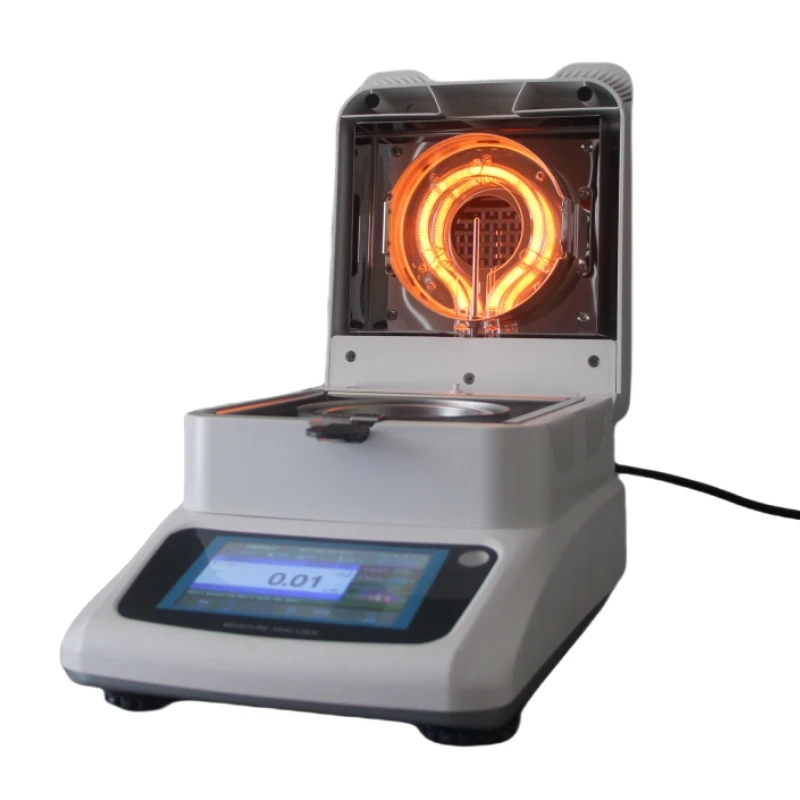
A major development was the commercialization of halogen-heated moisture analyzers, which automated the loss-on-drying principle by combining a precision balance with an integrated heating unit. This reduced test time compared with conventional oven drying and made routine moisture checks practical in production and QC laboratories.
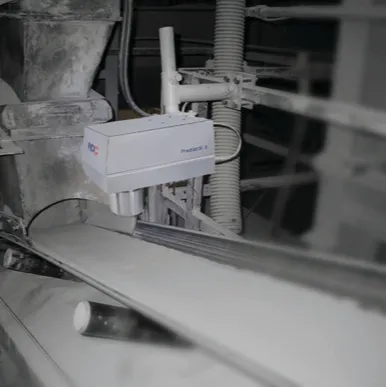
A second milestone was the spread of non-destructive inline technologies, especially near-infrared and microwave systems, which allow continuous measurement without stopping the line or destroying the sample. These systems became especially valuable in continuous extrusion, sheet, and recycling applications where moisture can vary rapidly and immediate correction improves process stability.
Key Characteristics and Technical Overview
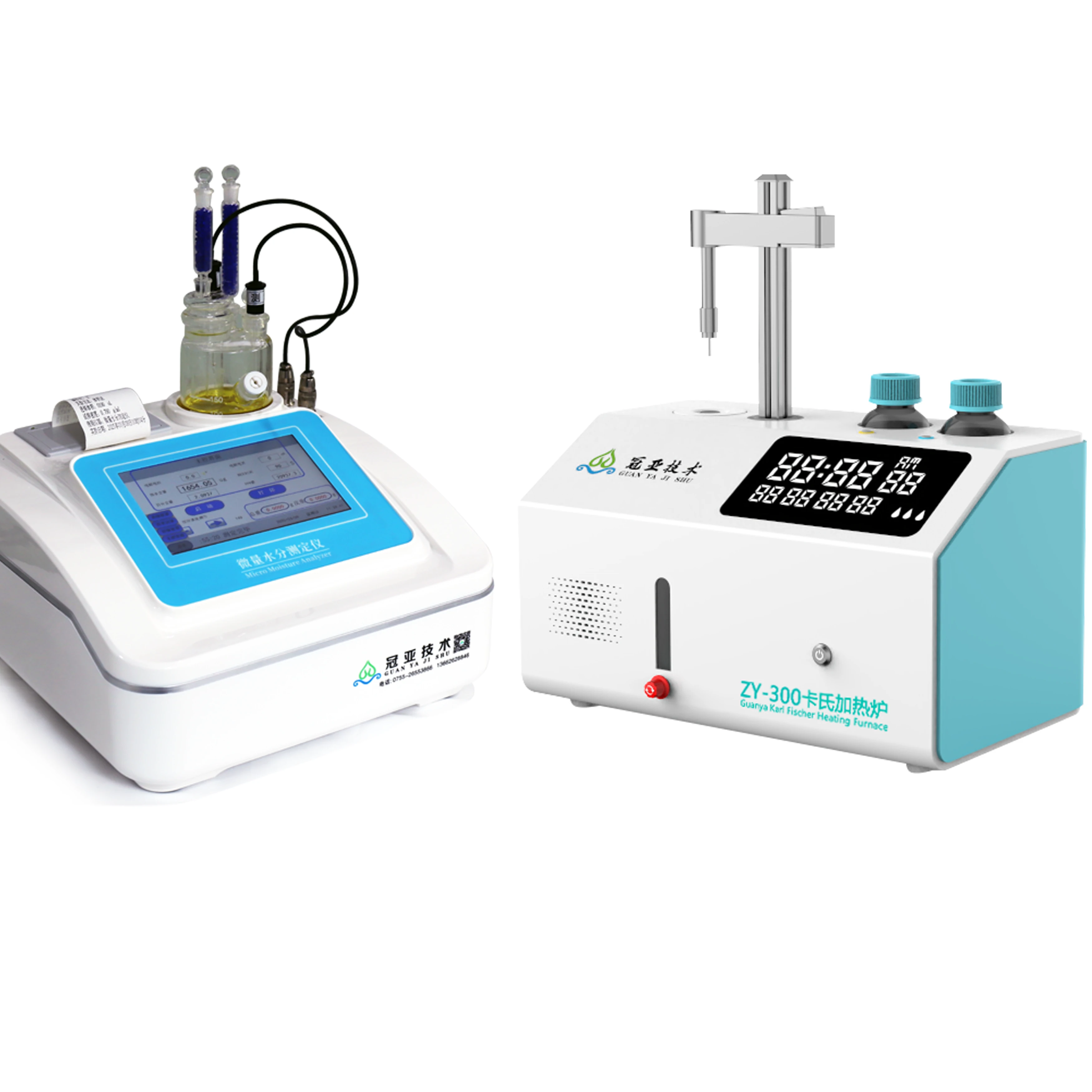
Moisture-measuring equipment is typically classified by measurement principle, sampling mode, and installation format. The main technical families include gravimetric analyzers, Karl Fischer titrators, resistance meters, dielectric/capacitance devices, microwave sensors, near-infrared sensors, and dew-point analyzers for gases.
Main measurement principles
- Loss on drying (LOD): A sample is heated and weighed until mass stabilizes; the mass loss is interpreted as moisture or, more broadly, volatile content. Moisture analyzers based on this method are common in laboratory and at-line control.
- Karl Fischer titration: A chemical method used when trace moisture or high specificity for water is required. It is widely regarded as a reference-grade technique for water content determination.
- Resistance / conductance: Moisture is inferred from changes in electrical resistance, commonly used in pin-type meters and some material-specific instruments.
- Capacitance / dielectric: Moisture is estimated from changes in dielectric properties, enabling non-invasive measurement in some solids and bulk materials.
- Microwave / radio-frequency: Penetration into the material allows deeper and often more representative measurement than surface-only methods, especially for continuous process monitoring.
- Near-infrared (NIR): Fast, non-contact optical measurement suitable for inline or at-line control, especially where continuous production is important.
- Dew-point / trace moisture in gases: Used for process air, drying gas, and some gas-phase applications where moisture must be controlled at low levels.
Typical performance ranges and practical benchmarks
- Laboratory moisture analyzers commonly test small samples, often around 1 to 50 g, with plastics applications frequently using 2 to 10 g for representative granules or powders.
- Halogen moisture analyzers are often set around 105°C for general materials, with higher temperatures such as 160°C used when the product permits and faster drying is needed.
- Many moisture analyzers report results from about 1% down to 0.0001%, depending on instrument class and method.
- In plastics recycling and pellet handling, centrifugal or thermal dewatering systems are typically followed by moisture checks because residual moisture after mechanical dewatering remains too high for many downstream uses without further drying; in practice, moisture analyzers are then used to confirm the final level before reprocessing.
- For granules and flakes, the goal is often to verify very low residual moisture because even small deviations can influence extrusion pressure stability, bubble formation, hydrolysis, and final part appearance.
Important technical notes for plastics users
- Residual moisture matters differently by polymer family: hygroscopic polymers such as PET, PA, and PC generally require much stricter drying control than polyolefins. This makes the measurement method and sampling strategy especially important.
- Representative sampling is often the limiting factor, not the analyzer itself. Heterogeneous recycled flake, surface-condensed pellets, and powder blends can produce misleading results if the sample is not homogenized.
- Calibration and material-specific methods are essential for indirect instruments because electrical and optical response depends on bulk density, particle geometry, filler content, color, and temperature.
Types and Variations
Laboratory and at-line instruments
These instruments are used for batch testing, incoming inspection, process validation, and release testing. They include halogen moisture analyzers, oven-based systems, and Karl Fischer titrators. Their strength is accuracy and traceability; their limitation is slower turnaround than online sensors.
Portable moisture meters
Portable devices are used for spot checks in warehouses, production areas, or field applications. Common examples include pin-type and pinless meters for building materials, wood, and some industrial solids. In plastics plants they are less common for resin verification than laboratory analyzers, but they may still be used for maintenance, packaging areas, or auxiliary materials.
Inline and online sensors
Inline systems are mounted on conveyors, pipes, hoppers, dryers, or process lines to provide continuous readings. They are favored where moisture changes quickly and process feedback is required in real time. NIR and microwave systems are especially relevant here because they can be non-destructive and fast.
Gas-phase moisture instruments
These instruments measure moisture in compressed air, nitrogen, dryer purge gas, or other process gases. In plastics drying systems, dew-point control is important because insufficiently dry process air reduces drying performance and can leave residual moisture in the polymer.
Applications and Uses
Moisture-measuring equipment is used wherever water content affects product quality, process stability, or chemical safety.
- Plastics drying and resin preparation: Verification of moisture in hygroscopic polymers before injection molding, extrusion, or compounding.
- Recycling and reprocessing: Monitoring PET flake, washed regrind, and compounded recyclate to reduce hydrolysis, foaming, and quality variation.
- Powders and additives: Control of moisture in fillers, pigments, and polymer powders to improve flow, dispersion, and storage stability.
- Food, pharmaceuticals, and chemicals: Routine laboratory moisture checks for formulation consistency and shelf-life control.
- Wood, paper, and building materials: Portable meters are widely used for moisture assessment in sheets, boards, timber, concrete, plasterboard, and drywall.
- A poor-fit use: A pin-type wood meter is generally a poor choice for high-accuracy moisture control of plastic pellets because the electrical calibration is not inherently suited to polymer pellets and does not provide the same material-specific reliability as dedicated plastics moisture analyzers.
Technological Innovations and Automation
Modern moisture equipment increasingly emphasizes automation, connectivity, and process integration. Instruments now frequently offer digital data logging, method libraries, automated shutdown at endpoint, and laboratory information system compatibility.
Inline NIR and microwave sensors are especially important in automated plants because they allow moisture correction before defective material is compounded or molded. This reduces waste and supports closed-loop drying control, particularly in high-throughput extrusion and recycling lines.
Another innovation is the move toward application-specific methods. Instead of one universal moisture setting, manufacturers increasingly use material profiles that account for polymer type, particle size, filler loading, and target residual moisture. This improves repeatability and reduces operator dependence.
Environmental and Sustainability Aspects
Moisture measurement contributes directly to sustainability because under-dried or over-dried plastic causes avoidable energy use and scrap. In hygroscopic polymers, accurate control can shorten dryer residence time while still preventing hydrolysis or surface defects.
In recycling, moisture measurement supports circular economy compatibility by improving the usability of washed flakes and regranulated material. Better moisture control helps limit bubble formation, viscosity drift, and degradation during remelting, which increases the fraction of recycled content that can be used in demanding applications.
Non-destructive inline methods can also reduce waste by identifying off-spec material before full processing. However, these systems require careful calibration and can be less direct than gravimetric or chemical reference methods.
Economic and Global Market Impact
Moisture-measuring equipment is a relatively small but strategically important segment of process instrumentation. Its economic value lies in protecting higher-value downstream operations: a low-cost analyzer can prevent losses in drying energy, machine downtime, material scrap, and customer complaints.
The market spans laboratory balances, process analyzers, portable meters, and gas-phase sensors, serving plastics, food, chemicals, construction, paper, and biomass. Manufacturers such as Mettler Toledo, Thermo Fisher, Sartorius, AMETEK Brookfield, KERN, and other instrument suppliers participate through laboratory analyzers and application-specific systems, while broader industrial suppliers provide portable and process-oriented instruments.
Current Challenges and Innovations
A core challenge is that moisture content is not a universal property of the instrument alone; it depends on sample type, temperature, particle morphology, density, and calibration. As a result, indirect sensors may drift unless validated regularly against a reference method.
Another challenge is the distinction between water content and total mass loss. Loss-on-drying methods can include other volatiles, so they are not always chemically specific to water. This is important for plastic additives, solvents, coatings, and materials containing low-boiling components.
Instrumentation continues to improve through faster heaters, better balance resolution, robust algorithms, and more capable inline sensors. The strongest innovations are those that combine speed with traceability and make the measurement robust enough for real production variability.
Future Outlook
Future moisture-measuring systems are likely to become more connected, more material-specific, and more tightly integrated with dryer control, extrusion control, and plant analytics. Real-time feedback from inline sensors will likely gain importance as processors seek tighter quality windows and lower energy use.
For plastics, the most important development path is likely to be hybrid measurement strategies: a fast online sensor for continuous control, supported by a laboratory reference analyzer for calibration and auditability. This approach balances speed, accuracy, and regulatory confidence.
Demand is also expected to grow where moisture directly affects circular processing, including recycled PET, post-consumer flake, and mixed-polymer regrind. In these applications, measurement is increasingly part of the process design rather than a final inspection step.
References
- •
webLink
- •
webLink
- •
webLink
- •
webLink
- •
webLink
- •
webLink
- •
webLink
- •
webLink
- •
webLink
- •
webLink
- •
webLink
- •
webLink
- •
webLink
- •
webLink
- •
webLink
- •
webLink
- •
webLink
- •
webLink
- •
webLink
- •
webLink
- •
webLink
- •
webLink
- •
webLink
- •
webLink
- •
webLink
- •
webLink
- •
webLink
- •
webLink
- •
webLink
- •
webLink
- •
webLink
- •
webLink
- •
webLink
- •
webLink
- •
webLink
- •
webLink
- •
webLink
- •
webLink
- •
webLink