
Introduction
Closed loop control equipment for temperature refers to the sensors, controllers, power-switching devices, actuators, and related software used to maintain a process at a target temperature by continuously measuring the actual value and correcting deviations from the setpoint. In industrial practice, this is the foundation of feedback temperature control, and it is widely used wherever thermal stability affects product quality, safety, energy efficiency, or throughput.
In plastics processing, closed loop temperature control is central to barrel heating, melt temperature management, mold temperature control, hot runner systems, calender rolls, extruder zones, and process cooling loops. The same basic architecture appears across many thermal systems: a sensor measures temperature, a controller compares it with the setpoint, and a final control element such as a relay, SSR, SCR, valve, or pump modulates heat input or heat removal until the error is reduced.
The technology has evolved from simple on/off thermostats to PID-controlled and networked systems with auto-tuning, multi-zone coordination, remote diagnostics, and integration into PLCs and industrial communication networks. In plastics machinery, this evolution has improved repeatability, reduced scrap from temperature drift, and supported tighter tolerances in high-value products such as optical parts, medical components, multilayer films, and engineering plastics.
History and Development
Early temperature control in industrial heating relied on mechanical thermostats and manual adjustment, which were adequate for coarse regulation but not for processes requiring narrow thermal bands. The transition to electronic feedback control introduced continuous sensing and automatic correction, making temperature management more stable under changing load conditions.
A major development was the broad adoption of PID control in industrial temperature controllers. PID logic improved over simple on/off control by reacting not only to the present error but also to its rate of change and accumulated offset, which reduced overshoot and cycling in thermal systems.
Another important milestone was the spread of solid-state power control and programmable automation. In plastics machinery, SSRs, SCRs, PLC-based control, and digital controllers enabled faster switching, finer zoning, better data logging, and tighter integration with machine sequences, alarms, and quality systems.
Technical Overview
A closed loop temperature control system typically contains four core elements: sensor, controller, final control element, and thermal load.
- Sensor: commonly a thermocouple, RTD, or thermistor; in some systems, infrared sensing is used for non-contact measurement.
- Controller: compares measured temperature with the setpoint and computes corrective action, often through PID logic.
- Final control element: heater, cooling valve, pump, relay, SSR, or SCR that changes heat input or heat removal.
- Process/load: the material or equipment whose temperature must be controlled, such as a barrel zone, mold circuit, or thermal oil loop.
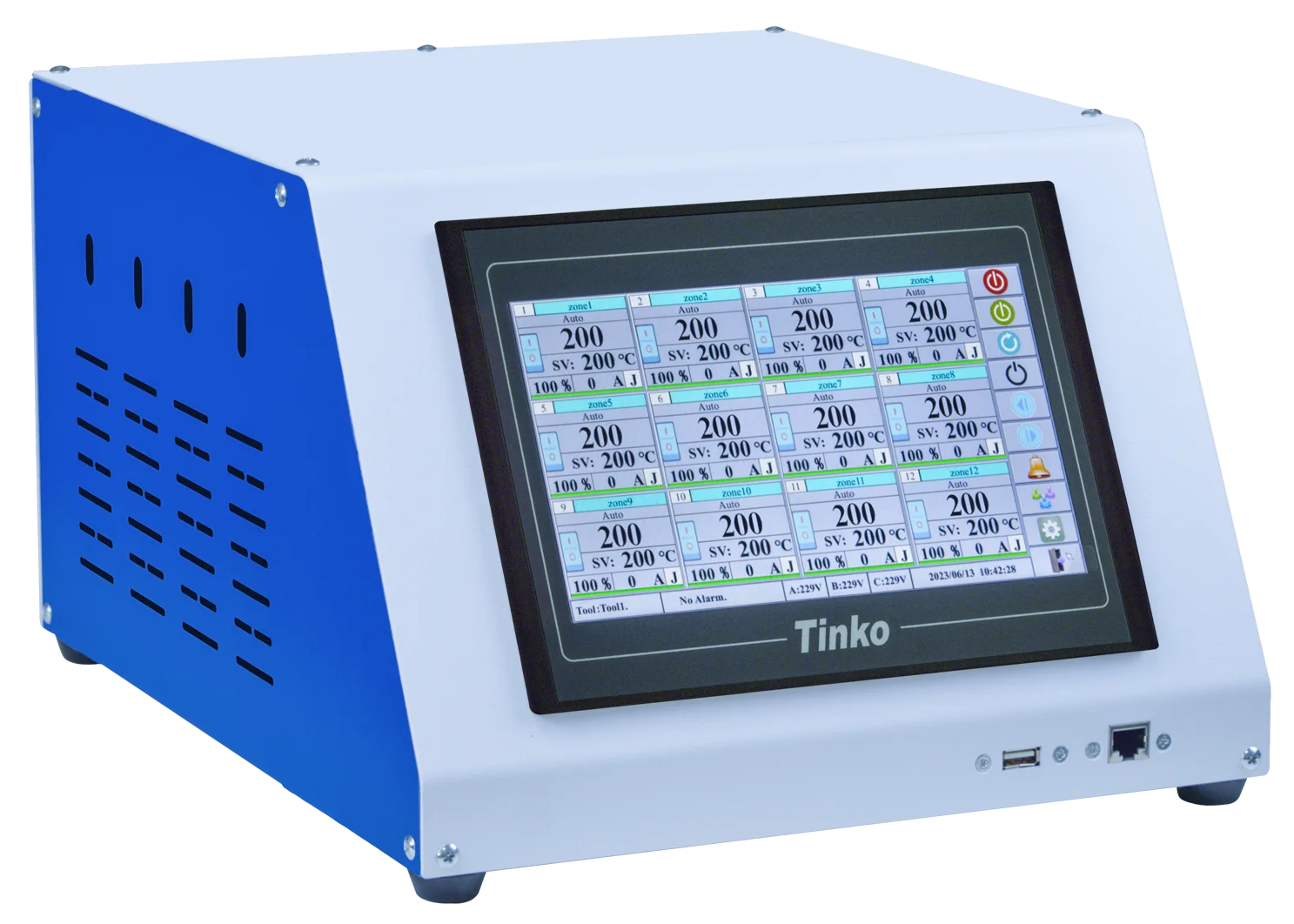
The operating principle is the continuous cycle of measure, compare, correct. If the actual temperature falls below the target, the controller increases heat input or reduces cooling; if it rises above target, the controller reduces heating or increases cooling.
Typical engineering characteristics in industrial temperature loops include:
- Control accuracy: often within fractions of a degree to a few degrees Celsius, depending on sensor location, thermal mass, and disturbance level; high-performance process heaters can hold tighter bands when the load is stable.
- Sampling and update rate: from fractions of a second to several seconds, depending on the controller and thermal inertia.
- Output modes: on/off, time-proportioning, phase-angle control, burst firing, analog control, or valve modulation.
- Common control behavior: auto-tuning or adaptive tuning to reduce oscillation and overshoot when process conditions change.
In plastics applications, a critical distinction is between temperature of the heating element and temperature of the process material. Closed loop equipment controls the process variable, not merely the heater surface, so sensor placement strongly affects performance and response time.
Types and Variations
Closed loop temperature control equipment can be grouped by sensing method, actuation method, and application.
| Type | Main feature | Typical use in plastics machinery |
|---|---|---|
| On/off thermostat | Simple switching around a setpoint | Basic cabinet heaters, noncritical auxiliary heating |
| PID temperature controller | Continuous correction with proportional, integral, and derivative terms | Barrel zones, hot runners, mold heaters, process ovens |
| PLC-based control loop | Temperature control integrated into machine logic | Extruders, injection molding machines, extrusion lines |
| SCR/thyristor power controller | Fine electrical power modulation | Large heater banks, high-power zones |
| SSR-based control | Fast switching, low maintenance | Smaller heater circuits, modular zones |
| Valve-controlled thermal loop | Modulates steam, hot water, oil, or glycol flow | Mold temperature units, jacketed vessels, calender systems |
In plastics processing, common closed loop thermal subsystems include:
- Barrel zone controllers for injection molding and extrusion
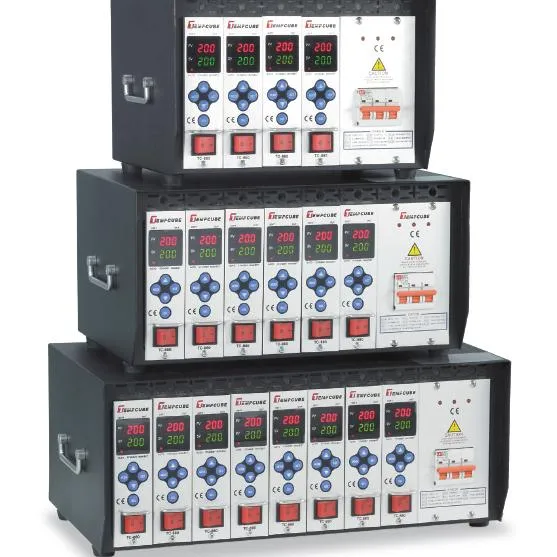
- Hot runner temperature controllers for manifolds and nozzles
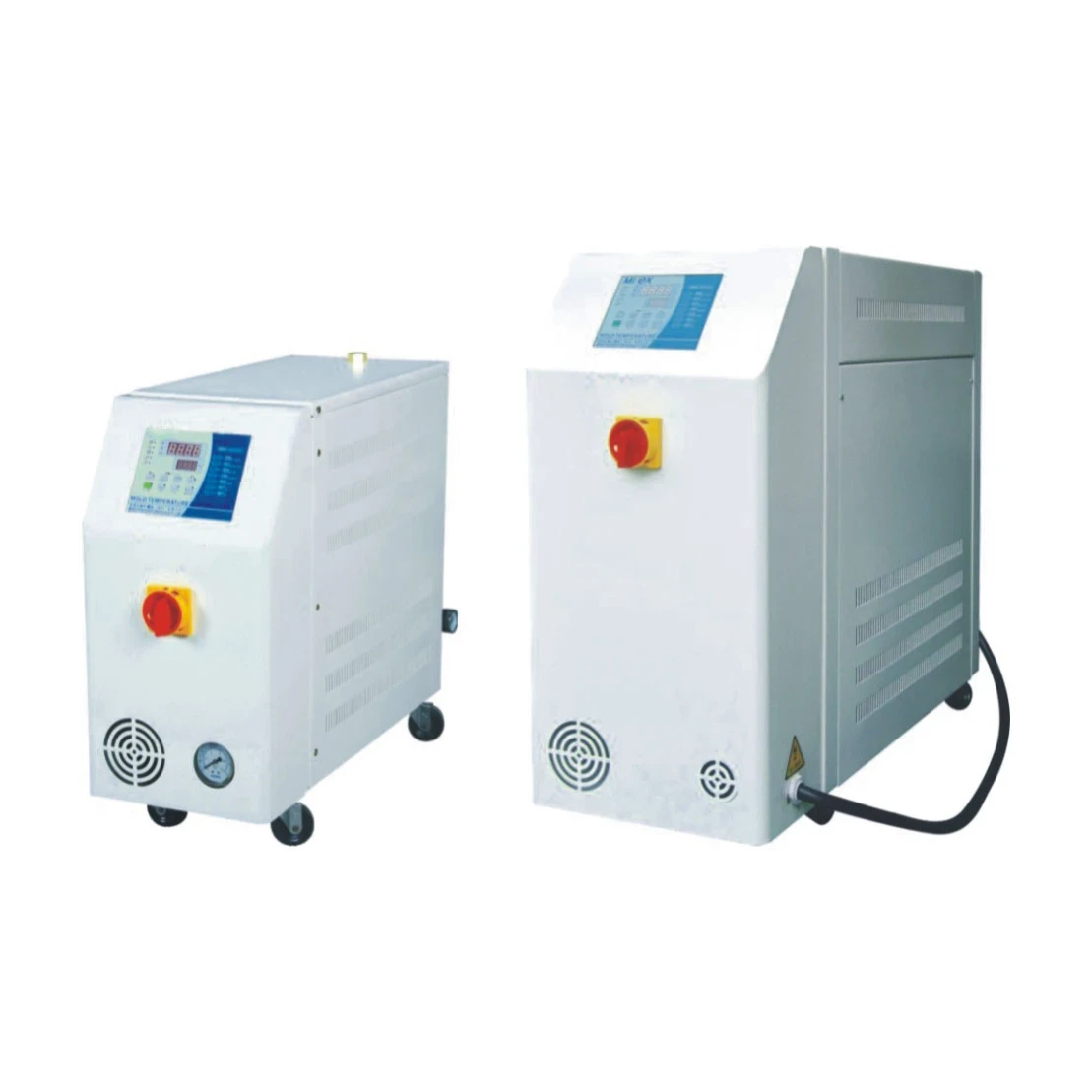
- Mold temperature control units using water, pressurized water, oil, or glycol
- Thermal oil systems for higher-temperature applications
- Closed-loop chillers and cooling circuits for auxiliary and downstream equipment
Working Principles in Plastics Processing
Closed loop temperature control in plastics machinery is used to stabilize polymer melt behavior, since viscosity, pressure, flow balance, crystallization rate, and dimensional stability all depend strongly on temperature.
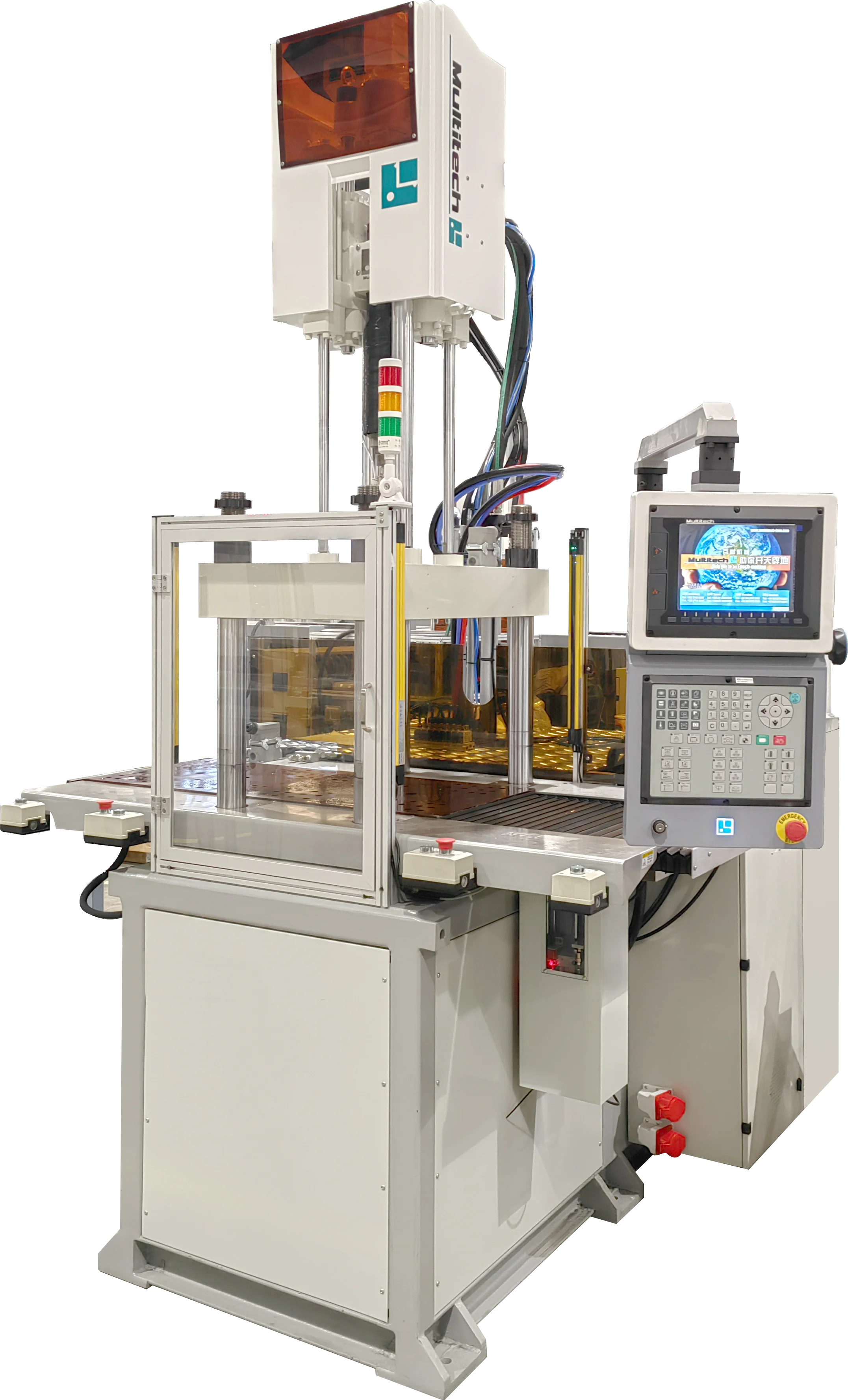
In an injection molding machine, barrel zones and nozzle heaters are regulated so the polymer reaches a consistent melt condition before injection. Poor temperature control can cause variation in shot weight, short shots, drooling, gate freeze inconsistency, or degradation of heat-sensitive resins.
In extrusion, closed loop control stabilizes feed-zone, compression-zone, metering-zone, die, and downstream cooling temperatures. This is especially important for profile extrusion, film, pipe, and compounding lines, where thermal drift can affect output rate, gauge uniformity, and surface finish.
In hot runner systems, temperature uniformity is crucial because imbalances across manifold circuits can create stringing, blocked flow, or cosmetic defects. Multi-zone closed loop controllers help maintain even melt delivery across complex runners.
In mold temperature control, a circulating fluid loop removes or adds heat to the mold steel so that cycle time, shrinkage, gloss, and warpage can be managed. Water-based units are common at moderate temperatures, while oil-based systems are used where higher stability or higher temperatures are needed.
Key Characteristics and Performance Benchmarks
Several quantitative indicators are useful when evaluating closed loop temperature control equipment for plastics processing.
- Sensor response: thermocouples offer fast response and broad range, while RTDs typically provide better accuracy and stability in many industrial loops.
- Loop stability: properly tuned PID systems reduce temperature oscillation and limit overshoot, which is important for heat-sensitive polymers such as PVC, POM, and certain engineered resins.
- Throughput impact: stable temperature control supports higher line speeds and fewer scrap-related interruptions, especially in extrusion and injection molding applications where thermal drift affects output consistency.
- Power modulation: SSR and SCR control allow smooth heater power management, while mechanical relays are simpler but less suitable for frequent switching.
In cooling and dewatering contexts adjacent to plastics recycling, closed loop thermal equipment may be used in wash lines and flotation systems. Centrifugal dewatering can reduce moisture significantly before thermal drying, and industrial washing lines commonly target residual moisture low enough to improve downstream drying efficiency; exact values depend on polymer type, flake geometry, and machine design.
Applications and Uses
Closed loop temperature control equipment is used across nearly every segment of plastics processing.
- Injection molding: barrel, nozzle, mold, and hot runner control for consistent melt preparation and cycle repeatability.
- Extrusion: zone, die, and downstream cooling regulation for profiles, pipe, sheet, film, and compounding.
- Blow molding: parison and mold thermal management to improve wall thickness consistency and container quality.
- Thermoforming: heater bank and mold temperature stability for forming repeatability and part definition.
- Compounding and recycling: temperature control of extruders, pelletizers, wash systems, and drying auxiliaries.
- Auxiliary equipment: chillers, heat exchangers, pumps, and thermal-fluid circulation units for production support.
A weaker-fit use is general building HVAC, where the same control principles apply but the equipment, response times, and process objectives differ substantially from plastics machinery.
Technological Innovations and Automation
Modern closed loop temperature control increasingly uses digital PID algorithms, auto-tuning, multi-loop coordination, and data connectivity. These features help compensate for changing thermal loads, startup transients, and ambient variation.
Key developments include:
- Networked controllers that communicate with PLCs and supervisory systems
- Recipe-based temperature profiles for product changeovers
- Alarm and fault diagnostics for sensor breakage, heater failure, and overtemperature protection
- Remote monitoring for maintenance and process optimization
- Model-based control in more advanced systems, where the controller anticipates load changes rather than only reacting to them
For plastics plants pursuing Industry 4.0 objectives, temperature data can be linked to quality records, energy dashboards, and machine condition monitoring, making the thermal loop not only a control function but also a source of process intelligence.
Environmental and Sustainability Aspects
Closed loop temperature control can reduce energy use by preventing unnecessary heating and cooling, minimizing overshoot, and matching thermal input more closely to actual process demand.
Sustainability benefits include:
- Lower energy waste through tighter setpoint control and reduced cycling
- Reduced scrap because stable temperature improves dimensional and visual quality
- Lower material loss in start-up and changeover phases
- Improved water efficiency in closed-loop cooling circuits that recirculate the same fluid rather than relying on once-through cooling
At the same time, highly precise control systems may increase capital cost, sensor maintenance burden, and system complexity. The sustainability value therefore depends on the process: high-volume or high-specification plastics production usually gains more from closed loop control than low-value, low-tolerance applications.
Economic and Global Market Impact
Temperature control equipment is a cross-cutting category in plastics machinery because nearly every thermal process relies on it. Demand follows broader trends in injection molding, extrusion, recycling, packaging, automotive components, medical plastics, and electrical/electronic production.
From an operational standpoint, the economic value comes from:
- Reduced scrap and rework
- Higher throughput stability
- Lower downtime from temperature-related defects
- Better reproducibility across shifts and plants
- Faster qualification of new materials and tools
Global competition has also pushed suppliers toward modular controllers, more compact panels, and integrated digital platforms. In regions with high energy prices or stricter quality standards, the payback period for advanced closed loop systems can be especially attractive.
Current Challenges and Innovations
Despite its maturity, closed loop temperature control still faces engineering challenges.
- Sensor placement: poor placement can create misleading feedback and unstable control.
- Thermal lag: large metal masses and viscous polymers respond slowly, complicating tuning.
- Electrical noise: especially in high-power environments with heaters, drives, and SCRs.
- Maintenance: thermocouple drift, RTD aging, and heater degradation can weaken loop performance.
- Process variability: resin changes, throughput shifts, and ambient conditions alter thermal demand.
Current innovation is focused on:
- Self-tuning controllers
- Predictive control and adaptive algorithms
- Higher-resolution sensing
- Better integration with machine vision and quality systems
- Condition-based maintenance for heaters, sensors, and power electronics
Future Outlook
Closed loop temperature control equipment is likely to become more intelligent, more connected, and more energy-aware. In plastics machinery, future systems will increasingly combine traditional PID control with predictive analytics, digital twins, and plant-wide optimization tools.
The most important direction is not simply tighter temperature tolerance, but process-level stability: better melt homogeneity, faster changeovers, reduced startup scrap, and lower total energy intensity. As plastics processors face rising pressure on efficiency, traceability, and sustainability, closed loop temperature control will remain a foundational enabling technology rather than a background utility.
Summary
Closed loop control equipment for temperature is the feedback-based hardware and software used to hold thermal processes at a target value by sensing actual temperature and correcting deviations automatically. In plastics processing, it is essential to machine performance, product quality, energy efficiency, and process repeatability, and it continues to advance through digital control, automation, and predictive methods.
References
- •
ENGINEERING NOTE TUNING THE PID COEFFICIENTS. (n.d.). https://sunelectronics.com/suncat/pdf_files/pid_note.pdfLink
- •
Closed-loop control. (n.d.). ScienceDirect. https://www.sciencedirect.com/topics/computer-science/closed-loop-controlLink
- •
Closed loop system examples and how they work. (2025, October 16). https://clearwatershelton.com/closed-loop-system-examples-how-they-work-in-various-industries/Link
- •
Temperature controllers for closed loop feedback control of thermoelectric assemblies. (2016, February 23). Power Electronics Tips. https://www.powerelectronictips.com/temperature-controllers-closed-loop-feedback-control-teas/Link
- •
Closed loop heat cycle. (n.d.). Delta T. https://www.deltat.com/closed_loop_elements.htmlLink
- •
What is closed loop feedback and how does it work? (2026, March 11). Science Insights. https://scienceinsights.org/what-is-closed-loop-feedback-and-how-does-it-work/Link
- •
Closed loop control system basics. (n.d.). Mead O'Brien. https://blog.meadobrien.com/2015/12/closed-loop-control-system-basics.htmlLink
- •
Controller basics. (n.d.). http://edutoknow.weebly.com/uploads/7/2/9/1/7291717/tempcontrollebasics.pdfLink
- •
Control loops and dynamics. (n.d.). Spirax Sarco. https://www.spiraxsarco.com/learn-about-steam/basic-control-theory/control-loops-and-dynamics?sc_lang=en-GBLink
- •
What is closed loop temperature control? (2022, November 15). LinkedIn. https://www.linkedin.com/pulse/what-closed-loop-temperature-control-watlowLink
- •
Thermal management: The power of closed-loop control. (2025, August 29). LinkedIn. https://www.linkedin.com/pulse/thermal-management-power-closed-loop-control-selvakumar-v-lsyicLink
- •
What is a closed loop system and how does it work? (2026, March 12). Science Insights. https://scienceinsights.org/what-is-a-closed-loop-system-and-how-does-it-work/Link
- •
Closed-loop controls. (2025, June 17). Tutco SureHeat. https://www.tutcosureheat.com/closed-loop-controlsLink
- •
Closed loop control systems: How they work in industrial automation. (2026, June 8). CrossnoKaye. https://crossnokaye.com/blog/closed-loop-control-systems-how-they-work-in-industrial-automationLink
- •
What is a closed loop control system and how does it work? (2022, May 11). TechTarget. https://www.techtarget.com/whatis/definition/closed-loop-control-systemLink
- •
Closed-loop control system. (2023, November 29). GeeksforGeeks. https://www.geeksforgeeks.org/electronics-engineering/closed-loop-control-system/Link
- •
A closed loop system has feedback control. (2013, August 30). Electronics Tutorials. https://www.electronics-tutorials.ws/systems/closed-loop-system.htmlLink
- •
Closed-loop controller. (2004, March 30). Wikipedia. https://en.wikipedia.org/wiki/Closed-loop_controllerLink
- •
Process temperature control systems. (n.d.). Qualitest. https://qualitest.us/collections/process-temperature-control-systemsLink
- •
How to choose the best NTC PID controller for precision temperature control. (2026, March 1). SmartBuy. https://smartbuy.alibaba.com/buyingguides/ntc-pid-controllerLink
- •
Cryogenic temperature controllers. (n.d.). QD Europe. https://qd-europe.com/ch/en/product/cryogenic-temperature-controllers/Link
- •
A precise closed-loop temperature-control system. (n.d.). Tech Briefs. https://www.techbriefs.com/component/content/article/30102-msc22774Link
- •
Closed-loop temperature control: Precision and efficiency. (2026, April 16). VSMC Medical. https://www.vsmcmedical.com/news/Closed-Loop-Temperature-Control-Precision-and-Efficiency.htmlLink
- •
Open-loop, closed-loop heating methods. (n.d.). ISA. https://www.isa.org/intech-home/2020/july-august-2020/departments/open-loop-closed-loop-heating-methodsLink
- •
Closed loop cooling system in the real world: 5 uses. (2025, October 24). LinkedIn. https://www.linkedin.com/pulse/closed-loop-cooling-system-real-world-5-uses-znu2fLink
- •
Closed loop temperature. (n.d.). Interempresas. https://www.interempresas.net/FeriaVirtual/Catalogos_y_documentos/187805/Control_en_lazo_cerrado_y_auto--tuning_-ingles-.pdfLink
- •
Exp 3. (2025, December 6). Scribd. https://www.scribd.com/document/942481696/Exp-3Link
- •
Closed loop cooling system in the real world: 5 uses you'll actually. (2025, October 3). LinkedIn. https://www.linkedin.com/pulse/closed-loop-cooling-system-real-world-5-uses-youll-actually-8yyjcLink
- •
A complete guide to PID temperature controllers. (2023, January 17). RS Components. https://uk.rs-online.com/web/content/discovery/ideas-and-advice/pid-temperature-controllers-guideLink
- •
What is closed-loop control: The foundation of modern. (2026, February 25). Advanced Motion Controls. https://www.a-m-c.com/closed-loop-control/Link
- •
Closed-loop temperature control of an electrical heater. (2025, September 27). Scribd. https://www.scribd.com/document/363006223/PID-Temperature-systemLink
- •
About control theory principles. (n.d.). NPH Heaters. https://nphheaters.com/ABOUT_CONTROL_THEORY_PRINCIPLES.pdfLink
- •
Design and analysis of a closed-loop temperature. (n.d.). IEEE. https://ieeexplore.ieee.org/document/9317248/Link
- •
Eli5: what is a closed loop HVAC system? (n.d.). Reddit. https://www.reddit.com/r/explainlikeimfive/comments/12n52s7/eli5_what_is_a_closed_loop_hvac_system/Link
- •
The essential guide to open loop and closed loop systems. (2024, February 12). Automation Electric. https://automationelectric.com/the-essential-guide-to-open-loop-and-closed-loop-systems/Link
- •
What are some real-world examples of open-loop and closed-loop systems. (2026, February 25). Aerotech. https://go.aerotech.com/in-motion/real-world-examples-of-open-loop-and-closed-loop-systemsLink