
Introduction
Vulcanising agents are chemicals that create or assist the formation of cross-links between rubber polymer chains, converting an uncured elastomer into a durable, elastic, and serviceable vulcanizate. In practical terms, they are the core curatives that define cure speed, crosslink density, heat resistance, compression set, rebound, abrasion resistance, and long-term aging performance in rubber goods.
Although sulfur remains the dominant curing chemistry for general-purpose rubber, the term covers a broader family that includes peroxides, metal oxides, resin curatives, quinone compounds, sulfur donors, amines, and other specialty crosslinkers used to match the chemistry of different elastomers and end-use requirements. Their importance spans tires, hoses, seals, cable insulation, conveyor belts, footwear, industrial rollers, and specialty applications where the balance between elasticity and stability is critical.
Historically, vulcanisation transformed rubber from a temperature-sensitive natural material into an engineered industrial polymer, and that legacy still shapes modern compounding practice. Current development trends include lower-emission cure systems, reduced zinc formulations, peroxide and resin routes for selected elastomers, and improved control over scorch safety and network architecture to support performance, processing efficiency, and sustainability goals.
History and Development
Vulcanisation is associated with the mid-19th-century discovery that sulfur and heat could convert raw rubber into a far more useful material. This discovery established the modern rubber industry by solving the intrinsic instability of untreated rubber, which becomes sticky in heat and brittle in cold.
Over time, industrial practice evolved from simple sulfur curing toward more sophisticated systems designed for specific polymers and products. The development of accelerators, activators, and alternative crosslinking chemistries made it possible to control cure rate, improve processing safety, and tailor final properties more precisely.
Today, vulcanising agents are selected not only for performance but also for regulatory, environmental, and manufacturing reasons, particularly in sectors facing stricter limits on heavy metals, volatile emissions, and end-of-life handling.
Chemical Structure and Key Properties
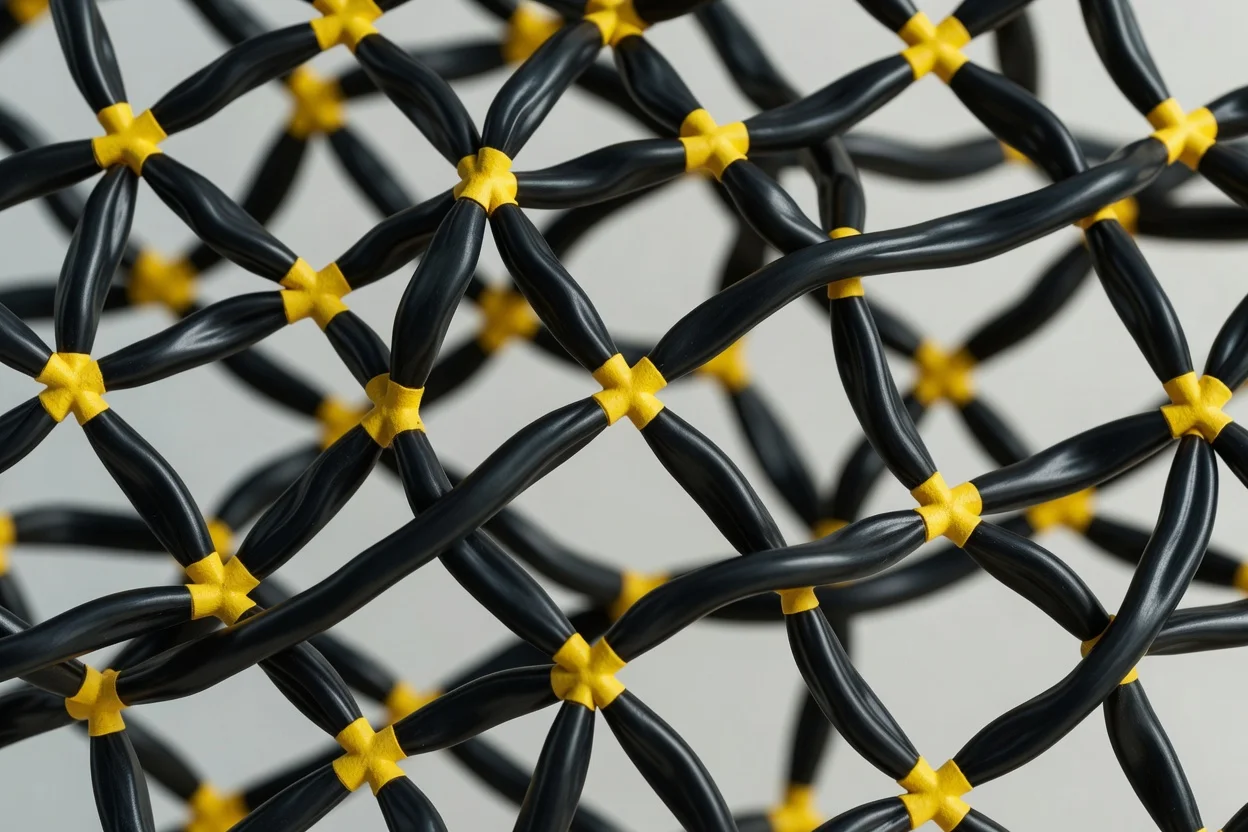
Vulcanising agents function by generating a three-dimensional network through chemical links between polymer chains. In sulfur systems, those links are typically sulfur bridges; in peroxide systems, carbon-carbon links predominate; in metal oxide or resin systems, crosslinking proceeds through different reaction pathways suited to specific elastomers.
Main property effects
- Higher elasticity and recovery: crosslinks prevent permanent flow under stress while preserving rubber-like flexibility.
- Improved tensile strength and modulus: the network resists chain slippage, increasing load-bearing capacity.
- Better abrasion and wear resistance: crucial for tires, belts, and dynamic seals.
- Improved heat and aging resistance: especially important for engine bays, cables, and high-temperature service.
- Enhanced chemical resistance: depends strongly on the curative system and base elastomer.
Key technical limits
- Poor oxygen and grease barrier in many standard rubbers → inherently open elastomer structure and low crystallinity → use barrier layers, fillers, coatings, or alternative polymers where barrier performance is required.
- Low surface energy before treatment in many rubber compounds → weak wetting and adhesion to inks, adhesives, and coatings → use surface activation, primers, or compatible coupling agents.
- Overcuring or excessive crosslink density → reduced flexibility and higher brittleness → use cure monitoring and optimized accelerator packages.
- Scorch risk in fast sulfur systems → premature crosslinking during mixing or shaping → use delayed-action accelerators and process temperature control.
Major classes of vulcanising agents
| Class | Typical role | Typical elastomer fit |
|---|---|---|
| Sulfur and sulfur donors | Classic elastic networks with tunable cure structure | Natural rubber, SBR, BR, many general-purpose rubbers |
| Peroxides | Carbon-carbon crosslinks, heat stability, lower extractables | EPDM, EVM, silicone, saturated elastomers, some specialty rubbers |
| Metal oxides | Cure systems for halogenated and chlorinated elastomers | Neoprene, chloroprene, chlorosulfonated polyethylene |
| Resin curatives | Heat resistance and adhesion-oriented networks | Butyl rubber, specialty compounds |
| Quinone and amine systems | Specialty crosslinking in selected rubbers | Butyl, acrylate, fluorinated and other specialty elastomers |
Production Processes and Raw Feedstocks
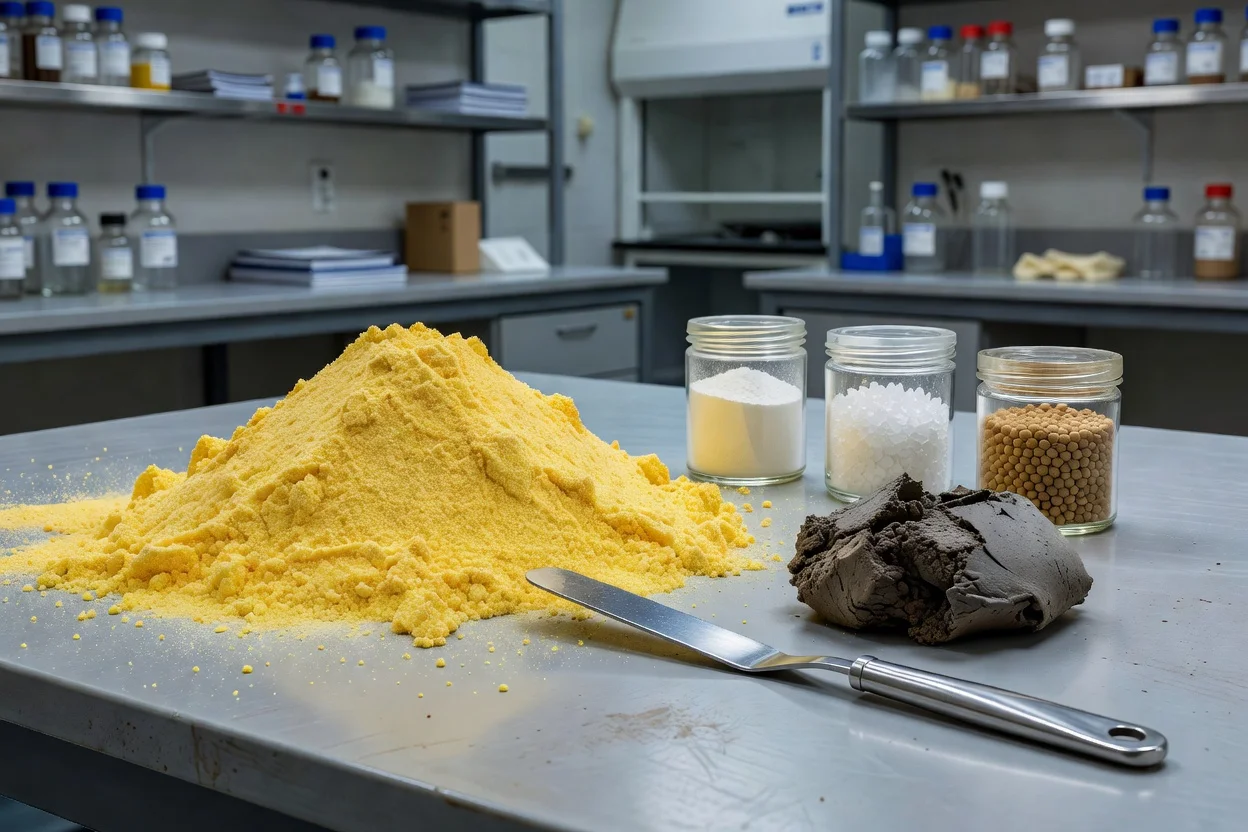
Vulcanising agents are manufactured as chemical specialties from sulfur, organic intermediates, peroxides, phenolic resins, amines, metal oxides, and formulation-specific auxiliaries. The agent itself is only one part of the cure package; accelerators, activators, retarders, and fillers strongly influence final behavior.
Sulfur-based systems
Sulfur remains the main curative for general-purpose rubber because it produces a good balance of elasticity, strength, and fatigue resistance at relatively low cost. In practice, sulfur is used with accelerators such as sulfenamides, thiazoles, thiurams, dithiocarbamates, or guanidines to control cure rate and crosslink structure.
A common formulation might use sulfur at a few phr together with a sulfenamide accelerator and zinc oxide/stearic acid activation; the accelerator speeds sulfur incorporation and helps build a more efficient network during heating.
Peroxide systems
Organic peroxides decompose under heat to create radicals that abstract hydrogen and generate carbon-centered crosslinks, which can provide excellent thermal stability and low compression set in selected elastomers. They are widely used where sulfur-type sulfur bridges are undesirable, such as certain high-temperature or low-extractable applications.
A typical example is dicumyl peroxide in EPDM, where peroxide-derived radicals create a stable network suited to heat-resistant sealing and wire and cable compounds.
Metal oxide and specialty systems
Metal oxides, especially zinc oxide and magnesium oxide, are essential in chloroprene and related halogenated elastomers. Phenolic resin curatives are important for butyl rubber, particularly where heat resistance and gas impermeability are valued.
Applications and End-Use Markets
Vulcanising agents are fundamental to the rubber value chain, not plastics in the narrow sense, but they are closely linked to polymer processing, elastomer compounding, and many adjacent materials markets. Their usage is concentrated in products that must withstand repeated deformation, heat, abrasion, weathering, or chemical exposure.
| End use | Typical curative system | Why it is used |
|---|---|---|
| Tires | Sulfur-accelerator system | Excellent dynamic performance, fatigue resistance, cost efficiency |
| Hoses and belts | Sulfur or peroxide | Flexibility, wear resistance, heat resistance |
| Cable insulation | Peroxide or sulfur, depending on polymer | Electrical reliability and thermal stability |
| Seals and gaskets | Peroxide, sulfur, or resin | Compression set control and chemical resistance |
| Footwear soles | Sulfur-based systems | Elasticity and abrasion resistance |
| Conveyor belts and rollers | Sulfur or peroxide | Durability under cyclic loading |
| Chloroprene products | Metal oxide systems | Polymer-specific crosslinking chemistry |
| Butyl rubber products | Resin or quinone systems | Low gas permeability and heat resistance |
Major sectors
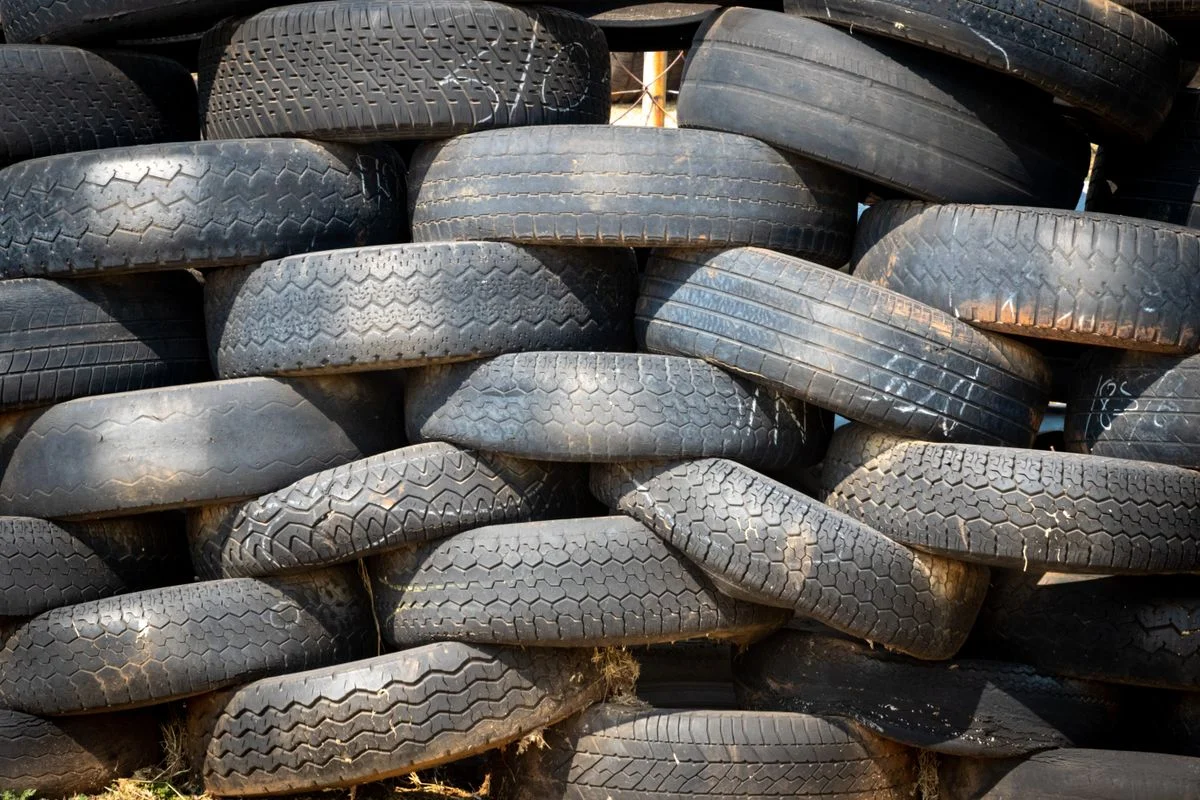
- Automotive: tires, vibration isolators, hoses, belts, and seals are the largest and most demanding markets, with sulfur-based systems dominating most tire compounds.
- Electrical and electronics: cable insulation and specialty elastomeric parts often use peroxide systems for thermal stability and controlled electrical performance.
- Industrial goods: conveyor belts, tank linings, rollers, and diaphragms rely on formulation-specific cure systems to balance wear and chemical resistance.
- Construction and infrastructure: roofing membranes, waterproofing systems, and expansion-related elastomeric parts benefit from long-term weatherability and retention of flexibility.
- Medical and specialty wear: selected peroxide-cured or specialty crosslinked elastomers are used where low extractables and cleanliness matter.
One poor-fit use
Standard sulfur-cured rubber is generally a poor fit for high-temperature, low-extractable, or highly saturated elastomer applications because sulfur crosslinks can have lower thermal stability and may not cure saturated backbones effectively. In such cases, peroxide, resin, or metal oxide systems are preferred.
Environmental and Sustainability Aspects
Sustainability considerations for vulcanising agents are tied to both chemistry and end-of-life behavior. Traditional sulfur curing is comparatively low-cost and efficient, but rubber crosslinking itself creates a thermoset-like network that is difficult to remelt and recycle.
Recyclability and circularity
- Conventional vulcanized rubber is not melt-reprocessable, which limits mechanical recycling and complicates circularity.
- Devulcanisation and reclaim processes can partially break crosslinks, but property recovery is often incomplete and application-specific.
- Material design for recycling increasingly favors formulations and product architectures that can be more easily separated, reused, or chemically treated at end of life.
Bio-based and lower-impact alternatives
Research and product development are exploring bio-based curatives, reduced-toxicity packages, and systems that lower zinc or other regulated constituents. Such approaches are especially relevant where regulatory pressure or wastewater concerns arise from conventional activators and co-curatives.
Carbon footprint considerations
The footprint of vulcanising agents is only one part of the total impact; most emissions arise from the upstream manufacture of rubber polymers, compounding operations, and the use phase of the final product. Nevertheless, cure efficiency matters because lower energy cure schedules, reduced scrap, and longer product life can materially improve overall environmental performance.
Economic and Global Market Impact
Vulcanising agents are essential specialty chemicals with demand closely linked to tire production, automotive output, industrial maintenance, and infrastructure spending. Because sulfur-based systems are high-volume and relatively low-cost, the market is broad but price-sensitive; by contrast, peroxide, resin, and specialty curatives occupy higher-value niches tied to performance-critical applications.
The leading global supply base generally includes major rubber chemical producers in Asia, Europe, and North America, with the tire industry acting as the main demand anchor. China, India, Japan, South Korea, Europe, and the United States are among the most important production and consumption centers due to their rubber processing and automotive manufacturing ecosystems.
Current Challenges and Innovations
Main challenges
- Regulatory pressure on zinc and certain amine or metal-based systems in some geographies.
- Need for lower energy curing to reduce cycle time and improve plant productivity.
- Balancing scorch safety and fast cure in high-throughput compounding lines.
- Compatibility with new elastomers and recycled content, which can alter cure kinetics and final network formation.
Innovation directions
- Low-zinc and zinc-lean sulfur systems to reduce environmental loading while maintaining cure performance.
- Improved peroxide co-agents to enhance crosslink efficiency and mechanical properties in peroxide-cured compounds.
- Phenolic and resin-based curatives for high-heat and gas-barrier applications, especially in butyl rubber.
- Hybrid cure packages that combine curatives and accelerators for tighter control over network structure and dynamic properties.
Future Outlook
Vulcanising agents will remain indispensable wherever rubber must perform under stress, heat, and time. The most important future shift is not elimination but refinement: more selective curative systems, lower-toxicity chemistries, and cure packages designed for both performance and circularity.
The strongest growth opportunities are likely to be in high-performance tires, electrification-related cable and sealing materials, and specialty elastomers used in energy, mobility, and infrastructure. At the same time, recycling constraints will keep pressure on formulators and manufacturers to develop products with better end-of-life pathways and reduced environmental burden.
Summary
Vulcanising agents are the chemical foundation of rubber curing, controlling how elastomers become strong, elastic, durable, and application-specific materials. Sulfur-based systems dominate general rubber processing, while peroxides, metal oxides, resin curatives, and other specialty chemistries serve demanding or polymer-specific applications.
Their technical value is matched by strategic importance across tires, cables, seals, hoses, and industrial rubber goods, but their thermoset nature also creates recycling and sustainability challenges. Future development will therefore center on cleaner cure chemistries, lower-impact formulations, and more circular rubber product design.
References
- •
What does a rubber vulcanizing agent do and how much do ... (2023, September 11). Rubbermasterbatch. https://www.rubbermasterbatch.com/news_detail/3.htmlLink
- •
Classification of vulcanizing agents. (2016, October 17). Nurchem. https://www.nurchem.com/classification-of-vulcanizing-agents/Link
- •
Vulcanising agent. (2026, January 26). Gume. https://www.gume.de/en/additive/Link
- •
Types-and-applications-of-rubber-vulcanizing-agent. (2025, January 1). Hnxnchem. http://www.hnxnchem.com/knowledge/types-and-applications-of-rubber-vulcanizing-agentLink
- •
Vulcanizator. (2024, April 10). Chembk. https://www.chembk.com/en/chem/VulcanizatorLink
- •
Vulcanization. (2002, February 13). Wikipedia. https://en.wikipedia.org/wiki/VulcanizationLink
- •
Vulcanization agent—An overview. (2013, October 16). ScienceDirect. https://www.sciencedirect.com/topics/materials-science/vulcanization-agentLink
- •
Vulcanization & accelerators. (n.d.). Lusida Rubber Products. https://lusida.com/wp-content/uploads/2018/11/DTechnicalNote-Vulcanization-Dec10.pdfLink
- •
Other dynamics. (2023, September 11). Rubbermasterbatch. https://www.rubbermasterbatch.com/news_detail/4.htmlLink
- •
Functions of major compounding agents commonly used in rubber ... (2022, August 3). Axisrubber. https://www.axisrubber.com/blog/functions-of-major-compounding-agents-commonly-used-in-rubber-products.htmlLink
- •
Rubber vulcanizing agent for coatings. (2026, July 24). B2bwiki. https://b2bwiki.baidu.com/en/encyclopedic/rubber-vulcanizing-agent-for-coatingsLink
- •
42-Rubber_Additives_-Compounding_Ingredient.pdf. (n.d.). Scribd. https://www.scribd.com/document/486668905/42-Rubber-Additives-Compounding-Ingredient-pdfLink
- •
What is vulcanization and vulcanized rubber? (2022, July 15). Globaloring. https://www.globaloring.com/blog/what-is-vulcanization-and-vulcanized-rubber/Link
- •
Glossary. (n.d.). Walker Rubber. https://www.walker-rubber.co.uk/glossaryLink
- •
Understanding the chemistry of vulcanizing agents in rubber production. (2024, December 27). Yg-1. https://www.yg-1.com/news/industry-news/understanding-the-chemistry-of-vulcanizing-agents-in-rubber-production.htmlLink
- •
Vulcanizing—An overview. (n.d.). ScienceDirect. https://www.sciencedirect.com/topics/earth-and-planetary-sciences/vulcanizingLink
- •
Chemistry of the vulcanization and protection of elastomers: A review of the achievements. (n.d.). Wiley. https://onlinelibrary.wiley.com/doi/10.1002/app.11659Link
- •
Polymer science. (n.d.). Niscpr. https://nsdl.niscpr.res.in/bitstream/123456789/382/2/revised%20additives%20for%20rubber.pdfLink
- •
Influence of different vulcanizing agents on structures and ... (n.d.). Mtak. https://real.mtak.hu/198888/1/EPL-0012130_article.pdfLink
- •
Vulcanization of rubber [PPTX]. (2020, September 28). Slideshare. https://www.slideshare.net/slideshow/vulcanization-of-rubber/238657278Link
- •
Curing or vulcanizing agents for adhesives and sealants. (2025, June 30). Specialchem. https://www.specialchem.com/adhesives/guide/curing-or-vulcanizing-agents-for-adhesives-and-sealantsLink
- •
Rubber vulcanisation. (2025, October 19). Powerrubber. https://powerrubber.com/en/blog/rubber-vulcanisationLink
- •
Vulcanization process and rubber types [PDF]. (2026, February 18). Scribd. https://www.scribd.com/document/704846945/Polymer-Chemistry-NotesLink
- •
Select accelerators for rubbers. (2025, July 18). Specialchem. https://www.specialchem.com/adhesives/guide/accelerators-for-rubbers-selection-guideLink
- •
(Commonly used vulcanizing agent) classification and ... (2025, September 5). Yg-1. https://www.yg-1.com/news/industry-news/commonly-used-vulcanizing-agent-classification-and-vulcanization-system-of-sulfur.htmlLink
- •
Sulfur vulcanization. (2018, July 15). Wikipedia. https://en.wikipedia.org/wiki/Sulfur_vulcanizationLink
- •
Brief introduction of 5 types of rubber vulcanizing agents(1). (2025, October 27). Yg-1. https://www.yg-1.com/news/industry-news/brief-introduction-of-5-types-of-rubber-vulcanizing-agents-1.htmlLink
- •
Curing(vulcanizing)agents. (n.d.). Kawachem. https://www.kawachem.co.jp/english/product/rubber/actor/Link
- •
Introduce you rubber vulcanizing agent. (n.d.). Yg-1. https://www.yg-1.com/news/introduce-you-rubber-vulcanizing-agent.htmlLink
- •
Crosslinking and vulcanizing agents. (n.d.). Vanderbiltchemicals. https://www.vanderbiltchemicals.com/markets/rubber-accelerators-crosslinking-and-vulcanizing-agentsLink
- •
What are rubber chemicals? (2024, August 13). Cefic. https://erca.cefic.org/what-are-rubber-chemicals/Link
- •
Vulcanisation and reinforcement. (2024, January 24). UNSW Sydney. https://www.unsw.edu.au/science/our-schools/materials/engage-with-us/high-school-students-and-teachers/online-tutorials/polymers/design/vulcanisation-and-reinforcementLink
- •
China sale peroxide vulcanizing butyl rubber curing ... (2025, October 27). Yg-1. https://www.yg-1.com/news/industry-news/unlocking-the-potential-of-vulcanizing-agents-in-material-science.htmlLink
- •
Novel co-agents for improved properties in peroxide ... [PDF]. (n.d.). Utwente. https://ris.utwente.nl/ws/files/6086534/thesis_Alvarez.pdfLink
- •
What is vulcanised rubber used for? (2020, January 27). Martins Rubber. https://www.martins-rubber.co.uk/blog/what-is-vulcanised-rubber-used-for/Link
- •
Vulcanizing agents. (2025, August 13). Lansingroup. https://en.lansingroup.com/a/119548/vulcanizing_agentsLink
- •
Interesting facts about rubber vulcanizing agents you ... (2023, February 17). Finorchem. https://finorchem.com/interesting-facts-about-rubber-vulcanizing-agents-you-should-know/Link
- •
7 - Vulcanization [PDF]. (2025, November 9). Scribd. https://www.scribd.com/document/943556405/7-VulcanizationLink
- •
Vulcanizing agent & rubber release agent supplier. (2026, February 10). Alpinepolymer. https://alpinepolymer.com/rubber-makers-sulfur/Link
- •
Vulcanize definition & meaning. (n.d.). Dictionary.com. https://www.dictionary.com/browse/vulcanizeLink
- •
US4739036A - Rubber vulcanization agents and methods ... (1995, February 1). Google Patents. https://patents.google.com/patent/US4739036A/enLink
- •
Vulcanized rubber | Top 10 applications and benefits. (2025, January 15). Elastostar. https://elastostar.com/top-10-uses-of-vulcanized-rubber/Link
- •
Vulcanized rubber | History | Research starters. (2023, April 30). Ebsco. https://www.ebsco.com/research-starters/history/vulcanized-rubberLink
- •
Vulcanized rubber: Types, benefits, and uses. (2025, January 10). Elastostar. https://elastostar.com/vulcanized-rubber-meaning-types-benefits/Link