
Introduction
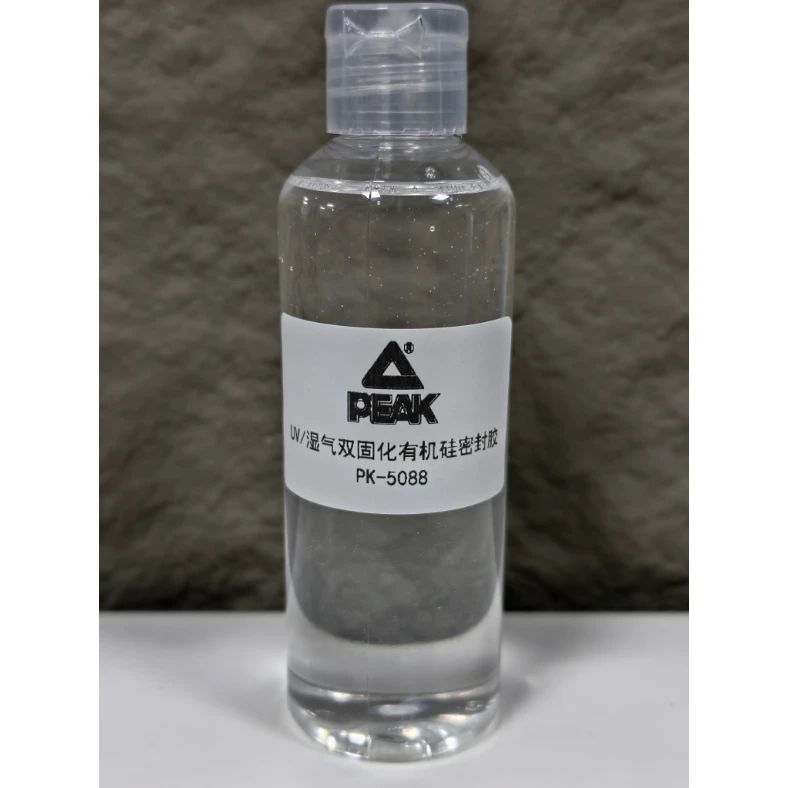
Silicon elastomers are a family of rubber-like materials built around a siloxane backbone, most commonly based on polydimethylsiloxane, and are valued for their unusually broad temperature resistance, electrical insulation, weatherability, low compression set, and biocompatibility. In the plastics and elastomers value chain, they occupy a high-performance niche rather than a commodity one, serving applications where conventional organic rubbers or thermoplastics are stressed by heat, cold, sterilization, UV, ozone, or long-term sealing requirements.
The category spans several major processing and cure formats, including room-temperature vulcanizing systems, high-consistency rubber, and liquid silicone rubber, each selected according to molding method, cure speed, purity requirements, and part geometry. Historically, silicone elastomers evolved from early silicone chemistry into a major industrial and biomedical material class, with documented medical use dating back to 1946 for bile duct repair and later expansion into tubing, implants, seals, and precision-molded parts.
Their performance profile is rooted in the silicon-oxygen backbone, whose high bond energy gives greater thermal and oxidative stability than carbon-carbon backbones used in many organic elastomers. At the same time, silicone elastomers have real limitations: their relatively low tear and abrasion resistance in some formulations can limit use in heavy-wear parts, and their low surface energy can complicate adhesion, printing, or coating unless surface treatment or primers are used. These limitations are often addressed through filler reinforcement, formulation design, plasma or corona treatment, and hybrid constructions.
Sustainability remains a major topic. Silicone elastomers are durable and reusable in long-life applications, but their feedstocks are petrochemical and mineral-derived, their manufacture is energy-intensive, and mechanical recycling remains limited compared with mainstream thermoplastics. Current innovation is therefore focused on cleaner production routes, lower-carbon feedstocks, improved recyclability, and formulations tailored for medical, automotive, electrical, and consumer applications that demand both performance and regulatory compliance.
History and Development
Silicone chemistry developed in the twentieth century from organosilicon research into industrial polymers and elastomers. Early adoption was driven by the need for materials that could retain elasticity under conditions that degraded natural rubber and many synthetic rubbers, especially high heat, ozone, and sterilization.
Medical technology accelerated adoption because silicone elastomers combined softness, inertness, and sterilizability. Over time, industrial grades expanded into electrical insulation, automotive sealing, consumer goods, and specialty industrial components, aided by the development of cleaner, more controllable processing routes such as liquid injection molding and precision extrusion.
Chemical Structure and Key Properties
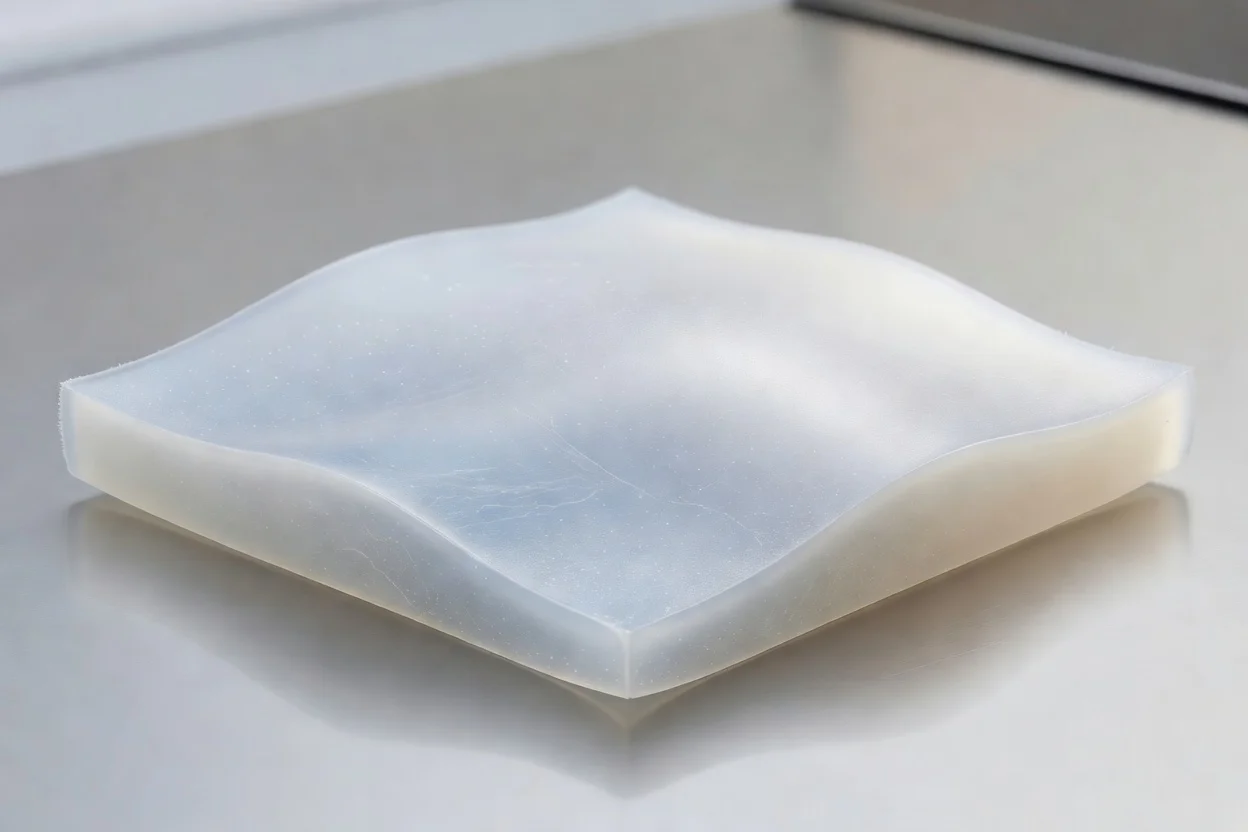
Silicone elastomers are based on repeating siloxane units with organic side groups, typically methyl, attached to silicon atoms. This structure produces a flexible chain with exceptional thermal and oxidative stability relative to many carbon-based elastomers.
| Property | Typical significance | Technical implication |
|---|---|---|
| Wide service temperature range | Stable flexibility in heat and cold | Suitable for ovens, engines, outdoor seals, and cold-climate components |
| Low compression set | Retains sealing force after compression | Important in gaskets, O-rings, and long-life seals |
| Electrical insulation | High dielectric performance | Used in cable accessories, insulators, and electronics |
| Weather and ozone resistance | Good outdoor durability | Performs well in UV and atmospheric exposure |
| Biocompatibility | Generally favorable biological response | Supports medical tubing, implants, and wearable devices |
| Low surface energy | Water-repellent, non-stick surface | Useful in release liners and seals, but can hinder bonding |
| Tear/abrasion limits | Lower durability in some grades | Often offset with reinforcement or design changes |
A practical formulation example is reinforcing silica, commonly used at roughly 20 to 40 phr in many silicone compounds to raise tensile strength and tear resistance by forming a physical network within the polymer matrix. Another common approach is using peroxide or platinum-catalyzed cure systems, where crosslink density is tuned to balance elasticity, compression set, and processing speed.
The main limit → cause → workaround pattern is especially important here:
- Poor O2/grease barrier → the flexible siloxane network and relatively open polymer structure allow permeation → use multilayer construction, fluorosilicone, barrier coatings, or change to a different polymer for true barrier packaging.
- Low surface energy before treatment → the hydrophobic silicone surface resists wetting and adhesion → use plasma, corona, primers, or mechanical interlocks before bonding or coating.
- Moderate tear and abrasion resistance in some grades → elastomeric backbone and formulation dependence → add reinforcing fillers, alter cure chemistry, or select higher-performance compounds.
Production Processes and Raw Feedstocks
Commercial silicone elastomers are generally produced from silica-derived silicon, chlorosilane intermediates, siloxane polymers, fillers, catalysts, and curing agents. Industrial descriptions consistently note a sequence beginning with silica or quartz sand, high-temperature reduction to elemental silicon, reaction with methyl chloride, distillation to chlorosilanes, hydrolysis or condensation, and polymerization into silicone base polymers.
The usual feedstock chain is:
- Quartz sand or silica
- Elemental silicon
- Methyl chloride
- Chlorosilane intermediates
- Silicone polymer base fluids or gums
- Reinforcing silica and other fillers
- Crosslinkers, catalysts, pigments, and additives
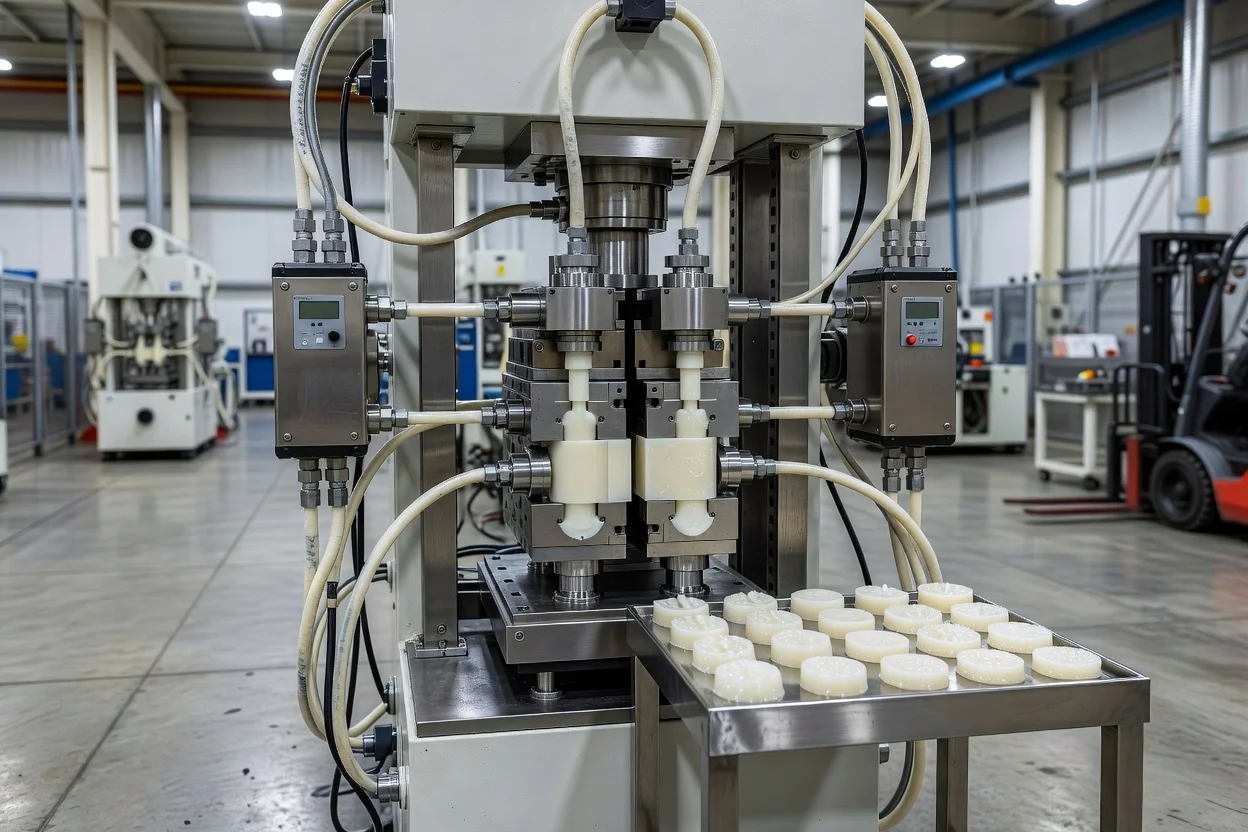
Processing methods depend on the elastomer family. Common routes include extrusion, compression molding, transfer molding, injection molding, calendering, coating, and dipping. Liquid silicone rubber is widely used in high-volume injection molding because of its flowability and fast cure, while high-consistency rubber is often favored for extrusion and compression molding.
Applications and End-Use Markets
Silicone elastomers serve a broad range of applications where reliability under harsh service conditions matters more than low cost.
| End-use sector | Typical grade/form | Usual process | Functional reason |
|---|---|---|---|
| Medical devices | High-purity LSR, RTV, HCR | Injection molding, extrusion, coating | Biocompatibility, sterilizability, softness |
| Electrical and electronics | Insulating silicone grades, conductive or thermally conductive variants | Molding, extrusion, potting, coating | Dielectric strength, thermal stability |
| Automotive and transportation | Heat-resistant HCR/LSR | Compression molding, injection molding, extrusion | Engine-bay heat, vibration isolation, sealing |
| Aerospace and defense | High-performance silicone compounds | Molding, sealing, fabrication | Low-temperature flexibility and environmental resistance |
| Consumer goods | Food-contact and general-purpose grades | Injection molding, extrusion, dipping | Odor neutrality, flexibility, durability |
| Lighting and optics | Transparent silicone elastomers | Molding, encapsulation | Clarity, thermal resistance, stability |
| Industrial sealing | Medium- to high-durometer compounds | Extrusion, compression molding | Low compression set, weather resistance |
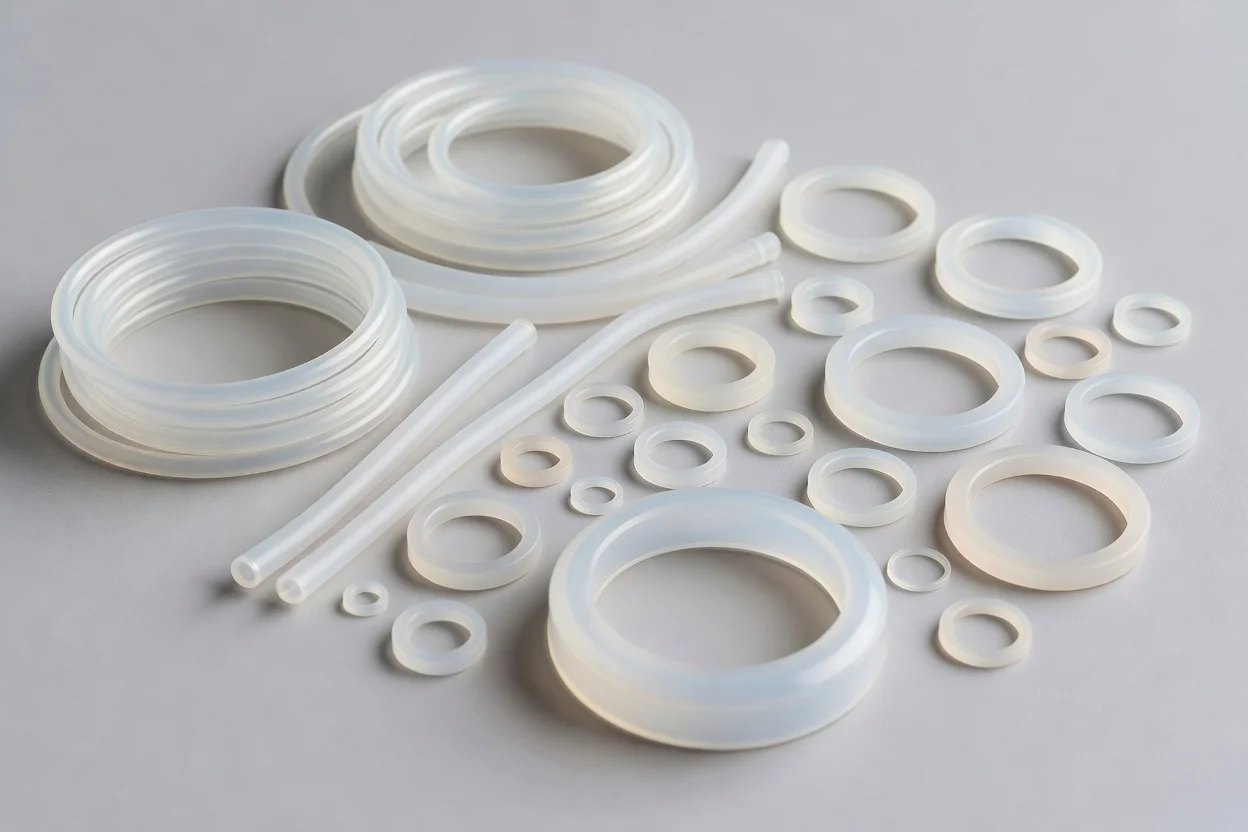
Representative products include O-rings, gaskets, seals, cable terminations, insulating components, tubing, catheters, prosthetic parts, oven seals, membranes, and molded consumer and medical parts.
A less suitable use is high-wear mechanical parts exposed to continuous abrasion, where silicone elastomers may underperform compared with abrasion-optimized polyurethane or some engineering rubbers unless heavily modified.
Environmental and Sustainability Aspects
Silicone elastomers are durable and long-lived, which can reduce replacement frequency and lifetime material throughput in demanding applications. Their stability also supports repeated sterilization and service in harsh environments, which is beneficial in medical and industrial use.
At the same time, the sustainability profile is mixed. Raw materials are derived from silica and methyl chloride chemistry, and industrial production is energy-intensive, particularly at the silicon production stage. Unlike many thermoplastics, silicone elastomers are crosslinked thermosets, which makes conventional remelting impossible and limits closed-loop mechanical recycling.
Current sustainability pathways include:
- Design for long service life and part consolidation
- Regrind use in some noncritical applications
- Chemical or advanced recycling research for silicone waste streams
- Lower-carbon production and cleaner intermediate chemistry
- Bio-based or partially renewable feedstock concepts, although these remain limited compared with mainstream petrochemical polymers
In practice, the environmental case for silicone elastomers is strongest when their long life, safety, sterilizability, and performance prevent repeated replacement or enable applications that would otherwise fail with shorter-lived materials.
Economic and Global Market Impact
Silicone elastomers belong to the premium segment of the elastomers market, with value driven by performance, regulatory approvals, and application-critical reliability rather than commodity volume. Demand is closely tied to medical devices, electrification, consumer electronics, automotive thermal management, and industrial sealing.
Major global producers and technology leaders commonly identified in the market include Dow, Wacker Chemie, Elkem, and other specialized silicone manufacturers with integrated feedstock and compounding capabilities. Competitive advantage depends on polymer consistency, purity, cure technology, specialty fillers, and the ability to supply application-specific grades for regulated markets.
Current Challenges and Innovations
Several technical challenges continue to shape development:
- Adhesion and bonding remain difficult because of low surface energy, driving demand for surface activation and specialty primers.
- Recyclability is constrained by thermoset crosslinking, prompting interest in depolymerization and circular-economy design.
- Cost remains higher than many conventional elastomers, so silicone is reserved for applications where performance justifies the premium.
- Wear resistance can be insufficient in some formulations, encouraging reinforcement and hybrid compounds.
Innovation is concentrated in:
- Liquid silicone rubber systems for high-throughput precision molding
- Thermally conductive and electrically conductive formulations for electronics and EVs
- High-purity medical grades with tighter extractables and leachables control
- Improved fillers and crosslink systems to enhance tear strength, compression set, and processability
- Surface-modified and hybrid silicone materials for adhesion, barrier, and multifunctional performance
Future Outlook
The long-term outlook for silicone elastomers is favorable in sectors that require reliability under thermal, electrical, and sanitary stress. Growth is likely to be strongest in medical technology, advanced electronics, electric vehicles, renewable-energy infrastructure, and demanding sealing applications.
Future progress will depend on whether the industry can lower manufacturing emissions, improve end-of-life pathways, and expand high-value multifunctional grades without sacrificing the defining properties that make silicone elastomers valuable. Continued formulation innovation, especially in fillers, cure chemistry, and surface engineering, is likely to widen their role across the plastics and elastomers ecosystem.
Summary
Silicone elastomers are high-performance, crosslinked siloxane-based materials distinguished by heat resistance, low-temperature flexibility, electrical insulation, weatherability, and biocompatibility. Their main strengths make them indispensable in medical, electrical, automotive, and industrial sealing applications, while their main weaknesses are cost, adhesion challenges, and limited recyclability.
References
- •
Silicone elastomers in engineering: Uses and benefits. (2025, June 9). Sur-Seal. https://www.sur-seal.com/blog/understanding-silicone-elastomers-and-their-role-in-engineering/Link
- •
Silicone elastomers in the market today. (2023, January 5). Polymer Science. https://polymerscience.com/silicone-elastomers-in-the-market-today/Link
- •
Silicone rubber: A versatile elastomer in industry. (2023, November 27). J-Flex. https://www.j-flex.com/silicone-rubber-a-versatile-elastomer-in-industry/Link
- •
What is a silicone elastomer? (n.d.). Elkem. https://www.elkem.com/products/silicones/elastomers/Link
- •
Silicone rubber: Types, structure & properties. (2025, July 8). SpecialChem. https://www.specialchem.com/plastics/guide/silicone-rubber-elastomerLink
- •
What are the different processing methods for silicone rubber? (2022, July 5). Elkem. https://magazine.elkem.com/material-science-insights/different-processing-methods/Link
- •
Pros and cons of silicone elastomers. (2021, May 3). SIMTEC Silicone Parts. https://www.simtec-silicone.com/blogs/pros-and-cons-of-silicone-elastomers/Link
- •
Chemistry & properties of silicones. (2024, September 20). INMR. https://www.inmr.com/chemistry-properties-of-silicones/Link
- •
Manufacturing process of silicone products: A guide. (2025, April 28). Elastostar. https://elastostar.com/manufacturing-process-of-silicone-products/Link
- •
Silicone elastomers. (2026, August 12). Stockwell Elastomerics. https://www.stockwell.com/silicone-elastomers/Link
- •
Properties: Silicone rubber. (2026, August 12). AZoM. https://www.azom.com/properties.aspx?ArticleID=920Link
- •
The making of silicone: The 5 step process. (2024, November 28). United Silicones. https://united-silicones.com/blogs/news/the-making-of-silicone-the-5-step-processLink
- •
Silicone rubber. (2005, December 6). In Wikipedia. https://en.wikipedia.org/wiki/Silicone_rubberLink
- •
Silicone: A guide to production, uses and benefits. (2022, December 11). SIMTEC Silicone Parts. https://www.simtec-silicone.com/blogs/how-is-silicone-produced/Link
- •
BOTM: March 2010 silicone elastomer. (n.d.). Society For Biomaterials. https://biomaterials.org/sites/sfb/files/docs/2014/botm_2010_mar_silicone_elastomer.pdfLink
- •
Silicone rubber fabrication. (2025, November 5). Dow Inc. https://www.dow.com/en-us/market/mkt-consumer-goods-appliances/sub-consumer-rubber-fabrication.htmlLink
- •
Silicone uses and benefits. (2024, July 19). Fictiv. https://www.fictiv.com/articles/silicone-uses-and-benefitsLink
- •
Learn more about silicone rubber at Silicone Engineering. (2018, September 13). Silicone Engineering. https://silicone.co.uk/videos/properties-of-silicone-engineering/Link
- •
Silicone elastomers. (n.d.). Wacker Chemie AG. https://www.wacker.com/cms/en-us/products/applications/thermoplastics-elastomers/silicone-elastomers/silicone-elastomers-1.htmlLink
- •
Process for preparing silicone elastomer compositions. (n.d.). Google Patents. https://patents.google.com/patent/WO1998042307A1/enLink
- •
Silicone elastomer sheet. (2024, December 16). Goodfellow. https://www.goodfellow.com/global/resources/silicone-elastomer-sheet-material-informationLink