

Introduction
Digitalization in plastics processing refers to the use of digital technologies, software, and connected data systems to monitor, control, optimize, and integrate manufacturing operations across the plant and enterprise. In practical terms, it extends far beyond simple data entry or paperless workflows: it links machines, sensors, process data, quality systems, maintenance, logistics, and business planning so that production becomes more transparent, more responsive, and more automatable.
In the plastics machinery sector, digitalization is closely associated with Industry 4.0, digital twins, the digital thread, supervisory control systems, and manufacturing execution systems that connect injection molding, extrusion, blow molding, thermoforming, granulation, and auxiliary equipment into a coordinated production environment. The topic matters because plastics processors operate under tight constraints involving resin variability, energy cost, scrap reduction, traceability, downtime, and product consistency, all of which are directly affected by the quality of data and the speed of decision-making.
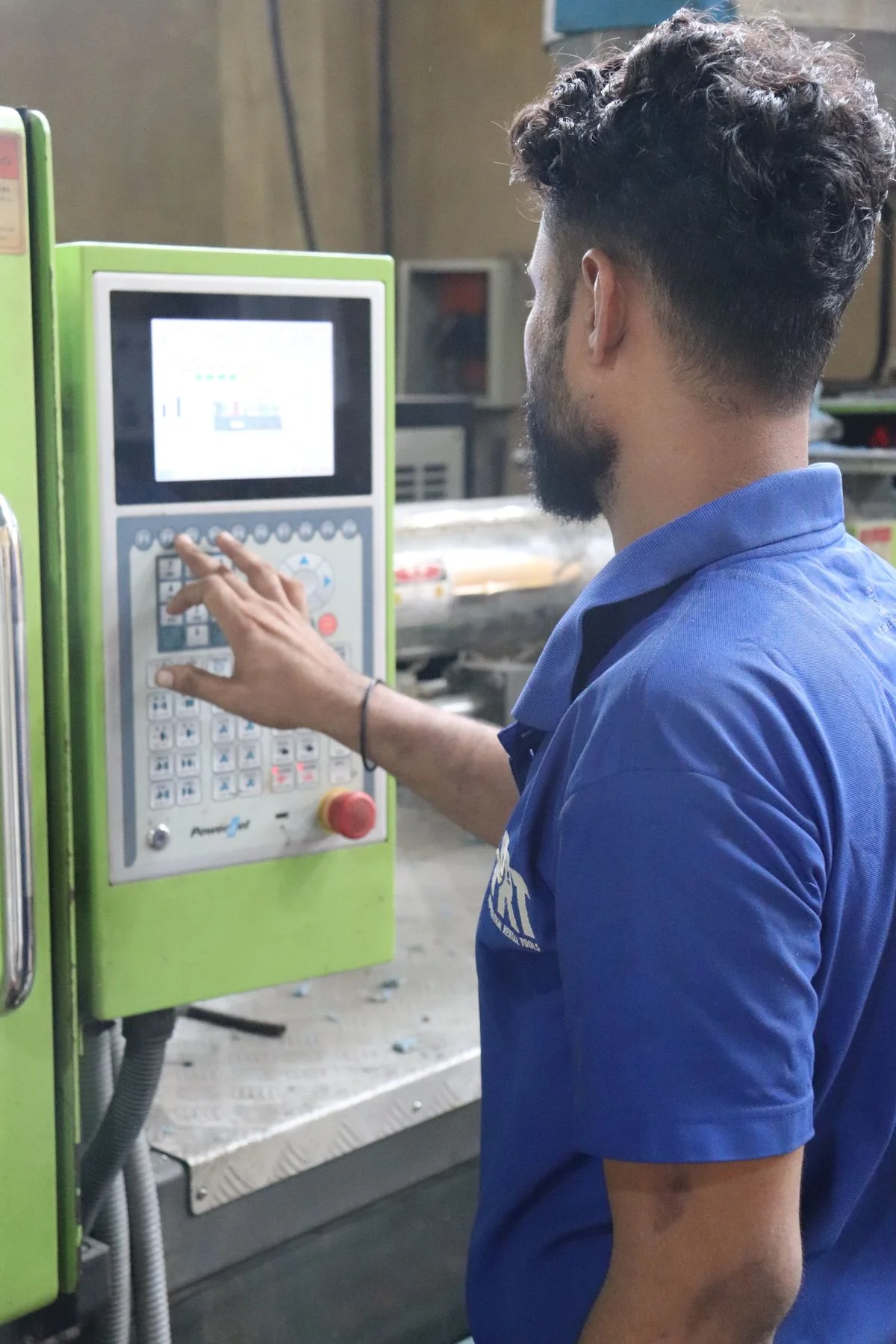
Digitalization in plastics machinery is not a single machine class but an ecosystem of technologies: machine controllers, PLCs, SCADA, MES, analytics platforms, quality databases, predictive maintenance tools, and AI-assisted process optimization. It also includes the digitization step that converts analog signals and manual records into machine-readable data, which then becomes usable for process optimization, traceability, and closed-loop control.
The history of digitalization in plastics processing reflects a progression from local automation to connected production, from isolated machine controls to plantwide integration, and from data collection to model-based optimization. Current implementations emphasize energy efficiency, material savings, and traceability, while future developments are increasingly centered on interoperable systems, digital twins, and more autonomous production using advanced analytics and AI.
History and Development
Early digitalization in plastics processing emerged with the spread of electronic controllers and computerized process monitoring, which replaced purely manual adjustment and analog instrumentation. As machine controls improved, processors gained more repeatability in temperature regulation, screw speed, pressure profiles, and cycle timing, especially in injection molding and extrusion lines.
A major milestone came with the wider adoption of PLC-based control, SCADA, and later MES platforms, which enabled production data to be gathered across multiple machines rather than only within a single machine boundary. This shift made it possible to track OEE, alarm history, batch genealogy, quality deviations, and maintenance events in a structured way.
A second milestone was the emergence of digital twins and the digital thread, in which process data from equipment is linked to virtual representations of machines, products, and production flows. This enabled simulation, offline parameter testing, and better cross-functional coordination between engineering, operations, and service teams.
A third development has been the integration of cloud connectivity, AI-supported analytics, and remote service tools, allowing processors and equipment suppliers to diagnose faults, compare plants, and optimize parameters continuously rather than only during scheduled audits. In many plants, this has moved digitalization from a reporting function toward a core production capability.
Key Characteristics and Technical Overview
Digitalization systems in plastics machinery generally combine hardware, software, and networks into a layered architecture. Typical layers include field devices, machine controllers, edge devices, plant systems, and enterprise systems.
Key technical elements include:
- Sensors and data acquisition
- Melt pressure, barrel temperature, torque, vibration, motor load, humidity, flow, weight, and vision systems are used to convert physical conditions into digital signals.
- Control systems
- PLCs and machine controllers execute deterministic process logic, while SCADA supervises multiple assets and MES coordinates production orders, traceability, and reporting.
- Analytics and optimization
- Statistical process control, anomaly detection, machine learning, and recipe management are used to reduce drift and stabilize output.
- Digital twins
- Virtual models mirror machine or line behavior and support simulation, parameter testing, and maintenance planning.
- Connectivity standards
- Industrial Ethernet, OPC-style data exchange, and integration middleware are commonly used to move data between equipment and business systems.
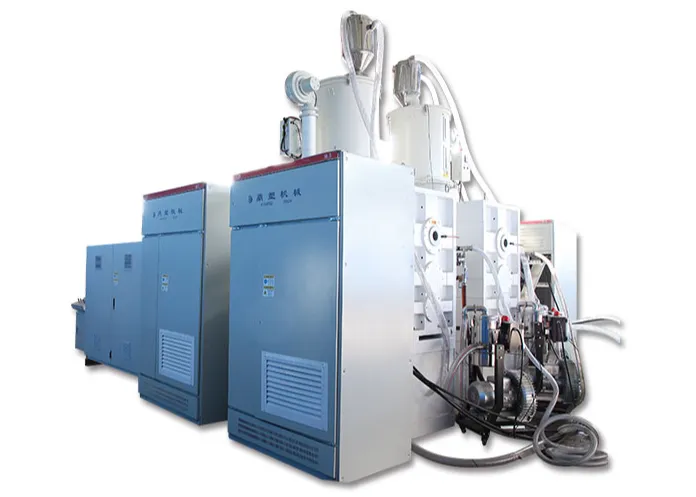
In plastics processing, digitalization is valuable because many process variables interact nonlinearly. For example, a slight change in melt temperature can alter viscosity, cavity filling, pressure profile, dimensional accuracy, and cycle stability. Digital systems help detect such interactions earlier than human observation alone can do.
Typical quantitative benchmarks in digitized plastics operations vary by process, but commonly cited engineering ranges include:
- Injection molding cycle monitoring: sub-second logging of clamp force, injection pressure, screw position, and cooling time for every shot.
- Extrusion line data capture: continuous monitoring at line speeds that may exceed several hundred meters per minute in film, sheet, or cable applications, depending on product type.
- Granulation and recycling lines: flake or regrind characterization often includes particle size distribution, bulk density, contamination level, and moisture content for process control.
- Centrifugal dewatering in recycling systems: residual moisture after mechanical dewatering is typically reduced to low single-digit percentages, with final values depending on polymer, wash-line design, and thermal drying stage.
- Rotor-based size reduction equipment: granulators commonly operate at several hundred to several thousand rpm, depending on knife geometry, material, and throughput requirement.
- Throughput: digitalized systems may support machines and lines ranging from tens of kg/h in lab or specialty applications to multiple t/h in large extrusion or recycling lines.
- Specific energy consumption: process optimization can lower energy per unit output, especially when digital control reduces scrap, idle running, and unnecessary heating or pneumatic losses.
Because equipment, resin, and product class differ widely, exact benchmarks are application-specific rather than universal.
Types and Variations
Digitalization in plastics machinery appears in several forms.
| Type | Main function | Typical plastics-processing context |
|---|---|---|
| Machine-level digitalization | Local control, alarms, recipe handling, parameter logging | Injection molding machines, extruders, blow molding machines |
| Cell-level digitalization | Coordination of several machines and auxiliaries | Automated molding cells, extrusion and downstream lines |
| Plant-level digitalization | Production visibility, traceability, scheduling, KPI management | Multi-line factories, recycling plants, compounding plants |
| Enterprise-level digitalization | Integration with ERP, purchasing, quality, and service | Global manufacturing networks and multi-site processors |
| Product digitalization | Tracking of parts, lots, and process genealogy | Automotive, medical, packaging, and technical parts |
| Service digitalization | Remote diagnostics and predictive maintenance | OEM service models and high-availability operations |
Within these categories, common functional variants include:
- Condition monitoring systems
- Predictive maintenance platforms
- Energy management systems
- Recipe and parameter libraries
- Quality inspection and vision systems
- Digital twin and simulation platforms
- Remote assistance and fleet management tools
Applications and Uses
Digitalization is used across nearly every plastics-processing segment.
- Injection molding
- Supports cavity pressure control, scientific molding, mold changeover documentation, defect detection, and complete shot traceability.
- Extrusion
- Improves line stability, screw and melt monitoring, thickness control, haul-off coordination, and downstream synchronization.
- Blow molding
- Helps manage parison or preform variability, wall-thickness distribution, and cycle repeatability.
- Thermoforming
- Enables oven-zone control, sheet handling optimization, and trim-loss reduction.
- Compounding
- Improves dosing accuracy, recipe consistency, and batch traceability.
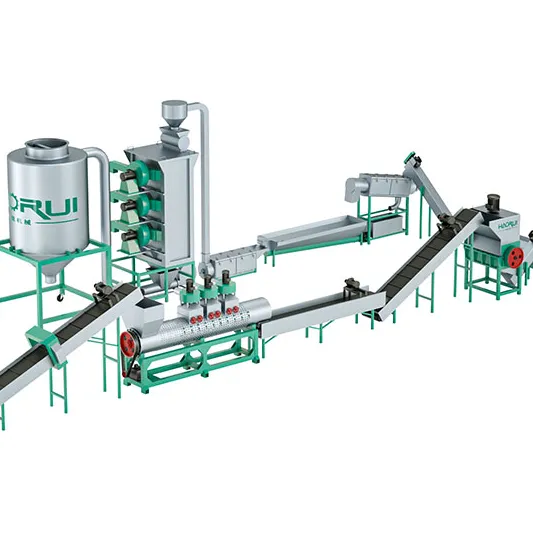
- Recycling and reprocessing
- Useful for input sorting, wash-line control, moisture management, contamination monitoring, and yield improvement.
- Auxiliary equipment
- Covers dryers, chillers, feeders, pumps, granulators, conveyors, and robots integrated into a plantwide data environment.
A less suitable application is very low-cost, highly manual production where the product value is small, the process is simple, and the capital budget is limited. In such cases, full digitalization may deliver weaker returns than targeted automation or basic data logging.
Technological Innovations and Automation
The most important digitalization trends in plastics machinery are tied to automation depth and data quality.
- Closed-loop control
- Process variables are measured and corrected automatically, reducing variation in melt flow, pressure, or part weight.
- AI-assisted optimization
- Algorithms identify parameter patterns that correlate with defects, energy waste, or downtime.
- Digital twins
- Enable virtual commissioning, process simulation, and faster launch of new products or mold tools.
- Edge computing
- Reduces latency by processing critical data near the machine before sending summaries to higher-level systems.
- Remote service
- Supports faster troubleshooting and software updates without requiring on-site intervention.
This convergence is especially important in plastics because many quality issues, such as warpage, sink marks, haze, thickness variation, and contamination, are not caused by a single factor but by interacting machine, material, mold, and environmental variables. Digital systems help expose those interactions.
Environmental and Sustainability Aspects
Digitalization is increasingly linked to sustainability in plastics processing because it can reduce waste, energy use, and unplanned scrap generation.
Its main environmental contributions include:
- Energy efficiency
- Better scheduling, motor control, and heating optimization reduce unnecessary power consumption.
- Material waste reduction
- Stable processes generate fewer rejects, purges, and start-up losses.
- Recycling support
- Traceability and quality monitoring improve the handling of recycled feedstocks and regrind.
- Predictive maintenance
- Prevents catastrophic failures that can create scrap or force premature replacement of components.
- Process transparency
- Makes environmental reporting and compliance tracking easier.
At the same time, digitalization has trade-offs. More sensors, servers, and connected devices increase system complexity and can add cybersecurity, maintenance, and obsolescence burdens. For some processors, the environmental gains are strongest when digitalization is focused on high-impact bottlenecks rather than deployed indiscriminately.
Economic and Global Market Impact
Digitalization changes the economics of plastics machinery by shifting value from standalone equipment to data-enabled performance. Suppliers increasingly compete not only on throughput or clamp force but also on uptime, software capability, service connectivity, and process intelligence.
For processors, the main economic effects include:
- Lower scrap and rework
- Shorter commissioning and product changeover times
- Improved labor productivity
- Better traceability for regulated markets
- Reduced unplanned downtime
- Higher asset utilization across shifts and sites
Globally, adoption is strongest where labor costs, energy prices, quality requirements, or regulatory demands are high. Automotive, medical, packaging, electronics, and technical parts manufacturing are especially active users because these sectors value repeatability and documentation.
Current Challenges and Innovations
Despite its benefits, digitalization in plastics processing faces several obstacles.
- Interoperability
- Plants often contain mixed generations of machines from different suppliers, making data integration difficult.
- Legacy equipment
- Older machinery may lack native connectivity or standardized data structures.
- Cybersecurity
- Increased connectivity expands the attack surface of production systems.
- Data quality
- Poor sensor calibration or inconsistent naming conventions can undermine analytics.
- Workforce readiness
- Operators, technicians, and engineers need new skills in data interpretation and software-enabled process control.
- ROI uncertainty
- Some projects fail because they emphasize dashboards rather than measurable process improvement.
Current innovation is focused on solving these problems through open interfaces, modular software, edge analytics, standardized data models, and lower-friction integration between OT and IT environments.
Future Outlook
The future of digitalization in plastics machinery is likely to be shaped by three developments.
First, deeper machine autonomy will expand as control systems combine real-time sensing with AI-based decision support. Second, end-to-end traceability will become more important as supply chains demand proof of material origin, process history, and product conformity. Third, digital twins and simulation will move further into routine engineering, not just advanced R&D, because they shorten commissioning and reduce risk when launching new products.
For plastics processors, the strategic significance of digitalization is likely to increase as resin prices, energy volatility, labor shortages, and sustainability regulation continue to pressure margins. In that environment, the most competitive plants will be those that treat digitalization not as an add-on, but as a core production capability embedded in machine design, process engineering, quality assurance, and service management.
Summary
Digitalization in plastics machinery is the transformation of production through connected data, software, automation, and analytics. It links equipment, materials, quality, maintenance, and enterprise systems into a more controllable and more efficient manufacturing environment, with clear benefits for productivity, traceability, and sustainability.
References
- •
Digitalization. (2004, November 14). Wikipedia. https://en.wikipedia.org/wiki/DigitalizationLink
- •
What is Digitalization? (2025, December 24). WalkMe. https://www.walkme.com/glossary/digitalization/Link
- •
Digitalization: A literature review and research agenda. (n.d.). https://comum.rcaap.pt/server/api/core/bitstreams/28900ffe-5be7-485a-9ae6-2aca8616882b/contentLink
- •
Digitalization. (n.d.). Siemens. https://www.siemens.com/en-us/technology/digitalization/Link
- •
What is digitalisation? (2025, January 1). PFH Private University of Applied Sciences. https://www.pfh.de/en/blog/what-digitalisationLink
- •
What is Digitalization? Meaning and opportunities. (2024, January 12). Prysmian. https://www.prysmian.com/en/insight/sustainability/what-is-digitalization-meaning-and-opportunitiesLink
- •
Distinguishing digitization and digitalization: A systematic review of the literature. (2025, January 1). Journal of Product Innovation Management. https://onlinelibrary.wiley.com/doi/10.1111/jpim.12690Link
- •
What is digital transformation in business? (n.d.). University of Phoenix. https://www.phoenix.edu/articles/business/what-is-digital-transformation-in-business.htmlLink
- •
Digitalization. (2025, January 1). Cambridge Dictionary. https://dictionary.cambridge.org/us/dictionary/english/digitalizationLink
- •
Digitalization. (2026, May 25). Merriam-Webster. https://www.merriam-webster.com/dictionary/digitalizationLink
- •
The differences between digitization, digitalization, and digital transformation in manufacturing. (n.d.). Yokogawa. https://www.yokogawa.com/eu/library/resources/white-papers/the-differences-between-digitization-digitalization-and-digital-transformation-in-manufacturing/Link
- •
What is digitalization for business? (2025, January 1). Eaton. https://www.eaton.com/us/en-us/support/eaton-answers/what-is-digitalization-in-business.htmlLink
- •
What is digital transformation? (2024, September 9). IBM. https://www.ibm.com/think/topics/digital-transformationLink
- •
What is a digital system? Features, examples, and benefits. (2026, May 13). Ventronchip. https://www.ventronchip.com/news/what-is-a-digital-system-features-examples-and-benefits.htmlLink
- •
史上最全企业数字化系统整理 [Comprehensive enterprise digitalization system compilation]. (2023, August 29). Tencent News. https://news.qq.com/rain/a/20230829A02YGU00Link
- •
数字化系统- 中压解决方案 [Digital systems - Medium voltage solutions]. (2026, September 22). ABB. https://new.abb.com/medium-voltage/zh/modular-systems/digital-solutionsLink
- •
Digital systems. (n.d.). NJIT Digital Commons. https://digitalcommons.njit.edu/cgi/viewcontent.cgi?filename=0&article=1000&context=oat&type=additionalLink
- •
数字化系统(软件)开发及应用 [Digital systems (software) development and application]. (n.d.). National Development and Reform Commission. https://www.ndrc.gov.cn/xxgk/zcfb/tz/201712/W020190905503634628770.pdfLink
- •
新书推荐丨提炼“7个步骤”!他们以方法论框架教你做数字化 ... [New book recommendation: 7 steps! They teach you digital transformation with a methodological framework]. (2025, February 10). Zhejiang University. http://niim.zju.edu.cn/index.php/details?id=2513Link
- •
企业数字化转型技术盘点及趋势展望 [Enterprise digital transformation technology inventory and trend outlook]. (2019, November 12). Tencent Cloud. https://cloud.tencent.com/developer/news/1016187Link
- •
2025 年度向特定对象发行A 股股票募集说明书(注册稿) [2025 annual report to specific targets for A-share issuance (registration draft)]. (n.d.). Sina Finance. http://file.finance.sina.com.cn/211.154.219.97:9494/MRGG/CNSESH_STOCK/2026/2026-6/2026-06-04/12371680.PDFLink
- •
数字工厂 [Digital factory]. (2023, December 19). ProcessOn. https://www.processon.com/view/649005f042fb7c00832ea187Link
- •
关于广东美亚旅游科技集团股份有限公司公开发行 ... [Regarding Guangdong Meiya Tourism Technology Group Co., Ltd. public offering...]. (n.d.). Qixin. http://qxb-pdf-osscache.qixin.com/AnBaseinfo/c38fda94702a2d75da4a7da72dff59d8.pdfLink
- •
企业数字化战略更新与动态能力构建 [Enterprise digital strategy update and dynamic capability building]. (n.d.). Shanghai University of Finance and Economics. https://qks.sufe.edu.cn/j/PDFFull/A4TwAT41x-fxmd-tnem-rg2m-MdYHPTwf6BKu.pdfLink
- •
产业结构调整指导目录 [Industrial structure adjustment guidance catalog]. (n.d.). National Development and Reform Commission. https://www.ndrc.gov.cn/xxgk/zcfb/fzggwl/202312/P020231229700886191069.pdfLink
- •
思略特季刊 [Strategy& Quarterly]. (n.d.). PwC. https://www.strategyand.pwc.com/cn/zh/reports/2023/quarterly-updates-autumn-2023.pdfLink
- •
孩子王(301078.SZ)首次覆盖报告 [[PDF] Child King (301078.SZ) first coverage report]. (n.d.). East Money. https://pdf.dfcfw.com/pdf/H3_AP202303141584245685_1.pdfLink
- •
四川君逸数码科技股份有限公司2025 年年度报告全文 [Sichuan Junyi Digital Technology Co., Ltd. 2025 annual report full text]. (n.d.). SZSE. https://disc.static.szse.cn/disc/disk03/finalpage/2026-04-27/11017a02-c048-4b89-91a8-80b6c3f1f640.PDFLink
- •
企业数字化转型蓝皮报告 [Enterprise digital transformation blue book report]. (n.d.). East Money. https://pdf.dfcfw.com/pdf/H3_AP202112301537478098_1.pdf?1640873618000.pdfLink
- •
国家发展改革委关于修改《产业结构调整指导目录(2019 年本)》的决定 [NDRC decision on amending the Industrial Structure Adjustment Guidance Catalog (2019 edition)]. (2022, November 30). Ministry of Justice. https://www.moj.gov.cn/pub/sfbgw/flfggz/flfggzbmgz/202305/t20230512_478693.htmlLink