
Introduction
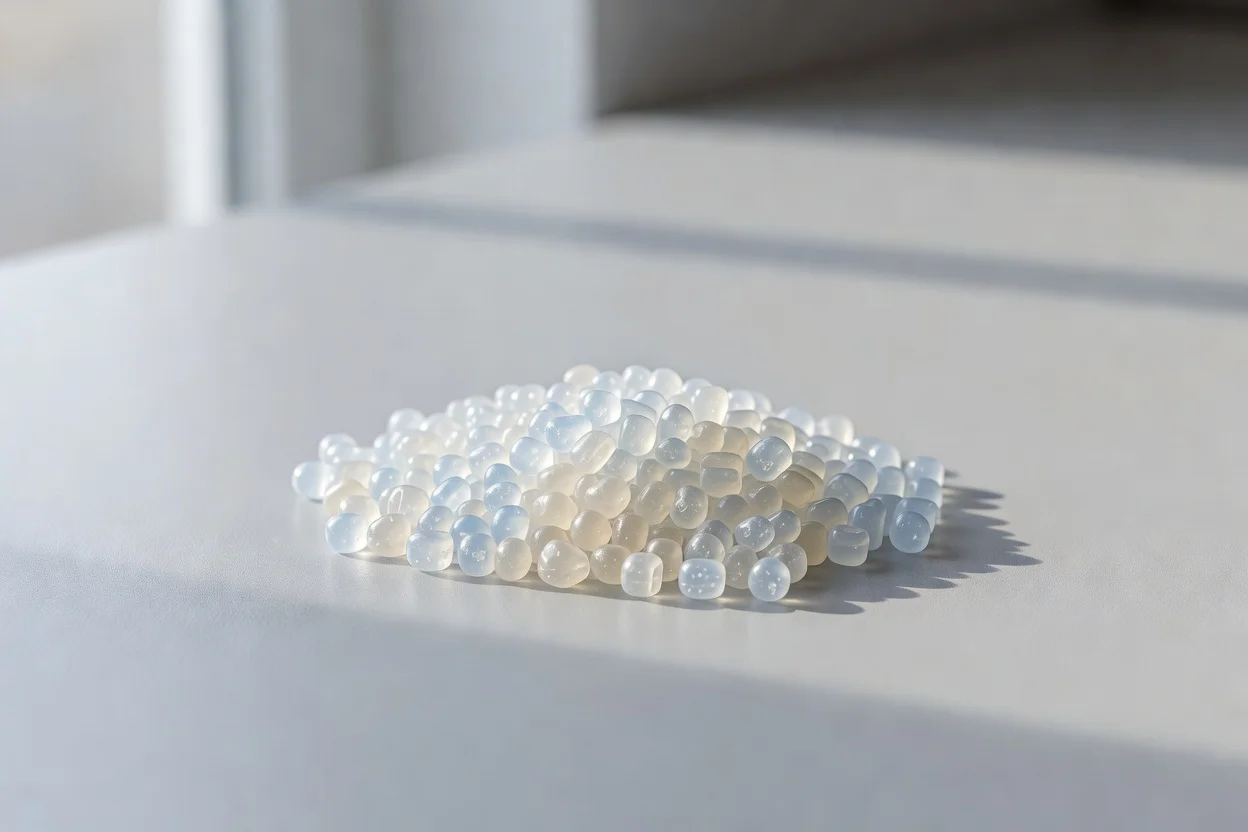
rHDPE (recycled high-density polyethylene) is a mechanically or, less commonly, chemically recovered polyethylene feedstock made from post-consumer and post-industrial HDPE waste and reprocessed into pellets, regrind, or compounded resin for new products. It is one of the most important recycled polyolefins because it combines relatively low cost, good stiffness-to-weight ratio, chemical resistance, moisture resistance, and broad processability with a substantially lower carbon footprint than virgin HDPE.
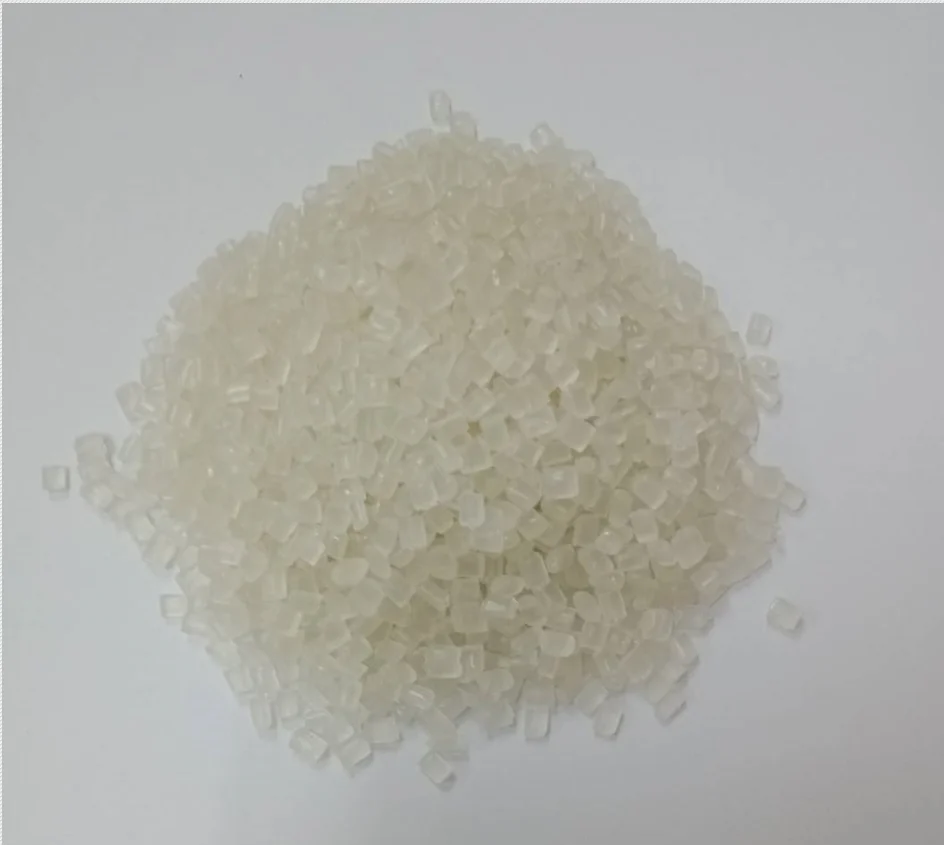
In the plastics value chain, rHDPE sits at the intersection of collection, sorting, washing, extrusion, compounding, and downstream conversion, making it both a material and a circular-economy system output. Its principal variants are sorted by feedstock and quality: post-consumer recycled rHDPE, post-industrial recycled rHDPE, natural/unpigmented grades, mixed-color grades, and higher-purity grades that may be suitable for demanding non-food applications or, in certain regulated systems, food-contact structures when used with validated barrier or multilayer designs.
The material has evolved from a low-value recycling stream into a strategic industrial resin used in packaging, containers, pipe, conduit, pallets, plastic lumber, agricultural products, and some infrastructure components. At the same time, rHDPE remains constrained by feedstock variability, odor and contamination control, property drift, and regulatory limits for high-performance or food-contact uses, which is why blending, compatibilization, odor reduction, and multilayer design continue to shape the market.
Its future is tied to improved collection systems, recycled-content mandates, better sortation technologies, and lower-carbon manufacturing pathways, while market growth will depend on whether rHDPE can reliably deliver consistent performance at scale without undermining product safety or process stability.
History and Development
HDPE itself became a major industrial polymer in the mid-20th century, and its recycling followed the broader expansion of municipal plastics recovery systems and curbside collection. rHDPE gained importance as packaging waste streams became better segregated and as processors learned to convert washed flake into consistent pellets suitable for extrusion and molding.
Early rHDPE use was concentrated in low-spec products such as bins, crates, and plastic lumber, where variation in color and melt behavior was acceptable. Over time, sorting improvements and compounding know-how enabled broader use in bottles, containers, pipe, and construction products, especially where the recycled material can be blended with virgin resin or placed in non-critical layers.
The market’s development has also been shaped by sustainability policy and corporate procurement targets. Recent product-carbon-footprint disclosures from major recyclers and converters have strengthened demand for rHDPE by quantifying emissions reductions versus virgin HDPE.
Chemical Structure and Key Properties
rHDPE retains the basic polyethylene backbone of HDPE, which is a linear, semi-crystalline polyolefin with high density, good tensile stiffness, and strong resistance to many acids, alkalis, and water. Because the polymer chemistry is the same as virgin HDPE, performance depends heavily on contamination, molecular-weight distribution, oxidation history, and the level of blending or stabilization used during recycling.
Key technical characteristics
| Property | Practical significance |
|---|---|
| High stiffness | Useful for bottles, crates, pipe, and molded goods |
| Low moisture absorption | Suitable for wet or humid environments |
| Good chemical resistance | Valuable for detergents, cleaners, and many industrial fluids |
| Good impact resistance | Supports containers, bins, and transport packaging |
| Thermoplastic reprocessability | Allows remelting and pelletizing into new products |
Real limits and workarounds
| Limit | Cause | Common workaround |
|---|---|---|
| Poor oxygen and grease barrier | Nonpolar polyethylene has limited barrier performance to small gas and fat molecules | Use multilayer structures, barrier coatings, or blend designs when barrier performance is required |
| Low surface energy before treatment | Polyethylene surfaces are difficult to wet, print, or bond | Apply corona, flame, plasma, or primer treatment before printing, labeling, or adhesive bonding |
| Property variability | Mixed feedstocks, oxidation, and contamination alter melt flow and mechanical behavior | Improve sortation, use filtration and deodorization, add stabilizers, and blend with virgin resin |
| Odor and color inconsistency | Residual organics, inks, and legacy additives remain in the recyclate | Use hot washing, deodorization, color sorting, and deodorant/masterbatch systems |
Additives and compounding examples
- A small antioxidant package, often on the order of a few tenths of a percent, is commonly used to slow thermal-oxidative degradation during re-extrusion and repeated melting; the mechanism is radical scavenging and peroxide decomposition control.
- Compatibilizers such as ethylene-glycidyl methacrylate copolymer are used in recycled polymer blends to improve interfacial adhesion, especially when rHDPE is mixed with other recycled streams such as PET; the mechanism is chemical interaction at the phase boundary rather than simple dilution.
Production Processes and Raw Feedstocks
rHDPE is produced from post-consumer sources such as milk jugs, detergent bottles, chemical bottles, caps, closures, and other rigid HDPE packaging, as well as post-industrial scrap from converters and manufacturers. Natural or unpigmented HDPE is especially valuable because it can be more easily reprocessed into higher-quality light-colored recyclate.
Typical production chain
- Collection and bale formation
- Sorting by polymer type, color, and contamination level
- Grinding into flakes
- Washing, separation, and drying
- Melt filtration and extrusion
- Pelletizing or compounding into specified grades
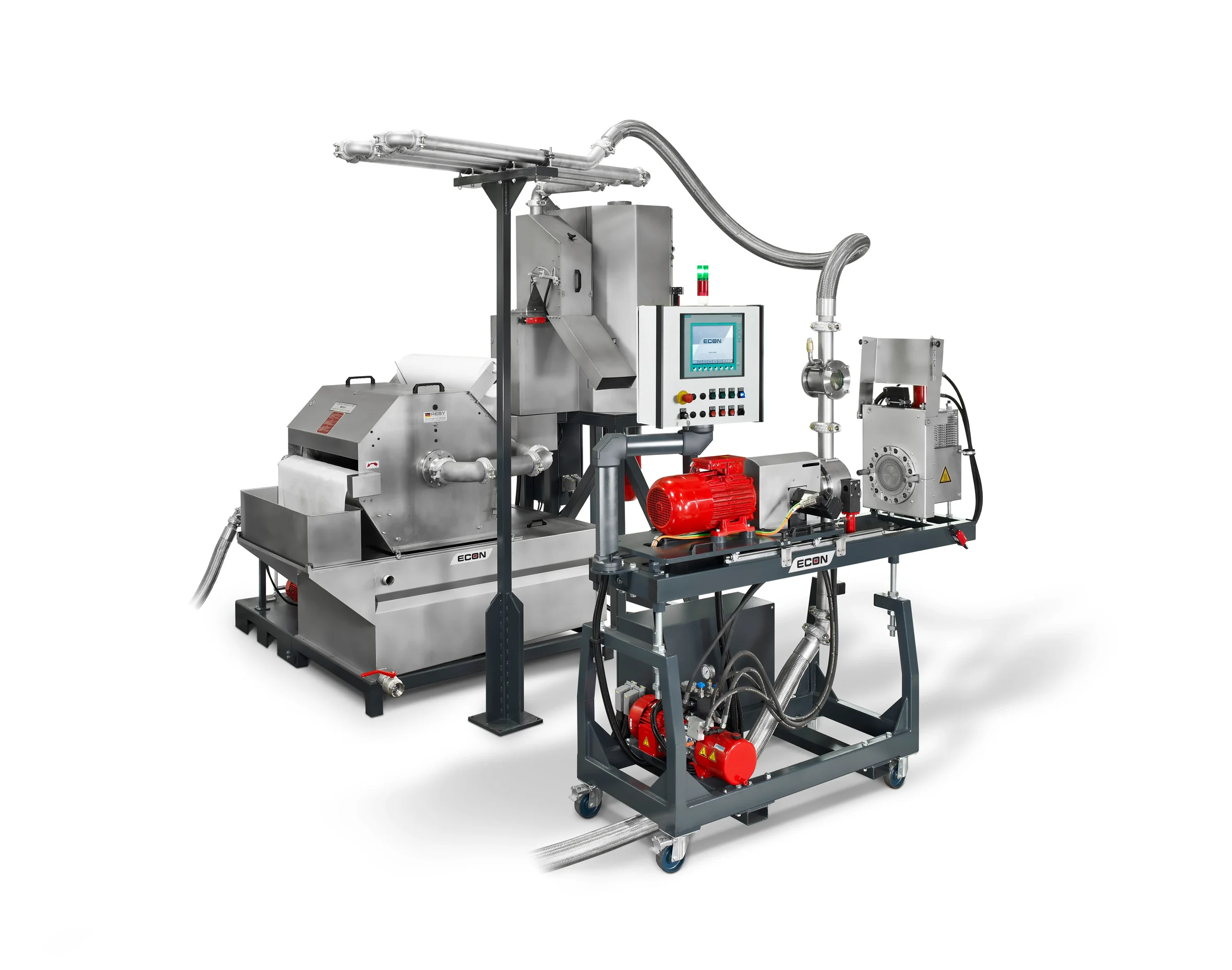
Mechanical recycling dominates commercial rHDPE production because HDPE tolerates repeated remelting better than many condensation polymers, and the process is comparatively mature and economical. Chemical recycling can also contribute to circularity in the broader polyethylene system, but the supplied search results emphasize mechanical recycling as the main route for rHDPE pellets.
Industry leadership
Major recycling and resin platforms include Veolia PlastiLoop, which operates rHDPE recycling sites in Europe and Asia, and ALPLA recycling, whose plants in Spain have reported very low product-carbon footprints for rHDPE. Regional recyclers and compounders also play a significant role by supplying grades tailored to local packaging, pipe, and industrial markets.
Applications and End-Use Markets
rHDPE is used primarily in non-food and durable applications where toughness, chemical resistance, and recyclability matter more than absolute optical clarity or ultra-tight property tolerances.
| End-use sector | Typical grade or process | Notes |
|---|---|---|
| Rigid packaging | Blow-molded or injection-molded rHDPE, often blended | Detergent bottles, shampoo bottles, chemical containers, caps, closures |
| Construction and infrastructure | Extruded sheet, pipe, conduit, corrugated profiles | Drainage pipe, cable protection, utility conduit, geosynthetics |
| Logistics and materials handling | Injection molding, thermoforming, extrusion | Crates, pallets, bins, totes, trays |
| Plastic lumber and outdoor goods | High-recycled-content extrusion or compression molding | Decking, fencing, benches, park furniture |
| Agriculture | Extrusion and molding | Irrigation parts, nursery pots, agricultural film, liners |
| Industrial packaging | Blow molding, extrusion, compounding | Drums, jerrycans, non-food chemical packaging |
| Woven and sheet goods | Tape extrusion and weaving | Tarpaulins, ground covers, FIBC-related components |
Major application areas
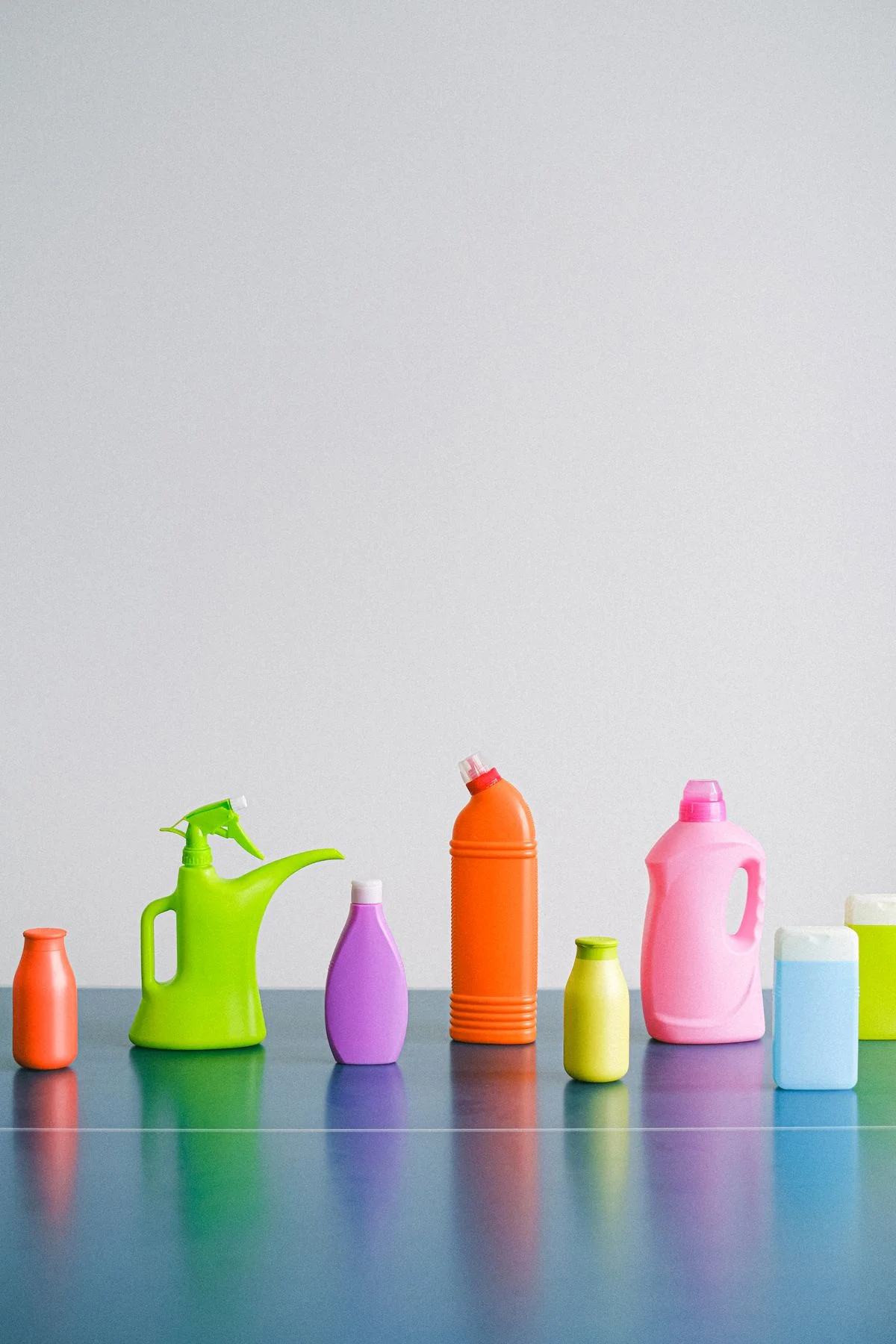
- Packaging bottles and containers: rHDPE is widely used for detergent bottles, bleach bottles, shampoo containers, motor-oil containers, and other non-food packaging because of its chemical resistance and ease of blow molding.
- Pipe and conduit: rHDPE is used in drainage pipe, corrugated pipe, cable ducting, and certain non-pressure utility systems, where stiffness and corrosion resistance are important.
- Construction products: plastic lumber, fencing, decking, roofing accessories, and damp-proof or waterproofing products make use of its weatherability and low water uptake.
- Pallets, crates, and bins: these are among the most common injection-molded outlets because they tolerate color variation and benefit from durability.
- Agricultural products: irrigation components, nursery containers, and some films or liners are produced from rHDPE blends.
- Geomembranes and geosynthetics: rHDPE can be used in certain containment and stabilization products, often in formulations designed around performance rather than appearance.
One poor-fit use
- Clear, high-barrier food packaging is a poor fit for rHDPE because the material is naturally opaque and has weak oxygen and grease barrier performance unless it is used in carefully engineered multilayer systems.
Environmental and Sustainability Aspects
rHDPE is central to plastics circularity because it keeps HDPE out of landfill and substitutes recycled feedstock for virgin fossil-derived resin. The supplied sources consistently report large cradle-to-gate emissions reductions relative to virgin HDPE, with examples ranging from roughly 51 percent to as high as 85 to 88 percent lower carbon footprints, depending on plant, energy mix, and methodology.
Sustainability benefits
- Lower fossil feedstock demand compared with virgin HDPE production.
- Reduced greenhouse-gas emissions in many measured production systems.
- Waste diversion from landfill and incineration.
- Extended material life through repeated conversion into durable goods such as pallets, bins, and outdoor products.
Recyclability
HDPE is among the most recyclable commodity polymers because its chemistry is relatively simple and it can be remelted into new products after collection and cleaning. However, every recycling loop can introduce some degradation, contamination, and additive carryover, so the highest-value applications depend on good sorting and specification control.
Bio-based alternatives and carbon trade-offs
Bio-based polyethylene can reduce fossil carbon intensity when derived from renewable feedstocks, but it does not automatically solve collection or sorting problems, and it competes with land, water, and biomass availability. rHDPE generally has a stronger immediate circularity case because it reuses existing plastic waste streams rather than depending on new biomass supply.
Economic and Global Market Impact
The economic appeal of rHDPE rests on three factors: lower feedstock cost than virgin resin, growing demand for recycled content, and the ability to serve large, durable-goods markets with moderate performance requirements. Packaging, construction, and materials-handling industries are especially important because they can absorb large volumes of recyclate with relatively flexible appearance constraints.
Globally, market development is being shaped by recycled-content mandates, extended producer responsibility schemes, consumer brand commitments, and corporate decarbonization targets. Recyclers such as Veolia and ALPLA have used low-carbon product claims and regional capacity expansions to position rHDPE as a strategic industrial material rather than a waste-derived byproduct.
Current Challenges and Innovations
Key challenges
- Feedstock inconsistency: mixed bale quality causes variability in melt flow, color, and mechanical properties.
- Contamination: labels, food residues, oils, and incompatible plastics can impair performance and odor.
- Aging and oxidation: repeated heat history can reduce toughness unless stabilized.
- Regulatory constraints: food-contact use requires stricter controls and validated system designs.
- Downcycling risk: many current outlets remain durable but lower-spec than the original packaging applications.
Innovation pathways
- Better optical sorting and near-infrared identification for cleaner HDPE streams.
- Advanced wash lines and deodorization systems for higher-purity recyclate.
- Compatibilized blends to broaden use in mixed-polymer waste streams.
- Multilayer packaging architectures that place rHDPE in non-contact or structural layers.
- Higher-quality pelletizing and rheology control for pressure-sensitive extrusion uses such as pipe.
Future Outlook
rHDPE is likely to remain one of the most commercially important recycled plastics because it can be deployed in high-volume markets with relatively forgiving design requirements and strong sustainability credentials. The strongest growth opportunities are likely in non-food packaging, pipe and conduit, logistics products, plastic lumber, and infrastructure-related goods, where recycled content is increasingly valued and technical barriers are manageable.
The long-term trajectory will depend on whether industry can improve collection quality, reduce odor and contamination, and maintain consistent mechanical performance at higher recycled-content levels. If those problems are addressed, rHDPE can move from a cost-saving recyclate into a mainstream engineered material for circular manufacturing systems.
Summary
rHDPE is recycled HDPE converted into reusable resin for packaging, construction, infrastructure, logistics, and outdoor products. Its main strengths are durability, chemical resistance, processability, and substantially lower carbon intensity than virgin HDPE, while its main limitations are feedstock variability, weak barrier performance, and quality control requirements.
References
- •
HDPE plastic recycling & disposal UK. (2023, June 20). https://www.businesswaste.co.uk/your-waste/plastic-recycling/hdpe-recycling/Link
- •
再生高密度聚乙烯顆粒的應用. (2025, March 7). https://www.wastetrade.com/zh_hk/resources/recycling/applications-of-recycled-hdpe-pellets/Link
- •
Recycled HDPE granules: What they are, benefits, and key applications. (2025, December 4). https://mascomglobal.com/recycled-hdpe-granules-what-they-are-benefits-and-key-applicationsLink
- •
Applications of recycled HDPE pellets. (2026, April 27). https://iplbrightgreen.co.uk/recycled-hdpe-applications/Link
- •
What are the applications of recycled polyethylene? (2023, March 29). https://sintac.es/en/what-are-the-applications-of-recycled-polyethylene/Link
- •
Recycled HDPE resin in the real world: 5 uses you'll actually see. (2025, October 2). https://www.linkedin.com/pulse/recycled-hdpe-resin-real-world-5-uses-youll-actually-kdficLink
- •
Recycled HDPE – Properties, applications, and benefits. (n.d.). https://www.ambiomaterials.com/en/materials/rhdpeLink
- •
Recycled HDPE granules: Turning plastic waste into useful products. (2026, April 13). https://pashupatigrp.com/blog/recycled-hdpe-granules-turn-plastic-waste-into-productive-materialLink
- •
HDPE recycling: Turning waste into resources. (2025, January 1). https://www.recyclingtoday.org/pages/hdpe-recyclingLink
- •
rHDPE – Recycled high-density polyethylene. (2023, March 3). https://duytanrecycling.com/en/rhdpe-recycled-high-density-polyethylene/Link
- •
Innovative applications of recycled HDPE plastic pellets in modern packaging. (2026, January 9). https://plastic-pellet.com/blog/recycled-hdpe-plastic-pellets/Link
- •
HDPE guide: Properties, uses & applications [2025 update]. (2022, February 3). https://lairdplastics.com/resources/hdpe-guide-properties-uses-applications-2025-update/Link
- •
How is HDPE recycled? (2026, August 26). https://www.plasticexpert.co.uk/plastic-recycling/hdpe-plastic-recycling/Link
- •
How rHDPE reduces plastic waste: A circular economy solution. (2025, June 5). https://www.intcoplastics.com/blog/why-rhdpe-is-the-future-of-sustainable-packaging/Link
- •
What are the primary uses of recycled HDPE and why is its recycling rate important? (2025, November 13). https://lifestyle.sustainability-directory.com/learn/what-are-the-primary-uses-of-recycled-hdpe-and-why-is-its-recycling-rate-important/Link
- •
Recycled resin range. (2026, May 13). https://circularplasticsaustralia.com/recycled-resin-range/Link
- •
What can high density polyethylene be recycled into? (2020, December 31). https://accelpolymers.com/2020/12/31/what-can-high-density-polyethylene-be-recycled-into/Link
- •
86 per cent fewer emissions with rHDPE from Brazil. (2026, August 27). https://blog.alpla.com/en/blog/sustainability-social-engagement-recycling/86-cent-fewer-emissions-rhdpe-brazilLink
- •
Recycled high-density polyethylene (rHDPE) - PlastiLoop. (2024, July 25). https://www.plastiloop.veolia.com/our-resins/recycled-high-density-polyethylene-rhdpeLink
- •
Incorporation of recycled high-density polyethylene to polyethylene pressure pipes. (2020, December 10). https://www.sciencedirect.com/science/article/abs/pii/S0959652020341263Link
- •
Our products rHDPE - Polytopoly. (n.d.). https://www.polytopoly.com/en/our-products/hdpeLink
- •
rHDPE causes up to 88 per cent fewer CO2 emissions than virgin HDPE. (2022, May 25). https://www.petnology.com/magazine/article/wanted-solutions-on-a-silver-platterLink
- •
What is rHDPE? Recycled plastic made from durable HDPE materials. (2026, March 2). https://www.repax.io/blog/what-is-rhdpe-recycled-plastic-made-from-durable-hdpe-materialsLink
- •
Recyceltes HDPE mit hervorragender CO2-Bilanz. (2022, May 6). https://www.bvse.de/gut-informiert-kunststoffrecycling/nachrichten-recycling/8511-recyceltes-hdpe-mit-hervorragender-co2-bilanz.htmlLink
- •
What can we produce with recycled PP and HDPE? (n.d.). https://www.reddit.com/r/upcycling/comments/1eclwb3/what_can_we_produce_with_recycled_pp_and_hdpe/Link
- •
Infographic: HDPE packaging carbon footprint analysis. (n.d.). https://retailpartner.com/hdpe-vs-ldpe.htmlLink
- •
Journal of Chemical Process and Material Technology. (n.d.). https://publikasiilmiah.unwahas.ac.id/index.php/JCPMT/article/download/5676/4144Link
- •
Recycled plastics glossary. (n.d.). https://intcoplastics.com/glossaryLink
- •
El HDPE reciclado reduce hasta un 88% la huella de carbono. (2022, May 10). https://www.residuosprofesional.com/hdpe-reciclado-reduce-huella-carbono/Link
- •
rHDPE bottles: Properties and buyer guide | Propacks. (2026, May 18). https://propacks.net/us/blog/rhdpe-bottles-explainedLink
- •
ABC plastic: Sustainable manufacturing with rHDPE. (2025, November 9). https://www.linkedin.com/posts/vikraant-asiwal-59bab85b_abc-plastic-sustainable-manufacturing-with-activity-7393150508418576384-CKrxLink
- •
Your complete guide to rHDPE. (2023, December 13). https://www.aerofibre.com/what-is-rhdpeLink
- •
rPET, rHDPE พลาสติกรีไซเคิลมาตรฐานโลก สู่บรรจุภัณฑ์ยั่งยืนใน ... (n.d.). https://www.chinoplaspack.com/TH/news/news19.htmlLink
- •
What is rHDPE? Recycled plastic made from durable HDPE materials. (2026, March 2). https://www.repax.io/glossary/what-is-rhdpe-recycled-plastic-made-from-durable-hdpe-materialsLink
- •
Experimental statistical modeling of tensile properties and flexural stiffness of recycled high-density polyethylene (rHDPE) thermoplastic using response surface methodology (RSM). (n.d.). https://www.sciencedirect.com/science/article/pii/S2590048X23001103Link
- •
EcoProfile of recycled HDPE pellets EU27+3, cradle-to-gate, post. (n.d.). https://nexus.openlca.org/ws/files/38592Link
- •
Influence of blend composition and compatibilizer on mechanical and morphological properties of recycled HDPE/PET blends. (2014, November 28). https://www.scirp.org/journal/paperinformation?paperid=51955Link
- •
Recycled high-density polyethylene (R-HDPE) - Cirplus. (2026, March 12). https://cirplus.com/materials/R-HDPELink
- •
Structural and mechanical properties of recycled HDPE. (2024, October 9). https://pmc.ncbi.nlm.nih.gov/articles/PMC11642715/Link
- •
Pros and cons of using recycled HDPE plastic. (2022, March 22). https://tangentmaterials.com/blog/pros-and-cons-of-using-recycled-hdpe-plastic/Link
- •
EcoProfile of recycled HDPE pellets EU27+3, gate-to- ... (n.d.). https://nexus.openlca.org/ws/files/38593Link
- •
Blending recycled high-density polyethylene HDPE. (n.d.). https://www.mdpi.com/2313-4321/8/1/2Link
- •
Recycled plastic pellets and regrind | HDPE & PP plastic. (2024, October 9). https://greenpathrecovery.com/recycled-plastic-pellets/Link
- •
PakTech: 100% recycled HDPE. (n.d.). https://usplasticspact.org/case-study/paktech/Link
- •
I'm looking at making products out of recycled HDPE, what can and can't it ... (n.d.). https://www.reddit.com/r/plastic/comments/otc298/im_looking_at_making_products_out_of_recycled/Link
- •
High-density polyethylene (HDPE) recycling. (2023, May 5). https://reclaimplastics.com/materials-we-recycle/hdpe-recycling/Link
- •
Achieving ESG goals with sustainable HDPE plastics. (2025, April 21). https://www.libertyplasticsinc.com/article/achieving-esg-goals-with-sustainable-hdpe-plastics-the-environmental-benefits-and-solutions/Link
- •
How HDPE reduces the ecological impact of manufacturing. (2021, November 23). https://tangentmaterials.com/blog/how-hdpe-reduces-the-ecological-impact-of-manufacturing/Link
- •
Discover the environmental benefits of HDPE. (2025, November 10). https://www.wlplastics.com/environmental-benefits-of-hdpeLink