
Introduction
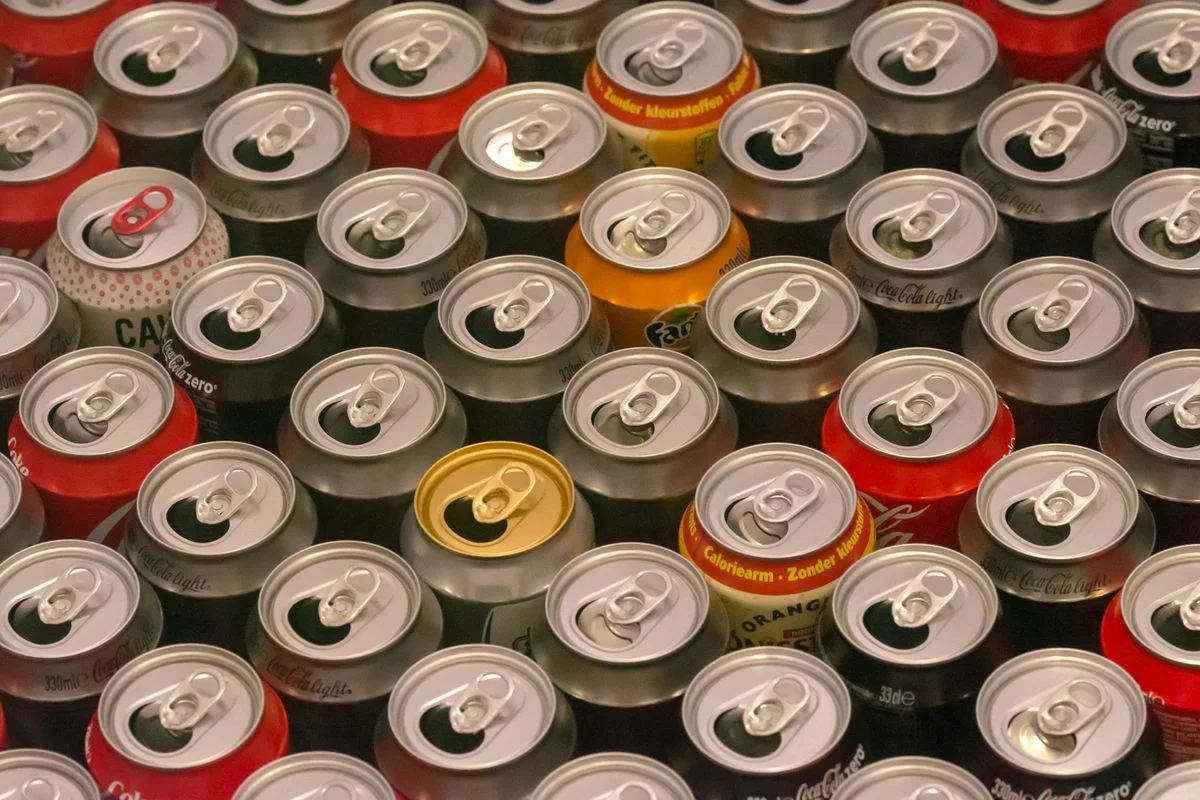
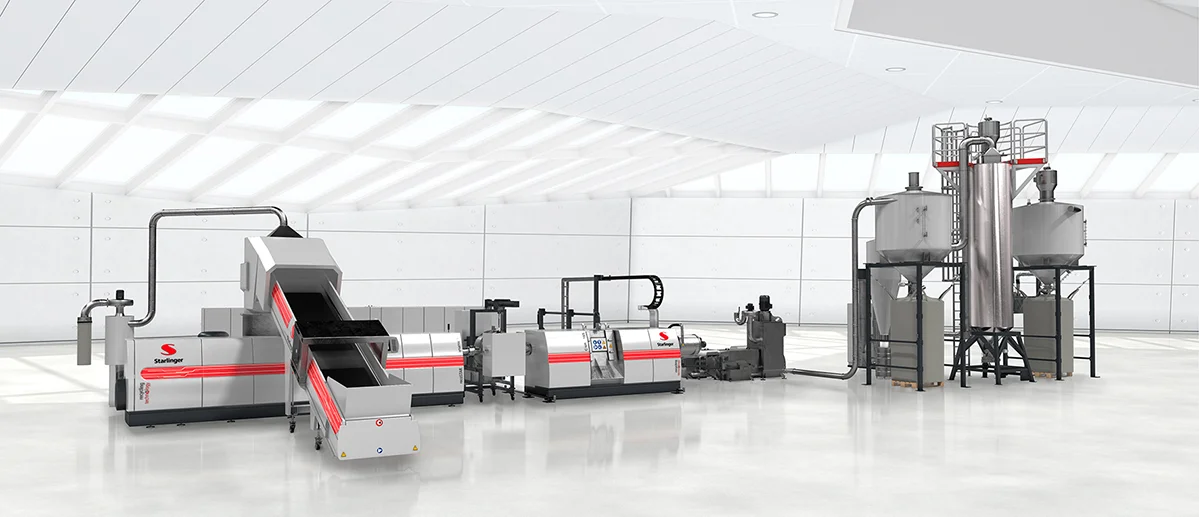
Recycling lines are integrated industrial systems that convert post-consumer and post-industrial waste into reusable material streams such as sorted bales, washed flakes, or recycled pellets. In plastics processing, the term usually refers to mechanical recycling lines that combine size reduction, separation, washing, drying, and often extrusion or pelletizing in a continuous, synchronized workflow.
In practice, a recycling line is not a single machine but a coordinated plant section designed around the feedstock, contamination level, and target output quality. For plastics, the line may be configured as a sorting line for mixed waste, a washing line for contaminated packaging and film, or a pelletizing line for converting clean flakes and regrind into reusable granules. The wider significance of these systems has increased with circular-economy policy, resin price volatility, and demand for lower-carbon materials, while future development is being shaped by better optical sorting, closed-loop water systems, and more energy-efficient dewatering and extrusion technologies.
History and Development
Modern recycling lines evolved from basic manual sorting and baling into highly automated material-recovery systems. Early municipal recycling facilities relied heavily on hand sorting and simple mechanical separation, but by the late twentieth century conveyor-based plants had begun to combine screens, magnets, and balers to process mixed streams at higher throughput.
Key milestones include:
- The expansion of material recovery facilities (MRFs), which formalized the separation of mixed recyclables into commodity streams using conveyors, screens, magnets, optical sorters, and balers.
- The emergence of plastic washing and pelletizing lines, which enabled contaminated post-consumer plastics to be transformed into flakes and pellets suitable for manufacturing, rather than being limited to low-value reuse.
- The adoption of optical and infrared sorting, which improved the identification of polymer types and reduced dependence on manual sorting for plastics such as PET, HDPE, and PP.
Technical Overview
A plastics recycling line typically begins with receiving and pre-sorting, followed by size reduction, cleaning, separation, dewatering, drying, and either bale formation or extrusion into pellets. The exact configuration depends on whether the feed is rigid packaging, PET bottles, film, mixed rigid scrap, or industrial regrind.
Main process stages
- Feeding and pre-sorting remove oversized objects, hazardous contaminants, and non-target materials before the main line.
- Shredding or granulation reduces bulky plastics to manageable pieces for washing and separation.
- Washing and friction cleaning remove dirt, labels, glues, organics, and oils; PET lines often include hot washing for adhesive removal.
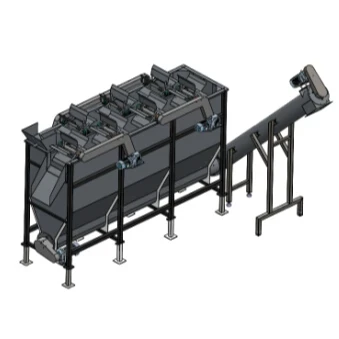
- Density separation such as sink-float tanks separates polymers by specific gravity, for example PET from PP and PE fractions.
- Dewatering and drying lower moisture to levels suitable for storage or extrusion.
- Pelletizing or granulating melts, filters, and cuts clean feedstock into uniform pellets for remanufacturing.
Typical engineering benchmarks
| Parameter | Typical range in plastics recycling lines |
|---|---|
| Granulator output flakes | about 8–12 mm nominal, depending on screen size and material |
| Rotor speed | roughly 400–1,000 rpm in many granulation applications, depending on design and feed |
| Centrifugal dewatering residual moisture | commonly about 1–5% after mechanical dewatering; high-performance PET drying lines may go below 1% with thermal finishing |
| Line throughput | small lines may run at a few hundred kg/h; industrial PET, rigid, or film lines commonly run from about 500 kg/h to several t/h |
| Specific energy consumption | strongly dependent on contamination and line design; washing-heavy systems and pelletizing sections typically consume materially more energy than dry sorting alone |
These figures vary widely by polymer, contamination level, target purity, and whether the system is designed for flakes, washed regrind, or pellets. PET bottle washing lines, for example, commonly include label removal, hot washing, friction washing, flotation separation, and final drying to produce high-purity rPET feedstock.
Product quality considerations
Output quality is governed by contamination control, polymer purity, and moisture management. Residual labels, fines, metals, and incompatible polymers can degrade melt quality, reduce mechanical properties, and raise filtration loads in downstream extrusion. For this reason, lines intended for bottle-to-bottle or fiber-grade recycling require tighter sorting and washing control than lines producing lower-grade regrind.
Types and Variations
Recycling lines are generally classified by feedstock and output.
- MRF sorting lines handle mixed recyclables and separate plastics from paper, metals, and glass for downstream reprocessing.
- Plastic washing lines process post-consumer or post-industrial plastics into clean flakes, often for PET, HDPE, or rigid packaging.
- Film recycling lines are optimized for lightweight flexible packaging and typically require aggressive washing, dewatering, and agglomeration because films trap contaminants and retain moisture more readily than rigid scrap.
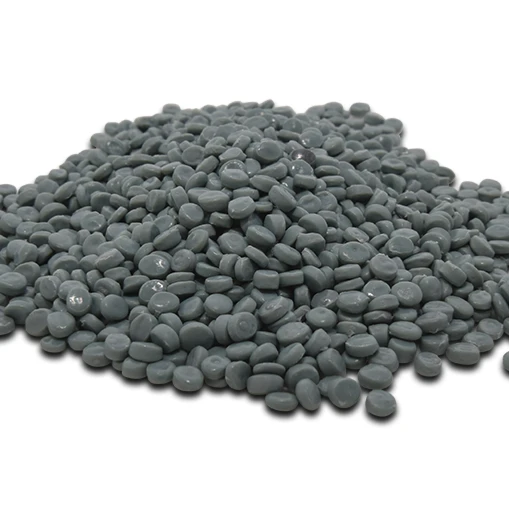
- Pelletizing lines convert clean flakes or regrind into standardized pellets with melt filtration and strand or underwater cutting.
- Comprehensive bottle-to-pellet lines integrate sorting, label removal, granulation, washing, drying, and extrusion in a single plant flow.
Applications and Uses
Recycling lines are used across multiple plastics and waste-processing sectors.
- Packaging recycling is the largest and most visible application, especially for PET bottles, HDPE containers, and PP closures.
- Industrial scrap recycling handles production off-cuts, purge, runners, and rejected parts, often with cleaner feed and simpler washing requirements.
- Film and flexible packaging recycling is used for agricultural film, stretch film, and bags, but is technically more demanding because of contamination and entanglement.
- Mixed municipal recycling relies on sorting lines rather than direct polymer washing, because the feed contains paper, metals, glass, and multiple plastic types.
- Poor-fit use: heavily contaminated multilayer laminates and composite articles are usually a poor fit for standard mechanical recycling lines because polymer separation is difficult and output quality is unstable.
Technological Innovations and Automation
Automation is central to modern recycling lines. Optical sorters use infrared sensing and air ejection to identify polymer families and remove unwanted fractions, while magnets and eddy current separators recover ferrous and non-ferrous metals from mixed streams.
Other notable innovations include:
- AI-assisted sorting, which improves recognition of object shape, color, and material combinations in mixed waste streams.
- Closed-loop water circuits, which reduce freshwater demand and lower wastewater volumes in washing lines.
- High-efficiency friction washers and dryers, which reduce contamination while limiting thermal load.
- Integrated process control, which synchronizes feeder speed, rotor loading, wash residence time, and dryer performance to stabilize throughput and quality.
Environmental and Sustainability Aspects
Recycling lines support material recovery, but their environmental performance depends on energy use, water consumption, and the quality of the output resin. The main sustainability benefit is displacement of virgin polymer production by recyclate, which can reduce demand for fossil feedstocks and lower waste disposal volumes.
At the same time, recycling lines create their own environmental burdens:
- Electricity consumption rises with shredding, hot washing, drying, and extrusion.
- Water demand can be significant in washing systems without efficient recirculation.
- Reject streams still require disposal or alternative treatment.
- Downcycling risk remains when contamination prevents high-value reuse.
Sustainability gains are strongest when the line is designed for high yields, low reject rates, and closed-loop reuse of water and heat. Regulatory pressure and producer-responsibility schemes are also encouraging higher collection rates and better design for recyclability.
Economic and Global Market Impact
Recycling lines have become strategic assets in plastics markets because they connect waste management to resin supply. Their economics depend on feedstock cost, output purity, energy pricing, labor intensity, and access to end markets for flakes or pellets. MRFs and plastics recyclers also benefit from economies of scale, with larger facilities generally better able to absorb sorting, labor, and equipment costs.
The global market is shaped by several forces:
- Demand for recycled-content packaging and consumer goods
- Policy frameworks such as extended producer responsibility (EPR)
- Volatility in virgin polymer prices
- Growth in regional sorting and reprocessing capacity
- Pressure to improve domestic recycling infrastructure and reduce export dependence
Current Challenges and Innovations
The main technical challenges remain feed variability, contamination, material losses, and the difficulty of producing consistent high-quality output from mixed waste. Film, labels, multilayer packaging, black plastics, and odor retention continue to complicate processing.
Current innovation priorities include:
- Better polymer identification for dark, multilayer, and composite packaging
- Improved contaminant removal for adhesives, inks, and organic residues
- Lower-energy drying and extrusion
- More robust process monitoring to reduce downtime and reject rates
- Designs that can switch more easily between PET, HDPE, PP, and film streams
Future Outlook
Future recycling lines are likely to become more modular, data-driven, and energy-aware. Plants will increasingly combine advanced sensing, process analytics, and flexible mechanical design to handle changing waste streams and stricter quality targets. The strongest growth areas are expected in PET bottle-to-bottle systems, flexible packaging recovery, and integrated washing-pelletizing plants designed for food-contact or near-food-contact applications.
Longer term, mechanical recycling lines will coexist with chemical recycling and advanced recovery methods, but they are likely to remain the backbone of large-scale plastic reuse because they are commercially established, comparatively mature, and capable of handling substantial material volumes when feedstock quality is sufficient.
Summary
Recycling lines are the process backbone of modern plastics recovery, turning waste polymers into sorted commodities, washed flakes, or recycled pellets through coordinated mechanical and thermal operations. Their importance is rising as manufacturers seek more stable recycled feedstock, regulators push circularity, and engineers continue to improve sorting accuracy, water reuse, drying efficiency, and output purity.
References
- •
How does a plastic recycling production line work? Step-by-step process explained. (2025, July 24). Granuwelextruder.com. https://granuwelextruder.com/how-does-a-plastic-recycling-production-line-work-step-by-step-process-explained/Link
- •
Plastic recycling lines for small & mid-size plants. (2025, May 8). Geording.com. https://www.geording.com/en/news/blog/plastic-recycling-lineLink
- •
What is a plastic recycling line. (n.d.). Retech Machinery. https://www.retechmachine.com/news/what-is-a-plastic-recycling-line.htmlLink
- •
Recycling basics and benefits. (2026, June 22). U.S. Environmental Protection Agency. https://www.epa.gov/recycle/recycling-basics-and-benefitsLink
- •
Plastic recycling washing line: Principles, cost & technology trends. (2025, November 12). Boxinpm.com. https://www.boxinpm.com/news/industry-news/the-ultimate-guide-to-waste-plastic-recycling-washing-lines-from-working-principles-and-model-selection-to-2025-technology-trends.htmlLink
- •
How recycling facilities actually work in 2025. (2026, June 20). Gd-environmental.co.uk. https://gd-environmental.co.uk/how-recycling-facilities-work/Link
- •
How a material recycling facility sorting line works. (2026, August 28). Zhonganshredder.com. https://www.zhonganshredder.com/material-recycling-facility-sorting-line/Link
- •
Recycling lines. (n.d.). Corferias. https://cloud.corferias.co/extranet/servicio/stand_virtual/archivos/PDF(8489).pdfLink
- •
How it works: Inside the machine that separates your recyclables. (2013, August 28). Popular Science. https://www.popsci.com/technology/article/2013-07/how-it-works-recycling-machines-separate-junk-type/Link
- •
A look inside a recycling plant – How your items get sorted and recycled. (n.d.). RecycleNation. https://recyclenation.com/2020/08/a-look-inside-a-recycling-plant-how-your-items-get-sorted-and-recycled/Link
- •
MSW sorting line: Process, equipment & plant design. (2026, August 12). Recyclemachine.net. https://www.recyclemachine.net/how-msw-sorting-lines-work/Link
- •
The recycling journey. (n.d.). Highland.gov.uk. https://www.highland.gov.uk/download/downloads/id/724/recycling_journeys.pdfLink
- •
How recycling machines work. (2025, February 16). Recyclingtoday.org. https://www.recyclingtoday.org/blogs/news/how-recycling-machines-workLink
- •
Plastic recycling line: Washing, shredding & pelletizing. (2026, April 6). Suhuimachine.com. https://suhuimachine.com/blog/buyers-guides/plastic-recycling-line/Link
- •
Processing recyclables: What's my line? (2023, November 9). Waste360. https://www.waste360.com/waste-recycling/processing-recyclables-what-s-my-line-Link
- •
Plastic recycling granulating line explained. (2025, September 9). Boxinpm.com. https://www.boxinpm.com/news/industry-news/plastic-recycling-granulating-line-the-ultimate-guide-to-types-uses-and-benefits.htmlLink
- •
What is a PET bottle recycling line? Components, process. (2025, October 26). Recyclemachine.net. https://www.recyclemachine.net/pet-bottle-washing-process/Link
- •
PET bottle washing line: Selection guide, costs & ROI. (2026, April 9). Kitech-recycling.com. https://kitech-recycling.com/blog/pet-bottle-washing-line-guide/Link
- •
ELI5: How do recycling factories deal with the problem of contamination? (n.d.). Reddit. https://www.reddit.com/r/explainlikeimfive/comments/d6u0i3/eli5_how_do_recycling_factories_deal_with_the/Link
- •
How does recycling work? The complete guide [2026]. (2026, June 20). Recycling.guru. https://recycling.guru/how-does-recycling-work/Link
- •
Recycling – How it works. (2019, May 15). Communities for Recycling. https://recyclingpartnership.org/communitiesforrecycling/recycling-how-it-works/Link
- •
The U.S. recycling system. (2019, April 17). U.S. Environmental Protection Agency. https://www.epa.gov/circulareconomy/us-recycling-systemLink
- •
Recycling. (2002, August 10). Wikipedia. https://en.wikipedia.org/wiki/RecyclingLink
- •
Here’s your guide to how recycling actually works. (2018, April 11). Medium. https://medium.com/cleantech-rising/heres-your-guide-to-how-recycling-actually-works-1f3d97b37904Link
- •
The recycling process. (2024, March 17). Skrecycles.ca. https://skrecycles.ca/learn/the-recycling-process/Link
- •
Endocytic recycling of MHC class I molecules in non-professional antigen presenting and dendritic cells. (2019, January 7). Frontiers in Immunology. https://www.frontiersin.org/journals/immunology/articles/10.3389/fimmu.2018.03098/fullLink
- •
What happens to my recycling? (2024, July 16). Recyclenow.com. https://www.recyclenow.com/how-to-recycle/what-happens-to-my-recyclingLink
- •
The plastic recycling process. (2024, September 5). Association of Plastic Recyclers. https://plasticsrecycling.org/how-recycling-works/the-plastic-recycling-process/Link
- •
Recycling is not enough to make the world a greener place. (n.d.). ScienceDirect. https://www.sciencedirect.com/science/article/pii/S2950155523000253Link
- •
Steel scrap shredding process: Industrial guide for recycling lines. (2026, July 2). Yuximetalshredder.com. https://yuximetalshredder.com/blog/steel-scrap-shredding-process/Link
- •
A detailed explanation of how plastic recycling machines work. (2026, March 23). Aceretech.com. https://www.aceretech.com/blog/marketing-event-3/a-detailed-explanation-of-how-plastic-recycling-machines-work-analyzing-the-complete-processfrom-shredding-to-pelletizing-462Link
- •
The "Three Lines One Permit" policy: An integrated environmental regulation in China. (n.d.). ScienceDirect. https://www.sciencedirect.com/science/article/abs/pii/S0921344920304183Link
- •
Research paper material recovery facilities (MRFs) in the United States: Operations, revenue, and the impact of scale. (2025, February 1). ScienceDirect. https://www.sciencedirect.com/science/article/abs/pii/S0956053X24006408Link
- •
Seattle's recycling process. (n.d.). Seattle.gov. https://www.seattle.gov/utilities/your-services/collection-and-disposal/recycling/recycling-processLink
- •
How to optimize your wire chopping operation: 5 key questions. (2025, March 20). LinkedIn. https://www.linkedin.com/posts/sweed-machinery_recyclers-recyclingindustry-recycledmaterials-activity-7308578088823529473-RN6vLink
- •
How is recycling done? (2023, May 31). Flextrades.com. https://www.flextrades.com/blog/how-is-recycling-done/Link
- •
2026 state of recycling report. (2026, August 17). The Recycling Partnership. https://recyclingpartnership.org/residential-recycling-report/Link
- •
Opinion | The reign of recycling. (2015, October 4). The New York Times. https://www.nytimes.com/2015/10/04/opinion/sunday/the-reign-of-recycling.htmlLink
- •
A predictive approach for disassembly line balancing problems. (2022, May 22). Sensors, 22, 3920. https://www.mdpi.com/1424-8220/22/10/3920Link
- •
State of recycling 2024. (n.d.). The Recycling Partnership. https://recyclingpartnership.org/wp-content/uploads/dlm_uploads/2024/01/Recycling-Partnership-State-of-Recycling-Report-1.12.24.pdfLink
- •
Municipal solid waste recycling in the United States: Analysis of current and alternative approaches. (2025, July 15). National Academies Press. https://www.nationalacademies.org/read/27978/chapter/6Link
- •
Recycling in the U.S. is broken. How do we fix it? (2020, March 13). Columbia Climate School. https://news.climate.columbia.edu/2020/03/13/fix-recycling-america/Link