
Introduction
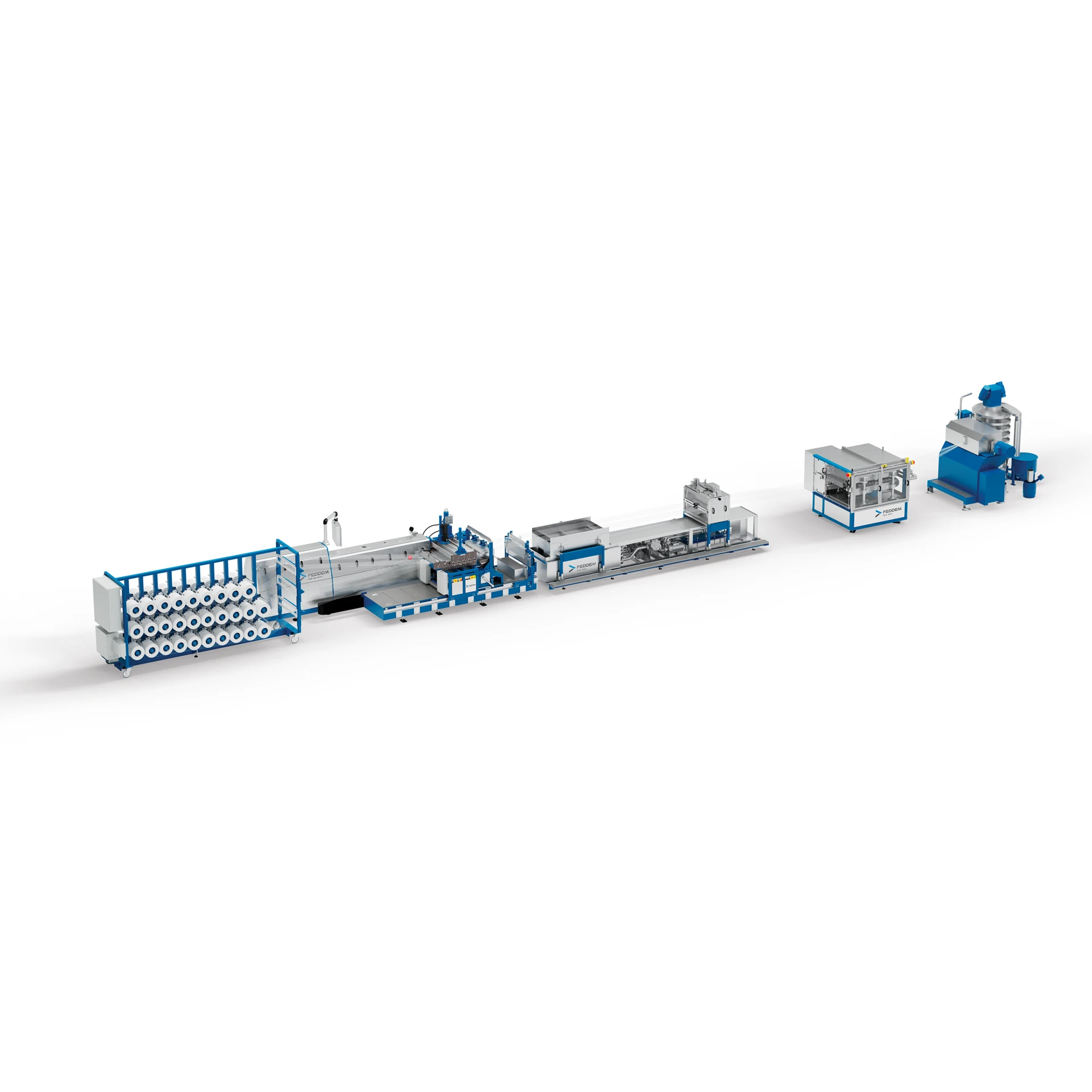
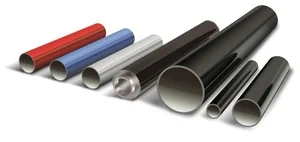
Pultrusion equipment is the machinery set used to manufacture continuous fiber-reinforced polymer profiles with a constant cross-section, such as rods, tubes, channels, angles, beams, grating components, and rebar. The core principle is pulling continuous reinforcements through resin impregnation, preforming, a heated die, and a cutting system, which distinguishes pultrusion from extrusion and gives the final profile high longitudinal strength and dimensional consistency.
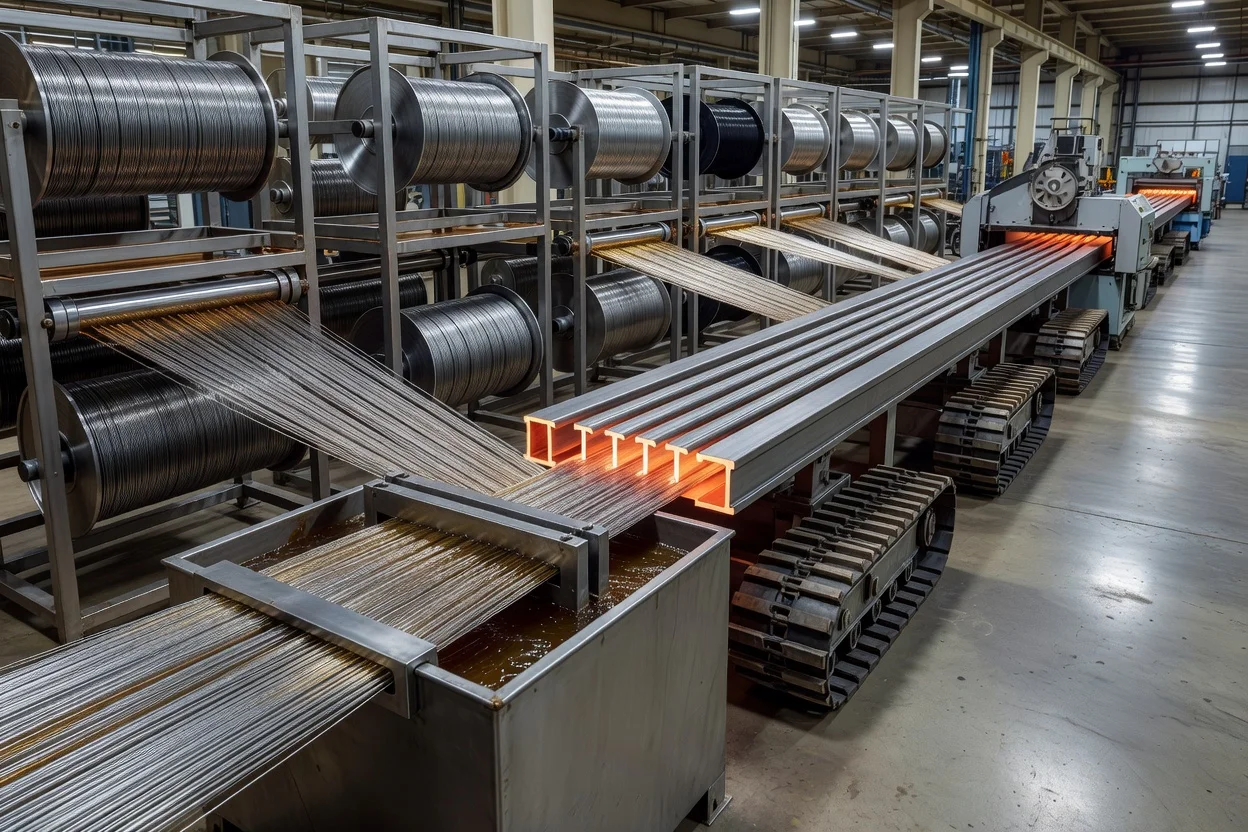
In industrial practice, pultrusion equipment ranges from compact lines for small rods and electrical profiles to heavy-duty systems for large structural members, with machine architectures typically organized around a fiber creel, resin bath or injection system, preforming guides, a heated die, a haul-off or puller, and a saw or flying cut-off unit. Major variants include reciprocating pullers, continuous caterpillar-track systems, hydraulic clamp haul-offs, and servo-driven lines for tighter speed control and higher process repeatability.
Pultrusion is especially important in construction, electrical infrastructure, transportation, marine, industrial flooring, and corrosion-resistant chemical environments, because it combines low weight with high stiffness, dielectric performance, and resistance to moisture and chemicals. The process also faces continuing development pressures from energy efficiency, automated quality control, resin handling improvements, and the growing need to support recyclable or lower-carbon composite systems.
History and Development
Pultrusion evolved from earlier continuous composite processing concepts into a mature industrial process as heated dies, controlled pulling systems, and more reliable resin impregnation methods became available. The process became established because it offered continuous production, consistent cross-sections, and a comparatively high degree of automation for fiber-reinforced profiles.
Several milestones shaped modern pultrusion equipment:
- The adoption of heated steel dies enabled simultaneous shaping and thermoset curing, making continuous profile manufacture practical for structural composite sections.
- The development of more stable haul-off systems, including caterpillar tracks and hydraulic reciprocating pullers, improved control over pull force and line speed for larger or more complex profiles.
- The integration of servo control, metering systems, and secondary automation expanded pultrusion into more precise, high-throughput production environments, including custom industrial systems and automated downstream handling.
Technical Overview
Pultrusion equipment works by keeping continuous fibers under tension while resin is applied, shaped, cured, and withdrawn at a controlled rate. The process is thermally and mechanically coupled: line speed must match cure kinetics, die temperature, resin viscosity, and the allowable pulling force on the emerging profile.
A typical pultrusion line includes:
- Creel or fiber rack for rovings, mats, or stitched reinforcements.
- Resin impregnation unit, either an open bath or injection/metering system.
- Preforming section to consolidate the wetted reinforcement and remove excess resin.
- Heated die where shaping and polymerization occur.
- Puller/haul-off using caterpillar tracks or hydraulic clamps to maintain constant tension.
- Cut-off saw for length control and downstream finishing.
Typical engineering ranges
Pultrusion lines are highly application-specific, but published industrial references indicate several common operating ranges:
| Parameter | Typical range | Notes |
|---|---|---|
| Line speed | 0.5–3.0 m/min | Lower speeds are used for thick or highly complex profiles. |
| Heated die temperature | 120–180°C | Typical for thermoset curing systems. |
| Pull force | 5 kN–500 kN | Wide range reflects small bars versus heavy structural profiles. |
| Max pul-force on smaller research/industrial systems | 20–100 kN | Reported for specific equipment classes and lines. |
| Large-profile machine envelopes | up to 500 × 250 mm² or 750 × 350 mm² | Indicative of heavy-section capability. |
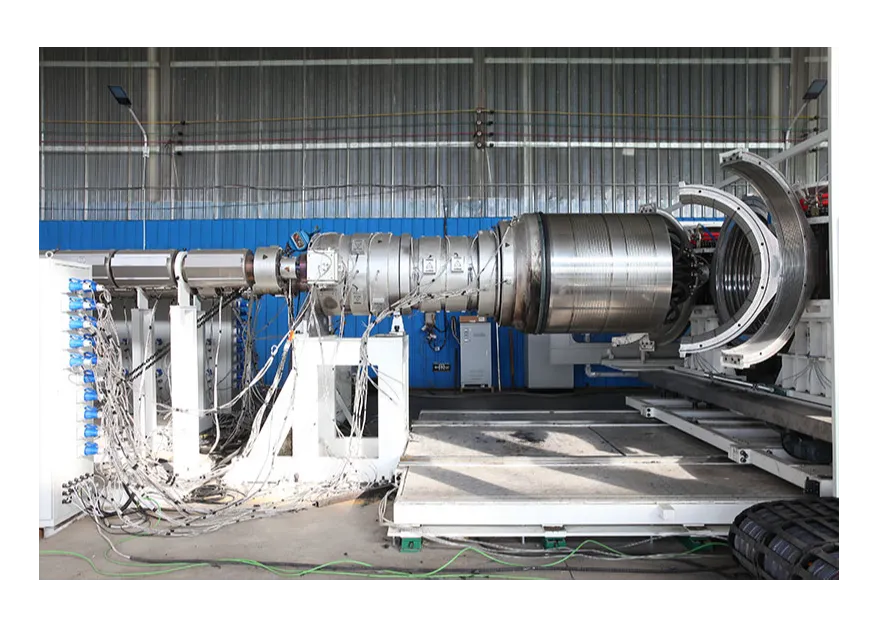
The die is one of the most critical components. In practice, pultrusion molds are often high-alloy steel, approximately 0.75–1.5 m long, with polished and sometimes chrome-plated internal surfaces to reduce friction and improve surface finish. For hollow sections, a mandrel may be added to form internal geometry and maintain dimensional stability.
Material systems
Most pultrusion equipment is optimized for thermoset matrices such as polyester, vinyl ester, epoxy, and polyurethane. Reinforcements commonly include glass fiber, carbon fiber, and aramid, with glass fiber dominating many construction and utility applications because of cost and corrosion resistance. Thermoplastic pultrusion systems also exist, but they require different thermal management and impregnation strategies.
Types and Variations
Pultrusion equipment is commonly classified by pulling method, profile size, and degree of automation.
- Reciprocating pull-through systems use clamp-and-return motion and are suited to many medium-duty operations.
- Continuous caterpillar systems provide uninterrupted pull and are widely used for stable, high-volume production.
- Hydraulic haul-off systems are preferred for heavy profiles requiring high pulling force and robust clamping.
- Servo-driven lines improve speed precision and process repeatability, especially where profile quality tolerances are tight.
- Custom heavy-duty systems are engineered for large structural sections, unique cross-sections, or specialized production cells.
A practical distinction is between standard profile lines and special-purpose lines. Standard lines target beams, channels, rods, and tubes, whereas special-purpose equipment may support rebar, grating, ladder rails, insulator cores, or hybrid composite profiles.
Applications and Uses
Pultrusion equipment is widely used wherever long, constant-section composite parts are needed with high stiffness and corrosion resistance.
- Construction and civil engineering: beams, channels, bridge components, handrails, ladders, grating, and reinforcement elements.
- Electrical and utility infrastructure: insulators, cross-arms, cable tray supports, and dielectric structural parts.
- Marine and coastal installations: ladders, guardrails, walkways, and structural members exposed to saltwater.
- Chemical processing and industrial plants: corrosion-resistant platforms, slatted flooring, and support members.
- Transportation and mobility: lightweight stiffeners and structural profiles for selected vehicle and equipment applications.
- Renewable energy and specialized infrastructure: support structures and corrosion-resistant components in demanding environments.
A comparatively poor-fit use is highly decorative or sharply variable geometry parts, because pultrusion is designed for constant cross-sections and is not suited to complex three-dimensional shape changes.
Process Control and Product Quality
Quality in pultrusion depends on precise control of resin pickup, fiber alignment, die temperature, and pull speed. Excess resin can increase brittleness or void content, while insufficient wet-out can reduce interlaminar strength and surface integrity. Pull force must remain stable enough to prevent fiber waviness, dimension drift, or incomplete cure within the die.
Important quality indicators include:
- Dimensional tolerance and cross-sectional stability.
- Surface finish quality, especially on visible architectural profiles.
- Void content and degree of cure.
- Fiber volume fraction and longitudinal mechanical performance.
Technological Innovations and Automation
Modern pultrusion equipment increasingly incorporates:
- Servo-controlled haul-off systems for tighter speed regulation.
- Closed-loop resin metering and injection to reduce waste and improve impregnation consistency.
- Digital temperature zoning in heated dies to match cure progression to profile thickness.
- Secondary automation for cutting, stacking, handling, and in some cases downstream machining.
- Data acquisition and process monitoring for repeatability, traceability, and predictive maintenance.
Research-oriented platforms also explore integrated mixing and metering, hybrid thermoplastic capability, and specialized preforming technologies for complex reinforcement architectures.
Environmental and Sustainability Aspects
Pultrusion equipment has several sustainability advantages relative to many discontinuous composite processes because it is continuous, material-efficient, and well suited to long-life structural products. The process can reduce scrap through controlled metering and near-net-shape production, and its products often offer long service life in corrosive environments, lowering replacement frequency.
At the same time, pultrusion remains energy-dependent because thermoset curing requires heated dies and controlled line operation. Key sustainability themes include:
- Improved energy management in die heating and line startup.
- Resin waste reduction through metering and closed impregnation systems.
- Increased compatibility with lower-emission resin formulations and bio-based chemistry where performance requirements permit.
- Greater attention to end-of-life recyclability, which remains a structural challenge for many thermoset composite products.
Economic and Global Market Impact
Pultrusion equipment supports a global supply chain spanning machinery builders, profile producers, and downstream fabricators. Companies in the segment include machine specialists such as Pultrex, Strongwell’s machinery division, Kent Pultrusion, PulFORCE, and regional manufacturers in Europe and Asia. Some producers focus on complete turnkey lines, while others emphasize custom dies, pullers, or secondary automation.
Economically, pultrusion is attractive where:
- Profiles are long and repetitive.
- Corrosion resistance can reduce lifecycle cost.
- High throughput offsets tooling and machine investment.
- Dimensional consistency is critical for installation and assembly.
Current Challenges and Innovations
Pultrusion equipment faces several technical and commercial challenges:
- Managing cure exotherm and temperature gradients in thick profiles.
- Handling higher pull forces without damaging fibers or reducing die life.
- Balancing productivity with quality in thick-walled or complex sections.
- Expanding compatibility with recyclable or thermoplastic composite systems.
- Maintaining tight process stability as labor, resin, and energy costs fluctuate.
Ongoing innovation is focused on smarter controls, improved impregnation strategies, more durable die materials, and systems that reduce operator dependence while improving traceability.
Future Outlook
The future of pultrusion equipment is likely to be shaped by higher automation, more sophisticated process monitoring, and broader materials development. Demand is expected to remain strongest in infrastructure, utilities, and corrosion-prone industrial markets, where the performance benefits of pultruded profiles are well established.
Likely next steps include:
- More digitized line control with sensor-based quality feedback.
- Better energy optimization in cure zones and downstream handling.
- Wider use of custom machine architectures for large and specialized profiles.
- Expanded interest in thermoplastic pultrusion and hybrid composite systems.
The long-term competitiveness of pultrusion equipment will depend on whether machinery builders can combine productivity, lower energy intensity, and improved circularity with the mechanical performance that has made pultruded composites a staple of structural reinforcement and corrosion-resistant design.
References
- •
Pultrusion Machines | Thermoplastic and Thermoset Pultrusion solutions. (2021, June 29). Pultrex. https://pultrex.com/pultrusion/Link
- •
Welcome to Ashirvad Industries-Pultrusion Machine, Pultrusion Machine Equipment,Pultrusion Machine Manufacturer,Pultrusion Machine Exporter,Pultrusion Machine Manufacturer and Exporter,Manufacturer of Pultrusion Machine,Exporter of Pultrusion Machine, Pultrusion Machine Equipment Manufacturer, Pultrusion Machine Equipment Exporter, Pultrusion Machine Equipment Manufacturer and Exporter,Manufacturer and Exporter of Pultrusion Machine,,Ahemedabad,India. (2014, June 20). Ashirvad Industries. https://ashirvadind.com/Link
- •
Pultrusion Machines Selection Guide. (n.d.). GlobalSpec. https://www.globalspec.com/learnmore/manufacturing_process_equipment/manufacturing_equipment_components/pultrusion_machinesLink
- •
What is the Pultrusion Manufacturing Process? (2026, August 17). Addcomposites. https://www.addcomposites.com/post/pultrusionLink
- •
Pultrex: Specialists in Pultrusion Machines & Pultruded Profiles. (2023, February 1). Pultrex. https://pultrex.com/Link
- •
Ashirvad Industries Launches more imporved new website. (2015, February 5). Ashirvad Industries. https://ashirvadind.com/ashirvad-industries-launches-more-imporved-new-website/Link
- •
Pultrusion Machine Manufacturers, Suppliers, Dealers & .... (2026, August 18). TradeIndia. https://www.tradeindia.com/manufacturers/pultrusion-machine.htmlLink
- •
Pultrusion Process and Equipment. (2024, December 3). Dymriton. https://www.dymriton.com/frp-pultrusion-mould-pultrusion-process-and-equipment/Link
- •
Kent Pultrusion Suppliers Showroom. (2026, August 17). CompositesWorld. https://www.compositesworld.com/suppliers/kent-pultrusionLink
- •
Shandong Gold Lead Machinery Co., Ltd.: FRP Pultrusion .... (2004, March 5). Made-in-China. https://goldlead.en.made-in-china.com/Link
- •
New Pultrusion Machines. (2025, October 4). Liberty Pultrusions. https://www.libertypultrusions.com/new-pultrusion-machines/Link
- •
유리섬유 풀트루전 기계 제조업체 및 공급업체. (2024, April 7). Made-in-China. https://kr.made-in-china.com/manufacturers/fiberglass-pultrusion-machine.htmlLink
- •
Pultrusion Machines for Sale High-Efficiency & Cost-Effective .... (2025, May 30). FRPGRPequipment. https://www.frpgrpequipment.com/news/pultrusion-machine.htmlLink
- •
How to Choose the Right Pultrusion Machine: A Technical Sele. (2024, December 16). IncomePultrusion. https://incomepultrusion.com/how-to-choose-the-right-pultrusion-machine/Link
- •
Pultrusion Machine. (n.d.). Kana Advanced Composite Industries. https://www.kanacomposite.com/pultrusion-machineLink
- •
Pultrusion Machinery | Systems | Technology. (2013, March 22). Strongwell. https://www.strongwell.com/products/machinery-and-technology/Link
- •
Pultrusion - Fraunhofer IGCV. (2026, May 20). Fraunhofer IGCV. https://www.igcv.fraunhofer.de/en/research/competences/composites/pultrusion.htmlLink
- •
Pultrusion Machine Manufacturers | FRP/GFRP Rebar & Profile Lines. (2026, January 8). Alibaba. https://www.alibaba.com/supplier/pultrusion-machine-manufacturers.htmlLink
- •
Pultrusion Manufacturer | FRP Profiles, GFRP Rebar & Machinery. (2026, July 23). IncomePultrusion. https://incomepultrusion.com/Link
- •
Pultrusion Equipment for Composite Profile Production. (n.d.). ALDFRP. https://www.aldfrp.com/News/Pultrusion-Equipment-for-Composite-Profile-Production-398.htmlLink
- •
<C4ABC5BBB7CEB1D7C0DAB7E12D50756C74727573696F6E206D616368696E652E687770>. (n.d.). Dasanworld. http://www.dasanworld.com/cn/pdf/Pultrusion_machine.pdfLink
- •
2026 FRP Pultrusion Machine. (2016, November 28). Made-in-China. https://aoliande.en.made-in-china.com/product-group/EbgfYiBcODtq/FRP-Pultrusion-Machine-catalog-1.htmlLink
- •
Top 100 Pultrusion Manufacturers in 2026. (2026, August 26). Ensun. https://ensun.io/search/pultrusionLink
- •
Pultrusion. (n.d.). Pultruders. https://pultruders.com/pultrusion/3-equipment/Link
- •
Henan Sitong Precision Moulds Co., Ltd. (2025, April 25). Made-in-China. https://www.made-in-china.com/manufacturers/grp-pultrusion-machine.htmlLink
- •
3t To 50t FRP Profiles Pultrusion Machines | Zhongsheng. (2023, July 5). FRPZS. https://www.frpzs.com/FRP-Pultrusion-Machine/FRP-Profiles-Pultrusion-Machines.htmlLink
- •
Pultrusion Process. (2022, May 1). TechnoFRP. https://www.technofrp.com/news/pultrusion-process-2/Link
- •
Liberty Pultrusions Announces $700000 Investment to .... (2026, September 10). USA Today. https://www.usatoday.com/press-release/story/42798/liberty-pultrusions-announces-700000-investment-to-expand-manufacturing-capacity-at-pittsburgh-pa-facility/Link
- •
Pultrusion - Wikipedia. (2006, August 14). Wikipedia. https://en.wikipedia.org/wiki/PultrusionLink
- •
China Pultrusion Machine Manufacturers - TechnoFRP. (2008, January 1). TechnoFRP. https://www.technofrp.com/pultrusion-machine-product/Link
- •
PulFORCE - Pultrusion Machines & Process Solutions. (2024, January 16). PulFORCE. https://pulforce.com/Link
- •
Kent Pultrusion. (n.d.). Kent Pultrusion. https://kentpultrusion.com/Link
- •
Microsoft Word - ECCM15_paper439.doc. (n.d.). CompositeTape. https://www.compositetape.com/images/439.pdf.pdfLink
- •
China Pultrusion Machine, Pultrusion Machine Wholesale .... (2026, September 17). Made-in-China. https://www.made-in-china.com/products-search/hot-china-products/Pultrusion_Machine.htmlLink
- •
Pultrusion Machine Manufacturing Technology. (2025, July 20). IncomePultrusion. https://incomepultrusion.com/product/pultrusion-machine/Link
- •
Pultrusion Machines - Aeron Composite. (n.d.). Aeron Composite. https://www.aeroncomposite.com/pultrusion.htmlLink
- •
FRP Production Line and Pultrusion Machines (2025). (n.d.). GTOFRP. https://www.gtofrp.com/FRP-Production-Line-and-Pultrusion-Machines-2025-Technology-Cost-and-Market-Trends-id47076585.htmlLink
- •
Pultrusion - an overview. (n.d.). ScienceDirect. https://www.sciencedirect.com/topics/materials-science/pultrusionLink
- •
Microsoft PowerPoint - Kent Pultrusion + Polynt Pultrusion School Presentation. (n.d.). Kent Pultrusion. https://kentpultrusion.com/kent_pultrusion_images/What%20Is%20Pultrusion.pdfLink
- •
Mastering Fiberglass Pultrusion Machines & Lines. (2025, August 22). FRPZS. https://www.frpzs.com/News/What-is-F-R-P-Pultrusion.htmlLink
- •
Pultrusion Process: Steps, Equipment and Process Control. (2026, August 31). Unicomposite. https://www.unicomposite.com/pultrusion-process-and-solutions/Link
- •
How UK's Only Pultrusion Machine Manufacturer Became .... (2017, June 19). Pultrex. https://pultrex.com/only-machine-manufacturer-became-global-supplier/Link
- •
Pultrusion Machine Manufacturer | Turn-Key FRP Production .... (2026, August 7). IncomePultrusion. https://incomepultrusion.com/pultrusion-machine/Link
- •
Pultrusion Machine in Mumbai - Justdial Verified - Justdial. (2026, July 8). Justdial. https://www.justdial.com/jdmart/Mumbai/Pultrusion-Machine/jdm-1088717-ent-2-17692800Link
- •
What Is the Pultrusion Process? Steps, Materials & Uses. (2025, October 27). Jotaintl. https://jotaintl.com/what-is-the-pultrusion-process/Link
- •
PULTRUSION MACHINERY, EQUIPMENT, & SERVICES. (n.d.). Strongwell. https://www.strongwell.com/wp-content/uploads/2013/04/PULSTAR-Brochure.pdfLink