
Introduction
Machinery for foam, reactive or reinforced resins refers to industrial equipment used to meter, mix, impregnate, form, cure, and post-process polymer systems that either expand into foams or react into structural composites and reinforced plastic parts. The category spans polyurethane, epoxy, phenolic, silicone, polyester, vinyl ester, and other multi-component systems, as well as lines for fiber-reinforced plastics (FRP/GRP), prepregs, pultrusion, resin transfer molding, spray-up, and continuous lamination.
In practical terms, the segment covers three overlapping machine families: foam processing systems for flexible, rigid, and spray foams; reactive resin machinery for casting, pouring, spraying, injection, and molding of thermoset or reactive polymers; and reinforced-resin equipment for producing composites with glass, carbon, aramid, or mineral reinforcements. The technology is central to insulation, automotive seating, sandwich panels, molded composites, pipes, profiles, and structural reinforcement, while also facing strong pressure to reduce energy use, material waste, and emissions through better dosing control, automation, and waste-free production concepts.
History and Development
Early foam and reactive-resin machinery emerged alongside the commercial development of polyurethane, polyester, and epoxy chemistries, when manufacturers needed reliable ways to control highly sensitive mixing ratios, temperature, and cure behavior. As resin systems became more complex, machinery evolved from simple manual spray and pour equipment into integrated metering, mixing, and curing lines for repeatable industrial production.
Key development milestones include:
- The spread of meter-mix-dispense equipment for polyurethanes and other reactive liquids, which made consistent ratio control and higher throughput possible in molded foam, casting, and spraying applications.
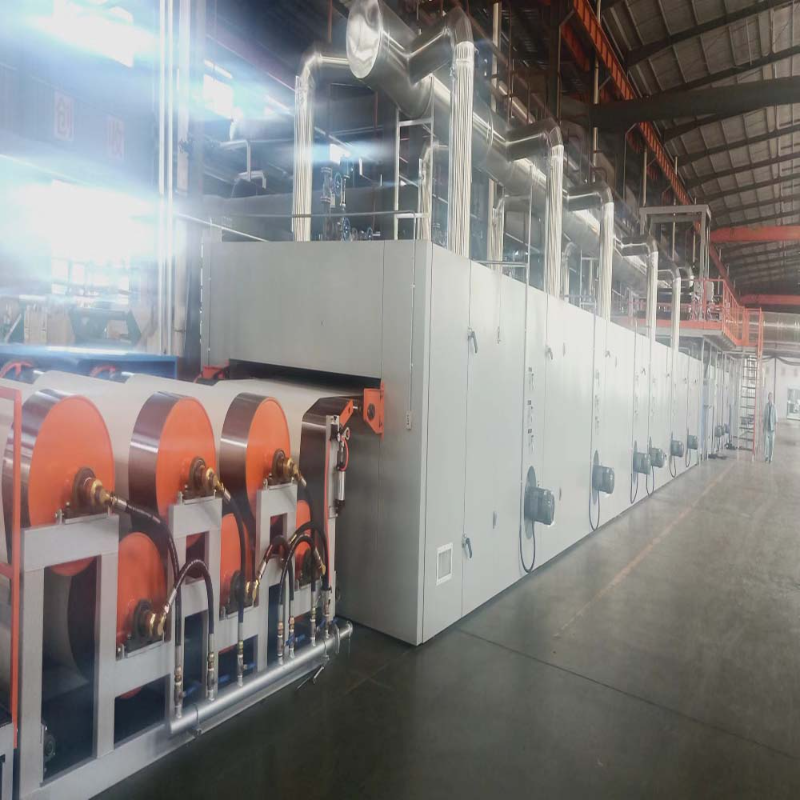
- The commercialization of continuous foam block and panel lines, especially double-belt and slabstock systems, which enabled large-scale production of flexible and rigid foams for insulation and cushioning.
- The maturation of composite production lines such as pultrusion, prepreg impregnation, and RTM/vacuum-assisted systems, which expanded reinforced plastics into structural applications requiring higher fiber volume and tighter dimensional control.
More recently, manufacturers have focused on digital dosing, automated recipe handling, precision gas dosing for foam nucleation, and waste-reduction systems designed to lower scrap and improve reproducibility.
Key Characteristics and Technical Overview
This machinery is defined by the need to manage fast chemical reactions, tight ratio tolerances, and highly temperature-sensitive formulations. The essential engineering task is to deliver materials at the correct proportion, pressure, and temperature while preventing premature reaction, phase separation, or poor cell/fiber structure.
Core machine functions
- Metering and dosing: Pumps or cylinders deliver each component with controlled ratio accuracy for isocyanate/polyol systems, epoxy hardeners, phenolic blends, or resin/fiber combinations.
- Mixing: High-pressure impingement or low-pressure mechanical mixing produces a uniform reactive blend before discharge.
- Foam generation: Controlled gas release, blowing-agent activation, or chemical foaming creates the final cellular structure in flexible, rigid, or spray foam products.
- Impregnation and forming: Fiber mats, roving, fabrics, or continuous reinforcements are saturated with resin and then shaped, cured, or pultruded into profiles and sheets.
- Curing and downstream handling: Heated molds, ovens, double belts, pullers, saws, trimming stations, and conveyors stabilize geometry and finish the part.
Typical technical benchmarks
| Parameter | Typical industrial range | Notes |
|---|---|---|
| PU spray/dispense output | about 3 to 60 lb/min | Common in smaller spray, pour, and insulation systems. |
| Continuous foam line output | about 220 to 1100 lb/min | Typical for flexible or rigid slabstock and continuous pour systems. |
| High-pressure PU machine output | about 4 to 20 kg/min in cited models | Output depends on formulation, shot size, and application. |
| RIM press force | about 500 to 5000 kN | Used for reaction injection molding and related press systems. |
| Residual moisture after centrifugal dewatering | often around 5% to 10% on plastic washing/dewatering lines, and lower in specialized drying stages | This benchmark is most relevant when recycled feedstock is part of the process chain rather than primary resin handling. |
| Granulator flake size | commonly around 10 to 20 mm for recycled plastic flakes | More relevant to reinforced or recycled feed preparation than to live reactive metering. |
| Rotor speeds in granulation | commonly in the hundreds of rpm, depending on cutter design and polymer | Relevant where scrap reduction and regrind preparation are integrated. |
| Specific energy consumption | highly application-dependent; continuous foam and composite lines generally target lower kWh per finished kilogram through improved heat transfer and reduced scrap | Energy intensity is driven by heating, pumping, trimming, and curing demands. |
Process-specific engineering notes
- High-pressure foaming machines are favored when rapid, reproducible mixing is required, especially for polyurethane spray foam and molded parts.
- Low-pressure systems are used where simpler maintenance, lower investment, or more forgiving chemistry is preferred, such as some pour-in-place foams and elastomers.
- Double-belt presses are critical for continuous sandwich panels and foam-core laminates because they combine transport, pressure, heat, and cure in one continuous line.
- Pultrusion machines maintain controlled draw speed through a heated die to produce constant-section profiles with consistent fiber alignment and resin content.
- FRP winding and prepreg machinery emphasize fiber placement accuracy, impregnation uniformity, and controlled resin content for pressure vessels, pipes, tapes, and aerospace-oriented laminates.
Types and Variations
| Machine type | Primary function | Typical products |
|---|---|---|
| Foam metering and dispensing machines | Mix and deliver reactive foam components | Spray foam, molded foam, cushioning foam, packaging foam |
| Slabstock and continuous foaming lines | Produce large foam blocks or continuous slabs | Furniture foam, insulation foam, packaging blocks |
| Pour-in-place and casting systems | Fill molds or cavities with reactive mixtures | Seats, panels, housings, insulation elements |
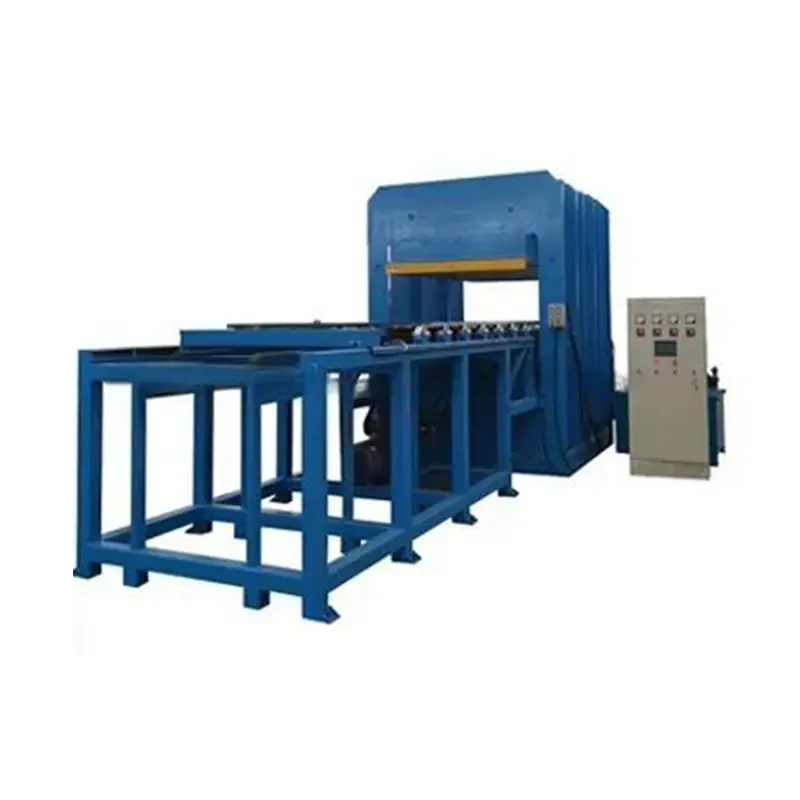
| High-pressure reaction injection molding systems | Inject reactive resins into closed molds | Automotive panels, structural skins, composite parts |
| Spray systems | Apply foam or resin directly onto substrates | Building insulation, waterproofing, roof systems |
| Pultrusion lines | Continuously pull fibers through resin and heated dies | Beams, rods, rebar, channels, tubes |
| Filament winding machines | Wind resin-impregnated fibers around mandrels | Tanks, pipes, pressure vessels |
| Prepreg impregnation and coating machines | Coat fibers or fabrics with resin for later forming | Prepregs, UD tapes, laminates |
| Double-belt presses | Cure and consolidate continuous panels | Sandwich panels, boards, foam-core laminates |
| Composite trimming and finishing equipment | Cut, route, and finish cured composite parts | FRP components, laminates, structural profiles |
Applications and Uses
The segment serves industries that require either low-density cellular materials or high-strength composite parts.
- Construction and insulation: Spray foam rigs, panel lines, and block foam systems are used for thermal insulation, roofing, sandwich panels, and sealed building envelopes.
- Automotive and transportation: Molded PU foams, RIM systems, prepreg lines, and composite molding equipment support seats, interior parts, panels, lightweight structural components, and vibration-damping elements.
- Aerospace and marine: Prepreg, RTM, filament winding, and vacuum-assisted composite systems are used where fiber orientation, resin content, and fatigue resistance are critical.
- Electrical and industrial equipment: Epoxy, phenolic, and composite machinery produces housings, insulators, enclosures, and corrosion-resistant parts.
- Furniture and bedding: Flexible foam slabstock and molded foam systems are widely used for cushions, mattresses, and comfort layers.
- Packaging and protective materials: Low-density foams and reactive casting systems are used for protective inserts and shock-absorbing packaging.
- Infrastructure and structural reinforcement: Pultruded FRP profiles, FRP rebar, and composite sheets are used in corrosion-prone or electrically nonconductive environments.
A relatively poor-fit use is high-temperature metallic processing, because the chemistry, temperature range, and forming physics of these machines are designed for polymers and composites rather than metal melting or forging.
Technological Innovations and Automation
Automation has become a defining feature of the sector. Modern plants increasingly use:
- Recipe management and digital dosing control for repeatable ratio accuracy and reduced operator dependence.
- Precision gas dosing and nucleation units to refine foam cell structure and improve material efficiency.
- Closed-loop temperature and viscosity management to stabilize reactive chemistry during varying ambient conditions.
- Robotic or automated lay-up and tape placement for prepregs and composite laminates.
- Integrated trimming, cutting, and block-handling systems to reduce manual handling and scrap.
- Turn-key production lines combining storage, metering, mixing, forming, curing, and post-processing in one controlled workflow.
These systems improve reproducibility, but they also increase capital cost and maintenance complexity. The best-performing plants typically balance automation with formulation flexibility, especially where multiple resin chemistries or product families are processed on the same line.
Environmental and Sustainability Aspects
Environmental performance is now a central design criterion for this machinery segment.
- Energy efficiency: Continuous lines can reduce specific energy consumption by integrating heating, transport, and curing, while optimized dosing reduces rework and off-spec scrap.
- Material waste reduction: Better mixing accuracy, smarter head purging, and waste-free fillers or additives can lower losses in foaming and composite production.
- Recycling compatibility: Reinforced and foamed products are often difficult to recycle mechanically, so machines that support lower-density designs, reduced scrap, or recycled-content feedstocks are increasingly valued.
- Emission control: Reactive resin systems may involve isocyanates, catalysts, solvents, or volatile additives, so enclosed handling, extraction, and automated transfer are important for compliance and worker protection.
- Circular-economy potential: Some composite and foam systems are moving toward bio-based polyols, recyclate-based fillers, solvent-free coating, and redesign-for-disassembly strategies, although industrial adoption remains uneven.
Economic and Global Market Impact
The market is shaped by construction demand, vehicle lightweighting, packaging requirements, and industrial infrastructure investment. Suppliers with strong positions in polyurethane and composite processing typically offer not just individual machines but complete engineered systems, reflecting the complexity of reactive chemistry and line integration.
Europe remains influential in high-end foaming and composite machinery, while Asia has expanded strongly in pultrusion, FRP, and cost-competitive production lines. Trade shows and industrial catalogues consistently classify this field as a distinct machinery category, underlining its importance as a bridge between plastics processing and advanced materials manufacturing.
The economic value of these systems depends less on machine count than on throughput stability, downtime avoidance, formulation flexibility, and final-part consistency. For many processors, the machine is not a standalone asset but the core of a fully integrated production cell or line.
Current Challenges and Innovations
The main technical and commercial challenges are:
- Handling reactive chemistry safely and consistently, especially with moisture-sensitive, exothermic, or hazardous components.
- Maintaining ratio accuracy at high throughput, since small metering errors can alter density, cell structure, cure, or mechanical performance.
- Reducing emissions and worker exposure, particularly in spray and open-mixing environments.
- Producing lighter parts without sacrificing strength, which requires better fiber placement, impregnation, and cure control.
- Integrating recycled or bio-based inputs, which can alter viscosity, reactivity, and process window.
Recent innovation has concentrated on smarter dosing, modular line design, digital monitoring, and more efficient heat management. In foaming equipment, one notable trend is the move toward lower-waste systems and improved filler handling; in composite machinery, the trend is toward automated fiber placement, faster curing, and more repeatable impregnation.
Future Outlook
Future development is likely to focus on higher process intelligence, lower-emission chemistry, and more adaptable production lines. Systems will increasingly combine sensors, software, and servo-controlled dosing to respond to formulation drift and ambient variation in real time.
In foam processing, the next generation of equipment is expected to improve cell uniformity, reduce energy per unit output, and better accommodate low-global-warming-potential blowing systems and circular feedstocks. In reinforced-resin machinery, growth will likely come from lightweight infrastructure, electrification-related components, and automated composite production for high-volume structural applications.
The long-term direction of the sector is toward machines that do more than form polymer parts: they will increasingly function as precision reaction platforms for engineered cellular and fiber-reinforced materials.
References
- •
Polyurethane foam machine and plant. (n.d.). Eachsun. https://www.eachsun.com/Foam-Machine/Link
- •
Lavorazione resine. (n.d.). Resin-Mix. https://www.resin-mix.com/Link
- •
Foaming equipment | Polyurethane dispensing and. (n.d.). FSI. https://fsi.co/products/foaming-equipment/Link
- •
Reactive or reinforced resin foam machines. (2002, January 1). Plastinfo. https://www.plastinfo.com/machinery/?level0=4&level1=50&level2=0Link
- •
AFROS SPA - CANNON GROUP. (n.d.). Machines Italia. https://machinesitalia.org/company/afros-spa-cannon-groupLink
- •
FRP machinery. (2023, March 1). Omniskompozit. https://omniskompozit.com/en/product-categories/grp-machines/Link
- •
Machinery and plants. (n.d.). Magma Macchine. https://www.magmamacchine.it/en/macchine-impiantiLink
- •
Prepreg, tow preg & spreading technology. (2026, February 13). Cygnet Texkimp. https://cygnet-texkimp.com/solutions/prepreg-tow-preg-spreaders/Link
- •
China pultrusion machine manufacturers. (2008, January 1). TechnoFRP. https://www.technofrp.com/pultrusion-machine-product/Link
- •
The exhibition - Plast 2026. (2025, October 22). Plastonline. https://plastonline.org/en/profile/the-exhibition/Link
- •
[Hot item] GFRP fiberglass pultrusion products line FRP rebar pultrusion machine. (2025, June 26). Made-in-China. https://jiubocomposites1.en.made-in-china.com/product/nOpAWfjUXwYs/China-Gfrp-Fiberglass-Pultrusion-Products-Line-FRP-Rebar-Pultrusion-Machine.htmlLink
- •
Machines and production systems. (n.d.). Hennecke. https://www.hennecke.com/en/solutions/machines-and-production-systemsLink
- •
Prepregs-advancements in composite materials. (2024, May 9). Jota Machinery. https://www.jotamachinery.com/composites/prepregs/Link
- •
[Hot item] GFRP rebar production line FRP rebar making machine. (2025, June 26). Made-in-China. https://jiubocomposites1.en.made-in-china.com/product/vdptqkOzkFrD/China-Gfrp-Rebar-Production-Line-FRP-Rebar-Making-Machine.htmlLink
- •
Pultrusion machine manufacturer | Turn-key FRP production lines. (2026, August 7). Income Pultrusion. https://incomepultrusion.com/pultrusion-machine/Link
- •
High-performance PU & composite processing equipment. (2026, March 4). Cannon. https://cannon.com/processing-equipment/Link
- •
Equipment for the production of laminate, prepregs and laminates. (2025, November 27). Carbon Studio. https://carbonstudio.ae/product/reliant-machineryLink
- •
About us. (n.d.). Cannon. https://cannon.com/about-us/Link
- •
Winding machine. (2025, September 27). Lianzhong FRP. http://www.lianzhongfrp.com/46.htmlLink
- •
Products. (2011, June 1). KraussMaffei. https://www.kraussmaffei.com/en/reaction-process-machinery/products?lang=deLink
- •
Pultrusion machine for FRP structural profiles | GTOFRP™. (n.d.). GTOFRP. https://www.gtofrp.com/pultruded-equipment.htmlLink
- •
Find plastics making equipment. (n.d.). Making.com. https://making.com/products/plasticsLink
- •
Prepreg machine | PAN-based carbon fiber impregnation. (2026, January 29). Jota Machinery. https://www.jotamachinery.com/products/prepreg-machine/Link
- •
FRP sheet continuous forming making machine. (2025, January 20). Alibaba. https://www.alibaba.com/showroom/frp-sheet-continuous-forming-making-machine.htmlLink
- •
Exhibitor categories. (2020, January 20). Plastivision. https://www.plastivision.org/exhibitor-categories.phpLink
- •
Urethane processing systems: Product lines reviewed. (2025, July 20). The Free Library. https://www.thefreelibrary.com/Urethane+processing+systems:+product+lines+reviewed.-a012674349Link
- •
优质泡沫、反应或增强树脂机械 - Chinaplas 2026. (2026, April 20). Chinaplas Online. https://www.chinaplasonline.com/eMarketplace/quality/AllProducts/simp?SProds=79&SearchType=all&SearchBy=Prod&page=1&Sort=0&src=31&v=c2Link
- •
Other machines for composites - Plastics processing. (2025, January 1). DirectIndustry. https://www.directindustry.com/cat/plastics-processing/other-machines-composites-M-1742.htmlLink
- •
Techtextil – Exhibitors & products - ZAPPA MACCHINE SRL. (2025, October 10). Messe Frankfurt. https://techtextil.messefrankfurt.com/frankfurt/en/exhibitor-search.detail.html/zappa-macchine-srl/mf_1_0052422014_3764186_10000008202401.htmlLink
- •
Resin processing solutions | Trusted partners | Novag. (2020, January 1). Resin Processing Solutions. https://www.resinprocessingsolutions.com/novagLink
- •
Industrial presses for processing PU and composite resins. (2025, August 12). Cannon. https://cannon.com/news/an-introduction-to-industrial-presses-for-processing-polyurethanes-and-composite-resins/Link
- •
High pressure PU mixing machine | Metering | Dosing | AutoRIM. (2024, December 17). AutoRIM. https://www.autorim.co.uk/pu-equipment/pu-mixing-machines/high-pressure/Link
- •
Polymer Engineering Co., Ltd. company profile | IPROS GMS. (2017, June 28). IPROS. https://mono.ipros.com/en/product/detail/2000317156/Link
- •
Reinforced plastics equipment. (Product lines reviewed). (2025, January 24). The Free Library. https://www.thefreelibrary.com/Reinforced+plastics+equipment.+(Product+Lines+Reviewed).-a093534833Link
- •
Equipos para fibra de vidrio. (n.d.). Fibermaq. https://www.fibermaq.com.br/es/fiberglass.phpLink
- •
GAMA: Industrial machines and equipment. (2025, January 1). DirectIndustry. https://www.directindustry.com/prod/gama-80383.htmlLink
- •
Foaming / casting machine | Products & services. (n.d.). Tohomachinery. https://www.tohomachinery.co.jp/en/products/foaming/Link
- •
PU foam foaming machines & production line solutions. (2026, March 22). Raytech Machinery. https://www.raytechmachinery.com/pu-foam-foaming-machines/Link
- •
Top polyurethane foam machines: Market data, performance, buying guide. (2026, February 14). Alibaba. https://www.alibaba.com/product-insights/top-polyurethane-foam-machines-market-data-performance-buying-guide.htmlLink
- •
Epoxy resin/polyamide/polyurethane CCM RTM molding colorform foaming machine. (2009, October 29). Made-in-China. https://henghuipu1776.en.made-in-china.com/product/gTGRNCsoAEcw/China-Epoxy-Resin-Polyamide-Polyurethane-CCM-Rtm-Molding-Colorform-Foaming-Machine.htmlLink
- •
Máquina de inyección de espuma de poliuretano. (2024, November 1). Top China Machine. https://es.topchinamachine.com/showroom/polyurethane-foam-injecting-machine.htmlLink
- •
Fiberglass chop gun sprayer - New resin spray machine for sale. (2026, January 8). Alibaba. https://www.alibaba.com/product-detail/Fiberglass-Chop-Gun-Sprayer-Fiberglass-Resin_1600589772736.htmlLink
- •
Resin reactors for accurate and efficient processes. (n.d.). IFA Technology. https://www.ifa-technology.net/en/industrial-reactors/industrial-resin-reactors/Link
- •
Industrial foam makers: Top suppliers & machines for production. (2025, August 18). Accio. https://www.accio.com/plp/industrial-foam-makersLink
- •
Spray foam insulation equipment guide. (n.d.). Spray Foam Magazine. https://www.sprayfoammagazine.com/spray-foam-guides/spray-foam-equipment-guideLink
- •
CCM RTM high pressure resin transfer carbon fiber composite molding machine. (2009, October 29). Made-in-China. https://henghuipu1776.en.made-in-china.com/product/YQFRsZpOryhm/China-CCM-Rtm-High-Pressure-Resin-Transfer-Carbon-Fiber-Composite-Molding-Machine.htmlLink
- •
Zařízení na pěnění polyuretanu - Topchinamachine.com. (n.d.). Top China Machine. https://cs.topchinamachine.com/showroom/polyurethane-foaming-equipment.htmlLink
- •
OSHA technical manual (OTM) - Section III: Chapter 1. (n.d.). OSHA. http://www.osha.gov/otm/section-3-health-hazards/chapter-1Link
- •
A complete overview of polyurethane foam making plant. (2026, February 11). Alibaba. https://www.alibaba.com/product-insights/polyurethane-foam-making-plant.htmlLink
- •
Product information. (2006, January 1). Royal Thermoset. https://www.royalthermoset.com/productsLink
- •
US8003730B1 - Process for epoxy foam production. (2011, August 23). Google Patents. https://patents.google.com/patent/US8003730B1/enLink
- •
Understanding PU foam manufacturing machines. (2025, December 10). Sabtech Machine. https://www.sabtechmachine.com/a-understanding-pu-foam-manufacturing-machines-processes-and-applications.htmlLink
- •
Self-foaming polymers- opportunities for the next generation of personal protective equipment. (n.d.). HAL. https://hal.science/hal-03454352/file/Self-foaming%20polymers-%20opportunities%20for%20the%20next%20generation%20of%20Personal%20Protective%20Equipment.pdfLink
- •
Materials, production & properties of polyurethane foam. (2026, June 16). IQS Directory. https://www.iqsdirectory.com/articles/foam-fabricating/polyurethane-foam.htmlLink