
Introduction
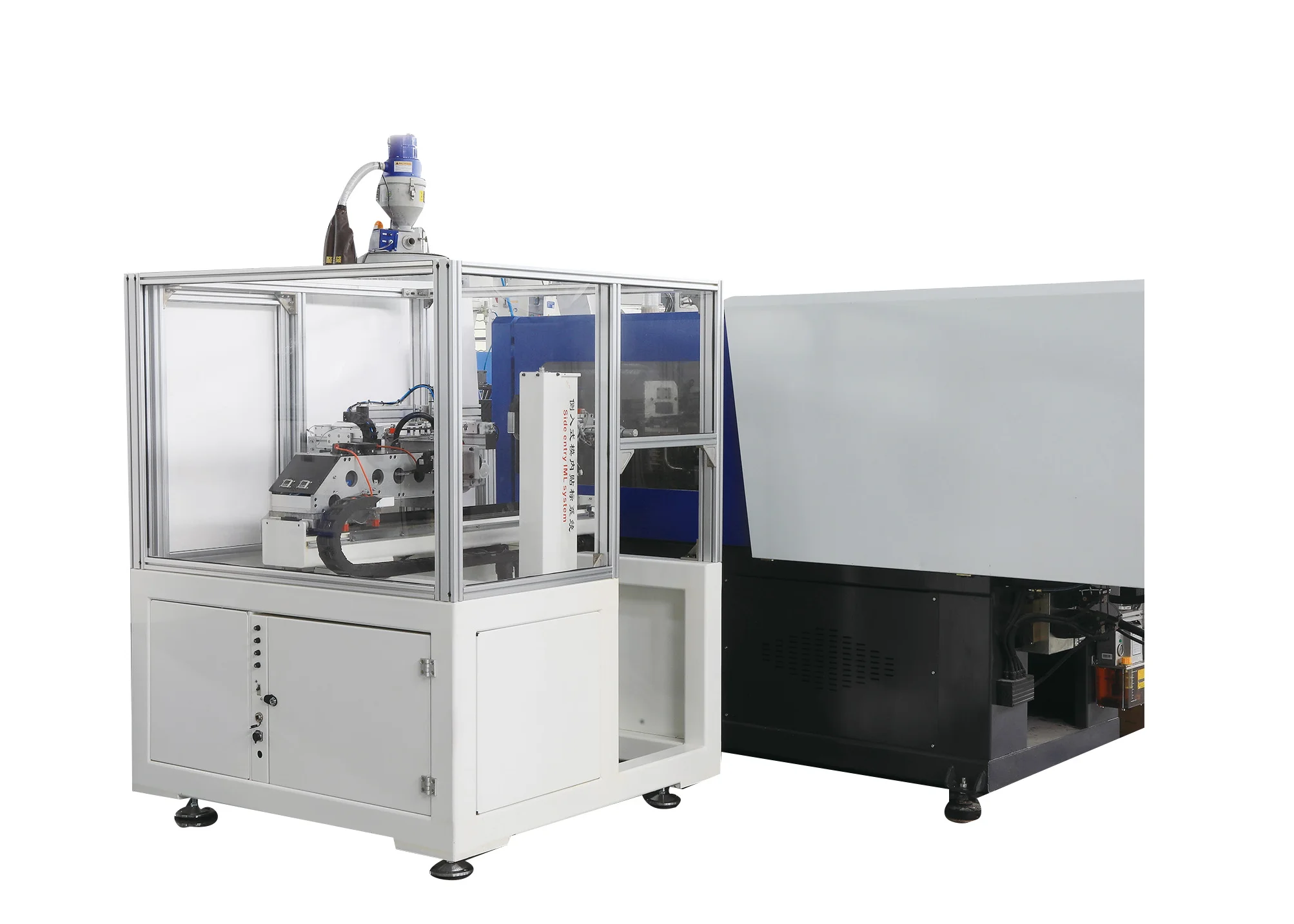
In-mold labeling equipment (IML equipment) is the automation, tooling, and machine-integrated hardware used to place a pre-printed label into a mold before plastic is formed, so the label becomes permanently fused with the part during injection molding, blow molding, or, less commonly, thermoforming. In packaging, the technology is valued for its durable decoration, high-quality graphics, and efficient one-step production, but it also requires precise synchronization between the molding press, robot, label handling system, and mold design.
IML systems are most strongly associated with high-volume packaging such as lids, tubs, pails, cups, and thin-wall containers, where cycle time, label positioning accuracy, and mold cavitation are critical. The field has evolved from relatively simple pick-and-place labeling solutions into highly integrated cells using Cartesian side-entry robots, top-entry robots, vacuum or electrostatic label retention, vision inspection, and servo-controlled handling to support continuous production.
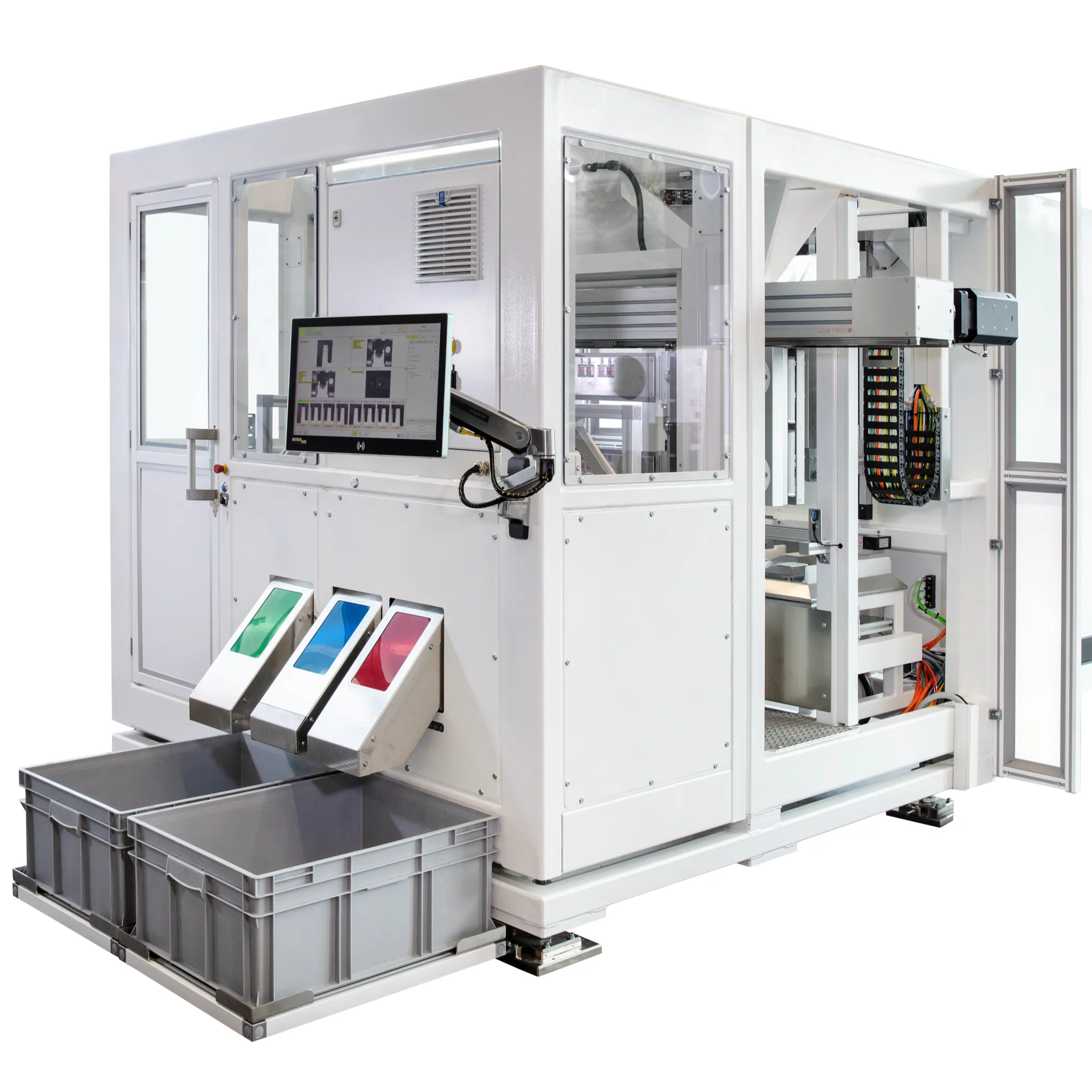
From an engineering perspective, IML equipment sits at the intersection of plastics processing, print technology, robotics, and moldmaking. Its performance depends not only on the molding machine but also on label substrate selection, static control, cavity design, vacuum management, and downstream part removal and stacking. Sustainability has become more important as well, because IML can eliminate secondary labeling steps, reduce adhesives and separate sleeves, and improve package recyclability when compatible mono-material label structures are used.
History and Development
IML emerged as a response to the packaging industry’s demand for decorated containers with lower unit labor and higher graphic quality than post-mold labeling could easily deliver. Early systems relied on separate label magazines and mechanical placement devices, later augmented by vacuum or electrostatic retention to stabilize labels on the mold wall during injection.
A major development was the move toward robot-integrated IML cells, where label pick-up, cavity insertion, part removal, and stacking are handled in one synchronized cycle. This integration improved repeatability and allowed IML to scale to multi-cavity, high-speed production in food, personal care, and industrial packaging.
A further milestone was the adoption of servo-driven Cartesian and side-entry robots and application-specific tooling for thin-wall, high-cavitation molds. These developments enabled faster cycle times, better label orientation, and improved reliability in demanding 24/7 production environments.
Technical Overview
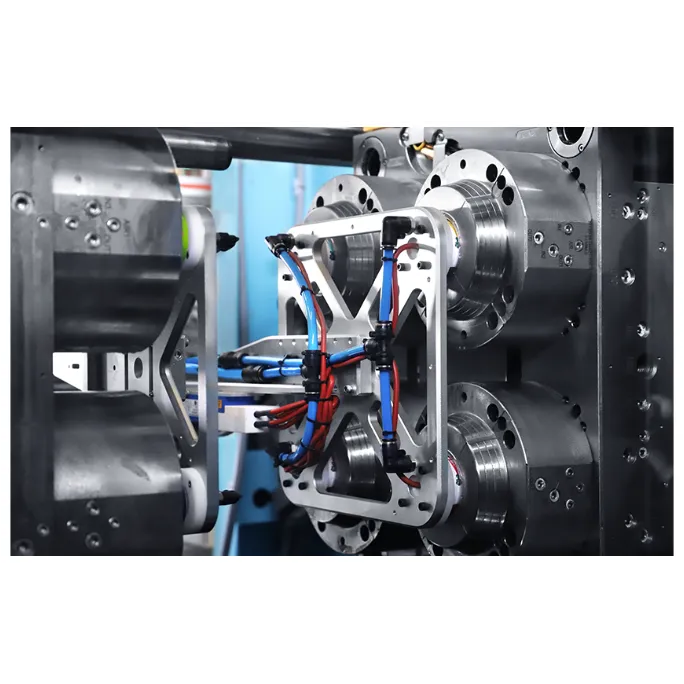
IML equipment is usually built around four coordinated subsystems: the molding machine, the label handling robot, the label retention method, and the specialized mold. The robot typically removes a label from a stack or magazine, positions it in the open cavity, and holds it by vacuum or electrostatic charge until the molten polymer contacts and embeds it.
Core functional sequence
- Labels are printed, die-cut, and oriented in stacks, magazines, or reels depending on the line design.
- The IML robot transfers a single label into the open mold.
- Vacuum ports, pins, or electrostatic charging hold the label against the cavity wall.
- Melted polymer is injected or, in blow molding, the parison is expanded against the label and mold surface.
- After cooling, the finished part is ejected or removed by the robot.
Typical machine architecture
| Subsystem | Typical function | Common technical features |
|---|---|---|
| Label magazine / feeder | Stores and presents die-cut labels | Stack magazines, roll-fed feeding, singulation, orientation control |
| Robot or manipulator | Places labels and often removes parts | Side-entry Cartesian, top-entry, disc/carousel variants, servo axes |
| Retention system | Holds label in place before and during injection | Vacuum ports, electrostatic charging, mechanical pinning |
| Mold | Defines part geometry and label location | Precision label pocketing, venting, high-cavitation packaging tools |
| Control system | Synchronizes all motions with the press | PLC/servo integration, recipe management, interlocks, vision options |
Typical operating benchmarks
Published industry descriptions and equipment literature indicate that IML is optimized for high-speed, thin-wall production, with some systems using injection speeds of 300 mm/s or higher to fill thin sections before freeze-off occurs. High-volume packaging lines commonly use multi-cavity molds, and patent literature describes handling tools able to place labels into more than four cavities simultaneously in one cycle.
For the label-converting stage, printed label webs are often cut into die-cut pieces before use, while the end-use label substrate may be PP, PET, PS, or composite films depending on stiffness, shrink behavior, and recyclability goals. In related film-insert applications, pre-formed films are also used, but the dominant packaging variant for IML remains die-cut printed labels.
Although exact figures vary by machine size and part geometry, industrial IML systems are generally characterized by:
- High throughput suitable for packaging mass production.
- Short cycle times driven by servo motion and integrated part transfer.
- Low residual label movement due to static or vacuum retention before injection.
- Precision placement necessary for graphics alignment, particularly on lids and wrap-round containers.
Types and Variations
By molding process
| Type | Main use | Technical notes |
|---|---|---|
| Injection IML | Lids, tubs, pails, thin-wall containers | Most common form; requires precise robot timing and mold coordination. |
| Blow-mold IML | Hollow containers, bottles, jars | Label is placed in the mold before the parison is expanded; often used for decorative packaging. |
| Thermoforming IML | Trays and formed packaging | Less common; label integration occurs during sheet forming rather than injection. |
By robot configuration
- Side-entry Cartesian robots are widely used in packaging because they match the press layout and can handle label insertion and part removal efficiently.
- Top-entry systems are used where vertical access or special tooling layouts are preferred.
- Disc or carousel robots are used in certain compact or vertical configurations for repetitive label transfer.
By label retention method
- Vacuum-holding systems use suction to stabilize the label against the cavity wall.
- Electrostatic systems charge the label so it adheres to the mold surface.
- Mechanical pinning is used in some mold designs as an auxiliary retention method.
By application format
- Flat-label IML is common for lids and pails.
- Wrap-round IML is used for containers with larger decorated surfaces.
- Multi-material or film insert variants are used when the objective is decorative or functional surface integration rather than conventional label appearance.
Applications and Uses
IML equipment is most established in food packaging, where decorated lids, tubs, yogurt containers, margarine tubs, and reusable food pails benefit from abrasion-resistant graphics and high-speed production. The same equipment concept is also used in household goods, paint pails, industrial containers, cosmetics, and some pharmaceutical and chemical packaging formats.
Common sector-to-machine matching includes:
- Food and beverage packaging: injection IML for tubs, lids, and cups.
- Household and industrial packaging: injection IML for pails, buckets, and storage containers.
- Personal care and cosmetics: injection or blow-mold IML for premium-looking containers and bottles.
- Chemical and paint packaging: robust injection IML for pails and high-volume utility containers.
- A poor-fit use: low-volume, highly customized, or frequently artwork-changing products, where the tooling and automation investment is often difficult to justify compared with simpler post-molding labeling.
Materials and Label Engineering
IML performance depends heavily on the compatibility between label substrate, plastic resin, and mold temperature profile. Common label materials include PP, PET, PS, and composite films, selected for print quality, stiffness, shrink response, and bonding behavior.
Key engineering considerations include:
- Dimensional stability, so the label remains flat and accurately placed before injection.
- Melt bonding behavior, so the incoming polymer integrates with the label surface without wrinkles or delamination.
- Surface treatment and print system compatibility, especially where gloss, opacity, or metallic effects are required.
- Recycling alignment, particularly when the container and label are intended to stay within a mono-material family.
Technological Innovations and Automation
Modern IML systems increasingly combine robotics with vision inspection, digital recipe control, and servo optimization. Automation decisions often include robot geometry, end-of-arm tooling, label holding method, and downstream inspection and stacking equipment.
Notable innovations include:
- Integrated label feeding and singulation, reducing manual handling and misfeeds.
- High-cavitation label placement, which improves output for packaging molds with many cavities.
- Servo-controlled motion profiles, improving repeatability and reducing mechanical wear.
- Inline inspection, which helps detect label skew, missing labels, or placement errors before packaging shipment.
Environmental and Sustainability Aspects
IML can improve sustainability by combining decoration and molding in one step, thereby reducing separate labeling operations, adhesives, and additional consumables. When paired with suitable label materials and container resins, it can also support more straightforward package recycling than multi-layer decorative systems that use incompatible inks or sleeves.
At the same time, IML is not automatically “green” in every case. It typically requires:
- More complex molds and robots than conventional decoration.
- Higher capital investment and more sophisticated maintenance.
- Careful selection of label and resin combinations to preserve recyclability.
In practice, the environmental advantage is strongest where high throughput, lightweight packaging, and reduced secondary operations offset the embodied complexity of the equipment.
Economic and Global Market Impact
IML equipment is commercially significant because it is strongly aligned with the economics of high-volume packaging, where small per-part savings compound over large annual production volumes. The technology is therefore most attractive to converters and brand owners seeking premium appearance, tamper-resistant decoration, and automated production efficiency.
The global market includes integrated machine suppliers, robot specialists, moldmakers, label printers, and turnkey automation firms. Companies such as BECK Automation, Sepro, Wittmann, KraussMaffei, and several mold and robot specialists have established positions in the IML ecosystem through complete systems or key subsystems.
Current Challenges and Innovations
The main technical challenges are:
- Label misplacement, especially at high speed or with static instability.
- Mold complexity and cost, particularly for multi-cavity packaging tools.
- Process synchronization, since the robot, press, and label feed must operate within tight timing windows.
- Material compatibility, especially when premium graphics conflict with recycling objectives.
Recent innovation is focused on:
- Faster, more compact robots.
- Better electrostatic and vacuum holding systems.
- Mold designs optimized for rapid label capture and stable venting.
- Inline quality assurance and data-driven production monitoring.
Future Outlook
IML equipment is likely to remain strongest in packaging, especially where brands value decorated rigidity, automated efficiency, and consistent graphic quality. Future growth is expected to be shaped by servomotor efficiency, smart factory integration, and materials engineered for recycling compatibility.
The most important direction of development is not simply faster robot motion, but tighter system integration across printing, die-cutting, molding, inspection, and logistics. As packaging companies face stronger sustainability and traceability requirements, IML systems that combine high speed with lower material waste and improved circularity compatibility are likely to gain the greatest strategic value.
Summary
IML equipment is a specialized automation platform that embeds a printed label into a plastic part during molding, creating durable decoration in a single production cycle. Its most important strengths are speed, graphic quality, and seamless integration with high-volume packaging lines, while its main limitations are capital cost, tooling complexity, and the need for tight process control.
References
- •
In mold labeling system. (n.d.). Dakumar. https://www.dakumar.com/in-mould-labeling.htmlLink
- •
In mold labeling machine – IML series. (2024, August 30). Huarong. https://www.huarong.com.tw/page/product/en/injection-molding-machine/special-injection/detail/iml-in-mold-labling/Link
- •
In-mold basics. (2021, July 12). IMD Association. https://imdassociation.com/in-mold-101/in-mold-basics/Link
- •
Sepro IML, complete solution for packaging. (n.d.). Sepro Group. https://www.sepro-group.com/modular-robotic-solutions/products/iml-in-mold-labelling-systemLink
- •
PRODUCTS » IML systems. (n.d.). Enelkon. https://www.enelcon.com/en/modul/products/iml-systemsLink
- •
In-mold labelling: An overview. (2012, October 27). ScienceDirect. https://www.sciencedirect.com/topics/engineering/in-mold-labellingLink
- •
IML: Forbedre Produktionsmærkning. (n.d.). Simco. https://www.northerngrafics.com/iml-en/Link
- •
IVI robot: IML robot manufacturer. (2026, July 17). Ivirobot. https://ivirobot.com/Link
- •
IML automation systems. (n.d.). H T Mould China Limited. https://chinamoldshop.com/en/iml.htmlLink
- •
Horizontal > Models > In-mold labeling injection molding application. (2006, March 8). China-plastic-machinery. http://china-plastic-machinery.cn/page/horizontal_features/en/IML-In-mold-labeling-Injection-Molding-MachineLink
- •
In-mould labelling machine. (2025, January 1). Plastemart. https://www.plastemart.com/printing-machines-plastics-films-bags-molded-parts/in-mould-labelling-m-c/manufacturers/548Link
- •
Understanding IML printing machine: Material properties, technical.... (2026, February 22). Alibaba. https://www.alibaba.com/product-insights/iml-printing-machine.htmlLink
- •
In-mold labels. (n.d.). Label & Narrow Web. https://www.labelandnarrowweb.com/issues/2013-01/view_features/in-mold-labels-857280/Link
- •
IML label printing machines (in-mold). (2024, October 28). Zonten Europe. https://zonten-europe.com/en/industries/iml-label-printing-machines/Link
- •
In-mold labeling robot for 550-1000T IMM. (n.d.). Motek Industry. https://www.motekindustry.com/Injection-IML-Dedicated-Robot/Link
- •
CM-IML in-mold labeling machine. (2025, September 8). CM-PET. https://www.cm-pet.com/cm-iml-in-mold-labeling-machineLink
- •
In-mould labelling. (2006, April 12). Wikipedia. https://en.wikipedia.org/wiki/In-mould_labellingLink
- •
In-mold labeling (IML) robots. (2024, May 5). Campetella. https://www.campetella.com/en/iml/Link
- •
IML automation solutions for plastics manufacturing. (n.d.). Pages Group. https://www.pagesgroup.net/Link
- •
IML machine, in mold labeling system supplier. (n.d.). Dakumar. https://www.dakumar.com/IML-machine.htmlLink
- •
BECK IML - IML (in mould labeling). (2025, May 13). BECK Automation AG. https://www.beck-automation.com/en/products/beck-iml/Link
- •
Mold manufacturers. (n.d.). In-Mold Decorating Association. https://imdassociation.com/Services/mold-manufacturers/Link
- •
IML systems. (n.d.). GuangDong SWITEK Technology Co., Ltd. https://global.switek.com.cn/Products/IML-System/Link
- •
In mold labeling - IML. (2022, November 28). Nissha USA. https://nisshausa.com/products/in-mold-labeling/Link
- •
Iml (in-mould labelling) coatings. (n.d.). Europages. https://www.europages.co.uk/companies/iml-in-mould-labelling-coatings.htmlLink
- •
In-mould labelling (IML) robot for buckets. (2023, January 1). Techno Industries. https://www.technoindustries.in/injection-in-mould-labelling-robot.htmlLink
- •
In mold labeling: Complete guide to IML technology and machines. (2026, March 2). Ivirobot. https://ivirobot.com/in-mold-labeling-complete-guide-to-iml-technology-and-machines/Link
- •
InMold labeling (IML). (n.d.). KraussMaffei. https://www.kraussmaffei.com/en/our-processes/inmold-labeling-imlLink
- •
Understanding IML robot machine. (2025, November 17). Alibaba. https://www.alibaba.com/product-insights/iml-robot-machine.htmlLink
- •
Plastic processing machinery and equipment NES. (n.d.). Kompass. https://lb.kompass.com/z/tr/a/plastic-processing-machinery-and-equipment-nes/53700/r/istanbul/tr_tr34/Link
- •
In mold labeling system. (n.d.). Ivirobot. https://ivirobot.com/in-mold-labeling-system/Link
- •
Understanding in-mould labeling: Process, machinery, and benefits. (2024, December 4). VIE Machinery. https://viemachinery.com/understanding-in-mould-labeling-process-machinery-and-benefits/Link
- •
C.I.D. full rotary printing machine for in mold. (2025, March 24). Labelmen. https://www.labelmen.com/product/iml-printing-machine/Link
- •
How does in mold labeling work? (2025, August 1). Inmoldlabel. https://www.inmoldlabel.net/news/how-does-in-mold-labeling-work.htmlLink
- •
Quality-marked line of in mold labeling machine, IML solution, etc., is served here! (2017, January 1). Imlsolutionteam. https://www.imlsolutionteam.com/Link
- •
B2B台灣、中國射出成型機製造商、出口商. (2024, November 1). Manufacturers. https://www.manufacturers.com.tw/zh-tw/machinery/Injection-Molding-Machines.htmlLink
- •
Iml process label printing suppliers. (2024, January 25). Made-in-China. https://www.made-in-china.com/manufacturers/iml-process-label-printing.htmlLink
- •
In-mold labeling catching on in North America. (2026, March 27). Plastics Technology. https://www.ptonline.com/articles/in-mold-labeling-catching-on-in-north-americaLink
- •
IML injection molding machines. (2025, September 15). Accio. https://www.accio.com/plp/iml-injection-molding-machinesLink
- •
International Medical Lasers. (2025, January 1). LinkedIn. https://www.linkedin.com/company/international-medical-lasersLink
- •
Iml punching machine factory suppliers. (2025, December 22). Made-in-China. https://www.made-in-china.com/manufacturers/iml-punching-machine-factory.htmlLink
- •
"iml punching machine factory". (2026, May 27). Made-in-China. https://www.made-in-china.com/products-search/hot-china-products/iml_punching_machine_factory.htmlLink
- •
In-mould labelling systems (IML) for plastics. (n.d.). Kompass. https://www.kompass.com/z/ww/a/in-mould-labelling-systems-iml-for-plastics/5370023/Link
- •
Custom iml packaging. (n.d.). Europages. https://www.europages.co.uk/companies/custom-iml-packaging.htmlLink
- •
IML electronic - With passion and precision. (2026, August 3). IML Electronic. https://www.iml-electronic.com/Link
- •
Top IML manufacturers: Find reliable in-mold labeling suppliers. (2026, August 16). Accio. https://www.accio.com/supplier/iml-manufacturerLink
- •
Interface Manufacturing Limited. (2025, January 1). LinkedIn. https://www.linkedin.com/company/interface-manufacturing-limitedLink
- •
Iml robotics at best price in Mumbai, Maharashtra. (2025, January 1). TradeIndia. https://www.tradeindia.com/products/iml-robotics-3197073.htmlLink
- •
Iml machine. (2025, January 20). Alibaba. https://www.alibaba.com/countrysearch/CN/iml-machine.htmlLink
- •
In-mold labeling apparatus and method. (2010, April 9). Google Patents. https://patents.google.com/patent/US8616869B2/enLink
- •
Equipment list. (2025, February 21). Boise State University. https://www.boisestate.edu/coen-imfl/equipment-and-processes/equipment-list/Link
- •
In-mold labeling vs. in-mold decorating. (2023, February 27). Robotic Automation Systems. https://www.roboticautomationsystems.com/blog/in-mold-labeling-vs-in-mold-decorating/Link
- •
What is in-mold labeling (IML)? (2022, November 15). Moldmore Plastic. https://moldmore.com/what-is-in-mold-labeling-iml/Link