

Introduction
Electrostatic systems are technologies that use stationary or slowly varying electric charges to perform industrial functions such as particle separation, coating, cleaning, printing, and dust control. In the plastics industry, the term most often refers to electrostatic charging and field-assisted handling systems used in spray coating, powder deposition, film and sheet processing, additive separation, packaging, and contamination control, where charge-induced attraction or repulsion improves transfer efficiency and surface quality.
These systems are built around a basic physical principle: like charges repel and opposite charges attract, allowing charged particles, droplets, or surfaces to be directed without direct mechanical contact. Because electrostatic forces can act over distance and with little moving hardware, such systems are attractive where low wear, high transfer efficiency, and precise particle control are important.
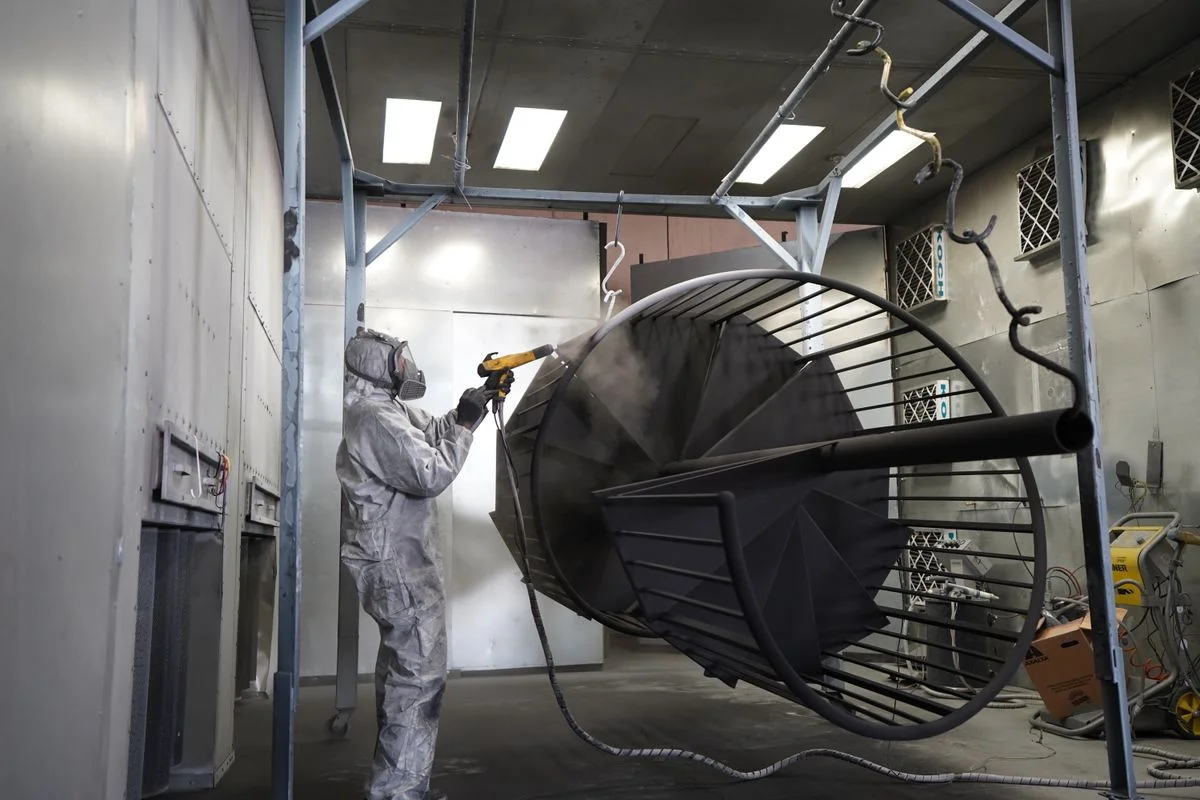
Within plastics processing, electrostatic systems have evolved from simple corona-charging and grounded-target coating setups into more integrated process modules with high-voltage controls, feedback sensors, and automation interfaces. Their industrial value is tied to three recurring goals: reducing material waste, improving coverage or separation efficiency, and lowering energy or maintenance burdens compared with purely mechanical alternatives.
History and Development
Electrostatic technology developed from foundational research in electric charge, field theory, and potential, which established the basis for later industrial applications in printing, precipitation, and coating. Early practical adoption came through xerography and electrostatic painting, both of which demonstrated that charged materials could be positioned and fixed with high precision.
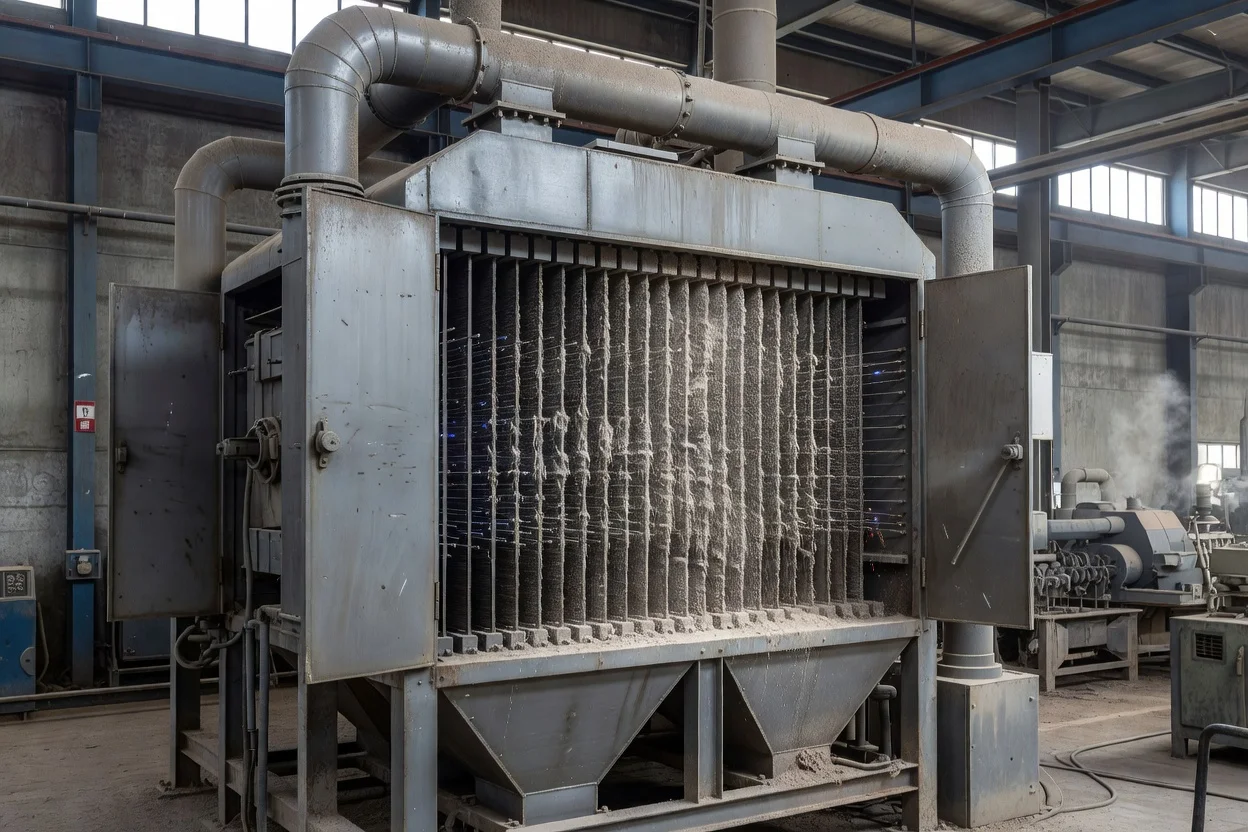
A major industrial milestone was the deployment of electrostatic precipitators for particulate removal in exhaust streams, where charged particles are collected on oppositely charged surfaces with very high removal efficiency. This established electrostatics as a robust process tool for air cleaning and emissions control.
A second milestone was the spread of electrostatic spray application in coatings, where charged droplets improve wraparound and transfer efficiency on grounded substrates, reducing overspray losses. More recent developments emphasize lightweight high-voltage supplies, improved charge control, and unattended operation in dust-management and surface-cleaning systems.
Key Characteristics and Technical Overview
Electrostatic systems are usually defined by five engineering elements: a charge source, a high-voltage field, a target or collector, a ground or return path, and a control/safety package. Depending on the application, charging may occur by corona discharge, triboelectric charging, or conductive charging.
In plastics processing and recycling, electrostatic systems are often paired with material handling or separation units. In these contexts, process performance depends strongly on particle size, moisture, dielectric behavior, and surface contamination, because charge retention and field response vary with the polymer and the surrounding atmosphere.
Typical operating and performance features include:
- High-voltage levels commonly in the kilovolt range for charging and collection functions, while current is kept low for safety and control.
- Particle or droplet attraction by Coulomb force, improving transfer efficiency in spray systems and separation efficiency in collection systems.
- Low mechanical complexity, since many systems use electrodes, grids, or plates rather than moving parts.
- High collection efficiency in particulate-removal applications, with industrial precipitators widely described as capable of removing more than 99% of particles in suitable stack-gas service.
For plastics recycling and mineral-like separations, electrostatic separators generally work best on dry, size-controlled fractions. A common precondition is low residual moisture, because wet surfaces dissipate charge and reduce separation sharpness; industrial practice therefore often combines drying, friction charging, and controlled feed classification before separation.
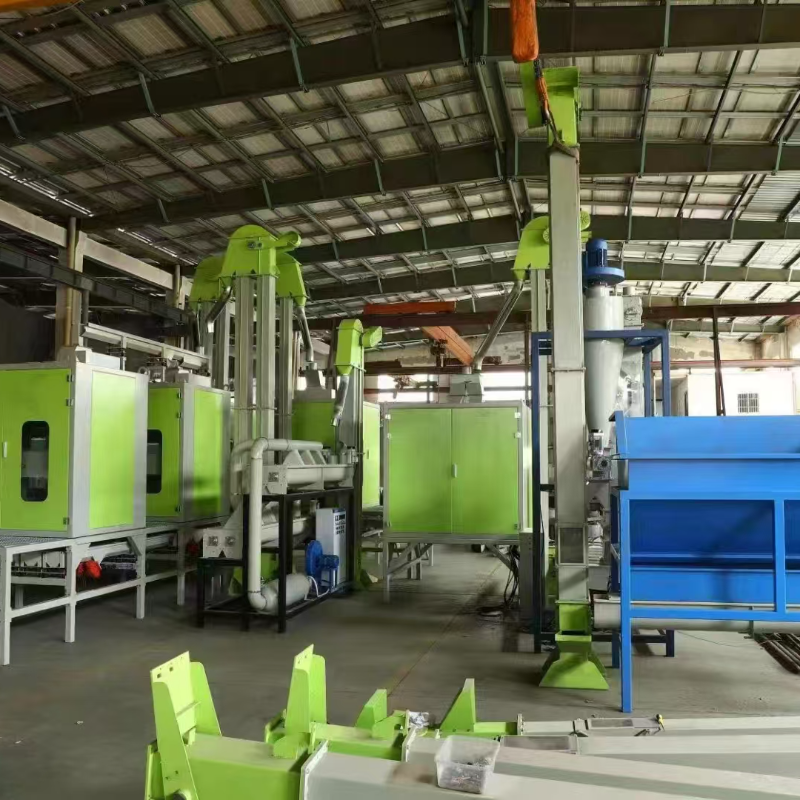
Where electrostatic systems are used with plastic flakes or regrind, the material is typically processed into controlled size fractions rather than very coarse scrap. In practical recycling lines, flake sizes are often in the roughly 5–12 mm range, though this varies by feedstock and separator design; the aim is to obtain predictable charge-to-mass ratios and residence time in the field. After dewatering, centrifugal separation and thermal drying are commonly used to reduce residual moisture to low levels before electrostatic treatment, because moisture otherwise suppresses charge retention. These are engineering norms inferred from separation practice rather than a single universal standard.
Throughput varies widely by machine class:
- Small industrial charging or cleaning modules may handle only limited line widths or localized surfaces.
- Coating and powder-application systems are commonly designed around continuous production lines rather than batch units.
- Separation lines for recycled polymers can range from hundreds of kg/h to several t/h, depending on feed cleanliness, particle size distribution, and the number of separation stages; wet or sticky contaminants reduce throughput significantly.
Specific energy consumption is usually favorable where electrostatics replaces high-airflow or high-mechanical-intensity operations, but overall energy use depends on auxiliary drying, compressed air, or dust-collection equipment attached to the process. In precipitation and separation services, the electrical input to charging electrodes is often modest compared with fan or thermal loads.
Types and Variations
| Type | Main function | Typical plastics-industry use |
|---|---|---|
| Electrostatic precipitator | Removes fine particulates from gas streams | Dust and fume control in polymer compounding, pellet handling, and thermal processing |
| Electrostatic spray system | Charges droplets or powder for better deposition | Coating of plastic parts, film, packaging components, and nearby metal fixtures |
| Electrostatic separator | Separates particles by charge response | Polymer recycling, filler removal, mixed-material sorting |
| Electrostatic air cleaner | Captures airborne dust and aerosols | Clean rooms, HVAC, and localized contamination control |
| Electrostatic dust-control grid | Prevents dust accumulation on surfaces | Equipment covers, enclosures, and sensitive production zones |
Electrostatic precipitators are especially important where fine airborne particles must be collected continuously, including industrial exhaust treatment and some plastics processing emissions streams. Wet electrostatic precipitators are used where particles are sticky, humid, or difficult to capture in dry systems.
Electrostatic separators in recycling are often combined with triboelectric charging, where different polymers acquire different charge polarities through contact and friction. This is useful for separating polymer mixtures, filler-rich fractions, and some label or film contaminants when feed preparation is tightly controlled.
Applications and Uses
In plastics manufacturing, the most relevant uses are:
- Electrostatic painting and powder coating for molded parts, appliances, furniture components, and profiles, where transfer efficiency and surface uniformity are improved.
- Dust and fume control in extrusion, compounding, conveying, and regrind handling, where electrostatic precipitation reduces airborne contamination.
- Plastic recycling and sorting, especially separation of polymers with different triboelectric behavior after drying and size classification.
- Surface cleaning and contamination control in packaging, films, and clean production zones, where dust attraction lowers defect rates.
- Printing and coding on plastic films and containers, where electrostatic charging supports toner or ink placement in xerographic and inkjet systems.
A less suitable application is high-moisture or highly conductive contamination streams, because charge leaks away quickly and separation quality deteriorates. In such cases, purely electrostatic methods are usually less effective than mechanical, optical, or wet-chemical alternatives.
Beyond plastics, electrostatic systems are also used in air cleaning, industrial emissions control, photocopiers, laser printers, and inkjet devices, illustrating the broad utility of charge-based manipulation in process engineering.
Technological Innovations and Automation
Recent electrostatic systems increasingly incorporate:
- Digital high-voltage control for stable charging across varying line speeds.
- Sensor-based feedback to monitor charge level, field strength, and particle loading.
- Integration with PLC and Industry 4.0 architectures for traceability, alarms, and predictive maintenance.
- Compact low-power supplies for dust-control and localized surface-cleaning modules.
In recycling, automation is particularly important because separator performance depends on feed consistency. Automated drying, classification, and dosing improve the stability of electrostatic response and reduce contamination-driven yield loss.
Environmental and Sustainability Aspects
Electrostatic systems can support sustainability in plastics processing by improving transfer efficiency, reducing overspray, and enabling dry separation of mixed materials. These benefits can lower raw-material losses and reduce the need for solvent-heavy or water-intensive operations.
Their environmental profile is strongest when they are used to:
- recover powders or fine particulates that would otherwise be wasted,
- reduce emissions from thermal processing,
- separate recyclable polymers with minimal chemical input,
- support cleaner, lower-defect coating operations.
However, the total sustainability benefit depends on the whole system. If electrostatic equipment requires intensive upstream drying or large fan loads, the net energy advantage may diminish. For that reason, process integration is more important than the electrostatic module alone.
Economic and Global Market Impact
Electrostatic systems have durable industrial demand because they can improve yield, reduce rework, and lower material losses in high-volume operations. In plastics, this matters most in coating, recycling, and contamination control, where even small efficiency gains can materially affect margins.
Their market relevance is also shaped by regulations on emissions, workplace cleanliness, and circular-economy performance. As manufacturers seek better recovery rates from mixed plastic waste and tighter control of airborne particulates, electrostatic technology remains a practical bridge between mechanical processing and advanced sorting.
Current Challenges and Innovations
The main technical challenges are:
- Moisture sensitivity, which weakens charging and separation.
- Feed variability, especially in recycled or post-consumer streams.
- Surface contamination, which can alter charge behavior.
- Safety and insulation requirements for high-voltage operation.
Innovation is focused on better charge conditioning, improved electrode geometry, compact power electronics, and more robust performance on mixed or partially contaminated feedstocks. In recycling, the most promising advances are those that combine electrostatic separation with drying, optical sorting, and data-driven process control.
Future Outlook
Electrostatic systems are likely to become more important in plastics processing as manufacturers pursue higher recovery rates, lower emissions, and more precise non-contact handling. The strongest growth potential lies in recycling separation, dust management, and high-efficiency coating, where charge-based mechanisms provide clear process advantages.
Future systems will probably be more compact, more automated, and better integrated with upstream drying and downstream quality inspection. In practical terms, the most competitive electrostatic platforms will be those that deliver stable performance across variable waste streams while minimizing energy use, maintenance, and safety risk.
Summary
Electrostatic systems are a versatile class of charge-based technologies used to manipulate particles, droplets, and surfaces in plastics processing and related industries. Their key strengths are non-contact operation, low mechanical complexity, and high efficiency in coating, separation, and particulate control, while their main limitations are sensitivity to moisture, feed inconsistency, and high-voltage safety demands.
References
- •
Ink jet printers and.... (2016, July 7). Physics LibreTexts. https://phys.libretexts.org/Bookshelves/College_Physics/College_Physics_1e_(OpenStax)/18:_Electric_Charge_and_Electric_Field/18.08:_Applications_of_ElectrostaticsLink
- •
Electrostatics: Definition, applications, and FAQs. (2023, June 22). Etutorworld. https://www.etutorworld.com/science/electrostatics.htmlLink
- •
7.7: Applications of electrostatics. (2016, November 1). Physics LibreTexts. https://phys.libretexts.org/Bookshelves/University_Physics/University_Physics_(OpenStax)/University_Physics_II_-_Thermodynamics_Electricity_and_Magnetism_(OpenStax)/07:_Electric_Potential/7.07:_Applications_of_ElectrostaticsLink
- •
Electrostatics - An overview. (2016, October 26). ScienceDirect. https://www.sciencedirect.com/topics/engineering/electrostaticsLink
- •
How an electrostatic system works: Principles and applications. (2025, October 8). Engineerfix. https://engineerfix.com/how-an-electrostatic-system-works-principles-and-applications/Link
- •
Electrostatics. (2003, November 16). Wikipedia. https://en.wikipedia.org/wiki/ElectrostaticsLink
- •
11. Some applications of electrostatics [PDF]. (n.d.). KFUPM. https://faculty.kfupm.edu.sa/EE/msunaidi/EE340%20stuff/application%20of%20electrostatics%20ch11.pdfLink
- •
3.9: Applications of electrostatics. (2023, May 30). Physics LibreTexts. https://phys.libretexts.org/Courses/Georgia_State_University/GSU-TM-Introductory_Physics_II_(1112)/03:_Electric_Charge_and_Electric_Field/3.09:_Applications_of_ElectrostaticsLink
- •
P. (n.d.). NPTEL. https://archive.nptel.ac.in/content/storage2/courses/117103065/modules/chap2/slide/slide16.htmLink
- •
Applications of static electricity. (2024, April 15). GeeksforGeeks. https://www.geeksforgeeks.org/physics/applications-of-static-electricity/Link
- •
Electrostatic systems keep dust off surfaces. (2013, December 2). Tech Briefs. https://www.techbriefs.com/component/content/article/7109-npo-20788Link
- •
Electrostatics. (2024, March 11). GeeksforGeeks. https://www.geeksforgeeks.org/physics/electrostatics/Link
- •
1.7 Applications of electrostatics. (n.d.). TEKS Guide. https://teksguide.org/resource/17-applications-electrostaticsLink
- •
Advances in the application of electrostatics in agriculture. (2025, November 14). PMC. https://pmc.ncbi.nlm.nih.gov/articles/PMC12654032/Link
- •
Electrostatics - An overview. (n.d.). ScienceDirect. https://www.sciencedirect.com/topics/neuroscience/electrostaticsLink
- •
Industrial applications of electrostatics: The past, present and future. (n.d.). ScienceDirect. https://www.sciencedirect.com/science/article/abs/pii/S0304388601000687Link
- •
Electrostatics. (n.d.). Brilliant. https://brilliant.org/wiki/electrostatics/Link
- •
Electrostatics. (2025, August 17). Thinka. https://www.thinka.ai/en-GB/Senior-Secondary-HKDSE/Physics/ElectrostaticsLink
- •
10. Capacitances. (n.d.). Galileo and Einstein. https://galileoandeinstein.phys.virginia.edu/Elec_Mag/2022_Lectures/EM_10_Capacitances.htmlLink
- •
Jim Stith, former president. (n.d.). https://cdnsm5-ss5.sharpschool.com/UserFiles/Servers/Server_70145132/File/Directory/Faculty/Curtis%20Yawn/ELECTROSTATICS.pdfLink
- •
Electrostatics - Charges, forces, fields, and Gauss’s law. (2026, May 18). Physics LibreTexts. https://phys.libretexts.org/Courses/Georgia_State_University/GSU-TM-Physics_II_(2212)/03:_New_PageLink
- •
An introduction to the theory of electrostatics. (n.d.). COMSOL. https://www.comsol.com/multiphysics/electrostatics-theoryLink
- •
The fundamentals of electrostatics. (2021, January 15). EEPower. https://eepower.com/technical-articles/the-fundamentals-of-electrostatics/Link
- •
Electrostatic. (n.d.). IEEE. https://technav.ieee.org/topic/electrostatic/Link
- •
Electrostatics: Electric charges, forces, and fields. (2025, May 1). Pearson. https://www.pearson.com/channels/physics/study-guides/electrostatics-electric-charges-forces-and-fieldsLink
- •
5: Electrostatics. (2024, July 7). Physics LibreTexts. https://phys.libretexts.org/Courses/Berea_College/Electromagnetics_I/05:_ElectrostaticsLink
- •
Electrostatic application - An overview. (2025, October 11). ScienceDirect. https://www.sciencedirect.com/topics/engineering/electrostatic-applicationLink
- •
Coulomb electrostatic force. (2018, July 29). BYJU'S. https://byjus.com/physics/electrostatics/Link
- •
11.2: UNIT 22 - Electric potential. (2025, July 10). Physics LibreTexts. https://phys.libretexts.org/Courses/University_of_Pittsburgh_at_Johnstown/Introduction_to_Physics:_An_Outline_of_Selected_Topics_(Keramati)/11:_Electrostatics/11.02:_UNIT_22_-_Electric_PotentialLink
- •
Electrostatics. (2025, July 24). Khan Academy. https://www.khanacademy.org/science/electrical-engineering/ee-electrostaticsLink
- •
Electrostatics. (2020, June 25). Britannica. https://www.britannica.com/science/electrostaticsLink
- •
1.1. (n.d.). University of Chicago. https://hep.uchicago.edu/cdf/frisch/p142/Purcell_Chapter1.pdfLink
- •
Electrostatics explained: Principles, laws & applications. (2023, September 26). Vedantu. https://www.vedantu.com/jee-main/physics-electrostaticsLink
- •
Electrostatics theory. (n.d.). Scribd. https://www.scribd.com/document/90892278/Electrostatics-TheoryLink
- •
Electrostatics. (2019, March 13). BYJU'S. https://byjus.com/jee/electrostatics/Link
- •
EOS/ESD fundamentals part 1. (n.d.). ESDA. https://www.esda.org/esd-overview/esd-fundamentals/part-1-an-introduction-to-esd/Link
- •
Electrostatic generator. (2005, March 5). Wikipedia. https://en.wikipedia.org/wiki/Electrostatic_generatorLink
- •
Electrostatics and industry. (2018, May 2). Eltex. https://www.eltex.de/en/electrostatics/electrostatics-and-industry/Link
- •
How does electrostatic spraying work? (2023, October 26). Vanda Coatings. https://vandacoatings.co.uk/blog/how-does-electrostatic-spraying-work/Link
- •
How electrostatic loudspeakers work. (2018, April 9). PS Audio. https://www.psaudio.com/blogs/pauls-posts/how-electrostatic-loudspeakers-workLink
- •
What is static electricity? Causes, effects & how to eliminate it. (2025, November 6). Electrostatics.com. https://electrostatics.com/staticelectricity.htmlLink