
Introduction
Conveyors and conveying systems are the backbone of material flow in plastics processing plants, moving raw materials, intermediates, and finished goods between storage, feeding, processing, inspection, packaging, and dispatch points. In the plastics industry, they are used not only for unit loads such as cartons, totes, and palletized goods, but also for bulk solids such as resin pellets, regrind, flakes, powders, and compounds; the appropriate design depends on throughput, material fragility, contamination risk, dust control, and plant layout.
In a plastics context, the term conveyor usually refers to a single mechanical transport device, while a conveying system is the broader architecture of conveyors, diverters, elevators, controls, sensors, and accumulation logic working together as one material-handling network. This distinction matters because plastics plants often combine different transfer principles in one line, for example pneumatic resin transfer to day bins, belt or roller transport for packaged goods, and specialized handling for hot parts, trim, or scrap.
The field has evolved from simple belt and gravity conveyors into integrated automation platforms tied to plant control systems and Industry 4.0 software. Modern systems increasingly emphasize energy efficiency, closed-loop conveying, material traceability, reduced manual handling, and compatibility with recycling and reprocessing workflows.
History and Development
Early conveying in manufacturing relied on gravity chutes, manual transfer, and simple belt or roller arrangements, which were later standardized as industrial material-handling equipment for continuous flow production.
Three development milestones are especially relevant:
- The widespread industrial adoption of belt conveyors established a flexible method for moving unit loads and bulk materials over fixed paths with relatively simple mechanics.
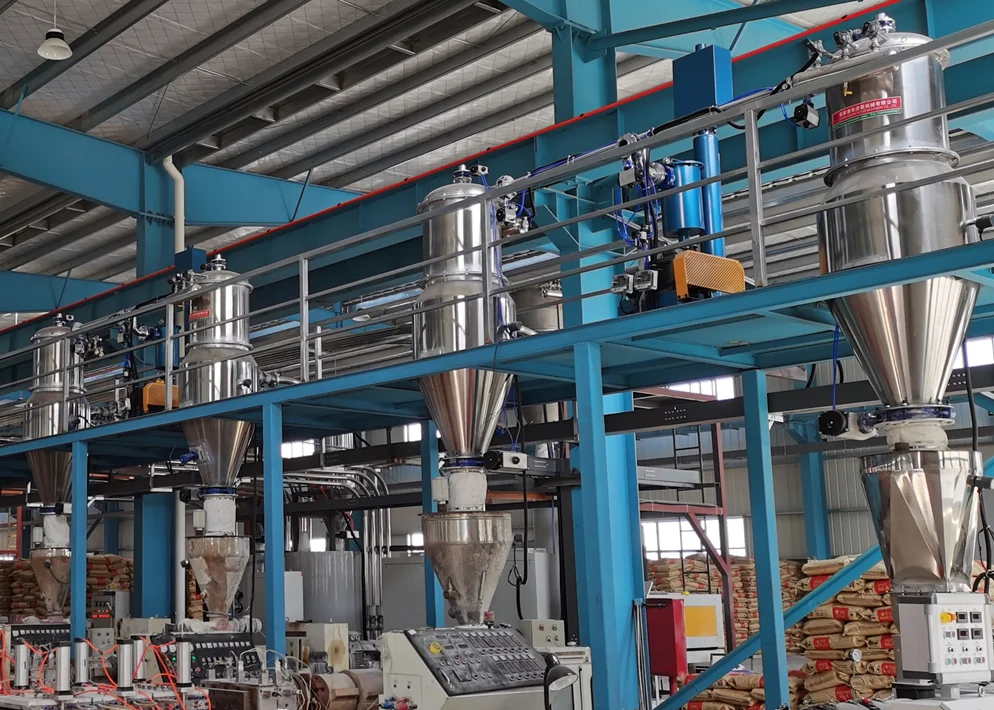
- The growth of pneumatic conveying made it practical to move powders, granules, and pellets through enclosed pipelines, a major advantage in plastics plants where contamination control and centralized material distribution are critical.
- The integration of sensors, drives, accumulation logic, and software control transformed conveyor lines into coordinated conveying systems capable of sorting, tracking, buffering, and interfacing with robots and other automation cells.
In plastics processing, these developments paralleled the shift from isolated machines to fully integrated extrusion, molding, compounding, and packaging lines, where conveying became a process-critical utility rather than a simple accessory.
Key Characteristics and Technical Overview
A conveying system is typically defined by its transport principle, load type, enclosure level, path geometry, control method, and sanitary or contamination-control requirements. For plastics plants, the most important technical criteria are:
- Throughput
- Distance and elevation change
- Material form: pellet, powder, flake, regrind, trim, finished part, or package
- Abrasion and degradation sensitivity
- Dust and contamination control
- Energy consumption
- Maintenance access
- Integration with feeding and automation equipment
Major conveyor and conveying principles
| Type | Typical use in plastics | Technical notes |
|---|---|---|
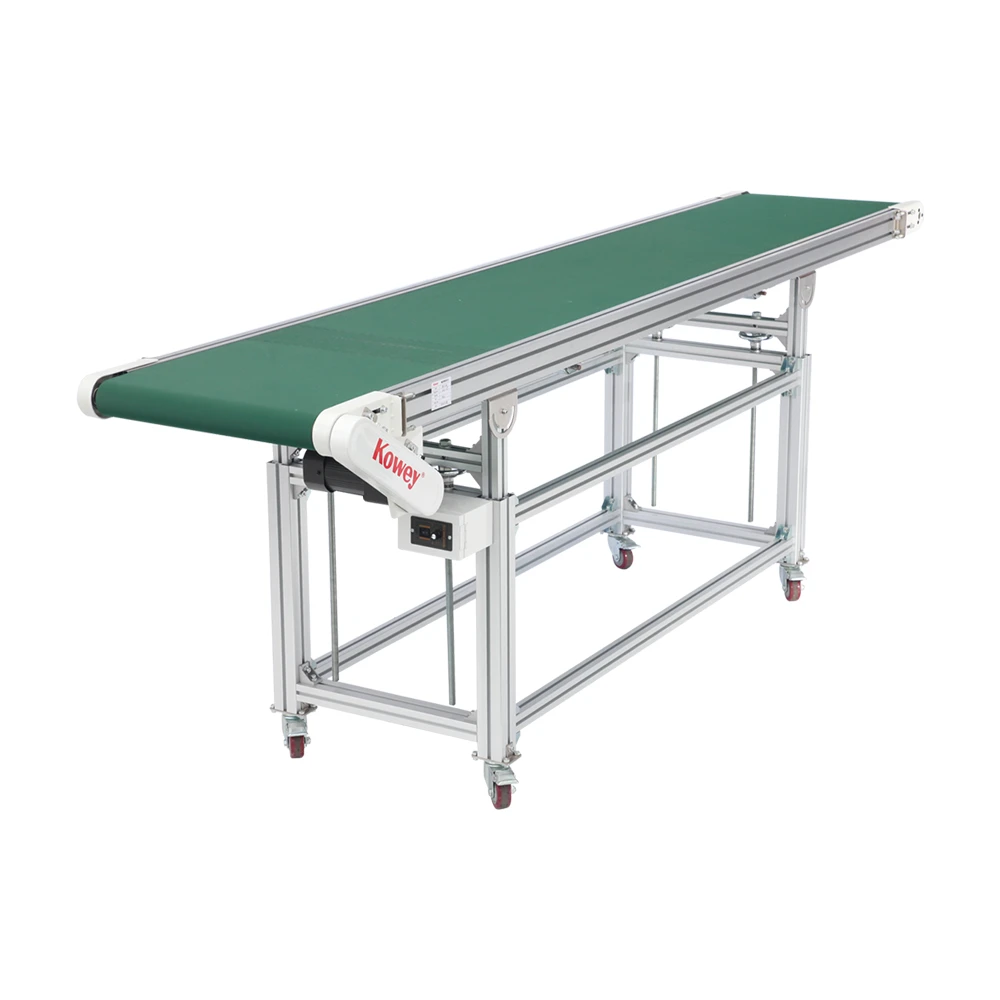
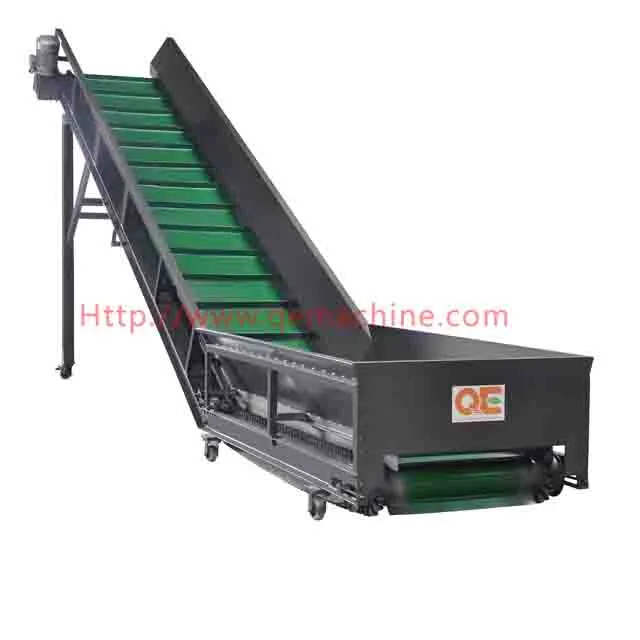
| Belt conveyor | Finished parts, cartons, totes, sprues, trim, light bulk items | Versatile, continuous transport; can be inclined or declined; widely used for packaging and assembly transport. |
| Roller conveyor | Pallets, crates, containers, rigid-bottom loads | Suitable for accumulation, sorting, and staging; gravity and powered variants are common. |
| Chain conveyor | Heavy loads, hot parts, palletized goods | Robust for harsh or high-load environments; useful where belts are unsuitable. |
| Screw conveyor | Powders, cohesive bulk solids, short transfer runs | Enclosed and compact; more common in bulk solids handling than in finished-part movement. |
| Pneumatic conveying | Pellets, powders, flakes, granules, resin transfer | Enclosed pipeline transport using vacuum or pressure; widely used for resin distribution and dust containment. |
| Overhead conveyor | Hanging parts, space-saving transport | Frees floor space and supports sequencing and buffering. |
| Vertical conveyor / lift | Floor-to-floor transfer, mezzanine feeding | Useful where footprint is constrained. |
| Sortation conveyor | Distribution of packaged goods, molded parts | Uses merges, diverts, and control logic for routing. |
Typical technical performance ranges
Because plastics facilities handle both unit loads and bulk solids, performance is often expressed differently by conveyor class:
- Belt and roller systems commonly run from low-speed accumulation to higher-speed transport on packaging and assembly lines; selection is driven more by line balance than by bulk throughput alone.
- Pneumatic conveying in plastics resin handling often operates in either vacuum or pressure mode, with dilute-phase systems favored for simplicity and dense-phase systems used where lower material degradation or lower air consumption is needed.
- Bulk conveying throughput can range from small feeder transfers to many tonnes per hour in larger plant networks, depending on pipe diameter, air velocity, solids loading, and material properties.
Plastics-specific operating considerations
In plastics processing, conveying systems must often handle:
- Virgin pellets with high flowability
- Regrind and flakes with irregular particle shape and variable bulk density
- Powders and fillers that are dust-prone and segregation-sensitive
- Hot sprues and trim that may require heat-resistant components
- Finished molded parts that are scratch-sensitive and may need gentle handling
Material characteristics strongly influence system choice. Free-flowing pellets are well suited to pneumatic or belt transfer, while abrasive flakes or fragile compounds may require lower-velocity, gentler conveying paths to reduce fines generation and segregation.
Types and Variations
By transport principle
- Mechanical conveying
- Pneumatic conveying
- Gravity conveying
- Magnetic conveying
- Vibratory conveying
By load type
- Unit-load conveyors for cartons, totes, pallets, and molded parts
- Bulk-material conveyors for pellets, powder, flakes, and regrind
- Hybrid systems that combine bulk feed, part transport, and packaging logistics
By control mode
- Continuous conveying
- Intermittent conveying
- Accumulation and buffering systems
- Sortation and routing systems
Common plastics-industry configurations
- Vacuum resin conveying systems for centralized feeding of injection molding and extrusion lines
- Pressure conveying systems for longer runs or higher-capacity resin distribution
- Belt conveyors for post-mold cooling, inspection, trimming, and packaging
- Roller conveyors for pallet movement, warehousing, and shipping
- Enclosed conveyors for dusty, food-contact, or contamination-sensitive applications
Applications and Uses
Conveyors are used throughout the plastics value chain, from raw-material reception to finished-goods logistics.
- Resin receiving and storage: Pneumatic systems transfer pellets from silos, railcars, or bags into day bins, blenders, or receivers.
- Feeding injection molding and extrusion: Central material-distribution systems deliver resin and additives to multiple machines, reducing manual bag handling and improving consistency.
- Blending and compounding lines: Conveyors move pellets, flakes, and additives between dosing, mixing, cooling, and packaging steps.
- Post-mold handling: Belt, roller, and overhead systems transport molded parts, runners, and trim to inspection or packing stations.
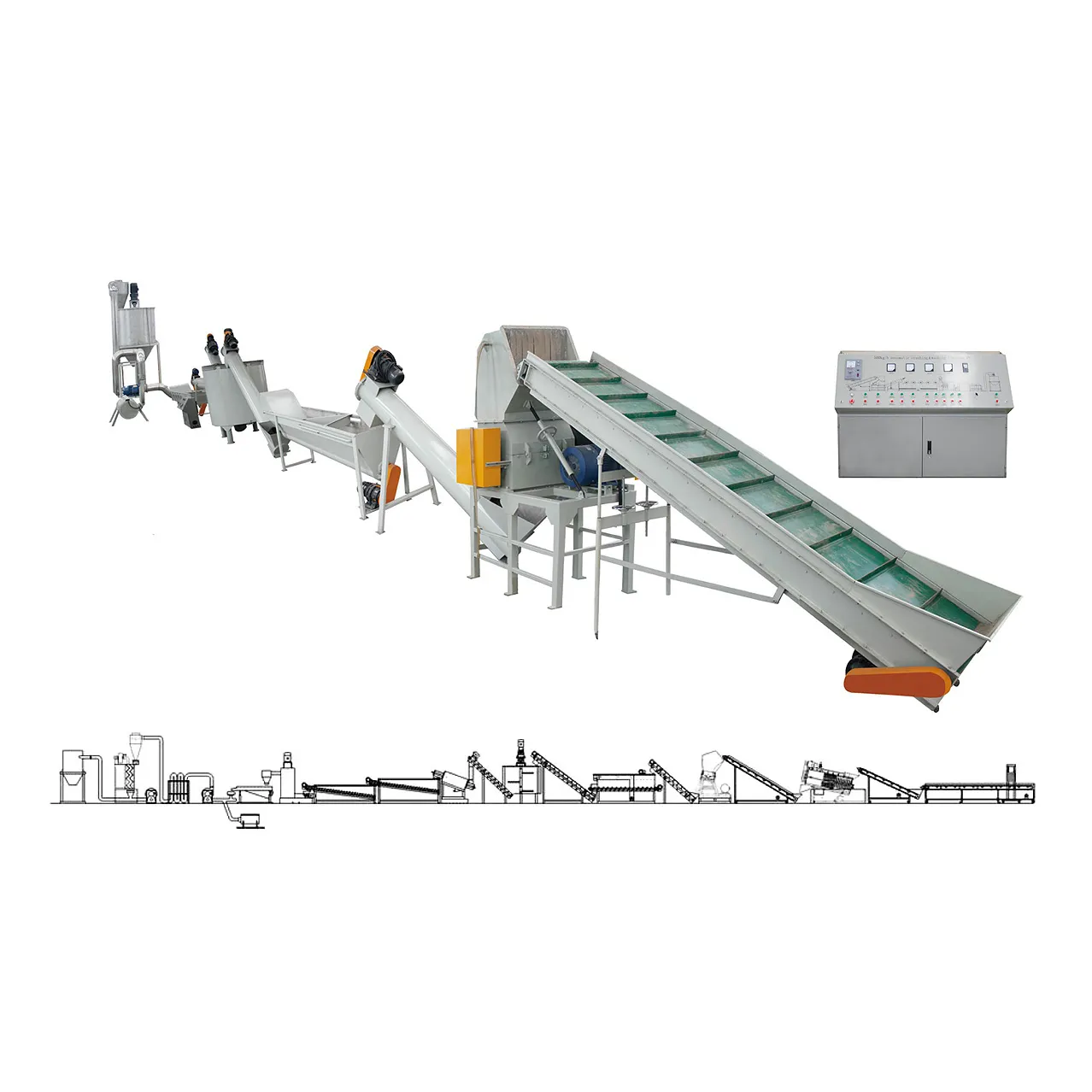
- Recycling and reprocessing: Conveyors move bottle flakes, regrind, and washed material between shredding, washing, dewatering, drying, and storage.
- Warehousing and distribution: Pallet, carton, and tote conveyors support finished-goods movement and order fulfillment.
- Automation interfaces: Conveyors deliver parts to robots, vision systems, and secondary operations for labeling, assembly, or palletizing.
A less suitable application is long-distance transfer of fragile, highly segregating powder blends in a conventional high-velocity pneumatic line, because particle attrition, dusting, and separation can become significant.
Technological Innovations and Automation
Modern conveying systems increasingly function as data-bearing automation assets rather than passive transport devices.
Key innovations include:
- Variable-speed drives for throughput control and energy optimization
- Sensors and machine vision for jam detection, part presence, and route verification
- PLC and MES integration for production tracking and recipe-based material routing
- Automatic diverters and merges for flexible line balancing
- Condition monitoring for motors, bearings, chains, and belts
- Central vacuum systems with smart receivers and controlled loading cycles
In plastics plants, automation is especially valuable because it reduces resin contamination, minimizes manual lifting, and supports consistent machine feeding. At the same time, more complex automation increases commissioning effort, control-system dependency, and maintenance skill requirements.
Environmental and Sustainability Aspects
Conveyors influence sustainability through energy use, material losses, labor efficiency, and waste reduction.
Positive sustainability contributions
- Reduced manual handling lowers forklift traffic and associated emissions within the plant.
- Closed conveying routes reduce dust release and material contamination, especially for pellets and powders.
- Automated transfer supports better use of regrind, scrap, and recycled content by enabling controlled reintroduction into production flows.
- Centralized conveying can improve housekeeping and reduce losses from spilled resin or trim.
Trade-offs and limitations
- Pneumatic conveying can be energy-intensive compared with gravity or short mechanical transfer, especially when long distances, high air velocities, or frequent starts and stops are involved.
- Mechanical conveyors may create wear debris, require lubrication, and generate noise.
- Over-engineered systems can consume more energy than needed if capacities are set far above actual demand.
For circular-economy applications, conveying systems are increasingly designed to handle regrind, post-consumer flakes, and recycled pellets with minimal contamination and controlled metering, making them an enabling technology for recycled-content manufacturing.
Economic and Global Market Impact
Conveyors are a foundational capital item in plastics plants because they directly affect labor productivity, material utilization, and line uptime. Their economic value is strongest where material flow is repetitive, high-volume, or sensitive to contamination.
The global market is shaped by:
- Growth in automated warehousing and packaging
- Expansion of resin handling and compounding capacity
- Rising demand for food-safe and cleanroom-compatible transport
- Continued adoption of Industry 4.0 monitoring and control
- Pressure to improve energy efficiency and factory footprint utilization
In plastics manufacturing, conveying systems often provide the physical link that allows injection molding, extrusion, recycling, inspection, and packaging equipment to operate as a coordinated production cell rather than as isolated assets.
Current Challenges and Innovations
Major challenges include:
- Wear and abrasion from glass-filled materials, regrind, and mineral-loaded compounds
- Dust control in pellet, powder, and flake handling
- Segregation and degradation in brittle or mixed-material streams
- Layout constraints in retrofit plants
- Maintenance complexity in highly automated systems
- Energy consumption in long pneumatic networks
Current engineering responses include:
- Low-shear pneumatic designs
- Abrasion-resistant pipes, bends, and liners
- Quick-clean and tool-free access features
- Smart load management with demand-based operation
- Modular conveyor platforms that can be reconfigured as production changes
- Traceability-enabled material routing for quality assurance and compliance
Future Outlook
Future conveying systems in plastics processing are likely to become more connected, adaptive, and material-specific. The strongest trends are:
- Wider use of digital monitoring for throughput, faults, and energy consumption
- Greater adoption of predictive maintenance
- More closed-loop resin distribution tied to recipe management
- Improved handling of recycled and bio-based materials
- Smarter hybrid systems that combine mechanical, pneumatic, and robotic transfer
- Increased emphasis on hygienic design, especially for packaging, food-contact, and medical applications
As plastics plants pursue higher automation and lower environmental impact, conveying systems will remain essential infrastructure, but with a growing role in data capture, process stability, and circular-material handling.
Summary
Conveyors and conveying systems are essential to plastics processing because they control the movement of pellets, powders, flakes, parts, and packaged goods across the factory. Their design ranges from simple gravity rollers to integrated pneumatic and software-controlled networks, and their future is tied to automation, energy efficiency, and circular-economy production methods.
References
- •
Conveyor Systems: Types, Requirements and Applications. (2026, June 16). IQS Directory. https://www.iqsdirectory.com/articles/conveyors/conveyor-system.htmlLink
- •
Types of Conveying Systems Explained. (2026, April 7). Scribd. https://www.scribd.com/document/411433509/ClassificationsLink
- •
Conveyor Systems: Definition, Types, Design, and Uses. (2019, December 3). OCA Dointelligentautomation. https://ocadointelligentautomation.com/insights/what-is-a-conveyor-systemLink
- •
Types of Conveyor Systems and Their Applications. (n.d.). Smartconvey. https://smartconvey.com/types-of-conveyor-systems-and-their-applications-in-different-industries/Link
- •
IP Lecture 3. (2025, May 26). Scribd. https://www.scribd.com/document/427893654/IP-Lecture-3Link
- •
Guide to Conveyor Systems: Types, Uses, & Benefits. (2025, May 19). Exotec. https://www.exotec.com/insights/guide-to-conveyor-systems/Link
- •
Types of Conveyor Systems and How to Select One. (2025, December 26). Racklify. https://racklify.com/encyclopedia/query/conveyor-system/Link
- •
Types of Conveyors and Conveyor Systems. (2020, November 10). IspatGuru. https://www.ispatguru.com/types-of-conveyors-and-conveyor-systems/Link
- •
Different Types of Conveyors for Your Material Handling Line. (2025, July 7). DXP. https://www.dxpe.com/different-types-of-conveyors-for-your-material-handling-line/Link
- •
11.StudyofDifferentTypesofConveyorSystemAndTheirUseAccording. (2025, July 16). Scribd. https://www.scribd.com/document/689071236/11-StudyofDifferentTypesofConveyorSystemAndTheirUseAccordingLink
- •
Conveyors and Conveying Systems: The Master Guide to Smart Automation. (2025, December 28). DNC Automation. https://www.dnc-automation.com/conveyors-and-conveying-systems/Link
- •
Conveyor System Guide for Bulk Powder & Granule Handling. (2026, May 22). Floveyor. https://www.floveyor.com/choosing-the-right-conveyor-system/Link
- •
Types of Conveying Systems Explained. (2025, July 23). Scribd. https://www.scribd.com/document/719963633/CONVEYORS-REVIEWERLink
- •
Conveyor system. (2007, September 11). Wikipedia. https://en.wikipedia.org/wiki/Conveyor_systemLink
- •
Conveyors and Conveying Systems (Lec1b). (2025, September 5). Scribd. https://www.scribd.com/doc/315447618/Conveyors-and-Conveying-Systems-Lec1bLink
- •
Conveyors with its types (upto advantages of belt conveyor). (2023, October 25). Slideshare. https://www.slideshare.net/slideshow/conveyors-with-its-types-upto-advantages-of-belt-conveyorpdf/262700735Link
- •
Comprehensive Guide to Types of Conveyor Systems. (2024, May 16). Horizon Industrial. https://horizon-industrial.com/blog/types-of-conveyor-systems/Link
- •
Different Types of Conveyors and Their Applications. (2026, February 20). Automation Ideas. https://automationideas.com/blog/different-types-of-conveyors-and-their-applications/Link
- •
Pneumatic Conveying: Types, Designs and Considerations. (2026, May 14). IQS Directory. https://www.iqsdirectory.com/articles/pneumatic-conveyor.htmlLink
- •
Conveyor System: Types, Maintenance and Industrial Use. (2026, March 10). Tractian. https://tractian.com/en/glossary/conveyor-systemLink
- •
What is a Conveyor System. (2020, July 21). MK North America. https://www.mknorthamerica.com/Blog/what-is-a-conveyor-system/Link
- •
Types of Warehouse Conveyors. (2022, August 16). Associated Solutions. https://www.associated-solutions.com/associated-university/blog/2022/types-of-conveyorsLink
- •
Conveyors 201: Their Many Types. (2020, March 10). PeakLogix. https://peaklogix.com/conveyors-201-their-many-types/Link
- •
Types and Uses of Industrial Conveyors. (2025, July 23). Ultimation. https://www.ultimationinc.com/conveyor-technologies/conveyor-types/Link
- •
Comprehensive Guide to Types of Conveyors and Their Uses. (2025, December 8). John Maye Company. https://www.johnmayecompany.com/post/types-of-conveyors-guide-usesLink