
Introduction
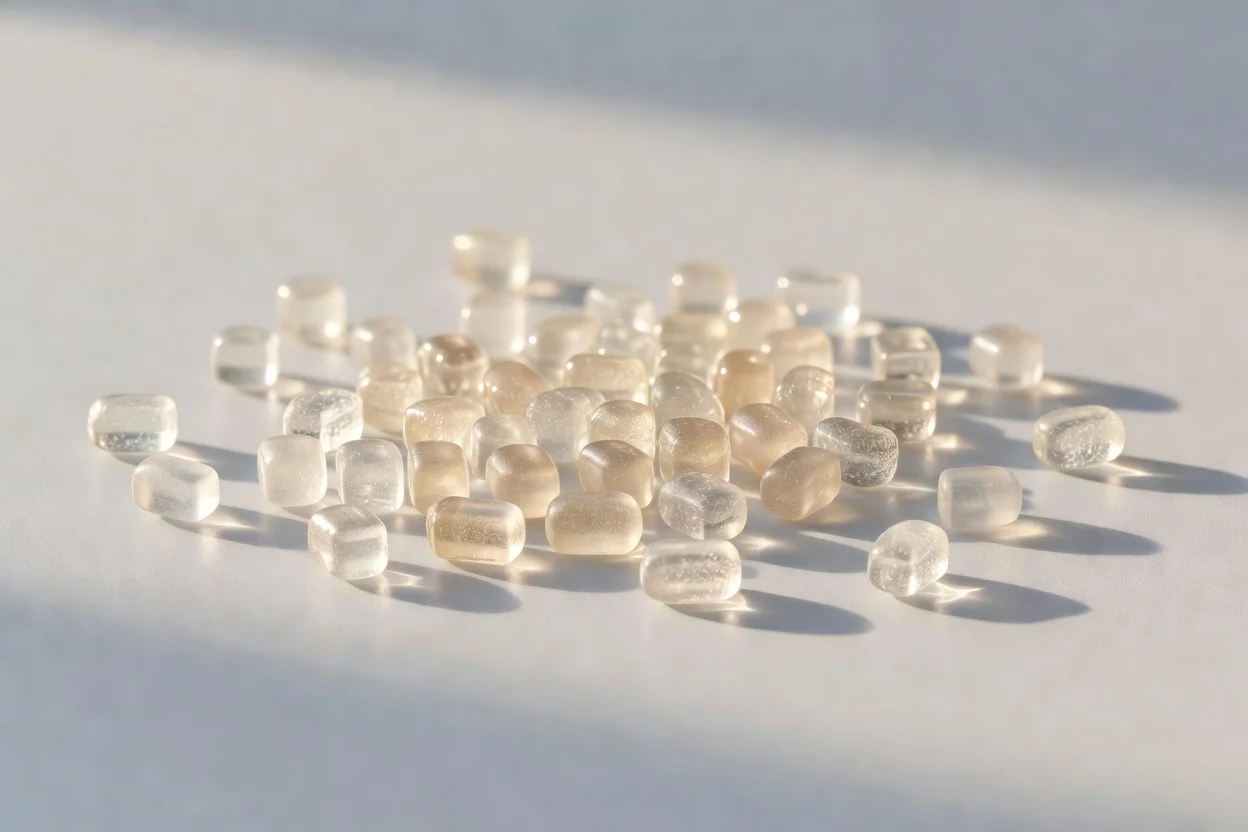
rPET (recycled polyethylene terephthalate) is PET resin recovered from post-consumer or post-industrial waste, then sorted, cleaned, reprocessed, and converted into flakes, pellets, or fiber-grade intermediates for new products. Chemically, it is the same polyester as virgin PET; the distinction lies in feedstock origin and the recycling route, not in a different polymer family.
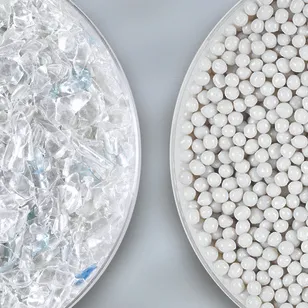
rPET matters because it sits at the center of one of the plastics industry’s most mature circular-material loops: beverage bottles and other PET articles are collected, mechanically recycled, and turned back into packaging, textiles, strapping, sheet, and molded articles. Its rise reflects both technological progress in decontamination and the pressure on brands and converters to reduce virgin fossil feedstock use and carbon intensity.
Historically, rPET grew first in fiber and nonwovens, where demanding optical and food-contact requirements were less restrictive, and then expanded into bottle-to-bottle packaging as sorting and super-clean recycling improved. Today, the material is used across food and beverage packaging, polyester fiber, automotive interiors, construction materials, and industrial products, with bottle-grade and fiber-grade rPET representing the two most important commercial streams.
The market is shaped by a balance of technical, regulatory, and sustainability factors: stronger collection systems increase supply, while food-contact approvals, color control, odor removal, and polymer degradation remain persistent constraints. At the same time, rPET is under scrutiny for whether it represents true circularity, especially when recycled content demand outpaces collection rates or when downcycling into lower-value applications limits closed-loop recovery.
History and Development
PET became a major packaging polymer in the mid-20th century because of its clarity, strength, gas-barrier performance, and ease of biaxial orientation. rPET emerged later as recycling systems and decontamination technology matured, first as a way to divert used bottles from landfill and then as a feedstock for high-volume secondary materials.
Early mechanical recycling of PET was constrained by contamination, mixed-color feedstock, and property loss caused by repeated heat history. Improvements in near-infrared sorting, hot washing, solid-state polycondensation, melt filtration, and super-clean reprocessing enabled higher-quality rPET suitable for demanding applications, including food and beverage containers under appropriate regulatory approval.
In parallel, brand commitments and recycled-content mandates increased demand for food-grade and bottle-grade rPET. As a result, rPET has shifted from a niche recycled fiber raw material to a strategic input in packaging and polyester value chains.
Chemical Structure and Key Properties
PET is an aromatic polyester built from terephthalate units and ethylene glycol-derived segments; rPET retains the same backbone but often exhibits reduced intrinsic viscosity, some chain scission, and residual contaminants depending on source quality and reprocessing severity.
Key property profile:
- High strength and stiffness, especially in oriented forms such as bottle preforms and fibers.
- Good clarity when contamination, yellowing, and acetaldehyde are controlled.
- Moderate barrier performance that suits many beverages and dry foods but not all oxygen-sensitive products.
- Thermoplastic processability compatible with extrusion, injection molding, thermoforming, and fiber spinning.
Important technical limits:
- Poor oxygen and aroma barrier in many packaging uses → caused by PET’s molecular permeability to gases → workaround: barrier coatings, multilayer structures, oxygen scavengers, or use in products with shorter shelf-life requirements.
- Performance loss from repeated thermal history → caused by hydrolysis and chain scission during collection, washing, remelting, and drying → workaround: rigorous drying, chain extenders, solid-state polycondensation, and blending with virgin PET or compatibilized streams.
- Sensitivity to moisture during processing → caused by hydrolytic degradation above melt-processing temperatures → workaround: pre-drying to low moisture levels before extrusion or injection molding.
- Limited low-temperature toughness in some grades → caused by PET’s semicrystalline morphology and glass-transition behavior → workaround: copolymer modification, impact modifiers, or application-specific design.
For food-packaging rPET, decontamination performance is as important as bulk polymer properties. Modern recycling systems use washing, sorting, and thermal or vacuum-based purification to remove volatile and nonvolatile contaminants, allowing approved food-contact applications where regulations permit.
Production Processes and Raw Feedstocks
rPET production begins with collection of PET waste, most commonly post-consumer beverage bottles and sometimes thermoformed trays or textile-derived PET where infrastructure exists. The main mechanical recycling sequence typically includes:
- Collection and bale formation
- Optical sorting and color separation
- Label and cap removal
- Grinding into flakes
- Hot washing and density separation
- Drying
- Extrusion, melt filtration, and pelletizing
- Optional decontamination and solid-state polycondensation for higher-quality resin
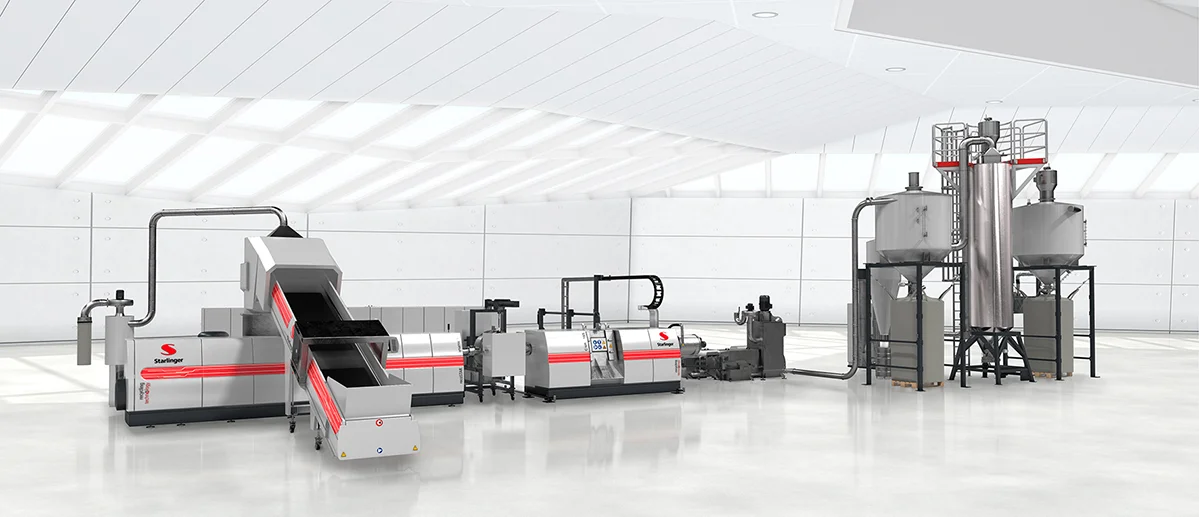
Feedstock quality is the decisive variable in rPET economics and performance. Clear bottle bales usually yield the highest-value output, while colored, multilayer, heavily contaminated, or mixed-polymer streams reduce yield and limit end uses.
Chemical recycling and hybrid routes are increasingly discussed for PET waste that is hard to process mechanically, but the mainstream commercial rPET market remains dominated by mechanical recycling because it is simpler, lower-cost, and already integrated into bottle collection systems.
Leading producers and industry participants include major PET and recycling groups with integrated collection, washing, and pelletizing capacity, such as ALPLA’s PET Recycling Team and Veolia’s PlastiLoop, alongside resin and polyester manufacturers that have built dedicated recycled-content platforms. Their significance lies in scale, food-grade purification capability, and the ability to supply consistent pellet quality for packaging converters.
Applications and End-Use Markets
rPET is one of the most versatile recycled polymers because it can be converted into both fiber and rigid packaging. The usual grade-to-use mapping is as follows:
| End use | Typical rPET grade | Usual process |
|---|---|---|
| Beverage bottles and food containers | Food-grade bottle-grade rPET | Injection stretch blow molding, thermoforming |
| Textiles and nonwovens | Fiber-grade rPET | Melt spinning, staple fiber conversion |
| Strapping | High-IV rPET | Extrusion and orientation |
| Sheet and film | Reprocessed rPET or blends | Extrusion, thermoforming |
| Automotive interiors | Fiber or molded rPET | Spunbond, needle-punching, injection molding |
| Construction products | Fiber-grade or mixed-grade rPET | Nonwovens, composites, insulation panels |
| Agriculture and geotextiles | Fiber-grade rPET | Woven/nonwoven fabrication |
| Industrial goods | Mixed recycled PET streams | Extrusion or compounding |
Major sector uses:
- Food and beverage packaging: bottle-to-bottle applications, trays, thermoformed containers, and some films where food-contact compliance is achieved.
- Textiles: polyester staple fiber, filament yarn, fleece, sportswear, carpets, upholstery, and insulation fill.
- Industrial strapping and sheet: high-strength packaging strap and extruded sheet for thermoforming.
- Construction: insulation panels, geotextiles, acoustic products, and reinforcement materials.
- Automotive: headliners, trim, insulation, and nonwoven components.
- Agriculture and horticulture: bags, woven sacks, and protective textiles in some markets.
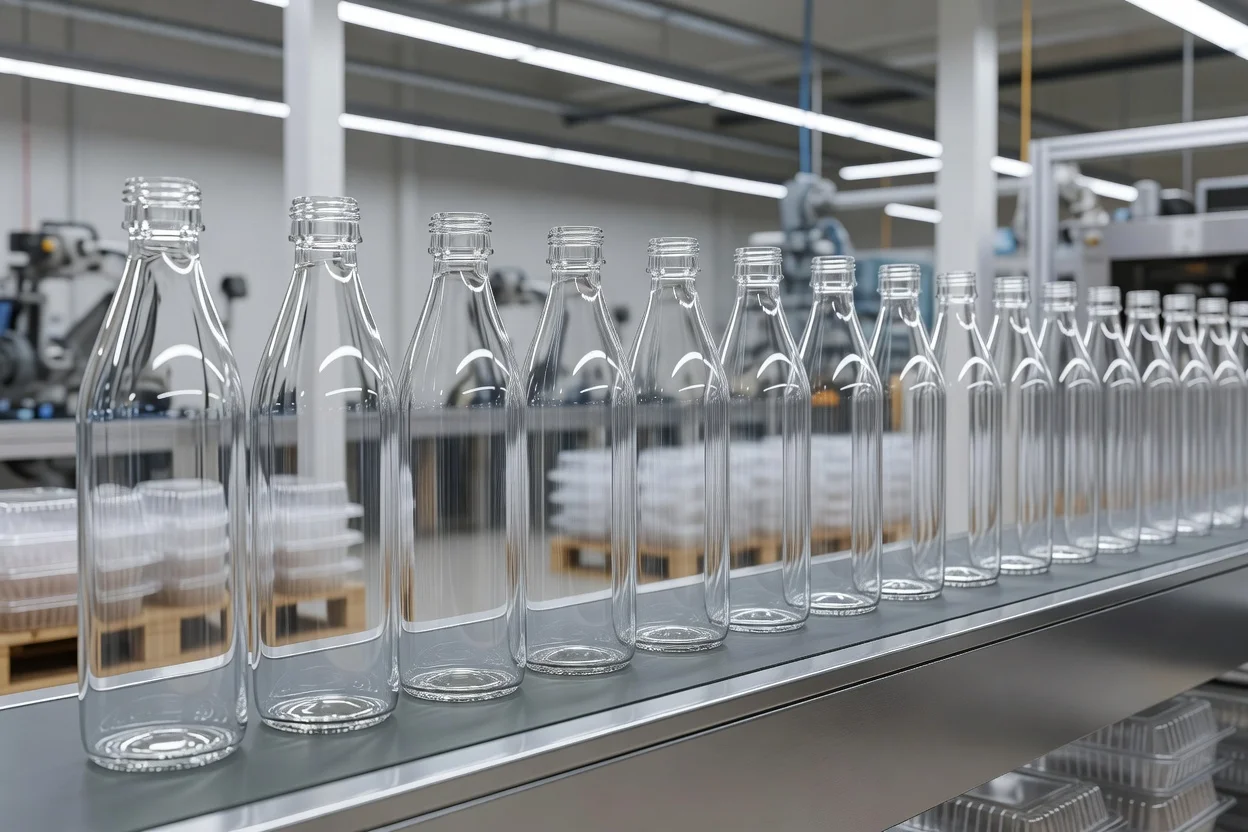
One poor-fit use is high-barrier, long-shelf-life oxygen-sensitive packaging, where rPET alone often cannot match the barrier of specialized multilayer systems without additional technologies.
Environmental and Sustainability Aspects
rPET is widely regarded as a lower-carbon alternative to virgin PET because it avoids the full petrochemical synthesis route and reuses polymer already placed in the economy. Multiple life-cycle assessments report substantial reductions in greenhouse gas emissions and fossil resource depletion versus virgin PET, although exact values vary with electricity mix, transport distance, collection efficiency, and allocation method.
Reported benefits commonly include:
- Lower energy demand than virgin PET production.
- Reduced greenhouse gas emissions versus virgin PET.
- Less reliance on fossil feedstocks.
- Diversion of bottles from landfill or litter streams.
At the same time, rPET is not impact-free. Recycling requires collection, transport, washing, drying, and remelting, and poorly located facilities or long logistics chains can erode part of the climate benefit. Contamination control also consumes water, caustic wash agents, and energy, and low-quality feedstock can lead to downcycling rather than true closed-loop recovery.
Recyclability is one of rPET’s strongest advantages: PET is among the few high-volume polymers with an established bottle-to-bottle recycling pathway in many regions. However, repeated recycling can still cause molecular degradation, so the practical circularity of rPET depends on collection rates, sorting purity, and design for recyclability.
Bio-based alternatives complicate the sustainability picture. Bio-based PET can reduce fossil carbon input, but it does not automatically solve end-of-life issues; rPET often outperforms bio-based PET on immediate circularity metrics when high-quality collected material is available.
Economic and Global Market Impact
The rPET market is driven by recycled-content commitments, packaging regulations, brand sustainability targets, and the economics of virgin PET versus recovered resin. When virgin PET prices rise or recycled-content mandates tighten, demand for high-quality rPET typically strengthens.
Economically, the value chain is highly sensitive to:
- Bale availability and collection rate
- Clear-flake yield
- Decontamination and food-grade certification costs
- Energy prices and logistics
- Competition from fiber, sheet, and bottle applications for the same feedstock
Because food-grade rPET commands a premium over lower-grade recycled outputs, integrated players with collection, washing, and purification assets hold a strategic advantage. This has encouraged vertical integration by packaging, recycling, and resin companies seeking secure feedstock and stable quality.
Global leaders in the broader PET and rPET ecosystem include large integrated packaging and polyester groups, specialist recyclers, and chemical companies with dedicated recycled-content platforms. Their market position depends less on nominal capacity alone than on access to clean bottle bales, purification technology, and downstream brand contracts.
Current Challenges and Innovations
The most persistent challenge is feedstock variability. rPET quality depends heavily on the source stream, and contamination with PVC, multilayer labels, pigments, adhesives, or non-PET polymers can reduce properties and food-contact suitability.
Other major challenges include:
- Color and haze control in clear packaging
- Odor and volatile residue removal
- Intrinsic viscosity recovery after thermal history
- Food-contact compliance across jurisdictions
- Insufficient collection infrastructure in many regions
- Competition for bottle-grade feedstock between packaging and fiber markets
Current innovations focus on:
- Advanced sorting using near-infrared and AI-assisted systems
- Improved washing and decontamination
- Solid-state polycondensation to restore molecular weight
- Chain extenders and stabilizers to limit degradation
- Chemical recycling pathways for hard-to-recycle PET fractions
- Design-for-recycling packaging that eliminates problematic labels, inks, and multilayer barriers
In textiles, one important innovation is the move toward traceable recycled polyester systems, where mechanical recycling is combined with certification and digital chain-of-custody tools to address claims transparency. In packaging, the major innovation frontier is increasing the share of food-grade rPET without sacrificing performance or appearance.
Future Outlook
rPET is likely to remain one of the most strategically important recycled polymers because it combines high volume, established infrastructure, and strong end-market demand. The strongest growth areas are expected in food and beverage packaging, polyester textiles, and industrial fiber applications, especially where regulation or brand commitments require recycled content.
Future progress will depend on three factors:
- Higher collection and sorting rates for post-consumer PET
- Better purification and property restoration technologies
- Packaging design that improves recyclability at the source
Longer term, the industry’s challenge is not merely making more rPET, but making higher-quality rPET from broader waste streams with lower energy use and lower contamination. That shift would move the material closer to true circularity and reduce dependence on premium bottle-grade bales.
Summary
rPET is recycled PET resin made from collected and reprocessed PET waste, most often used beverage bottles, and it retains the same basic polymer chemistry as virgin PET while carrying a lower environmental footprint. It is a major circular-economy material with established uses in bottles, fibers, strapping, sheet, and molded products, but its long-term growth depends on feedstock quality, decontamination performance, and robust recycling infrastructure.
References
- •
rPET Plastic: What It Is and Why You Should Care - Monterey Mushrooms. (2024, March 5). https://www.montereymushrooms.com/blog/rpet-plasticLink
- •
Recycled RPET FACTS - Bottled Water | IBWA. (2021, February 3). https://bottledwater.org/rpet-facts/Link
- •
What's rPET and why do we use it for food packaging? - Verive. (2025, May 7). https://verive.eu/food-packaging-materials/rpet/Link
- •
What Is rPET (Recycled PET)? A Plain Guide. (2026, June 5). https://www.deltaelnile.com/en/insights/what-is-rpet-recycled-pet-explained.htmlLink
- •
What is rPET Plastic? Benefits and Uses in Recycling. (2025, May 15). https://www.tomra.com/reverse-vending/media-center/feature-articles/what-is-rpet-plasticLink
- •
rPET Bottles: What They Are and Why - Propacks. (2026, May 18). https://propacks.net/us/blog/rpet-bottles-explainedLink
- •
rPET: From Waste to Wonder - A Concise Guide. (2025, May 13). https://www.esi.net.au/blog/from-waste-to-wonderLink
- •
What Is rPET? Recycled PET Plastic Explained | Propack Solutions. (2026, March 25). https://propacks.net/us/blog/what-is-rpetLink
- •
What is RPET? (2024, November 29). https://www.lifestylepackaging.com/useful-resources/sustainable-packaging/what-is-rpet/Link
- •
Recycled-PET fibre based panels for building thermal insulation: Environmental impact and improvement potential assessment for a greener production. (2014, September 15). Science of the Total Environment. https://www.sciencedirect.com/science/article/abs/pii/S0048969714008778Link
- •
What is rPET Packaging? A Complete Guide - Paramount Global. (2025, March 6). https://www.paramountglobal.com/knowledge/rpet-packaging-guide/Link
- •
Management and Production Engineering Review. (n.d.). https://journals.pan.pl/Content/119037/PDF/12-625.pdfLink
- •
Recycled PET Properties: Strength, Heat, Clarity & Uses. (n.d.). https://langgengjayagroup.co.id/blog/recycled-pet-properties-and-benefits-for-manufacturingLink
- •
Recycled Polyester (rPET): A Complete Guide to Sustainable Fabric. (2025, October 16). https://clothingdigest.com/recycled-polyester-rpet/Link
- •
RECYCLED POLYETHYLENE TEREPHTHALATE. (n.d.). https://s3-eu-west-1.amazonaws.com/cjp-rbi-icis-compliance/wp-content/uploads/2013/08/Recycled-Polyethylene-Terephthalate-Methodology.pdfLink
- •
Recycled PET (rPET) in the Real World: 5 Uses You'll Actually See .... (2025, October 22). https://www.linkedin.com/pulse/recycled-pet-rpet-real-world-5-uses-youll-actually-see-t5ijfLink
- •
Recycled Polyester (rPET): Complete Guide to Benefits .... (2026, April 22). https://vnpolyfiber.com/recycled-polyester-rpet-complete-guide-to-benefits-sustainability-certifications/Link
- •
Recycled Polyethylene Terephthalate (rPET) - PlastiLoop. (2024, July 25). https://www.plastiloop.veolia.com/recycled-polyethylene-terephthalate-rpetLink
- •
Environmental Savings - Recycled PET vs. Virgin PET - NET. (n.d.). https://giecdn.blob.core.windows.net/fileuploads/document/2020/11/06/vpet_rpet-lca-infographic.pdfLink
- •
Sustainability performance of polyethylene terephthalate .... (2022, January 1). https://onlinelibrary.wiley.com/doi/full/10.1002/pol.20210495Link
- •
PET Recycling Team further improves carbon footprint of rPET. (n.d.). https://blog.alpla.com/en/press-release/newsroom/pet-recycling-team-further-improves-carbon-footprint-rpet/03-18Link
- •
Applications Guidance Protocol for Recycled PET. (2024, September 3). https://plasticsrecycling.org/documents/pet-a-01/Link
- •
rPET Eco-Score: 68/100 | Recycled Polyester Sustainability Review. (2025, December 18). https://tap.eco/scores/materials/recycled-polyester-rpet-eco-score-savior-or-greenwashing-the-truth-behind-the-textileLink
- •
Case Study: Reducing Carbon Footprint with Recycled PET - CBRHK. (2026, July 4). https://cbrhkglobal.com/case-study-reducing-carbon-footprint-with-recycled-pet/Link
- •
[PDF] EcoProfile of recycled PET pellets EU27+3, cradle-to-gate, post. (n.d.). https://nexus.openlca.org/ws/files/38600Link
- •
Perspective Chapter: Recycled Polyethylene Terephthalate (rPET .... (2026, July 22). https://www.intechopen.com/online-first/1245607Link
- •
The Cradle-to-Cradle Life Cycle Assessment of Polyethylene terephthalate: Environmental Perspective. (2022, February 28). https://www.mdpi.com/1420-3049/27/5/1599Link
- •
Polyethylene Terephthalate (PET) Bottle-to-Bottle Recycling .... (2022, June 11). https://pmc.ncbi.nlm.nih.gov/articles/PMC9231234/Link
- •
Polyethylene terephthalate (PET) recycling: A review. (n.d.). https://www.sciencedirect.com/science/article/pii/S2666016424000677Link
- •
Recycled PET – rPET. (2022, May 23). https://www.alpekpolyester.com/rpet-recycled-pet/Link
- •
Exploring Comparative Energy and Environmental Benefits of Virgin, Recycled, and Bio-Derived PET Bottles. (2018, June 28). https://pubs.acs.org/doi/10.1021/acssuschemeng.8b00750Link
- •
PET bottle recycling - Wikipedia. (2004, August 23). https://en.wikipedia.org/wiki/PET_bottle_recyclingLink
- •
Why RPET Is Better For The Environment Than Virgin PET. (2025, December 4). https://www.dashanpacking.com/why-rpet-is-better-for-the-environment-than-virgin-pet-a-comprehensive-analysis/Link
- •
Life cycle assessment and circularity of polyethylene .... (2023, November 1). https://www.sciencedirect.com/science/article/abs/pii/S001393512301592XLink
- •
Circular Economy: From PET to RPET. (2024, October 4). https://www.frime.com/en/circular-economy-from-pet-to-rpet/Link
- •
PTF Ch.3: Environmental Impact - Ecology Center. (2026, May 5). https://ecologycenter.org/resource/ptf-ch-3-environmental-impact/Link