

Introduction
Self-healing agents are functional additives or embedded chemistries designed to repair damage in polymers, coatings, composites, and related plastics systems after cracks, cuts, microvoids, or delamination begin to form. In materials science, the term most commonly refers to the healing agent phase inside a self-healing material, rather than a software system, and these agents are central to extrinsic self-healing strategies that release repair chemistry when damage occurs.
The concept sits at the intersection of polymer chemistry, smart materials, and durability engineering. In extrinsic systems, a healing agent is usually stored in microcapsules or vascular networks; when the matrix fractures, the capsules rupture and release the repair chemistry, which then seals the crack or triggers further polymerization. In intrinsic systems, the “healing” effect does not rely on a separate stored agent, but on reversible bonds within the polymer network; however, the broader field still uses “healing agents” to describe the functional chemistry that enables repair.

These materials were developed to extend service life, reduce maintenance, and improve reliability in applications where inspection is difficult or downtime is costly, such as coatings, structural composites, electronics, infrastructure, and transportation. Their sustainability appeal is clear: longer lifetime can reduce material consumption and maintenance frequency, yet the trade-off is that some formulations use encapsulated reactive chemicals, additional catalyst phases, or complex multi-material architectures that can complicate recycling and reprocessing.
History and Development
Early self-healing concepts in materials drew inspiration from biology, especially the way living tissues repair themselves after damage. The modern plastics and polymer field expanded this idea through microcapsule-based systems, in which a crack breaks open embedded capsules containing a monomer or adhesive, allowing a nearby catalyst to initiate repair.
From there, the field diversified into several major design families:
- Extrinsic self-healing, where a separate healing agent is released from capsules or vascular channels.
- Intrinsic self-healing, where reversible covalent or supramolecular interactions in the polymer network allow repair without a separate stored agent.
- Stimulus-responsive systems, which heal after heat, light, moisture, or another trigger activates the chemistry.
- Autonomous systems, which recover without deliberate external intervention once damage occurs.
Research interest expanded rapidly as polymer scientists recognized that self-healing could address a long-standing weakness of plastics and composites: damage often begins as microcracks that are hard to detect until failure becomes visible. This made self-healing agents especially attractive for crosslinked thermosets, coatings, adhesives, and fiber composites that are otherwise difficult to repair.
Chemical Structure and Key Properties
A self-healing agent is not one single chemical class. It may be a monomer, oligomer, adhesive, toughening resin, reversible crosslinking component, or multifunctional additive package designed to restore structure or function after damage. The key design requirement is compatibility with the host polymer and a mechanism that becomes active only when damage exposes the agent.
Common chemical design modes
| Design mode | Typical chemistry | Main function |
|---|---|---|
| Microcapsule release | Epoxy precursors, dienes, acrylates, cyanoacrylates | Flow into the crack and harden |
| Catalyst-assisted healing | Encapsulated monomer plus dispersed catalyst | Trigger in-situ polymerization |
| Vascular networks | Reactive resins or healing fluids | Enable repeated replenishment |
| Intrinsic reversible networks | Hydrogen bonding, ionic interactions, Diels–Alder, disulfide exchange, metal-ligand interactions | Allow bond reformation after damage |
Key properties
- Damage-triggered activation: The chemistry remains dormant until cracking, rupture, or another failure event exposes it.
- Localized repair: Healing is concentrated at the damage zone rather than throughout the whole material.
- Property recovery: Depending on formulation, systems may recover mechanical strength, barrier integrity, electrical continuity, or corrosion resistance.
- Repeatability: Extrinsic capsule systems are often one-time or limited-cycle systems, whereas vascular and intrinsic systems can support multiple healing events.
Real limits and workarounds
- Limited repair volume → a single capsule contains only a finite amount of agent → workaround: use capsule distributions, vascular channels, or intrinsic reversible networks.
- One-time healing in capsule systems → once the local reservoir is consumed, that zone cannot heal again → workaround: multi-capsule architectures or replenishable vascular designs.
- Trade-off with bulk properties → capsules and additives can reduce strength, clarity, or processability → workaround: optimize capsule size, loading level, and shell chemistry.
- Healing often needs a trigger → some systems require heat, light, or time for the chemistry to complete → workaround: use autonomous chemistries or low-temperature reactive formulations.
Typical loading examples
- Microcapsule loading around 5–15 wt% is often used in research systems to balance repair capacity against loss of mechanical properties; the mechanism is simple fracture-triggered release, where capsule rupture exposes liquid monomer to the crack plane and catalyst.
- Catalyst or initiator loadings are usually much lower, often below a few wt%, because the catalyst must be active but not dominate the matrix; it functions by accelerating polymerization or bond exchange at the damaged interface.
Production Processes and Raw Feedstocks
Self-healing agents are produced through the same general chemical supply chains used for specialty polymers and additives, but with extra emphasis on encapsulation, purity, and controlled release.
Main manufacturing routes
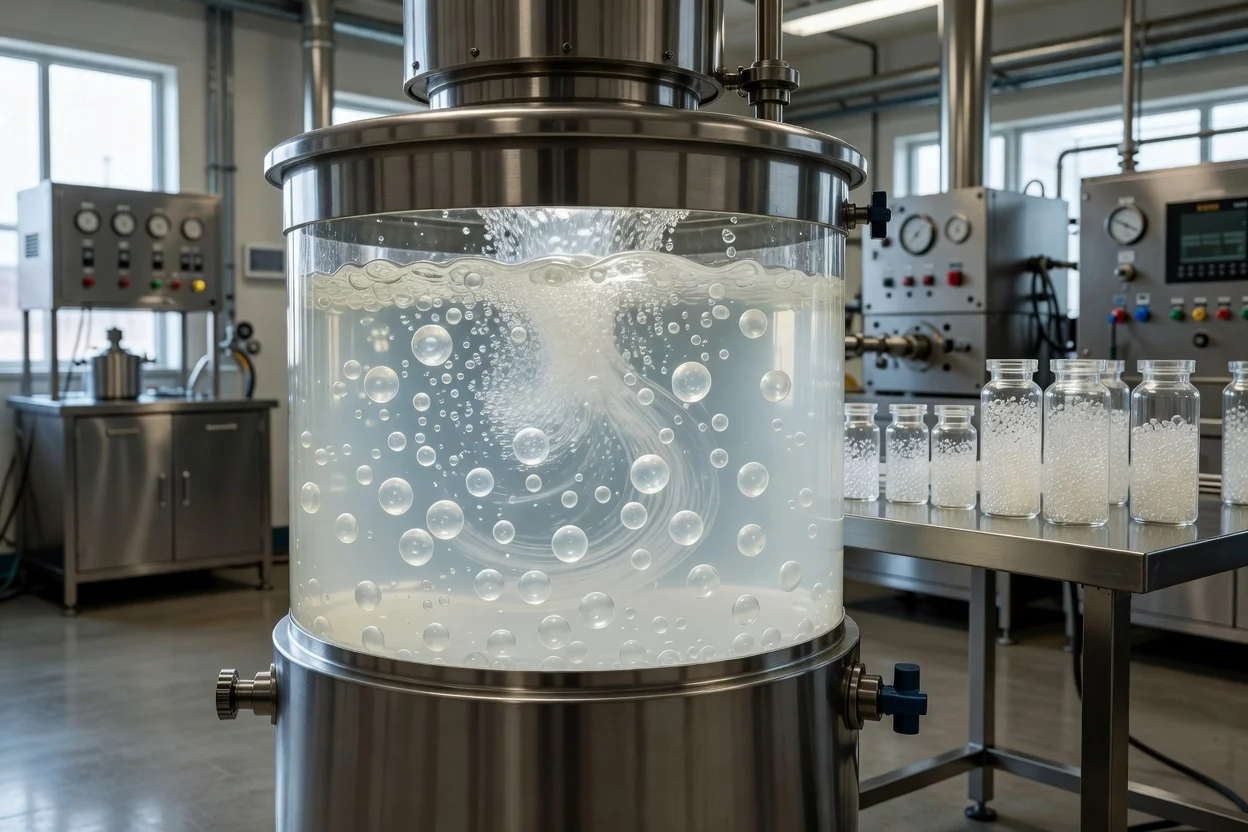
- In-situ polymerization of capsule shells to form microcapsules with oil-like healing cores.
- Interfacial polymerization for thin shell formation around liquid repair agents.
- Sol-gel or suspension methods for protective shells and hybrid carriers.
- Reactive blending to incorporate intrinsic healing functionality into the base polymer network.
- 3D printing and additive manufacturing for spatially programmed healing structures and graded architectures.
Common raw feedstocks
- Monomers and oligomers for the repair phase.
- Polymer shell materials for capsule containment.
- Catalysts, initiators, and accelerators for on-demand curing.
- Compatibilizers and dispersants to keep capsules evenly dispersed in the host resin.
- Fillers and reinforcing fibers that may be combined with healing chemistry in composites.
The quality of the healing agent is highly dependent on storage stability, viscosity, capsule integrity, and reactivity after release. If the agent gels too early, the crack cannot be filled; if it remains too fluid, the repair may lack cohesive strength.
Applications and End-Use Markets
Self-healing agents are used where material failure is expensive, dangerous, or difficult to access.
Major application sectors
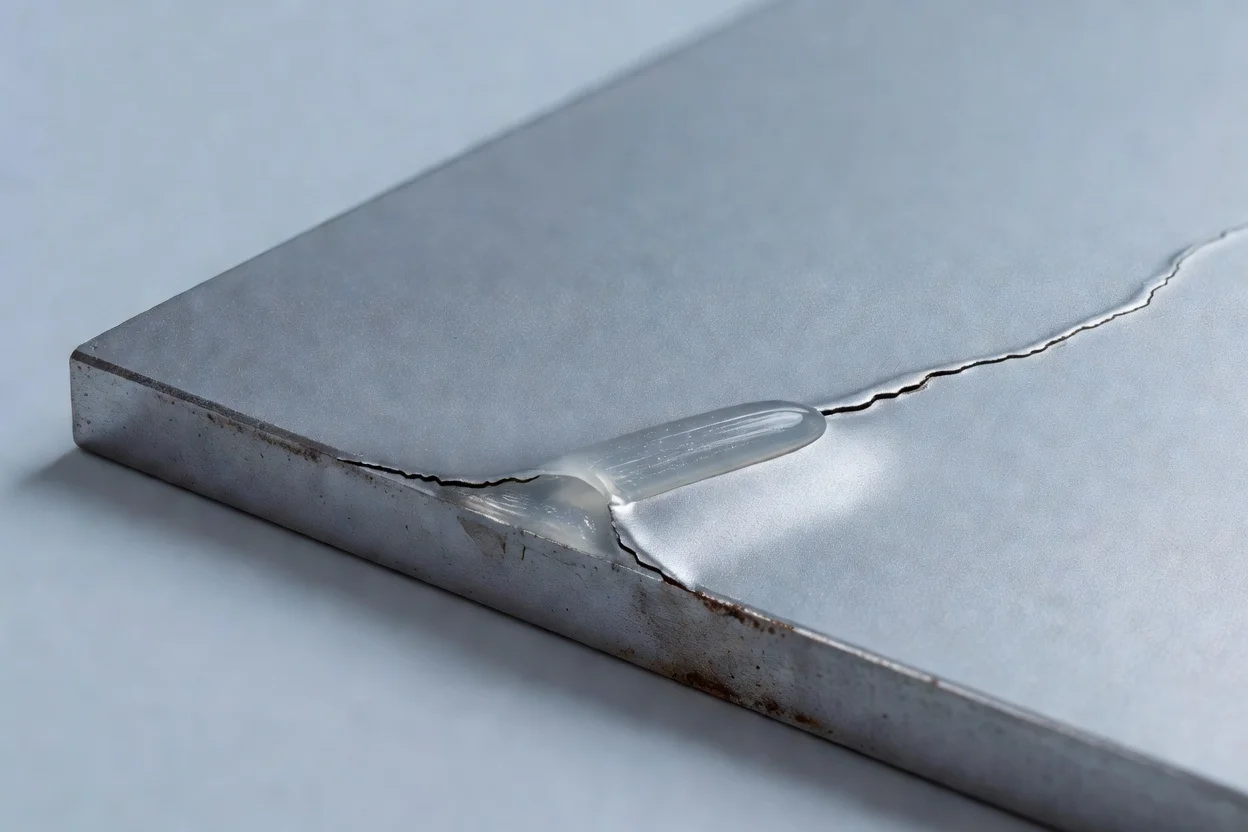
- Coatings and corrosion protection: A common use case, especially for metals and reinforced structures, where a released healing agent can seal microcracks before corrosion spreads.
- Aerospace and automotive composites: Used to improve fatigue resistance, impact tolerance, and service life in structural parts and protective layers.
- Infrastructure: Bridges, tunnels, dams, and pipes benefit from materials that can self-seal minor damage and reduce maintenance interventions.
- Electronics: Self-healing formulations can help recover conductivity or insulating performance after mechanical damage.
- Adhesives and sealants: Useful where joints experience cyclic stress or environmental attack.
- Biomedical materials: Hydrogels, coatings, implants, and tissue-engineering scaffolds can benefit from local repair and longer functional lifetime.
- Additive manufacturing: 3D printing enables controlled placement of healing phases in complex geometries.
Usual fit by material type
| Use case | Typical material format | Why it fits |
|---|---|---|
| Protective coatings | Extrinsic or intrinsic healing polymers | Thin layer, easy crack closure |
| Structural composites | Healing microcapsules or reversible matrices | High value, difficult maintenance |
| Electronics | Conductive self-healing polymers | Restores electrical pathways |
| Biomedical hydrogels | Reversible bond networks | Soft, aqueous, repair-friendly |
| Adhesives/sealants | Capsule or reversible chemistry | Needs localized re-bonding |
Poor-fit use
- Highly transparent optical parts are often a poor fit for capsule-based self-healing agents because added capsules can scatter light and reduce optical clarity.
Environmental and Sustainability Aspects
Self-healing agents can improve sustainability by extending product life, lowering repair frequency, and delaying disposal. That advantage is strongest in applications where maintenance is resource-intensive, such as aircraft parts, infrastructure coatings, and industrial composites.
However, sustainability is not automatic. Several trade-offs matter:
- Additional material complexity can make sorting, remelting, and recycling more difficult.
- Encapsulated reactive chemicals may complicate end-of-life handling.
- Multi-phase systems can be harder to recycle than conventional single-polymer materials.
- Service-life gains may offset some environmental cost if the component is high-value and failure-prone.
Bio-based and lower-impact alternatives are under active development, including bio-derived monomers, waterborne systems, and reversible chemistries designed for less hazardous processing. Research also explores self-healing concrete-like and hybrid systems, but in plastics the most promising environmental case remains the combination of longer life, reduced maintenance, and better design for durability rather than easy recycling alone.
Economic and Global Market Impact
The economic value of self-healing agents is tied less to commodity volume and more to avoided failure costs. Their strongest commercial case is in premium applications where downtime, replacement, or safety risk is expensive.
According to recent industry analyses and technical reviews, commercialization is advancing fastest in coatings, composites, and electronics rather than in mass-market packaging or general-purpose plastics. That pattern reflects the current cost structure: self-healing chemistries are usually more expensive than standard additives, so they are adopted first where life-cycle savings justify the premium.
Leading activity is concentrated in advanced materials research hubs and specialty chemical ecosystems in North America, Europe, and East Asia, with industrial uptake often led by aerospace, automotive, electronics, and specialty coatings supply chains.
Current Challenges and Innovations
Key challenges
- Balancing healing with base-property retention: Adding capsules or dynamic bonds can weaken strength, stiffness, or transparency.
- Repeat healing: One-shot capsule systems cannot support indefinite repair.
- Processing compatibility: Healing chemistry must survive mixing, curing, extrusion, or printing without premature reaction.
- Cost: Specialty capsules, catalysts, and reversible chemistries remain more costly than conventional additives.
- Recycling compatibility: Multi-material designs can conflict with circular-economy goals.
Active innovations
- Intrinsic reversible networks that repair multiple times without capsule depletion.
- Microvascular systems that replenish healing fluid for repeated use.
- Dual-function additives that combine toughness, corrosion inhibition, and crack sealing.
- Self-healing conductive polymers for wearable electronics and flexible devices.
- Additive manufacturing integration that places healing domains exactly where stress is expected.
Future Outlook
The next generation of self-healing agents is likely to move toward repeated, low-temperature, and recyclable repair systems that work more like a material function than a one-time rescue chemistry. Growth will likely be strongest where the economics are clearest: coatings, composites, electronics, and infrastructure maintenance.
A major technical goal is to combine self-healing with broader design-for-circularity principles. That means developing chemistries that are not only durable in service, but also easier to recover, reprocess, or benignly degrade at end of life. If that balance is achieved, self-healing agents could become a standard performance-enabling class in specialty plastics rather than a niche research concept.
Summary
Self-healing agents are the repair chemistry that enables plastics and polymer systems to recover from damage with little or no human intervention. They are most often used in capsule-based or reversible-bond systems, where they improve durability, extend service life, and reduce maintenance in coatings, composites, electronics, and infrastructure. Their main constraints are cost, limited repeatability in some designs, and recycling complexity, but ongoing innovation is steadily improving both performance and sustainability.
References
- •
Advances in Materials with Self-Healing Properties - PMC - NIH. (2024, May 20). PMC. https://pmc.ncbi.nlm.nih.gov/articles/PMC11123491/Link
- •
Practical Applications of Self‐Healing Polymers Beyond ... - PMC. (2024, February 15). PMC. https://pmc.ncbi.nlm.nih.gov/articles/PMC11040355/Link
- •
How do self-healing materials work? (2012, January 11). Explain that Stuff. https://www.explainthatstuff.com/self-healing-materials.htmlLink
- •
How to Build Self-Healing Agents. (2026, April 2). Union.ai. https://www.union.ai/blog-post/how-to-build-self-healing-agentsLink
- •
The Self-Healing Agent Pattern: How to Build AI Systems That Recover From Failure Automatically. (2026, March 31). Dev.to. https://dev.to/the_bookmaster/the-self-healing-agent-pattern-how-to-build-ai-systems-that-recover-from-failure-automatically-3945Link
- •
What Is a Self-Healing Agent? Definition & How It Works. (n.d.). AISymmetric CRM. https://affordabilitycrm.com/glossary/self-healing-agentLink
- •
What Are Self-Healing Agents. (2026, August 14). Arize. https://arize.com/glossary/self-healing-agents/Link
- •
Healing Agent - an overview. (n.d.). ScienceDirect. https://www.sciencedirect.com/topics/engineering/healing-agentLink
- •
AI Agent Error Handling & Self-Healing Patterns (2026). (2026, July 4). Taskade. https://www.taskade.com/blog/ai-agent-error-recoveryLink
- •
A review of self-healing mechanisms for the application of ... - PMC. (2026, February 18). PMC. https://pmc.ncbi.nlm.nih.gov/articles/PMC12915670/Link
- •
Properties and Applications of Self-Healing Polymeric Materials - PMC. (2023, November 14). PMC. https://pmc.ncbi.nlm.nih.gov/articles/PMC10674826/Link
- •
A survey on self-healing systems: approaches and systems. (n.d.). TU Wien. https://dsg.tuwien.ac.at/Staff/sd/papers/Zeitschrift%20Computing%20H.%20Psaier.pdfLink
- •
SOFTWARE—PRACTICE AND EXPERIENCE. (n.d.). University of St Andrews. https://research-repository.st-andrews.ac.uk/bitstream/handle/10023/6026/schneider_2013_asurveyofselfhealingsystemsframeworks.pdf?sequence=1&rut=9de6d3fd25440e96173dd6d8a4acd2af793d7698f25951c0ab78614676c629a5Link
- •
The Versatility of Polymeric Materials as Self-Healing Agents ... - PMC. (2021, April 7). PMC. https://pmc.ncbi.nlm.nih.gov/articles/PMC8067859/Link
- •
Self-healing and self-repairing technologies. (n.d.). University of Geneva. http://www.cui.unige.ch/~dimarzo/papers/JAMT.pdfLink
- •
How to Build a Self-Healing AI Agent Pipeline. (2026, March 26). Dev.to. https://dev.to/miso_clawpod/how-to-build-a-self-healing-ai-agent-pipeline-a-complete-guide-95bLink
- •
2. Recovery Strategies. (2026, March 30). Dev.to. https://dev.to/the_bookmaster/how-to-build-a-self-healing-ai-agent-a-practical-framework-1eb7Link
- •
The Guide to building Self-Healing Agents using LLMs - Medium. (2024, August 19). Medium. https://medium.com/@pranav.marla/the-guide-to-building-self-healing-agents-using-llms-0827dc5fc8eeLink
- •
Self-Healing AI Agents. (n.d.). Eloquent AI. https://eloquentai.co/resources/self-healing-ai-agents-the-future-of-enterprise-automationLink
- •
A Comprehensive Review of Self-Healing Polymer, Metal, and ... - PMC. (2022, November 29). PMC. https://pmc.ncbi.nlm.nih.gov/articles/PMC9740628/Link
- •
2024 - Kim - Practical Applications of Self‐Healing Polymers Beyond ... (2025, November 16). Scribd. https://www.scribd.com/document/911710745/Advanced-Science-2024-Kim-Practical-Applications-of-Self-Healing-Polymers-Beyond-Mechanical-and-Electrical-RecoveryLink
- •
Glossary Of Terms. (2010, December 9). PMC. https://pmc.ncbi.nlm.nih.gov/articles/PMC4547467/Link
- •
How Self-Healing AI Agents Fix Automation Issues in Real ... (2025, August 26). Accelirate. https://www.accelirate.com/real-time-self-healing-ai-agents/Link
- •
Self-Healing Polymer Nanocomposites: Mechanisms ... - PMC. (2026, January 20). PMC. https://pmc.ncbi.nlm.nih.gov/articles/PMC12846007/Link
- •
Self-Healing Polymer-Based Coatings: Mechanisms ... - PMC. (2025, November 27). PMC. https://pmc.ncbi.nlm.nih.gov/articles/PMC12694030/Link
- •
How Can Self-Healing Agent Pipelines Maintain Reliability Without ... (2025, October 3). Reddit. https://www.reddit.com/r/AI_associates/comments/1nwxtlj/how_can_selfhealing_agent_pipelines_maintain/Link
- •
What is Healing Agent? - UiPath Documentation. (2026, August 4). UiPath. https://docs.uipath.com/agents/automation-cloud/latest/user-guide-ha/what-is-healing-agentLink
- •
Self-Healing Polymer - an overview | ScienceDirect Topics. (n.d.). ScienceDirect. https://www.sciencedirect.com/topics/materials-science/self-healing-polymerLink
- •
Self-healing material - Wikipedia. (2006, July 4). Wikipedia. https://en.wikipedia.org/wiki/Self-healing_materialLink
- •
Evolution of self-healing elastomers, from extrinsic to ... (2020, November 2). RSC Publishing. https://pubs.rsc.org/en/content/articlehtml/2020/mh/d0mh00535eLink
- •
Self-Healing Structural Materials - PMC - NIH. (2021, July 13). PMC. https://pmc.ncbi.nlm.nih.gov/articles/PMC8309462/Link
- •
Self-Healing Materials for Electronics Applications. (2022, January 6). MDPI. https://www.mdpi.com/1422-0067/23/2/622Link
- •
Self-Healing Material - an overview. (n.d.). ScienceDirect. https://www.sciencedirect.com/topics/materials-science/self-healing-materialLink
- •
UiPath Self-Healing Agent Step-by-Step | Full Automation Demo. (2025, March 31). UiPath Forum. https://forum.uipath.com/t/uipath-self-healing-agent-step-by-step-full-automation-demo/2770774Link
- •
Self-Healing Polymeric Materials and Composites for Additive ... - PMC. (2023, October 24). PMC. https://pmc.ncbi.nlm.nih.gov/articles/PMC10649664/Link
- •
c01.dvi. (n.d.). Wiley-VCH. https://application.wiley-vch.de/books/sample/3527318291_c01.pdfLink
- •
Building a Self-Healing Agent with MCP and Observability. (2026, June 3). Reddit. https://www.reddit.com/r/AI_Agents/comments/1tv3h8v/building_a_selfhealing_agent_with_mcp_and/Link
- •
Fifteen chemistries for autonomous external self-healing polymers and composites. (2015, October 13). ScienceDirect. https://www.sciencedirect.com/science/article/abs/pii/S0079670015000507Link
- •
Smart Bio-Agents-Activated Sustainable Self-Healing Cementitious Materials: An All-Inclusive Overview on Progress, Benefits and Challenges. (2022, February 9). MDPI. https://www.mdpi.com/2071-1050/14/4/1980Link
- •
Self-Healing Composites: A Path to Redefining Material ... - PMC. (2024, September 24). PMC. https://pmc.ncbi.nlm.nih.gov/articles/PMC11477567/Link
- •
AI powered automatic software healing agent. (2024, October 29). GitHub. https://github.com/matebenyovszky/healing-agentLink
- •
Is anyone actually successfully using the so-called self-healing AI-assisted ... (2026, February 26). Reddit. https://www.reddit.com/r/QualityAssurance/comments/1rf0b1c/is_anyone_actually_successfully_using_the/Link