
Introduction
Polyetherketoneketone (PEKK) is a high-performance semi-crystalline thermoplastic in the polyaryletherketone (PAEK) family, valued for its combination of high heat resistance, chemical resistance, mechanical strength, and relatively low flammability. It is increasingly used in aerospace, medical, oil and gas, and additive manufacturing, where conventional engineering plastics do not provide sufficient thermal or environmental durability.
PEKK is distinguished from closely related PAEK materials by its tunable crystallization behavior, which arises from its copolymer structure and allows resin producers and processors to adjust melting point, crystallization rate, and part performance by changing the isomer ratio in the backbone. This processing flexibility has made PEKK one of the most important next-generation high-temperature thermoplastics for advanced composites and 3D-printing feedstocks.
The material has also attracted attention in biomaterials research because it is methacrylate-free, biocompatible in many reported uses, and capable of supporting sterilizable, load-bearing applications such as dental and orthopedic components. At the same time, PEKK remains a premium polymer with high production costs, energy-intensive synthesis, and a more limited circularity profile than mainstream plastics, so its sustainability case depends heavily on long service life, lightweighting benefits, and emerging recycling pathways.
History and Development
PEKK emerged as part of the broader development of PAEK polymers, which were created to serve environments requiring much higher performance than standard thermoplastics could offer. Its industrial significance expanded as resin suppliers refined aromatic polycondensation routes and demonstrated that the T/I monomer ratio could be used to tailor crystallization and processing windows.
Commercial interest accelerated when PEKK began to show advantages in thermoplastic composites, especially where weldability, damage tolerance, and rapid processing were important. More recently, additive manufacturing has helped broaden awareness of PEKK because the polymer’s slower crystallization and wide processing window can improve printability compared with some other ultra-high-performance polymers.
Chemical Structure and Key Properties
PEKK consists of an aromatic backbone with alternating ether and ketone linkages, producing a rigid chain with strong intermolecular interactions and high thermal stability. The exact placement of isophthaloyl and terephthaloyl units controls crystallization kinetics and melting behavior, which is one of PEKK’s most commercially valuable features.
Core property profile
| Property | Typical PEKK characteristic |
|---|---|
| Polymer family | PAEK |
| Structure | Aromatic, semi-crystalline thermoplastic |
| Thermal behavior | High glass transition and very high melting point |
| Mechanical behavior | High strength, stiffness, fatigue resistance |
| Chemical resistance | Strong resistance to many fuels, solvents, and aggressive fluids |
| Flammability | Low smoke and low toxic fume generation in many grades |
| Processing | Injection molding, extrusion, compression molding, and additive manufacturing |
Reported values vary by grade and formulation, but recent sources place glass transition temperature generally in the range of about 140°C to 168°C and melting points roughly between 300°C and 385°C depending on composition. Continuous-use temperatures around 250°C to 260°C are commonly reported for selected grades, with short-term exposure above that range possible in certain applications.
Practical limits and workarounds
- High processing temperature requirement → caused by the high melting point and rigid aromatic backbone → workaround: use carefully controlled melt processing, specialized hot tooling, and in additive manufacturing, tightly managed chamber temperatures and annealing cycles.
- Brittle processing window in some grades → caused by rapid crystallization if the formulation and cooling rate are not controlled → workaround: adjust T/I ratio, use thermal post-processing, or select amorphous-to-semicrystalline processing routes.
- Cost disadvantage versus commodity polymers → caused by complex synthesis and lower production volumes → workaround: reserve PEKK for high-value parts where weight reduction, long life, or service temperature offset the material cost.
Production Processes and Raw Feedstocks
PEKK is produced by step-growth aromatic polycondensation using chlorinated aromatic acid derivatives and diphenyl ether-type building blocks, with resin architecture determined by the ratio of terephthaloyl and isophthaloyl components. This chemistry yields a fully aromatic, high-temperature polymer chain whose crystallization can be engineered through monomer selection and process history.
Feedstocks are therefore more specialized than those used for commodity polyolefins. The key inputs are petroleum-derived aromatic intermediates and ketone-containing monomers, which makes the production chain dependent on high-purity chemical supply and tight reaction control. Compared with mass plastics, PEKK manufacturing typically emphasizes purity, reproducibility, and molecular-weight control rather than cost-per-ton minimization.
Applications and End-Use Markets
PEKK is used where weight reduction, thermal endurance, chemical resistance, and fire performance matter more than low raw-material cost. It is especially important as a matrix resin for high-performance composites and as a metal substitute in critical parts.
Major applications by sector
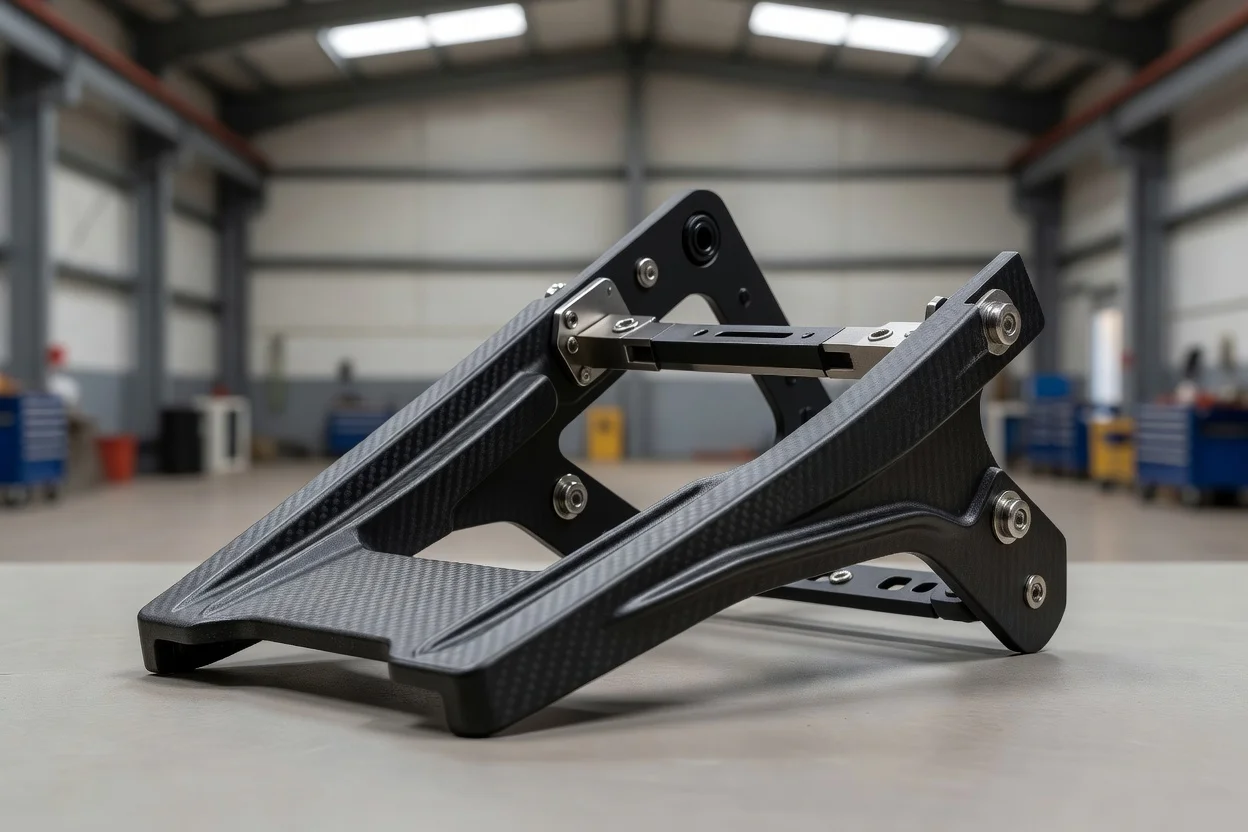
- Aerospace → usually unfilled, reinforced, or composite matrix grades; used for structural parts, clips, brackets, ducts, interior components, and fire-sensitive applications.
- Additive manufacturing → specialized filament or powder grades; used for complex functional parts, tooling, and low-volume end-use components because PEKK can support better printability and reduced warpage than some related high-temperature polymers.
- Medical and dental → purified or biomedical-grade resin; used in implants, prosthetic frameworks, spinal and dental devices, and other sterilizable components because of biocompatibility research and radiolucent, metal-free design potential.
- Oil and gas → high-performance grades for seals, connectors, valve components, downhole parts, and chemically aggressive environments.
- Industrial and electrical → insulation parts, wear components, bearings, pump and valve parts, and connectors where dimensional stability and chemical resistance are essential.
- Defense and transportation → lightweight structural and protective components, including applications where flame, smoke, and toxicity performance is important.
A relatively poor-fit use for PEKK is large-volume, cost-sensitive packaging, because the resin price and processing requirements are far above what is economically rational for short-life commodity packaging; mainstream polyolefins and PET dominate that market instead.
Environmental and Sustainability Aspects
PEKK’s sustainability profile is mixed. On one hand, its long service life, light weight, and ability to replace metals can reduce material use and lower operational energy in demanding systems, especially aerospace and transport. On the other hand, it is still a fossil-based, energy-intensive specialty polymer, and its high price and limited collection infrastructure constrain broad circularity.
Recyclability and circularity
PEKK is a thermoplastic, so it is not inherently crosslinked and can in principle be remelted and reprocessed. In practice, however, recycling is complicated by contamination, reinforcement in composites, high-value application requirements, and the need to preserve molecular weight and crystallinity.
Bio-based and lower-carbon pathways
No widely adopted bio-based PEKK route has yet displaced conventional petrochemical feedstocks at scale. Most sustainability innovation is therefore focused on:
- longer part life,
- remanufacturing and repair,
- better powder reuse in additive manufacturing,
- optimized processing to cut scrap,
- and composite recycling methods that recover high-value thermoplastic matrices.
Economic and Global Market Impact
PEKK occupies a small but strategically important niche in the global plastics market, with value driven by performance rather than volume. Demand is concentrated in aerospace, medical, and advanced manufacturing, where even small material volumes can justify premium pricing if the polymer enables part consolidation, weight reduction, or qualification against harsh service conditions.
Among the best-known commercial names, Arkema’s Kepstan PEKK is widely recognized in the market and is associated with grades tailored for high-temperature, chemical-resistant, and additive-manufacturing applications. Other suppliers and converters also serve the market, but the sector remains concentrated because resin qualification, process know-how, and application testing create high barriers to entry.
Current Challenges and Innovations
Current challenges
- High cost and limited scale compared with mainstream engineering plastics.
- Difficult processing due to high melt temperatures and narrow thermal management requirements.
- Property variability across grades because crystallinity and T/I ratio strongly influence performance.
- Qualification burden in aerospace and medical uses, where testing and certification are time-consuming.
Innovation directions
- Additive manufacturing optimization to improve crystallinity control, interlayer adhesion, and final part properties.
- Thermoplastic composites that combine PEKK with carbon or glass fiber for structural applications.
- Annealing and thermal post-processing to raise strength and dimensional stability after printing or molding.
- Surface engineering and hybrid formulations to improve wear, bonding, or tribological performance in selected parts.
Future Outlook
PEKK is likely to remain a specialty high-performance polymer rather than a high-volume plastic, but its importance may grow as industries prioritize lightweighting, electrification, thermal management, and high-reliability manufacturing. The strongest growth areas are likely to be aerospace composites, additive manufacturing, and advanced medical devices, where the polymer’s balance of processability and endurance is especially valuable.
Further expansion will depend on whether producers can reduce cost, improve recycling and composite recovery, and broaden qualification across regulated industries. If those hurdles are addressed, PEKK could become one of the defining high-temperature thermoplastics of advanced manufacturing.
Summary
PEKK is a high-performance PAEK thermoplastic distinguished by its tunable crystallization, exceptional heat and chemical resistance, and strong performance in aerospace, medical, oil and gas, and additive manufacturing. Its main strengths are durability, lightweighting potential, and process flexibility; its main weaknesses are cost, processing complexity, and limited circularity at present.
References
- •
Description of Poly(aryl-ether-ketone) Materials (PAEKs ... - PMC - NIH. (2023, May 2). https://pmc.ncbi.nlm.nih.gov/articles/PMC10180673/Link
- •
Polyetherketoneketone (PEKK): An emerging biomaterial for ... (2020, September 18). https://pmc.ncbi.nlm.nih.gov/articles/PMC7770505/Link
- •
What Is PEKK (Polyetherketoneketone)? (2025, April 7). https://plastechcoatings.com/what-is-pekk/Link
- •
Comprehensive Analysis Of Molecular Structure, Synthesis ... (n.d.). https://eureka.patsnap.com/materials/pekk-resin-structure-synthesisLink
- •
Polyetherketoneketone (PEKK) High Temperature Polymer (n.d.). https://eureka.patsnap.com/materials/pekk-polymer-analysisLink
- •
Comprehensive Analysis Of Molecular Structure, Processing ... (n.d.). https://eureka.patsnap.com/materials/pekk-thermoplastic-analysisLink
- •
PEKK - Material Guide | Craftcloud®. (n.d.). https://craftcloud3d.com/en/material-guide/pekkLink
- •
PEKEKK (polyetherketoneetherketoneketone) (n.d.). https://www.aikolon.fi/en/products/high-performance-plastics/pekekk-polyetherketoneetherketoneketoneLink
- •
PEKK | Additive Manufacturing Materials - AON3D. (2025, July 24). https://www.aon3d.com/materials/pekk/Link
- •
Polyetherketoneketone (PEKK): Comprehensive Analysis ... (n.d.). https://eureka.patsnap.com/materials/pekk-synthesis-properties-applicationsLink
- •
Polyetherketoneketone - Wikipedia. (2024, January 28). https://en.wikipedia.org/wiki/PolyetherketoneketoneLink
- •
Polyetherketoneketone (PEKK) Materials | CAS 29658-26-2 (n.d.). https://www.goodfellow.com/eu/material/polymers/pekk-polyetherketoneketoneLink
- •
Polyetherketones - Wikipedia. (2022, May 11). https://en.wikipedia.org/wiki/PolyetherketonesLink
- •
PEKK Polyetherketoneketone | Arkema Global. (n.d.). https://www.arkema.com/global/en/products/product-families/pekk-kepstan/Link
- •
PEKK: The High-Performance Polymer - ADDMAN. (2024, August 31). https://www.addmangroup.com/pekk-the-high-performance-polymer/Link
- •
PEKK vs. PEAK vs. PEEK: Key Differences and Applications. (2024, July 19). https://www.addmangroup.com/understanding-the-differences-between-pekk-peak-and-peek-materials/Link
- •
Polyether ether ketone - Wikipedia. (2003, June 24). https://en.wikipedia.org/wiki/Polyether_ether_ketoneLink
- •
PEKK plastic material - Polyetherketoneketone (n.d.). https://www.ensingerplastics.com/en/thermoplastic-materials/pekkLink
- •
PEEK vs PEKK vs PEEKK: Comparing Top-Grade PAEK Materials (n.d.). https://www.peekchina.com/blog/paek-peek-pekk-peekk.htmlLink
- •
Polyetherketoneketone (PEKK, Purity: 99.9%) (2024, September 18). https://www.nanorh.com/product/polyetherketoneketone-pekk-purity-99-9/Link
- •
Comprehensive Analysis Of Synthesis, Properties, And Advanced ... (n.d.). https://eureka.patsnap.com/materials/pekk-polymer-synthesisLink
- •
Polyetherketoneketone Industrial Applications - PatSnap Eureka (n.d.). https://eureka.patsnap.com/materials/pekk-industrial-applicationsLink
- •
[PDF] polyetherketoneketone (pekk), a versatile ultra-polymer for additive ... (n.d.). https://digitallibrarynasampe.org/data/pdfs/s2019_pdfs/TP19--1596.pdfLink
- •
PEKK (Polyetherketoneketone): The interesting alternative ... (2025, June 24). https://www.buser-ot.ch/en/specialities/pekk-the-interesting-peek-alternative/Link
- •
PEKK Material Properties and Applications - AON3D. (2026, June 29). https://www.aon3d.com/material-science/pekk-material-properties-and-applications/Link
- •
PEKK Polyetherketoneketone | Arkema Germany. (2024, October 1). https://www.arkema.com/germany/en/products-solutions/pekk-kepstan/Link
- •
a proper candidate for bone replacement (n.d.). https://www.sciencedirect.com/science/article/abs/pii/S2772950825002699Link
- •
Polyetheretherketone (PEEK): How to select the right grade? (2025, July 9). https://www.specialchem.com/plastics/guide/polyetheretherketone-peek-thermoplasticLink
- •
Polyetherketoneketone (PEKK): An emerging biomaterial for oral implants and dental prostheses (n.d.). https://www.sciencedirect.com/science/article/pii/S2090123220302137Link
- •
What is Poly-ether-ether-ketone (PEEK) Polymer? Properties ... (2019, September 24). https://www.victrex.com/en/blog/2017/a-closer-peek-at-peekLink
- •
PEEK plastics - Polyetheretherketone properties & applications | MCG (2026, August 25). https://www.mcam.com/en/products/peekLink
- •
Additive Manufacturing of Polyetherketoneketone (PEKK) (2025, March 8). https://papers.ssrn.com/sol3/Delivery.cfm/711b265c-3ea7-4208-af10-2ac46228d24d-MECA.pdf?abstractid=5170642&mirid=1Link