
Introduction
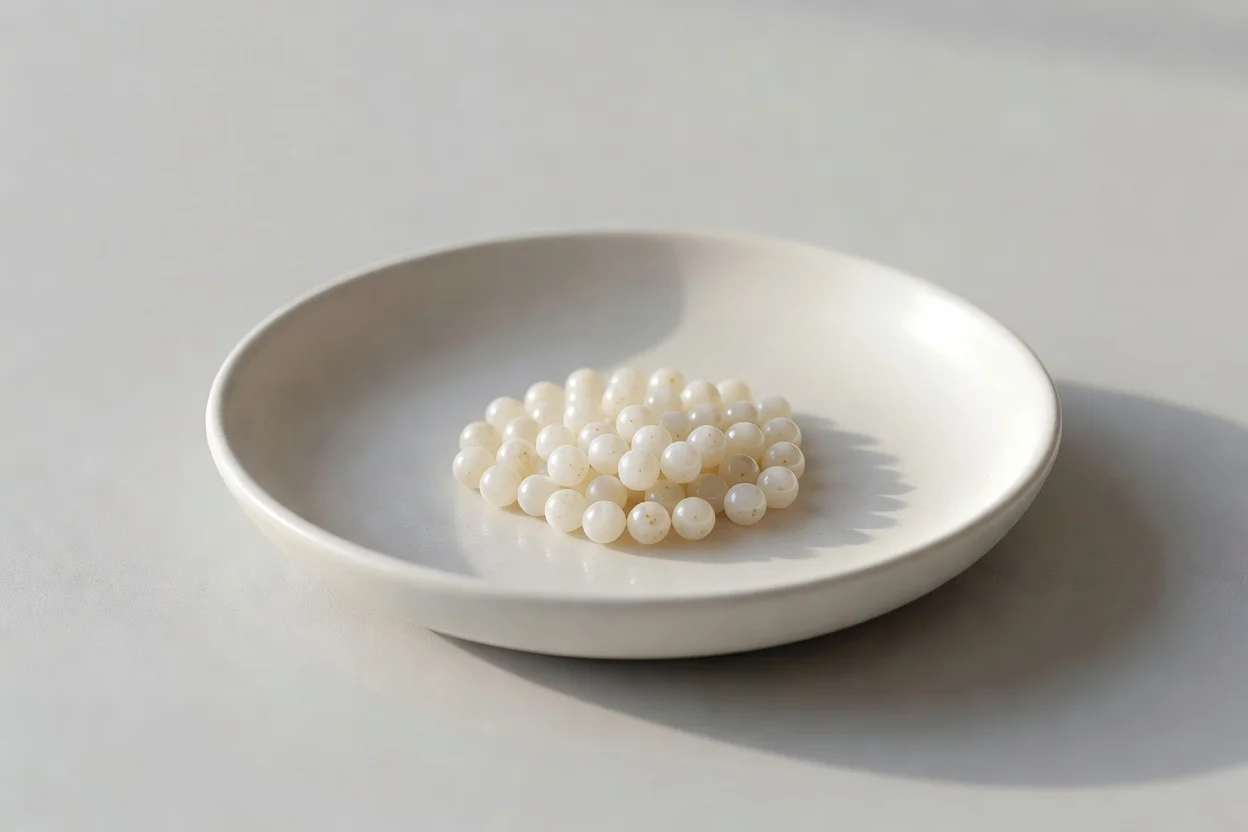
Protein-based bioplastics are a class of biobased, often biodegradable materials made from proteins such as soy, wheat gluten, casein, whey, gelatin, collagen, keratin, zein, and albumin, as well as newer microbial and recombinant structural proteins. They are of interest because they combine renewable feedstocks with film-forming and functional properties that can be useful in packaging, coatings, agricultural films, biomedical products, and other low- to moderate-load applications.
Unlike commodity fossil plastics, protein-based bioplastics are defined less by a single polymer chemistry than by a formulation strategy: proteins are plasticized, blended, cross-linked, hydrophobized, or otherwise modified to create usable materials with targeted mechanical and barrier performance. Their development reflects a broader shift in the plastics industry toward materials that can be sourced from agricultural co-products and biowastes, processed in water or mild conditions where possible, and designed for end-of-life options such as biodegradation or composting.
These materials remain technically constrained by water sensitivity, humidity-driven loss of strength, and generally lower elongation and toughness than mainstream polyolefins; in other words, the limitation is poor moisture resistance and brittle behavior under wet conditions, caused by the hydrophilic nature of many protein networks, with hydrophobization, blending, plasticization, and covalent cross-linking used as workarounds. Even so, protein-based bioplastics are attractive where oxygen barrier, biodegradability, edibility, or bioactivity matter more than long-term structural durability.
History and Development
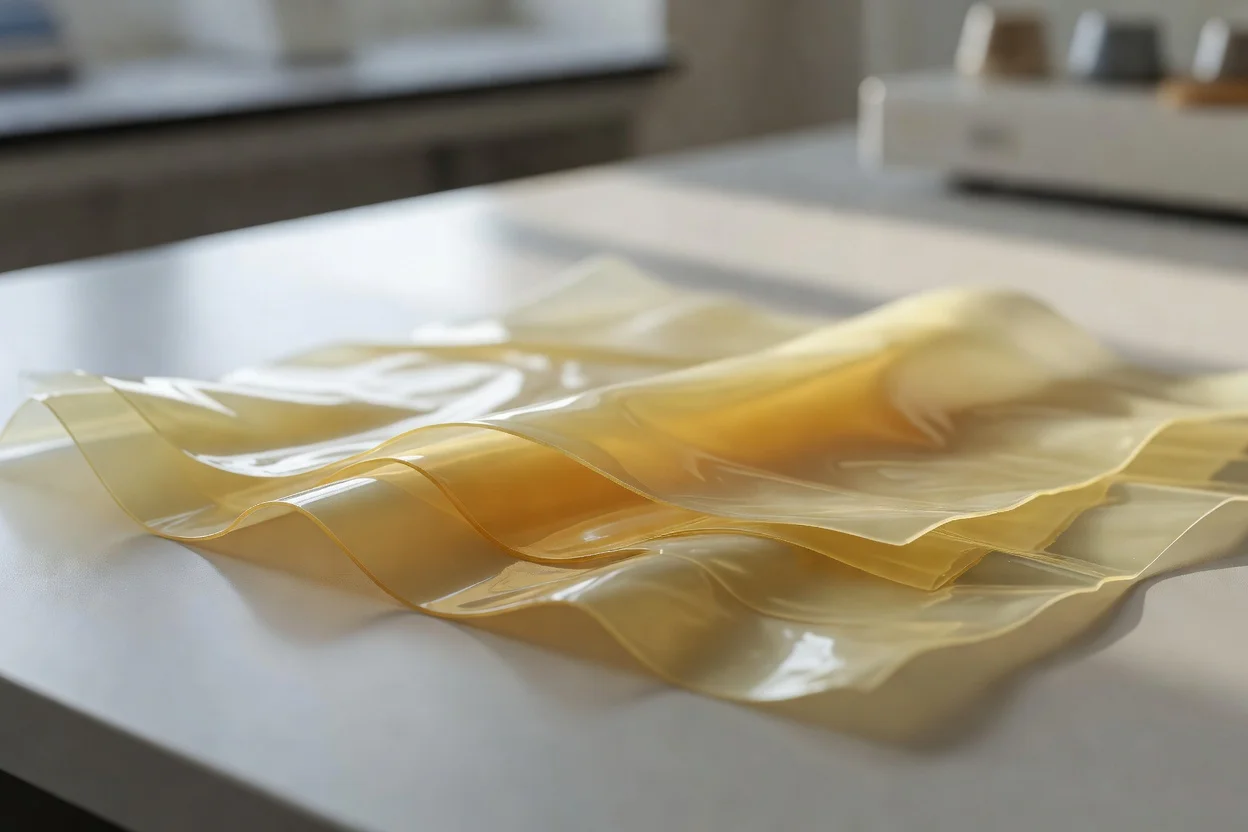
Protein materials have a long prehistory in coatings, adhesives, and molded goods, especially through the use of casein, gelatin, and soy protein in early industrial formulations. Modern research has expanded the field by applying polymer science, food chemistry, and green processing to proteins from both agricultural residues and dedicated production systems.
A major recent development has been the move from empirical formulation toward structure-guided design. Studies now show that protein plasticity, solubility, barrier performance, and biodegradability can be tuned through plasticizers such as glycerol, hyperbranched glycerols, and other polyols, or through enzymatic and covalent cross-linking. Research has also demonstrated aqueous processing routes that avoid conventional cross-linkers and solvents, improving alignment with green-chemistry principles.
Another important trend is the growing use of biowastes and co-products as feedstocks, including wheat gluten, potato proteins, soy, rapeseed, sunflower, whey, blood-derived proteins, collagen, keratin, and algae protein concentrates. This shift strengthens the circular-economy case for protein plastics by converting low-value biomass streams into higher-value materials.
Chemical Structure and Key Properties
Protein-based bioplastics are built from polypeptide chains whose side groups provide a dense landscape of hydrogen bonding, ionic interactions, disulfide linkages, and hydrophobic associations. This molecular complexity gives proteins strong potential for tunable properties, but it also makes performance highly sensitive to moisture, pH, processing history, and formulation.
Typical property profile
| Property | Typical behavior in protein-based bioplastics | Practical implication |
|---|---|---|
| Oxygen barrier | Often very good, especially in dry conditions | Useful for food packaging and freshness preservation |
| Water resistance | Often weak without modification | Limits use in humid or wet environments |
| Mechanical behavior | Good film-forming ability, but often brittle unless plasticized | Plasticizers and blending are commonly required |
| Biodegradability | High, often complete under suitable conditions | Supports compostable or short-life applications |
| Processability | Can be improved with aqueous, thermal, or enzymatic routes | Broadens manufacturing options |
Two real-world limitations are especially important:
- Poor moisture resistance → hydrophilic amino-acid-rich networks absorb water and swell → hydrophobization, multilayer structures, or blending with lipids/polyesters are used.
- Low elongation and brittleness → strong intermolecular interactions and limited chain mobility → plasticizers such as glycerol or sorbitol, plus cross-linking and blending, improve flexibility.
A concrete formulation example is glycerol at low-to-moderate loading, which increases chain mobility and reduces brittleness in protein films; this improves flexibility but usually reduces strength and barrier performance, so it is commonly balanced against cross-linking or reinforcement. Another example is enzymatic cross-linking of amino acids to produce water-resistant protein bioplastics, where the mechanism is the formation of a denser network that reduces water uptake and molecular mobility.
Production Processes and Raw Feedstocks
Protein-based bioplastics can be made from animal-derived or plant-derived proteins, as well as microbial proteins produced by fermentation.
Major feedstocks
- Plant proteins: soy, wheat gluten, zein, pea, potato, rapeseed, sunflower protein.
- Animal proteins: casein, whey, gelatin, collagen, keratin, albumin.
- Microbial and recombinant proteins: single-cell protein and engineered structural proteins.
Main processing routes
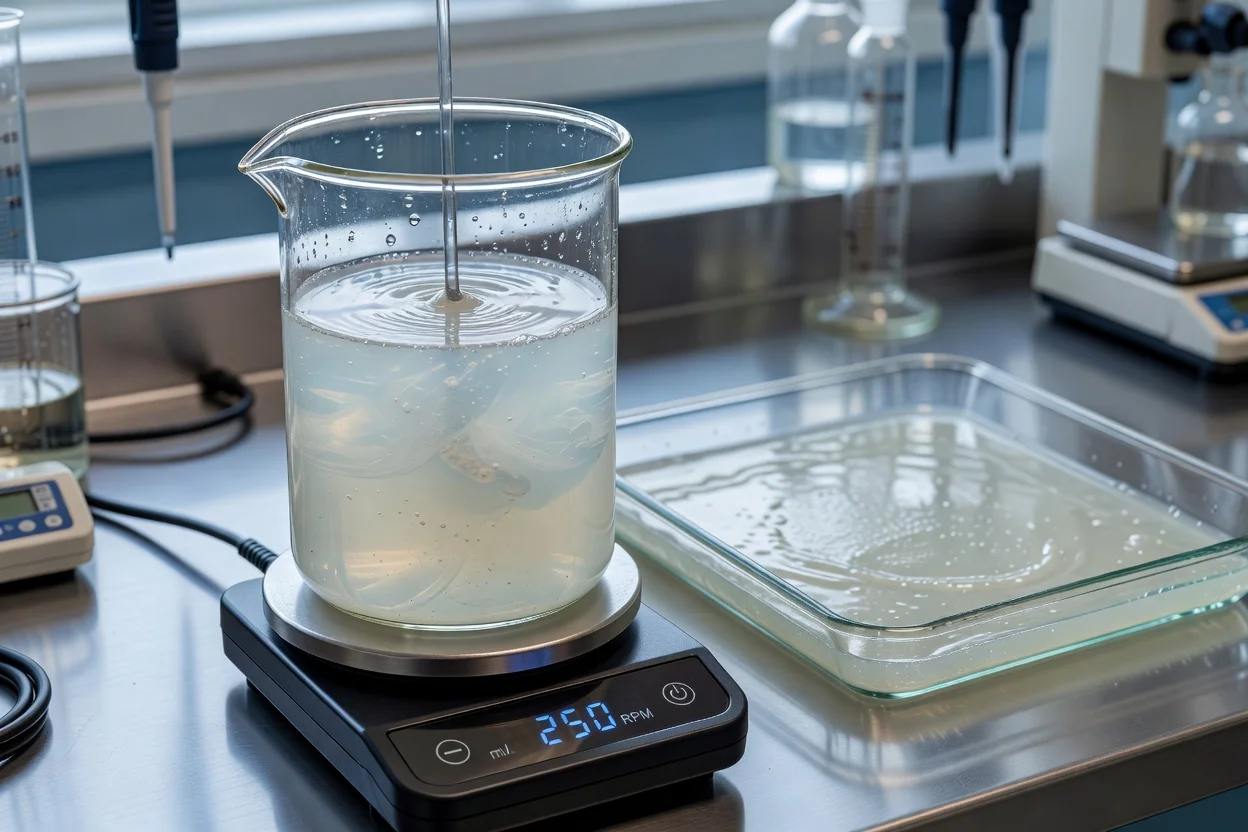
- Wet processing / solution casting
- Proteins are dissolved, dispersed, or partially denatured in water or mild solvents, then plasticized and cast into films.
- This is the most common laboratory route, but it is often energy-intensive and difficult to scale economically.
- Dry or thermomechanical processing
- Heat and shear are used to denature, align, or fuse proteins into molded materials or compounds.
- This route is attractive for industrial scalability when moisture and thermal stability are managed carefully.
- Cross-linking
- Enzymatic, physical, or chemical cross-linking improves water resistance and strength by tightening the polymer network.
- Blending and multilayer design
- Protein materials are combined with lipids, polysaccharides, biodegradable polyesters, or fillers to compensate for moisture sensitivity and brittleness.
Leading contributors and research directions
There is no single dominant global commodity producer comparable to polyethylene or polypropylene, but leadership is visible in three areas:
- Academic and patent-led innovation, especially in Europe, North America, and East Asia, where research groups are developing new protein plasticization and fermentation routes.
- Agri-food co-product valorization, where processors and materials developers collaborate to use by-products such as whey, gluten, and soy meal.
- Specialty compounders and niche material suppliers, which have begun commercializing protein-containing compounds for packaging and disposable goods, though the market remains small relative to petrochemical plastics.
Applications and End-Use Markets
Protein-based bioplastics are strongest in applications where the material must be film-forming, biodegradable, edible, oxygen-barrier-active, or biofunctional.
| End use | Typical protein feedstock / grade | Usual process | Fit for protein bioplastics |
|---|---|---|---|
| Food packaging films and coatings | Soy, whey, gluten, casein, gelatin | Casting, coating, extrusion-assisted multilayers | Strong fit |
| Edible films and fresh-produce coatings | Whey, gluten, soy, blended proteins | Casting, spraying, dipping | Strong fit |
| Pharmaceutical and biomedical packaging | Gelatin, albumin, collagen | Casting, forming, multilayers | Strong fit |
| Agricultural films and mulch-like materials | Plant proteins with blends or coatings | Casting, blending, lamination | Moderate fit |
| Absorbent and superabsorbent materials | Protein blends and composites | Forming and cross-linking | Moderate fit |
| 3D printing and specialty articles | Albumin and engineered proteins | Additive manufacturing | Emerging fit |
| General rigid consumer goods | Protein composites or blends | Molding or compounding | Limited fit |
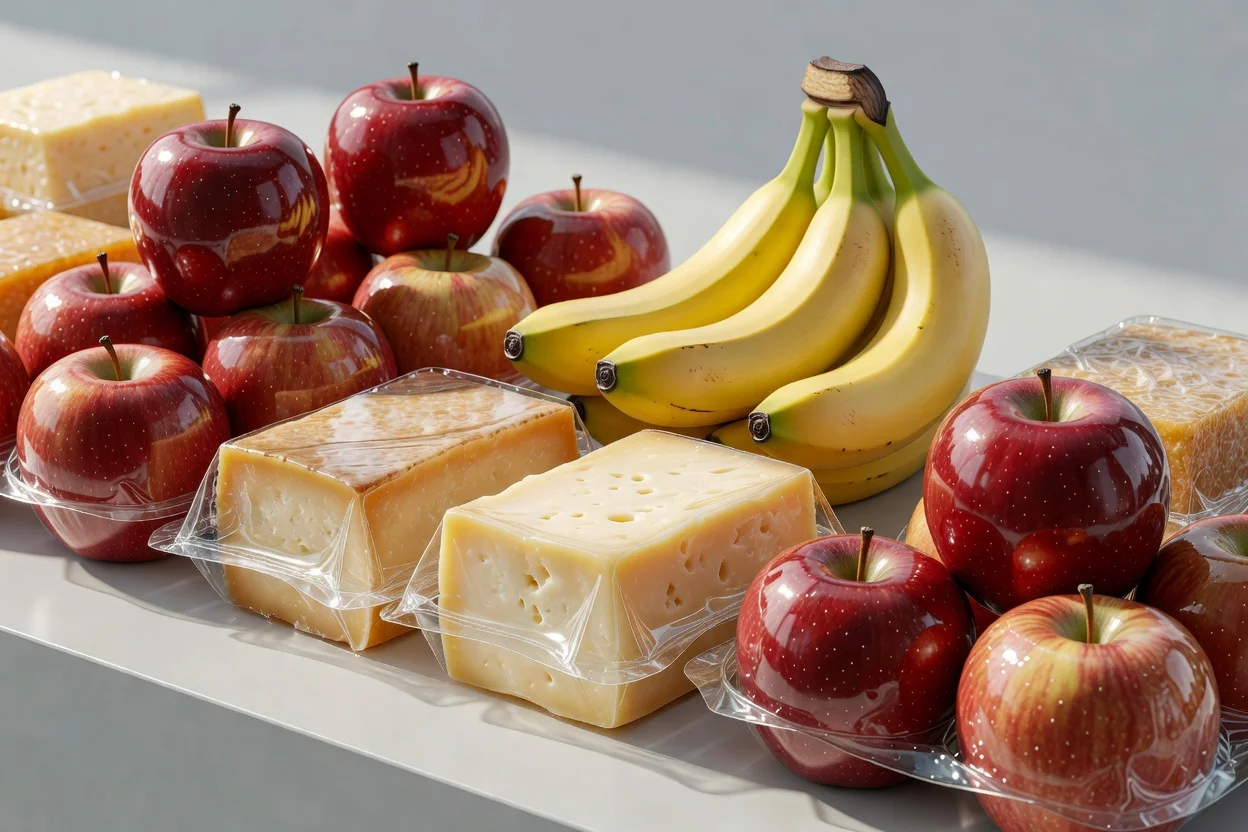
The strongest commercial and technical use case is food packaging, especially in films, coatings, wraps, edible layers, and paper coatings. These applications exploit the excellent oxygen barrier and active functionality of protein films, including potential antimicrobial or antioxidant effects.
In agriculture, protein-based films are being studied for mulching, vine clips, temporary covers, and erosion-control films, where short service life and controlled biodegradation are advantageous. In biomedical and pharmaceutical uses, proteins such as gelatin and collagen offer biocompatibility and safe decomposition, although regulatory and sterilization requirements are demanding.
A poorer-fit application is long-life outdoor structural plastic parts, because sustained exposure to moisture, UV, and mechanical fatigue tends to exceed the intrinsic durability of most protein networks.
Environmental and Sustainability Aspects
Protein-based bioplastics are often presented as renewable and biodegradable alternatives to fossil-derived plastics, but their environmental profile depends strongly on feedstock sourcing, processing energy, additives, and end-of-life management.
Potential sustainability advantages
- Renewable sourcing from crops, dairy by-products, slaughterhouse co-products, and fermentation streams reduces dependence on fossil feedstocks.
- Circular-economy potential is high when biowastes and co-products are upgraded into materials rather than discarded.
- Biodegradability can be advantageous in compostable packaging, agricultural films, and short-life products.
- Lower carbon footprint is possible relative to petrochemical plastics, depending on feedstock and processing route.
Key sustainability limitations
- Feedstock competition can arise if edible proteins are diverted from food systems.
- Water and energy use may be significant in purification and solution casting.
- End-of-life ambiguity remains a problem, because biodegradability is not the same as recyclability, and real-world degradation depends on conditions and infrastructure.
- Additives and blending agents can complicate compostability and recycling claims.
The most credible sustainability pathway is not universal replacement of conventional plastics, but targeted substitution in uses where protein materials offer a clear functional and environmental advantage, especially when built from by-products or fermentation-derived proteins.
Economic and Global Market Impact
Protein-based bioplastics remain a niche market within the wider bioplastics sector, which is still dominated by starch-based, PLA, PHA, and cellulose-related materials. Their economics are shaped by raw-material cost, purification needs, processing complexity, and performance limitations in humid environments.
Recent reviews indicate that protein-based films are already attracting commercial interest in food packaging, coatings, and disposable items, but industrial scale-up is constrained by higher costs than petroleum plastics and by the need for tighter quality control. Because protein feedstocks may be available as co-products, their cost structure can improve significantly when integrated into existing agri-food supply chains.
Market dynamics are also influenced by regulation and consumer demand. Sustainability labeling, food-contact safety, and compostability standards can accelerate adoption, but they can also create confusion if terms such as “bio-based,” “biodegradable,” and “compostable” are used inconsistently.
Current Challenges and Innovations
Main challenges
- Humidity sensitivity
- Root cause: hydrophilic protein chemistry.
- Consequence: loss of barrier and mechanical performance in wet conditions.
- Response: hydrophobization, multilayers, blending, and cross-linking.
- Brittleness and low elongation
- Root cause: dense intermolecular bonding and restricted chain mobility.
- Consequence: fracture under flexing or impact.
- Response: plasticizers, polymer blends, and network engineering.
- Scale-up and reproducibility
- Root cause: variability in protein source, extraction quality, and processing history.
- Consequence: inconsistent properties across batches.
- Response: better feedstock standardization and process control.
- Cost
- Root cause: purification, drying, and low-throughput wet processing.
- Consequence: difficulty competing with commodity plastics.
- Response: use of by-products, aqueous processing, and higher-value applications.
Innovation directions
- Crosslinker-free aqueous processing to reduce solvent and additive burden.
- Fermentation-derived structural proteins with tunable mechanics and biodegradability.
- 3D printing of protein bioplastics for customized biomedical or specialty components.
- Hydrophobized protein films to improve water resistance while retaining biodegradability.
- Active packaging formulations that integrate antioxidant or antimicrobial functionality.
Future Outlook
Protein-based bioplastics are unlikely to displace commodity plastics in high-volume structural applications, but they are likely to gain importance in specialty, short-life, and functional packaging markets where performance requirements align with their strengths. Their most promising future lies in designs that combine renewable feedstocks, water-based processing, controlled degradation, and targeted bioactivity.
The field is also moving toward more diversified raw materials, including fermentation proteins and industrial biowastes, which could reduce dependence on food-grade proteins and improve the sustainability profile. If industrial processing becomes more efficient and standards become clearer, protein bioplastics could shift from a research-intensive niche to a practical platform for premium packaging, agricultural consumables, and biomedical products.
Summary
Protein-based bioplastics are renewable polymer materials derived from animal, plant, or microbial proteins, with their greatest strengths in oxygen barrier performance, biodegradability, and functional packaging uses. Their key weaknesses are moisture sensitivity, brittleness, and cost, which currently limit broad substitution for conventional plastics.
The most credible growth path is selective deployment in applications where short service life, safety, or active functionality matter more than long-term durability, especially when feedstocks come from co-products or biowastes and processing is designed to minimize energy and water use.
References
- •
Ehman, N. V., et al. (n.d.). PEER-REVIEW ARTICLE - BioResources. BioResources. https://bioresources.cnr.ncsu.edu/wp-content/uploads/2026/05/BioRes_21_2_5543_Ehman_CVA_Review_Next_Generation_BioPlast_Renew_Resource_25488.pdfLink
- •
Strong and elastic, yet degradable: Protein-based bioplastics. (2022, February 11). ScienceDaily. https://www.sciencedaily.com/releases/2022/02/220211102033.htmLink
- •
PROTEIN-BASED BIOPLASTICS profile – material. (n.d.). Burg Halle. https://www.burg-halle.de/gast/process/protein-based-bioplastics-profile/Link
- •
Protein-Based Bioplastics from Biowastes. (n.d.). Springer Nature. https://link.springer.com/chapter/10.1007/978-981-16-1823-9_5Link
- •
Wei, B., Li, J., & Liu, Y. (2022, February 8). Plastics from proteins. Nature. https://www.nature.com/articles/s41570-022-00367-9Link
- •
Vegetative and microbial proteins for bioplastics applications. (2025, May 20). PMC. https://pmc.ncbi.nlm.nih.gov/articles/PMC12090056/Link
- •
Protein based bioplastics and their antibacterial potential. (n.d.). University of Georgia. https://www.stat.uga.edu/sites/default/files/users/Mandal%20research/2015_Protein_based_bioplastics_and_their_antibacterial_potential.pdfLink
- •
Development of protein‐based bioplastics modified with different additives. (n.d.). Wiley. https://onlinelibrary.wiley.com/doi/10.1002/app.45430Link
- •
Jones, A. (n.d.). PROTEIN-BASED PLASTICS AND THEIR POTENTIAL USE IN MEDICAL AND FOOD. University of Georgia. https://getd.libs.uga.edu/pdfs/jones_alexander_201512_phd.pdfLink
- •
Protein-based bioplastics and their antibacterial potential. (n.d.). Wiley. https://onlinelibrary.wiley.com/doi/abs/10.1002/app.41931Link
- •
Biosynthetic Structural Proteins with Super Plasticity, Extraordinary Mechanical Performance, Biodegradability, Biocompatibility and Information Storage Ability. (n.d.). Wiley. https://onlinelibrary.wiley.com/doi/10.1002/ange.202117538Link
- •
Microbial protein-derived bioplastics from renewable resources. (2025, November 22). PMC. https://pmc.ncbi.nlm.nih.gov/articles/PMC12703861/Link
- •
Proteins in the design of sustainable plastics alternatives. (n.d.). Springer. https://link.springer.com/article/10.1557/s43579-023-00481-9Link
- •
Bioplastics for Food Packaging: Environmental Impact, Trends.... (2022, October 5). PMC. https://pmc.ncbi.nlm.nih.gov/articles/PMC9563026/Link
- •
Aqueous‐Based Assembly of Plant‐Derived Proteins Yields a Crosslinker‐Free Biodegradable Bioplastic Consistent with Green Chemistry Principles. (2024, November 21). PMC. https://pmc.ncbi.nlm.nih.gov/articles/PMC11884229/Link
- •
3D-Printed Protein-Based Bioplastics with Tunable Mechanical Properties. (2025, February 7). ACS. https://pubs.acs.org/doi/10.1021/acs.biomac.4c01497Link
- •
Protein-based Bioplastics for Food and Pharmaceutical Packaging. (2021, June 3). RSC. https://books.rsc.org/books/edited-volume/875/chapter-abstract/649299/Protein-based-Bioplastics-for-Food-and?redirectedFrom=fulltextLink
- •
Proteins from Agri-Food Industrial Biowastes or Co-Products and Their Applications as Green Materials. (2021, April 29). PubMed. https://pubmed.ncbi.nlm.nih.gov/33947093/Link
- •
Proteins from Agri-Food Industrial Biowastes or Co-Products and Their Applications as Green Materials. (n.d.). MDPI. https://www.mdpi.com/2304-8158/10/5/981?type=check_update&version=2Link
- •
Protein-based bioplastics and methods of use. (2016, October 6). Google Patents. https://patents.google.com/patent/US20160289449A1/enLink
- •
Recent progress in protein-based food packaging films. (n.d.). Springer. https://link.springer.com/article/10.1186/s42825-025-00231-8?error=cookies_not_supported&code=f8860a14-d6d5-4752-9344-78117abab47fLink
- •
Novel Bioplastic from Single Cell Protein as a Potential Packaging Material. (2021, April 27). ACS. https://pubs.acs.org/doi/10.1021/acssuschemeng.1c00355Link
- •
Comparison of Protein Content, Availability, and Different Processing Methods. (2022, March 7). PMC. https://pmc.ncbi.nlm.nih.gov/articles/PMC8915110/Link
- •
Bioplastic. (2005, August 29). Wikipedia. https://en.wikipedia.org/wiki/BioplasticLink
- •
Hydrophobisation approaches of protein-based bioplastics. (n.d.). ScienceDirect. https://www.sciencedirect.com/science/article/pii/S0924224423001668Link
- •
A comprehensive review on plant protein-based food packaging. (2025, June 12). PMC. https://pmc.ncbi.nlm.nih.gov/articles/PMC12173619/Link
- •
Innovations in applications and prospects of bioplastics.... (2021, November 29). PMC. https://pmc.ncbi.nlm.nih.gov/articles/PMC8629338/Link
- •
Perspective on the production, characterisation and physio.... (n.d.). DergiPark. https://dergipark.org.tr/en/download/article-file/4400563Link
- •
Recent advances in plant protein-based sustainable bioplastics. (2026, January 8). Frontiers. https://www.frontiersin.org/journals/sustainable-food-systems/articles/10.3389/fsufs.2025.1733428/fullLink
- •
What Are Protein-Based Bioplastics? (2024, November 1). EuroPlas. https://europlas.com.vn/en-US/blog-1/what-are-protein-based-bioplasticsLink
- •
5 Types of Bioplastics: Starch, Cellulose, Protein, and More. (2024, September 13). Green Business Benchmark. https://www.greenbusinessbenchmark.com/archive/5-bioplastic-typesLink
- •
Bioplastics: Their Advantages and Concerns. (2021, June 22). Academia.edu. https://www.academia.edu/49343060/Bioplastics_Their_Advantages_and_ConcernsLink
- •
Bioplastics: Definition, Types, Uses, Challenges. (2023, October 2). Microbe Notes. https://microbenotes.com/bioplastics/Link
- •
Environmental benefits of bioplastics. (2025, June 12). European Bioplastics. https://www.european-bioplastics.org/bioplastics/environment/Link
- •
Exploring the Rise of Bioplastics: A Sustainable Alternative. (2025, April 10). Techmer PM. https://www.techmerpm.com/exploring-the-rise-of-bioplastics/Link