
Introduction
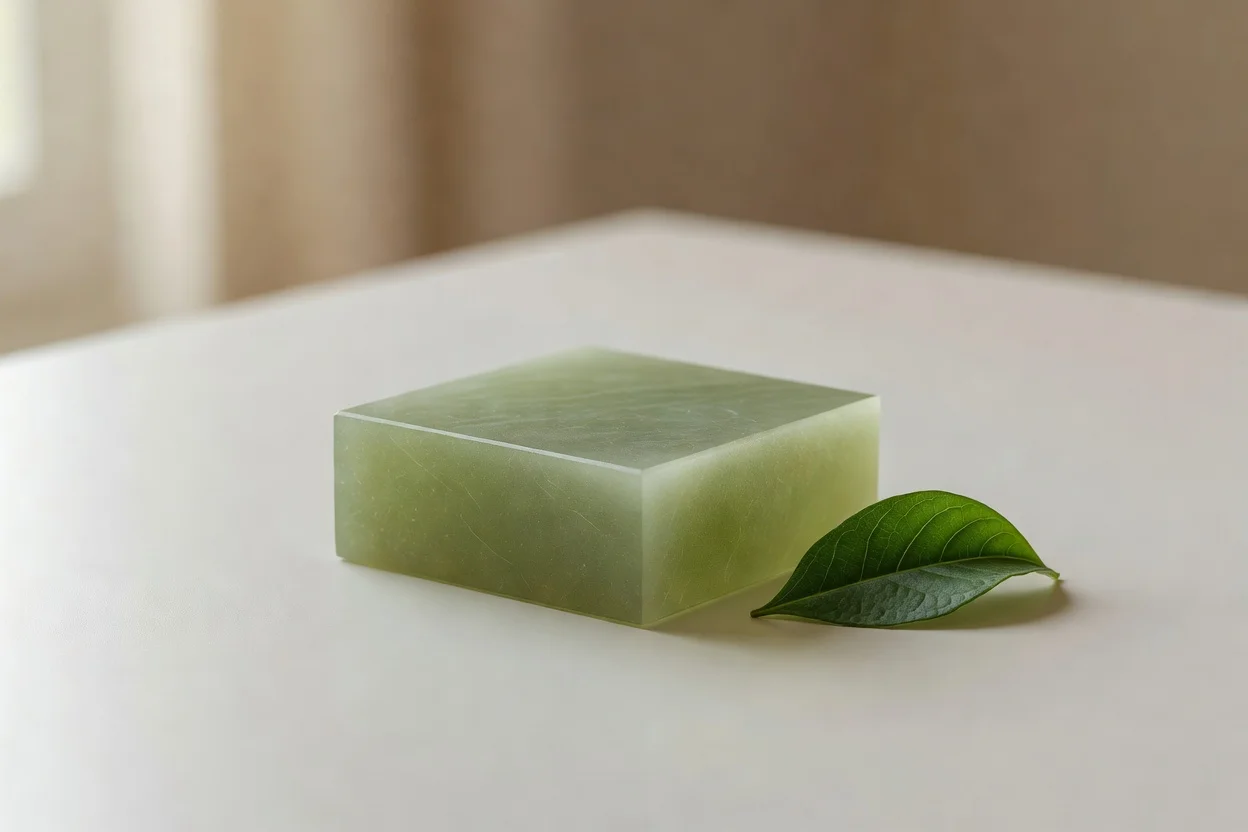
Biobased polyurethane or Bio-PU is a polyurethane material in which part of the carbon content, and in some formulations most or all of it, is derived from renewable feedstocks such as vegetable oils, lignocellulosic biomass, sugars, or other biomass-derived intermediates rather than purely fossil-based raw materials. It occupies an important position in the plastics value chain because polyurethane chemistry is highly adaptable: by varying the polyol, isocyanate, catalyst, chain extender, and additives, Bio-PU can be formulated as foams, coatings, adhesives, elastomers, membranes, and biomedical materials.
Bio-PU has developed as a response to three converging pressures: reduced dependence on petroleum, lower carbon intensity, and growing regulatory and customer demand for lower-VOC and more sustainable materials. At the same time, its technical identity remains closely tied to conventional polyurethane chemistry, which means many commercial Bio-PU systems still rely on isocyanates, and therefore “bio-based” does not automatically mean “non-toxic” or fully circular. This has accelerated research into non-isocyanate polyurethane routes, bio-based polyols, and hybrid formulations that improve both environmental profile and performance.
Commercially, Bio-PU spans a broad maturity range. Some products, such as renewable-content flexible foams and waterborne coatings, are already used at industrial scale, while others, such as fully bio-based non-isocyanate systems, remain in development or early commercialization. The field is therefore best understood not as a single material, but as a family of partially renewable polyurethane systems with varying bio-content, processability, durability, and sustainability trade-offs.
History and Development
Polyurethane chemistry itself emerged in the twentieth century as a versatile route to foams, coatings, adhesives, and elastomers, but the early industry was overwhelmingly fossil-based. The Bio-PU movement accelerated as environmental policy, volatile oil pricing, and concerns over solvent emissions and resource depletion pushed formulators to replace petroleum-derived polyols with renewable alternatives.
Early work focused mainly on bio-polyols from vegetable oils, because they could be integrated into established polyurethane production lines with relatively limited process changes. Over time, research expanded to lignocellulosic biomass, lignin-derived fractions, sugar-derived platforms, microbial fermentation products, and chemically modified natural oils. More recently, the field has moved toward fully bio-based and non-isocyanate polyurethane concepts, especially for coatings, adhesives, biomedical materials, and specialty elastomers.
A key development has been the distinction between simply “bio-based content” and true process redesign. Many first-generation products substituted only the polyol segment, while newer work aims to reduce or eliminate fossil-derived monomers, reduce VOCs, and improve recyclability or degradability.
Chemical Structure and Key Properties
Polyurethanes are built from the reaction of an isocyanate with a polyol, producing urethane linkages and a segmented structure that can be tuned from soft and flexible to rigid and highly crosslinked. In Bio-PU, the renewable component is usually the polyol, though emerging systems also use bio-based isocyanates or alternative non-isocyanate chemistries.
The performance of Bio-PU depends strongly on:
- the renewable feedstock used for the polyol,
- the functionality and molecular weight of that polyol,
- the isocyanate type and index,
- the degree of phase separation,
- and the presence of fillers, catalysts, or chain extenders.
Typical property trends include:
- Flexible foams: resilience, comfort, and cushioning performance can remain comparable to conventional PU when the formulation is well balanced.
- Rigid foams: low thermal conductivity supports insulation uses, although fire performance often still requires dedicated flame-retardant strategies.
- Coatings and adhesives: good flexibility, adhesion, abrasion resistance, and chemical resistance can be achieved, especially in waterborne or hybrid systems.
- Elastomers and TPU-like materials: mechanical properties can be retained, though the exact balance of hardness, tensile strength, hydrolysis resistance, and heat resistance depends on whether the system is polyester- or polyether-leaning.
Key technical limits and practical workarounds
- Lower phase separation or slightly reduced thermal stability → bio-based monomers can change segment compatibility and crystallization behavior → workaround: optimize polyol architecture, increase hard-segment design efficiency, or use hybrid bio-based/fossil blends.
- Poorer abrasion resistance in some coatings → certain renewable polyols and waterborne formulations can sacrifice surface robustness → workaround: add crosslink density, silica or nanofillers, or select tougher aliphatic/isophorone-based systems.
- Organic-solvent swelling in some bio-based coatings → higher bio-content and hydrophilic segments can increase solvent uptake → workaround: reformulate toward more hydrophobic structures, use post-cure optimization, or employ crosslinking and barrier topcoats.
- Low flammability resistance in rigid foam applications → PU chemistry is inherently combustible → workaround: incorporate flame retardants, PIR-type formulations, or protective facings and building-system designs.
- Cost and feedstock variability → renewable raw materials can be more expensive and less standardized than petrochemical inputs → workaround: use side-stream biomass, develop higher-yield conversion routes, and scale integrated bio-refinery supply chains.
Production Processes and Raw Feedstocks
Bio-PU production generally follows conventional polyurethane processing, but with renewable raw materials substituted into one or more formulation components.
Main feedstocks
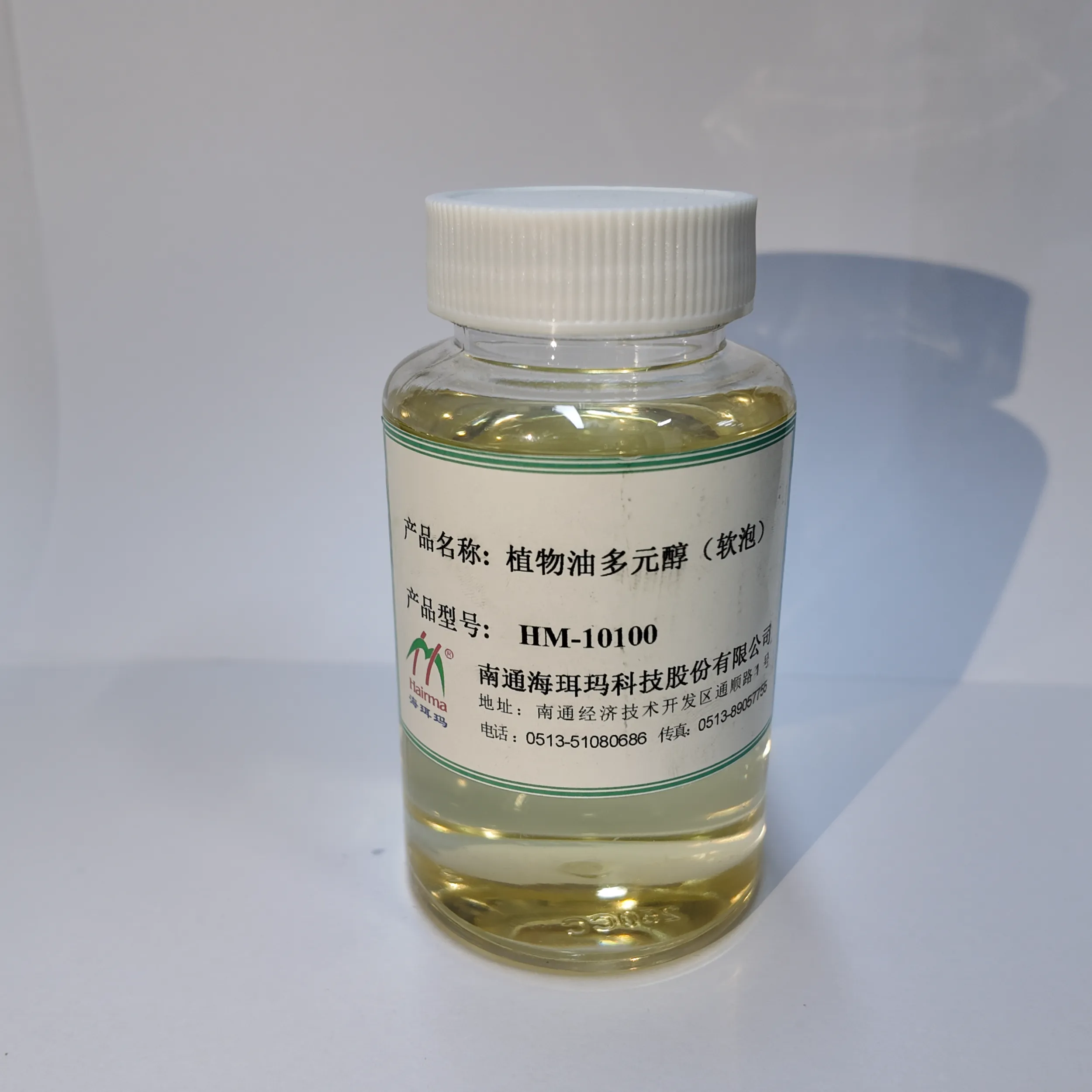
- Vegetable oils such as soybean, castor, rapeseed, and related oils are widely used because they are abundant and chemically modifiable.
- Lignocellulosic biomass provides lignin-derived and carbohydrate-derived intermediates, especially for higher-functionality polyols and specialty products.
- Sugars and sugar-derived compounds are used in bio-based polyol and monomer synthesis, including routes that support cycloaliphatic or aromatic building blocks.
- Fermentation-derived intermediates increasingly support lower-carbon polyurethane chemistries and specialty TPU platforms.
Typical production routes
- Direct use of bio-polyols: natural oils are epoxidized, hydroxylated, transesterified, or otherwise functionalized, then reacted with isocyanates.
- Hybrid formulations: renewable polyols are blended with petrochemical polyols to balance cost, performance, and bio-content.
- Waterborne polyurethane dispersions: these reduce or eliminate organic solvents and are especially important in coatings and adhesives.
- Non-isocyanate polyurethane routes: cyclic carbonate and amine-based chemistry, often from bio-based precursors, aims to avoid toxic isocyanates altogether.
Leading companies and industrial position
The Bio-PU field is spread across feedstock, polyol, and formulation suppliers rather than dominated by a single product class. Industrially relevant contributors mentioned in recent sources include BASF for waterborne and coating systems, Dow for natural-oil-based polyols in flexible foams, Henkel for bio-based adhesives, and Ford-related development for bio-based polyurethane resins in additive manufacturing. These companies matter because they connect renewable feedstock innovation to large-volume end-use sectors such as automotive interiors, furniture, construction, and industrial coatings.
Applications and End-Use Markets
Bio-PU is used across the same broad application landscape as conventional polyurethane, but its best-fit uses are those where renewable content, low VOCs, tunable softness, or specialized surface performance provide clear added value.
| Application | Typical Bio-PU grade or process | Why it fits |
|---|---|---|
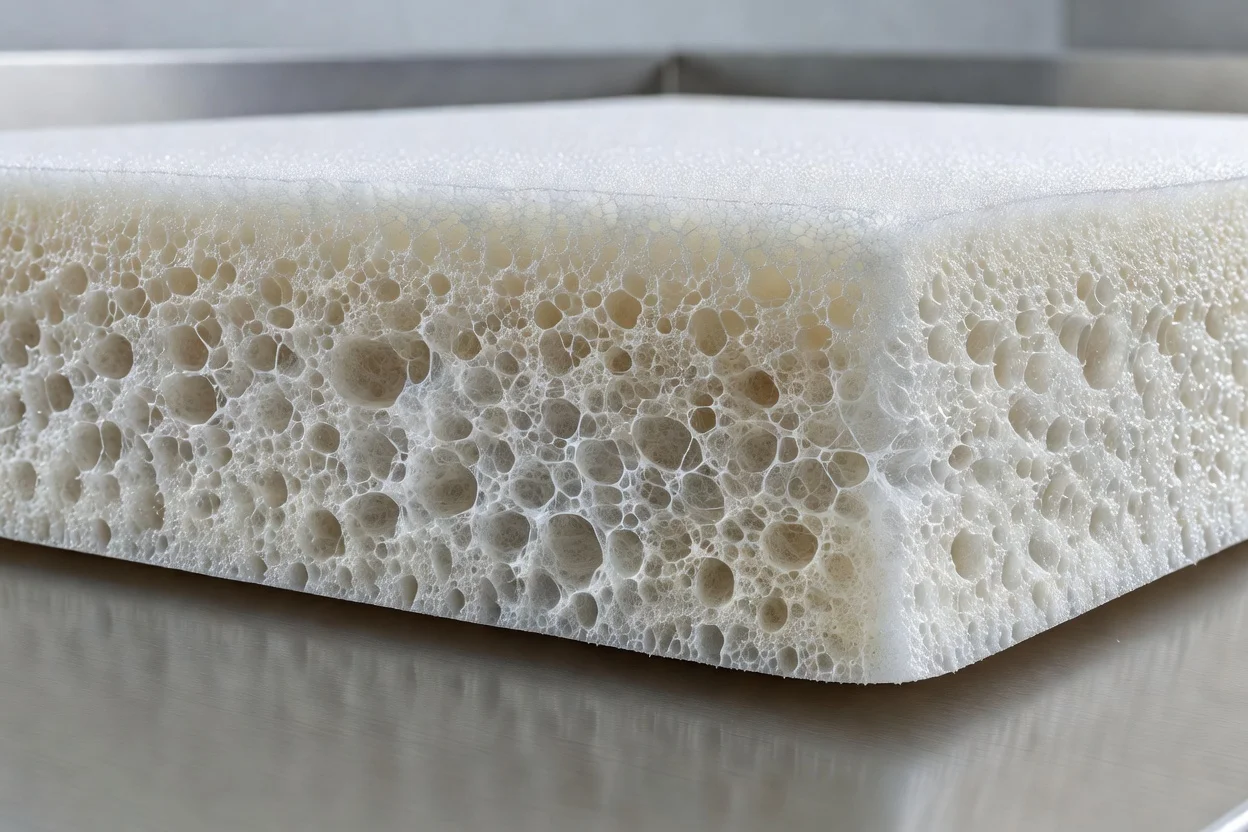
| Flexible foam | Natural-oil polyol-based foam, often slabstock or molded | Comfort, cushioning, resilience, and partial bio-content for bedding and seating. |
| Rigid insulation foam | Bio-polyol rigid foam, sometimes PIR-like systems | Low thermal conductivity and building insulation performance. |
| Coatings | Waterborne, UV-curable, solvent-free, or hybrid Bio-PU | Low VOCs, adhesion, durability, and surface finish. |
| Adhesives and sealants | Two-component or waterborne Bio-PU | Strong bonding and room-temperature processing for wood, metal, textiles, and composites. |
| Elastomers and TPU | Bio-based TPU or elastomeric PU | Wear resistance, flexibility, and customizable hardness. |
| Biomedical materials | Hydrophilic or bioactive PU systems | Tunable biocompatibility, swelling, and drug-loading potential. |
| Membranes and porous sorbents | Bio-PU foams and porous networks | Oil sorption, separation, and functional filtration. |
Major end-use sectors include:
- Furniture and bedding: flexible foams for mattresses, cushions, and upholstery.
- Automotive: seating, interior panels, trim, and acoustic insulation.
- Construction: insulation foams, coatings, sealants, flooring, and roof protection.
- Wood and furniture coatings: waterborne and durable decorative finishes.
- Footwear and consumer goods: insoles, straps, soft-touch parts, and cushioning elements.
- Biomedical and hygiene products: wound dressings, scaffolds, and other tailored biocompatible systems.
One poor-fit use
Bio-PU is generally a poor fit for applications requiring extremely high temperature resistance or inherently nonflammable performance without extra protection, because polyurethane chemistry still tends to be combustible and may require additional flame-retardant or design measures.
Environmental and Sustainability Aspects
The main sustainability advantage of Bio-PU is that it can reduce reliance on fossil feedstocks by replacing part of the petrochemical polyol fraction with renewable carbon from plants or biomass residues. In some formulations, especially waterborne systems, it can also reduce VOC emissions and support lower-emission manufacturing.
However, the sustainability picture is mixed:
- Bio-based does not always mean biodegradable; many Bio-PUs are still durable engineering plastics designed for long service life.
- Bio-based does not automatically mean non-toxic; many systems still use isocyanates.
- Crop-based feedstocks can compete with land, water, and fertilizer use, depending on sourcing and agricultural practice.
- End-of-life recycling remains difficult because polyurethane is often thermoset or highly formulated, limiting mechanical recycling routes.
Important sustainability pathways include:
- Bio-based polyols from waste or residues rather than food crops.
- Chemical recycling or feedstock recovery for used polyurethane streams.
- Waterborne and solvent-free formulations to lower process emissions.
- Non-isocyanate polyurethane development to improve safety and circularity potential.
Economic and Global Market Impact
Bio-PU is attractive because polyurethane is a very large and diversified polymer market, so even partial substitution of fossil polyols can have outsized impact across multiple sectors. According to recent industry analyses, demand is strongest where sustainability claims are commercially valuable and where performance can be preserved, especially in coatings, adhesives, flexible foams, and specialty elastomers.
Key economic drivers include:
- pressure from VOC and carbon regulations,
- brand commitments to renewable content and lower Scope 3 emissions,
- volatility in crude-oil-linked raw materials,
- and growing consumer interest in lower-impact materials.
The main commercial barriers remain:
- higher or less predictable raw-material cost,
- performance tuning requirements,
- supply-chain variability for biomass feedstocks,
- and the need for formulation-specific qualification in demanding sectors such as automotive and construction.
Current Challenges and Innovations
Current technical work is focused on solving the classic Bio-PU trade-off: improving environmental performance without losing the mechanical and processing advantages that make polyurethane commercially important.
Main challenges
- Balancing renewability and performance
- Reducing dependence on toxic isocyanates
- Improving hydrolysis, UV, abrasion, and heat resistance
- Making renewable feedstocks consistent at industrial scale
- Designing end-of-life routes that are practical and economical
Notable innovations
- Non-isocyanate polyurethane synthesis from bio-based precursors.
- Bio-based waterborne polyurethane dispersions for coatings and adhesives with reduced VOC content.
- Hybrid systems combining renewable and conventional segments to preserve performance during scale-up.
- Functional bio-fillers such as lignocellulosic materials to improve cost, density, absorption, or barrier behavior.
- Advanced bio-based monomers from sugars and lignin-derived platforms, including work on fully bio-based aromatic or cycloaliphatic building blocks.
A useful practical example is the use of bio-based polyols at partial substitution levels in flexible foams, where renewable content can be increased without fundamentally changing the foam-making process; the mechanism is straightforward: the renewable polyol contributes hydroxyl functionality for urethane formation while preserving the foam cell structure created during gas generation and polymer rise. Another example is waterborne polyurethane dispersions for coatings, where renewable polyols and water as the main carrier reduce solvent emissions; the mechanism is film formation after water evaporation followed by hard-segment association and crosslinking.
Future Outlook
Bio-PU is likely to grow first in applications where sustainability, low VOCs, and performance can be co-optimized, especially coatings, adhesives, flexible foams, and selected elastomers. The strongest long-term expansion path is likely to come from three converging trends: better biomass conversion chemistry, broader adoption of waterborne and solvent-free processing, and gradual movement toward non-isocyanate systems.
The medium-term market may be dominated by partially bio-based, high-performance hybrid systems, because they offer the most practical balance of cost, compliance, and qualification risk. Over a longer horizon, fully bio-based polyurethane platforms may become more important if scalable bio-isocyanate alternatives, non-isocyanate routes, and robust recycling technologies mature sufficiently.
Summary
Bio-PU is a renewable-content polyurethane family built mainly by replacing fossil polyols with bio-based feedstocks such as vegetable oils, lignocellulosic biomass, and sugar-derived intermediates. Its importance lies in the fact that it preserves polyurethane’s hallmark versatility while offering pathways to lower fossil dependence, lower VOC emissions, and improved sustainability credentials. The central challenge is that environmental gains must still be balanced against cost, feedstock variability, durability requirements, and the continued use of isocyanates in many commercial systems.
References
- •
Flammability of Bio-Based Rigid Polyurethane Foam as ... (2016, August 31). https://www.intechopen.com/chapters/50924Link
- •
Recent Advances in the Preparation and Application of Bio-Based Polyurethane. (2024, July 29). https://pmc.ncbi.nlm.nih.gov/articles/PMC11314907/Link
- •
Bio-Based Polyurethane Foams: Feedstocks, Synthesis ... - PMC. (2025, May 7). https://pmc.ncbi.nlm.nih.gov/articles/PMC12108712/Link
- •
Assessment of Bio-Based Polyurethanes. (n.d.). https://pdfs.semanticscholar.org/7fa2/7f3fbf7eb975a72220050390d54698beeebc.pdfLink
- •
Silicon Haven. (2025, October 2). https://www.linkedin.com/pulse/bio-based-polyurethane-real-world-5-uses-youll-actually-ac1ofLink
- •
Biobased Polyurethane - an overview | ScienceDirect Topics. (n.d.). https://www.sciencedirect.com/topics/engineering/biobased-polyurethaneLink
- •
Biobased polyurethanes for biomedical applications - PMC - NIH. (2020, October 15). https://pmc.ncbi.nlm.nih.gov/articles/PMC7569269/Link
- •
Non-isocyanate polyurethane from bio-based feedstocks and their ... (2025, September 9). https://pubs.rsc.org/en/content/articlehtml/2025/lf/d5lf00160aLink
- •
A comprehensive review of biobased polyurethane and ... (n.d.). https://www.sciencedirect.com/science/article/abs/pii/S096195342400446XLink
- •
Bio‐Based Polyurethanes: Mechanical Performance, Structure ... (2026, May 1). https://onlinelibrary.wiley.com/doi/10.1002/pol.20251170Link
- •
Sustainable cycloaliphatic polyurethanes: from synthesis to ... (2023, January 3). https://pubs.rsc.org/en/content/articlehtml/2023/cs/d2cs00509cLink
- •
Bio‐Based Polyurethanes: Mechanical Performance ... (2026, May 1). https://onlinelibrary.wiley.com/doi/full/10.1002/pol.20251170Link
- •
[PDF] Biobased polyurethanes for biomedical applications. (n.d.). https://www.sciencedirect.com/science/article/am/pii/S2452199X2030253XLink
- •
Chemical Resistance And... (n.d.). https://eureka.patsnap.com/materials/renewable-polyurethane-biobasedLink
- •
Biobased polyurethanes for biomedical applications. (n.d.). https://www.sciencedirect.com/science/article/pii/S2452199X2030253XLink
- •
Bio-Based Polyurethane: Advanced Synthesis Strategies ... (n.d.). https://eureka.patsnap.com/materials/bio-based-polyurethaneLink
- •
from synthesis to applications - RSC Publishing. (n.d.). https://pubs.rsc.org/en/content/articlepdf/2023/cs/d2cs00509cLink
- •
Bio-Based Polyurethane Materials: Technical, Environmental, and ... (2025, April 1). https://www.osti.gov/pages/biblio/2567694Link
- •
Bio-Based Polyurethanes: Synthesis to Advanced Application. (2024, November 1). https://pubs.acs.org/doi/10.1021/bk-2024-1485.ch008Link
- •
Development of a Novel Biobased Polyurethane Resin System ... (2022, October 27). https://pmc.ncbi.nlm.nih.gov/articles/PMC9654683/Link
- •
Renewable Polyurethanes from Sustainable Biological Precursors. (2021, April 6). https://pubs.acs.org/doi/10.1021/acs.biomac.0c01610Link
- •
1-s2.0-S0927796X21000036-main. (2025, September 8). https://www.scribd.com/document/850972234/1-s2-0-S0927796X21000036-mainLink
- •
Bio-Based Polyurethane Coatings: Pioneering Efficient and Eco ... (n.d.). https://www.jrte.org/wp-content/uploads/2024/10/Bio-Based-Polyurethane-Coatings.pdfLink
- •
Bio-Based Waterborne PU for Durable Textile Coatings - PMC - NIH. (2021, December 2). https://pmc.ncbi.nlm.nih.gov/articles/PMC8659624/Link
- •
Biobased Hyperbranched Polyurethane. (2017, August 15). https://books.rsc.org/books/monograph/759/chapter/479776/Biobased-Hyperbranched-PolyurethaneLink
- •
Debunking Bio-PU myths: Performance over disposability. (2026, February 2). https://www.linkedin.com/posts/manisha-jasani_biopu-polyurethane-materialinnovation-activity-7423892246598545408-DvPWLink
- •
Bio-based method creates polyurethane without toxic chemicals. (2025, March 21). https://phys.org/news/2025-03-bio-based-method-polyurethane-toxic.htmlLink
- •
RSC. (n.d.). https://pubs.rsc.org/en/content/articlepdf/2025/lf/d5lf00160aLink
- •
Bio-Based Polymers: Farm to Industry. Volume 1: Chemistry and Feedstocks. (2024, November 1). https://pubs.acs.org/doi/10.1021/bk-2024-1485.ch009Link
- •
Bio-Based Polymers: Farm to Industry. Volume 1: Chemistry and Feedstocks. (2024, November 1). https://pubs.acs.org/doi/10.1021/bk-2024-1485.ch007Link
- •
Eco-Friendly and High-Performance Bio-Polyurethane Adhesives ... (2024, June 6). https://pmc.ncbi.nlm.nih.gov/articles/PMC11174640/Link
- •
The influence of bio-based monomers on the structure and thermal ... (2024, November 23). https://www.nature.com/articles/s41598-024-80358-6Link
- •
Wood Coatings-New Perpestive New Trends 2024 - Biomass. (2024, September 23). https://biomasscoating.com/en/wood-coatings-new-perpestive-new-trends-2024-biomass/Link
- •
A Comparison of Ester‐ and Ether‐Based Bio‐TPUs With Regard to ... (2025, September 20). https://pmc.ncbi.nlm.nih.gov/articles/PMC12449858/Link
- •
Progress of Polysaccharide-Contained Polyurethanes for ... (2022, July 11). https://pmc.ncbi.nlm.nih.gov/articles/PMC9478012/Link
- •
Bio-based vs recycled polyurethane foam: what's the better ... (2025, October 3). https://circufoam.com/bio-based-vs-recycled-polyurethane-foam-whats-the-better-path-to-circularity/Link
- •
Material on Trial: PU Leather, aka 'The Vegan Leather'. (2025, March 5). https://veganfashionrepository.com/2025/03/05/material-on-trial-pu-leather-aka-the-vegan-leather/Link
- •
Application of bio-based polyurethanes in construction. (n.d.). https://www.sciencedirect.com/science/article/abs/pii/S0921344924004993Link
- •
An overview of polyurethane biomaterials and their use in ... (n.d.). https://www.sciencedirect.com/science/article/pii/S0168365923006235Link
- •
Sustainable polyurethanes: toward new cutting-edge opportunities. (n.d.). https://hal.science/hal-04489278/file/Revue%20PU%20Sust.pdfLink
- •
Preparation of bio-based porous material with high oil ... (2024, February 26). https://pubs.rsc.org/en/content/articlehtml/2024/ra/d4ra00469hLink
- •
Advantages of Bioplastics vs. Disadvantages. (2020, March 26). https://qualityinspection.org/advantages-of-bioplastics-vs-disadvantages/Link
- •
Advantages and Disadvantages of Bioplastics Production from ... (2021, July 28). https://pmc.ncbi.nlm.nih.gov/articles/PMC8348970/Link
- •
Polyurethane Advantages - Urethane Properties & Benefits. (n.d.). https://www.precisionurethane.com/urethane-advantage.htmlLink