
Introduction
Polyamide-imide (PAI) is a high-performance, amorphous engineering polymer valued for exceptional heat resistance, strength retention at elevated temperature, wear resistance, creep resistance, and dimensional stability. It occupies a niche above many conventional engineering plastics and is used where parts must endure severe thermal, mechanical, electrical, or tribological stress, especially in aerospace, semiconductor, industrial machinery, and high-end automotive systems.
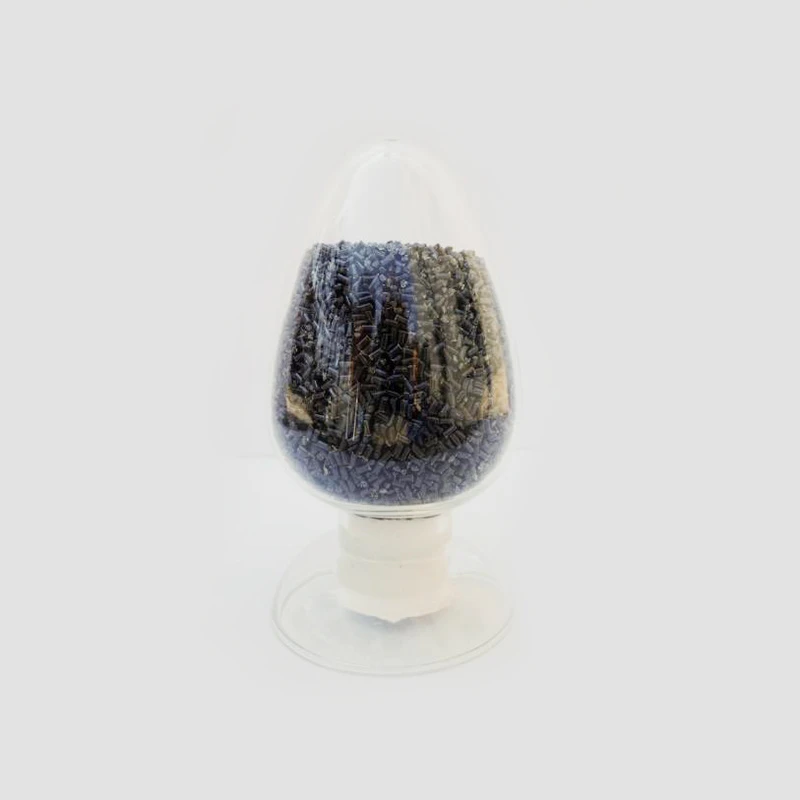
PAI combines characteristics associated with polyamides and polyimides, yielding a material that can be melt-processed in thermoplastic grades while still delivering unusually high thermal performance. Commercially, it is best known under premium product families such as Torlon; these grades are widely recognized for maintaining stiffness and strength close to their glass-transition region and for their resistance to wear, chemicals, and deformation under load.
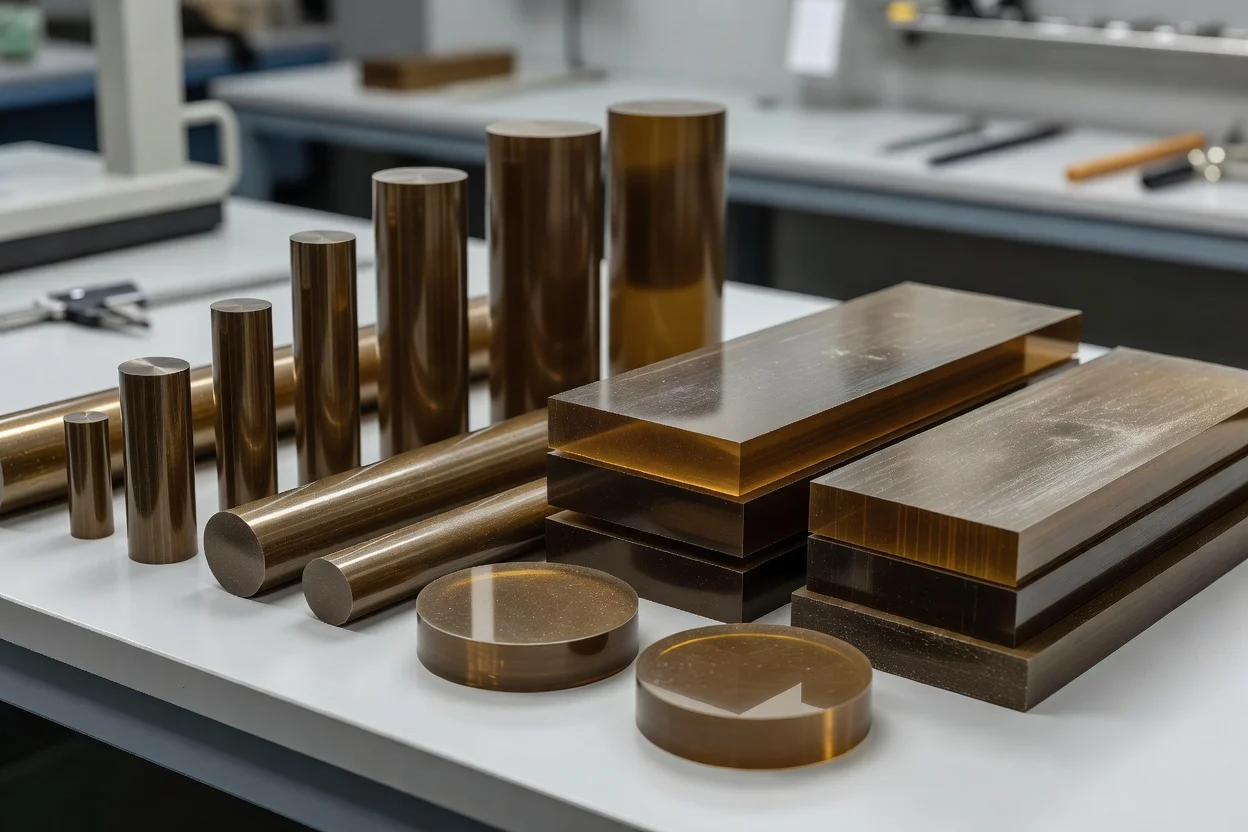
Historically, PAI emerged from the broader development of high-temperature aromatic polymers and was advanced to bridge the processing advantages of thermoplastics with the thermal durability of polyimides. Today, the material exists in multiple forms, including molding compounds, extruded shapes, sheets, films, coatings, and reinforced grades, with formulation choices tailored to friction, electrical insulation, mechanical strength, and thermal expansion control.
Sustainability considerations are increasingly relevant, but PAI is not currently a mass-circular material in the way commodity polyolefins are. Its value proposition is instead durability and service-life extension: in demanding applications, longer component life, lower replacement frequency, and reduced downtime can partially offset its high energy and material intensity. At the same time, recyclability remains limited by its thermoset-like service profile in some forms, high processing temperatures, and the economics of collecting small, high-value parts, which has encouraged interest in additive-enabled redesign, repair, regrind use in selected applications, and process improvements.
History and Development
PAI belongs to the family of aromatic heterocycle-containing polymers developed during the expansion of aerospace, electrical, and industrial high-performance plastics in the second half of the 20th century. The chemical design goal was to create a polymer that could tolerate temperatures beyond the limits of standard nylons, polyesters, and many polyether-based plastics while still being processable into useful parts.
The resulting material architecture typically incorporates aromatic rings, amide linkages, and imide functionality, producing a highly rigid backbone with strong intermolecular interactions. This structure underpins the characteristic combination of high glass-transition temperature, low creep, and excellent dimensional stability.
Commercial development accelerated through proprietary formulations and processing know-how. The best-known brand family, Torlon, established PAI as a premium machinable and moldable material for extremely demanding service environments. Later developments expanded PAI into coatings, films, fiber-reinforced compounds, and specialty laminates, broadening its use in electronics, tribology, and high-temperature structural parts.
Chemical Structure and Key Properties (Technical Overview)
PAI is an amorphous aromatic polymer whose properties are governed by the ratio and arrangement of amide and imide groups along the chain. The imide segments contribute rigidity, thermal resistance, and chemical robustness, while the amide segments provide enough chain mobility to allow melt processing in thermoplastic grades.
Key property profile
| Property | Typical behavior |
|---|---|
| Glass-transition temperature | High, commonly around 250 to 280 °C in many commercial grades |
| Continuous use temperature | Often up to about 260 °C in premium grades |
| Strength and stiffness | High, with retained performance at elevated temperature |
| Wear and friction | Excellent, especially in bearing and sliding applications |
| Creep resistance | Very high, making it suitable for loaded parts at heat |
| Dimensional stability | Excellent, with very low thermal expansion in many grades |
| Chemical resistance | Broad resistance to many solvents, fuels, and lubricants |
Representative published data for unfilled or standard commercial PAI grades commonly show tensile strengths in the roughly 100 to 180 MPa range and flexural moduli in the multi-gigapascal range, although values vary by grade, reinforcement, and test standard. Density is typically around 1.37 to 1.40 g/cm3 for unfilled grades.
Real limitations and practical workarounds
- High moisture sensitivity before processing → moisture can cause hydrolytic degradation or molding defects → workaround: thorough drying and moisture control before injection molding, often to very low residual moisture levels.
- High cost → complex synthesis and niche volumes make PAI expensive relative to standard engineering plastics → workaround: use only where service-life, reliability, or temperature resistance justify the premium.
- Limited impact toughness in some reinforced grades → glass or mineral reinforcement can raise stiffness but reduce ductility → workaround: choose unfilled, tailored blends, or design for reduced stress concentration.
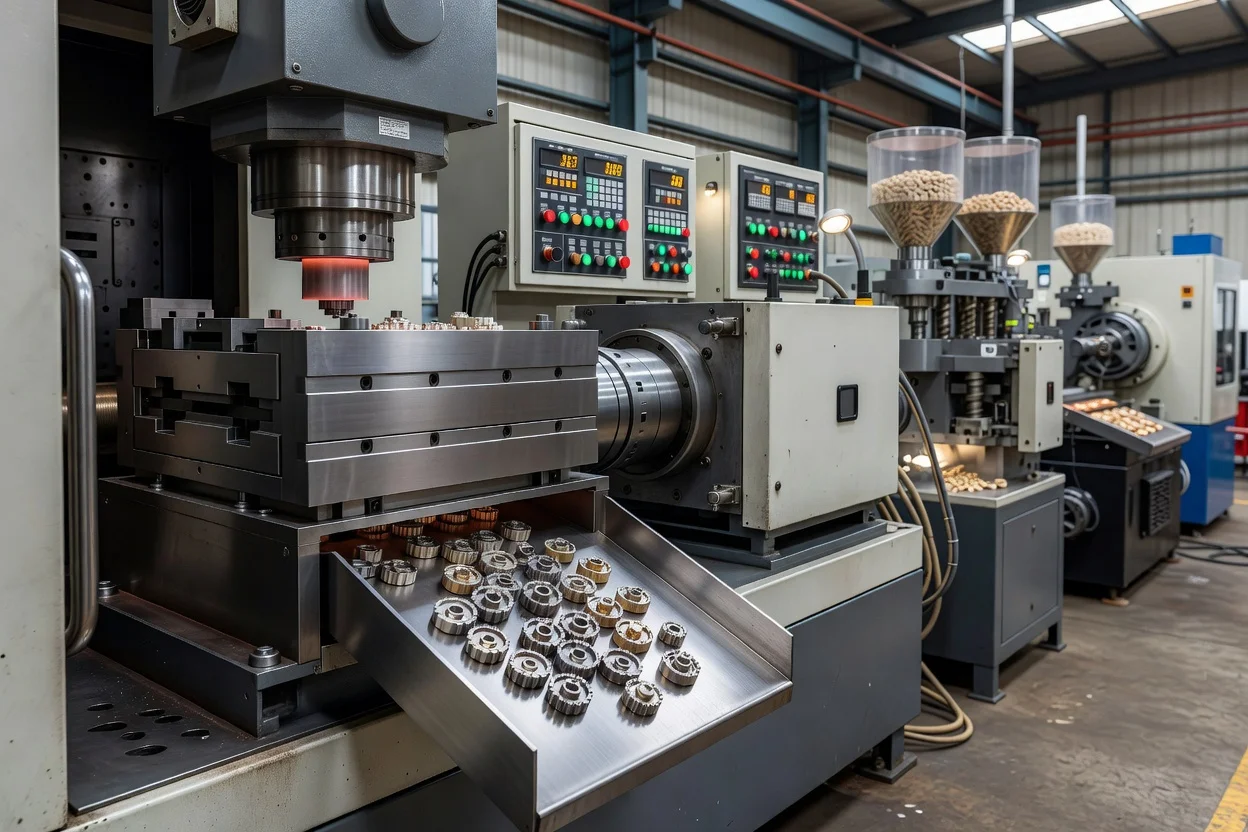
- Not ideal for easy low-temperature mass processing → high melt temperatures and narrow processing windows raise manufacturing complexity → workaround: compression molding, precision injection molding, machining of semifinished stock, or annealing after processing.
For PAI specifically, the material can also be described as having excellent compressive strength and low creep, which is why it is selected for loaded bearing elements, thrust washers, and valve components operating under heat and stress.
Production Processes and Raw Feedstocks
PAI is produced through aromatic polycondensation routes, commonly involving aromatic diamines, aromatic diisocyanates, dianhydrides, or related multifunctional acid components, depending on the specific chemistry and product family. The industrial aim is to create a high-molecular-weight aromatic backbone with controlled imidization and minimal defects.
Common synthesis and finishing routes
- Solution polycondensation → used to form PAI precursor resins or coating solutions, often followed by curing or imidization.
- Melt polymerization → used in some newer process concepts to improve process efficiency and reduce solvent dependence.
- Compounding → fillers, fibers, and lubricants may be added to tune wear, modulus, thermal expansion, and friction behavior.
- Forming → injection molding, compression molding, extrusion, sheet forming, and machining from stock shapes are all used depending on part geometry and tolerances.
- Post-curing or annealing → used to relieve stress and stabilize dimensions after processing.
Raw feedstocks and chemistry context
The feedstock slate is anchored in aromatic petrochemical intermediates, meaning that PAI’s carbon footprint is influenced upstream by aromatic monomer production, solvent use, and energy-intensive thermal processing. In coated or solution-based routes, solvent management is especially important for emissions control and cost efficiency.
Manufacturing implications
PAI is usually not a commodity polymer sold by the millions of tonnes. Its economics depend on tight process control, purity, low-defect resin synthesis, and high-value downstream fabrication. This is why major commercial emphasis is placed on application engineering, not just resin sales.
Applications and End-Use Markets
PAI is selected where failure is expensive and replacement is difficult. Its main value is not general-purpose versatility but reliable performance in severe service conditions.
| End-use sector | Typical PAI form or grade | Why it is used |
|---|---|---|
| Aerospace | Machined stock, reinforced shapes, bearing and thrust components | Heat resistance, low creep, low thermal expansion |
| Automotive and transportation | Precision gears, transmission components, valves, seals | Wear resistance, load-bearing capacity, thermal stability |
| Semiconductor and electronics | Test sockets, connectors, insulating parts | Dimensional stability, electrical insulation, clean machining |
| Industrial machinery | Bearings, bushings, rollers, wear pads | Tribology, compressive strength, long service life |
| Oil, gas, and chemical processing | Seals, valve seats, compressor parts | Chemical resistance and heat tolerance |
| High-temperature electrical uses | Films, laminates, insulation parts | Dielectric performance and thermal endurance |
Common product forms
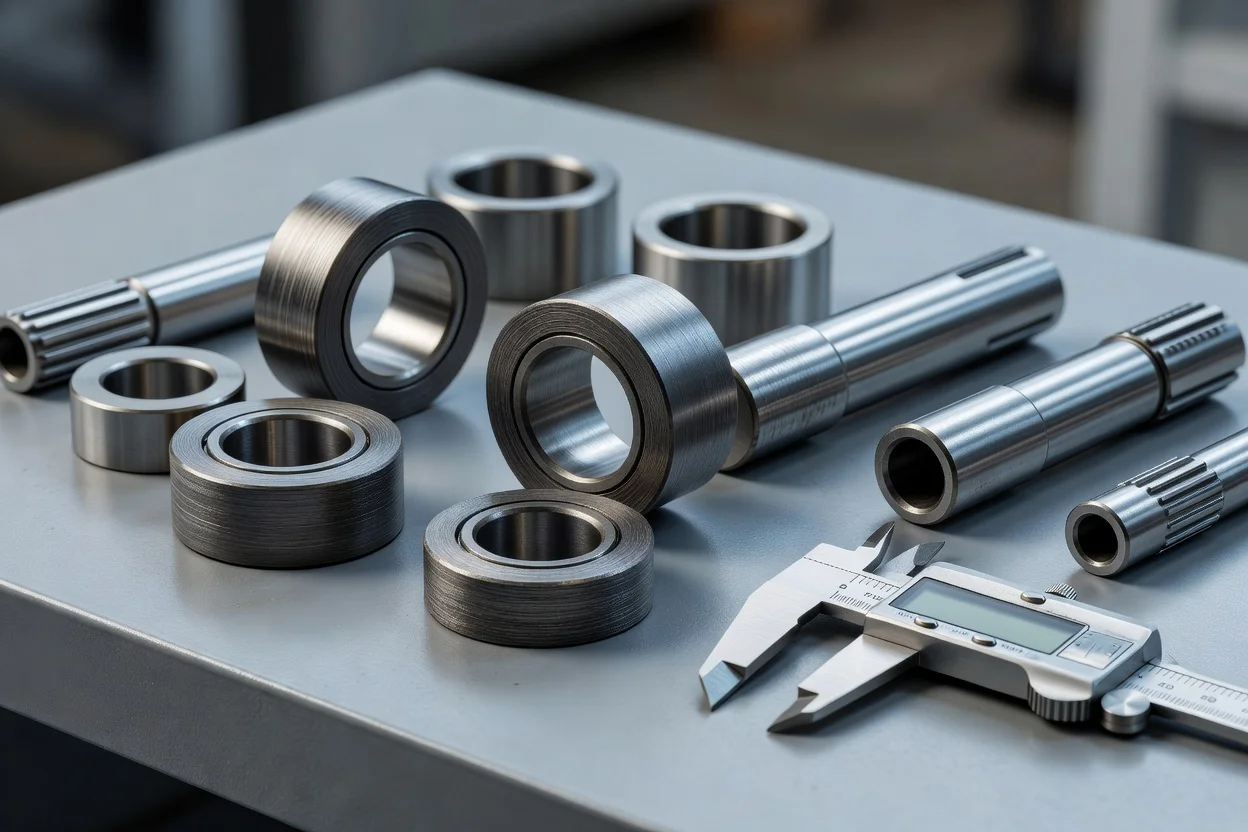
- Machined parts for bearings, bushings, thrust washers, and gears.
- Injection-molded components for precision electrical and mechanical parts.
- Compression-molded stock shapes for thick sections and stable structural parts.
- Films and laminates for electrical insulation and high-temperature flexible substrates.
- Coatings for wear or thermal barriers in specialized industrial uses.
One poor-fit use
PAI is generally a poor fit for low-cost, high-volume disposable goods because its price, processing temperature, and engineering-performance focus are far beyond the needs of such products.
Environmental and Sustainability Aspects
PAI has a mixed sustainability profile. On one hand, it is not a low-impact polymer: it relies on high-performance aromatic chemistry, energy-intensive synthesis, and often solvent-based processing. On the other hand, its exceptional durability can reduce material turnover and extend the operating life of critical components, which may lower lifecycle impacts in demanding applications.
Recyclability and circularity
- Mechanical recycling is limited by contamination, small part size, and property retention requirements in high-end applications.
- Regrind use may be possible in selected noncritical parts, but property consistency must be validated.
- Chemical recycling is not yet a mainstream route for PAI and remains far less developed than for commodity plastics.
- Design for longevity is currently the most practical circularity lever for PAI in many use cases.
Bio-based alternatives
Bio-based substitutes are not widely established as direct replacements for PAI in its most demanding applications. In practice, lower-temperature bio-based engineering plastics may displace PAI only where the service window is less severe; for extreme heat and wear, PAI’s performance remains difficult to match.
Carbon footprint considerations
PAI’s footprint is shaped by high-temperature synthesis, aromatic feedstocks, and the energy required for fabrication. However, in components that avoid frequent replacement, the functional footprint per hour of service can be competitive relative to cheaper materials that fail sooner.
Economic and Global Market Impact
PAI is a specialty high-performance polymer with a relatively small but strategically important market position. Demand is driven by industries that prioritize reliability over unit cost, especially aerospace, semiconductor equipment, and precision industrial systems.
Market characteristics
- Premium pricing reflects complex synthesis, tight quality control, and low production volumes.
- Specification-driven sales are common, with users buying engineered grades rather than generic resin.
- High switching barriers exist because parts often require requalification when materials change.
Leading commercial players and contributions
- Syensqo markets the widely recognized Torlon PAI brand and is one of the most visible global suppliers in this category.
- Drake Plastics is prominent in the distribution and fabrication of high-performance PAI shapes and is especially visible in machining-oriented applications.
- Ensinger, Curbell Plastics, Polymershapes, and Goodfellow contribute strongly to semifinished shapes, technical supply, and application support in engineering markets.
Because PAI is used in mission-critical parts, supplier reputation, dimensional consistency, and documented performance often matter as much as price.
Current Challenges and Innovations
Key challenges
- Processing difficulty at high temperatures and narrow moisture-control tolerances.
- Cost pressure versus lower-cost engineering plastics and metal substitutes.
- Property trade-offs between wear resistance, stiffness, and toughness depending on reinforcement level.
- Limited circular infrastructure for recovering high-performance polymers from small, dispersed parts.
Innovation directions
- Melt-polymerization process development aimed at reducing solvent dependence and improving manufacturing efficiency.
- Coating and laminate systems that exploit PAI’s thermal and dielectric advantages in thin-film formats.
- Nanofilled and reinforced grades designed to improve modulus, thermal stability, or tribological behavior without excessive embrittlement.
- Application-specific compounding with solid lubricants, fibers, and fillers to tune friction and thermal expansion for bearings and sliding components.
- Advanced precision machining of semifinished stock for complex, low-volume parts where molding is impractical.
A practical example is the use of glass fiber reinforcement* or **mineral fillers* to raise stiffness and reduce thermal expansion in structural parts, while **PTFE or other lubricating additives may be incorporated in selected wear grades to lower friction and improve sliding performance.
Future Outlook
PAI is likely to remain a niche but strategically important polymer rather than a high-volume general-purpose resin. Its future depends on three forces: the growth of semiconductor and electrification hardware, the continued need for lightweight high-temperature components, and the pressure to lower embodied energy and improve process efficiency.
The most plausible growth areas are high-precision mechanical parts, electrical test hardware, aerospace interior and engine-adjacent components, and high-temperature industrial systems. Process innovations that reduce solvent use, improve recyclability, or support more efficient forming will matter more than pure volume expansion.
Summary
PAI is a premium high-performance thermoplastic whose defining strengths are heat resistance, wear resistance, creep resistance, and dimensional stability. It is produced from aromatic feedstocks through advanced polymerization routes and is used mainly in high-value, failure-sensitive applications such as bearings, seals, electrical parts, and aerospace or semiconductor components.
Its main limitations are high cost, demanding processing conditions, and limited circularity compared with commodity polymers. Even so, PAI remains important because it solves engineering problems that few other plastics can address reliably at elevated temperature and under sustained mechanical load.
References
- •
MakeItFrom.com. (2020, May 30). Polyamide-imide (PAI). https://www.makeitfrom.com/material-properties/Polyamide-Imide-PAILink
- •
Drake Plastics. (2022, January 17). Polyamide-imide (PAI). https://drakeplastics.com/ultra-high-performance-plastic-materials-solutions-for-your-most-demanding-applications/polyamide-imide-pai/Link
- •
Aikolon Oy. (2008). PAI (polyamide-imide). https://www.aikolon.fi/en/products/high-performance-plastics/paiLink
- •
Ensinger. (n.d.). PAI plastic - Polyamide imide. https://www.ensingerplastics.com/en-us/thermoplastic-materials/torlon-pai-polyamid-imideLink
- •
Wikipedia. (2005, February 7). Polyamide-imide. https://en.wikipedia.org/wiki/Polyamide-imideLink
- •
Meyer Plastics. (2025, January 10). PAI Polyamide-imide (Torlon®). https://meyerplastics.com/materials/high-performance/pai/Link
- •
GTeek. (n.d.). Polyamide-imide / PAI. https://www.gteek.com/engineering-plastics/Polyamide-imide-PAI-3Link
- •
GTeek. (n.d.). Polyamide-imide / PAI. https://www.gteek.com/en/polyamide-imide-pai-3Link
- •
Drake Plastics. (n.d.). Torlon-PAI-Design-Guide_EN-227547.pdf [PDF]. https://drakeplastics.com/wp-content/uploads/2020/01/Torlon-PAI-Design-Guide_EN-227547.pdfLink
- •
Syensqo. (n.d.). Torlon® PAI Polyamide-Imides. https://www.syensqo.com/en/brands/torlon-paiLink
- •
Telle. (2021, March 18). Polyamide imide (PAI). https://telle.de/en/production-products/plastics/material-range/product/polyamide-imide-paiLink
- •
Drake Plastics. (2019, November 1). What is a polyamide-imide? https://drakeplastics.com/2019/11/01/what-is-a-polyamide-imide/Link
- •
Polymer Shapes. (2023, June 7). PAI (Polyamide-imide). https://www.polymershapes.com/product/pai/Link
- •
Eureka PatSnap. (n.d.). Polyamide imide resin: Comprehensive analysis of... https://eureka.patsnap.com/materials/polyamide-imide-resin-designLink
- •
BKB Precision. (2025, January 1). PAI plastic | Polyamide-imide. https://www.bkbprecision.com/en/plastic-types/high-performance-types/paiLink
- •
Goodfellow. (n.d.). Polyamide-imide (PAI) plastic materials | CAS 31957-38-7. https://www.goodfellow.com/usa/material/polymers/pai-polyamide-imideLink
- •
Curbell Plastics. (2025, February 6). Torlon® PAI material. https://www.curbellplastics.com/materials/plastics/torlon-pai/Link
- •
Baetro Machining. (2025, June 24). PAI manufacturing: Advancements and solutions in the industry. https://baetro-machining.com/blog/pai-manufacturing/Link
- •
Eureka PatSnap. (n.d.). Polyamide imide: Advanced high-performance polymer for... https://eureka.patsnap.com/materials/polyamide-imide-polymerLink
- •
Quanda Plastic. (2023, May 24). PAI (Polyamide-imide) overview and molding process. https://www.quandaplastic.com/pai-polyamide-imide-overview-and-molding-process/Link
- •
Eureka PatSnap. (n.d.). Thermoplastic polyamide imide: Molecular engineering, processing... https://eureka.patsnap.com/materials/thermoplastic-polyamide-imideLink
- •
Sage Journals. (n.d.). Synthesis and manufacture of polyamide-imide/copper foil laminates without adhesive. https://journals.sagepub.com/doi/pdf/10.1177/096739110601400109Link
- •
Goodfellow. (n.d.). Polyamide/imide sheet - supplier of research materials. https://www.goodfellow.com/eu/resources/polyamide-imide-sheet-material-information/Link
- •
Eureka PatSnap. (n.d.). Thermosetting polyamide imide: Molecular design, synthesis... https://eureka.patsnap.com/materials/thermosetting-pai-synthesisLink
- •
Beeplastic. (n.d.). PAI CNC machining | High-temp parts. https://www.beeplastic.com/pages/paiLink
- •
Eureka PatSnap. (n.d.). Halogen-free flame retardant... https://eureka.patsnap.com/materials/high-temperature-polyamide-imideLink
- •
Eureka PatSnap. (n.d.). Heat resistant polyamide imide: Advanced synthesis, thermal... https://eureka.patsnap.com/materials/heat-resistant-polyamide-imideLink
- •
LinkedIn. (2025, October 3). Polyamide imide resin in the real world: 5 uses you'll... https://www.linkedin.com/pulse/polyamide-imide-resin-real-world-5-uses-youll-actually-xnjseLink
- •
PolyAlto. (n.d.). PAI (polyamide-imide). https://www.polyalto.com/en/catalog/products/pai-polyamide-imide-Link
- •
CAMEO. (n.d.). Polyamide-imide. https://cameo.mfa.org/wiki/Polyamide-imideLink
- •
Polymer Shapes. (2026, April 14). PAI (Polyamide-imide) thermoplastic material. https://polymershapes.com/product/pai-polyamide-imide/Link
- •
NTU. (n.d.). doi:10.1016/j.eurpolymj.2004.10.011. https://homepage.ntu.edu.tw/~gsliou/FPML/Paper/2005/EPJ,%202005-41(3)-511.pdfLink
- •
Google Patents. (2020, September 8). Process for the manufacture of polyamide-imide polymer. https://patents.google.com/patent/EP4028449B1/enLink
- •
Google Patents. (2020, September 8). Polyamide-imide polymer and process for its manufacture. https://patents.google.com/patent/WO2021048074A1/enLink
- •
AZoM. (2001, September 16). Polyamideimide - PAI. https://www.azom.com/article.aspx?ArticleID=877Link
- •
Justia Patents. (2000, April 11). PAI-based coating composition. https://patents.justia.com/patent/10421881Link
- •
PMC. (2026, January 27). Synthesis of polyimides, polyamides, and poly(amide-imides... https://pmc.ncbi.nlm.nih.gov/articles/PMC12898531/Link
- •
ScienceDirect. (n.d.). Progress in designing poly(amide imide)s (PAI) in terms of chemical structure, preparation methods and processability. https://www.sciencedirect.com/science/article/abs/pii/S0014305716308485Link
- •
Ensinger. (2022, May 16). Torlon® PAI: A robust engineering polymer that few molders... https://www.ensinger-pc.com/resources/blog/torlon-pai-a-robust-engineering-polymer-that-few-molders-process-here-is-why/Link
- •
WIPO. (2021, March 18). Polyamide-imide polymer and process for its manufacture. https://patentscope.wipo.int/search/en/WO2021048074Link
- •
MDPI. (n.d.). Optimization of electrospun TORLON® 4000 polyamide-... https://www.mdpi.com/2073-4360/16/11/1516Link