
Introduction
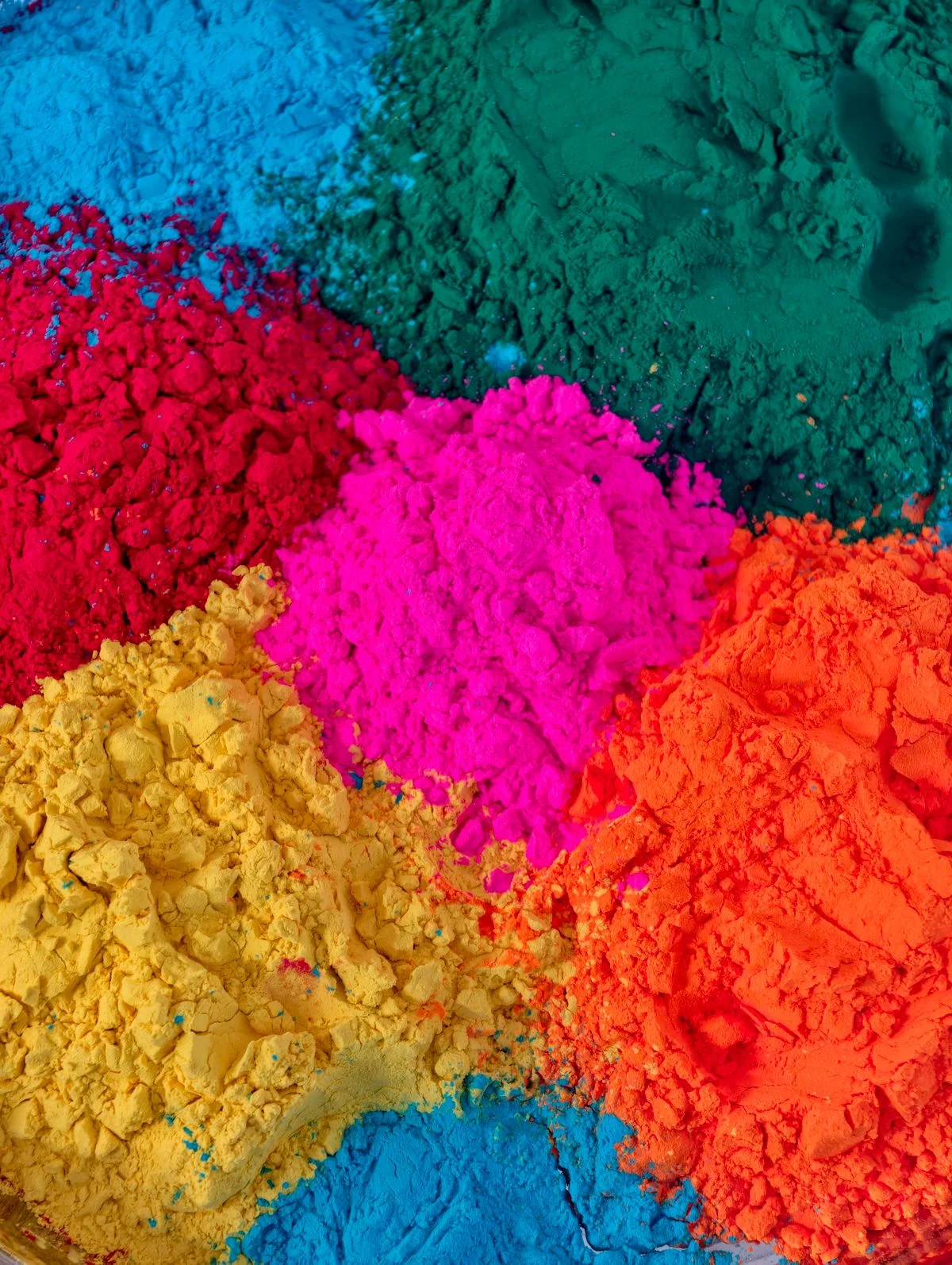
Colour pigments are insoluble particulate materials used to impart, modify, or mask color in plastics, coatings, inks, textiles, cosmetics, and many other products. In plastics, they are central auxiliaries rather than structural raw materials: they do not form the polymer backbone, but they strongly influence appearance, opacity, weatherability, and sometimes heat management or functional performance.
Pigments are broadly divided into organic and inorganic classes, with additional industrial categories such as carbon black, metallic-effect pigments, and pearlescent pigments. Their value in plastics comes from their ability to remain insoluble in the host resin, withstand processing conditions, and retain color under light and environmental exposure. Their limitations are equally important: because pigments are insoluble, they must be carefully wetted, dispersed, and stabilized in the polymer to avoid specks, weak color development, or property loss.
Historically, pigments evolved from mineral and naturally derived colorants to highly engineered synthetic materials, with modern pigment science focused on particle size control, crystal form, surface treatment, and thermal stability. Today, the sector is shaped by sustainability pressures, including restrictions on hazardous legacy pigments, demand for recyclable and low-carbon plastics, and the development of bio-based, solvent-free, and high-performance alternatives.
History and Development
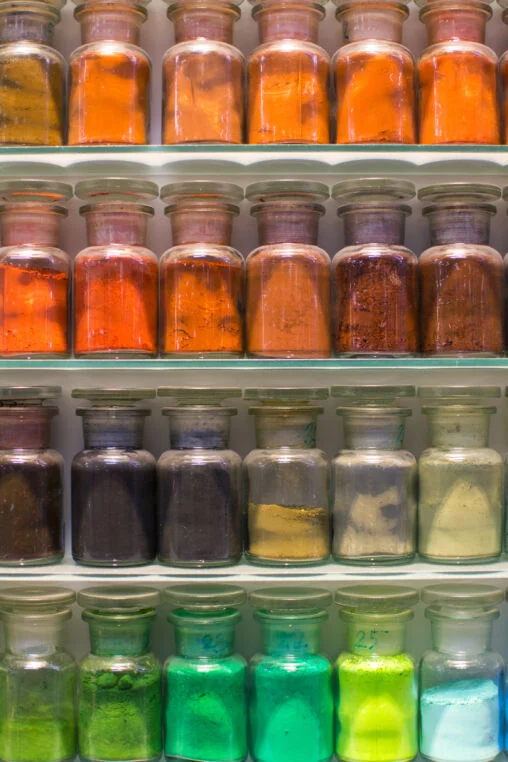
Pigments have been used since antiquity in art, decoration, and early manufacturing, initially obtained from minerals, soot, and biological sources. Over time, industrial chemistry enabled reproducible synthetic pigments with higher strength, broader hue selection, and improved durability.
A major turning point was the distinction between dyes and pigments: dyes dissolve in their application medium, whereas pigments remain as particles and color by selective absorption and scattering of light. This distinction became crucial for plastics, where insolubility is advantageous because it improves color permanence and reduces migration, bloom, and bleeding.
The modern pigment industry expanded alongside the rise of synthetic polymers, mass-market packaging, automotive coatings, electrical goods, and consumer products. As plastics diversified, so did pigment requirements: transparency for films, opacity for bottles, heat resistance for engineering resins, outdoor durability for construction products, and strict purity for medical and food-contact applications.
Chemical Structure and Key Properties
Pigments produce color through selective interaction with visible light. Inorganic pigments often gain color from electronic transitions in metal-containing structures, while organic pigments typically rely on conjugated molecular systems that absorb specific wavelengths. The observed color is also affected by particle size, crystal structure, dispersion state, and refractive-index contrast with the surrounding polymer.
Core property profile
- Insolubility: pigments remain as solid particles in the polymer matrix and do not dissolve like dyes.
- Tinting strength: a strong pigment develops visible color at low loading because of efficient light absorption and scattering.
- Opacity or transparency: titanium dioxide and many inorganic pigments provide high opacity, while some organic pigments are used for transparent, high-chroma effects.
- Heat stability: the pigment must survive melt processing temperatures without decomposition or unacceptable shade shift.
- Lightfastness and weather resistance: outdoor plastics require pigments that resist UV-induced fading and chalking.
- Dispersion behavior: particle wetting and deagglomeration determine color development, gloss, and mechanical performance.
Real limits and typical workarounds
- Poor dispersion → agglomeration in the resin → use of high-shear compounding, surface-treated pigments, or pre-dispersed masterbatches.
- Some organic pigments have limited thermal stability → shade shift or degradation during processing → select high-performance pigment grades and lower the residence time and melt temperature.
- Certain inorganic pigments can increase opacity but reduce clarity → poor fit for transparent packaging → use transparent organic pigments or reduce loading.
- Many pigments are not inherently compatible with every polymer → poor wetting and migration risk → apply surface treatments or coupling strategies.
Practical comparison
| Pigment class | Typical strengths | Typical limitations | Common plastics uses |
|---|---|---|---|
| Inorganic | High opacity, strong lightfastness, thermal robustness | Higher density, broader particle-size distributions, sometimes lower chroma | Pipe, construction profiles, masterbatch, cable, outdoor goods |
| Organic | Bright hues, high chroma, lower dosage needs | Lower heat/light resistance in some grades, dispersion sensitivity | Packaging, consumer goods, films, molded articles |
| Carbon black | Deep black, UV screening, conductivity in some formulations | Can interfere with recyclability sorting and electrical insulation design if misused | Cable jacketing, pipes, geomembranes, automotive parts |
| Metal-effect / pearlescent | Luster, metallic or interference effects | Cost, orientation sensitivity, formulation complexity | Automotive trim, cosmetic packaging, premium consumer products |
Production Processes and Raw Feedstocks
Pigment manufacture depends on chemistry, particle engineering, and post-treatment. Organic pigments are typically made by controlled synthesis followed by crystallization, filtration, washing, and milling, while inorganic pigments often derive from mineral processing, precipitation, calcination, or oxidation routes.
Common feedstocks include:
- Aromatic intermediates and coupling components for organic pigments.
- Metal salts, oxides, and minerals for inorganic pigments.
- High-purity carbon sources for carbon black.
- Surface modifiers, dispersants, and coating agents that improve compatibility with polymers.
For plastics, pigments are rarely used as loose powders alone in high-throughput production. They are frequently incorporated into masterbatch, a concentrated pre-dispersion in a carrier resin. This improves handling, dosing accuracy, and dispersion consistency in downstream conversion.
A typical formulation may contain:
- 1–5 wt% pigment in a final plastic article for tinting applications, depending on color strength and opacity.
- 20–50 wt% pigment in a masterbatch, depending on pigment density, viscosity, and target dosage.
Mechanistically, dispersants and surface treatments reduce pigment–pigment attraction, promote wetting by the polymer melt, and help break agglomerates into smaller, more uniformly distributed particles.

Applications and End-Use Markets
Pigments serve almost every plastics segment, but the preferred pigment type depends on processing temperature, required color, exposure environment, and regulatory constraints.
Major plastic applications
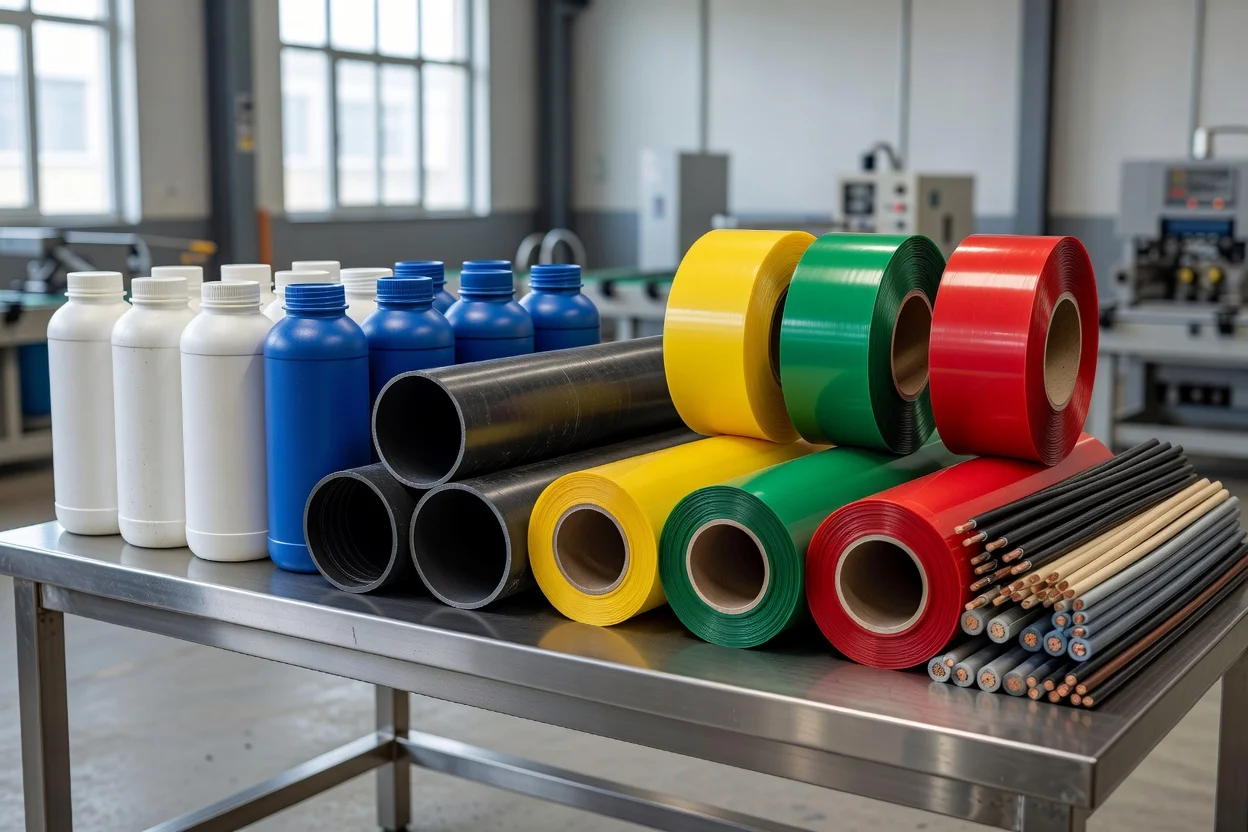
- Films and flexible packaging: organic pigments are common for bright hues; titanium dioxide provides whiteness and opacity; carbon black may be used for light shielding and UV protection.
- Bottles and containers: pigments must meet food-contact and migration requirements; clarity-sensitive packaging often uses transparent or low-haze grades.
- Pipe and fittings: inorganic pigments and carbon black are widely used because outdoor durability, heat resistance, and UV stability are critical.
- Cable and wire jacketing: pigments must tolerate extrusion temperatures and maintain color under service heat; carbon black is widely used for black cable compounds.
- Agricultural films and greenhouse products: pigments are selected for solar control, UV durability, and weathering performance.
- Geomembranes: black systems with carbon black are favored for UV resistance and long service life.
- Rotomolding: pigments must withstand prolonged thermal exposure and maintain uniform dispersion in thick-wall parts.
- UHMWPE wear and medical components: high-purity pigments or very limited coloration are used where biocompatibility, low contamination, and wear performance matter.
- PEX and crosslinked pipe systems: pigment stability during processing and long-term service is essential.
One poor-fit use
- Highly transparent optical components are generally a poor fit for conventional pigments because even well-dispersed particles scatter light and reduce clarity.
Environmental and Sustainability Aspects
Pigments affect sustainability in plastics in both positive and negative ways. On the positive side, durable pigmentation can extend product life by improving UV resistance, weatherability, and reuse potential, which can lower replacement frequency. On the negative side, some pigment systems can complicate recycling, contaminate recyclate streams, or involve environmentally sensitive chemistries.
Recyclability
- Dark carbon-black-heavy plastics can be difficult for some near-infrared sorting systems to identify, although sorting technology is improving and alternative detectable blacks are being developed.
- Mixed or poorly controlled pigment systems can reduce the value of recyclate by causing color inconsistency, haze, or contamination.
- Designing for recycling increasingly favors limited color palettes, compatible additives, and masterbatch systems that are easier to control in closed-loop processes.
Bio-based alternatives
Bio-based pigments and naturally derived colorants are receiving interest, but they often face trade-offs in lightfastness, heat resistance, and batch consistency compared with synthetic industrial pigments. In plastics, bio-based options are more likely to succeed in niche or low-temperature applications unless performance gaps are addressed by formulation engineering.
Carbon footprint and chemistry
Pigment carbon footprint depends on synthesis route, process energy, solvent use, purification demands, and yield. High-performance pigments can have a relatively high manufacturing burden per kilogram, but their low dosage can offset total impact in use. For plastics, the environmental assessment must therefore consider both production impact and service-life benefit.
Economic and Global Market Impact
Pigments are a foundational but often underappreciated segment of the plastics value chain. They influence product differentiation, brand identity, regulatory compliance, and recyclability strategy, making them strategically important for packaging, consumer goods, automotive, and construction markets.
Demand is tied to broader polymer consumption, construction cycles, packaging volumes, and automotive output. According to recent industry analyses, market growth has been supported by packaging, infrastructure, and high-performance coatings and inks, while sustainability requirements are reshaping product portfolios toward safer chemistries and more recyclable formulations.
Global production is concentrated among large chemical companies and specialized pigment manufacturers, with strong regional clusters in Asia, Europe, and North America. Leading producers commonly compete on color strength, weatherability, regulatory compliance, and cost-in-use rather than solely on price.
Current Challenges and Innovations
Main challenges
- Dispersion control remains one of the most important technical issues in plastics coloration because poor dispersion reduces color strength and can impair mechanical properties.
- Regulatory pressure is increasing on legacy heavy-metal pigments and other restricted substances.
- Recycling compatibility is becoming a design criterion rather than an afterthought.
- Thermal stability remains a limiting factor for high-temperature polymers and long residence-time processing.
Innovation directions
- High-performance organic pigments with improved heat and weather resistance for demanding plastics.
- Surface-engineered pigments that disperse more efficiently in polyolefins, engineering plastics, and specialty resins.
- Pre-dispersed masterbatches that improve dosing precision and lower dust exposure during compounding.
- Recyclable-color design using restricted palettes and sorting-friendly blacks.
- Functional pigments that do more than color, including UV screening, infrared reflectance, conductivity, and anti-corrosion performance.
Future Outlook
Pigments will remain essential to plastics, but their role is shifting from simple coloration toward systems engineering. Future pigment selection will increasingly balance appearance, processability, regulatory compliance, recyclability, and carbon footprint.
The most important growth opportunities are likely to be:
- Recycling-compatible pigment systems
- Low-VOC and low-solvent dispersion technologies
- High-durability pigments for lightweight, long-life plastics
- Functional pigments for thermal management, electromagnetic response, and identification
- Safer, more transparent supply chains for regulated applications
As plastics move further into circular-economy models, pigments will need to support not only color and aesthetics but also sortability, reprocessability, and value retention across multiple life cycles.
Summary
Colour pigments are insoluble solid colorants that give plastics their visual identity while also affecting opacity, UV resistance, and sometimes functional performance. Their industrial importance lies in the balance between chemistry, dispersion, processing stability, and end-use durability, with organic and inorganic systems each serving distinct roles. The future of the sector is being shaped by recyclability, regulatory reform, and the demand for lower-impact, higher-performance pigment technologies.
References
- •
Review Lecture. Pigments and signals in colour vision. (n.d.). Proceedings of the Royal Society of London. Series B. Biological Sciences. https://pmc.ncbi.nlm.nih.gov/articles/PMC1331666/Link
- •
ScienceDirect Topics. (n.d.). Pigment - an overview. https://www.sciencedirect.com/topics/chemistry/pigmentLink
- •
The Chemistry of Pigments. (n.d.). Nature. https://www.nature.com/articles/065363a0Link
- •
Pigments, Dyes, Inks and Glazes. (n.d.). ChemArt. https://chemart.rice.edu/Pigments&Dyes.htmlLink
- •
Dyes and pigments | Everything you need to know. (2024, May 27). Royal Talens. https://www.royaltalens.com/blogs/colour-stories/dyesLink
- •
Colour and art: A brief history of pigments. (n.d.). Dyes and Pigments. https://www.sciencedirect.com/science/article/abs/pii/S0030399205001076Link
- •
Introduction to a pigment. (n.d.). Colour Index. https://colour-index.com/definitions-dye-pigment/introduction-to-a-pigmentLink
- •
A Closer Look at Colored Pigments. (2021, October 14). PCI Magazine. https://www.pcimag.com/articles/109376-a-closer-look-at-colored-pigmentsLink
- •
Pigment | Chemistry | Research Starters. (2022, September 1). EBSCO. https://www.ebsco.com/research-starters/chemistry/pigmentLink
- •
Pigment. (2002, April 18). Wikipedia. https://en.wikipedia.org/wiki/PigmentLink
- •
LII. The influence of temperature on the colour of pigments. (n.d.). Philosophical Magazine. https://www.tandfonline.com/doi/full/10.1080/14786449108620206Link
- •
Chemistry and artists' colors. Part II. Structural features of colored compounds. (2009, August 3). Journal of Chemical Education, 57(4), 264. https://pubs.acs.org/doi/10.1021/ed057p264Link
- •
The Chemistry of Pigments and How Scientists Prevent Color Degradation. (2020, June 23). InChemistry. https://inchemistry.acs.org/atomic-news/chemistry-of-pigments.htmlLink
- •
The world of inorganic pigments. (2022, May 30). ChemTexts. https://link.springer.com/article/10.1007/s40828-022-00166-1Link
- •
Pigment | Synthetic, Organic, Inorganic. (1998, July 20). Britannica. https://www.britannica.com/technology/pigmentLink
- •
Interactions between colour-producing mechanisms and their perception. (2017, May 22). Proceedings of the Royal Society B: Biological Sciences. https://pmc.ncbi.nlm.nih.gov/articles/PMC5444072/Link
- •
Pigment. (n.d.). https://samplecontents.library.ph/wikipedia/wp/p/Pigment.htmLink
- •
Colours & Pigments: A Blog on the Science behind Colours and Pigments. (n.d.). Neelikon. https://neelikon.com/colours-pigments-a-blog-on-the-science-behind-colours-and-pigments.phpLink
- •
Colour - Wavelengths, Pigments, Light. (2025, August 21). Britannica. https://www.britannica.com/science/color/Physical-and-chemical-causes-of-colourLink
- •
Pigment Synthesis and Analysis of Color in Art: An Example of Applied Science for High School and College Chemistry Students. (2020, March 27). Journal of Chemical Education, 97(5), 1272–1282. https://pubs.acs.org/doi/10.1021/acs.jchemed.9b01093Link