
Introduction
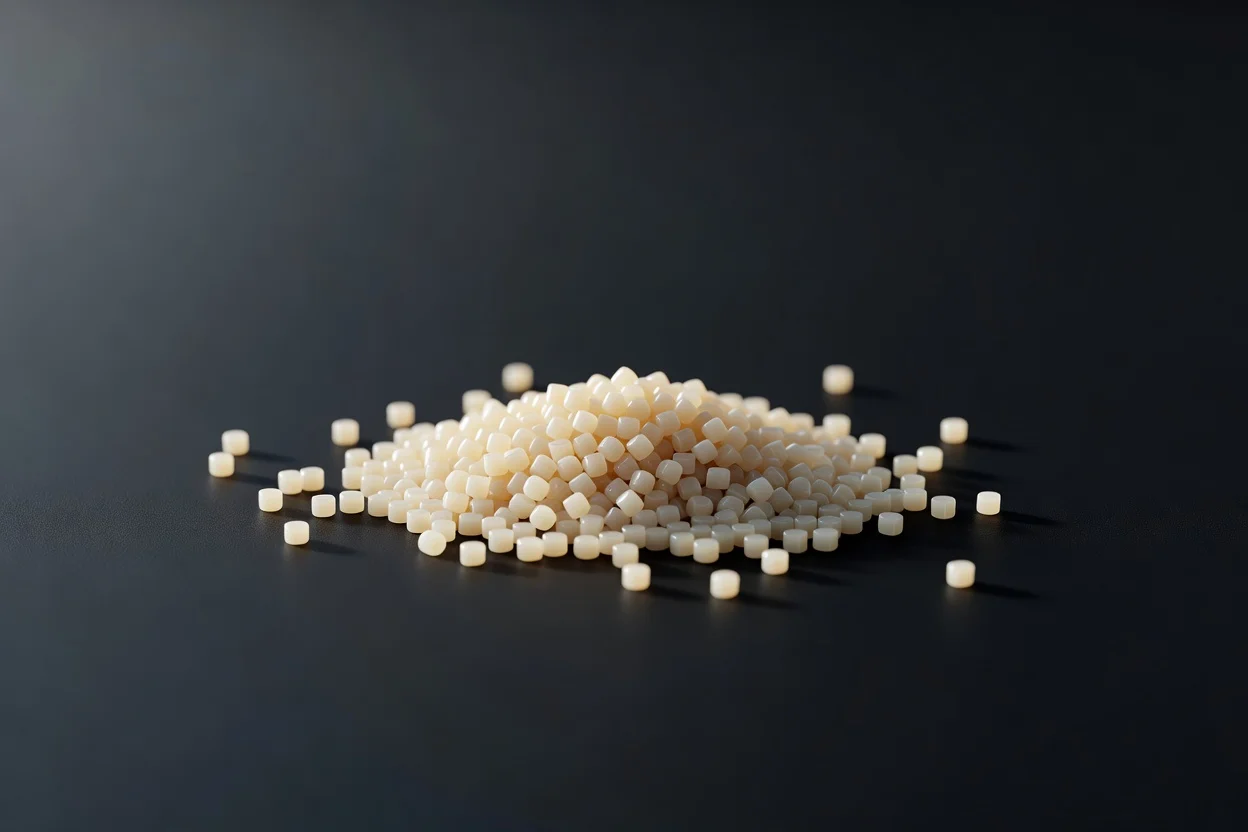
Engineering thermoplastic vulcanizates (ETPV) are a high-performance class of thermoplastic elastomers that combine the elastic recovery of vulcanized rubber with the melt processability of engineering thermoplastics. They are typically built from a dynamically crosslinked elastomer phase dispersed within a continuous thermoplastic matrix, a morphology that gives them rubber-like resilience, reprocessability, and suitability for demanding sealing and under-the-hood applications.
ETPV is usually discussed as a more specialized branch of thermoplastic vulcanizates (TPVs). Compared with conventional TPVs, ETPV systems are designed for harsher service environments, often emphasizing resistance to heat, oils, fuels, chemicals, and long-term compression set. Commercial descriptions commonly highlight matrices such as copolyesters or other engineering polymers, and elastomer phases such as ethylene-acrylate or other engineered rubber chemistries.
The material emerged from efforts to replace thermoset rubber parts with compounds that could be processed on standard thermoplastic equipment, reducing compounding complexity, scrap, and post-curing requirements while preserving useful elastomeric performance. This positioning has made ETPV relevant in automotive sealing, ducts, boots, gaskets, and similar components where durability and manufacturing efficiency must be balanced.
Sustainability is part of ETPV’s value proposition, but also part of its challenge. Its thermoplastic processability can reduce manufacturing waste and enable regrinding or recycling of production scrap, yet its multi-phase structure and frequent use in durable, long-life parts complicate end-of-life recycling and material sorting. Current development trends focus on halogen-free formulations, lower-migration systems, improved heat stability, and broader compatibility with circular-economy manufacturing.
History and Development
ETPV grew out of the broader development of thermoplastic vulcanizates, a materials family introduced to bridge the gap between elastomers and thermoplastics. Earlier TPV technologies were often based on polyolefin matrices and rubber phases such as EPDM, while ETPV represents a more engineering-oriented extension using higher-performance thermoplastic matrices and elastomer systems for elevated-temperature and chemically aggressive environments.
Commercial interest accelerated when automotive and industrial manufacturers sought replacements for molded rubber parts that could be processed more quickly and consistently on existing thermoplastic machinery. Patent literature and product announcements describe ETPV as a response to the need for higher heat and oil resistance than standard TPVs could provide.
Chemical Structure and Key Properties
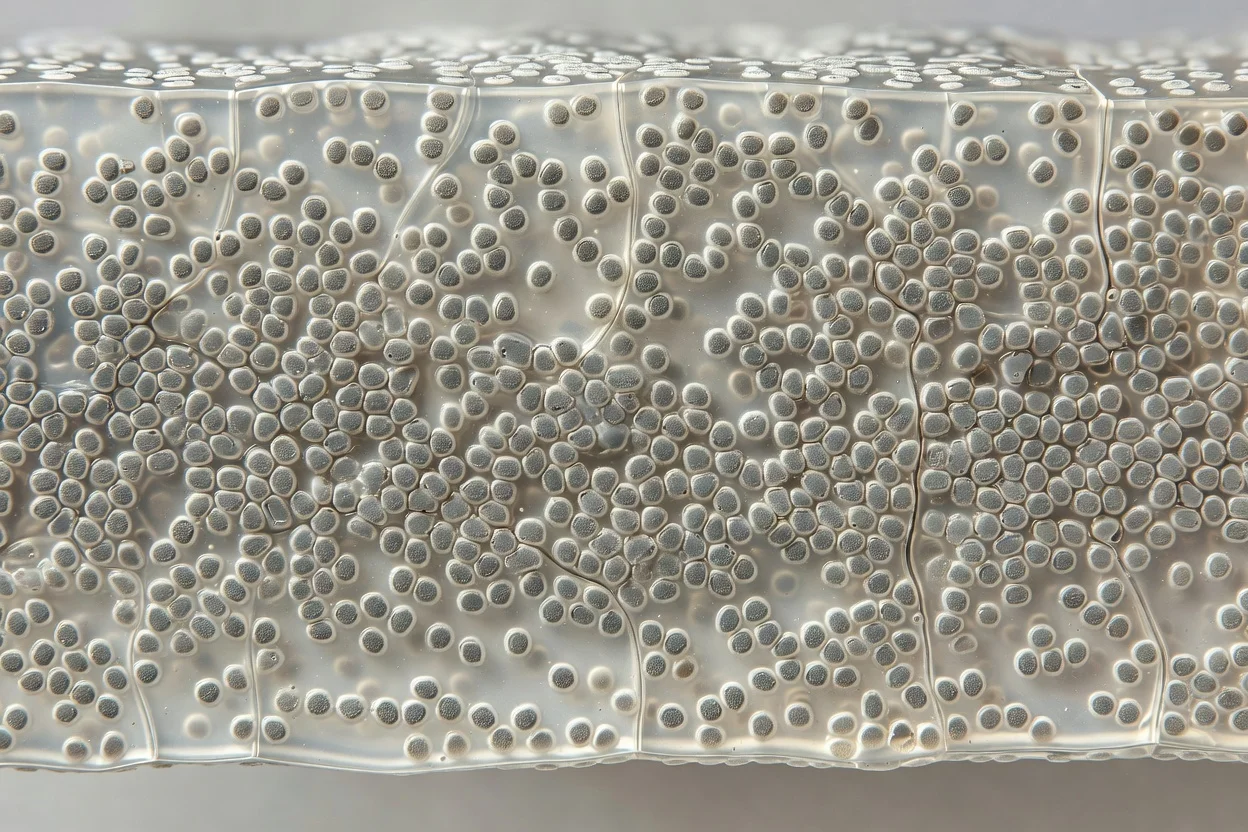
ETPV is a biphasic polymer alloy: a finely dispersed, dynamically crosslinked elastomer phase is embedded in a continuous engineering thermoplastic phase. The dynamic vulcanization step creates very small rubber domains, often described as micrometer-scale particles, which are stabilized by crosslinking while the thermoplastic matrix remains melt-processable.
Key property features include:
- Elastic recovery comparable to rubber in many sealing applications.
- Thermoplastic processability by injection molding, extrusion, blow molding, and overmolding.
- Heat and oil resistance superior to many general-purpose elastomer systems.
- Halogen-free and often plasticizer-free formulations in commercial variants.
- Recyclability of processing scrap, although not always simple closed-loop recycling of post-use parts.
Important real-world limits include:
- Barrier performance limit → the elastomer-rich morphology and non-barrier engineering matrices can give only moderate resistance to gas and grease permeation compared with specialized barrier polymers → workaround: multilayer construction, co-extrusion, or use in components where structural sealing matters more than true barrier performance.
- Surface-energy limit → untreated thermoplastic surfaces may show limited adhesion to inks, adhesives, or coatings → workaround: corona/plasma treatment, primers, or co-molding with adhesion-promoting layers.
A practical formulation example is DuPont’s ETPV family, which was described in technical material as available in 60 and 90 Shore A grades, including standard and heat-stabilized versions for prolonged high-temperature exposure. That type of grading illustrates how hardness, thermal endurance, and processing behavior can be tuned for sealing or boot applications.
Production Processes and Raw Feedstocks
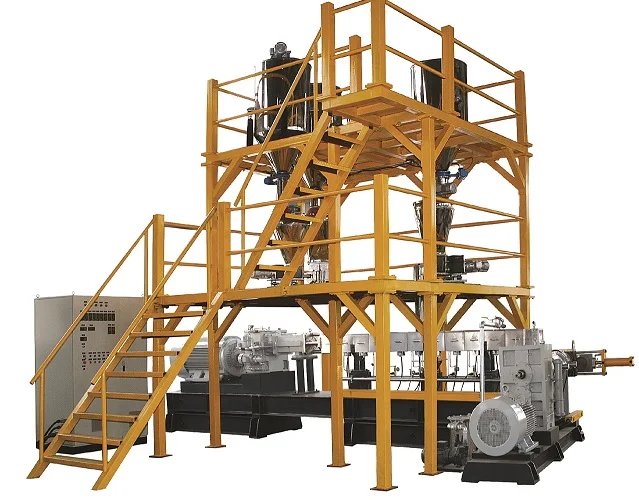
ETPV is produced by dynamic vulcanization, in which the elastomer is crosslinked while being blended at high shear with a molten thermoplastic matrix. This creates the characteristic morphology of crosslinked rubber particles suspended in a continuous thermoplastic phase.
The process generally involves:
- Feeding the thermoplastic matrix and elastomer into an intensive mixer or compounding extruder.
- Heating above the matrix melting point.
- Adding curing agents or reactive packages to crosslink the elastomer during mixing.
- Controlling shear and residence time to obtain fine particle dispersion.
- Pelletizing the compound for downstream molding or extrusion.
Typical feedstocks vary by product family, but commercial descriptions point to:
- Engineering thermoplastic matrices such as copolyesters or other high-performance polymers.
- Elastomer phases such as EPDM, EPM, AEM, NBR, or related engineered rubbers, depending on the performance target.
- Additives and stabilizers for heat aging, UV resistance, color, and process stability.
Unlike thermoset rubber compounding, ETPV does not require postcuring in many applications, which simplifies conversion and improves dimensional consistency.
Applications and End-Use Markets
ETPV is most strongly associated with automotive and transportation parts, especially where rubber-like sealing and repeated flexing are needed.
| End-use sector | Typical ETPV use | Usual processing route | Performance focus |
|---|---|---|---|
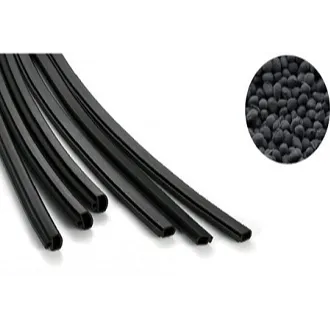
| Automotive sealing | Weatherstrips, glass run channels, hood seals, trunk seals | Extrusion, coextrusion, injection molding | Compression set, ozone resistance, aging stability |
| Under-the-hood parts | Spark-plug boots, ducts, air hoses, bellows, CV-joint boots | Injection molding, extrusion, blow molding | Oil resistance, heat resistance, flex fatigue |
| Building and construction | Expansion joints, seals, gaskets, profiles | Extrusion, coextrusion | Weatherability, dimensional stability |
| Electrical and industrial | Cable jackets, protective boots, flexible connectors | Extrusion, molding | Flexibility, chemical resistance, process consistency |
| Consumer and appliance parts | Handles, soft-touch components, gaskets | Injection molding | Aesthetics, soft feel, manufacturability |
Commercial and patent sources specifically mention automotive weatherseals, ducts, ignition seals, hoses, gaskets, and molded parts as important uses. Reports also note suitability for blow molding, which is useful for large hollow parts and profiles requiring melt strength.
A poor-fit use is high-barrier packaging. Although ETPV can be useful in flexible functional parts, it is generally not the preferred choice where ultra-low oxygen transmission or highly transparent film performance is required, because its value is in elastic mechanical performance rather than packaging barrier optimization.
Environmental and Sustainability Aspects
ETPV has a mixed sustainability profile.
Positive aspects include:
- Lower processing waste than conventional rubber systems that require separate vulcanization steps.
- Reprocessable manufacturing scrap, which supports internal recycling in molding and extrusion operations.
- Potential part consolidation, because thermoplastic processing can reduce assembly steps and fasteners.
Limitations include:
- Multi-material composition, which makes post-consumer recycling more difficult than for single-polymer parts.
- Durable-use application, which delays end-of-life recovery and can increase material lock-in in vehicles and equipment.
- Dependence on fossil-derived engineering polymers and elastomers in many commercial formulations.
Some commercial sources emphasize halogen-free and plasticizer-free designs, which can simplify compliance and reduce migration concerns in sensitive applications. However, these advantages do not by themselves make the material circular; recyclability depends on collection, sorting, compatibility with reprocessing streams, and contamination control.
Bio-based or recycled-feedstock variants are conceptually attractive, but the most technically demanding ETPV applications still prioritize performance stability over renewable content. That trade-off remains one of the central tensions in sustainable materials design.
Economic and Global Market Impact
ETPV occupies a niche within the broader TPV and TPE markets, but it is strategically important because it competes in applications where failure tolerance is low and replacement with thermoset rubber is economically meaningful. Automotive sealing and under-the-hood components remain the main value pool, with secondary demand from construction, electrical, appliance, and industrial fluid-handling segments.
Public sources and market analyses repeatedly point to automotive as the dominant demand center for TPV-type materials, driven by lightweighting, part consolidation, and the shift toward more efficient thermoplastic processing. The most visible historical commercial developer in this segment has been DuPont, though the broader market now includes multiple global compounders and specialty polymer suppliers.
Current Challenges and Innovations
Current technical challenges include:
- Heat aging and compression set in long-life sealing parts, especially under cyclic thermal exposure.
- Adhesion to adjacent materials in overmolded or coextruded assemblies.
- Balancing softness with mechanical strength, since greater elastomer content can improve feel but reduce stiffness and dimensional stability.
- Recycling complexity due to multi-phase formulation and application contamination.
Innovation is focused on:
- Morphology control during dynamic vulcanization to refine rubber domain size and improve consistency.
- Higher-temperature grades for harsher engine-bay and industrial environments.
- Halogen-free, low-migration formulations for regulated or sensitive applications.
- Blow-molding grades and coextrusion systems that enable larger, more complex hollow parts with better part integration.
- Selective crosslinking and nanostructuring approaches that improve performance through more controlled phase architecture.
A practical formulation example from the broader TPV field is the use of dynamic vulcanization to produce fine rubber domains on the order of micrometers, which improves elastic recovery by preventing the rubber phase from flowing under load while still allowing the matrix to be remelted and shaped.
Future Outlook
ETPV is likely to remain a premium materials solution rather than a commodity polymer, because its principal value lies in combining manufacturability with performance in demanding service conditions. The strongest future opportunities are in automotive electrification, thermal-management parts, modular sealing systems, and applications that reward part consolidation and lower assembly complexity.
Future growth will depend on whether suppliers can deliver:
- higher recycled or bio-attributed content without sacrificing reliability;
- better end-of-life recyclability through mono-material design or compatibilized recovery streams;
- improved resistance to heat, fluids, and aging at reduced part weight;
- easier adhesion and joining for multi-material assemblies.
Summary
ETPV is a high-performance thermoplastic vulcanizate designed to deliver rubber-like elasticity with thermoplastic processing efficiency. Its main strengths are dynamic-vulcanized morphology, heat and oil resistance, recyclability of production scrap, and suitability for demanding sealing and under-the-hood parts. Its main constraints are multi-material recyclability, barrier limitations, and the need for careful surface and adhesion engineering in composite assemblies.
References
- •
Engineering ThermoPlastic Vulcanizates (ETPV). (n.d.). https://taminkalatak.com/product/etpv-engineering-thermoplastic-vulcanizates/Link
- •
DuPontTM ETPV [PDF]. (n.d.). https://doc.diytrade.com/docdvr/450410/43217965/1427596562.pdfLink
- •
ETPV. (2022). https://www.mexpolimeros.com/eng/etpv.htmlLink
- •
DuPont ETPV Customer Presentation 1 2006. (n.d.). https://www.scribd.com/document/62850955/DuPont-ETPV-Customer-Presentation-1-2006Link
- •
'Super-TPVs': The new challenge to rubber. (n.d.). https://www.ptonline.com/articles/super-tpvs-the-new-challenge-to-rubberLink
- •
DuPont ETPV. (2015). https://www.slideshare.net/slideshow/dupont-etpv/46905162Link
- •
Технические термопластичные вулканизаты (ЭТПВ). (n.d.). https://ru.taminkalatak.com/product/etpv-engineering-thermoplastic-vulcanizates/Link
- •
Ethylene propylene thermoplastic vulcanizate. (n.d.). https://eureka.patsnap.com/materials/ep-tpv-material-engineeringLink
- •
K 2004: Oktoberfest of polymers. (2004). https://www.machinedesign.com/news/article/21814881/k-2004-oktoberfest-of-polymersLink
- •
Thermoplastic vulcanizates. (n.d.). https://en.wikipedia.org/wiki/Thermoplastic_vulcanizatesLink
- •
DuPont Mobility and Materials DuPont™ ETPV 90A01 NC010 TPV. (n.d.). https://www.matweb.com/search/datasheet_print.aspx?matguid=fca6281768d148d3bfc8732fbab17f58Link
- •
Ethylene propylene diene rubber thermoplastic vulcanizate. (n.d.). https://eureka.patsnap.com/materials/epdm-tpv-engineeringLink
- •
ETPV vulcanizados termoplásticos. (n.d.). https://www.mexpolimeros.com/etpv.htmlLink
- •
WO2002100940A1 - Thermoplastic vulcanizates. (2002). https://patents.google.com/patent/WO2002100940A1/enLink
- •
High performance TPVs for long term high temperature applications. (n.d.). https://www.thefreelibrary.com/High+performance+TPVs+for+long+term+high+temperature+applications.-a0123572958Link
- •
Automotive applications of thermoplastic vulcanizates. (n.d.). https://onlinelibrary.wiley.com/doi/full/10.1002/app.49181Link
- •
New understanding of morphology evolution of thermoplastic vulcanizates. (2014). https://pubs.acs.org/doi/10.1021/sc500391gLink
- •
Elastomeric alloy thermoplastic vulcanizate. (n.d.). https://eureka.patsnap.com/materials/elastomeric-alloy-tpvLink
- •
Expanded polytetrafluoroethylene - An overview. (n.d.). https://www.sciencedirect.com/topics/engineering/expanded-polytetrafluoroethyleneLink
- •
Electron-beam physical vapor deposition. (n.d.). https://en.wikipedia.org/wiki/Electron-beam-physical-vapor-depositionLink
- •
Nanostructured thermoplastic vulcanizates by selectively cross-linking a thermoplastic blend with similar chemical structures. (2013). https://pubs.acs.org/doi/10.1021/ie401853kLink
- •
Thermoplastic vulcanizate compositions. (2019). https://patents.justia.com/patent/20210040300Link
- •
Thermoplastic vulcanizate polymer: Comprehensive analysis of. (n.d.). https://eureka.patsnap.com/materials/thermoplastic-vulcanizate-polymerLink
- •
Thermoplastic vulcanizate blow molding grade: Advanced material. (n.d.). https://eureka.patsnap.com/materials/tpv-blow-molding-gradeLink
- •
Buildings with ETFE foils: A review on material properties, architectural performance and structural behavior. (n.d.). https://www.sciencedirect.com/science/article/abs/pii/S0950061816318232Link
- •
Green thermoplastic vulcanizates based on silicone rubber. (2021). https://pmc.ncbi.nlm.nih.gov/articles/PMC7893803/Link
- •
Thermoplastic vulcanizate: Advanced material engineering for. (n.d.). https://eureka.patsnap.com/materials/thermoplastic-vulcanizateLink
- •
Thermoplastic vulcanizate thermoplastic elastomer. (n.d.). https://eureka.patsnap.com/materials/tpv-thermoplastic-elastomerLink
- •
Processable polyethylene/EPDM thermoplastic vulcanizates. (2000). https://patents.google.com/patent/US6667364B2/enLink
- •
Thermoplastic vulcanizate composition and method of making same. (2003). https://patents.google.com/patent/WO2003082971A2/enLink
- •
Preparation and properties of novel thermoplastic. (2017). https://pmc.ncbi.nlm.nih.gov/articles/PMC6418593/Link
- •
Thermoplastic vulcanizates in medical applications. (2024). https://www.mddionline.com/business/thermoplastic-vulcanizates-in-medical-applicationsLink
- •
Material properties in engineering applications explained. (n.d.). https://turn2engineering.com/mechanical-engineering/materials-science/material-propertiesLink
- •
The engineering properties of electroless nickel coatings [PDF]. (n.d.). https://advancedplatingtech.com/wp-content/uploads/2013/10/Engineering-Properties-of-Electroless-Nickel-Coatings.pdfLink
- •
Thermoplastic vulcanizates market size report, 2026-2033. (n.d.). https://www.grandviewresearch.com/industry-analysis/thermoplastic-vulcanizates-industryLink
- •
Engineering materials: Types & uses [PDF]. (n.d.). https://www.scribd.com/presentation/933854580/Introduction-to-Engineering-Materials-FullLink
- •
What are the properties of engineering materials? (n.d.). https://www.ilearnengineering.com/mechanical/what-are-the-properties-of-engineering-materialsLink
- •
Types of engineering materials. (n.d.). https://aprcomposites.com.au/materials-science/engineering-materials/Link