
Introduction
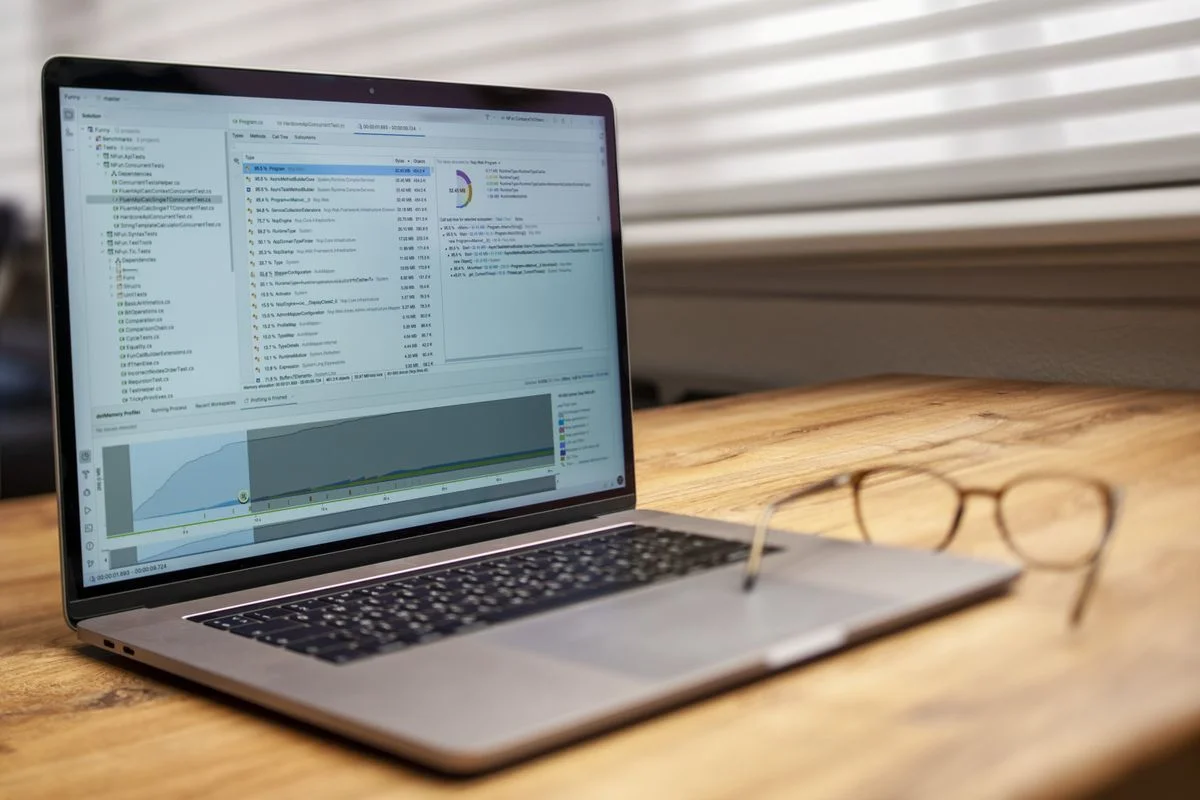
SPC/SQC quality assurance software is a digital quality-control system that uses statistical methods to monitor manufacturing variation, detect abnormal process behavior, and support corrective action before defects are produced in volume. In plastics processing, it is used to stabilize dimensions, weights, melt-related process indicators, and inspection results across operations such as injection molding, extrusion, blow molding, thermoforming, and recycling, while also strengthening traceability, compliance, and continuous improvement.
In practice, the software sits between measurement systems and production decision-making: it captures data from gages, sensors, inspection stations, and machine or process signals, then converts them into control charts, capability indices, alerts, reports, and audit-ready records. The broader term SQC generally covers statistical quality methods such as inspection and acceptance sampling, while SPC refers more specifically to ongoing process monitoring and control during production.
History and Development
Statistical quality control emerged from early 20th-century industrial statistics, but its modern software form developed with computer-based charting, automated data collection, and shop-floor integration. Over time, SPC moved from paper charts and manual calculations to software capable of real-time monitoring, automatic rule evaluation, and electronic records management.
Key development milestones include:
- The standardization of control charts and process-capability analysis as core tools for distinguishing common-cause from special-cause variation.
- The integration of digital gages, inspection devices, and machine data into quality systems, reducing transcription errors and enabling immediate response to process drift.
- The expansion from standalone SPC charting into broader quality platforms that combine inspection planning, CAPA, traceability, compliance, and analytics in one environment.
In plastics manufacturing, this evolution has been especially valuable because process variation can emerge quickly from changes in resin moisture, melt temperature, screw recovery, tooling condition, cooling balance, or downstream handling, making near-real-time feedback more useful than retrospective inspection alone.
Technical Overview
At its core, SPC/SQC software applies statistical rules to sequential quality data and compares them with expected process behavior. The system typically ingests measurements such as part dimensions, fill weight, wall thickness, warpage indicators, seam integrity, moisture values, or cycle time, then calculates control limits, trends, outliers, runs, and process capability measures such as \(Cp\), \(C{pk}\), \(Pp\), and \(P{pk}\).
Common functional elements include:
- Data acquisition from manual entry, gages, probes, CMMs, vision systems, or machine interfaces.
- Control charts such as X-bar/R, X-bar/S, I-MR, p, np, c, and u charts.
- Capability analysis to compare process spread with specification limits.
- Alerting and escalation when trends, runs, or out-of-limit conditions appear.
- Traceability and audit trails for regulated production and customer documentation.
For plastics processors, practical implementations often monitor part-to-part variation, cavity-to-cavity balance, shot weight, extrusion gauge consistency, and inspection pass/fail data at line speed. The software is especially effective when paired with automatic measurement capture, because operator-driven transcription can obscure short process excursions that create scrap before anyone notices.
Typical quantitative characteristics reported in industrial use include:
- Real-time chart refresh at machine-cycle or inspection-cycle frequency.
- Throughput support from single-station setups to enterprise systems handling multiple lines and plants.
- Residual moisture after centrifugal dewatering in plastics recycling workflows often targeted below about 2 percent before thermal drying, with the software used to verify process stability rather than perform the dewatering itself.
- Flake size control in recycling and regrind preparation commonly managed in the approximate 10–12 mm class for many downstream operations, with SPC used to track size distribution and contamination-related deviations where applicable.
- Specific energy use that depends heavily on the connected process; the software layer itself is low-energy compared with the process it monitors, but it can reduce total energy per acceptable part by preventing scrap, rework, and unnecessary machine time.
Types and Variations
| Type | Main purpose | Typical use in plastics processing |
|---|---|---|
| Standalone SPC software | Control charts, capability analysis, alerts | Molded part dimensional control, extrusion gauge tracking |
| SQC suites | Broader statistical quality workflow, including inspection and sampling | Incoming resin checks, lot acceptance, final inspection |
| MES-integrated quality modules | Quality embedded in production execution | Plant-wide traceability, OEE-linked quality response |
| Enterprise quality platforms | Multi-site quality governance and analytics | Global standardization across molding and conversion plants |
| Inspection-centric systems | Sampling plans, nonconformance, audit records | Medical, automotive, and packaging compliance workflows |
Vendors position some products primarily as SPC systems and others as combined SPC/SQC or quality-management platforms, but the practical difference is often the scope of workflow coverage rather than the statistical methods themselves.
Applications and Uses
SPC/SQC software is used wherever plastic product quality can be expressed as measurable data and linked to a process cause. Major applications include:
- Injection molding, where the software tracks shot weight, dimensions, cavity balance, flash, sink, and cycle-time stability.
- Extrusion, where wall thickness, ovality, output stability, melt pressure, and haul-off consistency are monitored.
- Blow molding, where parison-related variation, bottle weight, and wall distribution are often tracked.
- Thermoforming, where sheet thickness, forming depth, and trim consistency are common control points.
- Plastic recycling and reprocessing, where flake quality, contamination, moisture, and output consistency are key to downstream usability.
- Packaging and consumer goods, where high-volume inspection and rapid response to drift reduce scrap and customer complaints.
A weaker fit is highly exploratory laboratory work, where sample sizes are very small and process behavior is intentionally changing; in that environment, advanced statistical experimentation may be more useful than routine SPC charting.
Working Principles in a Plastics Plant
A typical deployment follows a closed-loop logic:
- A quality characteristic is defined, such as part weight, thickness, or moisture.
- Data are captured automatically or manually at a defined frequency.
- The software compares measurements with control limits and historical behavior.
- Special-cause signals trigger alerts, escalation, or containment.
- Engineers investigate root cause and implement corrective action.
- The process is stabilized and capability is re-evaluated.
This structure is particularly important in plastics because short-lived process disturbances can produce long sequences of nonconforming parts before final inspection would detect the issue. SPC therefore functions as a prevention layer rather than a purely detection-based quality tool.
Technological Innovations and Automation
Recent software development has shifted SPC/SQC from charting toward broader digital quality orchestration. Current capabilities commonly include:
- Real-time dashboards and mobile alerts.
- Automated data collection from metrology devices, machine interfaces, and inspection systems.
- Rule engines for outlier, trend, and run detection.
- Integration with MES/ERP and traceability systems.
- Advanced analytics and AI-assisted monitoring for anomaly detection and predictive quality use cases.
In plastics manufacturing, these tools are increasingly linked with machine data such as mold temperature, barrel zone settings, screw position, pressure curves, vacuum, and cooling performance, making quality analysis more process-aware than traditional end-of-line inspection.
Environmental and Sustainability Aspects
SPC/SQC software supports sustainability chiefly by reducing scrap, rework, energy waste, and material loss. By identifying process drift early, it can prevent the production of out-of-spec resin, molded parts, film, or extrudate that would otherwise require regrind, reprocessing, or disposal.
Additional sustainability benefits include:
- Lower rates of rejected batches and therefore less wasted polymer feedstock.
- Better process stability, which can improve machine utilization and reduce avoidable energy consumption per acceptable part.
- Improved traceability, which supports reclamation, segregated rework, and circular-economy workflows in recycling and post-industrial scrap recovery.
The software itself does not directly decarbonize production, but it can enable measurable resource-efficiency gains by making process variation visible and actionable.
Economic and Global Market Impact
The market has expanded as manufacturers seek higher quality with less reliance on manual inspection and spreadsheet-based analysis. Suppliers increasingly position SPC as part of a broader manufacturing digitalization stack, combining quality management with live production visibility and compliance documentation.
For plastics processors, the economic value is typically driven by:
- Reduced scrap and resin loss
- Lower rework and downtime
- Faster containment of quality excursions
- Stronger customer and regulatory compliance
- Less dependence on specialized statistical expertise through guided workflows and templates.
Adoption is strongest where quality costs are high, including automotive, medical, electronics, packaging, and technical molding.
Current Challenges and Innovations
Despite mature statistical foundations, implementation remains challenging in many plants because data may be fragmented across machines, inspection stations, and ERP/MES systems. Other common barriers include inconsistent sampling discipline, poorly defined characteristics, and limited statistical training among operators or supervisors.
Current innovations are addressing these issues through:
- Easier user interfaces and embedded guidance.
- Better integration with measurement equipment and plant systems.
- Configurable inspection plans and sampling frequencies.
- More powerful analytics that support root-cause analysis rather than only alarm generation.
A persistent trade-off is that overly aggressive alarm settings can create nuisance alerts, while overly tolerant settings can miss meaningful drift; effective implementation therefore depends on both software configuration and process engineering discipline.
Future Outlook
Future SPC/SQC software in plastics processing is likely to become more predictive, more interconnected, and more autonomous. Likely directions include:
- Deeper use of machine learning for anomaly detection and context-aware alerts.
- Greater linkage between quality data and machine parameters, tooling history, and maintenance records.
- More support for enterprise-wide standardization across multiple plants and product families.
- Expanded use in circular-material workflows, especially recycling and reprocessing lines where feedstock variability is high.
The most important long-term trend is that quality software is moving from a reporting function to a process-control function, with SPC/SQC becoming a decision layer that helps plastics manufacturers stabilize production, reduce waste, and improve first-pass quality.
Summary
SPC/SQC quality assurance software is a statistical control platform that helps plastics manufacturers monitor process variation, prevent defects, and document quality performance in real time. Its value lies in combining measurement capture, control-chart logic, alerts, capability analysis, and traceable records to support more stable and resource-efficient production across molding, extrusion, recycling, and related operations.
References
- •
Collect & analyze product quality data in real-time. dataPARC’s statistical process control tools allow you to identify issues and process variations before they occur, minimizing scrap or out-of-spec product and increasing First Pass Quality (FPQ). (2026, July 23). https://www.dataparc.com/spc-sqc/Link
- •
Statistical Process Control software is shifting from standalone control-chart tools to end-to-end quality workflows that connect sampling, inspections, nonconformance, and data capture. (2026, February 12). https://wifitalents.com/best/statistical-process-control-software/Link
- •
Monitor and control manufacturing processes with real-time Statistical Process Control (SPC). (n.d.). https://ifactoryapp.com/statistical-quality-control/Link
- •
Find the best Statistical Process Control Software for your organization. (n.d.). https://www.softwareadvice.com/manufacturing/spc-comparison/Link
- •
SPC software for manufacturers that need to reduce defects, maintain compliance, and build a culture of continuous improvement without specialized data science skills. (2026, July 10). https://www.advantive.com/products/pqsystems-sqcpack/Link
- •
10 Tools Compared: Best Real Time Spc Software (2026). (2026, July 6). https://wifitalents.com/best/real-time-spc-software/Link
- •
Statistical Quality Control (SQC) is a systematic approach that uses statistical methods to monitor, control, and improve product quality in manufacturing processes. (n.d.). https://oxmaint.com/statistical-quality-controlLink
- •
With the Seeq Advanced Analytics and AI Suite, SPC becomes dynamic, automated, and scalable across the enterprise. (2026, August 23). https://www.seeq.com/resources/use-cases/statistical-process-control-spc-sqc/Link
- •
Statistical Quality Control (SQC) and Statistical Process Control (SPC) software programme captures equipment and process level data and turns it into actionable information. (2014, September 7). https://www.mt.com/jp/ja/home/applications/Product-Inspection_2/PI-SQC-and-SPC.htmlLink
- •
statistical process control, ISO 9000, QS-9000, gage calibration/analysis and DOE. (n.d.). https://www.qualitydigest.com/static/magazine/pdfs/source2kSPCSoftware.pdfLink
- •
Top 10 Best Manufacturing Quality Control Software of 2026. (2026, February 12). https://wifitalents.com/best/manufacturing-quality-control-software/Link
- •
Statistical process control or SPC software helps manufacturers monitor quality control data and analyze key process information. (2019, September 27). https://softwareconnect.com/roundups/best-spc-software/Link
- •
Real-time SPC software to monitor quality, detect issues, and reduce variation with live control charts and alerts. (n.d.). https://www.capterra.com/spc-software/Link
- •
Gain real-time insights to prevent defects before they happen. (n.d.). https://www.epicor.com/en-us/products/manufacturing-execution-software-mes/advanced-mes/ptw-spc-sqc/Link
- •
Users can capture and import data from multiple sources and use it to create histograms, charts, Pareto diagrams and capability analyses. (2021, September 2). https://www.softwareadvice.com/manufacturing/sqcpack-profile/Link
- •
SPC Software For Manufacturers (2026). (2026, March 2). https://www.getapp.com/operations-management-software/spc/f/for-manufacturers/Link
- •
Major Micro Systems produces SPC Software for Quality Control. (2010, August 7). http://www.majormicro.com/intro/default.aspLink
- •
Statistical Process Control software for quality control. (n.d.). https://www.appvizer.com/operations/spcLink
- •
Monitor multiple processes and integrate a wide variety of data to get a complete picture of your quality improvement environment. (n.d.). https://www.sas.com/it_it/software/qc.htmlLink
- •
SPC Software The SPC software Compact.Net supports you in monitoring your manufacturing processes and controlling them based on pre-specified warning thresholds and control limits. (2023, February 6). https://www.caq.net/en/knowledge/spc-softwareLink
- •
SigmaXL Best overall SPC desktop. (2026, July 12). https://gitnux.org/best/spc-statistical-process-control-software/Link
- •
At Advantive, we offer statistical quality control (SQC) software to monitor and manage quality across your shop floor. (2026, June 23). https://www.advantive.com/solutions/sqc-software/Link
- •
GainSeeker is the premier statistical process control (SPC) solution engineered to solve this challenge for leaders in aerospace, automotive, electronics, and beyond. (n.d.). https://www.softwareadvice.co.uk/directory/424/spc/softwareLink
- •
Statistical Quality Control (SQC) and Statistical Process Control (SPC) software programmes capture equipment and process level data and turns it into actionable information. (2023, February 26). https://www.mt.com/au/en/home/applications/Product-Inspection_2/PI-SQC-and-SPC.htmlLink
- •
SQCpack is a scalable statistical process control (SPC) solution which helps SMBs manage their quality control program with SPC data analysis and collection tools, audit trails, and security technology. (n.d.). https://www.getapp.ca/software/111267/sqcpackLink
- •
The SPC Software Compact.Net records and analyzes quality data in real time, automatically detects trends, runs, and outliers, and immediately informs the responsible persons in the event of deviations. (n.d.). https://www.caq.net/en/spc-softwareLink
- •
Q-DAS procella is a statistical process control software enabling recording of measured values and identification of trends. (2024, February 14). https://hexagon.com/products/product-groups/manufacturing-project-management/statistical-process-control-softwareLink
- •
SQCpack is a statistical process control solution designed to help SMBs optimize process performance with SPC data analysis, collection & security tools, & more. (2026, September 5). https://www.getapp.com/operations-management-software/spc/Link
- •
The Quality Control system is a comprehensive QC and QA software with built-in real-time Statistical Process Control (SPC), designed for manufacturers and service organizations. (2022, September 23). https://blueoceands.com/spcsystem/Link
- •
7 best SPC software for 2026. (2026, August 31). https://www.guideflow.com/blog/spc-softwareLink
- •
SPC (Statistical Process Control) software helps manufacturers monitor and control production quality by analyzing real-time process data. (n.d.). https://sourceforge.net/software/spc/europe/Link
- •
DELMIAWorks (formerly IQMS)' Statistical Process Control (SPC) module enables real-time tracking of product and process quality to facilitate continuous improvement of the manufacturing process. (2021, June 1). https://www.solidworks.com/product/delmiaworks/manufacturing-erp/quality/spc/Link
- •
Statistical process control (SPC) software allows manufacturing companies to streamline the management, comparison and analysis of statistical data in order to optimize performance and make predictions. (n.d.). https://sourceforge.net/software/spc/for-enterprise/Link
- •
Advantive’s award-winning SPC software delivers unparalleled visibility and intelligence to help plant managers understand and control variability in manufacturing. (2026, June 23). https://www.advantive.com/solutions/spc-software/Link
- •
SPC (Statistical Process Control) software helps manufacturers monitor and control production quality by analyzing real-time process data. (n.d.). https://sourceforge.net/software/spc/free-trial/Link
- •
Statistical process control (SPC) is a standard methodology for measuring, monitoring, and controlling quality during a process. (2022, November 16). https://www.minitab.com/en-us/products/real-time-spc/Link
- •
Have used SPC XL. As far as business software goes it used to be pretty reasonable. (2024, February 5). https://www.reddit.com/r/manufacturing/comments/1ajhofp/q_spc_software_any_open_source_or_free_versions/Link
- •
With Net-Inspect's real-time statistical process control software (SPC Software), gathered data can drive immediate feedback to the operators or inspectors. (n.d.). https://www.net-inspect.com/solutions/spc-software/Link
- •
I highly recommend that you develop your skills in executive presentations and change management. (2025, July 13). https://www.reddit.com/r/industrialengineering/comments/1lz4w0r/what_are_some_best_methods_of_introducing_spc_to/Link