
Introduction
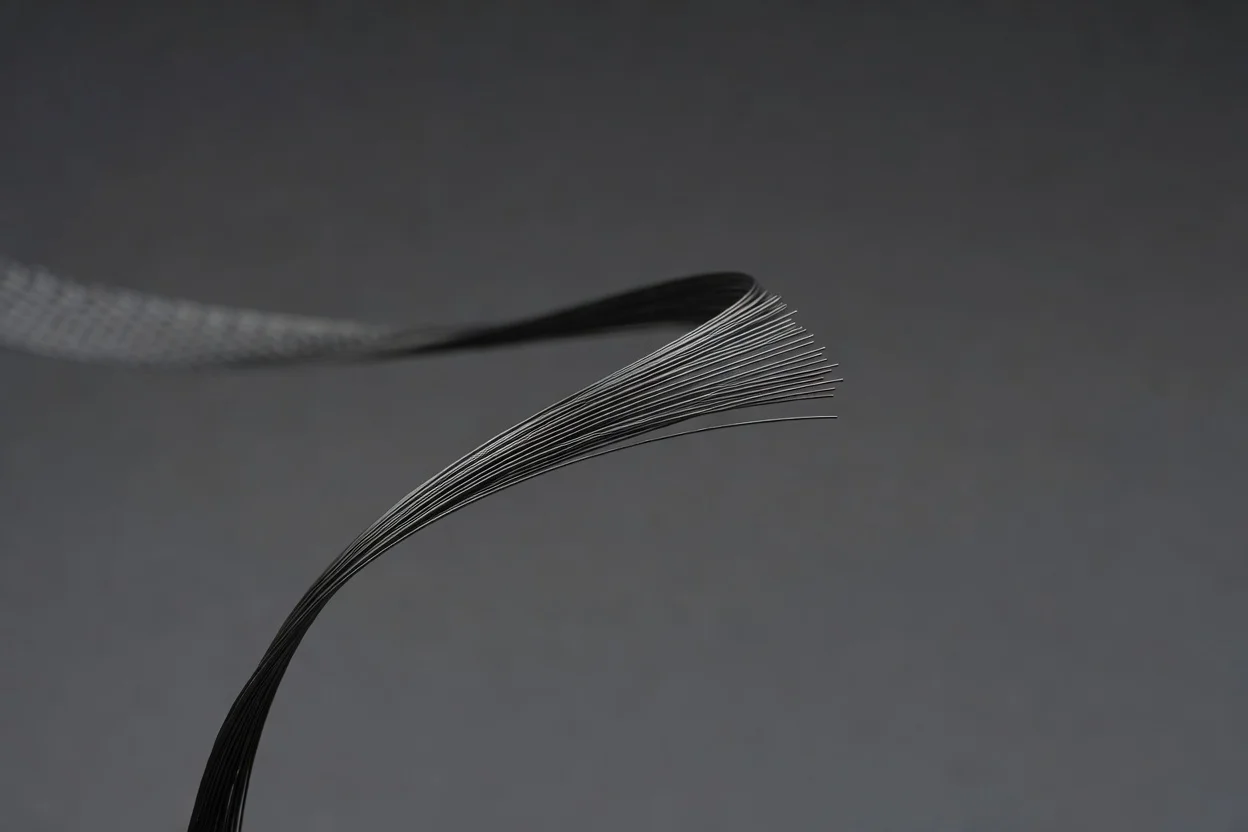
Carbon fibers are high-performance, mostly carbon-based filaments valued for exceptional specific strength, specific modulus, low density, thermal stability, and chemical resistance. In plastics and composites, they are used primarily as a reinforcement rather than as a stand-alone plastic raw material, enabling lightweight structures in aerospace, transportation, energy, industrial equipment, sports goods, and medical devices.
Commercial carbon fibers are typically produced from precursor filaments, especially polyacrylonitrile (PAN), and less commonly from pitch or rayon, through oxidation, carbonization, and sometimes graphitization at high temperature. Their role in the plastics value chain is therefore central: the fiber provides load-bearing performance, while the surrounding resin system controls manufacturability, impact behavior, and long-term durability.
The material’s industrial significance has grown alongside demands for fuel efficiency, electrification, and structural miniaturization, but its growth is constrained by high production cost, energy-intensive processing, and difficult end-of-life separation from polymers. Current development is focused on lower-cost precursors, faster processing, thermoplastic composites, recycled carbon fiber, and bio-based routes, which are reshaping the outlook for the sector.
History and Development
Carbon fiber development is commonly traced to the late 19th century, when carbonized filaments were used in early electric lamps, but modern high-performance carbon fibers emerged in the mid-20th century. Industrial-scale development accelerated after controlled carbonization of organic precursor fibers made consistent high-strength filaments possible.
From the 1960s onward, PAN-based carbon fiber became the dominant commercial route because it offered a strong balance of mechanical properties, yield, and processability. Pitch-based carbon fibers later found niches where high modulus or thermal/electrical conductivity was especially valuable. Rayon-based routes, once important historically, declined due to lower efficiency and competitiveness.
As composite manufacturing matured, carbon fiber moved from aerospace and defense into broader industrial and consumer markets, especially where weight reduction justifies higher material cost. Recent progress has also been shaped by sustainability goals, with increasing attention to recycling, bio-based precursors, and thermoplastic composite systems.
Chemical Structure and Key Properties
Carbon fiber is composed mainly of carbon atoms arranged in highly oriented microcrystalline structures aligned along the fiber axis. This alignment produces strong anisotropy: properties are far superior along the fiber direction than across it.
Typical industrial carbon fibers have diameters of about 5 to 10 micrometers and carbon contents above 90%, with higher-purity grades sometimes called graphite fiber. Their density is commonly around 1.6 to 2.0 g/cm3, much lower than steel, which is a major source of performance advantage in structural composites.
Key property profile:
- High tensile strength and high modulus along the fiber axis.
- Low density, enabling superior strength-to-weight and stiffness-to-weight ratios.
- Low thermal expansion, which supports dimensional stability in precision structures.
- Chemical resistance and good performance in many non-oxidizing environments.
- Electrical and thermal conductivity relative to most polymers and glass fibers.
Important limits and practical workarounds:
- Poor impact tolerance in brittle composite systems → the fiber itself is strong, but the composite can fail suddenly when the matrix cracks → workaround: use toughened resins, hybrid laminates, veils, or thermoplastic matrices.
- Strong anisotropy → excellent axial properties but weaker through-thickness and transverse behavior → workaround: optimize layup, textile architecture, stitching, and multidirectional reinforcement.
- Oxidation at elevated temperature in air → carbon is stable at high temperature only in non-oxidizing conditions → workaround: use protective coatings, inert atmospheres, or oxidation-resistant matrix systems.
- High electrical conductivity can cause galvanic or EMI design issues → conductive fibers interact with metals and electronics → workaround: isolate interfaces, use dielectric layers, or design grounding paths.
Commercial grades are often classified by modulus and strength:
- Standard modulus grades for general structural reinforcement.
- Intermediate modulus grades for balanced stiffness and strength.
- High-modulus and ultra-high-modulus grades for aerospace, satellite, and precision tooling.
Production Processes and Raw Feedstocks
The dominant industrial route begins with an organic precursor fiber, most commonly PAN, which is first stabilized in air, then carbonized in an inert atmosphere, and sometimes graphitized at even higher temperatures.
Main stages:
- Precursor spinning: PAN or another precursor is spun into continuous filaments.
- Stabilization/oxidation: the precursor is heated in air to create a thermally stable ladder structure.
- Carbonization: heating in inert gas removes non-carbon atoms and forms carbon-rich fibers.
- Graphitization: for very high modulus grades, higher-temperature treatment increases crystalline order.
Feedstocks and precursor routes:
- PAN-based fibers: the commercial mainstream because of broad performance and scalable production.
- Pitch-based fibers: favored for high modulus, high thermal conductivity, and certain specialty applications.
- Rayon-based fibers: historically important but now limited in volume.
- Emerging research examines bio-based precursors to reduce fossil dependence and improve lifecycle sustainability.
Typical product forms after manufacture include:
- Tow for downstream conversion into textiles, unidirectional tapes, or chopped reinforcement.
- Chopped fiber for thermoplastics, molding compounds, and conductive compounds.
- Powder for specialty conductive or tribological formulations.
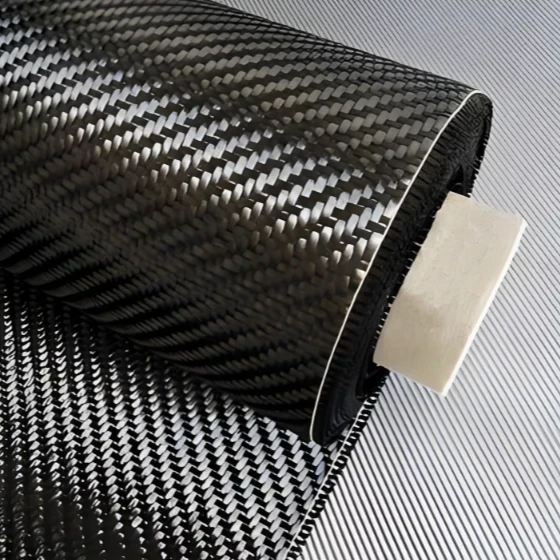
- Fabric, tape, and pre-impregnated materials for composite processing.
Applications and End-Use Markets
Carbon fiber is most valuable where lightweighting and stiffness justify premium cost, and where metals, glass fiber, or natural fiber reinforcements cannot meet performance targets.
| End-use sector | Typical carbon fiber form | Usual matrix/process | Why it is used |
|---|---|---|---|
| Aerospace and defense | Continuous tow, fabric, prepreg | Thermoset autoclave, out-of-autoclave, AFP/ATL | Maximum stiffness, fatigue resistance, weight reduction |
| Automotive and mobility | Chopped fiber, fabric, prepreg, thermoplastic tape | Compression molding, RTM, injection compounds, thermoplastics | Light weighting, crash performance, EMI control |
| Wind energy | Fabric, prepreg, pultruded elements | Resin infusion, prepreg curing | Blade stiffness and fatigue resistance |
| Industrial equipment | Continuous fiber, pultrusion products | Pultrusion, filament winding | Corrosion resistance, structural efficiency |
| Sports and leisure | Fabric, prepreg, chopped compounds | Compression molding, layup, injection molding | High rigidity with low mass |
| Medical and prosthetics | Fabric, prepreg, chopped reinforcement | Thermoplastic and thermoset composites | Lightweight strength, radiolucency in some designs |
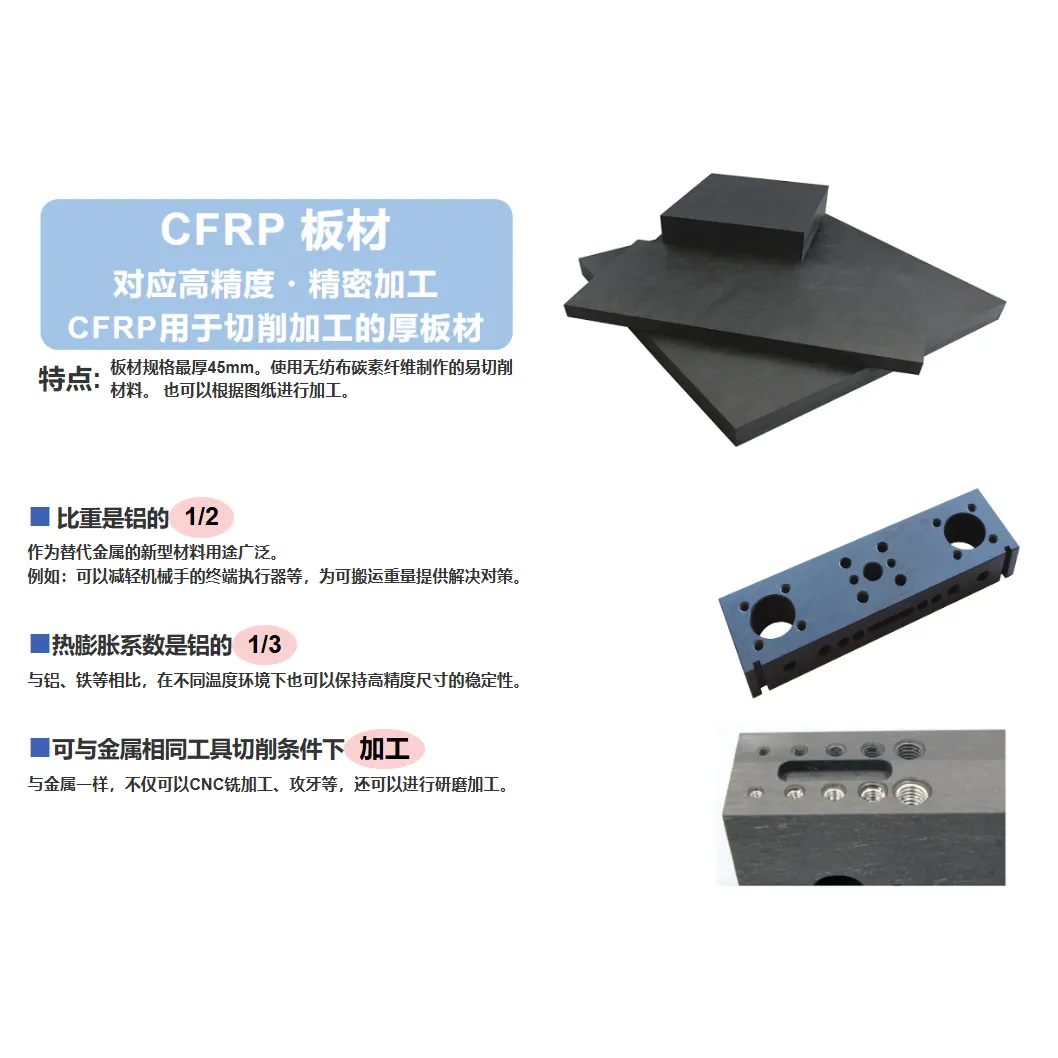
| Construction and civil engineering | Bars, plates, fabrics | Lamination, strengthening systems, pultrusion | Retrofit strengthening and corrosion resistance |
Major application patterns:
- Aerospace structures use continuous fiber prepreg grades because high stiffness and controlled quality are critical.
- Automotive composites increasingly use chopped or tape forms in thermoplastics to support faster cycle times and recyclability potential.
- Wind-energy components often use continuous fabrics or prepregs in large structural sections where fatigue resistance matters.
- Industrial pultrusions use aligned fiber to achieve corrosion-resistant profiles with high axial properties.
- Sports goods use woven fabrics and molded laminates to combine lightness with aesthetic finish.
One poor-fit use is mass-market commodity parts where low cost and impact toughness dominate, because carbon fiber usually remains too expensive and too anisotropic compared with glass-fiber-reinforced plastics or unfilled thermoplastics.
Environmental and Sustainability Aspects
Carbon fiber offers clear use-phase benefits because its low density can reduce vehicle, aircraft, and equipment mass, lowering energy demand over the product life cycle. These gains are especially relevant in transportation and rotating machinery, where every kilogram saved can improve efficiency.
However, the sustainability picture is mixed:
- Production is energy intensive, especially because stabilization and carbonization require high temperatures.
- Conventional precursors are fossil-derived, especially PAN, which ties the supply chain to petrochemical feedstocks.
- Recycling is difficult when fiber is embedded in thermoset composites, because separation from cured resin is complex.
- Downcycling risk is significant when recovered fibers are shortened or damaged during reclamation.
Recycling and circularity pathways:
- Mechanical recycling: grinding composites into short-fiber feedstocks, usually with downgraded performance.
- Thermal recovery/pyrolysis: burns off matrix resin and recovers fiber, but property loss can occur.
- Solvolysis and chemical recovery: can preserve fiber quality better, though economics and scale remain challenging.
- Thermoplastic composites: improve reprocessability and offer a more circular design direction.
Bio-based alternatives are under active development, including lignin- or biomass-derived precursors, but these routes still face process-control and cost hurdles compared with mature PAN-based production.
Economic and Global Market Impact
Carbon fiber remains a premium material with a supply chain shaped by a limited number of large producers and by high capital intensity. Leading industrial suppliers commonly cited in the market include Toray, Hexcel, SGL Carbon, Mitsubishi Chemical, and other specialty fiber manufacturers.
The market is strongly influenced by:
- Aerospace demand, which rewards the highest-performance grades.
- Wind power and energy-transition infrastructure, which expand demand for structural composites.
- Automotive electrification, where range extension and packaging efficiency support lightweight materials.
- Industrial localization, as governments and manufacturers seek secure supply for advanced materials.
Recent industry analyses have described strong growth expectations, particularly in China and in wind-energy-related applications, although reported market size estimates vary by source and methodology. This variability reflects differences in whether analysts count fiber only, prepreg, or the broader carbon fiber composite market.
Current Challenges and Innovations
The sector is being reshaped by several technical and commercial pressures:
- Cost reduction remains the main barrier to broader adoption.
- Cycle time in composite manufacturing is still slower than for many metal or injection-molded plastic parts.
- Quality consistency is essential because defects in precursor, stabilization, or surface treatment can reduce downstream composite performance.
- Interface engineering is critical, since fiber-matrix adhesion determines much of the final composite’s usable strength.
Active innovation areas include:
- Fast-curing thermoplastics for higher-volume production.
- Automated fiber placement and automated layup to reduce labor and improve reproducibility.
- Hybrid composites combining carbon fiber with glass fiber, natural fiber, or metals for cost-performance balance.
- Sizing chemistry optimization, where surface treatments improve wet-out and adhesion to specific matrices.
- Recycled carbon fiber for semi-structural and conductive applications.
Typical additive or interface examples in carbon-fiber-reinforced plastics include:
- Epoxy sizing and coupling treatments, often at low surface-treatment levels, to promote matrix wet-out and interfacial bonding by modifying the fiber surface chemistry.
- Conductive or flame-retardant fillers in the resin phase, used to balance EMI shielding, fire performance, or processing behavior in targeted formulations.
Future Outlook
Carbon fiber is likely to remain a strategic reinforcement material where lightweighting, stiffness, and durability dominate design criteria. The strongest growth potential lies in thermoplastic composites, recycled fibers, lower-cost precursor systems, and higher-throughput manufacturing routes that can support automotive, energy, and infrastructure markets.
Longer term, the industry’s trajectory will be determined by whether producers can simultaneously reduce cost, lower carbon footprint, and improve circularity without sacrificing the performance advantages that made carbon fiber commercially important in the first place. If bio-based precursors, efficient recycling, and scalable thermoplastic processing continue to mature, carbon fiber will expand beyond premium niches into broader industrial applications.
Summary
Carbon fibers are high-value reinforcement materials defined by low density, high stiffness, high tensile strength, and excellent chemical and thermal performance in appropriate environments. Their industrial role is not to replace plastics, but to upgrade plastics into advanced composites that serve aerospace, transportation, energy, medical, and industrial applications.
Their future is closely tied to three developments: lower-cost precursors, more circular composite systems, and higher-volume manufacturing methods that can make performance composites more accessible while reducing environmental burden.
References
- •
碳纖維. (2007, October 22). 維基百科,自由的百科全書. https://zh.wikipedia.org/wiki/%E7%A2%B3%E7%BA%96%E7%B6%ADLink
- •
什麼是碳纖維、碳纖維複合材料. (n.d.). m-chemical.co.jp. https://www.m-chemical.co.jp/carbon-fiber/cn/about/Link
- •
碳纖維. (2023, June 3). 百度百科. https://baike.baidu.com/item/%E7%A2%B3%E7%BA%A4%E7%BB%B4/1492681Link
- •
Carbon fibers. (2002, December 21). Wikipedia. https://en.wikipedia.org/wiki/Carbon_fibersLink
- •
High performance carbon fibers. (2015, May 11). American Chemical Society. https://www.acs.org/education/whatischemistry/landmarks/carbonfibers.htmlLink
- •
碳纖維. (2007, October 22). 維基百科,自由的百科全書. https://zh.wikipedia.org/zh-tw/%E7%A2%B3%E7%BA%96%E7%B6%ADLink
- •
纖維紡織:碳纖維的故事. (n.d.). 科技大觀園. https://scitechvista.nat.gov.tw/Article/c000003/detail?ID=3447c990-ccba-4355-b24f-a1b075577c68Link
- •
Carbon fiber and carbon nanotubes. (2020, September 30). EBSCO Research Starters. https://www.ebsco.com/research-starters/engineering/carbon-fiber-and-carbon-nanotubesLink
- •
Carbon fiber. (2017, October 16). ScienceDirect. https://www.sciencedirect.com/topics/materials-science/carbon-fiberLink
- •
Carbon fiber. (n.d.). Chemeurope. https://www.chemeurope.com/en/encyclopedia/Carbon_fiber.htmlLink
- •
Carbon fiber properties. (2019, October 29). ScienceDirect. https://www.sciencedirect.com/topics/materials-science/carbon-fiber-propertiesLink
- •
Chapter: 1 High-performance fiber technology. (2005, May 9). National Academies Press. https://www.nationalacademies.org/read/11268/chapter/3Link
- •
碳纖維及其應用. (2018, March 9). 吉林省政府. https://fzzx.jl.gov.cn/gzdt/yjdt/201803/t20180309_3735899.htmlLink
- •
Carbon fibers and carbon fiber-reinforced plastic (CFRP). (n.d.). SGL Carbon. https://www.sglcarbon.com/en/carbon-fibers-and-cfrp/Link
- •
A materials world. (n.d.). Toray Industries. https://www.toray.com/sustainability/articles/vol04.htmlLink
- •
什麼是碳纖維? (2015, January 7). 復材網. https://www.cnfrp.com/college/show-8003.htmlLink
- •
“新材料之王”碳纖維:2025市場近250億、風電領域年均增長.... (2023, January 10). 證券時報網. https://www.stcn.com/article/detail/772610.htmlLink
- •
碳纖維行業將迎增量市場. (2024, July 3). 中國石化新聞網. http://www.sinopecnews.com.cn/xnews/content/2024-07/03/content_7099610.htmlLink
- •
“黑色黃金”碳纖維——21世紀的新材料之王. (2017, October 10). 界面新聞. https://www.jiemian.com/article/1671907.htmlLink
- •
Carbon fiber – The key building block of advanced composites. (2023, July 3). Hexcel. https://www.hexcel.com/carbon-fiber-the-key-building-block-of-advanced-composites/Link
- •
Carbon fiber: Types, how it is made, and uses. (2025, June 30). ThomasNet. https://www.thomasnet.com/articles/custom-manufacturing-fabricating/carbon-fiber/Link
- •
中國科普博覽. (n.d.). 碳纖維. http://www.kepu.net.cn/blog/imrcn/201904/t20190401_478029.htmlLink
- •
What is carbon fiber? (2026, May 29). DragonPlate. https://dragonplate.com/what-is-carbon-fiberLink
- •
碳纖維. (n.d.). MBA智庫百科. https://wiki.mbalib.com/wiki/%E7%A2%B3%E7%BA%A4%E7%BB%B4Link
- •
Fabrication and properties of carbon fibers. (2009, December 16). PMC. https://pmc.ncbi.nlm.nih.gov/articles/PMC5513585/Link
- •
2025年中國碳纖維產業全景圖譜. (2025, March 12). 新浪財經. https://finance.sina.com.cn/roll/2025-03-12/doc-inepkert1865591.shtmlLink
- •
Carbon fiber. (2021, June 11). Avient. https://www.avient.com/products/fiber-line-engineered-fiber-solutions/high-performance-synthetic-fibers/carbon-fiberLink
- •
高性能纖維:碳纖維. (n.d.). 中國棉紡織行業協會. http://ccta.org.cn/fszz/fzzsxx/yl/201712/t20171228_3657692.htmlLink
- •
中石油知識:高科技化工產品——碳纖維. (2023, January 1). eoffcn.com. https://www.eoffcn.com/bkzl/ksjq/147490.htmlLink
- •
Carbon fibers. (2021, June 1). ADS. https://ui.adsabs.harvard.edu/abs/2021Carbo.178..822Z/abstractLink
- •
How is carbon fibre made: manufacturing & more. (2023, September 1). PFH. https://www.pfh.de/en/blog/how-carbon-fibre-madeLink
- •
Carbon fiber - Manufacturing & solutions. (n.d.). Aramco. https://www.aramco.com/en/what-we-do/energy-innovation/nonmetallic-solutions/carbon-fiber-solutionsLink
- •
碳纖維行業150頁深度研究報告:高端製造業換裝首選材料. (2022, August 4). 新浪. https://k.sina.cn/article_7426890874_1baad5c7a001013zed.htmlLink
- •
What is carbon fiber? (2021, May 26). Toray CFE. https://toray-cfe.com/en/what-is-carbon-fiber/Link
- •
Carbon fiber, a marvel of engineering. (2022, March 10). Aramco. https://www.aramco.com/en/news-media/elements-magazine/2022/carbon-fiberLink
- •
Bio-based carbon fibers. (n.d.). Fraunhofer. https://www.fraunhofer.de/en/research/current-research/bioeconomy/new-materials/bio-based-carbon-fibers.htmlLink
- •
新材料系列報告之一:碳纖維. (n.d.). 東方財富. https://pdf.dfcfw.com/pdf/H3_AP201709200899823177_01.pdfLink
- •
負責部門一覽:Carbon Fiber Div. (n.d.). 三菱化學株式會社. https://www.m-chemical.co.jp/cn/products/departments/mcc/cfcm/index.htmlLink
- •
碳纖維複合材料. (2023, April 13). 百度百科. https://baike.baidu.com/item/%E7%A2%B3%E7%BA%A4%E7%BB%B4%E5%A4%8D%E5%90%88%E6%9D%90%E6%96%99/4721348Link