
Introduction
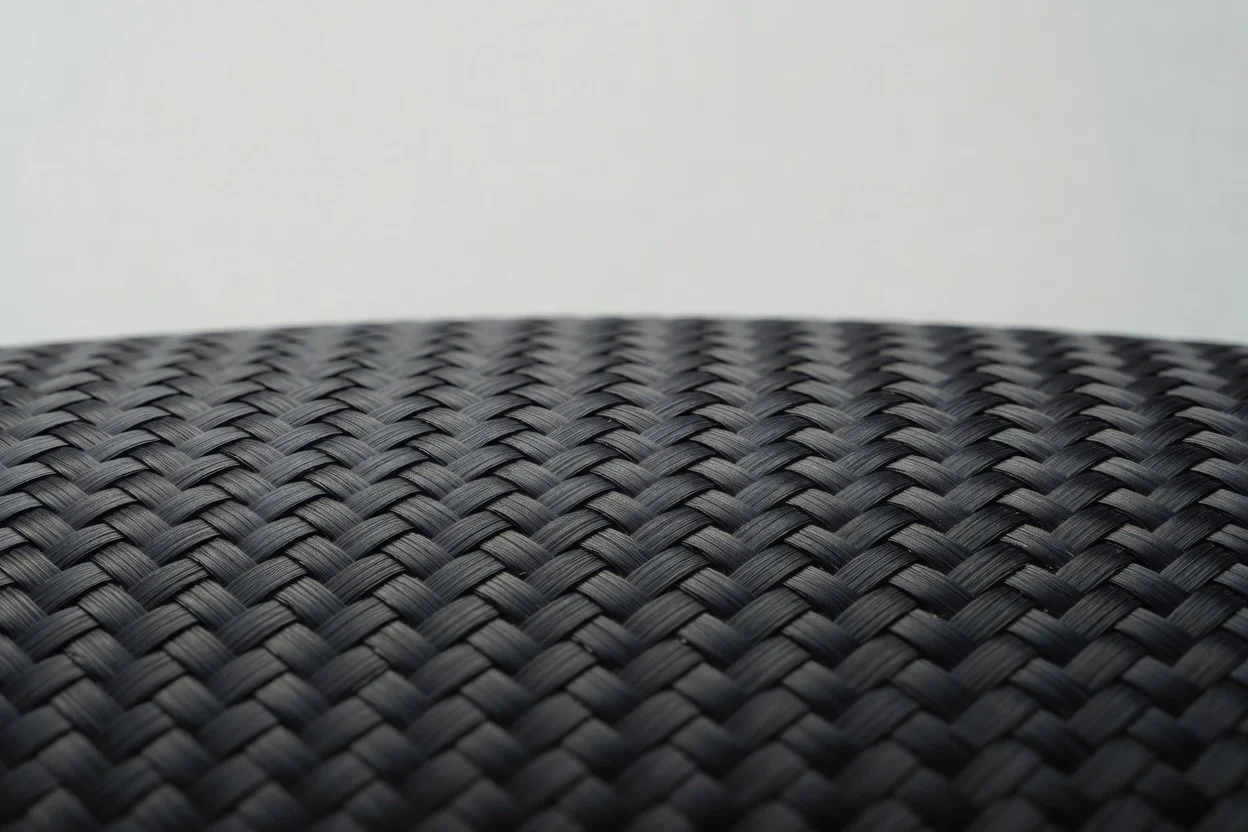
Recycled carbon fiber (rCF) is carbon fiber recovered from manufacturing scrap or end-of-life carbon-fiber-reinforced polymer (CFRP) parts, then cleaned, classified, and reprocessed into new usable reinforcement forms such as chopped fiber, milled fiber, nonwoven mat, veil, sliver, tape, compound, or aligned architectures. It occupies a distinct position in the composites value chain: unlike virgin carbon fiber, which is produced from precursor-based high-temperature conversion, rCF is a secondary raw material that preserves much of the parent fiber’s stiffness and low density while significantly reducing cost and embodied environmental burden.
rCF has moved from a niche sustainability concept to an industrial feedstock for semi-structural and non-structural composites, especially where lightweighting, conductivity, stiffness retention, and visual aesthetics matter but full virgin-fiber certification is not essential. The material is increasingly used in automotive parts, consumer goods, sporting goods, construction products, thermal-management components, additive manufacturing filaments, and specialty continuous-roving systems developed to extend the usable value of recovered fibers.
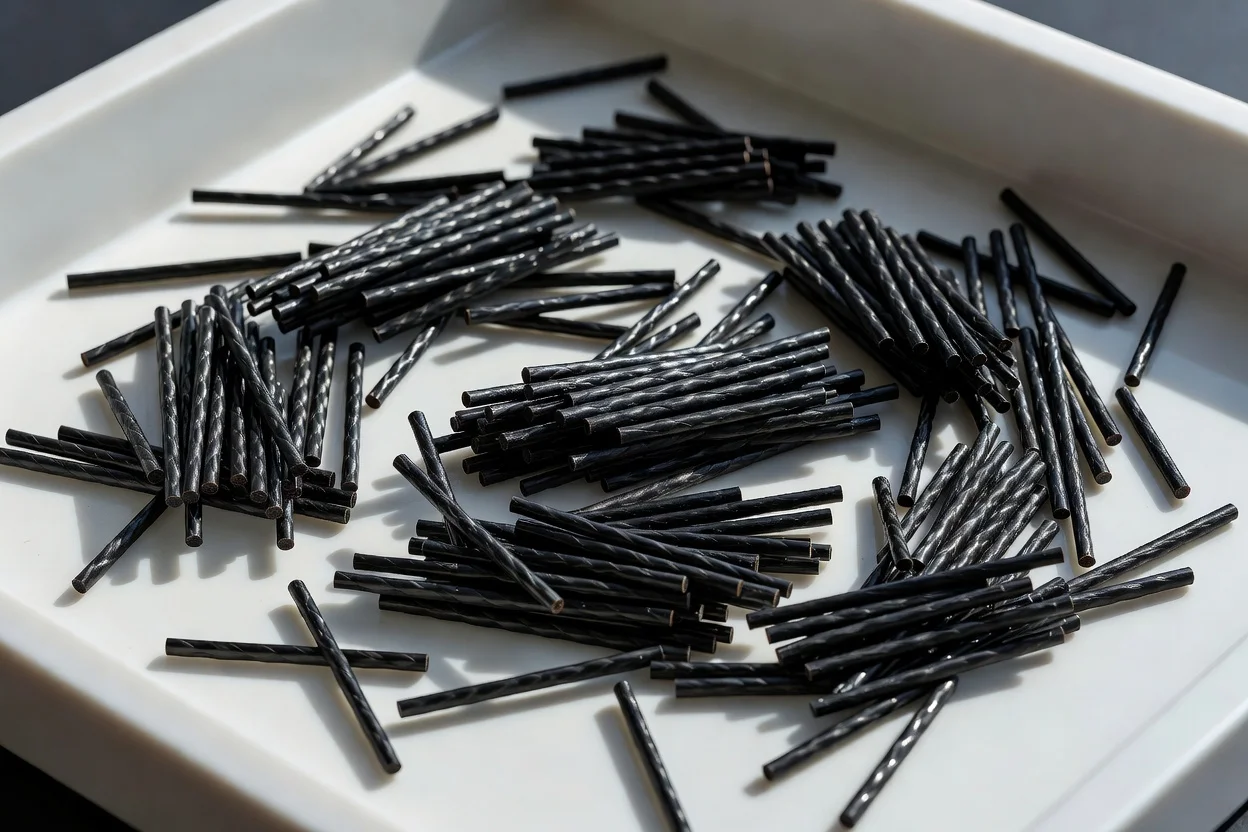
Historically, rCF development has tracked the growth of CFRP use in aerospace, automotive, wind energy, pressure vessels, and industrial equipment, because those sectors eventually generate both manufacturing scrap and end-of-life waste streams suitable for recovery. The dominant recycling routes are mechanical size reduction, thermal treatment such as pyrolysis, and chemical or solvolytic processes, each of which influences fiber length, surface condition, cleanliness, and downstream performance.
From a sustainability perspective, rCF is important because it can lower energy demand and carbon emissions relative to virgin fiber production, while also diverting difficult-to-handle composite waste from landfill or incineration. Its future will likely depend on better fiber-length retention, improved surface restoration, automated sorting and dismantling, continuous remanufacturing technologies, and tighter integration with thermoplastic composite processing and additive manufacturing.
History and Development
The rise of rCF is linked to the broader adoption of carbon fiber composites in transport and energy systems, which created a growing stream of cured scrap and retired composite components. Early recycling work focused on recovering fibers from offcuts and defective parts, with initial applications concentrated in low-cost reinforcement and filler-type uses.
Industrialization accelerated as recycling companies refined pyrolysis, solvolysis, and mechanical reclamation methods, allowing cleaner fibers and more consistent output forms. In parallel, textile-style processing and alignment technologies emerged to convert discontinuous recovered fibers into slivers, mats, tapes, and even continuous-looking rovings for higher-value composite manufacturing.
More recent development has shifted from simple reclamation toward remanufacturing, meaning the recovered fibers are engineered into semi-finished materials that can enter established thermoplastic or thermoset processing routes. This step is crucial because recovered carbon fiber is only economically compelling when its form matches industrial conversion methods such as compression molding, injection molding, extrusion, filament fabrication, or tape laying.
Chemical Structure and Key Properties
rCF is not a new polymer; it is the same carbon-rich fiber backbone that characterized the original reinforcement, but with properties shaped by the recovery route and the degree of damage introduced during matrix removal. The fundamental value of rCF lies in the retention of carbon fiber’s high modulus, low density, and electrical conductivity, even though tensile strength is often reduced relative to virgin fiber because of fiber shortening and surface defects.
| Property | Typical relevance for rCF | Practical implication |
|---|---|---|
| Low density | Remains a major benefit | Enables lightweight parts |
| High modulus | Often largely retained | Good stiffness in semi-structural uses |
| Tensile strength | Usually lower than virgin fiber | Requires design compensation |
| Electrical conductivity | Generally preserved | Useful for EMI shielding and sensing |
| Fiber length | Highly variable | Strongly affects reinforcement efficiency |
| Surface condition | Can be roughened or damaged | Influences bonding with the matrix |
Several real-world limits define rCF’s use:
- Lower tensile strength than virgin carbon fiber → caused by fiber breakage, oxidation, or surface damage during recovery → workaround: use in chopped, aligned, or hybrid architectures, or in parts where stiffness matters more than ultimate strength.
- Shorter and more variable fiber length → caused by reclaiming from cured composites or aggressive processing → workaround: convert fibers into nonwoven mats, slivers, compounds, or continuous remanufactured rovings.
- Non-uniform sizing and surface chemistry → caused by removal of the original matrix and finishing layers → workaround: apply new sizing, compatibilizers, or coupling strategies matched to the target polymer system.
A useful mechanistic example is the use of rCF in thermoplastic compounds with polyamide 6 or polyamide 66, where the fibers are opened, carded, drawn, and partially fixed into tapes or slivers before molding; this improves alignment and load transfer compared with random chopped feed. Another common example is milled or chopped rCF at low-to-moderate loading in injection-molded polymers, where the fiber acts primarily as a stiffness-raising and conductivity-enhancing phase rather than a continuous load-bearing reinforcement.
Production Processes and Raw Feedstocks
rCF begins as either post-industrial scrap or post-consumer/end-of-life CFRP waste. The feedstock quality is highly variable, and this is one of the main determinants of cost, performance, and end-use suitability.
The main recovery routes are:
- Mechanical recycling → cutting, shredding, or grinding CFRP into fiber-containing fractions; generally the simplest route, but it produces shorter fibers and mixed material streams.
- Thermal recycling → pyrolysis or fluidized-bed processing that removes the matrix and leaves behind carbon fiber with varying degrees of cleanliness and surface change.
- Chemical recycling → solvolysis or related dissolution/depolymerization routes that can better preserve fiber surface quality in some cases, though process complexity is higher.
After recovery, fibers are commonly transformed into:
- chopped fiber
- milled fiber
- nonwoven mats
- veils
- slivers
- aligned mats
- compounds and pellets
- textured yarns or remanufactured rovings in advanced systems.
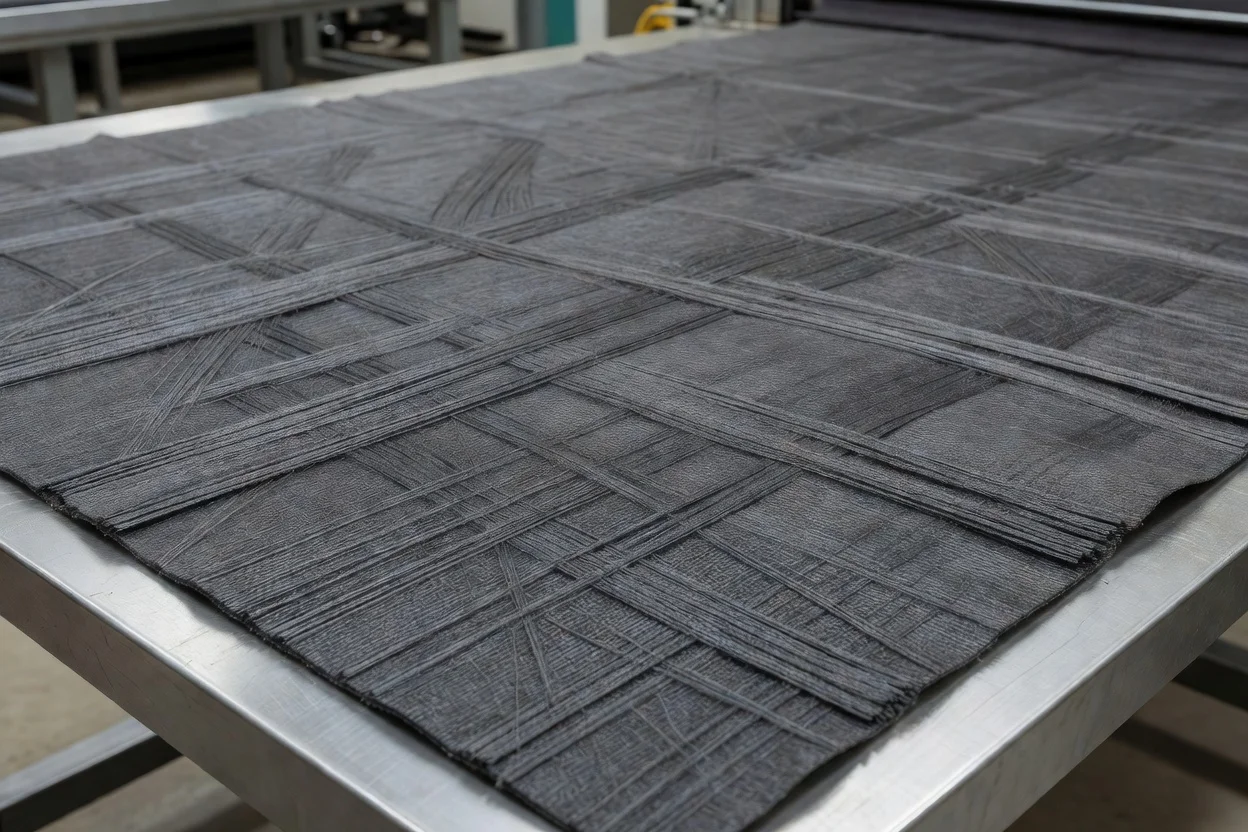
A notable development is textile-style processing, where recovered fibers are aligned into slivers and tapes using carding, drawing, and partial thermoplastic fixation. This is especially important for thermoplastic composites, because alignment can recover more of the fiber’s reinforcing potential than random dispersion alone.
Leading industrial players in this area include Gen 2 Carbon, MCG, Thermolysis, and several specialist European remanufacturing and equipment-development groups; their significance lies in building repeatable supply chains and standardized product formats for downstream processors. Continuous-rovings remanufacturing is also attracting attention, with proprietary technologies aiming to convert fragmented rCF into endless rovings suitable for more demanding composite architectures.
Applications and End-Use Markets
rCF is best suited to applications where weight reduction, stiffness, conductivity, and cost efficiency are more important than absolute aerospace-grade strength retention. The most common markets are summarized below.
| End-use sector | Typical rCF form | Usual processing route | Notes |
|---|---|---|---|
| Automotive | Chopped fiber, nonwoven mat, compound, SMC/BMC | Injection molding, compression molding | Interior parts, panels, brackets, semi-structural components |
| Aerospace secondary parts | Mats, aligned preforms, tapes | Compression molding, thermoplastic consolidation | Interior and non-critical structural elements |
| Sporting goods | Mats, compounds, aligned forms | Compression molding, hybrid layup | Bicycles, rackets, boards, accessories |
| Construction | Chopped fiber, mats, fillers | Concrete reinforcement, panels, profiles | Durability and crack-control uses |
| Additive manufacturing | Milled/chopped fiber filament or compound | FDM/MEX | Functional prototypes and lightweight parts |
| Electronics and thermal management | Milled fiber, conductive compounds | Injection molding, extrusion | EMI shielding, antistatic parts, heat-spreading components |
| Wind and energy infrastructure | Aligned forms, fabrics, fillers | Composite or hybrid component manufacture | Secondary structures, panels, blades, liners |
In automotive, rCF is often used for interior trim, non-visible panels, covers, brackets, and other components where cost and weight savings are valuable but certification pathways are less demanding than for primary structures. In this sector, rCF is attractive because it can deliver material performance at lower price and with lower life-cycle impacts than virgin fiber systems.
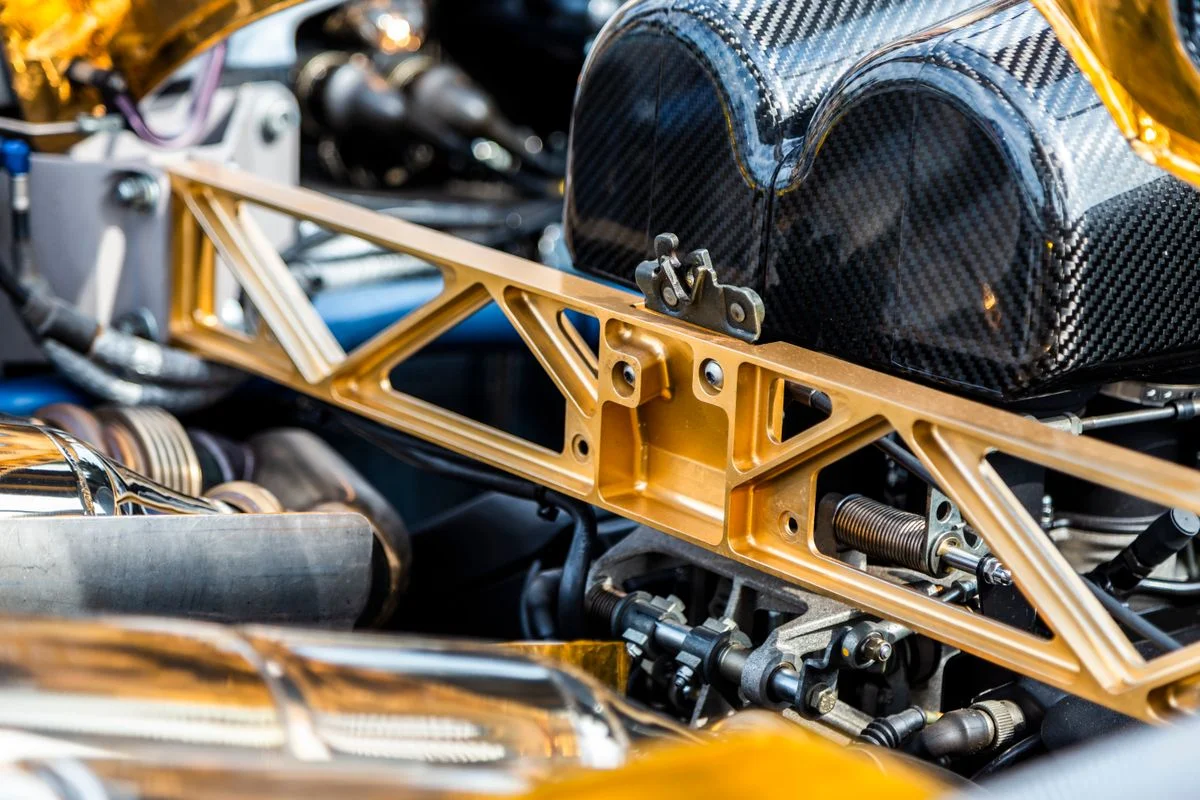
In consumer and sporting goods, rCF’s visual appearance and strength-to-weight ratio support products such as bicycle parts, rackets, housings, and design-oriented furniture. In construction, it appears in concrete reinforcement, panels, bricks, and prefabricated elements, where the fiber can improve toughness, crack resistance, or dimensional stability.
A poor-fit use is highly loaded primary aerospace structure, where continuous virgin-grade fiber architecture and stringent certification remain difficult for many rCF formats to match. rCF can still serve aerospace in secondary structures, cabin interiors, and tooling, but the most demanding load-bearing applications remain challenging.
Additive manufacturing is an especially active area because rCF can be compounded into filaments or pellets for FDM/MEX, enabling mechanically enhanced printed parts and lower-cost sustainable feedstocks. The key limitation is printability: fiber length, dispersion, nozzle wear, and interlayer bonding must all be controlled carefully.
Environmental and Sustainability Aspects
rCF is widely viewed as a circular-economy material because it turns composite waste into a new reinforcement stream rather than a disposal problem. Multiple studies indicate that recycling carbon fiber can reduce energy use dramatically relative to virgin production, with some analyses citing reductions of 82–98% or comparable large decreases depending on the method and system boundary.
Environmental benefits commonly associated with rCF include:
- lower embodied energy than virgin carbon fiber production
- reduced greenhouse-gas emissions
- diversion of composite waste from landfill
- lower demand for primary precursors and high-temperature conversion capacity
- improved material efficiency in high-value applications.
However, sustainability performance depends strongly on actual recovery route, transport distance, yield, and whether the recovered fiber truly displaces virgin material in a meaningful application. If rCF is used only in low-value filler roles, the environmental benefit is positive but smaller than when it replaces virgin reinforcement in a durable, long-lived part.
Bio-based matrices and recycled thermoplastics can further improve the overall profile of rCF composites, especially in remanufactured tape and filament systems. There is also growing interest in designing products for easier disassembly and fiber recovery at end of life, which would improve feedstock purity and reduce processing burden.
Economic and Global Market Impact
Economically, rCF matters because virgin carbon fiber is expensive and energy intensive, while recycled fiber can enter the market at a substantially lower cost. Recent sources report rCF pricing below virgin equivalents and describe cost reductions that make broader industrial adoption feasible, especially in automotive and industrial goods.
The market is shaped by three structural advantages:
- cost → rCF can be cheaper than virgin carbon fiber, broadening adoption in cost-sensitive sectors.
- security of supply → recycled feedstock can reduce dependence on virgin precursor capacity and improve regional circularity.
- sustainability branding → OEMs increasingly value lower-carbon materials for reporting and product differentiation.
Industry leadership is emerging around recovery specialists, composite material converters, and technology developers. Gen 2 Carbon, MCG, Thermolysis, and companies involved in continuous remanufacturing technologies have been notable in expanding the product range beyond chopped fiber into engineered intermediate forms.
Global demand is closely tied to growth in CFRP manufacturing itself, because more virgin composite production eventually means more future scrap and a larger secondary raw-material pool. Regions with strong aerospace, automotive, and wind-energy composite industries are therefore likely to remain important sources of both feedstock and demand.
Current Challenges and Innovations
The central technical challenge is that recycling often damages the very attributes that make carbon fiber valuable: fiber length, surface quality, and consistency. As a result, the main innovation goal is to preserve or restore architecture while keeping processing costs low.
Current innovation directions include:
- continuous or near-continuous remanufacturing of reclaimed fibers into rovings and fabrics
- textile-based opening, carding, drawing, and tape formation for aligned semi-finished goods
- better surface treatment and new sizing systems to improve bonding with thermoplastics and thermosets
- hybrid materials that combine rCF with virgin fiber, natural fiber, or mineral fillers to balance cost and performance
- additive-manufacturing feedstocks with controlled filament length, dispersion, and print stability
A practical example of formulation strategy is the use of chopped rCF in engineering thermoplastics at modest loadings, where the fiber can raise stiffness and conductivity without making processing unmanageable; the mechanism is load transfer through the fiber-matrix interface and formation of a conductive network at sufficient aspect ratio. Another example is rCF/PA6 aligned tape, where the purpose is to maximize fiber orientation before molding so that the recovered fiber contributes more effectively to tensile and bending performance.
Future Outlook
The future of rCF will likely be defined by quality control and format engineering rather than by recycling alone. Markets will reward suppliers that can deliver consistent fiber length distributions, traceable properties, and application-specific intermediate forms such as aligned tapes, nonwoven preforms, or continuous rovings.
Growth is likely in:
- automotive lightweighting and EV components
- thermoplastic composite semi-finished products
- additive manufacturing compounds and filaments
- EMI shielding and thermal-management materials
- secondary aerospace and wind-energy parts
- construction and infrastructure reinforcement.
The strongest long-term opportunity is integration into closed-loop composite systems, where products are designed from the outset for recovery, sorting, and remanufacture. If that happens, rCF may evolve from a waste-derived substitute into a standard industrial raw material category with its own specifications, certification pathways, and global supply chains.
Summary
Recycled carbon fiber is a high-value secondary reinforcement material made by recovering carbon fibers from composite scrap and end-of-life parts, then converting them into usable feedstocks for new composites and related products. Its appeal rests on a rare combination of stiffness, low density, conductivity, lower cost, and reduced environmental burden relative to virgin carbon fiber.
Its main constraints are shorter fiber length, variable surface quality, and reduced tensile strength compared with virgin fiber, which limits its use in the most demanding primary structures. Even so, advances in alignment, remanufacturing, and thermoplastic processing are steadily expanding rCF’s role across automotive, consumer, construction, electronics, additive manufacturing, and secondary aerospace markets.
References
- •
rCF is assumed to be recovered from a fluidized bed recycling process. (n.d.). https://s3-eu-west-1.amazonaws.com/pstorage-acs-6854636/9605389/es7b04069_si_001.pdfLink
- •
Recycled carbon fiber (rCF). (2024, May 21). Automotive Glossary | MCG. https://automotive.mcgc.com/glossary_term/recycled-carbon-fiber-rcf/Link
- •
Recycling Carbon Fibre (rCF) Yarn. (2025, February 25). https://rcf-yarn.com/Link
- •
Recycled Carbon Fiber: Rising Global Adoption & Industry Impact. (2025, July 16). Polaris Market Research. https://www.polarismarketresearch.com/blog/why-recycled-carbon-fiber-is-being-increasingly-adopted-by-industries-globallyLink
- •
Socio-economic analysis of recycled carbon fiber use. (n.d.). https://eurecomp.eu/sites/default/files/SEA-Full_report.pdfLink
- •
Recycled Carbon Fiber in the Real World: 5 Uses You'll Actually See. (2025, October 19). https://www.linkedin.com/pulse/recycled-carbon-fiber-real-world-5-uses-youll-89xfeLink
- •
ECCM17_Paper_Template. (n.d.). https://az659834.vo.msecnd.net/eventsairwesteuprod/production-pcoconvin-public/8eab770e74d74ff7b2d7cdd70996229fLink
- •
Comparison of the Characteristics of Recycled Carbon Fibers Obtained from Three Recycling Methods. (2022, September 2). Polymers, 14(17), 3612. https://pmc.ncbi.nlm.nih.gov/articles/PMC9457743/Link
- •
IMPACTS OF RECYCLED CARBON FIBRE AND. (n.d.). https://lutpub.lut.fi/bitstream/handle/10024/164658/Sankar%20Karuppannan%20Gopalraj_A4.pdf?sequence=1&isAllowed=yLink
- •
A review of 3D printing of the recycled carbon fiber reinforced polymer composites: Processing, potential, and perspectives. (n.d.). https://ira.lib.polyu.edu.hk/bitstream/10397/108485/1/1-s2.0-S2238785423016988-main.pdfLink
- •
Recycled carbon fibre (rCF). (2024, June 26). Spot material. https://spotmaterial.com/article/recycled-carbon-fibre-rcf/Link
- •
The 3R (recycling, recovery, and reuse) of fiber reinforced composites. (2026, January 29). RSC. https://pubs.rsc.org/en/content/articlehtml/2026/lp/d5lp00249dLink
- •
rCF-UD-Tapes: Recycled Carbon Fibers for Structural Uses. (2026, August 23). ALFORMET. https://www.alformet.com/en/blog/blog-1/rcf-ud-tapes-in-thermoplastic-composite-materials-from-recycled-fibers-to-structural-applications-18Link
- •
Mechanical and Physical Properties of Recycled-Carbon-Fiber-Reinforced Polypropylene Composites. (2021, December 28). Polymers, 14(1), 169. https://pmc.ncbi.nlm.nih.gov/articles/PMC8746072/Link
- •
Zarządzanie Przedsiębiorstwem. Enterprise Management. (n.d.). http://zp.ptzp.org.pl/assets/files/ZP.EM_26_2-2023_2.pdfLink
- •
CCIC, UNNC Continuous RCF Innovation Deliver Low-Cost, Low-Carbon CFRP. (2026, August 4). CompositesWorld. https://www.compositesworld.com/news/ccic-unnc-continuous-rcf-innovation-deliver-low-cost-low-carbon-cfrp-Link
- •
Tapes made from recycled carbon fibers for lightweight construction. (2024, December 5). DITF. https://www.ditf.de/en/index/current/press-releases/detail/tapes-made-from-recycled-carbon-fibers-for-lightweight-construction/Link
- •
Recycled carbon fiber: Comparing cost and properties. (2026, May 25). CompositesWorld. https://www.compositesworld.com/articles/recycled-carbon-fiber-comparing-cost-and-propertiesLink
- •
CCIC Develops Closed-Loop Continuous RCF Remanufacturing Process. (2026, August 24). CompositesWorld. https://www.compositesworld.com/news/ccic-develops-closed-loop-continuous-rcf-remanufacturing-process-demonstrates-via-auto-componentsLink
- •
A comprehensive overview of the potential of recycled carbon fibers. (2026, January 29). PubMed. https://pubmed.ncbi.nlm.nih.gov/41616543/Link
- •
Case Study: How we recycle carbon fiber materials. (2026, August 3). MCG. https://www.mcam.com/en/case-studies/recycled-carbon-fiberLink
- •
CCIC, UNNC Continuous RCF Innovation Deliver Low-Cost, Low-Carbon CFRP. (2026, July 3). CompositesWorld. https://www.compositesworld.com/kc/cw-tech-days-sustainability/articles/ccic-unnc-continuous-rcf-innovation-deliver-low-cost-low-carbon-cfrp-Link
- •
End-to-end processing of recycled carbon fiber composites: From waste hydrogen tanks to mechanically enhanced additive-manufactured components. (2025, October 17). Chemical Engineering Journal. https://www.sciencedirect.com/science/article/abs/pii/S1385894725105044Link
- •
Comparative analysis of carbon fiber reinforced composites. (n.d.). Composites Part B: Engineering. https://www.sciencedirect.com/science/article/pii/S1359836825008388Link
- •
Recycling and Reutilization of Waste Carbon Fiber Reinforced Plastics. (2023, August 23). Polymers, 15(17), 3588. https://pmc.ncbi.nlm.nih.gov/articles/PMC10490397/Link
- •
Key Challenges and Solutions for Integrating Recycled Carbon Fiber. (2025, December 17). PatSnap. https://www.patsnap.com/resources/blog/articles/recycled-carbon-fiber-integration-automotive-structural-components-solutions-rdqa/Link
- •
What is Recycled Carbon Fiber (rCF) Good For? High-Performance Secondary Applications. (2026, August 3). SMI Composites. https://www.smicomposites.com/what-is-recycled-carbon-fiber-rcf-good-for-high-performance-secondary-applications/Link
- •
Building confidence in recycled carbon fiber. (2026, August 24). CompositesWorld. https://www.compositesworld.com/articles/building-confidence-in-recycled-carbon-fiberLink
- •
TWENTY-THIRD INTERNATIONAL CONFERENCE ON COMPOSITE MATERIALS (ICCM23). (n.d.). https://strathprints.strath.ac.uk/89010/7/Mills-etal-ICCM-2023-Developing-recycled-carbon-fibre-reinforced-material-for-sustainable-additive-manufacturing.pdfLink
- •
SAMPE 2020 Paper. (n.d.). https://digitallibrarynasampe.org/data/pdfs/s2020_pdfs/TP20-0000000241.pdfLink
- •
vol7_ECCM21_Life cycle performance.pdf. (n.d.). https://elib.dlr.de/205312/1/%5B15%5D%20Kroos%20et%20al.%20ECCM21%20-%20Filament%20for%20Add%20Manuf%20reinforced%20rCF%20from%20waste%20stream.pdfLink
- •
Recycling of Carbon Fiber Reinforced Composite Polymers. (2020, December 16). Polymers, 13(1), 15. https://pmc.ncbi.nlm.nih.gov/articles/PMC7765972/Link
- •
headline all caps (36pt light) two lines maximum. (n.d.). https://speautomotive.com/wp-content/uploads/2022/10/Reclaimed-Carbon-Fibre-Based-Sustainable-Solutions-for-Automotive-Structures_VENKAT.pdfLink
- •
Carbon Fiber Recycling, LLC Launches Sustainable Milled. (2025, November 12). PR.com. https://www.pr.com/press-release/953473Link
- •
Re-Processing And. (2025, March 11). https://pmc.ncbi.nlm.nih.gov/articles/PMC12334481/Link
- •
Progress and prospects of recycling technology for carbon fiber reinforced composites. (2024, December 19). Frontiers in Materials. https://www.frontiersin.org/journals/materials/articles/10.3389/fmats.2024.1484544/fullLink
- •
Remanufacturing of recycled carbon fiber-reinforced composites based on fused deposition modeling processes. (n.d.). The International Journal of Advanced Manufacturing Technology. https://link.springer.com/article/10.1007/s00170-021-07473-wLink
- •
Environmental Aspects of Use of Recycled Carbon Fiber Composites in Automotive Applications. (2017, October 27). Environmental Science & Technology. https://pubs.acs.org/doi/10.1021/acs.est.7b04069Link
- •
Thermolysis launches RCF brand supporting recycled carbon fiber. (2024, June 13). CompositesWorld. https://www.compositesworld.com/news/thermolysis-launches-rcf-brand-supporting-recycled-carbon-fiber-product-developmentLink
- •
Carbon-Fiber-Recycling Strategies: A Secondary Waste Stream. (2023, August 3). Polymers, 15(15), 3387. https://pmc.ncbi.nlm.nih.gov/articles/PMC10419936/Link
- •
Recycling Carbon Fiber from Carbon Fiber-Reinforced Polymer and. (2022, December 29). Polymers, 15(1), 197. https://pmc.ncbi.nlm.nih.gov/articles/PMC9824332/Link
- •
Advanced recycled carbon fiber (rCF) reinforced PEEK composites. (2022, December 16). https://www.sciencedirect.com/science/article/abs/pii/S2589234722001191Link
- •
Recent Progress in Carbon Fiber Reinforced Polymers Recycling. (2021, October 25). Polymers, 13(21), 3736. https://pmc.ncbi.nlm.nih.gov/articles/PMC8585427/Link
- •
What Is Recycled Carbon Fibre? (2024, April 18). Penta Patterns. https://www.pentapatterns.co.uk/knowledge-hub/what-is-recycled-carbon-fibre/Link
- •
Recycled Carbon Fibre Composites in Automotive. (2023, March 6). https://www.sciltp.com/journals/ijamm/articles/2504000480Link
- •
Recycling Carbon Fiber: Importance & Process. (2024, July 8). Harvey Performance. https://www.harveyperformance.com/in-the-loupe/recycling-carbon-fiber-importance-process/Link
- •
A state of art review on recycling and remanufacturing. (n.d.). https://www.sciencedirect.com/science/article/pii/S2666682023000683Link
- •
Applications of Carbon Fiber in Marine, Auto & More. (2024, August 1). IYRS. https://www.iyrs.edu/resources/applicationsofcarbonfibercompositesLink