
Introduction
Polyethylene foams are lightweight cellular materials made from polyethylene resins and are valued for their combination of low density, shock absorption, moisture resistance, thermal insulation, and ease of conversion into sheets, rolls, planks, profiles, and die-cut parts. In the plastics value chain, they sit at the intersection of polymer production, foam processing, and downstream fabrication, serving as a versatile semi-finished material for packaging, construction, automotive, sports, medical, and industrial uses.
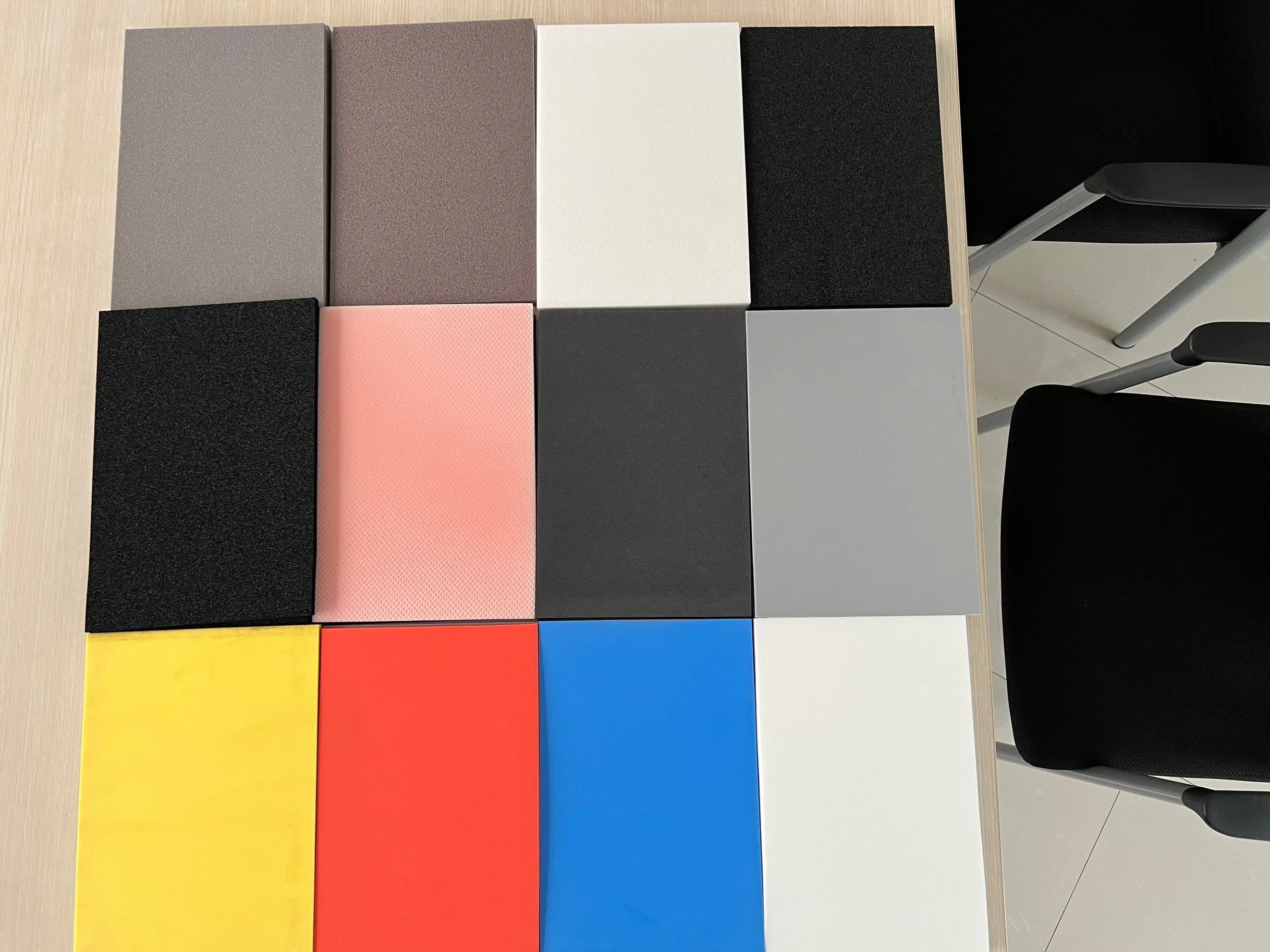
The term covers several closely related forms, including non-crosslinked expanded polyethylene (EPE), crosslinked polyethylene foam (XPE), and irradiated crosslinked foam (IXPE), with differences in cell structure, resilience, surface quality, and temperature performance. Their commercial importance comes from the balance of performance and cost: polyethylene foams can replace heavier or more fragile materials where cushioning, vibration damping, and water resistance are required.
At the same time, polyethylene foams face familiar sustainability tensions. Their durability can extend service life and reduce damage in transport, yet their low bulk density complicates collection and recycling logistics, and many applications remain difficult to recover after use. Ongoing innovation is therefore focused on recycled content, lower-carbon feedstocks, improved design for recyclability, and process routes that reduce blowing-agent emissions and material waste.
History and Development
Polyethylene foam emerged after the broader commercialization of polyethylene resin and the development of extrusion foaming technologies that allow a polymer melt to expand into a controlled cellular structure. Early growth was driven by packaging and insulation demand, where the material’s low cost, cushioning ability, and resistance to moisture provided immediate advantages over paper, cork, and some rubber-based alternatives.
As processing control improved, producers developed a wider family of foam grades. Crosslinking, in particular, enabled finer cells, better dimensional recovery after compression, and stronger thermal and mechanical performance, which expanded use into sports equipment, construction seals, orthopaedics, and automotive interiors. More recently, the material has benefited from demand for protective packaging in e-commerce, cold-chain logistics, and electronics, as well as from the need for lightweight thermal management materials in buildings and vehicles.
Chemical Structure and Key Properties
Polyethylene foams are based on the same hydrocarbon backbone as polyethylene resins, but their performance is shaped by the presence of gas-filled cells dispersed through the polymer matrix. In closed-cell grades, most cells are isolated from one another, which lowers water uptake and improves buoyancy, vapor resistance, and thermal insulation. In open-cell grades, connected pores increase compressibility and breathability but generally reduce moisture barrier performance.
Key property profile
| Property | Typical significance |
|---|---|
| Low density | Reduces part weight and shipping mass |
| Closed-cell structure | Limits water absorption and supports insulation |
| Resilience | Helps the foam recover after compression |
| Shock absorption | Protects fragile goods and people or equipment |
| Chemical resistance | Stable against many aqueous solutions and common contaminants |
| Thermal insulation | Air-filled cells reduce heat transfer |
A useful practical way to understand polyethylene foam is to compare it with solid polyethylene: the polymer itself is relatively flexible and chemically resistant, while foaming greatly reduces mass and creates the cushioning response needed in packaging and insulation.
Important limits and workarounds
- Poor oxygen and grease barrier → the hydrocarbon matrix is intrinsically nonpolar and highly permeable to gases and oils → workaround: use barrier laminates, metallized films, multilayer structures, or select another polymer where barrier performance is critical.
- Low surface energy before treatment → untreated foam surfaces bond poorly with inks, adhesives, and coatings → workaround: corona treatment, flame treatment, primers, or adhesive lamination are commonly used in converting.
- Compression set in lower-grade foams → prolonged loading can leave permanent thickness loss → workaround: use crosslinked or higher-density grades where recovery matters more than cost.
- Poor fit for high-temperature service → polyethylene softens well below the temperatures tolerated by engineering thermoplastics → workaround: choose alternative insulation or cushioning materials for hot-process environments.
Typical performance examples
Commercial data sheets commonly report densities from roughly 18 to 45 kg/m3 for many sheet products, with tensile strength, tear resistance, and thermal conductivity increasing or varying with density and crosslinking. Reported thermal conductivity values are often around 0.032–0.044 W/m·K, making the material useful as an insulator in building and HVAC-related applications.
Production Processes and Raw Feedstocks
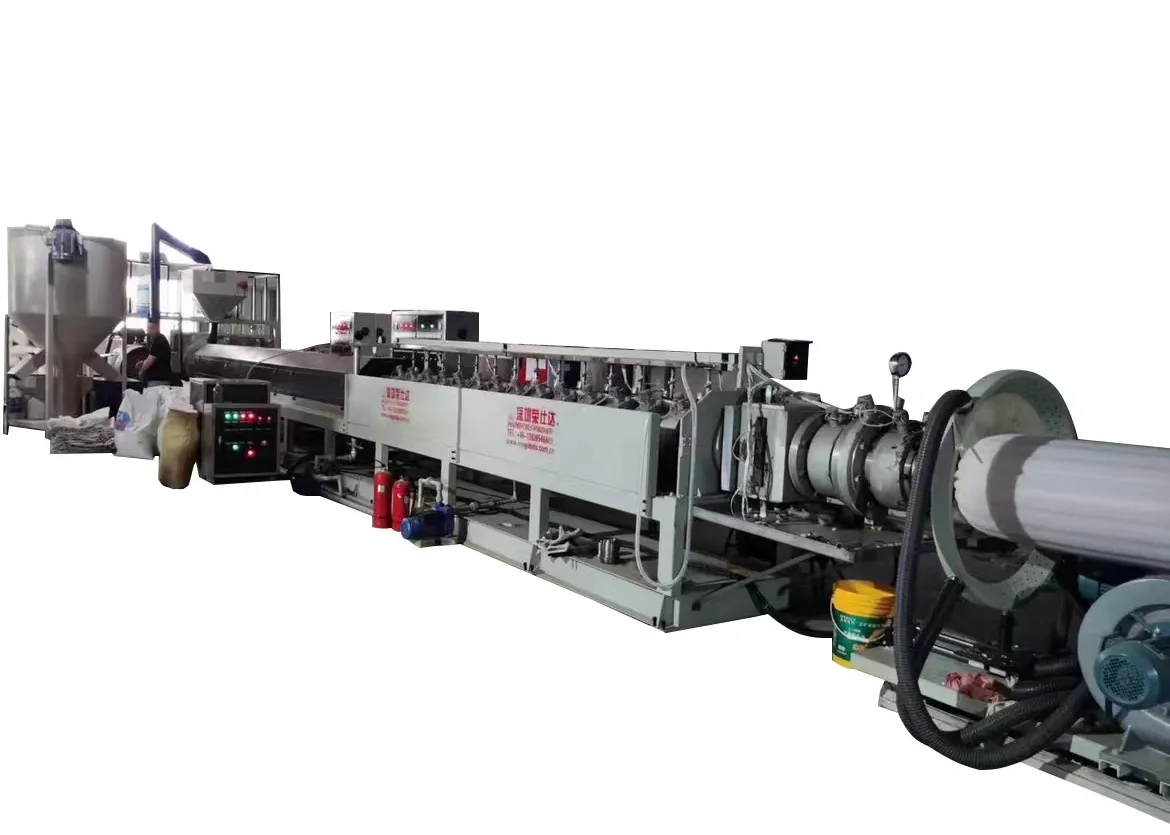
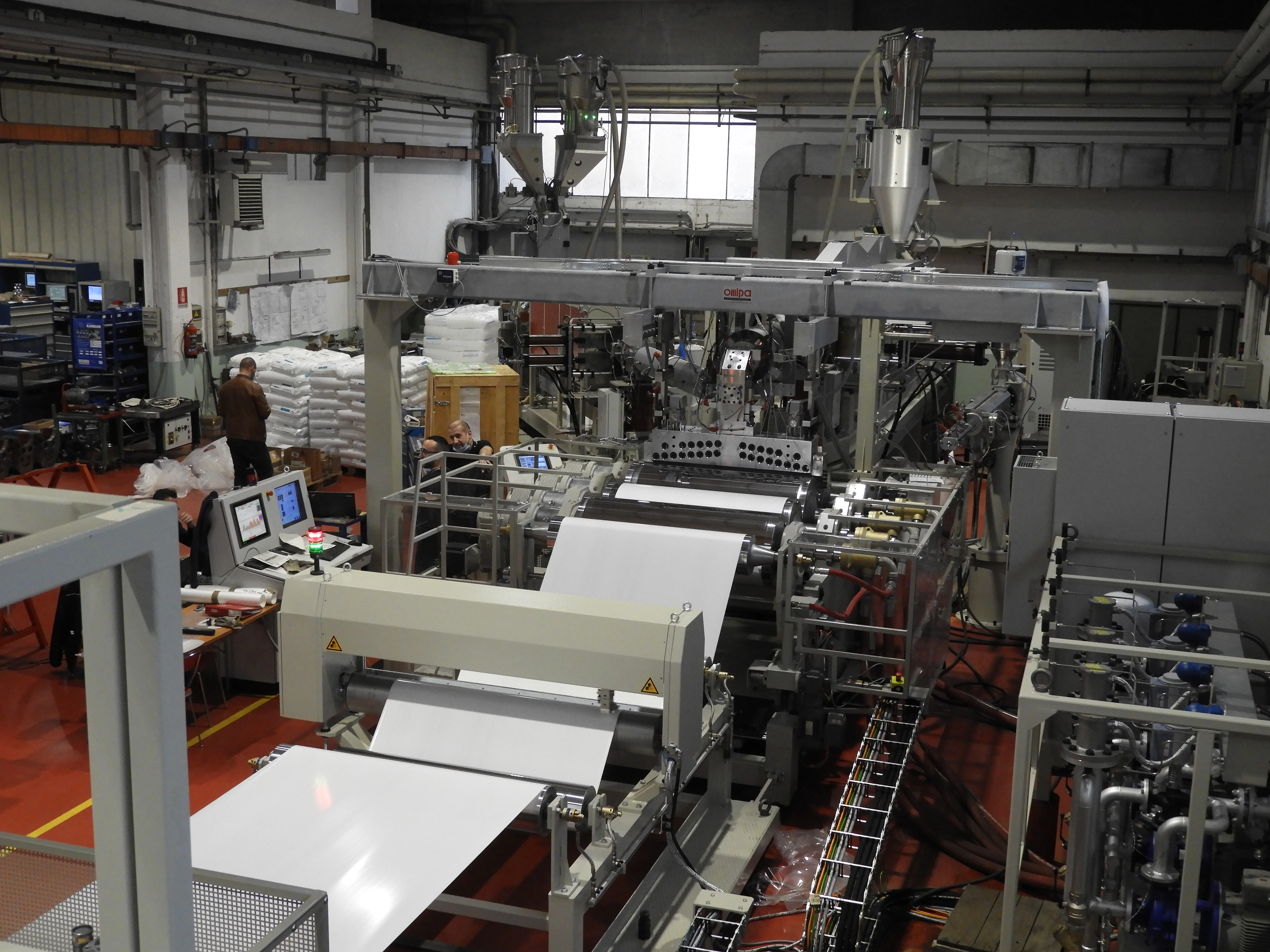
Polyethylene foam begins with polyethylene resin, usually in pellet form, together with additives such as stabilizers, colorants, nucleating agents, and a blowing system. The most common route is extrusion foaming: resin is melted, mixed with a physical or chemical blowing agent, and forced through a die; the sudden pressure drop causes expansion, and the structure is then cooled and stabilized.
Main production routes
- Extrusion foaming is the dominant route for sheets, rolls, profiles, and planks.
- Crosslinked foams use chemical or irradiation crosslinking to improve cell stability and resilience.
- Structural foam molding is used for parts needing a solid skin and foamed core.
- Secondary conversion includes slitting, lamination, die-cutting, thermoforming, and compression molding.
Feedstocks and process logic
The key raw material is ethylene-derived polyethylene, which may be produced from fossil-based or, increasingly, recycled or bio-attributed feedstocks depending on the supplier and grade. Blowing agents create the cellular structure by generating gas during or after extrusion; in modern systems, carbon dioxide, nitrogen, and selected chemical blowing agents are used to control cell size, expansion ratio, and surface finish.
Where very fine cells or higher dimensional stability are required, nucleating agents and crosslinking aids are often incorporated at low levels to influence bubble formation and suppress collapse. For example, talc or similar nucleators can promote more uniform cell density, while crosslinking improves melt strength and helps the foam retain shape during expansion.
Applications and End-Use Markets
Polyethylene foams are used wherever a combination of cushioning, light weight, moisture resistance, and easy fabrication is required. The most common end-use sectors differ by foam grade and process route.
| End-use sector | Typical grade | Usual form/process | Role |
|---|---|---|---|
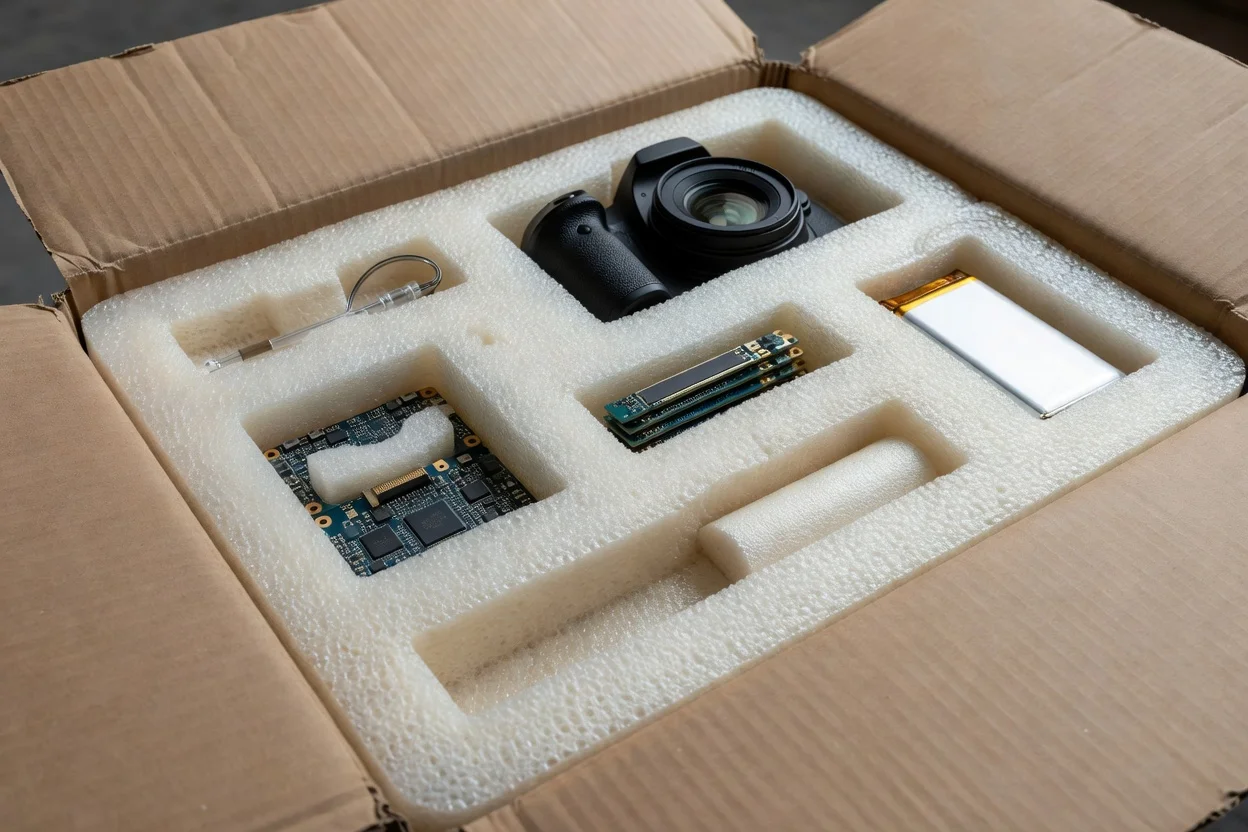
| Protective packaging | EPE, XPE | Sheets, inserts, die-cuts, rolls | Shock absorption, void fill, surface protection |
| Construction | EPE, XPE, IXPE | Rolls, sheets, strips | Underlayment, insulation, joint filler, seals |
| Automotive | XPE, IXPE, structural foam | Pads, trims, gaskets, NVH parts | Vibration damping, energy absorption |
| Sports and leisure | XPE, EPE | Mats, flotation aids, pads, helmets | Impact protection, buoyancy, comfort |
| Medical and orthopaedics | XPE, specialty grades | Pads, supports, device packaging | Cushioning, hygiene, lightweight support |
| Agriculture | EPE | Protective packaging, fruit nets, cushioning | Damage reduction in handling |
| Industrial and electronics | EPE, antistatic grades | Inserts, liners, separators | ESD-sensitive packaging, component protection |
Major uses
- Packaging and logistics: This is the largest and most established market, especially for fragile goods, electronics, appliances, furniture, and precision components.
- Construction and insulation: Foams are used for thermal and acoustic insulation, pipe wrapping, underfloor layers, seal strips, and expansion joint fillers.
- Automotive and transport: Applications include vibration damping, trim padding, seals, gaskets, headliner backing, and interior protection.
- Sports, recreation, and safety: Examples include mats, flotation devices, protective pads, helmet liners, and athletic accessories.
- Medical and orthopaedic products: The material appears in cushioning, supports, packaging for medical devices, and rehabilitation accessories.
- Agriculture and cold chain: Foam nets, cushioning, and thermal protection are used for produce handling and temperature-sensitive shipments.
A poor-fit use
Polyethylene foam is a poor fit for applications requiring high continuous heat resistance, such as hot-engine compartments or high-temperature electrical insulation, because the polymer softens and loses mechanical performance well before engineering thermoplastics or high-performance elastomers would.
Environmental and Sustainability Aspects
Polyethylene foam presents a mixed environmental profile. Its long service life, light weight, and strong protective performance can reduce product breakage and lower transport-related impacts, but its persistence, low density, and multi-material formats can make collection and recycling difficult.
Recyclability
Technically, polyethylene foam can be recycled through regrind and reprocessing when streams are clean and sufficiently homogeneous, and many industrial offcuts are more readily recovered than post-consumer waste. In practice, contamination, laminations, adhesive residues, and very low scrap density reduce the economics of recovery, especially for dispersed packaging waste.
Bio-based and circular options
Potential pathways include:
- Recycled polyethylene content in suitable non-food or non-critical grades
- Bio-attributed polyethylene made from renewable feedstocks in the polymer chain
- Design-for-recycling structures that avoid unnecessary laminates or mixed materials
- Take-back programs for industrial packaging and transport components
- Lightweighting and durability optimization to reduce material use per protected item
Carbon footprint considerations
Compared with heavier or more fragile alternatives, polyethylene foam can reduce damage and logistics mass, which may offset part of its footprint in use. However, the production footprint depends strongly on feedstock origin, energy mix, blowing-agent choice, and conversion efficiency. Sustainability claims therefore need to distinguish between virgin fossil-based foam, recycled-content foam, and bio-attributed alternatives rather than treating the category as uniform.
Economic and Global Market Impact
Polyethylene foam is a mature but strategically important segment of the plastics industry because it serves both commodity and performance-driven markets. Demand is closely tied to packaging volumes, construction activity, consumer goods manufacturing, and industrial logistics, making the market sensitive to trade flows and end-market cycles.
Leading global supply is generally associated with large polyethylene and polyolefin producers, regional foam converters, and packaging specialists. While market shares vary by grade and geography, the supply chain commonly depends on upstream PE resin producers and downstream foam fabricators rather than on a single integrated sector.
From a commercial perspective, the material benefits from:
- broad processability,
- low conversion cost relative to many engineering foams,
- strong price-performance balance,
- and compatibility with a wide range of fabrication methods.
Current Challenges and Innovations
Current challenges
- Recycling difficulty for low-density and contaminated foam waste
- Regulatory scrutiny around additives, blowing agents, and packaging waste
- Performance limits in high heat, flame, or barrier-critical applications
- Market pressure to lower plastic use while maintaining protection
- Fragmented recovery systems for post-consumer foam packaging
Innovations
- Crosslinked and multilayer structures that improve resilience and thermal performance.
- Open-cell engineering for applications needing softer touch or acoustic behavior.
- Lower-impact foaming systems using carbon dioxide or nitrogen in place of older chemistries.
- Antistatic and conductive grades for electronics packaging
- Recycled-content formulations for industrial and construction applications
- Functional laminates and coatings that add printability, sealability, or barrier performance while preserving the foam core
A practical example is the use of low-load nucleating or crosslinking systems to control cell size: a small amount of nucleator can improve foam uniformity and consistency, while crosslinking helps prevent collapse during expansion and improves compression recovery.
Future Outlook
Polyethylene foams are likely to remain important where protection, insulation, and low weight matter most, especially in logistics, construction, and consumer protection applications. The strongest growth opportunities are expected in higher-performance foams, more recyclable packaging formats, and applications that benefit from lightweight thermal and vibration management.
Future competition will likely center on three priorities:
- Circularity: better recovery, recycled-content integration, and mono-material design
- Performance engineering: finer cells, improved recovery, and tailored hardness across density ranges
- Decarbonization: lower-emission feedstocks, more efficient extrusion lines, and improved process energy management
The material’s long-term position will depend on whether the industry can preserve its core advantages while reducing waste and improving end-of-life pathways.
References
- •
Polyethylene foam: Types and applications. (2026, August 21). IQS Directory. https://www.iqsdirectory.com/articles/foam-fabricating/polyethylene-foam.htmlLink
- •
Many uses for polyethylene foam. (2021, November 2). Zone Enterprises. https://zoneenterprisesusa.com/tapesandadhesives/resources/many-uses-for-polyethylene-foam/Link
- •
Polyethylene foam: Comprehensive analysis of.... (2026, February 26). Eureka PatSnap. https://eureka.patsnap.com/materials/polyethylene-foam-analysisLink
- •
What is polyethylene foam? Types, uses & properties. (2026, March 9). Science Insights. https://scienceinsights.org/what-is-polyethylene-foam-types-uses-properties/Link
- •
The main applications for the polyethylene foam. (n.d.). EPOLI. https://www.epoli.pt/en/the-main-applications-for-the-polyethylene-foam/Link
- •
Polyethylene foam: Everything you need to know. (2024, November 8). Suprapol. https://suprapol.com/polyethylene-foam/Link
- •
Polyethylene foams | PE | Chemical, physical & non cross.... (2024, February 16). AS Rubber. https://www.asrubber.com/materials/polyethylene-foams/Link
- •
Different applications of polyethylene foam. (2018, February 2). Alcot Plastics. https://alcotplastics.com/different-applications-of-polyethylene-foam/blog.htmlLink
- •
Polyethylene foam technical data. (2017, May 19). FoamSearch. https://www.foamsearch.com/products/polyethylene-foam/Link
- •
Polyethylene foam. (2013, June 1). MFA Cameo. https://cameo.mfa.org/wiki/Polyethylene_foamLink
- •
Polyethylene foam uses, characteristics, and varieties. (2026, January 25). Foam by Mail. https://www.foambymail.com/blog/polyethylene-foam-its-uses-characteristics-and-varieties/Link
- •
How is polyethylene foam made? (2025, April 24). FoamTech. https://www.foamtechchina.com/how-is-polyethylene-foam-made/Link
- •
Polyethylene foam supplier and converter. (2026, April 28). Ramfoam. https://ramfoam.com/materials/polyethylene-foam/Link
- •
Polyethylene foam data sheet. (2015, February 2). Foam Factory, Inc. https://www.foambymail.com/polyethylene-foam-sheet.htmlLink
- •
050309-FP0454-Academic journal of materials & chemistry-9月刊.docx. (n.d.). Francis Academic Press. https://francis-press.com/uploads/papers/B0Z6oTN7Yc3pBB6h0EwZON80TKn7aaZpulOmT1EB.pdfLink
- •
The Rubber Company Limited - Registered in England and Wales. (n.d.). The Rubber Company. https://therubbercompany.com/wp-content/uploads/2013/06/Polyethylene-Foam-Sheeting-Data-Sheet.pdfLink
- •
Polyethylene foam applications. (2013, November 11). IQS Newsroom. https://blog.iqsdirectory.com/polyethylene-foam/Link
- •
How is foam manufactured? (n.d.). Polyformes Ltd. https://www.polyformes.co.uk/knowledge-centre/how-is-foam-manufacturedLink
- •
What is the purpose of PE foam? (2023, October 10). Foam Industries. https://www.foam-industries.com/news/what-is-the-purpose-of-pe-foamLink
- •
How does EPE foam machine work? (2026, April 21). WECAN. https://www.wecan-machine.com/news/136/Link
- •
Properties of PE cross linked closed cell foams. (n.d.). U-Perform. https://u-perform.com/wp-content/uploads/2023/10/Properties-of-PE-Foam-Nov2022.pdfLink
- •
PE foam. (n.d.). Polting Foam. https://foam.polting.com.pl/en/offer/pe-foam/Link
- •
The foam. (2025, October 10). Trocellen. https://trocellen.com/materials-technology/the-foam/Link
- •
Polymeric foams: Fundamentals and types of foams (Volume 1). (2023, June 8). ACS Publications. https://pubs.acs.org/doi/10.1021/bk-2023-1439.ch009Link
- •
Why companies are choosing polyethylene foam packaging. (2025, January 1). Sealed Air. https://www.sealedair.com/uk/resources/blog/polyethylene-foams-channelLink
- •
Supercritical fluid foaming.... (n.d.). Eureka PatSnap. https://eureka.patsnap.com/materials/open-cell-polyethylene-foamLink
- •
Modified polyethylene foam for critical environments. (2022, November 3). PMC. https://pmc.ncbi.nlm.nih.gov/articles/PMC9658328/Link
- •
Polyethylene closed cell foam: Comprehensive analysis.... (n.d.). Eureka PatSnap. https://eureka.patsnap.com/materials/polyethylene-closed-cell-foamLink
- •
Crosslinked polyethylene foam: Comprehensive analysis.... (n.d.). Eureka PatSnap. https://eureka.patsnap.com/materials/crosslinked-pe-foam-analysisLink
- •
What are the applications of polyethylene foam? (2024, February 10). Alanto. https://www.alanto.co.uk/polyethylene-advantages-and-disadvantages/Link
- •
Expanded polyethylene foam: Comprehensive analysis of.... (n.d.). Eureka PatSnap. https://eureka.patsnap.com/materials/expanded-polyethylene-foamLink
- •
Expanded polyethylene. (2016, July 26). Wikipedia. https://en.wikipedia.org/wiki/Expanded_polyethyleneLink
- •
Process for producing polyethylene open-cell foam. (1996, February 28). Google Patents. https://patents.google.com/patent/CN1019401B/enLink
- •
What is the structural polyethylene foam manufacturing.... (2025, April 11). Porterie. https://www.porterie.com/blog/what-is-the-structural-polyethylene-foam-manufacturing-process/Link
- •
Polyethylene foam manufacturers. (n.d.). IQS Directory. https://www.iqsdirectory.com/polyethylene-foam/Link
- •
Method of making polyethylene foam. (1996, February 9). Google Patents. https://patents.google.com/patent/US4110269A/enLink
- •
Modified polyethylene foams for insulation systems. (2023, October 16). PMC. https://pmc.ncbi.nlm.nih.gov/articles/PMC10610372/Link
- •
Polyethylene foam. (n.d.). Foam by Mail. https://www.foambymail.com/polyethylene-foam.htmlLink
- •
Manufacturing with polyethylene foam sheets. (2021, October 5). Janco. https://www.janco-inc.com/manufacturing-with-polyethylene-foam-sheets/Link
- •
Polyethylene open-cell foam and process for producing the.... (2009, June 29). Google Patents. https://patents.google.com/patent/JP2011006626A/enLink