
Introduction
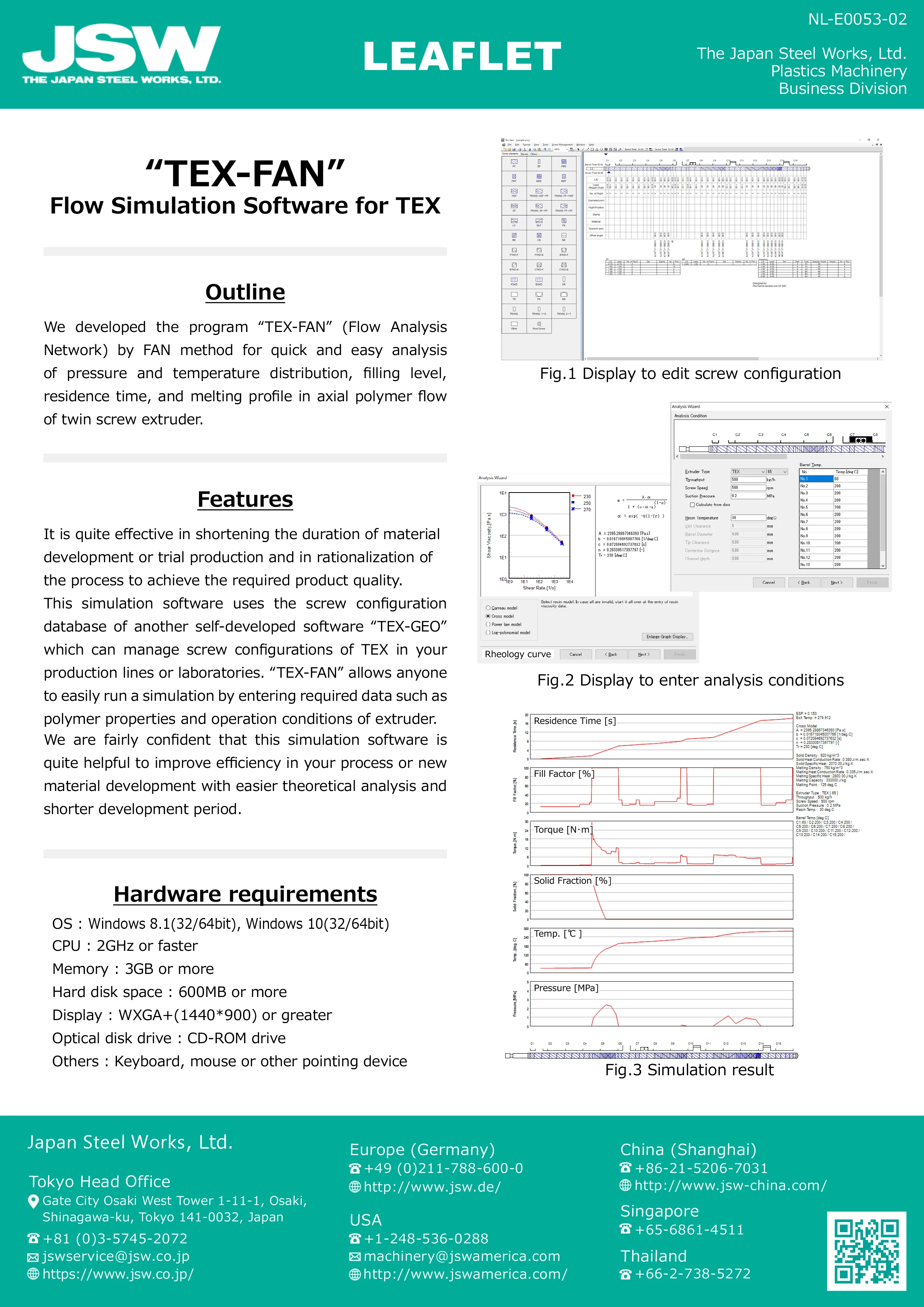
Simulation software is a class of computer-aided engineering and modeling tools used to create virtual representations of real systems, then predict how those systems will behave under defined conditions. In manufacturing, it reduces the need for costly physical prototypes by allowing engineers to test geometry, loading, flow, motion, scheduling, and process parameters before production begins.
Within the plastics industry, simulation software is used across injection molding, extrusion, blow molding, thermoforming, materials handling, and factory logistics. Its role has expanded from part-level analysis to full-process and plant-level optimization, including digital twins, cloud-based collaboration, and AI-assisted design validation. The technology continues to evolve as processors, solvers, and datasets improve, with sustainability pressures pushing greater attention to energy use, scrap reduction, and circular-material compatibility.

History and Development
Early simulation tools grew out of general numerical methods used in engineering analysis, but specialized software became increasingly important as product and process complexity increased. Modern simulation platforms emerged to overcome the limitations of coding models manually in general-purpose languages and to provide reusable workflows, visualization, and solver integration.
Three major development milestones shaped the field in industrial plastics applications:
- Finite-element and multiphysics integration made it practical to model stress, heat transfer, and fluid flow in one workflow, which is essential for polymer processing where thermal and mechanical effects are tightly coupled.
- Process-specific plastics modules brought specialized capabilities such as filling, packing, cooling, warpage prediction, and fiber orientation analysis into injection molding workflows, improving predictive accuracy for molded parts.
- Cloud and digital-twin deployment enabled distributed teams to run larger model sets, compare scenarios faster, and connect simulation with live manufacturing data for iterative optimization.
Key Characteristics and Technical Overview
Simulation software works by translating a real or proposed system into a mathematical model, then solving that model under selected boundary conditions and inputs. In plastics processing, the software typically uses geometry import, meshing, material models, solver settings, and post-processing tools to estimate how a design or process will behave in practice.
Typical technical elements include:
- Geometry and meshing: a part, mold, die, line, or plant layout is broken into discrete elements or entities for numerical analysis.
- Material models: polymer viscosity, viscoelastic behavior, crystallization, shrinkage, thermal conductivity, and heat capacity are represented through database values or user-defined inputs.
- Boundary conditions: melt temperature, mold temperature, screw speed, clamping force, cooling conditions, residence time, flow rate, and ambient environment are specified.
- Solvers: finite element analysis (FEA), computational fluid dynamics (CFD), discrete-event simulation (DES), or hybrid engines are used depending on whether the problem is structural, flow-based, or operational.
- Visualization and reporting: results are displayed as contour maps, time histories, animations, bottleneck charts, or scenario comparisons.

Common quantitative benchmarks in plastics-related simulation workflows include:
- Granulator flake size: simulation of recycling and size-reduction systems often targets flakes or regrind in roughly the 5–15 mm range for downstream washing, separation, or reprocessing, depending on the machine and feedstock; this is generally an engineering target rather than a universal standard.
- Residual moisture after centrifugal dewatering: in PET and other rigid-recycling lines, centrifugal dewatering commonly aims for roughly 1–2% residual moisture, with final drying stages required when lower moisture is needed for extrusion or pelletizing.
- Throughput: plastics-processing models may represent outputs from small compounding lines at tens of kg/h to large extrusion or recycling lines at multiple tonnes per hour.
- Rotor speeds and screw speeds: process simulations often evaluate high-speed rotating equipment in the hundreds to several thousand rpm range, while extrusion screws are typically modeled in much lower rotational ranges depending on polymer and output target.
- Specific energy consumption: simulations are frequently used to reduce kWh/kg by optimizing heating profiles, screw design, cycle time, conveying losses, or line balance.
These values vary significantly by machine class, polymer family, and product specification, so software outputs are most useful when tied to validated material data and process trials.
Types and Variations
Simulation software used in plastics manufacturing can be grouped into several functional categories:
| Type | Main Use in Plastics | Typical Output |
|---|---|---|
| Injection molding simulation | Filling, packing, cooling, shrinkage, warpage, gate design | Cycle time, deformation, sink marks, weld lines |
| CFD simulation | Melt flow in screws, dies, mixers, and manifolds | Pressure drop, residence time, temperature distribution |
| FEA / structural simulation | Mold base stress, machine frame stiffness, part performance | Deflection, stress, fatigue margin |
| Discrete-event simulation | Plant logistics, line balancing, maintenance scheduling | Throughput, queue lengths, utilization |
| Digital twin / hybrid simulation | Live process monitoring and scenario testing | Predictive control, OEE improvement |
| Optimization and DOE tools | Material, geometry, and process parameter studies | Best-fit settings, sensitivity rankings |
General-purpose platforms such as MATLAB/Simulink, AnyLogic, and SIMULIA are often adapted for systems modeling, while engineering-focused platforms such as Autodesk, Simcenter, COMSOL, and ANSYS are commonly used for physics-based analysis.
Applications and Uses
Simulation software is used throughout the plastics value chain, from resin development to finished-product manufacturing and recycling.
- Injection molding: mold filling, venting, cooling balance, warp control, gate location, and knit-line management are among the most common uses.
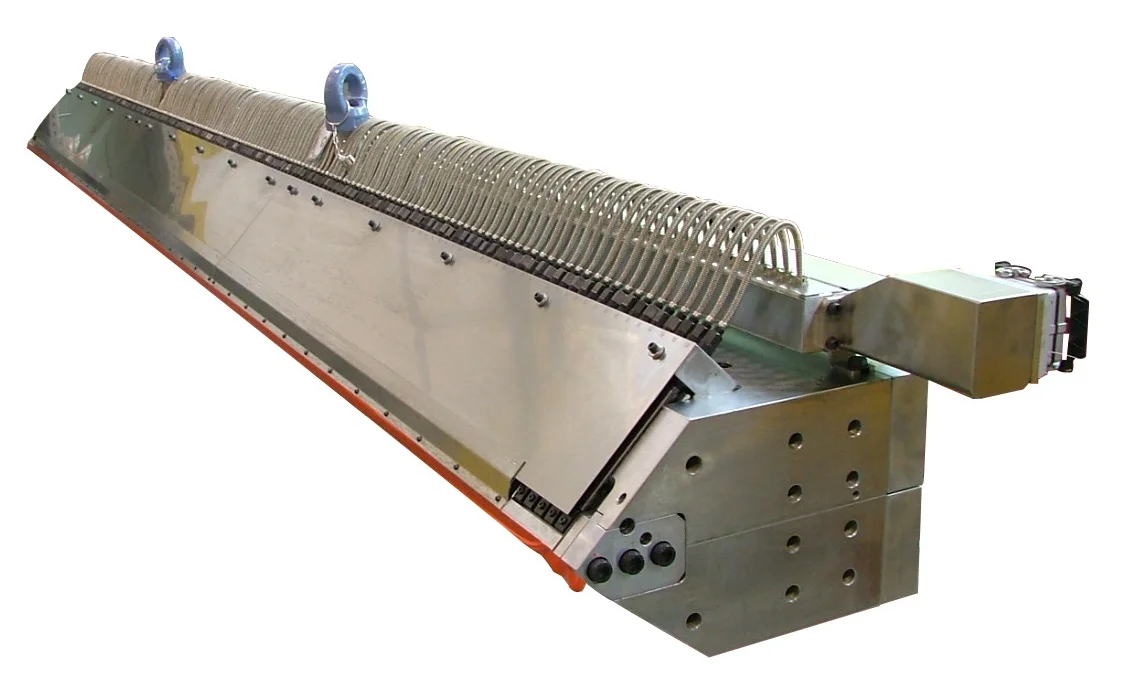
- Extrusion: die design, melt homogeneity, pressure profile, output stability, and temperature control can be simulated before tool fabrication.
- Blow molding and thermoforming: parison or sheet behavior, wall-thickness distribution, and cycle optimization are major applications.
- Compounding and mixing: residence time distribution, dispersive and distributive mixing, shear heating, and energy demand can be evaluated.
- Recycling and waste processing: washing lines, shredding, dewatering, drying, sorting, and regranulation systems are increasingly modeled to improve yield and contamination control.
- Factory planning: material flow, AGVs, storage, operator movement, and machine utilization are often modeled with DES tools.
One poor-fit use is highly unstructured artisan troubleshooting, where process behavior depends heavily on undocumented operator practice or rapidly changing feedstock quality; in such cases, simulation can still help, but its predictive value is limited without reliable data.
Technological Innovations and Automation
Recent innovation has focused on making simulation faster, more collaborative, and more tightly connected to production data. Cloud deployment has reduced the need for local high-performance workstations and made it easier to run large design-of-experiments studies across dispersed engineering teams.
Important technical trends include:
- Digital twins: virtual replicas of machines, cells, or plants can be synchronized with sensor data for prediction and diagnostics.
- AI-assisted surrogates: some tools now use previous simulation runs to estimate new outcomes faster than a full solve.
- Multiphysics workflows: coupling thermal, structural, flow, and control logic is increasingly common in plastics machinery design.
- Integration with PLM and MES systems: simulation data is increasingly linked to product lifecycle and manufacturing execution platforms for traceability and faster engineering change management.
- Real-time and discrete-event emulation: plant simulation is being used to test automation logic, line changes, and bottleneck scenarios before physical commissioning.
Environmental and Sustainability Aspects
Simulation software can support sustainability by reducing scrap, shortening development cycles, and improving energy efficiency before machines are built or reconfigured. In plastics processing, this is particularly important because wasted polymer, rework, and excessive heat use carry both cost and environmental penalties.
Key sustainability benefits include:
- Less prototype waste: virtual testing reduces the number of physical trial runs.
- Energy optimization: process simulations can identify lower-temperature windows, shorter cycles, and more efficient drive settings.
- Material reduction: warpage and thickness optimization can reduce overdesign and resin consumption.
- Recycling compatibility: simulation can help evaluate how regrind, recyclate, or blended feedstocks affect flow, cooling, and final properties.
- Process stability: better prediction of defects can reduce reject rates and downstream reprocessing.
At the same time, high-fidelity simulation itself consumes computing resources, so the environmental benefit is strongest when the software replaces substantial physical experimentation or avoids production scrap.
Economic and Global Market Impact
Simulation software is now a strategic engineering tool rather than a niche technical aid. It helps manufacturers reduce tooling risk, accelerate time to market, and make better capital-investment decisions before committing to molds, dies, lines, or automation systems.
Its market impact is especially visible in:
- Capital goods manufacturing, where early design validation lowers tooling and commissioning risk.
- Contract manufacturing, where short product lifecycles make fast design iteration essential.
- Global engineering teams, where cloud collaboration supports distributed product development.
- Supplier qualification, where simulation reports increasingly form part of design review and process approval workflows.
Industry comparisons in 2025–2026 show that buyers increasingly value solver breadth, usability, cloud access, and integration with larger engineering ecosystems rather than isolated feature counts.
Current Challenges and Innovations
Despite its value, simulation software has several persistent limitations:
- Data quality dependence: inaccurate material data or poor boundary conditions can produce misleading results.
- Model calibration burden: plastics processes are sensitive to machine settings, thermal history, and moisture content, which can be difficult to measure precisely.
- Computational cost: high-resolution multiphysics models may require significant compute time.
- Skill requirements: effective use still demands knowledge of polymer science, numerical methods, and machine behavior.
- Validation gap: simulated results must still be correlated with physical trials, especially for new polymers, recycled materials, and complex molds.
Current innovation is focused on faster solvers, automated meshing, machine-learning-based prediction, and tighter links between simulation, measurement, and control systems.
Future Outlook
Future development is likely to favor predictive, connected, and sustainability-oriented simulation. In plastics machinery, this means broader use of digital twins, more accurate recyclate and bio-based material models, and more direct links between simulation and machine control.
The most important expected directions are:
- Closed-loop optimization between simulation and shop-floor data
- Faster surrogate modeling for design exploration
- Improved polymer property databases for recycled and blended materials
- Greater automation of setup and validation workflows
- More cloud-native collaboration across OEMs, molders, and material suppliers
As plastics processors face pressure to cut energy use, reduce scrap, and handle more variable feedstocks, simulation software is likely to become even more central to machine selection, process development, and plant modernization.
Summary
Simulation software enables plastics manufacturers to predict performance, reduce risk, and optimize both product design and production systems before committing to physical trials. Its greatest value lies in combining engineering accuracy with faster iteration, especially when applied to injection molding, extrusion, recycling, and factory planning.
References
- •
What is simulation? Simulation software explained. (2026, May 12). Autodesk. https://www.autodesk.com/solutions/simulation/overviewLink
- •
Best Simulation Software 2026: Independent Buyer Guide. (2026, May 30). Demystifying PLM. https://www.demystifyingplm.com/best-simulation-software-2026Link
- •
Simulation software. (2007, April 29). Wikipedia. https://en.wikipedia.org/wiki/Simulation_softwareLink
- •
List of computer simulation software. (2007, March 6). Wikipedia. https://en.wikipedia.org/wiki/List_of_computer_simulation_softwareLink
- •
Simulation Software - MATLAB & Simulink. (n.d.). MathWorks. https://www.mathworks.com/discovery/simulation-software.htmlLink
- •
Best Simulation Software in 2026: Compare Top Tools. (2026, August 11). SoftwareSuggest. https://www.softwaresuggest.com/simulation-softwareLink
- •
Best Simulation Software - 2026 Reviews & Pricing. (n.d.). Software Advice. https://www.softwareadvice.com/simulation/Link
- •
Best Computer Simulation Software: 2026 Comparison. (2026, June 9). Gitnux. https://gitnux.org/best/computer-simulation-software/Link
- •
Top 10 Best Emulations Software of 2026. (2026, June 18). Wifitalents. https://wifitalents.com/best/emulations-software/Link
- •
Best Simulation Software 2026: Independent CAE Buyer's Guide. (2026, May 30). Threadmoat. https://threadmoat.com/guides/best-simulation-software-2026Link
- •
Category:Simulation software. (2022, January 1). Wikipedia. https://en.wikipedia.org/wiki/Category:Simulation_softwareLink
- •
Best Simulation Software of 2026 - Reviews & Comparison. (n.d.). SourceForge. https://sourceforge.net/software/simulation/Link
- •
Best Modeling Simulation Software (2026). (2026, March 12). Zipdo. https://zipdo.co/best/modeling-simulation-software/Link
- •
Best Simulation Software • February 2026. (2024, December 19). F6S. https://www.f6s.com/software/category/simulationLink
- •
Top 10 Best Modeling Simulation Software of 2026. (2026, March 12). Gitnux. https://gitnux.org/best/modeling-simulation-software/Link
- •
Best Simulation Software 2026. (n.d.). Capterra. https://www.capterra.com/simulation-software/Link
- •
Top 10 Modeling & Simulation Tools in 2026: Features, Pros, Cons, Comparison. (2026, July 30). DevOpsSchool. https://www.devopsschool.com/blog/top-10-modeling-simulation-tools-in-2025-features-pros-cons-comparison-2/Link
- •
Best Virtual Simulation Software | 2026 Verified Rankings. (2026, March 12). Gitnux. https://gitnux.org/best/virtual-simulation-software/Link
- •
Top 10 Simulation Software Tools in 2026: Features, Pros, Cons, Comparison. (2026, August 27). DevOpsSchool. https://www.devopsschool.com/blog/top-10-simulation-software-tools-in-2025-features-pros-cons-comparison/Link
- •
Best Simulation Modeling Software in 2026. (2025, January 1). 6sense. https://www.6sense.com/tech/simulation-modelingLink
- •
What is simulation software? A guide for engineers and innovators. (2026, July 13). OPAL-RT. https://www.opal-rt.com/blog/what-is-simulation-software-guide-engineers-innovators/Link
- •
Best Simulation Software for Operations Teams in 2026. (2026, August 26). Startup Stash. https://startupstash.com/simulation-tools/Link
- •
Simulation Software 2026 - Best Application Comparison. (2026, September 5). GetApp. https://www.getapp.com/it-management-software/simulation/Link
- •
Best AI Simulation Tools for Mechanical Engineers (2026). (2026, July 17). Colab Software. https://www.colabsoftware.com/guides/ai-powered-simulation-tools-smarter-faster-design-validationLink
- •
Choose the best simulation software for 2026 | Simcenter. (2026, January 19). Siemens. https://blogs.sw.siemens.com/simcenter/best-simulation-software/Link
- •
Introduction to Simulation and Modeling: Guide to Software Selection. (n.d.). University of Houston. https://uh.edu/~lcr3600/simulation/guide.htmlLink
- •
Top 3 Best Software Simulation Tools for Training in 2026. (2026, June 5). Assima Solutions. https://assimasolutions.com/resources/blog/explore-assimas-guide-to-the-best-software-simulation-tools-for-effective-training-and-enhanced-learning-outcomes-in-2026/Link
- •
Best Simulation Software for Windows 2026 | Capterra. (n.d.). Capterra. https://www.capterra.com/simulation-software/s/windows/Link
- •
What is Simulation Software? (2025, October 29). Dassault Systèmes. https://www.3ds.com/store/simulation-softwareLink
- •
What Is Simulation Software? (2024, December 17). aPriori. https://www.apriori.com/glossary/simulation-software/Link
- •
Chapter 3 Kinds of Simulation. (n.d.). Simio. https://textbook.simio.com/SASMAA7/ch-kinds.htmlLink
- •
List of Top Simulation Software - Oct 2025 Reviews | SoftwareWorld. (2025, October 1). SoftwareWorld. https://www.softwareworld.co/simulation-software/Link
- •
Best Free Simulation Software Solutions 2026 | Capterra. (n.d.). Capterra. https://www.capterra.com/simulation-software/s/free/Link
- •
What is Simulation? Use Cases of Simulation Software. (2025, June 18). Simio. https://www.simio.com/blog/what-is-simulation-use-cases-of-simulation-softwareLink
- •
Choosing the Right Simulation Tool. (2010, March 26). INFORMS. https://www.informs.org/Publications/OR-MS-Tomorrow/Choosing-the-Right-Simulation-ToolLink
- •
Best Process Simulation Software of 2026. (n.d.). SourceForge. https://sourceforge.net/software/process-simulation/Link
- •
Software Simulator - an overview | ScienceDirect Topics. (n.d.). ScienceDirect. https://www.sciencedirect.com/topics/engineering/software-simulatorLink
- •
Simulation Software for Engineering Analysis & Optimization. (2026, July 6). Dassault Systèmes. https://www.3ds.com/technologies/simulation-softwareLink
- •
List of discrete event simulation software. (2008, June 23). Wikipedia. https://en.wikipedia.org/wiki/List_of_discrete_event_simulation_softwareLink
- •
15 Best Simulation Software for Engineering Industry in 2026. (n.d.). SoftwareSuggest. https://www.softwaresuggest.com/simulation-software/engineering-industryLink
- •
What is Simulation? | Ansys Developer Portal. (2022, September 1). Ansys. https://developer.ansys.com/about-simulationLink
- •
15 Best Simulation Software for 2026. (n.d.). Appvizer. https://www.appvizer.com/it/simulationLink
- •
10+ Best Engineering Simulation and Modeling Software Tools. (2026, January 20). Visure Solutions. https://visuresolutions.com/plm-guide/best-engineering-simulation-and-modeling-tools/Link
- •
Simulation Tutorial - Introduction. (2024, August 14). Solver. https://www.solver.com/simulation-tutorial-introductionLink
- •
List of 15 Best Simulation Software in Manufacturing Industry. (n.d.). SoftwareSuggest. https://www.softwaresuggest.com/simulation-software/manufacturing-industryLink
- •
Simulation Software | Simulation Analysis & Tools. (n.d.). Autodesk. https://www.autodesk.com/in/products/simulationLink
- •
FlexSim 2026 | Get Information & Free Trial. (2026, February 11). Autodesk. https://www.autodesk.com/products/flexsim/overviewLink
- •
AnyLogic: Simulation Modeling Software Tools & Solutions. (2017, January 1). AnyLogic. https://www.anylogic.com/Link
- •
Computer Simulation - an overview | ScienceDirect Topics. (n.d.). ScienceDirect. https://www.sciencedirect.com/topics/computer-science/computer-simulationLink
- •
Simulation software for smart manufacturing: a review. (n.d.). Springer. https://link.springer.com/article/10.1007/s42452-025-08012-yLink
- •
What Is Simulation? | Definition, Examples, and Uses. (n.d.). SIMUL8. https://www.simul8.com/what-is-simulationLink
- •
Types of Simulations. (2025, November 1). Skillwell. https://www.skillwell.com/resources/types-of-simulationsLink
- •
What Model Simulation Software do YOU use? (n.d.). Reddit. https://www.reddit.com/r/AskEngineers/comments/11lhkc/what_model_simulation_software_do_you_use/Link