
Introduction
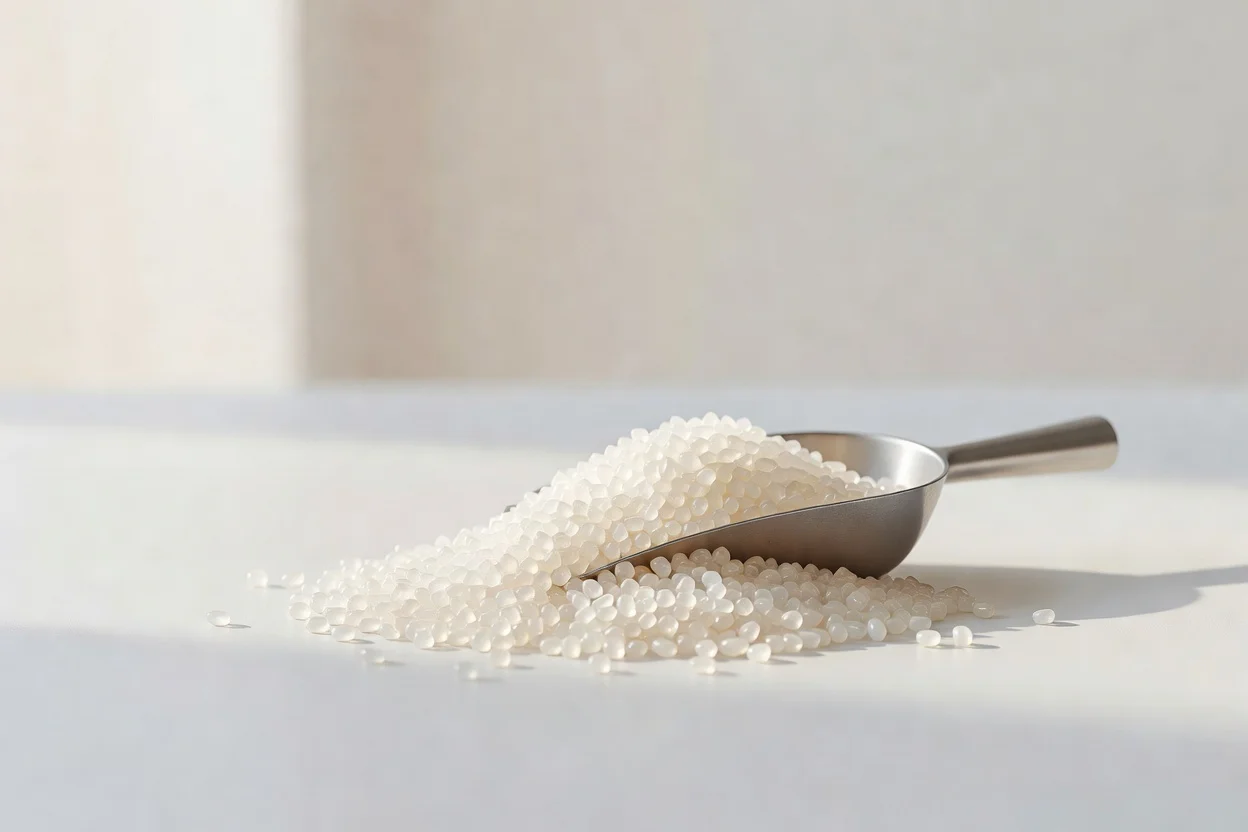
Urea-formaldehyde resins (UF) are low-cost, fast-curing thermosetting amino resins made from urea and formaldehyde, and they are among the most important binders in the plastics and composites value chain. Their dominant role is as an adhesive for dry-process wood products, especially particleboard and medium-density fiberboard, but they also appear in laminates, molded electrical components, textile and paper treatments, insulation foams, and agricultural nitrogen-release products.
UF resins are valued for their high reactivity, colorless bond lines, good surface hardness, and strong compatibility with lignocellulosic substrates, yet their use is constrained by moisture sensitivity and formaldehyde emissions. Over time, industrial development has focused on lowering free-formaldehyde content, improving hydrolysis resistance, and reducing emissions through resin formulation changes, scavengers, and hybrid systems such as melamine-modified UF.
In the broader plastics and auxiliaries ecosystem, UF occupies a distinct place: it is not a commodity melt-processable polymer like polyethylene or polypropylene, but a reactive resin system whose economic value comes from rapid curing, low material cost, and high throughput in pressed panel production. Its future is shaped by tightening indoor-air regulations, advances in low-emission wood panels, and circular-economy pressure to replace fossil-derived binders with lower-carbon or bio-based alternatives where performance allows.
History and Development
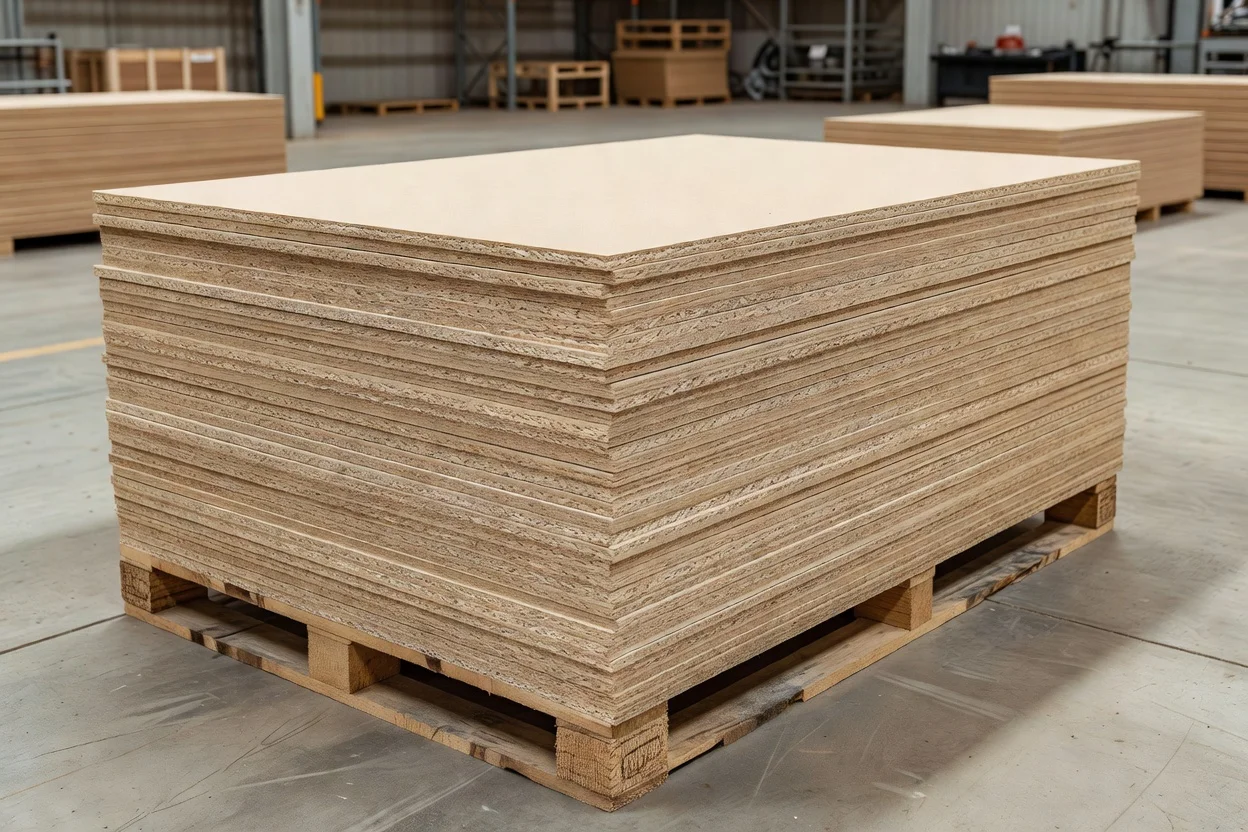
UF chemistry emerged in the early 20th century and became commercially important as industrial production expanded in the interwar period. Its adoption accelerated because it offered a practical combination of low cost, water-based processing, and rapid cure for mass production of wood composites and molded articles.
The resin family belongs to the broader class of amino resins, alongside melamine-formaldehyde resins and related condensation polymers. From the beginning, the trade-off was clear: UF could deliver attractive cost and processing economics, but the cured network was vulnerable to hydrolysis in humid conditions, which limited suitability for exterior exposure.
As environmental and health concerns over formaldehyde became more prominent, the industry shifted toward lower molar ratios, improved catalysts, and emission-reduction strategies. Recent research has also explored nanofillers, scavengers, and composite modifications to reduce emission and improve water resistance without sacrificing cure speed.
Chemical Structure and Key Properties
UF resins are produced by stepwise methylolation and condensation of urea with formaldehyde, yielding a crosslinked network containing methylene and methylene-ether linkages after cure. The uncured resin is typically water-soluble or water-dispersible, while the cured material becomes a rigid, infusible thermoset.
Key properties
| Property | Typical significance |
|---|---|
| Fast cure | Supports short press cycles in panel production. |
| Low cost | Makes UF the default adhesive for many interior wood products. |
| High surface hardness | Useful in molded parts and decorative surfaces. |
| Colorless glue line | Important for light-colored furniture and laminates. |
| Good electrical insulation | Supports molded electrical components. |
| Moderate heat resistance | Adequate for many interior applications, not for sustained high-temperature service. |
Important limits
- Poor moisture resistance → hydrolysis of aminomethylene linkages and water uptake weaken the cured network → workaround: melamine modification, lower formaldehyde-to-urea ratio, scavengers, and improved curing control.
- Formaldehyde emissions → residual formaldehyde and post-cure release can affect indoor air quality → workaround: low-emission formulations, optimized press conditions, emissions testing, and post-addition of formaldehyde scavengers.
- Limited outdoor durability → humidity and weathering accelerate property loss → workaround: restrict UF to interior use or switch to phenolic, melamine-formaldehyde, or other more hydrolysis-resistant systems.
A practical formulation example is the use of melamine as a modifier in UF wood adhesives to improve hydrolysis resistance by increasing crosslink density and reducing water-sensitive sites. Another common strategy is lowering the formaldehyde-to-urea molar ratio to around 0.9 to 1.0 in industrial production to reduce emissions, while balancing cure speed and bond strength.
Production Processes and Raw Feedstocks
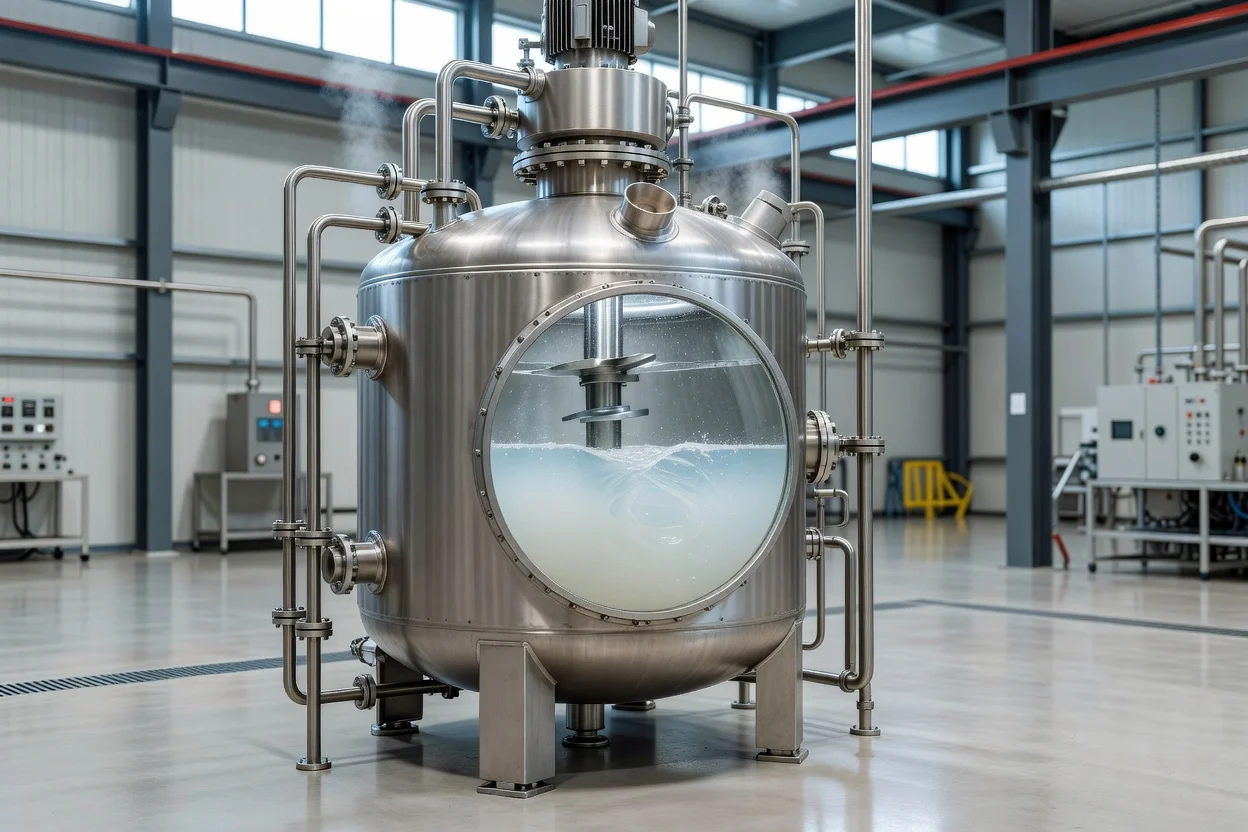
UF resins are manufactured from urea and formaldehyde, usually in aqueous solution under alkaline and acidic stages that control methylolation, condensation, molecular weight build, and final viscosity. Industrial production generally uses a staged process: alkaline addition to form methylol ureas, followed by acid-catalyzed condensation to the desired degree, then stabilization for storage and application.
Main feedstocks
- Urea: typically derived from ammonia and carbon dioxide in the fertilizer and chemical chain.
- Formaldehyde: usually produced from methanol oxidation, making UF indirectly linked to methanol and natural gas or renewable methanol supply chains.
- Catalysts and modifiers: acids, bases, ammonia, melamine, scavengers, and sometimes fillers or extenders depending on end use.
Processing note
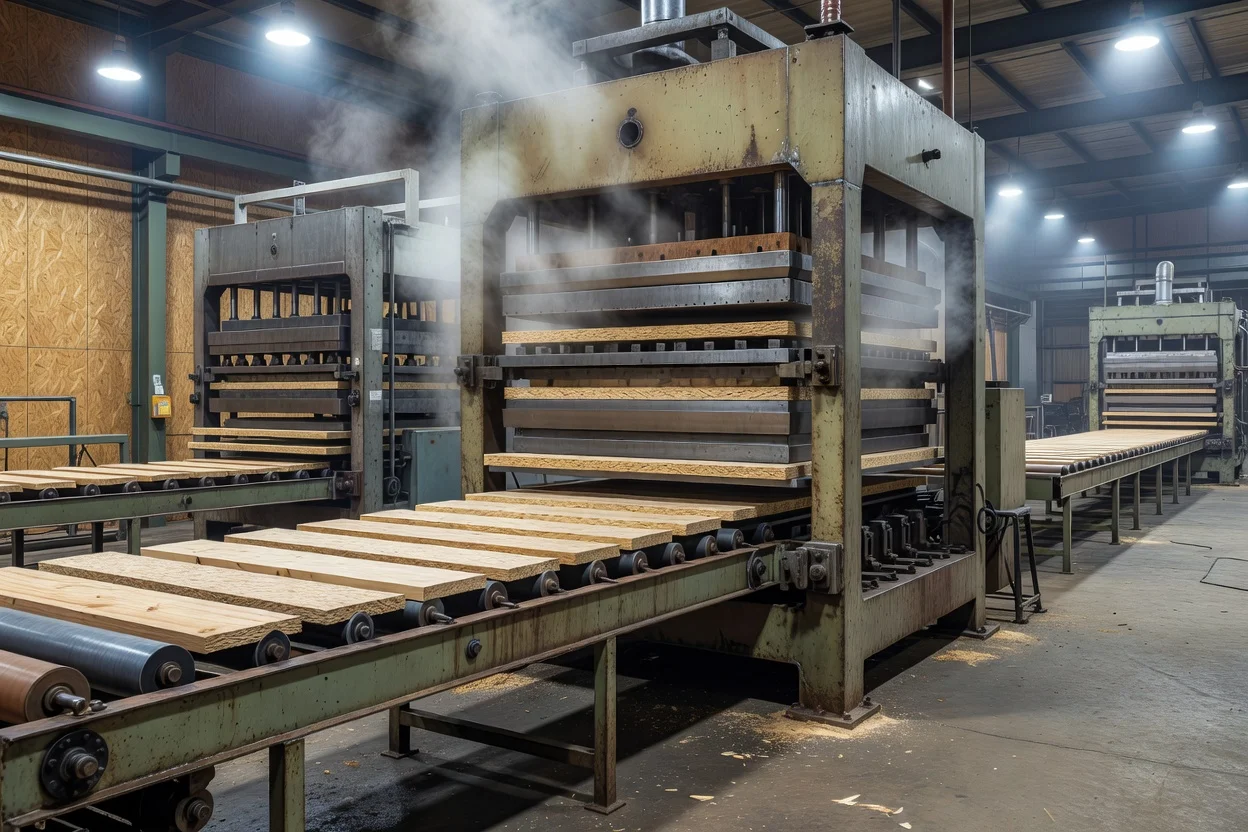
In wood-panel plants, UF is generally blended with flour, wax, hardeners, or other additives and then pressed at elevated temperature and pressure. The resin’s low cure temperature and fast kinetics are major reasons it dominates high-throughput interior panel lines.
Applications and End-Use Markets
UF is most strongly associated with wood-based panels, where it serves as the principal adhesive for particleboard, MDF, and interior plywood. In particleboard, UF reportedly accounts for around 95% of wood adhesives used in production, underscoring its centrality to the panel industry.
Major end uses
| End use | Typical UF grade or form | Why UF fits |
|---|---|---|
| Particleboard and MDF | Low-viscosity adhesive resin | Fast press cure, low cost, good dry bond strength. |
| Interior plywood and laminates | Modified UF adhesive | Colorless bond line and rapid throughput. |
| Molded electrical parts | UF molding compound | Dimensional stability and electrical insulation. |
| Textile and paper treatment | UF finishing resin | Crosslinking and durable-press or wet-strength effects. |
| Agriculture | UF concentrate or slow-release nitrogen product | Controlled nitrogen release in soil and fertilizer stabilization. |
| Insulation foams | UF foam systems | Rapid in-place expansion and cure in cavities. |
Sector-by-sector context
- Wood composites: This is the largest market by far, especially for interior panels and furniture cores.
- Construction interiors: UF is used in decorative laminates, millwork, and some non-structural bonded assemblies where moisture exposure is limited.
- Electrical and molded goods: Its hardness and insulating properties support switches, circuit breakers, and similar parts.
- Textiles and paper: UF chemistry historically supported wrinkle-resistant finishes and paper treatment, although environmental pressures have reduced some of these uses.
- Agriculture: Low-molecular-weight UF concentrates and related products are used for slow nitrogen release and fertilizer stabilization.
A poor-fit use
UF is a poor choice for continuous outdoor or wet-service applications because hydrolysis and moisture uptake degrade performance over time. For those conditions, phenolic resins, melamine-formaldehyde systems, polyurethane, or other moisture-resistant binders are generally preferred.
Environmental and Sustainability Aspects
UF has a mixed sustainability profile. On one hand, it is highly efficient in use because small resin additions can convert low-value wood particles and fibers into durable panel products with high material utilization. On the other hand, it is a fossil-derived thermoset associated with formaldehyde emissions and limited end-of-life recyclability.
Recyclability and end-of-life
- UF-cured wood panels are difficult to depolymerize cleanly because the resin forms a crosslinked thermoset network.
- Mechanical recycling of UF-bonded panels is possible in some cases, but downcycling and contamination remain common outcomes.
- Energy recovery is often easier than material recovery, but it does not close the loop.
Emissions and indoor air quality
Formaldehyde release is the central environmental concern for UF systems. Regulatory pressure has encouraged lower-emission panel standards, improved resin chemistry, and emissions testing across furniture and building materials supply chains.
Bio-based and lower-carbon alternatives
- Bio-based urea substitutes and partially renewable formaldehyde sources are under development, though scale and economics remain challenging.
- Lignin-, tannin-, and protein-based adhesives are being explored as alternatives in some wood composite applications, but they often face trade-offs in cure speed, water resistance, and industrial robustness.
- Recycled wood feedstocks can reduce upstream impacts, but they do not eliminate the fossil origin of the UF binder itself.
A common industrial compromise is to improve UF formulation rather than eliminate it: lower free-formaldehyde levels, add scavengers, and optimize press conditions to reduce emissions while preserving panel productivity.
Economic and Global Market Impact
UF remains one of the most important low-cost resins in industrial manufacturing because it aligns with large-volume, price-sensitive markets such as furniture, flooring substrates, and building panels. Its value proposition is strongest where interior performance is sufficient and production economics matter more than long-term weather resistance.
Recent industry sources indicate global UF resin production exceeds 5 million metric tons annually, with some estimates placing it above 8 million metric tons depending on scope and inclusion of related products. The difference reflects variation in how analysts define UF resin, UFC, and allied amino-resin streams.
The largest demand centers are typically:
- China and broader Asia-Pacific, due to scale in panel production and furniture manufacturing
- Europe, where regulatory scrutiny is stronger and low-emission grades are important
- North America, where engineered wood and interior composites remain major uses
Leading producers include large diversified chemical and resin manufacturers such as Bakelite, along with regional producers integrated into wood-panel, formaldehyde, and fertilizer value chains. Market competition is driven by resin price, emission compliance, curing performance, and customer-specific formulation support.
Current Challenges and Innovations
Main challenges
- Formaldehyde regulation: tighter emissions limits raise formulation and testing costs.
- Water resistance: intrinsic hydrolysis susceptibility limits service life in humid environments.
- Thermoplastic substitutes: polyurethane, MDI-based binders, and other systems compete in wood composites where stronger moisture resistance is required.
- Circularity pressure: thermoset recyclability remains weak compared with remeltable polymers.
Innovation directions
- Nanocomposites and fillers: studies show water resistance and formaldehyde emission can improve substantially with nanomodification; one study reported formaldehyde emission reduced by 62% and water resistance improved by 84% in a UF wood adhesive nanocomposite.
- Lower molar ratio formulations: industrial practice has moved toward formaldehyde-to-urea ratios around 0.9 to 1.0 to cut emissions.
- Hybrid resins: melamine-modified UF is used to improve hydrolysis resistance and performance in more demanding interior applications.
- Scavenger technology: additives bind residual formaldehyde in the resin or finished board, helping meet emissions targets.
- Process optimization: improved pressing, curing, and resin distribution reduce overuse and emission peaks.
Future Outlook
UF is likely to remain a major resin for interior wood composites because its cost and productivity advantages are difficult to replace at scale. However, its growth will increasingly depend on compliance with emissions standards, formulation innovation, and the ability to serve low-emission furniture and construction markets.
Longer term, the most credible growth pathway is not simple volume expansion but performance refinement: lower-emission UF for regulated indoor products, hybrid systems for better moisture resistance, and partial substitution with renewable or recycled feedstocks where technically feasible. In parallel, alternative binders will keep gaining share in applications that demand stronger moisture resistance or easier end-of-life recovery.
Summary
UF resins are high-volume, low-cost thermosetting binders that underpin a large share of global wood-panel manufacturing and also support laminates, molding compounds, paper, textiles, and specialty fertilizer products. Their industrial importance comes from fast cure, strong dry adhesion, and efficient processing, while their main limitations are formaldehyde emissions and poor moisture durability.
References
- •
Urea-Formaldehyde Resins (UF) - Chemical Market Analytics. (2024, February 21). https://chemicalmarketanalytics.com/chemical/urea-formaldehyde-resins-uf/Link
- •
Properties and Uses of Urea-Formaldehyde Resin. (2021, February 26). https://capitalresin.com/properties-and-uses-of-urea-formaldehyde-resin/Link
- •
Urea Formaldehyde Resin (UF) Resin (UF): Properties .... (2026, July 16). https://www.xometry.com/resources/materials/urea-formaldehyde-uf/Link
- •
UF: Urea-Formaldehyde Resin - NETZSCH Analyzing & Testing. (n.d.). https://analyzing-testing.netzsch.com/en-US/polymers-netzsch-com/thermosets/uf-urea-formaldehyde-resinLink
- •
Applications of formaldehyde. (2023, February 28). https://www.formacare.eu/about-formaldehyde/applications/Link
- •
Important Properties and Uses of Urea Formaldehyde Resin. (2022, April 5). https://bansaltrading.com/uses-of-urea-formaldehyde-resinLink
- •
How Durable Is Urea-Formaldehyde Resin? - GOODLY. (2025, September 23). https://www.goodlyglue.com/news/43/Link
- •
Applications of Urea Formaldehyde Resin - News. (2025, May 13). https://www.aojinchem.com/news/applications-of-urea-formaldehyde-resin/Link
- •
Song, J. (2021). Preparation and Properties of the Urea-Formaldehyde Res-In .... https://pmc.ncbi.nlm.nih.gov/articles/PMC8309405/Link
- •
Urea-formaldehyde. (2005, May 24). https://en.wikipedia.org/wiki/Urea-formaldehydeLink
- •
Urea Formaldehyde Industrial Applications. (2026, April 21). https://eureka.patsnap.com/materials/urea-formaldehyde-applicationsLink
- •
Que, Z. (2007). Effects of urea–formaldehyde resin mole ratio on .... https://www.sciencedirect.com/science/article/abs/pii/S036013230500507XLink
- •
Dunky, M. (1998). Urea–formaldehyde (UF) adhesive resins for wood. https://www.sciencedirect.com/science/article/pii/S0143749697000547Link
- •
Urea formaldehyde | PPTX. (2017, September 20). https://www.slideshare.net/slideshow/urea-formaldehyde-79982269/79982269Link
- •
Yuan, J. (2015). Structure and properties of urea-formaldehyde resin .... https://pubs.rsc.org/ra/article/5/66/53700/492666/Structure-and-properties-of-urea-formaldehydeLink
- •
Li, J. (2021). Morphology and Crystallinity of Urea-Formaldehyde Resin .... https://pmc.ncbi.nlm.nih.gov/articles/PMC7956499/Link
- •
What is urea formaldehyde Resin? Definitions and Applications. (2023, October 13). https://europlas.com.vn/en-US/blog-1/what-is-urea-formaldehyde-resin-definitions-and-applicationsLink
- •
Concise Chemistry of Urea Formaldehyde Resins and .... (2020, February 11). https://irispublishers.com/icbc/fulltext/concise-chemistry-of-urea-formaldehyde-resins.ID.000507.phpLink
- •
Nuryawan, A. (2017). Urea-formaldehyde resins: production, application, and testing. https://iopscience.iop.org/article/10.1088/1757-899X/223/1/012053Link
- •
Bakelite® Urea Resins. (2026, March 5). https://bakelite.com/products/urea-resins/Link