

Introduction
Melamine/formaldehyde resins are thermosetting amino resins produced by the condensation of melamine and formaldehyde, and they are valued for their hardness, heat resistance, chemical resistance, and low-color cure. They occupy an important position in the plastics value chain as binders, impregnating resins, adhesives, surface coatings, and molding-compound components, especially in decorative laminates, wood-based panels, tableware, electrical parts, and selected technical textiles and papers.
Within the broader family of formaldehyde-based resins, melamine-formaldehyde systems are generally tougher and more moisture-resistant than urea-formaldehyde resins, while remaining more economical and easier to process than many higher-performance thermosets. Their industrial relevance has expanded beyond traditional wood products into flame-retardant foams, coating binders, wet-strength and paper-treatment systems, and modified low-emission formulations designed to reduce free-formaldehyde content and improve storage stability.
The technology has also evolved materially over time: modern grades often use butylation, methylation, or other modification strategies to improve flexibility, compatibility, and shelf life, while lower-emission formulations address regulatory and occupational-health pressures associated with formaldehyde release. At the same time, the resin family faces structural challenges typical of thermosets, including limited recyclability and brittleness in some cured systems, which continue to drive innovation in formulation, curing chemistry, and circularity-oriented design.
History and Development
Melamine-formaldehyde chemistry emerged as part of the mid-20th-century expansion of amino resins for industrial use, alongside urea-formaldehyde and phenol-formaldehyde systems. Early demand was driven by decorative laminates, molded household goods, and wood adhesives, where the combination of a light base color, cure hardness, and resistance to heat and household chemicals offered a compelling performance profile.
As applications broadened, resin makers developed modified MF grades to address practical limitations in processing and end use. Butylated and methylated versions improved solubility and application behavior in coatings and impregnation resins, while blended systems such as melamine-urea-formaldehyde helped balance cost, bond performance, and formaldehyde emission control in wood panels. More recent research has focused on reducing free formaldehyde, improving flexibility and storage stability, and tailoring molecular architecture for paper impregnation and advanced coatings.
Chemical Structure and Key Properties
Melamine is a triazine-based, nitrogen-rich molecule that reacts with formaldehyde through methylolation and subsequent condensation to form a highly crosslinked three-dimensional network upon curing. The cured resin contains methylene and ether bridges and is classified as a thermoset, meaning it becomes infusible and insoluble after cure.
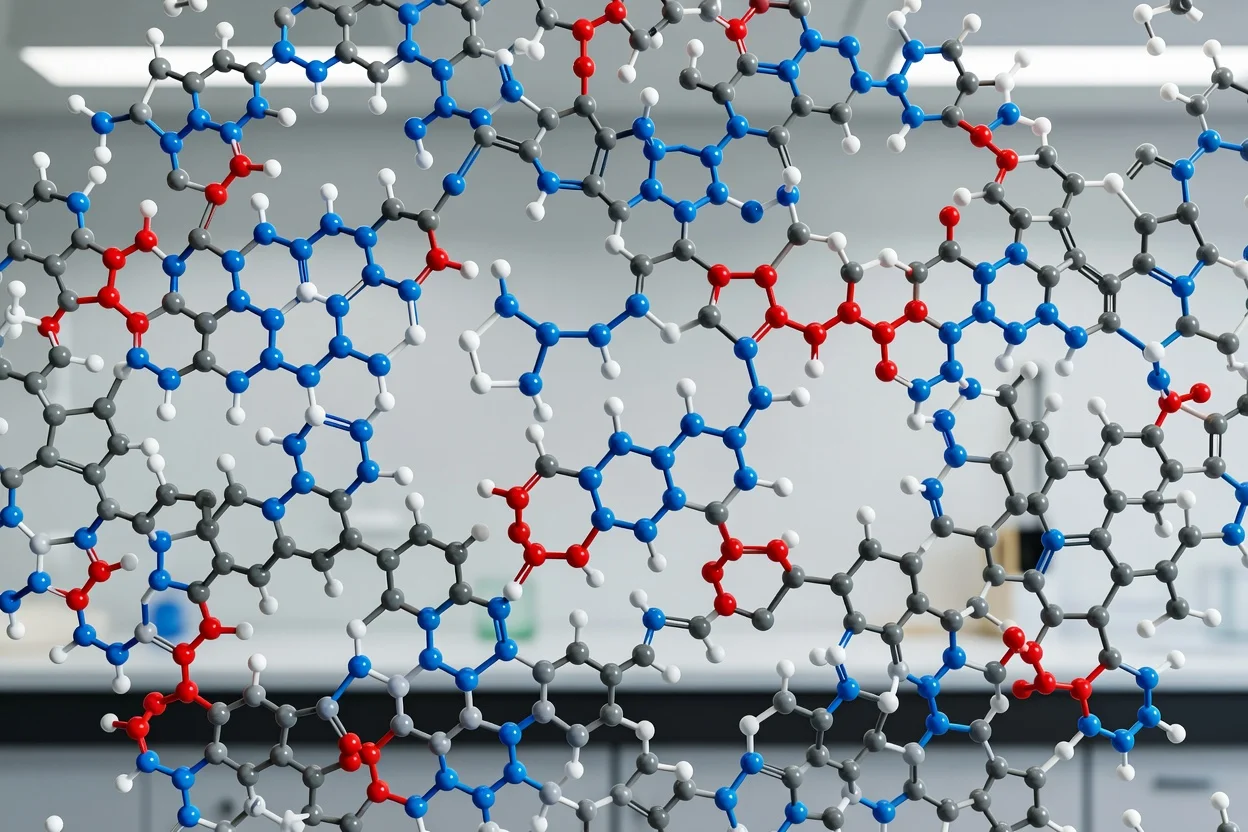
Core property profile
| Property | Typical significance |
|---|---|
| High surface hardness | Excellent scratch and abrasion resistance in laminates and molded goods. |
| Heat resistance | Retains shape and performance under elevated temperatures better than many common thermoplastics. |
| Chemical resistance | Performs well against many household chemicals, oils, and mild solvents. |
| Low color / clarity | Suitable for decorative surfaces because it does not strongly discolor printed papers or overlays. |
| High crosslink density | Produces stiffness, dimensional stability, and low creep after cure. |
Real technical limits and typical workarounds
- Brittleness → caused by high crosslink density and rigid triazine-ring structure → commonly addressed by partial alkylation, co-condensation, or blending with urea-formaldehyde or other flexibilizing components.
- Free-formaldehyde emissions → caused by residual formaldehyde and reversible hydrolysis in some formulations → reduced by optimized synthesis, formaldehyde scavengers, and low-emission modified resins.
- Limited recyclability → caused by irreversible thermoset crosslinking → mitigated through design-for-durability, reuse of durable components, mechanical reuse of laminated substrates, and emerging chemical-recovery concepts, though options remain limited relative to thermoplastics.
- Poor fit for continuous boiling-water contact in some grades → caused by hydrolytic stress at severe conditions → workarounds include selecting exterior-grade or modified systems, using post-cured formulations, or substituting other resin chemistries where needed.
Production Processes and Raw Feedstocks
MF resin production begins with melamine and formaldehyde, usually in aqueous media under controlled pH and temperature, followed by condensation to the desired degree and, in many commercial systems, further modification by alcohols such as butanol or isobutanol. The process is highly formulation-dependent because the extent of methylolation and condensation strongly influences viscosity, reactivity, storage stability, and final cure behavior.
A simplified industrial sequence is:
- Methylolation of melamine with formaldehyde under alkaline or neutral conditions.
- Condensation under controlled pH and heat to build oligomeric species.
- Modification with alcohols or other reagents where improved solubility, flexibility, or coating behavior is required.
- Formulation into waterborne resins, impregnation solutions, molding powders, or coating binders.
Melamine itself is typically derived from urea-based industrial chemistry, while formaldehyde is produced from methanol oxidation in large chemical plants. That makes MF resin part of a larger petrochemical and nitrogen-chemistry chain, with cost and availability influenced by methanol, ammonia-derived intermediates, energy prices, and regional environmental regulation.
Applications and End-Use Markets
MF resins serve several distinct markets, and each uses a grade optimized for the specific process window and performance target.
| End use | Typical MF grade / form | Usual function |
|---|---|---|
| Decorative laminates | Impregnation resin, often modified or butylated | Surface hardness, gloss, stain resistance, print protection. |
| Wood-based panels | MF, MUF, or MF-modified adhesive systems | Moisture-resistant bonding in plywood, particleboard, and structural lumber. |
| Molding compounds | Powder or compounded thermoset resin | Hard, heat-resistant electrical and household parts. |
| Coatings | Waterborne or solvent-borne modified MF | Crosslinker/binder for durable, chemical-resistant finishes. |
| Paper and textiles | Impregnation or wet-strength systems | Strength, stiffness, and improved wet performance. |
| Flame-retardant foam and insulation | Specialized foam formulations | Low smoke, flame resistance, and acoustic or thermal insulation. |
| Concrete admixtures | Sulfonated melamine-formaldehyde superplasticizer | Water reduction and improved workability in high-performance concrete. |
Decorative laminates and surfacing
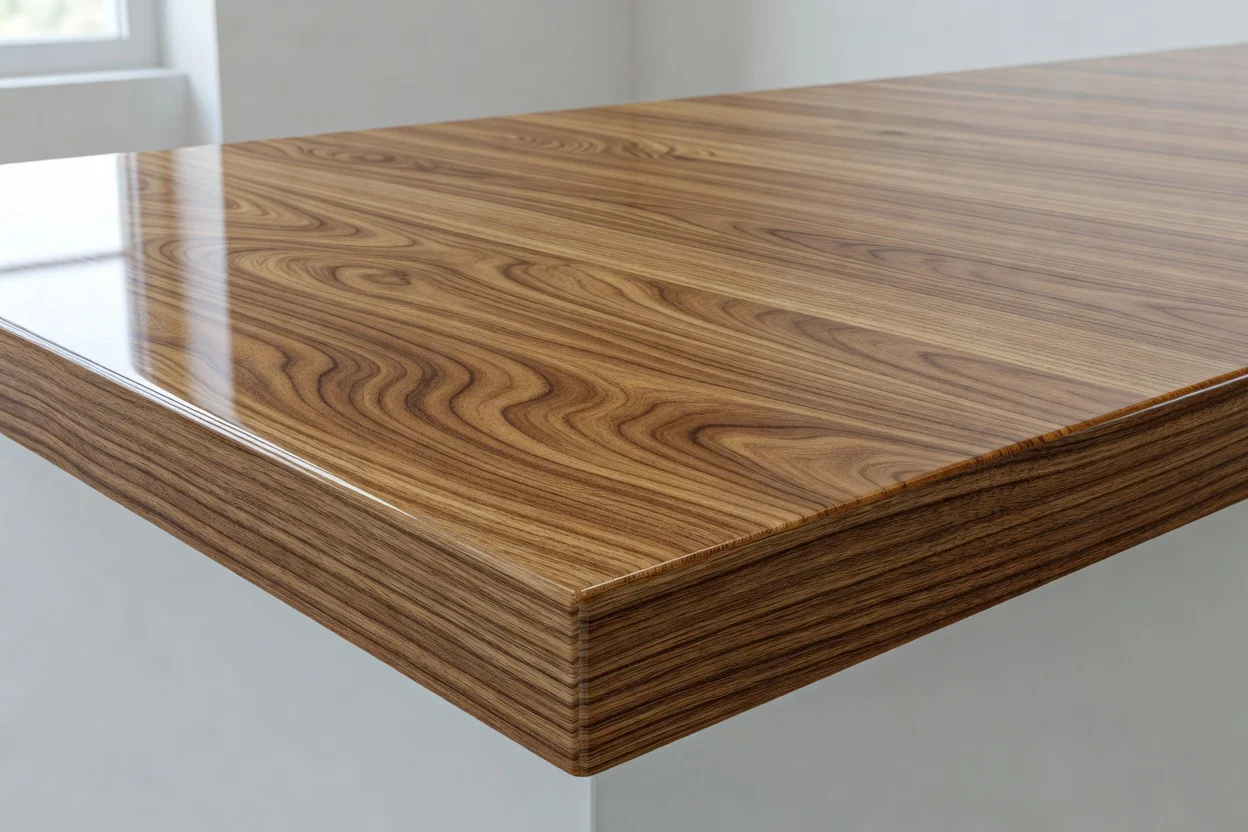
This is one of the most established MF markets. The resin impregnates decorative paper and overlay layers, then cures under heat and pressure to form hard, glossy, chemically resistant surfaces used in countertops, cabinets, tabletops, and wall panels. The resin’s light base color is particularly important because it preserves printed patterns and decorative graphics during cure.
Wood adhesives and panels
MF and MF-modified systems are used where better moisture resistance and heat durability are required than standard urea-formaldehyde adhesives can provide. The resin is especially relevant in semi-exterior and exterior-grade wood products, scarf and end joints, and high-performance laminates.
Molded articles and electrical parts
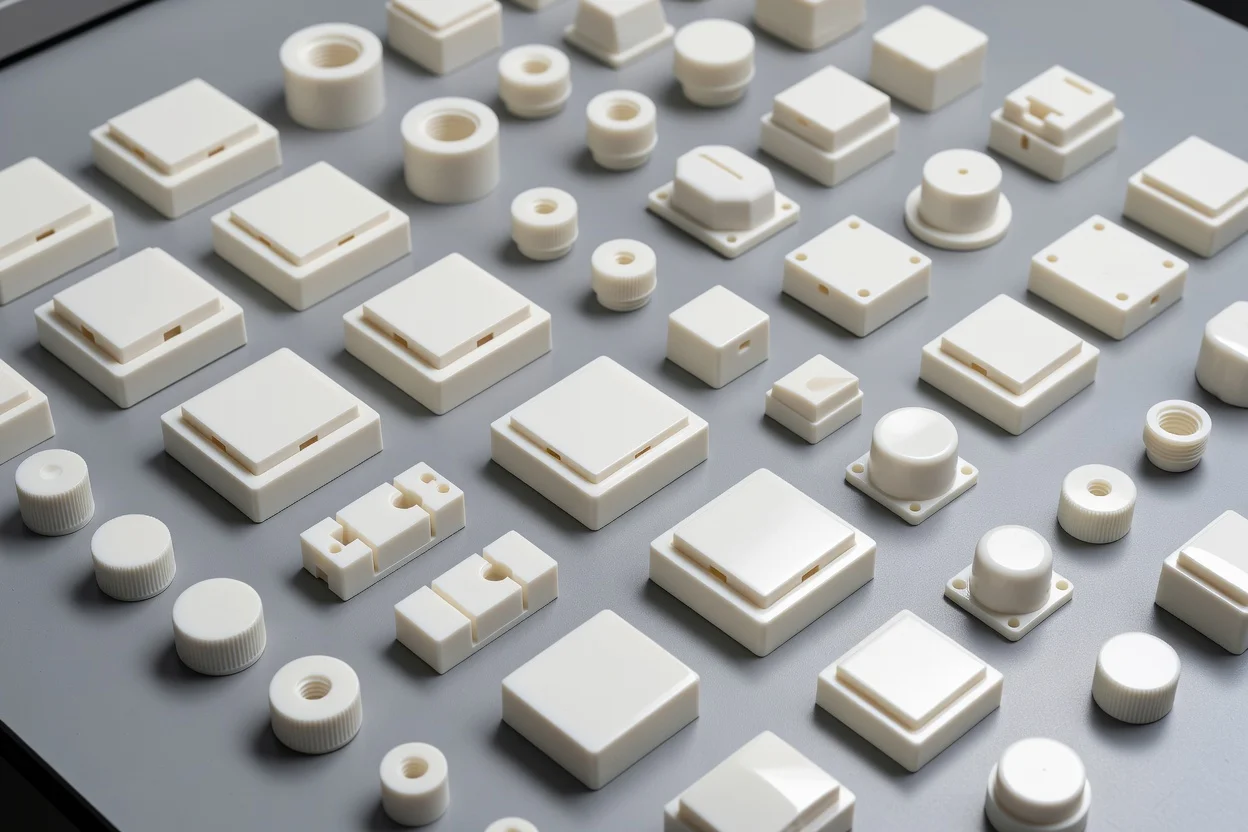
MF molding compounds are used for durable, rigid parts such as switches, appliance housings, screw caps, and electrical components, where dimensional stability and heat resistance matter more than impact toughness. A poor-fit use is applications requiring repeated flexing or high impact resistance, because cured MF is relatively brittle.
Coatings and surface finishes
In coatings, MF resins are widely used as crosslinkers or binders because they help produce hard, solvent-resistant, and glossy films. Automotive and furniture finishes are notable examples, although many modern systems rely on modified grades to improve flexibility and application behavior.
Paper, textiles, and specialty systems
MF resins appear in wet-strength paper systems, filter media, and selected textile treatments, where crosslinking improves structural integrity under wet or thermal stress. Their use in flame-retardant foams and acoustic insulation reflects the resin family’s high nitrogen content and favorable char-forming behavior during combustion.
Environmental and Sustainability Aspects
MF resins are technically durable, but their sustainability profile is mixed.
Recyclability and end-of-life
Because MF is a thermoset, it cannot be remelted and reshaped after curing. This limits mechanical recycling and complicates separation from wood, paper, or composite substrates at end of life. In practice, recovery often depends on the substrate rather than the resin itself, which constrains circularity relative to thermoplastics.
Formaldehyde emissions
A central environmental issue is formaldehyde release during manufacturing, processing, and in-service aging. Research and product development have therefore emphasized low-free-formaldehyde resins, emission-reducing modifiers such as ethylene glycol and caprolactam, and better process control. These strategies can improve storage stability and lower emissions while preserving useful cure behavior.
Bio-based or lower-carbon alternatives
No fully drop-in bio-based substitute has displaced MF across its major applications, but several pathways are under discussion:
- bio-derived formaldehyde precursors and renewable methanol routes
- bio-based or partially bio-based co-reactants in modified aminoplast systems
- alternative binder chemistries in panels and coatings where performance requirements permit substitution
These options remain application-specific, and the trade-off is usually between lower carbon intensity and equivalent resistance to heat, chemicals, or moisture.
Carbon footprint
The footprint of MF depends heavily on the upstream intensity of methanol, ammonia-derived feedstocks, energy used in melamine production, and curing losses during manufacture. Because MF is used in long-life products such as laminates and structural panels, durability can partially offset embodied impacts by extending service life, but this does not eliminate end-of-life challenges.
Economic and Global Market Impact
MF resins are part of the larger amino-resin market and are closely tied to construction, furniture, interiors, and industrial coatings demand. Their economic importance is strongest in regions with large wood-panel, laminate, and molded-goods sectors, where performance, aesthetics, and cost must be balanced.
The competitive position of MF is shaped by:
- melamine and formaldehyde raw-material prices
- emissions regulation and workplace exposure standards
- competition from phenolic, polyurethane, epoxy, and non-formaldehyde alternatives
- regional demand for flooring, cabinetry, and interior surfacing
In industrial practice, commercial supply is often provided through specialized resin companies offering waterborne, butylated, methylated, and custom-modified grades for specific processing windows. In the broad market, the leading production base tends to follow the geography of melamine, methanol, and downstream wood-product manufacturing rather than a single global end-user segment.
Current Challenges and Innovations
Main challenges
- Emission compliance remains a major issue, especially for interior products and regulated markets.
- Brittleness and crack sensitivity can limit use in demanding structural or impact-prone parts.
- Shelf-life and storage stability remain important for liquid resins used in impregnation and coatings.
- End-of-life recovery is difficult because cure is irreversible.
Current innovation directions
- Toughened MF formulations using polyols, lactams, or co-reactive modifiers to improve flexibility and storage stability.
- Low-emission systems designed to suppress residual formaldehyde and reduce in-service release.
- Advanced coating resins with improved weathering, surface durability, and application latitude.
- Functional foams and hybrid composites that exploit MF’s flame performance while reducing smoke generation.
- Nanocomposite coatings that combine MF with fillers or nanoscale modifiers to improve barrier and wear performance.
Future Outlook
MF resins are likely to remain important wherever a combination of hardness, heat resistance, decorative quality, and chemical durability is required at moderate cost. Near-term growth will probably be concentrated in higher-value formulations: low-emission wood binders, durable surface coatings, flame-resistant foams, and specialty impregnation systems.
The main strategic question for the category is not whether MF will disappear, but how it will adapt. Future competitiveness will depend on lower-formaldehyde chemistry, better process efficiency, more robust performance in demanding applications, and clearer end-of-life strategies for composites and laminated products.
References
- •
Melamine formaldehyde resin & dispersant MF | Application guide. (2025, July 1). https://www.lignosulfonate.com/melamine-formaldehyde-resin/Link
- •
What products are made from melamine formaldehyde. (2022, May 5). https://bisley.biz/news/what-products-are-made-from-melamine-formaldehyde/Link
- •
Melamine formaldehyde: Properties & uses. (2025, October 27). https://www.scribd.com/document/86834449/Melamine-FormaldehydeLink
- •
Lan, P., Yang, R., Mao, H., Cui, J., & Brosse, N. (2019, October 30). Production of melamine formaldehyde resins used in impregnation by incorporation of ethylene glycol and caprolactam with high flexibility, storage stability, and low formaldehyde content. BioResources. https://bioresources.cnr.ncsu.edu/resources/production-of-melamine-formaldehyde-resins-used-in-impregnation-by-incorporation-of-ethylene-glycol-and-caprolactam-with-high-flexibility-storage-stability-and-low-formaldehyde-content/Link
- •
Applications of formaldehyde. (2023, February 28). https://www.formacare.eu/about-formaldehyde/applications/Link
- •
What melamine resin is used for. (2020, December 9). https://capitalresin.com/what-melamine-resin-is-used-for/Link
- •
Melamine-formaldehyde resin. (2026, July 31). https://www.britannica.com/technology/melamine-formaldehyde-resinLink
- •
Top uses and benefits of melamine resin. (2024, December 10). https://www.atlasfibre.com/top-uses-and-benefits-of-melamine-resin/Link
- •
Melamine-formaldehyde resin - An overview. (n.d.). https://www.sciencedirect.com/topics/engineering/melamine-formaldehyde-resinLink
- •
Research on toughening and modification of melamine formaldehyde resin. (2023, October 23). https://www.sinoyqx.com/melamine-formaldehyde-resin-2/Link
- •
Preparation of melamine-formaldehyde resins and ... (n.d.). https://patents.google.com/patent/US3470134A/enLink
- •
Melamine resin. (2007, April 6). https://en.wikipedia.org/wiki/Melamine_resinLink
- •
Dorieh, A. (2022). A review of recent progress in melamine-formaldehyde resin based nanocomposites as coating materials. https://www.sciencedirect.com/science/article/abs/pii/S0300944022000650Link
- •
MF: Melamine-formaldehyde resin. (n.d.). https://analyzing-testing.netzsch.com/en-US/polymers-netzsch-com/thermosets/mf-melamine-formaldehyde-resinLink
- •
All melamine formaldehyde (MF) resin for plastic parts. (2025, May 8). https://www.specialchem.com/plastics/pf-melamine-formaldehyde-mf-resin/all-productsLink
- •
Synthesis and thermal degradation studies of melamine formaldehyde (MF) resin. (2014, November 9). https://pmc.ncbi.nlm.nih.gov/articles/PMC4241734/Link
- •
The storage stability of melamine formaldehyde resin solutions. (n.d.). https://www.sciencedirect.com/science/article/abs/pii/S0032386198007241Link
- •
A review: Synthesis, application and modification research progress of melamine–formaldehyde resin. (2025, December 23). https://scijournals.onlinelibrary.wiley.com/doi/10.1002/pi.70071Link